Walker Books Australia, 2011. ISBN 9781921720055.
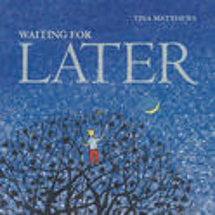
(Ages 5+) Picture book. Warmly recommended. When Nancy goes searching
for someone to ply with her or read her a story, or play cards, or give
her a swing or tickle her, she is rebuffed by them all. Mother and
father are too busy, her brother is cooking, her aunt hanging out the
clothes and grandfather is busy mowing the lawn. All tell her that they
are too busy and to come back later. Later is the refrain on each page
as Nancy looks for companionship. Instead she climbs a tree, finding
that the leaves tell her a story and the limbs allow her to swing fro
them, and the leaves tickle her as she swings. All the things she
wanted from the others she is getting for herself in the tree.
The story promotes several messages with an underlying subtlety.
Parents and family ignore the child to the detriment of all. Many
students reading this will tell stories of how their parents have not
enough time for them, and the story asks people to re-evaluate their
time spent with their children. But Nancy finds she is able to
fend for herself, able to fill in her time by herself, able to occupy
herself without the family. This too will be a telling discussion point
with students. What is there that they can do by themselves? Do they
need an adult or older sibling with them? But like all good stories,
the family is reunited at the end, each learning something that will
enhance family life.
Each page is illustrated using a Japanese woodblock technique giving
the story a grounding in the familiar, the home and garden. Shown in
wonderful detail, the illustrations beg the reader to notice and talk
about what they see. The New Zealand author, Tina Matthews, a
passionate promoter of the Free Range Kids movement seeks to advance
her cause in the best of ways, through a simple and warm hearted story
of a family.
Fran Knight
Anna and the French Kiss by Stephanie Perkins
Penguin, 2011. ISBN 9780143206262.
Recommended. Anna and the French Kiss is an excellent coming of age story for
young
teenagers to read. There's something in it for everyone, from comedy,
to adventure but most of all to love. It is a tale that will leave you
feeling light heartened and elated for ages after you've put down the
book.
The story begins in America but quickly changes to France when the main
character Anna is forced to live there by her over-bearing father.
Despite obvious resentment her feelings soon change after she falls for
Etienne St Clair, the charismatic, gorgeous boy who lives on the floor
above her. Her love takes a back step when she finds out that he has a
permanent girlfriend, something that won't ever change, no matter how
she feels.
Throughout the book it is easy to get lost inside the world of Anna, St
Clair and the culture and joy of European France. Once you start
reading you won't be able to put it down until your eyes have finished
reading the very last word.
Amelia Rohrlach (Student, Year 11)
Editor's note: Amelia gave this 4.5 stars out of 5
Take two by Sienna Mercer
Egmont, 2011. ISBN 978 1405256971.
Revamped! by Sienna Mercer
Egmont, 2009. ISBN 978 1405243711.
(Ages: 10+) Warmly recommended. Two new books in the series, My
sister
the vampire, will have readers pleased. In Revamped, the
twins,Izzy
and Olivia have now been together for a while, taking in the fact that
one is a vampire, but finding they have much in common. But when
Izzy's dad says he has decided to move to Europe and that they must
move, the girls are distraught. They make up their minds to work
together to change his mind.
In Take two, the girls are thrilled to find a favourite teen
actor in
their town and so try to get to know him. But when Izzy does some
snooping around, she finds that someone on the set has a major secret.
Both books are very readable, short, fast paced and involving from the
start. As with all the books in the series, they should prove very
popular with upper primary readers, with the tension of keeping
their secret, all through the book.
Fran Knight
The Swiss Family Robinson by Johann Wyss (retold by Martin Powell)
Graphic Revolve series. Raintree, 2011. ISBN: 978 1406 224986.
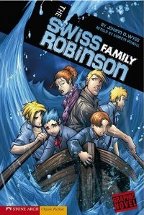
En route from Switzerland to Australia, the Robinson family is ship
wrecked on a deserted island. They must discover what their new home
has to offer in order to ensure their survival. As they learn about the
island, they come across many unfamiliar plants and animals, some of
which threaten their existence. Over time, the family grow accustomed
to their new home and existence and even welcome a stranger to their
midst.
Although I find this story to be quite familiar, thanks to having seen
a film of the same name in my childhood, I cannot be certain as to how
true it is to the original story. I found most of the text to be
grammatically correct, apart from the following statement, 'It's a wild
fig tree, which have probably grown here since Biblical times!' This
glitch was possibly over-looked due to the limited word count and
vocabulary used in this series. Certainly, the graphic novel format
makes this tale accessible to even children for whom reading does not
come easily. The illustrations brought forth similar feelings to those
I had as a child. I would happily go and live in such a tree house as
is portrayed in this book!
Jo Schenkel
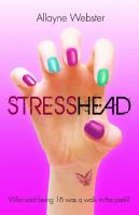
Stresshead by Allayne Webster
Omnibus, 2011. ISBN 9781862918207.
(Age: 13+) Recommended. Denise (Dennie to her family and friends) is
having a really
tough time. With her mum acting super weird, her boyfriend being a
total jerk and her Year Eleven results withheld, she doesn't even have
her best friend Kat to turn to. Kat has problems of her own. How can
Dennie cope with the stress?
First things first, this is not your average run-of-the-mill teenage
LOL novel. It deals with some issues rarely seen in this genre, such as
accidental pregnancy, depression, and even breast cancer, in a
sympathetic and nice way. As well as dealing with the affect of these
issues on the patrons themselves, it also took into perspective the way
it affected the whole family, and how different people may react. It
was a very interesting book, especially as the characters were
realistic.
On of the things I loved about this book was the dialogue. It was
snappy, original, and down-to-earth, which is also the main quality of
this book. It was very down-to-earth and easy to relate to. Overall, it
was a nice read. Great dialogue and realistic events made this one
worth reading, although it was let down by a sluggish-at-times pace and
boring finish.
I recommend this book.
Rebecca Adams (Student)
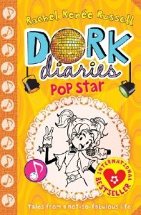
Dork Diaries: Pop Star by Rachel Renee Russell
Simon and Schuster, 2011. ISBN: 978 0 857071187.
Recommended for ages 9 and up. Nikki is a self-confessed dork! Her dad
is a pest exterminator who drives a van with a giant roach on the roof
and he is the reason that Nikki has won a scholarship at her new
school. Her mum demands regular family times and often asks that Nikki
look after her little six year old sister, Brianna. Although she has
two great friends, Chloe and Zoey, they don't know the truth about
Nikki and her family. When McKenzie, an externally attractive but
internally nasty person from her class, sees Nikki performing a song
and dance routine at the local pizza bar with Brianna, she and her
'mean girl' friends film the event and upload it to YouTube. With this
as blackmail material, McKenzie tries to stop Nikki and her friends
from entering a talent competition to be held at school.
This is the third book in the Dork Diaries series and contains
a
winning format for younger girls or slightly older disinclined female
readers. Although the protagonist is aged fourteen, the overall content
of the book would still be suitable for younger children. With themes
of friendship, honesty, resilience, bullying, cyber bullying, first
love and being prepared to stand up for what you believe in, this could
possibly be used as a class text. Containing large, well spaced bold
font, presented as diary entries and liberally scattered with cartoon
style illustrations, this series is similar to the Louise Rennison
books. It is bound to fill a niche for girls in the same way The
Diary
of a Wimpy Kid does for the boys.
Jo Schenkel
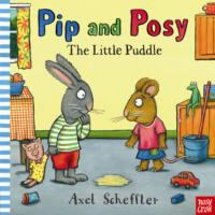
Pip and Posy: the little puddle by Axel Scheffler
Nosy Crow, 2011. ISBN 9780857630049.
From the illustrator of The Gruffalo comes another Pip and Posy
story for the very young. This time Pip comes to Posy's
place to play, and because it is too wet to play outside, they have to
stay indoors. They have heaps of fun, so much that Pip forgets to
go to the toilet and has an accident. But Posy brings a level
head to the situation and soon the friends are happily playing again,
even if Pip does look a little strange.
It's a simple story based on a very ordinary situation and that's what
engages the age group. They can relate to both characters, and
the illustrations are just enchanting. There's even a lesson to
be learned by grown-ups in this one.
Barbara Braxton
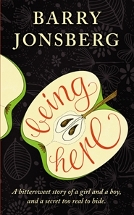
Being here by Barry Jonsberg
Allen and Unwin, 2011. ISBN 978 1742373850.
Leah Cartwright lives in a nursing home and suffers from Alzheimer's
disease but is aware that she is in her declining years. When Carly, a
sixteen year old student interviews her for a history project, Leah
recounts her childhood living on a remote farm with only her mother for
company.
Leah's loneliness of childhood is reflected by her existence in the
impersonal care facility. Despite her assurances to Carly that her life
was not unhappy, the reader is left with a real sense of sadness for a
childhood spoiled and lost.
Being a puritanical Christian with an unhealthy, dogmatic, Old
Testament view of life, Leah's mother is arrogant, ignorant and
completely indifferent to the views, needs and rights of others. What
Leah forgives and understands as circumstantial behaviour is nothing
short of child abuse in emotional and physical form, perpetrated by a
domineering bully.
The suffering of Leah's childhood is moderated by the character of
Adam, a boy of her own age who manifests as an imaginary friend yet
develops substance, influence and presence to a degree which must be
determined and rationalised by the reader.
Through Leah, Jonsberg conveys the message that we are in control of
our stories. As a child, Leah was completely and utterly powerless to
alter any tangible aspect of her life and she had no recourse to social
authorities, friends, family or witnesses of any kind. In the midst of
this powerlessness however, the child responds by re-writing her story
in her own imagination, creating an escapist, alternative experience
which merged and also diverged with her reality. It could be considered
that this response is a symptom of mental illness which would be an
understandable outcome produced by the mother's psychiatric problems.
Interviewed by Carly, Leah has the opportunity to tell her story to a
person who at first appears completely disconnected in a cultural and
generational sense, yet who becomes captivated by the tale. Talking
together, the pair offer insights which touch each other and a
meaningful relationship beyond the school project is formed.
The theme of story telling continues with Leah's desire to commit her
life to tape, almost as a statement but with an attempt to positively
influence Carly, thus altering and participating in her life story.
This narrative will be interpreted differently by readers as Jonsberg
invites them to take some responsibility for bringing the character of
Adam to life and making conclusions about his nature and purpose.
Rob Welsh
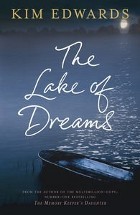
The Lake of Dreams by Kim Edwards
Penguin, 2011. ISBN: 978 0 670 92029 7
Recommended for secondary students. Following her mother's minor
accident and incapacitation, Lucy, between jobs and beginning to
question her relationship and what she is doing with her life, returns
to her family home for a brief stay. Arriving at the place of her
childhood, Lucy is unsettled by the memories of not only her father's
death but also her first youthful romance with Keegan Fall, a local man
with whom she is reunited. Suffering from jet lag, and unable to sleep,
Lucy explores a part of the house her mother has kept locked.
Practicing the skills she learnt from her father, she picks the lock on
a window seat and discovers a blanket and some old brochures about
women's health and the suffragette movement. Her temporary lack of
direction and inquisitive nature lead her to investigate the history of
these items and, in doing so, Lucy uncovers some well hidden family
secrets.
Written with flowing, descriptive text, many paragraphs in this novel
lent themselves to being read aloud. Edwards has produced a well-paced
and engaging novel about family history, love and relationships. The
modern day story is cleverly intertwined with the historic tale and the
selfishness displayed by Lucy contrasts with the selflessness of other
characters from the past. This could perhaps be used by secondary
students as a paired text, contrasted with Mary Lawson's Crow Lake.
Both
revolve
around the untimely deaths of parents and the ways in
which such events can affect those left behind.
Jo Schenkel
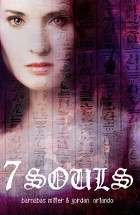
7 Souls by Barnabas Miller and Jordan Orlando
Penguin, 2011. ISBN 9780143206255.
(Age: 14+) Mary is a wealthy and popular teenager living in New York
City. On the morning of her seventeenth birthday, she wakes up
expecting presents. Instead she finds herself naked and scratched in a
department store, and no recollection of the night before. Soon her
life starts falling apart, and she has no idea why. She thinks that
someone is out to get her, but who? Isn't she the popular girl everyone
loves? 7 Souls is definitely original, I can most certainly say that.
The
problem is, perhaps it was a bit too original. The plot is very strange
and some elements are a little annoying. The main character,
Mary, is very hard to relate to, and the dialogue is quite clumsy, as
though the writers themselves weren't sure what the characters should
be like. The pace is slow at the best of times and some of the
supporting characters are much undeveloped. But this book redeems
itself from those flaws with a couple of things. First, the
description. This may be why the pace is a little sluggish, but anyway
the description is vivid and powerful, and makes the story far more
interesting than it would have been. Second, the plot. Although it is
very strange, it actually makes for an intriguing idea, and a truly
chilling prospect. It is quite a scary book.
This book is not for everyone. A lot of pages coupled with a very
strange plot means you could either love it or hate it. Either way, it
is still a fairly decent read.
Rebecca Adams (Student)
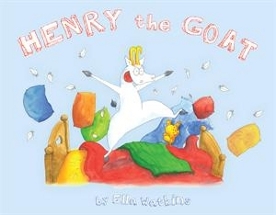
Henry the Goat by Ella Watkins
Hardie Grant Egmont, 2011. ISBN 9781921690877
Henry the goat just loves to play - but sometimes his over-exuberance
for life leads to strife. Today his best friends, Rufus, a
book-worm marsupial, and Oscar, a water-phobic crocodile, are coming to
play and Henry cannot wait. He helps his Dad tidy the garden,
helps his mum bake a cake and then sits quietly with Grandma reading
books until his friends arrive, although Henry's idea of helping
does not necessarily coincide with theirs. The afternoon is
full of fun and frolic, but it may be that Henry is the only one having
fun.
This story has so much energy that it just leaps off the pages and the
reader really experiences Henry's enthusiasm. But you have to
engage with the pictures to see if this is really fun for
everyone. Perhaps Rufus and Oscar are not quite as enthusiastic.
Henry the Goat came to life when the author was just 8 years old and
this book was written when she was 14. 'At first Henry was just a
picture that I drew in my school poetry book. Most things that you draw
you never draw again. However later I decided to redraw him, just to
show him to Mum and Dad. Before I knew it, every time I picked up a
pencil, my hand would etch the few lines that made up Henry's features.
With each time I redrew him he began to change a little and I was soon
drawing him with different expressions and movements. As I drew him
more and more, a personality began to form. I noticed that Henry didn't
seem to react randomly to situations I set him, I began to know him. I
began to understand him and the way he thinks. That's when I realized
his personality was kicking in, he was becoming a person. I now knew he
needed a name. Henry seemed the right name for a goat of such
status.'
Meet Ella and Henry at http://www.henrythegoat.com.au
Barbara Braxton
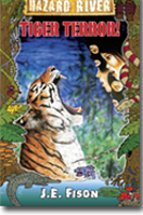
Hazard River series by F. E. Fison
Tiger terror, Ford Street, ISBN 978 1921665134.
Bat attack! Ford Street, ISBN 978 19 21665141.
(Ages 9+) Warmly recommended. Adventure. Two new books in the series,
Hazard River, will please the readers of this fast and furious
adventure series. In Bat attack, Jack Wilde and his friends are
getting
ready for the New Year's Eve dance at the local disco, but events
intervene to change the direction of their evening. The story Fison
tells at he start of each book was enough to hook me into reading the
series. Tiger terror too is concerned with environmental issues
and
grabs the readers' attentions from the first page as Jack and his
companions set out to save tigers after finding a tiger paw in a
medicine shop in Chinatown.
Easy to read, exciting, with short chapters and easily identified
characters, this series will be readily picked up by students,and the
bright, intertwined front covers will lure them to the books.
Fran Knight
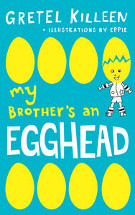
My brother's an egghead by Gretel Killeen
Puffin, 2011. ISBN: 978 0143305644.
Mum's promise to Eppie and Zeke is that, if they can manage to stay out
of trouble for a day and politely take care of their new neighbours,
she will buy them a puppy. When it turns out that the children, Tig and
Pop, are aliens, Eppie and Zeke find it hard to do as they have
promised. As a result, they dress themselves in somewhat bizarre
armour, which includes donning inflatable life jackets.
With three more adventures to come, this series will probably hold most
appeal to the disinclined male reader looking for a short and funny
book. Although, as an adult reader, I didn't find the story to be
wildly humorous, I have no doubt that children will love the 'gross and
grotty' elements of the book and enjoy Mum being referred to by her
children as Bum. Given the variations in font and print size and the
inclusion of small cartoon style sketches, children are bound to find
this series both engaging and easy to read.
Jo Schenkel
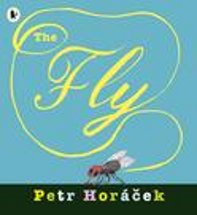
The fly by Petr Horacek
Walker Books, 2011. ISBN 9781 406330731.
Picture book. When the fly lands inside he is horrified when a fly swat
lands near him with a great thwack. Someone is trying to kill him! Told
from the fly's point of view, this funny take on the life of a fly and
what drives him to do what he must do, will absorb readers and those
read to, alike.
In a few well chosen words Horacek tells his tale, following the fly as
it tries to keep away from the fly swat, eat some food (he doesn't mind
sharing), avoid the cow's tail, the frog an the bird both of whom see
him as their dinner, and then finally returning home for tea.
Each page is covered with wonderfully bold illustrations, some in
pastel, some watercolour, and some in pencil, but all detail the
exploits of the poor fly, simply trying to survive.
Children will have sympathy with the fly's attempts, and perhaps take a
closer look at this insect in our midst.
The humorous take at the end and the cut pages between will further
endear the readers to this book.
Fran Knight
Violence 101 by Denis Wright
Black Dog Books, 2011. ISBN 9781742031781 Violence 101 is a difficult book to categorise. The main
character is Hamish Graham, fourteen, highly intelligent and extremely
violent. It would be easy to dismiss him as another troubled teen
and given his history it would be easy to dislike him. However as
the book progresses it becomes possible to understand him even when you
strongly disapprove of what he does. The book raises interesting
ideas about good and evil and redemption. Not all of these are
neatly resolved which is a reflection of real life. I like the
style that the author uses with writings from Hamish interspersed with
the action of the story. Some parts of the book are disturbing,
the incident with the neighbour's dog being one example.
As I was reading the book I began to wonder how it would be
resolved. As you have more understanding of Hamish through his
writing and the events in the book you begin to have some empathy for
him and his situation. I think the author handled the issues
involved well and created a realistic and believable resolution. There
is no conventional happy ending, rather there is some hope for
the future if Hamish can learn to control his anger or channel it into
constructive purpose.
I would recommend this book for older teenagers and it could be
suitable for class discussion.
David Rayner