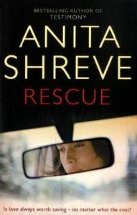
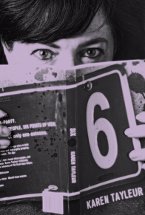
Little, Brown; 2010. ISBN: 9781408700747.
(Age 13+) Peter Webster grows up in a small town in Vermont, USA. He
becomes an EMT (paramedic) and dreams of building a house on a nearby
ridge with panoramic views. However at 21 years of age he finds
himself married to Shelia Arsenault and living in a one bedroom
apartment above an ice cream shop after an unplanned pregnancy and the
resultant birth of his daughter Rowan.
Initially married life is rosy for Webster but then Sheila starts
drinking heavily, saying that 'I feel like a trapped lunatic.' Then a
drunken Sheila is involved in a road accident in which infant Rowan is
thrown through the car window in the baby seat and another car driver
is badly injured. Sheila faces a jail term but flees
interstate leaving Webster to bring up Rowan alone.
The book fast forwards eighteen years. Webster is worried
by Rowan's change of behavior as she suddenly experiments with drinking
and lets her grades slip. He searches for Sheila on the internet
and tracks her down in Massachusetts and visits to ask her to come and
meet her daughter, hoping that may help the situation.
Shelia, who has been sober for years, refuses saying: 'I severed the
mother-daughter tie the minute I got in the car drunk with Rowan in the
back.'
At home the alienation between father and daughter gets worse when
Rowan sees Webster reading her diary that he has accidentally
found. The night of the graduation prom Rowan and a friend jump
off a quarry ledge and hit their heads on rocks underneath the
water. Rowan survives but in a coma.
This book asks the question 'is love worth saving - no matter the
cost?'It examines the forces that stretch human relationships
and of forgiveness. It also supports the notion that friends look
after each other. I found it a good read after a slow start.
Would be suitable for readers 13 years plus.
Kay Haarsma
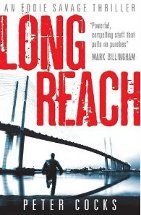
Long Reach by Peter Cocks
Walker Books, 2011. ISBN 978141632474.
Longreach's publishers recommend this ultra violent, fast paced
thriller for readers 14+. As a parent and library staffer, I would add
two more years because the violence is graphic.
Opening implausibly, the story recovers well and the experience of
Eddie Savage, working undercover for an obscure justice authority is
related in style and language which will meet with the approval of
young adults.
A familiar plot is employed with Eddie seeking to avenge his murdered
brother and he is cast well as a physically tough, resilient and street
smart young man. Curiously he is written as a seventeen year old, a
factor which caused me some discomfort since the plot involves him and
his under aged girlfriend drinking remarkably frequently. Disturbingly,
Eddie as an individual and the couple are depicted as being independent
and sophisticated partially due to their attendance at restaurants,
private functions and relaxing in their own homes, all activities where
drinking appears to underline their maturity.
Eddie infiltrates an established and feared London criminal family and
working undercover becomes embroiled in their drug trafficking, art
fraud and stand over crimes. Susceptible to discovery at any time Eddie
must collect evidence and report back to his controllers and the author
cleverly conveys the sense of constant fear, pressure and mixed loyalty
which the central character faces.
The story is fast paced and captivating, yet the author is so clearly
focused on preparing sequel titles that he does not create an adequate
conclusion for this one. Coming to a desultory halt, Peter Cocks pretty
much shouts that we will have to await the next title to find out what
happens, a marketing tactic which is disappointing to the reader.
Whilst the author could not be accused of glamorising crime, he does
fail to demonstrate legal consequences or emphasise moral outcomes for
the teenaged readers his publisher states he writes for. Certain
characters appear to have been preserved for subsequent plots and do
not receive justice.
It could be argued that teenaged readers are capable of developing
their own moral conclusions and that the harsh realities that crime
sometimes does pay and that villains do go free are concepts worthy of
literary depiction.
Whilst the author pitched sexuality (implying experiences rather than
describing them) and language (limited swearing only when necessary for
authenticity) in an age appropriate fashion, it bothered me that gross
violence was treated as acceptable, if not a selling point for the
book.
Rob Welsh
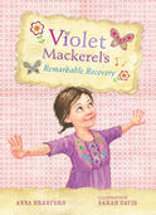
Violet Mackerel's remarkable recovery by Anna Branford
Ill. by Sarah Davis. Walker, 2011. ISBN 9781921529184
(Age 6-9) Highly recommended. Violet Mackerel's Brilliant Plot
is on
the shortlist for the CBCA Younger Readers Award, and this companion
volume is
equally as good as the first. Violet has had many sore throats and Dr
Singh decides it is time for her to have her tonsils out. Violet is not
too happy about this but decides that she will make a remarkable
recovery and that her voice will improve so much that she will be able
to sing opera on the radio.
Violet is such a wonderful character. Her warm and positive nature is
quite inspiring without being didactic. Violet mentions the small
things that she has observed having an impact, like the little flower
that Mum's boyfriend brings her and the hug that she is sure is in the
scarf that Mum has knitted and she thinks about 'The Theory of Giving
Small Things'. This moving idea is one that could engender lots of
discussion if the story is read aloud and shared. Children (and adults)
could come up with ideas of small things that they could give to make
people happy. Thinking outside the square helps Violet find the elderly
lady she met at the hospital, and this too is a fabulous concept to
introduce to young children.
I love the special feeling of family love that shines through the whole
book. Mum, her boyfriend Vincent and siblings Nathan and Nicola are
warm and loving. Sarah Davis' illustrations bring these characters to
life for the reader. Violet's exuberance and thoughtfulness are
highlighted, and Mum is drawn as a wonderful loving person that
everyone would like to know.
This is an outstanding book that deserves to be in every library.
Although the cover may be more appealing to young girls, I believe that
this book would be welcomed by boys especially if read aloud. The
humour and thoughtful ideas will be enjoyed by all. A website with activities
and downloads, as well as a competition, supports the series.
Pat Pledger
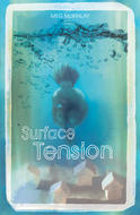
Surface Tension by Meg McKinlay
Walker Books, 2011. ISBN 9781921720284.
(Age 9+) Recommended. 'The day that I was born, they drowned my town'
and so begins Cassie's story of life in her town and the mystery that
she uncovers in the lake. Cassie has to swim six laps every day because
she was born prematurely and has to build up her lung function. One day
after finding another disgusting band-aid in the town's pool she goes
to the lake to swim instead. There she meets up with Liam, a boy who
has a tragic past, and as the water recedes in the lake because of the
drought, they discover that it hides a sinister secret.
I was fascinated by this story and in particular, its setting of a
drowned lake during a drought. I once taught near a reservoir whose
waters had covered a valley similar to the one in Cassie's story and
found the idea of preserving old headstones and the history of the
place excited students. It is intriguing to imagine just what tragedies
and mysteries have been submerged in the murky depths. What is the
secret that Cass and Liam uncover? Has someone been murdered? How will
they prove what has happened if the lake is flooded once more?
McKinlay has written a wonderful mystery that kept me guessing to the
end. She has scattered clues throughout the book for the more astute
reader, but I was still unsure of what exactly had happened right to
the stunning conclusion - a wonderful thing for a mystery writer to
achieve.
In addition to the suspense, McKinlay has grouped together a range of
characters and family situations that also give depth to the story.
Readers will identify with Cass, who has to work so hard physically to
have a normal life, and with Liam, where a family tragedy has left his
father mentally ill and difficult to deal with. The author's writing is
a winning combination of vivid descriptions of life in a country town
during a drought, the thrill of swimming in dangerous water and the
excitement of uncovering a puzzle.
This is an engrossing story that will be enjoyed by both boys and girls
in upper primary school and also has enough substance for young teens.
After reading this excellent introduction to the mystery genre, I can
imagine readers going on to seek out other books by this author and to
devour other mysteries.
Pat Pledger
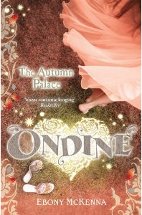
Ondine: The Autumn Palace by Ebony McKenna
Egmont, 2011. ISBN: 9781405256384.
Recommended age: 12+. Ondine has found the perfect man in Hamish. But
Hamish has a secret - he can turn into a ferret! And now, in his ferret
form, he has a mission - to spy for the duke, who fears someone wants
to kill him. Suddenly Hamish has no time for Ondine. Can she get back
her dream of romance?
Follow Ondine and Hamish along with their witch of an aunt through
carefully taste testing the duke's food, doing the dirty laundry,
pondering about raining fish and drunken duchesses. All to find out who
is out to kill the duke for his fortune.
Love it!!! I have read the first book in the series and found it a bit
disappointing in the way that it was a bit hard to read, but she has
surprised me with this book. It has held my interest so much more with
gripping turns in the storyline and surprises on every page. I would
recommend this book to people who love a good mystery, but you will
need to read the first book first otherwise only parts will make sense.
But then again Ebony is very clever in how she has marked certain words
and sentences with little hints and explanations to help you along.
Definitely a good read.
Taylor Oxenham (student)
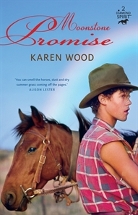
Moonstone Promise by Karen Wood
Allen and Unwin, 2011. ISBN 9781742373164. Recommended age: 14+. After a harsh childhood spent in foster care,
Luke finally feels at home on Harry's farm, working with horses. When
Harry dies and Luke has a bitter falling-out with the people around
him, he does a runner, leaving everything behind. He takes off to the
Gulf Country in search of brumbies and finds himself camped by a river
with three aboriginal elders.
Can a mob of wild brumbies and three wise men help Luke discover who he
is and where he belongs?
Very interesting book, it captures a young man struggling to make ends
meet. I really enjoyed this book and probably cried through half of it
but also laughed through the other half. With death, love and hate a
good read for anyone who loves horses and/or a good long read with a
heartfelt storyline. I would definitely love to read more of this
series and I hope that you all will feel the same. I should also say
that this book is not aimed at any gender and would be a great read for
either boys and girls or woman and men.
Taylor Oxenham (student)
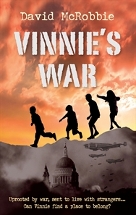
Vinnie's war by David McRobbie
Allen and Unwin 2011. ISBN 978 1742375762.
I highly recommend Vinnie's war as it is an excellent
historical
fiction novel for readers from about 11 onwards. Dealing with the
evacuation of children to English country towns before the Second World
War Blitz, the story has a similar feel to Magorian's Goodnight Mr.
Tom, without the harsher theme.
Vinnie, an orphan who has struggled to live a happy existence in
London, finds himself sent to the village of Netterfold and on the
train finds new friends of a similar age in Dob and Kathleen and the
latter's younger brother Joey.
Resilience is a theme which continues throughout the tale and I warmed
to the characters who display courage and stoicism dealing with
bereavement, homesickness, bullying and starting afresh in a strange
environment. The various escapades and plots are realistic and
wholesome, with the result being a well crafted narrative which rings
true. Indeed I imagine that elderly folk who lived in these times would
approve of and enjoy McRobbie's work.
The characters discover that hardships may be overcome and conflict can
be resolved, with friends being found in former opponents. I
particularly appreciated that Vinnie discovers that despite having a
miserable childhood as an orphan, he could move on, to experience a
fulfilling life. Assisted by kind people who take interest in his
welfare, the child finds happiness and I feel that this is theme which
is applicable to (and may resonate with) young people in modern times.
McRobbie includes an insightful afterward in which he explains many of
the historical events and factors such as rationing, billeting and bomb
shelters. This is based upon the author's own experiences as a 'Vaccie'
or evacuated child. I could not help thinking that this useful
inclusion would have been better placed as a prologue, to assist modern
children who may have little or no knowledge of the historical context.
Rob Welsh
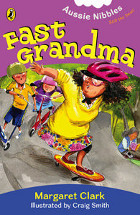
Fast Grandma by Margaret Clark
Ill. by Craig Smith. Aussie Nibbles. Puffin, 2011. ISBN 9780143305705.
(Age 6-9) Recommended. Another of the great Aussie Nibbles
series, Fast
Grandma presents a wonderful non-stereotypical grandmother for
young
children to think about.
When mum and dad go away to look after Aunt Faye, who is ill, Grandma
comes to stay to mind Evie and Matthew. She is the fast grandma, who
comes by a fast plane bringing gifts, and when she finds the fridge
bare, she speeds around the supermarket buying her version of fast
food. She goes so fast that Evie and Matthew have a difficult time
keeping up with her. She rock climbs, goes skateboarding and even rides
the Tunnel of Terror while all the other grandmothers sit and sip tea.
The children are a bit embarrassed because she tells everyone that she
gets her energy from eating red and green vegetables, but when she
rescues a little boy they are really proud of her.
I raced through this story, delighting in the way that Clark depicted
Fast Grandma as someone who loves to do all sorts of physical things.
Children will enjoy the humour of being told how red and green
vegetables will make you fast and I was fascinated by the energy of the
grandmother.
Illustrated with detailed and amusing black line drawings by the
talented Mr Smith, children will love to pour over the pictures showing
the antics that grandma gets up to. They will get a laugh a minute from
Smith's exquisitely funny expressions on the faces of the children and
bystanders and enjoy looking at this unique family.
This is a delightful and entertaining book that is ideal for young
children making the transition from picture books to independent
reading. Best of all, it is a lot of fun to read.
Pat Pledger
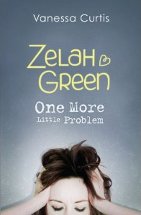
Zelah Green, One more little problem by Vanessa Curtis
Egmont, 2011. ISBN: 9781405240543.
Recommended age: 12+. Summer's supposed to be good, right? But Zelah's
stuck at home with a lousy laptop, stacks of homework and Dad being
more useless than ever. And then Caro turns up out of the blue, all
heavy metal and piercings and attitude and my boring summer's turned
upside down. It's like she knows just what to say to wind Zelah up,
sending her OCD right out of control!
Zelah has OCD; it's not something she can just stop, even if she wanted
to. She does things like jump at the top and bottom of the stairs at
least 15 times, disinfects everything she touches and will not touch
eggs under any circumstances.
Love this book, hope there's a sequel. It gives a wonderful insight
into the life of a child with OCD, whilst still getting the message
across that when you're young know who your friends are and be
yourself. I would really recommend this to anyone who loves to read
whether they like a long read, short story or anything in between.
Taylor Oxenham (student)
Mole Hunt by Paul Collins
Ford Street Publishing, 2011. ISBN 9781921665264.
Highly recommended by Pat Pledger.
Paul Collins has sent the plot outline for Mole
Hunt
that went around to publishers:
Special Agent Maximus Black excels at everything he attempts. The
problem is, most of what he attempts is highly illegal. Recruited by
the Regis Imperium Mentatis when he was just fifteen, he is the
youngest cadet ever to become a RIM agent. Of course, being a certified
sociopath helps. He rises quickly through the ranks, doing whatever it
takes to gain promotion. This includes murdering the doctor who has
certified him, as well as a RIM colonel who Black deems to be more
useful dead than alive. Now seventeen, he is a valuable member of a
highly secret task force whose assignment is to unearth a traitorous
mole. Unfortunately for RIM he is the mole, a delightful irony that
never ceases to amuse him.
In the two years he has been with RIM he has only met his match once.
Anneke Longshadow, another RIM agent, who nearly succeeded in exposing
him. But nearly wasn't enough. Now she is dead and he is very much
alive to pursue his criminal activities.
Right now, Black has a new problem. One that will challenge him to the
max. He has a lot of work to do and little time to do it but as with
every facet of his life, he plans each step with meticulous precision.
Maximus needs to find three sets of lost coordinates to rediscover the
power of the dreadnoughts - a powerful armada of unbeatable power, long
since put into mothballs by the sentinels whose job it is to keep peace
and harmony in the ever expanding universe.
Sadly for Black, complications arise. It seems Anneke Longshadow isn't
dead after all. Every bit his match, Anneke eludes the traps Black sets
for her. Born on Normansk, a planet with 1.9 gravity, Anneke is more
than capable of defending herself against Black's hired help, the
insectoid Envoy, and his professional mercenary and hitman, Kilroy.
Power-hungry, Black usurps the throne of Quesada, a powerful crime
syndicate. His ultimate aim is to replace the Galaxy gate-keepers, RIM,
with his own organisation. Matching him step by step, Anneke collects
as her allies all those who Maximus has deposed in his march to
becoming ruler of the universe.
Paul Collins
Melbourne June 2011
Editor's note: Read a post from Paul,
relating his experiences as an author.
Pat Pledger
Post from Paul Collins, author of the thrilling book, Mole Hunt
I grew up in a house without books. One occasionally materialised from
a drawer - it was a green-spined mystery title by Erle Stanley Gardner.
I used to look at it on its rare appearances, and wonder what a book
was doing there. None of my family read - my brother, a director of a
printing company, hasn't read a book to this day. But we both read
comics. We'd devour Marvel Group Comics such as Captain America,
Spiderman, Daredevil, the Uncanny X-Men, etc. And I think this is why I
write the way I do- it's not 'literary', nor really 'character-based',
but I'd like to think an amalgamation of both, but surely driven by
action. There is of course a place for all writing and we just need to
find our niche.
Regardless of style or motivation, writing novels can be an arduous and
unrewarding business. It's one of the few jobs in the world where
someone can work for a year and there's absolutely no guarantee that he
or she will be paid. So imagine working for a year maybe as a
carpenter, plumber, whatever, and getting told after a year that your
work isn't up to standard and sorry, we're not paying you.
More authors than not go through this scenario. I went through it with
Mole Hunt. Over four years it was submitted to most of
Australia's
major publishers and some via an agent in the UK and the US. Many
replied saying how good it was, but -
Penguin UK praised it to the hilt saying if they didn't already have
Artemis Fowl, the young James Bond, etc, they'd be keen. Another
prominent Australian publisher told me Mole Hunt reminded her of what
she used to love in science fiction - but it wasn't for her imprint,
which was more contemporary literature. But of course, rejection is
rejection.
Having learnt the hard way, I know that persistence is the key. I'm
reminded of when I first started submitting Dragonlinks (book
one in
The Jelindel Chronicles), my personal best-selling book. It was
at the
beginning of a fantasy craze in Australia. Every major publisher
rejected it. Three years went by and finally a publisher at Penguin
left and I resubmitted the manuscript without telling the new publisher
that Penguin had already rejected it some years earlier. It worked. The
publisher bought it. Published in 2002 it's still selling today.
Why dystopian fiction? Well, I've written it in the past with The
Earthborn Wars published by Tor in the US (The Earthborn, The
Skyborn
and The Hiveborn). Fifteen years before The Hunger Games,
I
also wrote
a virtual reality dystopian novel with a remarkably similar plot called
Cyberskin. People dying from a terminal illness can sign their
lives
over to a legal 'snuff' movie company and get killed live for the
audience (for payment, of course, a life insurance policy that goes to
their grieving family). They're pitted against a superior fighter who
is an enhanced fighting machine.
So it's a genre that I feel comfortable with. I think dystopian fiction
also lends itself to fast-paced filmic action, which is usually
attributed to my writing. Sometimes it's best to stay with what we know
and love. My own favourite authors are Eoin Colfer (Artemis Fowl)
and
Philip
Reeve (Mortal Engines). I can just as easily see these
books as
films, as I can my own Mole Hunt.
Although I suspect the time of the anti-hero is nigh, I was a little
worried about Maximus Black. He's obviously a sociopath, and
demonstrates this propensity by killing two people in the first
chapter. But just today I started reading Scorpio Rising by
Anthony
Horowitz. His baddies make Maximus look like an apprentice sociopath.
Scorpio agents manage to kill a truckload of people in the first
hundred or so pages. So that's one piece of doubt off my mind - perhaps
killing in comic-book fashion in YA fiction isn't so prohibited after
all. Further doubt has been eroded by various reviews that are
appearing. Bookseller and Publisher said it was 'bitingly clever' (I
don't usually get quotes like that!) and a cross between The Girl
With
the Dragon Tattoo, Dexter and Total Recall. Now if
the book lives up to
that description I suspect I'll have an enthusiastic readership. Other
reviewers refer to it as being so fast-paced it would give Matthew
Reilly a nosebleed, while another said she couldn't put the book down
(must be that magnetic cover!).
Paul Collins
Melbourne June 2011
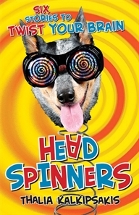
Head Spinners by Thalia Kalkipsakis
Allen and Unwin, 2011. ISBN 9781742373454.
(Ages 8+) Recommended. Brooke has a weird bump on her arm, it's not
itchy and it doesn't hurt, it has a warm tingling feeling and its
growing. Jamie didn't steal anything from the Big Cow Cafe, so how
did the fish sandwich end up in his bag? He doesn't even like
smoked-trout sandwiches. Danny's dad is absolutely bonkers but this,
this is the weirdest, most dangerous thing he has ever done. Why on
Earth is he speeding after another car?
This book has six awesome, excellent and amazing stories that will
leave your head spinning. I think this book is great. I enjoyed all six
stories, my favourite though would have to be Night Sight. I
would
definitely recommend this to people who like silly, suspense filled
stories that are just different, even if just for a laugh. I hope if
you read it (which I highly recommend) you enjoy it.
Tahlia Kennewell (student)
The Glass Collector by Anna Perera
HarperCollins, 2011. ISBN: 978-0-7322-9153-2
Recommended. Friendships and family are important, more so sometimes
than your
standing in life. This is obviously what Aaron believes. Born a
Zabbaleen, Aaron is forced to work with the rest of the men to scavenge
rubbish off the busy streets of Cairo. Living with his abusive
stepfamily and with the low price of recyclable goods scraping a living
is much harder than it once was.
Aaron did always have a special way with the glass; only his practiced
fingers could gather so much broken glass without cutting himself.
Aaron knows more about glass than anyone he knew, the colours, the
lights and beauty that is and can be made from glass. Caught with a
stolen perfume bottle it seems that the delights of being a glass
collector are now denied him. An outcast with nowhere to go, Aaron must
learn the error of his ways and repent for his sins to be allowed back
into the community and to have any chance at being with the girl he
loves.
A book full of complications, desperation and passion, The Glass
Collector was short listed for two awards: the Costa Children's
Book
Awards and the Branford Boase Award. I think that Anna Perera has
captured the thoughts and feelings of the characters brilliantly. The
Glass
Collector is written in both present tense and first person. This
does well to display the thoughts and feelings of life in a poor
village.
This sensational novel confronts several difficult
topics and life ideas including desperation, faith, social standards
and wealth.
Kayla Gaskell (Student, 15)
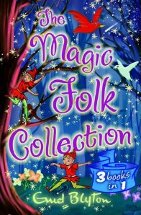
The Magic Fairy Folk Collection by Enid Blyton
Egmont, 2011. ISBN
9781405257572.
If you go to a person's house and you see their garden has a special
place for the little folk, with wishing wells, toadstools, a birdhouse
or two and butterflies and fairies dancing from overhead branches, and
little
gnomes fishing in a pond or resting on a rock, then there is a fair
chance
that person has been touched with a bit of fairy dust. And if you
go inside
and find that Miss Nearly 5's bedroom is more like the inside of a
fairy dell,
complete with misty, starry sky, then you can be assured of it.
So it's no wonder that that person loves Enid Blyton's tales of the
magical folk who so entranced her that she was reading before she went
to school,
and that she is going to share that enchantment with her own little
folk.
And when a compendium of some of the most-loved tales is published,
that person is
going to pounce on it and instead of reading her university texts,
she's going to transport herself back to her childhood.
So that's what I've been doing. This collection comprises The
Book of Fairies, The Book of Pixies and The Book of
Brownies and has
over 50 separate
stories that are just the right length for reading aloud as a bedtime
story and
sending little ones off to sleep with gentle magical thoughts.
But if I take my grandma's hat off and put my teacher librarian one on,
my experience is that these stories are a great transition between the
instructional home reader and the independence of the 'chapter
book'. Because each story is complete in itself, even though it is only
a few pages
long, young readers manage this "new reading" well and my library
collection always
had a great selection of Blyton's stories available that were very
popular. This compendium would have been a brilliant addition.
Politically correct or not, old-fashioned or not, I'm putting my hand
up to say I am a Blyton fan and her stories have pride of place in my
personal
collection. Perhaps it's time to take this generation back and
introduce them to an
old favourite.
Barbara Braxton
Interview with Karen Tayleur
at Mary Martin's Bookshop, The Parade, Norwood, South Australia (18 May 2011)
Meeting Karen Tayleur for lunch surrounded by books was the best of
both worlds for me. Karen was in Adelaide as a fellowship recipient of
the May Gibb's Children's Literature
Trust an
award which means a month spent in a furnished apartment at Norwood,
free of the interruptions which might occur at home, a place of
contemplation and quiet.
For the last few weeks, Karen has been researching and writing drafts
for her next two novels. One a gothic romance, is for young adults and
the other will be for younger readers and central to that idea, meant
going to Moonta to peruse the cemetery for ideas and names for her
Cornish story.
But Karen has written a range of stories over the past eight or nine
years, many of which have become favourites in schools, some being used
as class sets. From her days working at black dog books, she was
involved in the series of netball stories called, All Stars,
writing
Bree and Mel. This series for the middle primary student was fast paced
and involving, telling the story of the members of the netball team,
one at a time, showing their interlocking lives and how their different
backgrounds directed their choices. Published in 2005-6, the series is
often stored as a group of ease of access in primary school libraries,
having several different authors.
The stories of David Mortimer Baxter have also proved popular, as they
take a moral precedent and look at it more closely. In Lies,
for
example, David is told not to tell lies, but this does not sit well
when he is then asked to lie not to hurt someone's feelings. The series
of 6 books tells its story neatly with a lesson to be learnt at the
end, but they are not didactic or preaching, simply funny.
Her first novel for older readers, Chasing boys (2008) took a
different
tack, with a book about a girl changing schools,and trying vainly to
fit in. Karen infused the story with gems of observations of young
adults, probably enhanced by her dealings with her daughter and her
friends.
After the success of this book, Karen wrote Hostage (2009), and
my
favourite, 6 (2010). Both of these novels, again aimed at the
young
adult readership, tell of teens in situations which seem very close to
home. Hostage begins with a girl kidnapped by a young man she
knows,
who loses his cool in a chemist shop. Not quite ordinary but the day
spent with the two in his car, seems very ordinary as they drive around
Victoria in search of her father. The shift in power in the story and
the idea of just who is hostage to whom is a never ending thought as
Tully begins to take stock of her life and just who is important to her
and why. 6 too is breath taking as the opening scene tells the
reader
that 6 people have been in a car which has only 5 seat belts and has
crashed with one dead. The suspense through the book, trying to find
out who has died, while Karen goes back and forth, writing from
differing points of view is entrancing, right to the end. Both of these
books are used in schools as class sets, and as part of Literature
Circles, comparing them to other books on similar themes.
Not to be restrained as a fiction writer, Karen has also written a non
fiction book, Burke and Wills, Explorers off the map (2010),
for black
dog books in their engrossing series, Our Stories. Talking
about Burke
and Wills can be quite daunting as so much has been said,and so many
people have their own story about what happened. It is another
Australian story where a failure has achieved iconic status. Karen
handled all this well, producing a book which tells us in plain English
what the trip was all about, who the characters were and what happened.
Inviting double page spreads, the pages have small boxes of
information, maps, document and photographs, all designed to be read
easily by the primary school student.
If this is not all, Karen has also edited a book of short stories,
Short and Scary (2010), also published by black dog books, with
stories
by well know and lesser known authors, alongside new authors, resulting
in a successful group of short stories sure to be well used in
classrooms.
Since resigning from black dog books to concentrate more on her
writing, Karen has found some part time work at the Victorian Writer's
Centre, where she mentors younger writers and does manuscript
assessment.
For more information see her website
and follow her blog .
Fran Knight
(Children's literature enthusiast and reviewer)