Scholastic, 2009.
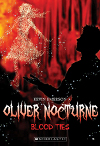
Sitting
in the principal's office with his parents on the last day of school,
Oliver is
not pleased to hear his teacher give him a load of extra maths work to
do over
the summer holidays before he goes to high school in the fall. They are
all off
to Morosia, the underworld vampire city where some of his relatives
live, and
he cannot get there soon enough. Meanwhile he visits his friends, Dean
and
Emalie, and they are on a quest to find Selene, who may be able to help
them find
out about Emalie's mother, who has disappeared.
A
trawl through all the spirits and wraiths surrounding vampire lore,
Oliver Nocturne is a series about Oliver
and his life as a vampire, and what is expected of him in the future.
Bringing
in all the stories at once is a bit overwhelming, and the number of
characters
sometimes confusing, and some of the stories within the novel are quite
scary.
I was often reminded of The Munsters
(the 70's TV show) as the story shows the vampires at home, going about
their
daily routines, and there will be an audience for this series with the
predominance of vampires stories being published of late, but I think
there are
better books around to spend the limited library budget on.
Fran Knight,
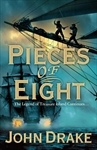
Pieces of eight by John Drake
HarperCollins, 2009. ISBN9780007305971.
John Drake has given another installment of
the Treasure Island story. The
pirate characters are all there; Long John Silver, Flint, Black Dog,
Ben Gunn
and of course the parrot. This time however the Royal Navy becomes
involved as
well as an Indian tribe, the Patanq. Naturally enough the tale has
everything
to do with buried treasure and takes place mainly on that very familiar
island.
Drake does introduce some changes however
that Robert Louis Stevenson didn't think to include. There are women!
There is Danny Bentham a pirate captain who
disguises herself as a man but has a preference for women and the
lovely Selena
with whom both Silver and Flint are in love. Naturally with the
inclusion of
women there is also much talk of 'rogering' and associated sexual
escapades.
The language which Drake includes also goes beyond 'shiver me timbers'
to
include some very earthy (or perhaps salty) swearing.
The reader is given some insight into Joseph
Flint's boyhood which goes some way to explain his very nasty sadistic
tendencies. The main characters are clever, single minded, and although
very
different, are still single minded in their determination to grab the
enormous
fortune that is Flint's treasure. On the other hand the majority of the
rest
are portrayed as simple folk, if not dim witted, with exception of the
Indian
leader, Dreamer.
Drake has written a rollicking tale that
moves along, for the most part, at a spanking pace. There is action
aplenty
both on board ship and on land. However I'm curious just as to whom the
book is
aimed, since it rules out a younger audience and I'm not sure if the
Treasure Island story will attract a
large adult readership.
Mark Knight
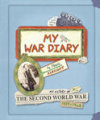
My Secret War Diary by Flossie Albright
Walker Books, 2009.
(Ages Middle school) A
beautifully bound and presented hard cover
book in the form of a diary, this tactile volume is sub titled, My
History of the Second World War,
1939-1945, and is a child's perspective of what happened to her and
her
family in Dorchester. It has all the trimmings of a young girl's diary
during
the middle of last century, with drawings and paintings on most pages,
little
cards and cut outs pasted in, warnings to any trespasser, highlighted
headings
and events of the war, all making this a singular account of the events
of
those turbulent years.
Flossie is 9, and first remarks that her
father has enlisted and is off to fight Germany. She outlines the
family tree
showing the reader where she fits into the family, and then recounts
the
efforts each household must make to lessen the amount of damage that
could be
done to them during raids. Each page is
littered with entries, observations, tales of friendships and woes, all
done in
a clear handwriting which may cause some of our students some problems.
Behind the stories of school and home life,
her dog and her family, we see the events of the war: Dunkirk, air
raids,
rationing, the Blitz, then VE Day.
Sometimes
the pages reminded me of things I had forgotten, the folded square of
paper
stuck into the book, the coin rubbings, drawing little maps and
sticking them
into a diary, adding small cut outs from the newspaper: all done by
children
during the war and for some years after, a past time now long
forgotten. This
would be an inviting and informative book for middle school readers,
those
interested in the background of WW2, or how children coped during war,
those
viewing childhood, or those simply interested in a book beautifully
presented
and designed. This book will satisfy a range of interests and I can
imagine
students poring over some of the pages as they come to understand that
Flossie
had a happy childhood despite what was happening around her.
Fran Knight
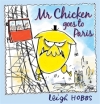
Mr Chicken goes to Paris by Leigh Hobbs
Allen
and Unwin, 2009. ISBN 9781741757699.
(Ages: Junior primary)
Hobbs has developed another unusual main
character in Mr Chicken, a rather single minded, taciturn chook with a
mouth
that is always down at the ends. Invited by his friend Yvette to visit
her in
Paris, Mr Chicken is eager to go, consulting maps before boarding the
plane,
economy class, to Paris. There, he and Yvette tour the main features of
Paris:
Arc de Triomphe, Musee du Louvre, the Eiffel Tower, Notre Dame and the
Palace
of Versailles.
At each place Mr Chicken has a comment to
pass, sometimes in French, as he asks people to take his photo,
observes what
is around him or is served a meal. His bright yellow physique stands
out
amongst the crowds, and the reader can see that it is the chicken that
the
other tourists are watching, not the scenery they have come to see.
A wry look at tourism and its allied
industries, Leigh Hobbs has created a likeable monster, which will
charm the
readers as they view Paris through his eyes and see Mr Chicken through
the eyes
of other tourists. Full of colour and Hobbs' easily identifiable
drawings, Mr. Chicken goes to Paris will be
wonderful read aloud to a class and just as joyous read alone, but the
reader
will want to share.
Fran Knight
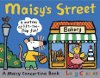
Maisy's Street: A Maisy Concertina Book by Lucy Cousins
Walker
Books, 2009. ISBN 9781406321982.
(Age 2+) A wonderful concertina book which also has the added
fascination of flaps that open up, Maisy's Street is sure to
delight
the very
young. The book opens with an instruction
to walk down the street with Maisy to Eddie's birthday party. On the
way Maisy
collects friends and the reader meets the doctor, the postman
and goes past the bank, the library and the
ice-cream van.
Each page is numbered and the young reader will have lots of
fun following the concertina and turning over the right page as well as
lifting
up the flaps to see what is underneath. There are two metres of
two-sided pages,
so that's a lot of fun and a lot to see in Maisy's Street!
The book is made out of sturdy cardboard and brightly
illustrated with simple text. It is sure to please readers who are
familiar
with Maisy and will be a great introduction for children who are
unfamiliar with
other Maisy books.
Pat Pledger
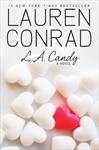
LA Candy by Lauren Conrad
Harper Collins Children's Books. ISBN 9780061905674.
(Age 15+) A disappointing novel, espousing all that older Australian
parents abhor in the American style. Jane, from a small town American
city, comes to LA with her more
stable
friend Scarlett (who thinks a quick night of fun is okay) to find
excitement and
love. The book follows many American TV
themes. It's so disappointing to read of flaky young people who seem
intent on
having a good time regardless of anything and who think that finding a
boyfriend is the
ultimate success. Jane appears innocent about the people who
frequent her
world. I just hope young people in
Australia look a little more carefully at potentially unhappy outcomes.
Why write about situations to be avoided?
Young people may find the book similar to
their dreams, but it's potentially a very sad scene.
Sue Nosworthy
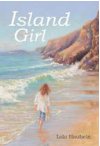
Island girl by Lolo Houbein
Hybrid Publishers,
2009. ISBN
9781876462888.
(Age 13+) Set on a remote island off the South Australian
coast, Island
girl
takes the reader on a tour of what it is like to live in a small
farming
community and the challenges that face young people as they look to
their
futures. Bianka has just left school,
and undecided about where her future lies, stays at home on the family
farm to
help her mother who is recovering from breast cancer. As
Bianka ponders what she will do with her
life, she uncovers a mystery about Flora, her great grandmother, a
brilliant
artist who left the island in mysterious circumstances.The
discovery of Flora's diary will lead Bianka to do much thinking about the directions that
a young woman can take.
Houbein paints a warm picture of family life, where each member is
valued for
their different talents, and hard work is appreciated. The gossip that
goes on
in small communities, as well as the secrets that families often hide,
are
examined in depth. The theme of self sufficiency is also strong. Bianka
grows vegetables;
collects seed from the bush and can build mud brick houses.
Set in the first person and narrated by Bianka, the language often
seems old
fashioned - she calls a boy that she
likes her 'romantic friend' - but the vivid descriptions paint a
memorable
picture of the beautiful island with its sandy beaches and seal
communities. I
found this book a refreshing change to the many books written by US
authors in
the first person. Bianka is not rich or selfish. She is a considerate
person who
is interested in the environment and who analyses what she really wants
to do
with her life on her path to independence.
The romance is gentle and caring. After encounters with Simon, a summer
visitor
to the farm, and Patrick, an island boy who prowls around, Bianka
discovers
what she wants in a relationship.
A thought provoking book, Island girl will have readers
thinking about
self
sufficiency, meaningful relationships and life in remote areas.
Pat Pledger
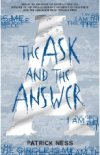
The ask and the answer by Patrick Ness
Walker
Books, 2009.
ISBN 9781406310269.
(Age 12+) Highly recommended. After the relentless suspense and an
incredible
cliff hanger ending in The knife
of letting go, I wasn't sure if the
sequel
could live up to that Guardian Children's Fiction Prize winning book.
However I
was not disappointed! Ness has written another wonderful book full of
action
and issues that made me think long after I finished the book. Todd has
taken the
dying Viola into Haven but it has been made into the stronghold of his
enemy
Mayor Prentiss. Imprisoned, Todd is forced to fit into the new order
and
carries out Prentiss' awful orders. Not knowing what has happened to
Viola, he
follows directions, putting bands on the Spackle who are herded into a
labour camp.
He also bands the women. There are secrets, resistance movements and
dire times
for Todd and Viola, who are separated but still care for each other.
I can't reveal too much except to say that the action is nonstop, the
dialogue
is as fabulous as the first book and the theme of what people will do
in times
of war and how they act under duress will stay with me. The
manipulation over
people's minds by Mayor Prentiss is described so vividly that I
finished the
book with a clearer understanding of how a powerful personality can
sway all
before him. Chaos Walking is an engrossing series and I can't wait for the
next
instalment,
after another cliff hanger ending.
Pat Pledger
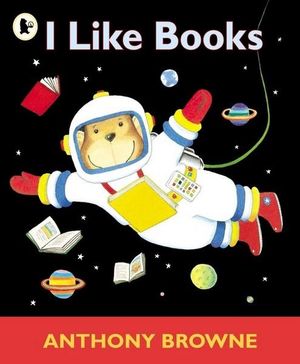
I like books by Anthony Browne
Walker Books,
2003. ISBN 9780744598575
(0+) A colourful picture book featuring Browne's signature
chimp, this is a celebration of what books have to offer. The little
chimp
likes all sorts of books, funny books and scary books, and
books about pirates and space and
dinosaurs.
Each page has text about a different type of book with an
amusing illustration to match. There is Little Red Riding Hood carrying
a
basket of books on the page about fairy tales and a scary ghost behind
the
little chimp reading on the page about
scary books. The expressions on the faces are wonderful, and children
will have
lots of fun examining them.
I like books lends itself to discussions about the types and
names of books that children like, and would be a lovely books to read
at
bedtime.
Pat Pledger
Pink by Lili Wilkinson
Allen and Unwin,
2009. ISBN 9781741758344.
(Age 14+) Recommended. Lili Wilkinson is a favourite author of mine and
Pink
didn't disappoint. Ava thinks that she finally will be able to find
herself
when she goes to the Billy Hughes School for Academic Excellence.
Dressed in
her new pink cashmere sweater, she is determined to discover her true
self.
Filled with doubts about her sexuality, her relationship with her
girlfriend Chloe
and with a burning desire to fit in, Ava makes friends with the popular
Pastels,
led by Alexis, who are all bright, intelligent and with leading roles
in the
school musical. Then she joins the Screws, the stage crew who do all
the
background sets and lighting, and meets another type of person - the
school
outcasts.
But Ava has secrets. Even though she is now wearing pink, and has
washed the
dye out of her hair, she has problems working out who her friends are
and how
to act in this new setting. The theme
that you don't always know about your sexual orientation at the age of
16 will
be of great interest to teenagers, as they follow Ava's often
disastrous
attempts to decide between Chloe and Sam. Wilkinson
leavens her story with lots of laugh
out loud humour and situations that teenagers often find themselves in.
Her
characters are outstanding: believable, funny and intelligent. Pink is a clever, brilliantly written story that doesn't talk
down to
its
audience. It tackles big themes, not just sexuality, but loyalty,
honesty, knowing
yourself, finding friends and becoming independent, in an engrossing
novel.
Pat Pledger
Gotta B by Claire Carmichael
Random House Australia, 2009. ISBN
9781741662986.
(Age 12+) Recommended. Set in the near future, Carmichael
explores a society where every young person is online constantly, so
much so
that Dr Carter Renfrew believes that this generation is the next step
in evolution,
Homo electronicus. When Rick Lawrence is suddenly disconnected, his
iZod dead, he
discovers that he can no longer communicate with his friends, the Five,
who
have been together since Kindergarten; he can't play games or even get
his
homework. He feels like he doesn't exist
and begins to get depressed. Communications companies, always keen to
keep
ahead of trends, are pushing for research into the teenage brain but
how far is
Renfrew and his colleague Dr Howard Unwin
prepared to go in their quest for
knowledge and power? And what are they prepared to do to Rick to get
their
data?
Carmichael has created a credible world where teenagers can
cope only if they have their iZod and are constantly online. The main
characters are well developed and engrossing. I became involved with
Rick's wobbly
mental state and cheered Tal when he decided that enough was enough and
he and
the Five would go to his rescue. The
cyberbully Marianne was brilliantly described as was George the
topnotch
computer student.
There is plenty of action and suspense as Tal and his
friends launch a cyber attack on a corporate bully and the
evil researchers. It was fascinating to
follow them as they mounted a campaign to stop the computer
disconnections and
research.
Themes of cyberbullying, unethical scientific experimentation
and media manipulation weave through the story and would
create lots of discussion points if used
as a class novel.
I found this to be a riveting book which I couldn't put
down. I finished it in the early hours in one sitting. What more can
you ask of
a book than that it totally engrosses the reader?
Pat Pledger
The disreputable history of Frankie Landau-Banks by E. Lockhart
Hyperion, 2009. ISBN 978-0786838196
(Age 14+) Recommended. Frankie Landau-Banks
suddenly finds
herself in the limelight at her exclusive boarding school. She manages
to
attract the attention of a popular boy Matthew and as his girlfriend
finds that
she has been elevated from obscurity and now belongs to the 'in' group.
However
she discovers that girls are not treated the same way as boys are in
the group
and in particular they are excluded from the secret society, the Loyal
Order of
the Basset Hounds. When she finds The
Disreputable History, the long lost manual of the club, she decides
that
she will grab some of the power that has previously belonged just to
the boys.
Using a fake e-mail address, she directs the activities of the club,
getting
the members to do audacious pranks until her plotting is discovered.
Frankie is a girl who is determined not to be
ignored, and
refuses to be relegated into doing
'female' activities. She thinks that coming up with wonderful practical
jokes
and getting the old boys' club to carry out her instructions will give
her
power and gain respect, but finds to her dismay that discrimination is
deeply
embedded in society. Whilst determined to prove herself an equal with
the boys,
she doesn't realise that she herself is fitting into a mould by waiting
around
for Matthew when he dumps her for Basset meetings, and still hoping
that after
everything goes haywire, he will be there for her.
A feature of the book that stood out for me was
the humorous
wordplays and the literary allusions to Wodehouse. Frankie had lots of
fun
making up words and meanings and this added a richness to the story
telling and
gave insights into Frankie's intelligence and personality.
Lockhart explores feminism, discrimination, peer
pressure
and the networks that give power in this complex, funny and witty
exploration
of one girl's attempt to be in the right group with the right cute
boyfriend.
Pat Pledger
Uglies series by Scott Westerfeld
Uglies by Scott Westerfeld Simon Pulse, 2005. ISBN 0689
865384
Recommended. Tally is an Ugly. She is almost 16 and will be transformed
on her
birthday into a Pretty. She will leave the dorm where she has lived for
the past four years and join the other Pretties in New Pretty Town. Her
friends have already had the operation; she is the last of her year in
her dorm, so she sneaks over the river to check out Pretty Town. During
one of thee clandestine outings she meets another Ugly, Shay, who
changes her life unexpectedly.
Shay teaches Tally to hoverboard, talks of a mysterious boy called
David and of the Smokies, a group of people who have rejected the
Pretty way of life and live somewhere in the wilderness. Shay's
operation draws near and Tally finds she has no intention of being a
Pretty and is going to join the Smokies. Tally desperately wants to be
Pretty and has no intention of following Shay, but Shay has left her
some cryptic clues on how to find the Smokey settlement.
Just as Tally's big day arrives so do some very strange pretties, Tally
has never seen their type before, and they take her to a place she
never knew existed. She is taken to Dr. Cable who seems to be the head
of the Special Circumstances Unit, a group she had believed was pure
fable. Dr. Cable knows all about Tally and Shay, but needs to know
where the Smokey settlement is, so she blackmails Tally into following
Shay and triggering a location device. Only if she does this will she
be made a Pretty. Tally is left with no choice.
Tally's interaction with the Smokies, particularly David, leads her to
change her mind. She finds out exactly what the operation does to your
brain when you are made a Pretty and decides to destroy the location
device. Her actions however precipitate the destruction of the
settlement and the rounding up of all the inhabitants.
Westerfeld constructs a very different future where society is
controlled and manipulated. The Pretties have every comfort. Their life
is easy they want for nothing, they are selfish and happy. But
are they free?
Pretties by Scott Westerfeld, Simon Pulse, 2005.ISBN 978 689
86539 8
Tally goes back into the city to try out a drug that has been made to
reverse the brain lesions that keep the Pretties contented. She and her
new friend Zane come to lead a group within the Pretties called the
Crims. They like to take their rather limited and safe lives and
perform outrageous acts to make themselves more 'bubbly'.
Tally and Zane are eventually contacted by the Smokies and given the
two pills they need to reverse the effects of the operation. However,
Zane and Tally have become so close that they decide to share the cure,
and take one each. Zane's reaction to the medication is very different
from Tally's. He begins to get terribly debilitating headaches and
bouts of physical weakness. Tally decides they've got to go back to the
Smokies and David's mother in particular to see what has gone wrong.
They devise a daring escape plan, but in the course of events Tally
ends up separated from the rest of the group and a long way from the
rusty ruins. When trying to find her way back she discovers a group of
primitive humans surviving in the wild. It's not until she enlists the
help of their shaman that the reality of the situation becomes clear.
When she reaches the rest of the group, she finds Zane in poor
condition, but realises that Zane has also had a tracker devise
implanted in a tooth and the Special Circumstances Unit, with her old
friend Shay in charge, take them back to the city. The second in the
series, Pretties follows Uglies, in this gripping trio
of books about a
dystopian society.
Specials by Scott Westerfeld, Simon Pulse, 2006. ISBN
9781416939948
Tally awakes to find that she has been changed. She has joined Shay as
one of the special, Specials. She is a Cutter. She has heightened
senses, strength, intelligence and a greater acceptance of her
superiority, even over other Specials.
One night while on patrol to follow and apprehend a group of Smokies
that have been supplying the new cure for Pretties, the Cutters
discover that things have changed. The Smokies are no longer the
peaceful submissive group they once were. They've been able to get hold
of sneak suits and hover boards as well as infra-red and bows and
arrows. The tables are turned on Tally and Shay the Smokies now have
captured some of the Cutters and are using stolen high tech hoverboards
to move quickly.
Tally tracks the group in the hope of finding their new settlement.
There is a surprise in store. The settlement is nothing like the one
she and Shay were briefly part of, it's another city! Even in a place
where differences are tolerated Tally still stands out and in a place
where weapons are not tolerated Tally herself is considered a lethal
weapon and must be neutralised.
Shay comes to her rescue, but there are more weird things happening. An
armada of hovercraft are waging war on the city. Such a thing hasn't
happened in 600 years! Tally needs to get back to the city and stop the
actions that are of her own making.
This is an exciting trilogy that explores a future society that has
many links to our own. The environment, freedom, selfishness, power and
its use as well as equality are all dealt with in an accessible well
crafted way.
Mark Knight
Editor's comment: Extras is the last in the series and is equally as
good.
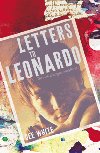
Letters to Leonardo by Dee White
Walker Books, 2009. ISBN 9781921150883.
This is a disturbing novel on many fronts.
Matt's Mother, whom he believes to be dead,
sends a birthday card on his fifteenth birthday. Matt
is shocked and angry with his father for
lying to him and he sets out to find his mother, whom he has not seen
since he
was five. Mum is bi polar and when on Lithium seems
normal,
but she
believes she
can't paint when on drugs and life becomes strange and unmanageable for
Matt. The trauma is relieved by the
wry comments of his best friend Troy and Matt's letters to
Leonardo da Vinci break the flow of the narrative.
The book shows only one extreme end of the spectrum of bi polar and a
horrifying
and
tragic
one at that! I would be keen to know
what psychologists would think appropriate in the area of mental
illness for
this age group. It's a frightening one-sided view, especially
as this may be the reader's introduction to the illness.
It is neither a healthy approach or a
constructive discussion of an illness society is trying to discuss
openly and
helpfully. An adult, but passionate and
beautifully written memoir about manic depression is An Unquiet Mind
by
Kay
Redfield Jamison. A wonderfully uplifting read on the topic.
Sue Nosworthy
Dig 3ft NW:The Legendary Journey of Burke and Wills by Murgatroyd, Sarah
That Burke and Wills ever became a household phrase is beyond me after reading to this extraordinary story. Murgatroyd details in her book the appalling beginnings of this exploration, riddled with political machinations, jealousy of South Australia, patronage and jobs for the boys. Burke, by anyone's standards, one of the most incompetent of the applicants for the position of leader of this prestigious expedition, had no idea, no surveying ability, could not read a compass, and was well known in the district where he served as a police officer, for getting lost on his way home from the pub. Leaving Melbourne took hours, when on the first day, they travelled 11 miles, camping at Essendon, close enough for Burke to return to his mistress in Melbourne for the night. By the time the caravan of horse, camels, 20 tons of equipment, and men, reached Medindie, they had taken nearly 60 days, had lost much equipment, paid out much of the money and no longer given credit at the small store, hired and fired a dozen or so men, and divided their party. The incompetence is overwhelming. Reading this story makes the reader gasp in amazement, as stupidity upon stupidity is piled high. This is an entertaining and very informative book. That this expedition ever got off the ground is staggering, and the mistakes made from selecting the participants to deciding what they would carry, along with ludicrous decisions made reflecting the jealousy between SA and Victoria makes the readers shake their heads in bewilderment. A great read for people of all ages. Fran Knight