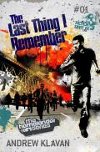
Headline Publishing, 2009. ISBN 9780755352999. Homelander series.
Recommended. A gripping and fascinating beginning to what
becomes a very
exciting and nightmarish journey for Charlie West. Well written, fast
moving and strongly of the
genre of good versus bad, the plot is quite mysterious to begin with,
but the
reader is blown along with the intricacies of the plot. In his
amazingly physically terrifying state,
Charlie recalls what his life was before he is captured.
The people he meets and the encounters he
faces auger well for a very exciting sequel. How exciting to read a
modern adventure book, with all the usual
personalities, both helpful and unfriendly who are very involved in the
adventure.
Boys will love this series. As
with some books there is a page of pull out stickers.
Sue Nosworthy
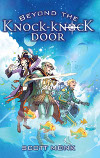
Beyond the Knock Knock door by Scott Monk
Random House, 2009. ISBN 9781741664072.
(Primary) This is a modern fantasy, fast moving with an
amazing list
of characters and fearsome animals. The
Bowman triplets are plagued by the terrifying Thornleigh sisters.
Michael gives a homeless man his fare and the
intrigue begins. The triplets answer a
riddle in a door and find themselves embroiled in a world of exotic
people who
challenge them in their beliefs and judgement. It's action packed and
races from one hair raising situation to
the next
with hardly a breath in between. The
text is well spaced and clear, an encouragement to boys to read. Modern
dialogue will appeal to readers.
Sue Nosworthy
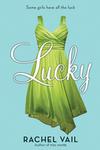
Lucky by Rachel Vail
Harper Collins (Harper Teen. 2009. ISBN 9780060890452.
(Age 13+) An American teen novel sadly
popular with pre teens as
well. It's very hard to be enthusiastic
about such hum drum writing, especially when shrouded with rich girl
syndrome,
beautiful people controlling the year group and constant references to
money! Phoebe and her four friends are
excitedly
preparing for their middle school graduation with the 'hottest party'
ever. Spoilt, over indulged girls who
think of little other than who will be invited and what they will wear
is
painful to read, (but I'm not 14!).
Phoebe's crisis comes when her mother loses her job. Dad is a teacher
and the family can't afford
the beautiful green dress on the cover (and only from Neiman Marcus!)
or the
cost of the dance. In her speech as year
captain, Phoebe tries to redress her friendship with her friends and
this is a
highlight of the book.
No doubt
teenagers will read it as Rachel Vail has written many in this genre.
Sue Nosworthy
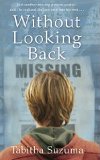
Without looking back by Tabitha Suzuma
Corgi Books, 2009.
(Ages 10 +)Highly recommended. We've
all heard harrowing stories of children abducted by one parent, leaving
the
other in fear and anguish. Tabitha Suzuma weaves a powerful story
around three
children trapped in just such a traumatic situation. For Max, Louis and
Millie,
life in Paris with their high flying French mother is difficult enough
without
their parents fighting for custody in a vindictive divorce battle. The
children
know that their Irish Father is at risk of losing them due to his
fragile
mental state, so a final weekend with him before the start of the new
school
year is especially important to all three.
However,
what begins as a weekend in Paris turns into an unexpected flight to
England. A
promised week of extra holiday as a special treat stretches into two,
and
finally the children are confronted with the truth; their father has
kidnapped
them.
The story
is told through the eyes of twelve year old Louis, the middle child and
a
talented street dancer. Gradually all three children adjust to their
new lives
in the Lake District and Louis's friendship with fellow dancer Tess,
seals
their fragile sense of security. However, Louis and Tess's winning
entry in a
dance competition is reported in the newspaper, and terrified of
discovery,
their father forces them to flee again.
Suzuma
maintains a cracking narrative with a strong vein of realism and plenty
of
excitement and tension. She confronts difficult questions in a way that
young
readers can relate to, but which never avoids the reality: however the
situation resolves, someone will lose out. The unexpected ending shows
just how
messy such situations can be and left me longing to find out more.
Perhaps
there is room for a sequel?Tabitha
Suzuma is already an established and impressive writer for teenagers
and here
she turns her talents to a younger readership. The strong plot, coupled
with Louis's
passion for dancing keep the story fresh and up to date and able and
mature
readers of 10+ are in for a treat.
Claire Larson
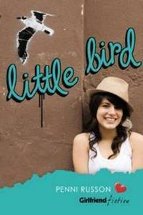
Little bird by Penni Russon.
Girlfriend
fiction). Allen and Unwin, 2009.ISBN 978 1
74175 864 164p (Age 11-14) Recommended.A twitty
adolescent novel, appealing to the teenager who is
unsure of herself, but through a series of family incidents gains
confidence
finds friends and accepts who she is.It's a family novel, centring around Shandra who is organising
her
perfect wedding and everyone around, including her younger sister
Ruby-Lee who
tells the story.To complicate matters,
Shandra's best friend Collette is also to be a bridesmaid and will make
the
dresses. She has a baby Maisy born to Spence a teacher at Ruby-Lee's
school.Ruby Lee is fascinated with
Spence and the situation becomes awkward when Ruby Lee baby sits Maisy.She falls out with her best school friend and
life becomes very difficult.But,
Ruby-Lee learns about pain, love and respect.She has grown up a lot.
Sue Nosworthy
Labour day by Joyce Maynard
Harper Collins, 2009. ISBN 9780061920783.
(Age 15+) Recommended. An intriguing novel, written from a
thirteen year old's point
of view. Henry and his Mother Adele live
an unusual and increasingly lonely and dysfunctional life.
Into their lives comes Frank, a man with a
black past. On a rare visit to a
department store Frank attaches himself to the pair. For the next five
days over the Labour Day
weekend the reader learns of Adele's past, Henry's inner anguish about
adolescence; girls, sex and making love and Frank. Henry
desperately wants a change over the hot August holidays and that he
gets. It's a change within himself as we
see him
share his innermost thoughts and those he observes from his Mother and
Frank
with the reader.
It's a psychologically interesting novel
highlighting the vulnerability and frailty of the human condition.
Sue Nosworthy
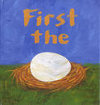
First the egg by Laura Vaccaro Seeger
Frances
Lincoln
Children's Books, 2009. ISBN 9781845079697.
(0+) Highly recommended. A 2008 Caldecott Honor Book and
rightly so, this is a beautiful and fascinating picture book that looks
at how
things evolve. First comes a white cut-out of an egg and on page turn,
the
reader sees the egg change into a chicken. Then there is a tiny green
cut-out
of a tadpole which turns into a frog.Other
wonders of nature follow, including a seed growing into a flower and a
caterpillar turning into a butterfly. Then in an interesting twist, a
word
turns into the story that has been read so far.
The illustrations are lush and colourful. Bold, bright
brushstrokes show the beauty of the transformations. The simple text
will lend
itself to being read aloud to the very young and beginning readers
would have a
delightful book to practise simple words.
Certain to become a classic, this is one book that is sure
to be cherished by its readers.
Pat Pledger
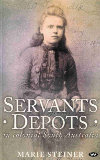
Servants depots in colonial South Australia by Marie Steiner
Wakefield
Press,2009. ISBN
9781862548053.
(Ages: Senior
secondary). A sliver of history in the broad sweep of
South Australia's 180 or so years, is taken up in this slim book, to
show us
how women were treated in early SA, and what part the government played
in
their protection. In 1855, shiploads of single women were in assisted
passage
to SA, to find employment and husbands. Surprisingly to me, many were
Irish.
When these women arrived, a depressed harvest in SA meant that there
were few
jobs available and so the government stepped in and provided depots in
Adelaide
initially and then Victor Harbor, Clare, Gawler, Robe, Kapunda, Mt
Barker and
Willunga. These places boarded the women with a matron, and helped them
find
employment. Steiner goes through the running, maintenance and success
of
depots, devoting a chapter to each.
One particular ship, the Nashwauk, which
foundered at Moana Rocks in 1855, and held 163
Irish girls is given close attention. We are told about the women, and
what
happened to each in turn as they found employment and/or husbands, or
travelled
on to Melbourne, hoping for better prospects.
It seems that the government at the time felt
that some care should be taken with these girls, lest they fall into
bad
company and prostitution, so set up these depots where people wanting
employees
could come and talk to the girls. The strict 'boarding house' regime
reflected
the life in the ships they came in, and so I imagine many were very
happy to
get work. But some came back within a few weeks, either the pay was
poor, or
not as much as promised, or the work far too hard, or they found they
were in a
place with no other woman. Many reasons for returning are explained,
and it is
interesting to see the lengths the board (Female Immigration Board)
went in
checking their stories, and in the case of several of the matrons,
retrieving
moneys owed to the girls by employers who dismissed them. A
fascinating look at a small part of our history, this book would be
particularly useful to students of women's studies or the history of
South
Australia.
Fran Knight
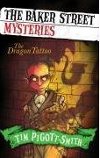
The dragon tattoo by Tim Pigott-Smith
Hodder
Children's Books,2008.
(Ages 8-12) The renowned actor Tim Pigott-Smith has turned his hand
to writing and created an enjoyable Holmes-esque yarn surrounding the
kidnap of a young girl whose father is mixed up with a sinister Chinese
gang called the Dragons. The
Irregulars are a band of youngsters who assist Sherlock Holmes in
solving crimes
and mysteries. The Dragon Tattoo tells the story of how they
first come
together in their efforts to find Holmes (who has disappeared in
mysterious
circumstances) and rescue Ann-Li from her dastardly kidnappers. Among
the
motley crew of Irregulars are Holmes' page boy Billy Chizzell, Sam
almost as
intuitive and devious as Holmes himself and Titch who has to disguise
herself
as a boy to survive on the streets of Victorian London.
A fun
story, competently written and with sufficient excitement, plot twists
and the
occasional touch of pathos to satisfy most young readers. The
references to
Sherlock Holmes and Watson elevate the story from a routine adventure
and with
luck will entice youngsters to try Conan-Doyle himself. Chris Mould's
atmospheric illustrations and Pigott-Smith's cinematic action sequences
add to
the suspense. It's all rounded off nicely with a sample of the
Irregulars next
adventure at the end of the book. Look out for The Rose of
Africa published this autumn which is sure to please
young readers eager for a series.
Claire
Larson
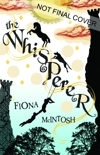
The whisperer by Fiona McIntosh
HarperCollins,
2009. ISBN 9780732286675
(Age 9-12) Griff is a boy with an amazing
ability - he can hear people's thoughts. He works in a circus as a
grunt,
putting up the circus tent and doing odd jobs. One day he carelessly
lets the
greedy circus owner find out about his magical skill and finds himself
as an
act
reading people's minds. Unhappy, he joins forces with Tess, who has a
group of
mythical animals, and together they flee from the circus, and go on a
quest to
find the Whisperer, the young prince, Lute, who speaks in Griff's mind
and
whose wicked uncle Janko is trying to take over the kingdom.
The story is told in alternate chapters which
flow along easily, giving the reader a good understanding of what is
happening
to Griff and to Lute. There are many elements here that make for a good
fantasy - the good prince versus his evil uncle who is after the
throne,
courageous
children with the ability to talk to animals and to read thoughts, and
fabulous
mythical beasts.
The plot is action driven and with enough
adventure to please the young reader. Griff, Lute and Tess are
courageous and
loyal, and the adults in the novel are well developed characters, from
the
weak, kindly king to the brave Pilo who guards the young prince. The
antics and
dialogue of the dwarf Bitter Olaf and the pirate queen, Calico Grace,
provide
many laughs.
McIntosh has written an engrossing novel
that primary children should enjoy.
Pat Pledger
What does your daddy do? by Gordon Reece and Vilma Cencic
Lothian Children's Books, 2009. ISBN 9780734411129.
(Age 5-7) Tina goes crying to her room because her
teacher
asks everyone what their fathers do, and her father doesn't have an
important
job. Ranjit's father is an actor on TV, Peter's father is a rock star
and Julie's
is a famous judge, but Tina's sweeps the streets. Mum explains that the
most
important job in the world for a father is to love his child and Tina's
Dad is
expert at that. He reads her stories at bedtime, listens to her tall
tales and
looks after her.
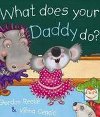
Vilma Cencic's illustrations are a delight. She has chosen animals for
the
characters in the story and each fits the type of occupation that the
fathers
have. Tina and her parents are cute koalas, the rock star father is an
echnida
with spines reminiscent of spiky hair, and the general in the army is a
wicked
looking crocodile with sharp teeth. Lots of humorous detail will keep
young
children giggling as they listen to or read the story.
This has a reassuring message for young children. After reading this
book, they
can go away knowing that no matter what their father's occupation is,
love is
the most important thing of all. It's better to have a loving, caring
parent
than a father with the most important job in the world.
Pat Pledger
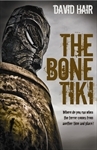
The bone tiki by David Hair
HarperCollins, 2009.
ISBN 9781869507343.
(Age 11+) Recommended. Very reminiscent of The Dark is Rising
by
Susan
Cooper,
this powerful novel stretches the reader's imagination in a fascinating
way. For readers not familiar with the
Maori stories there is an added layer, a little like the Australian
dreamtime
stories. To share the parallel words in
New Zealand, then and now, makes for a fast moving, many times bloody
and
gruesome journey for Mat. He made his
parents a pendant, the Maori half for his father and the Celtic knot
for his
mother. Mat lives with his lawyer father,
his mother now lives in Taupo. Through a
convoluted series of incidents, Mat has the man shaped tiki which
Puarata wants
for his evil dominance. Mat Wiri, Kelly
and a dog (who has other forms) called Fitzy embark on a quest to free
Wiri
from the hated Puarata. The creatures,
people and towns from an earlier time give the reader a
realistic feeling for another time, through Mat's
eyes. It's
an exciting time travel, with well rounded characters, both good and
evil.
Sue Nosworthy.
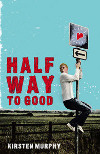
Half way to good by Kirsten Murphy
Penguin,
2009.
(Age
range: 14-18) Recommended.
As
a new school year begins Anna, a first year teacher and Luke, a senior
school
student are unaware of the events that will occur to see their lives
overlap.
Anna
is faced with the prospect of teaching students only a few years her
junior, a colleague
who insists on making her life difficult and a home life that is less
than
perfect. Luke is suffering panic attacks as his father's health
continues to
deteriorate, his brother moves out of home and his mother tries to act
as
though nothing is wrong. Both characters have a friend who tries to
make life
more bearable and help them see the brighter side of the situations
they find
themselves in. Luke's mate is Alex and Anna's friend is Jacqui. Through
the
interaction of the main characters and their friends we learn that Anna
has a
widowed brother whom she is helping raise a son and Luke has a
beautiful
girlfriend who he no longer feels able to involve in his life. When
Anna is
asked to take a special class for 'at risk' students she finds Luke
part of the
group and witnesses first hand one of his panic attacks. The situation
is
compounded when Anna discovers, over dinner one night, that Luke's
brother
Oliver is going out with Anna's sister Georgie. The events that follow
draw on
the reader's emotions and give an insight into challenges and hurdles
that
people face in their lives and the strength of character that sees them
overcome them.
This
is a story well worth taking the time to read.
Tracy
Glover
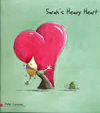
Sarah's heavy heart by Peter Carnavas
New
Frontier, 2009.
ISBN 9781921042058.
(All ages) Recommended. Sarah has a heavy heart that she carries all
the time,
on the bus, in the playground, at the park. Although she knows she will
always
carry it, she wishes it wasn't such a burden as it makes things like
sleeping
and having a bath very difficult. Then she sees a small boy clutching a
very
light heart, which makes him float away. She makes friends with him and
together they work out a solution to make their hearts behave.
Peter Carnavas' quirky characters are beautifully drawn,
using watercolours and black ink outlines. Sarah's little pet turtle, a
ground
bound animal, appears with her on every page, and the little boy has a
bird pet
which flies along with his light heart. Children will have fun finding
the
little animals and following the big red heart.
This is a unique story. It explores the different emotions
that people carry around with them. I
found the idea of finding a friend to share a heavy heart with, hence
bringing
balance into life very thought provoking
and complex, one to think about and ponder on. However, small children
will
enjoy Sarah's heavy heart as a read aloud and will love the gentle
characters.
Many discussions could be had about the meaning of friendship and love
and what
could give a person a heavy heart or a light heart. Better readers will
be able
to explore the gentle ideas themselves. Teacher's
notes are available.
Pat Pledger
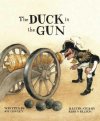
The duck in the gun by Joy Cowley
The Duck in the Gun by Joy Cowley, Walker Books, 2009. IBSN 9781921150838.
(Ages:5-7) Joy Cowley first wrote this book at the height of the Vietnam War, promoting an idea of peace in those distressing times. First published in 1969, this is a timely reprinting of a timeless book.
The General has marched with his men to the outskirts of the town they are to besiege, but on bringing up the large cannon, find that a duck has built a nest and laid her eggs in it. Amazed, the General tries to startle the duck from the gun, calling to her, then deciding that he must call a truce with the Prime Minister of the nearby town. Polishing his boots and wearing his medals, he visits the Prime Minister and after some discussion, they agree to halt proceedings for three weeks to allow the duck to leave the gun.
During the ensuing time, the General visits the Prime Minister to have tea with him and his daughter while the soldiers, noticing that the town looks a little shabby, offer to paint the houses. When the duck begins to look out form the gun, the General helps her and the eight ducklings down to the ground, but the men grumble that they cannot fire upon the town that they have just painted, while the General agrees that he has become quite fond of the Prime Minister's daughter.
Robyn Belton's wonderful illustrations add another layer of charm to this anti war story, chosen as one of the top ten children's books around the world by the Hiroshima Peace Memorial Museum, to actively promote peace. Although aimed at junior primary, it could be used at any year level.
Fran Knight