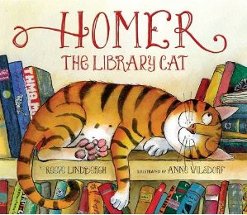
Ill. by Anne Wilsdorf. Walker Books, 2011. ISBN 9781 4063 3656 6
(Age: 4+ ) Warmly recommended. Picture book. Verse story. Homer
loves his house, it is quiet and his owner is quiet. When she goes
to work each day he is all alone in his quiet house. He lets the
mice play with his ball of wool, and purrs when he sees a bird. But
one day he is startled by a loud noise and jumps from the window.
Alone in the street he searches for somewhere quiet to sleep. He
tries the post office, but the workers sneeze, he tries the fire
house, but when the sirens go off he rushes out. He finds a carriage
on the railway track, but along comes a locomotive that needs
repair, so he rushes into a building he does not know. It is a
library and there is his owner, reading stories to the children.
Each of the illustrations shows Homer finding a neat place to sleep
but being bundled out of it for some reason.
Told in rhyming stanzas the rhythm and rhyme of the words will
gather the listeners in as they wonder at how Homer will find a
quiet place to sleep. Read out loud, this will be a wonderful story
for younger readers and with the illustrator including books on
nearly every page there is lots to look at for them as well. For the
National year of Reading, 2012 (Australia) this has come at an
apposite time and will be well used by teachers, parents and
librarians to promote libraries and reading.
Fran Knight
Requiem: Poems of the Terezin Ghetto by Paul B. Janeczko
Candlewick Press, 2011. ISBN: 9780763647278.
Fragments of lives and snippets of personal recollections, told by
the imagined voices of the inmates of the Terezin Ghetto, a prison
camp in what is now the Czech Republic, depict the horror of the
existence of those sentenced to death. Whilst on the surface, music
and the arts apparently abound, all is not as it seems. Copious
amounts of propaganda is distributed by the soldiers and those in
charge of the 'ovens of Auschwitz', and glossed over as being
commonplace and the accepted modus operandi in keeping the rest of
the world ignorant of the facts of the death camps. The book's
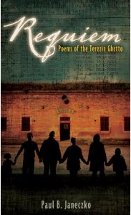
textured jacket depicts the silhouette of a featureless group of
people, hands joined, standing in front of a red-toned building.
Inside, the jacket information states that the book is 'Accented
with historic illustrations by the inmates, found after the war
ended'. These dark images provide a backdrop to the sparsely worded
poems. Each of these elements combines to create a powerful
collection of poetry.
Janeczko's numerous poetry collections are varied, ranging from the
simplistic form poetry appropriate for younger children to this
evocative, powerful, moving collection aimed at adults and students
in secondary school. From this slim and elegant volume, certain
poems could also be chosen to use in war units as discussion
starters with upper primary students. This title will also be a
valuable resource for year 10 teachers, particularly in light of the
new National Curriculum and its World War 2 focus, a collection to
read and re-read.
Jo Schenkel
The legend by Marie Lu
Razorbill, 2011. ISBN 9780141339412
(Age: 13+) Recommended. An exciting dystopian novel, The
legend is set in the near future where what was the United States
has been divided into the Republic and the Colonies, both at war
with each other. 15 year old Day, born into the poverty
stricken Lake area, is a wanted criminal who is trying to bring the
Republic into disrepute. Wealthy 15 year old June, is a
military prodigy, being prepared for the elite military
forces. When Day's family is threatened by the Plague, he
takes daring risks to find medicine for them, and June is sent to
track him down. But what they both uncover is shocking.
An action driven first novel, this is a stand out among the many
dystopian novels that are being published at the moment. Lu has
managed to keep the thrilling pace going until the end of the book.
As a reader I became immersed in Day's story, and avidly followed
his adventures to try and keep his family alive. I found myself
holding my breath as the military got closer and closer to him. Lu
has also included a mystery surrounding the death of June's brother,
Metias, which adds to the suspense, as the reader follows the clues
about how he died and sees the development of June from a self
centred 15 year old genius to a thoughtful young woman.
Not only was the action engrossing, the characterisation is
fabulous. The story is narrated by the two main protagonists, Day
and June and their narration is so well done that the reader begins
to know them very well by the end of the book. I loved the character
of Day, who is a daring risk taker, but who looks after his family
and the orphan Tess, while harrying the military of the
Republic. June too is a genius as well as being an outstanding
athlete, and as a reader I was sympathetic to her plight, so it was
great when the sparks began to glow between the two.
The dystopian nature of the Republic, the rigidness of the society
and the manipulation of the poor, provide a satisfying background to
what is essentially Day and June's action packed story.
The thrilling, suspenseful action, fascinating characters and
growing romance will keep the attention of the reader and the open
ended conclusion will ensure that the next in the series is picked
up.
Pat Pledger
Ivy loves to give by Freya Blackwood
Little Hare, 2009. ISBN 9781921541889.
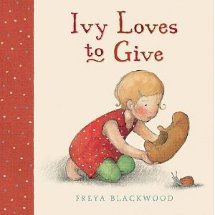
(Ages 3-5) Recommended. Boardbook. Little Ivy loves to give presents
but does not always get it right. For example she gives a dummy to
the cat, a slipper to a snail and a cup of tea to a chicken.
Fortunately her family has no problem with re-gifting and everyone
ends up happy by the end of the text. Readers are also invited to
remember the best gift of all is a hug.
A lovely story which will allow adults to explore the joy of giving
with young children. The beautiful watercolour illustrations are
amusing; the expression on the cat is particularly well done, and
the sturdiness of construction will ensure it survives lots of
handling.
A gorgeous present for a toddler and his/her family.
Chris Lloyd
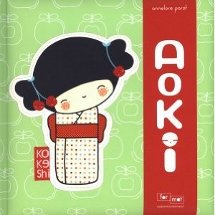
Aoki by Annelore Parot
Hardie Grant Egmont, 2011. ISBN 9781742970035.
Aoki is a kokeshi - a little wooden doll from Japan - and she
undertakes a
journey to Tokyo to visit her friend Yoko. Through a richness of
interactive
pages, peepholes and lift-the-flaps we share her journey and are
introduced to a
variety of aspects of life in Japan from helping her to pack her
suitcase to
enjoying the tranquillity of a Zen garden. There are snippets of
language to
learn and opportunities to compare lives and lifestyles which would
spark
further investigations. Why does the bed fold up like a cupboard?
Where
is Mt
Fuji?
On the surface, this looks like a book for little girls, but, in
reality, it is
the ideal foundation for introducing a study of Japan or the
Japanese
language.
It is engaging on so many levels and its unusual cover and glossy
paper
make it
very tactile. A very special book.
Barbara Braxton
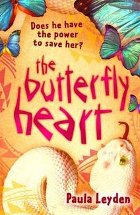
The Butterfly Heart by Paula Leyden
Walker Books, 2011. ISBN 9781406327922.
(Age: 12+) This charming story takes place in Zambia where twins
Bul-Boo and Madillo live with their parents and a colourful
assortment
of friends and neighbours. When they discover that their school
friend,
Winifred, is destined for a terrible fate, the girls feel compelled
to
help. Bul-Boo seeks the help of Ifwafwa, the wise snake man but can
he
deliver a solution before it is too late? Fred, who lives next
door, thinks his great grandmother can help. She is rumoured to be
like
a witch with magical powers but she inspires awe and terror in equal
measure in the children.
The author spent her childhood in Zambia and her knowledge of local
traditions, stories and customs make this story a delightful insight
into the 'butterfly heart of Africa'. Superstition and logic
interweave as the characters seek a solution to their problem. The
story is essentially told in first person from the viewpoints of
Bul-Boo, Ifwafwa and Winifred which sustains the momentum of the
story.
The chapters are short making it easy to read. Probably best suited
to
younger teens, it is a very enjoyable read.
Tina Cain
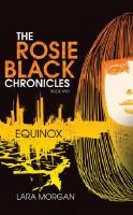
Equinox by Lara Morgan
Walker, 2011. The Rosie Black chronicles are thrilling novels that lead on
from each other perfectly, the books are set five hundred years into
the future where mankind is split into three groups of civilization,
the 'Centrals' are usually very popular and wealthy, an upper class
civilization. The 'Ferals' are a race that scavenges to survive,
living in poverty, dwelling on the fringe of humanity, and lastly,
the 'Bankers' these people are in between 'Feral' and 'Central'
status, living healthily but still aren't as good of as the
'Centrals'.
The main character of both novels is Rosie Black; in the novel Equinox
(novel #2) she is struggling to shut down the evil corporation,
'Helios' the ones responsible for the death of her mother and many
more through the creation of 'Mal X' a horrible disease that only
gives you a very painful and draining short time to live after you
have been infected. In this novel, Rosie and Pip (a very nice Feral)
are trying to destroy the evil Helios with the help of Riley, a very
smart man who is experienced in Helios technical workings along with
Aunt Essie and Dalton (a central). Rosie's father has been captured
by the Helios and Rosie and her friends are bent on rescuing him,
but it is like a choice decision, save her father or destroy the
Helios, or both. It is a very hard decision for Rosie.
This book was very enjoyable, with the action starting almost
immediately, but, like the first novel, there is no clear plot but
the little sequence of events are thrilling and make up for this.
For age recommendation I would say 10 onwards because of the
language and some of the terms are heard to understand for less
mature readers.
Sarah Filkin (Student)
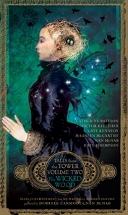
The Wicked Wood gathered by Isobelle Carmody and Nan McNab
Tales from the Tower: Volume 2. Allen and Unwin 2011. ISBN
9781742374413.
(Ages: 15+) Highly recommended. The Wicked Wood accompanies
The Wilful Eye; both volumes described as collections of
'tales of enchantment from six writers of modern fantasy'. Most
striking, at first glance, are the covers designed by Zoe
Sadokierski. With the books placed alongside each other, the hands
of two rather amazing winged female creatures meet, giving the
collection unity and continuity. A valuable introduction by Nan
McNab begins the journey for the reader and each of the contributors
is given space at the conclusion of their particular story to
explain its origin. Fairy tales carry great insights into everyday
life and the same stories are told the world over. Analysing these
tales can be a fascinating exercise and having new interpretations
of well-known stories presented in this way makes for interesting
and memorable reading. The length of each story differs, as does the
familiarity of its plot. Each of the stories stands alone well, with
a link to a traditional fairy tale being somewhat more obvious with
some than with others. All are exciting tales of fiction, full of
mystery and imagination. As with the previous volume, most stories
in this collection will be of interest to the teenage reader with
some obviously referring to more adult themes. Of interest, too, are
the various writing styles of each of the chosen authors, and how
they choose to retell their tale. This collection is highly
recommended.
Julie Wells
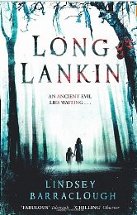
Long Lankin by Lindsey Barraclough
Bodley Head, 2011. ISBN 9780370331966.
(Age 13+) Recommended. Horror. Based on an old folk ballad about
Long
Lankin, a bogeyman who creeps into houses and steals little
children,
this is a truly chilling story that sent shivers down my spine from
the
moment that I started it. When Cora and little Mimi's mother suffers
a
breakdown, they are sent to stay with their Aunt Ida, who lives in a
large dilapidated manor house near the village of Bryers Guerdon.
Aunt
Ida is not pleased to see them and Cora immediately senses that all
is
not right when she forbids them to go near the local church and
keeps
all the windows and doors locked in the house. When Cora meets Roger
and his large family, together they try to solve the mystery of the
words Cave Bestiam (Beware the beast), which are above the front
door
of Aunt Ida's house and in the church.
Set in post-world war 2 Britain which is vividly depicted, the
readers
becomes immersed in the story which is told in the voices of Cora,
Roger and Aunt Ida. Each of these characters are fully fleshed and
come
alive on the page. Cora is a brave, stoic girl who endures her
aunt's
beatings and continues to try and solve the mystery that surrounds
the
Guerdon family and the threat that surrounds Mimi. Roger comes from
a
large happy family and uses his intelligence to follow clues, and
although Aunt Ida is forbidding, the reader gradually learns her
story
and comes to sympathizes with her plight.
Barraclough builds up suspense to an almost unbearable point.
Terrifying and unexplained events happen. Dark strangers lurk and
the
ghosts of lost children appear. Mimi is terrified of a portrait in
the
house and Cora sees the ghost of a nurse. When the children disobey
Aunt Ida and visit the churchyard, things become even more
frightening.
I couldn't put this book down. It is one of the most chilling books
that I have read, but it is also written beautifully, the prose
bringing alive the characters of the children and adults, the
threats
of the marshlands, the old manor house and the horror of Long
Lankin.
People who have enjoyed Helen Grant's books or those by Marcus
Sedgwick
will enjoy this.
Pat Pledger
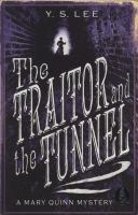
The Traitor and the Tunnel : a Mary Quinn mystery by Y. S. Lee
Walker, 2011. ISBN 9781406315974.
(Ages: 15+) Recommended. Mary is a young woman with a covert life.
From a poverty stricken youth in harsh Victorian London that finds
her tried and convicted of thievery, to an unexpected reprieve at
the hands of a couple of bright, forward thinking women, she is now
a trained private detective in a secret, all women's agency. In
this, the third novel of the Mary Quinn Mystery series, we find Mary
working undercover as a maid in Buckingham Palace, trying to find
the culprit in a series of petty thefts. Whilst on the job, the
Prince of Wales, becomes embroiled in a murder in an opium den much
to the horror of his mother, Queen Victoria. To make matters worse,
the prime suspect may be Mary's own long lost father. In her quest
to find the truth, Mary witnesses a series of strange events,
discovers a secret passage under the Palace and tries to find the
traitor in the midst of all these intrigues. She also rekindles her
acquaintance with the handsome but infuriating James Easton, all the
while trying to ward off the unwelcome advances of the Prince of
Wales and the attentions of the sleazy gutter journalist Octavius
Jones.
The scenes shift from the opulent drawing rooms to the spartan
servant quarters of Buckingham Palace, the prim niceties of
Victorian society, to the slums and grim prisons of a dark,
desperate London and the sewers that run beneath the city. This
historical novel, that is obviously lovingly researched by its
author, doesn't become bogged down in details, and is beguiling
rather than overwrought. I especially enjoyed the banter and
simmering passion between Mary and James, the man who keeps turning
up in her life.
Mary is a fine character, that despite her terrible start in life,
has managed to retain a sense of humour and worth and maintains
self-respect and chutzpah throughout.
This is an enjoyable romp of a tale, though not without sadness and
tragedy, which provides a glimpse into the life of Victorian
England, as well as being a page turning mystery.
Alicia Papp
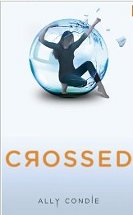
Crossed by Ally Condie
Penguin Books, 2011. ISBN 9780141333069.
(Age: 15+) Cassia lives in a world where everything is decided by a
central ruling authority. The Society, as this authority is referred
to, decrees which books one should read, the jobs that one should
occupy and even selects the partner one should be matched
with.
Cassia risks everything when she defies the rules and falls in love
with Ky. He has escaped to the wild frontiers beyond Society and
Cassia
is determined to find him. The world that Cassia discovers
brings
new challenges and Cassia is forced to reconsider her destiny. Crossed is the second book in the Matched Trilogy. Readers
who
haven't read the first book will not be familiar with the unique
setting and concepts that characterise this story. This makes the
first
few chapters a little challenging however it is well worth
persevering
with the sophisticated story. The reward is a fast paced, thrilling
read and the anticipation of the final book, yet to come.
Tina Cain
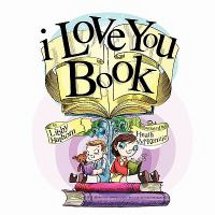
I love you book by Libby Hathorn and Heath McKenzie
IP Books, 2011 ISBN 978 1 9214798 9 2
(Ages 4+) Picture book. A book promoting the same sentiments as
Look, a BOOK! (Libby Gleeson and Freya Blackwood) but in an entirely
different way, I love you book, has short stanzas on each
page extolling the virtues of reading a book. So we see Dad reading
to the children, or the children being flown away on a cloud of
imagination, or talking about the words contained in a book and the
dizzying heights a book can take you. The picture book talks about
books good enough to eat, the smell and feel of books, the love of
stories read in the past and those still to come and those read over
and over again.
Each page is overwhelmingly colourful and energetic, as the children
roll about in bed, or take to the stage, or go under the sea, or
jump across piles of books. Enthusiasm for and a love of books is
revealed on each page, and all readers will find things to look at
and recognise amidst the scattering of people, animals and places.
Appropriately 2012 is the National year of Reading in Australia,
designed to promote reading and books throughout the country and
this along with several other books, will be read and reread as
teachers promote reading with their classes.
Fran Knight
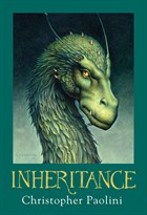
Inheritance by Christopher Paolini
Inheritance Cycle Bk 4. Random House, 2011. ISBN 9780385616508.
(Age: 13+) Highly recommended. For all of those people who fell in love
with Eragon all those years ago (around 2003), this is what you
all
have been waiting for. Inheritance is the long-awaited final
book in
the worldwide best-selling series.
As Eragon prepares for battle with the evil and incredibly powerful
Galbatorix, he is not the only one getting ready for war. With the help
of the elves and the dwarves, the Varden begin infiltrating cities and
recruiting soldiers to aid them in the impending war. But time is
swiftly running out, and Eragon still has a lot to learn. If he is not
even able to defeat his evil half-brother Murtagh, and his dragon
Thorn, then how can he hope to overcome Galbatorix and save his home
Alagaesia?
For many years, the Inheritance Cycle - Eragon, Eldest, Brisingr,
and Inheritance - has been the topic of fierce debate between book
nerds, with each side having valid points. Some claim that these books
are great works of fiction, and admire Paolini for creating such a rich
and fascinating world. Others claim that his plots are little more than
poorly written re-hashes of Star Wars crossed with Lord Of
The Rings;
both sides are correct to some extent.
This book is definitely the best of the series. It contains a great
deal more originality than the others, and it is also slightly better
written. The quality of the writing is certainly not brilliant, as it
rises to its best during exciting, action parts, and dwindles down to a
crawl during the slow parts, such as the rather lengthy and boring
chapters involved with Roran's (Eragon's brother) storming of the
castle at Aroughs. At its best the writing is thrilling and some scenes
are simply breath taking in their perfection and excitement, such as a
particularly thrilling fight scene between Eragon's dragon Saphira, and
Murtagh's dragon Thorn. But looking back at the series, one cannot help
but notice the similarities between these books and Lord Of The
Rings,
and a great deal of the series seems like Star Wars set in
Middle-Earth, with magic instead of the Force, and swords instead of
light-sabres.
People will either love or hate this book, depending on their opinion
of the rest of the series. Although at times it dwindles to a crawl and
dwells on the unnecessary, it is still a fantastic end to a great
fantasy saga, and will certainly satisfy all fans.
I highly recommend this book.
Rebecca Adams (Student)
Milo and the Restart Button by Alan Silverberg
Simon and Schuster, 2010. ISBN 9780857071903.
(Ages: 10+) Highly recommended. Milo has moved five times already
in his life and so being in a new town and at a new school he calls
hitting the restart button. Fitting in is not easy for Milo as he is a
bit of a klutz and he finds it hard to read people and situations
accurately. This leads to some very funny situations throughout the
book that young readers will enjoy. Milo is also dealing with the loss
of his mother from a brain tumour and Silberberg's writing about this
is intensely sad but hopeful as Milo leads the whole family through
their intense grief.
The comic style illustrations add to the appeal and I have already
added it to my list of books to recommend when students have finished
the Wimpy Kid series. This would be an excellent read aloud for Year
5-6 classes as well.
Chris Lloyd
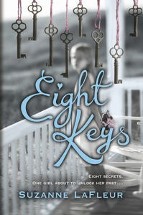
Eight keys by Suzanne LaFleur
Puffin, 2011. ISBN 978-014-134203-0.
(Age 10+) Recommended. Realistic. Bildungsroman. I thoroughly
enjoyed
Lafleur's book, Love, Aubrey and consequently I was very happy
to get
the opportunity to read Eight keys. This is the story of Elise,
almost
12 years old, and just entering middle school. She and Franklin have
always been best friends, playing medieval Knights, roaming in the
woods and using their imaginations. On her first day in the new school,
an encounter with a popular girl, Amanda, who scoffs at the scabs she
has on her arms from playing Knights, and calls her a baby, suddenly
leaves Elise feeling an outsider, wondering if her friendship with
Franklin is babyish. Her schoolwork suffers, and she becomes very
unhappy. Although her parents are dead, she has a loving aunt and uncle
and adult friends as a support system but she doesn't feel that she can
tell them just how bad the bullying at school has become. The
only thing that keeps her going is the discovery that the key she has
spied in her uncle's barn, is labelled with her name and opens one of
the eight mysterious locked rooms at the top of the building.
Lafleur's narrative flows gently and easily, pulling the reader in as
she explores what it is like for Elise to move from a small school,
where everyone knew her and where she felt safe, to a large school
where the teachers didn't seem to care and where she becomes the victim
of bullying.The bullying is both verbal and physical and Elise
is unable to cope with it. She retreats from her best friend Franklin
and doesn't stand up for him and tell the truth when it really counts.
This exploration of bullying and the nature of friends will resonate
with younger readers as will the exploration of peer pressure.
At home, Elise is jealous of the new people in her aunt and uncle's
lives, especially the baby, and questions whether they really want her.
It is not until she uncovers the secrets of the eight keys that open
the mysterious rooms that she can come to terms with herself and begins
to appreciate the love and friendship that surrounds her. A
father going to the trouble of preparing rooms and keys to show a
daughter how much she is loved and the type of girl she could grow up
to be is a very beautiful and poignant idea. There are some heart
wrenching moments that had me in tears and some funny moments as well.
I really loved this wonderful exploration of friendship, family and
growing up. Combined with a touching look at the awful consequences of
bullying, these relevant issues make this a very satisfying book for
the younger reader.
Pat Pledger