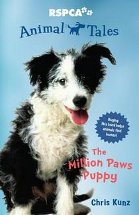
RSPCA Animal Tales Series book 1. Random House Australia, 2012. 70pp
(Ages: 7-10) Nine-year-old Cassie Bannerman is animal mad. She is
also determined, headstrong and always ready to lend a hand (or
two). The storyline, while lacklustre at times, is simple enough for
newly independent readers and well-written enough to engage the
young reader. The story is the first in the RSPCA Animal Tales
series and it is therefore fitting that the story revolves around
Cassie meeting the new RSPCA vet and convincing his son, Ben, to
participate in the RSPCA Million Paws Walk. When a little puppy runs
away from his owner on an adventure Cassie and Ben and their dogs
initiate a successful rescue mission.
Being an advocate for all things animals Cassie is the perfect
heroine for this all-new series which includes fact files about the
RSPCA and pet care at the end of the stories. This is definitely a
series which will appeal to pet-loving children all around
Australia. Not only those who are familiar with the challenges and
joys of being a pet-owner, but also the many children who have
all-consuming dreams of pets and animals. Themes of making
friends, inclusiveness and compassion are intertwined with humour
and lightness making this a great book for young readers.
Nicole Smith-Forrest
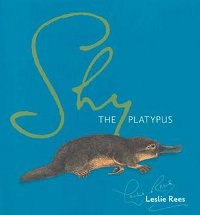
Shy the platypus by Leslie Rees
National Library of Australia, 2011. ISBN 9780642277411. $24.95
(Ages: 8+) This book, first published in 1944, outlines the
adventures of Shy as she grows up and leaves the family nest to have
a life of her own. It begins with a forward by Leslie Rees'
daughter, outlining us why and how her father addressed a lack
of books for children about Australian animals.
The style is very descriptive and would be ideal for a read aloud
text during a study of Australian animals in Year 3 or 4. Also ideal
for teachers wanting to ensure they cover classic literature as well
as contemporary texts with classes.
The book finishes with factual information about the platypus and
details about the beautiful illustrations included to support the
text. A worthy addition to a school library or lovely present from
grandparents wanting to give their grandchildren a quality book to
treasure.
Chris Lloyd
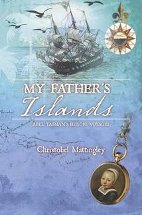
My father's islands: Abel Tasman's heroic voyages by Christobel Mattingley
National Library of Australia, 2012. ISBN 9780642277367.
(Ages: 10+) Historical. Highly recommended. Craesjen introduces
herself from the start, a strong minded, chatty young girl,
continually asking questions of her seafaring father, Abel Tasman,
especially when he arrives home after months at sea, bringing with
him the scent of spices and many, many tales. In this wonderful
recreation of the story of this early explorer and his amazing
discoveries, Christobel Mattingley has taken on the voice of his
daughter, a girl who loves her father, despite his being at sea for
so long.
Working for the Dutch East India Company means taking on an array of
things, chasing pirates, catching smugglers, charting unknown waters
and islands, searching for any new goods which could be sold at high
profits back in Europe and carrying cargo back to be sold. Made
captain, his abilities are recognised and he is commissioned to
explore the seas north of Indonesia, the Dutch East Indies, and
later given the command of two ships, the Zeehaan and the Heenskerck
o find new goods and things to trade.
This fictionalised biography of Tasman never falters. We hear of his
exploits and courage, his daring and expeditions through the eyes of
his daughter, and so are given an easily digested version of his
life and discoveries. What might have been ponderous is exciting and
visual, told with a child's perspective, and the inclusion of many
maps and drawings from the draughtsman on this voyage in 1642 add to
the fascination of Tasman's life.
There has been a number of excellent fictionalised biographies of
late, the wonderful Taj and the great camel trek by Roanne
Hawke, giving the exploits of Giles' expedition across the Nullarbor,
and Anthony Hill's absorbing recreation of Cook's voyages in Captain
Cook's apprentice.With the Australian Curriculum's history
focus, students are well served with these books, and My
father's islands will be the icing on the cake for those
studying Australia's early exploration. Having been taught that
Tasman was one of our foremost early explorers, paving the way for
Cook and others to discover more of our shorelines and so
precipitate the settlement of Australia by Europeans, to read that
Tasman was dismissed as not courageous enough by his masters in
Batavia, was shocking. I hope that younger readers who read this
book will be equally disturbed by the reception this great man
received, after reading this engrossing account of his life and
achievements.
Fran Knight
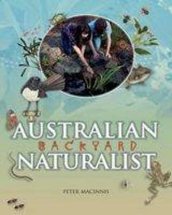
Australian Backyard Naturalist by Peter Macinnis
National Library of Australia, 2012. ISBN 9780642277428.
From the furry to the slimy, the large to the tiny, Peter Macinnis
explores the lives of the animals that share our lives and spaces in
this fabulous book designed to introduce the reader to the
fascinating world living in their backyard. From possums to parrots
to pill-bugs, we learn about the habits and habitats of creatures
that many of us never even notice yet are critical to ensuring that
our environment is healthy and harmonious. Much as I think that some
creatures have way too many legs and shudder as I think of them
creeping over my skin, I now have a new respect for them and
although I'm yet to be convinced of the value of a fly, I do
understand that without them there would be no maggots and therefore
the medical world would be deprived of an important source of
therapy.
For this is the sort of information that is characteristic of
Peter's books - he doesn't just give dry facts that can be clicked,
copied and pasted into some equally dry assignment - he tells a
story that absorbs you so you just keep reading and learning,
engaged and intrigued, and emerging with not just information, but
insight.
Each section comprises smaller sections that make its information
accessible in the short chunks that support the learning needs of
its audience. In My Backyard gives Peter's experiences with
each sort of creature and it's this personal touch that is one of
the elements which sets this book apart. At a Glance gives a
broader background of the creatures and this is supported by Amazing!
full of those quirky facts that some may wonder at the author's
ability to winkle out, but those who are familiar with his writing
and know the depth of his research are not so surprised. A
Closer Look examines more complex issues such as chemical
signals in ants and then the storyteller side of the scientist
returns with fascinating histories about man's interaction with the
creature. Did you know that Amalie Dietrich spent ten years living
rough in the Queensland bush in the mid-19th century collecting,
preparing and preserving specimens for use in European scientific
studies, including the first-ever taipan snake? Her work led her
become known as 'Australia's first spider lady'. Finally, each
section has at least one project idea that students can engage in so
they can see for themselves just what it is they have been learning
about. (Miss 5 is going to love those and Grandma is just going to
have to grow some backbone.)
The whole book is lavishly illustrated with photos from the National
Library's collections and diagrams and photos that no Google search
will ever deliver. The whole thing has this rich, glossy, satisfying
feeling that a quality print resource offers and is accompanied by teachers notes.
I'm always honoured to review Peter's books and this one is no
exception - it's been a torment having to wait till most schools
were back in session so that as many as possible can know about what
I consider to be a vital addition to the library's non fiction
collection, primary and secondary. In 2010, Peter's book Australian
Backyard Explorer won the Eve Pownall Award for Information
Books from the CBCA - I predict Australian Backyard Naturalist
will be a similar winner in 2013.
If it is not readily available through your local bookseller, it is
online through both National Library bookshop and the distributor,
NewSouth Books.
Barbara Braxton
Wired series by various authors
A and C Black, 2011.
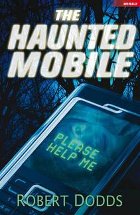
(Ages 11+) Recommended. Quick reads. Horror. The haunted mobile by Robert Dodds. ISBN 9781 4081 4258
5. The haunted mobile is a story that all of us can recognise as
a horror story for today. When Jake's mobile phone begins to send
him messages, asking for help and then texts his friends with
messages Jake did not send, he is perplexed. His friends think he is
lying, but when the messages become more insistent he takes action. Beast hunter by Kathryn White. ISBN 978 1 4081 4265 3.
Beast hunter tells a scary story of what may lurk in the old
quarry near Jacob's home, a quarry now filled with water. The signs
of danger and keep out are a magnet to the boys from the area who
spend the summer swimming in the cool water, until one fateful day,
one of the boys is drowned. But Jacob has seen something and
convincing those around him that what he has seen is a crocodile
draws derision from all and sundry. Beast hunter is a neatly
resolved, short horror story. Dead wood by Andy Croft. ISBN 978 1 4081 6335 1. Dead wood is an environmental horror story of sorts as
Holly's family move into an old house near a wood that her father
must cut down in the first moves to build a new housing estate. When
Holly's friend Ash stays the night weird things happen, resulting in
much damage to the house, which her parents blame on the girls, but
later when it happens again, her father ends up in hospital. A
horror story with bite.
Each of these books is very short, some 60 pages with large clear
print and wide margins and a few drawings to break up the pages.
Similar to the Lightning Strikes series, these will be
eagerly selected by students wanting something quick and easy or for
those who want a book which aims at their lower literacy level, or
to a classroom teacher wanting a set of books to have for their
students to fill in spare moments or build a lesson round.
Fran Knight
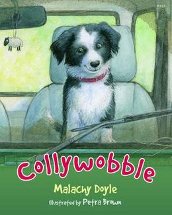
Collywobble by Malachy Doyle
Ill. by Petra Brown. Pont Books, Wales, 2012. ISBN 978 1848513204.
(Ages: 5+) Warmly recommended. Picture book. Be sure to wear your
woollies when reading this endearing tale of the runt of the litter,
rejected by the farmers who want a pup to be a big strong sheep dog,
and rejected by children who want a robust dog as a pet, then kept
on by Farmer Joe as long as he is able to earn his keep. But it is
mid winter, and when the pup's mum, Bess and Farmer Joe go out in
the snow to fetch the sheep, the pup knows something is wrong. After
all, no one has given him his tea. He ventures out into the snow,
and seeing the sheep coming along the road, closes the gate when
they trot into the yard. He then sets out to find his master and his
mother, having to hail down another farmer for help.
Named Collywobble, because he is a collie dog, but very small and
wobbly, the little pup will worm his way into the hearts of all the
readers of this little book. The illustrations, cute to the point
of 'aahh', are just wonderful in their depiction of the Welsh
countryside in mid winter. The dogs portrayed are charming, and will
appeal to every child and adult who reads the book. Pencil and line
drawings render the dog and its family beautifully. I just love the
double page spread of the determined little pup going out in the
snow on pages 14 and 15, and the water colour washes depicting the
Welsh Hills on pages 30 and 31, another 'aahh' moment.
A simple tale, well told in succinct prose, the book will be a hit
with its audience. It is published by a small publisher in Wales, Pont Books, but it is worth
ordering from your local supplier.
Fran Knight
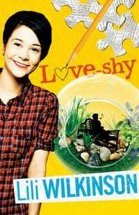
Love-shy by Lily Wilkinson
Allen and Unwin, 2012. ISBN 978 1 74237 623 3
(Ages: 12+) Highly recommended. Humour. Looking around for a
challenge to research to further her intellectual abilities for a
career in journalism, Penny stumbles over a boy leaving a computer
in the library. With some finesse she is able to get a look at what
he was accessing, a website called love-shy.com. From here her
senses are aroused and through an hilarious process of elimination,
finds out who the boy is in year 10 who is so love shy that he talks
about his problem on a blog. Thinking about a page one article for
her school Gazette sees her delving into this boy's life, gathering
information, eventually gaining his trust to a point where she
becomes a surrogate date to try and increase his skills with the
opposite sex.
This sounds very straightforward, if it was not for Penny's innate
and at times insufferable belief in herself and the rightness of
what she is doing. She ploughs ahead, not heeding the depths she is
plumbing, or the anxiety she is causing for Nick. She storms on, not
realising that she may be in the same predicament, not quite a
loner like Nick, but keeping herself aloof, surrounding herself with
tasks and committees, jobs and clubs, all to avoid having to make
and communicate with friends. When she and Nick finally argue, after
she inadvertently reveals that she reads his blog, he tells her that
she is just as bad as he, and this rocks her world. Absolutely
stunned, she learns something about herself and so sets about
involving others in her journey to self improvement.
This is a wonderful tale, full of fabulous characters, some amazing
like Nick's parents and some most understandable, like Penny's
parents, but all of them drawn so convincingly and with such a sense
of warmth and understanding that it is hard not to like them all.
The humour is understated, as we see Penny blinkered by her research
project, oblivious to anyone else, focussed on her goal of being a
journalist. The scenes at the party and at various functions around
the school are very real, written with a deft touch based on
Wilkinson's fine ability to observe and deconstruct what is going
on.
Fran Knight
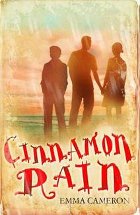
Cinnamon Rain by Emma Cameron
Walker Books, 2012. ISBN 9781921720451.
(Age: 15+) Verse novel. This book follows the lives of three
teenagers, Luke, Bongo and Casey, the girl they are both infatuated
with. Approaching the end of their high school years, the friends
must look to the future but first they have to survive the present.
Bongo hates living with his callous step dad while his mother
bounces in and out of rehab. His little brother has already been
removed from the home by welfare authorities. Now the one good thing
in Bongo's life is out of reach.
Casey, meanwhile, lives in fear of her protective and authoritarian
father. She is denied many of the everyday experiences most
teenagers enjoy as her dad seeks to stifle any sign of independence.
She's not sure she can stick around to finish high school. She needs
to put as much distance between herself and the family as possible.
Luke seems to have the most stable life, at least in Bongo's eyes.
His dad works and his mum puts nice meals on the table. However Luke
sometimes wonders if he is adopted. His parents seem to go through
the motions but they are really preoccupied with their own
responsibilities.
As the tension mounts in their lives, they find themselves forced in
unanticipated directions. With increasing maturity comes the
realization that life doesn't necessarily turn out as planned.
Presented in verse form, the author delivers a sensitive narrative
on the sometimes painful journey of adolescence.
Tina Cain
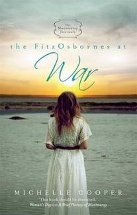
The Fitzosbornes at war by Michelle Cooper
Montmaray Journals, Book 3. Random House, 2012. ISBN 9781742750323.
(Age: 15+) Highly recommended. The third and last book in the
Montmaray Journals, Sophie continues to write in her journal, this
time with accounts of what is happening in Great Britain and
particularly London during the devastating Blitz. Life is filled
with evading falling bombs, sheltering in bomb basements and dancing
in nightclubs with young soldiers. Her brother Toby is in the
airforce and Henry decides to join up as well. As the war comes to
an end, it may be possible that their beloved Montmaray will be
liberated.
This is a wonderful but often heart wrenching conclusion to a
fascinating series that should be in every library. It paints an
extremely vivid picture of life during World War 2, with all the
heartbreak that is associated with war, as well as the joy of
falling in love. The journal recounts actual historical happenings
during the war, as well as giving a fictional and emotional look at
what is happening. Cooper gives an insight into her sources at the
end of the book, and readers who enjoyed reading about women's
experiences during war time will be able to follow their interest
with some non fiction books.
Sophie's experiences, as well as her voice in her journal, are much
more mature in this last volume, as befits an adult woman. The
journal spans the years from 1939 to 1948, so the reader follows
Sophie's growth from an adolescent to a young woman. The Fitzosbornes at war was very difficult to put down, and I was
sad to see the end of the series. Cooper's superb writing
effortlessly gained my attention and held it to the end as I avidly
read on to see what would happen to Sophie, Veronica, Henry, Simon
and Toby. There was an ultimately very satisfying, if painful
conclusion (after all it is wartime and not everyone survives), and
I'm very much looking forward to seeing what Cooper writes next.
Pat Pledger
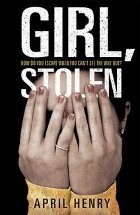
Girl, stolen by April Henry
Walker Books, 2012. ISBN 9781406334852.
(Age: 13+) Recommended. Reluctant readers. YALSA Best Fiction
for Young Adults (2011). Sixteen-year-old Cheyenne Wilder is
sleeping in the back of the car while her stepmother fills a
prescription for antibiotics for Cheyenne's pneumonia. Before she
realises what's happening, the car is being stolen. Griffin is
shocked when he sees that Cheyenne is in the back of the car and
doesn't know what to do when he discovers that not only is she sick,
she is blind as well.
From here on Cheyenne is a terrifying journey until she is finally
tied up in a bedroom and threatened by Griffin's father and his
sidekicks. But Cheyenne is a strong and very determined heroine who
is intelligent enough to work out ways of escaping. It also helps
that Griffin has a conscience and doesn't agree with what his father
plans when he discovers that Cheyenne's father is the rich and
powerful head of huge corporation.
Told in alternative viewpoints by Cheyenne and Griffin, the reader
quickly begins to identify with both. I was engrossed with
Cheyenne's story. Even though she was blind and her mother had died
fairly recently, she is resourceful and persistent. The back-story
of how she became blind is also fascinating. On the other hand,
Griffin also gained my sympathy. Forced to stay with his father when
his mother disappeared, he is not really a villain like his father.
I was able to empathise with his plight although it was obvious that
he was on the road to a life of crime when he stole the car Cheyenne
was in. What do you do when you are a teen with no resources and no
family support but a thief for a father? The relationship between
the two is cleverly built up by Henry and always seems realistic.
Questions about the nature of the bond between kidnapper and
kidnapped are raised and the contrast between the life of a rich
girl and that of a very poor boy is poignant.
Readers are in for a roller coaster ride as the resourceful Cheyenne
makes some escape attempts. There is action and suspense galore,
some gory moments and some very frightening scenes. The fact that
Cheyenne can't see makes everything even more thrilling.
Reluctant readers, especially girls, will enjoy this story, with its
fast paced action, and engrossing characters. The fact that it is
not too long will also help!
Pat Pledger
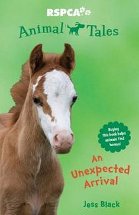
An unexpected arrival by Jess Black
RSPCA animal tales ; 4. Random House, 2012. ISBN
9781742753324.
(Age: 8+) Cassie Bannerman's mum and dad own a deli that she spends
a lot of time hanging around. So when the class teacher tells them
they have to spend a day watching their parents at work, Cassie is
disappointed. Fortunately her friend Ben comes to the rescue. His
dad is a vet and Cassie is invited to join them for the day.
Dr Joe, as Ben's dad is called is on official RSPCA business when
Ben and Cassie spend the day with him. The RSPCA want to encourage
farming practices that allow animals to lead comfortable and happy
lives. Farms that meet these standards can be given the Paw of
Approval and have their produce endorsed by the RSPCA.
While Dr Joe assesses Brackenridge farm, Cassie and Ben are able to
see a working farm first hand. They are enjoying the
experience when an emergency develops. They never expected that Dr
Joe would need helpers on his farm visit. Now they must roll up
their sleeves if a crisis is going to be averted.
This book is one in the series of RSPCA animal tales. It is an
entertaining and educational story that has some interesting fact
sheets at the end. It is a short chapter book suitable for junior
readers and the subject matter lends itself to classroom discussion.
Tina Cain
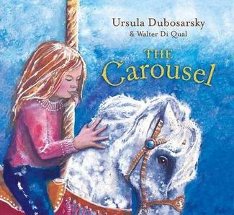
The carousel by Ursula Dubosarsky
Ill. by Walter Di Qual. Penguin, 2012. ISBN 978 0 670 07462 4.
(Ages 6+) Picture book. Journeys. In rhyming stanzas, Dubosarsky
tells the story of a young girl, and her relationship with the horse
she rides on the carousel. When circling, the girl can hear the
beating heart of the horse, and knows that he is sad. He is confined
to the rhythm of the carousel, going up and down, around and around,
and longs to be free. Her father's voice takes her away from her
wishes for the horse, but that night, staring out of her bedroom
window, she sees the little horses breaking away from their
confinement, galloping along the roadways and off into the hills
where they gallop forever free.
Children will love the story of the little horses breaking lose from
their captivity and ponder the position of the little girl and her
relationship with the horses. The illustrations, rendered in bold
colours, with white thick splotches of paint, pages of an almost
sprayed effect, mixed with a water colour effect for the horses and
their ride to the hills, are mystical in their nature, giving an
ethereal overlay to the story.
It always astonishes me that two stories can be published within a
few years, and be so similar. Kids will love to read and compare
this sorry with Flame stands waiting by Corinne Fenton
(Black Dog Books), another tale of a horse in a carousel.
Fran Knight
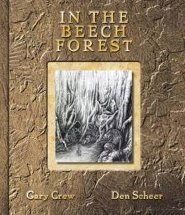
In the Beech Forest by Gary Crew
Ill. by Den Scheer. Ford Street, 2012. Hbk., RRP $29.99.
9781921665578.
"He was an ordinary boy, nothing special, and he went into the
forest alone. He had no particular purpose other than to look, as
adventurers do, or to slay imaginary monsters, as children do, so he
held his head high, and gripped his toy sword, just in case. But as
withered leaves shifted, and grey shadows lengthened, he hesitated,
remembering his computer games, the fearful quests he encountered
there, the dreadful heroes, the beasts unconquered and he wondered
if such wild fantasies might threaten here."
Is truth, indeed, stranger than fiction? Can the magic and mystery
of nature conjure up more than the most amazing brains dedicated to
scaring the pants off you via the screen? As he walked deeper into
the forest he heard 'rustlings and scatterings and promises of life'
but gradually all quietened and stilled and there was only silence
and darkness. This is Gary Crew at his best, as he takes the boy on
a journey, not only through the forest but also through his own soul
as he conquers his fears and finds himself and his power. The story
is accompanied by the most evocative images by newcomer Den Scheer,
who must be in line for the Crichton Award for new illustrators in
2013. The sepia tones, set in a border of stone add to the feeling
of ancient, dark, and mysterious times and places enrich and enhance
the text in a perfect marriage.
Crew is one of the masters of the picture book for older readers and
this is no exception - it is sure to entice and engage even the most
reluctant reader. My prediction is that this will be on the 2013
CBCA shortlist, and the artistry of Den Scheer will
become as well-known as other leaders in the picture book field.
Barbara Braxton
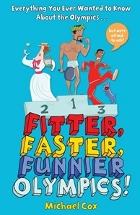
Fitter, faster, funnier Olympics: Everything you ever wanted to know about the Olympics but were afraid to ask by Michael Cox
A and C Black, 2012. ISBN 9781408165584.
(Age: 8+) 'From unbelievable tales of triumph (with all the shocking
bits left in) to incredible facts about Olympic athletes, this is an
aspirational, informative, interactive and hilarious guide to the
Olympics - what they're all about and what made them what they are
today. Packed with funny illustrations, inspirational ideas and
amazing activities, this is a brilliant guide to the Olympics past
and present.' Blurb.
Information ranging from the ancient Olympics to modern Olympics to
a do it yourself Olympics comes in a form that children will love.
There are true facts interpersed with some very funny details that
will have children laughing out loud. As Michael Cox writes,
'Instructions are somewhere between totally daft and certifiably
insane'.
The book will especially appeal to reluctant readers who will enjoy
the weird and wonderful humour. Some of the imagery, like 'Kebab an
entire queue of people at a bus stop during your javelin practice'
would leave readers with an amazing picture in their heads.
With humorous black and white illustrations, this small book
of 128 pages, will have a place in the hands of children who
want some facts but like to have a laugh at the same time.
Pat Pledger
Dark water by Cindy Jefferies
Wired up series. A and C Black, 2012. ISBN 9781408156513.
(Age: 15+) Sarah is working hard to earn selection in the Olympic
synchronised swimming team. It means she has a very challenging
training schedule which involves practice in the pool every morning
and work outs in the gym every afternoon. Despite working hard to
achieve her goal, Sarah doesn't tell the other kids at school what
she does. She thinks they will tease her.
Sarah is shy but she catches the eye of Tom, a boy from school. He
doesn't make fun of her shy demeanour like some kids. One day, Tom
and Sarah decide to join some class mates on a picnic.
Unfortunately, someone brings alcohol and before long things start
to get out of hand. Sarah is forced to take centre stage.
This is a very short chapter book with large writing and black and
white illustrations. It is recommended by Catch Up, an organisation
that aims to tackle literacy and numeracy problems that result in
under achievement. It is a simple story but the subject matter is
relevant for older teens.
It is a good book for those who struggle to read because it is an
enjoyable story and the size of the book is not overwhelming.
Tina Cain