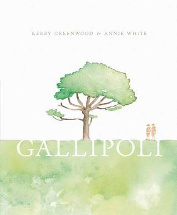
Gallipoli by Kerry Greenwood and Annie White
Scholastic, 2014. ISBN 9781743621295.
(Age 5+) Highly recommended. Gallipoli. World War 1. Bravery.
Friendship. Dusty and Bluey were mates, off to the Great War as part
of the Australian Light Horse. They were sent to Egypt to train as
soldiers and then deployed to Gallipoli, where they met Simpson and
his donkey Duffy, sustained injuries and attempted to be resilient
and positive under awful conditions.
Greenwood's prose brings this story alive, letting the reader learn
about Dusty and Bluey's feelings of excitement as they left for an
unknown war and gradually their fears about the horrors of war, each
promising to watch each other's back. She is able to bring in the
heroism of Simpson and his donkey and the awful times when the
soldiers are injured, the nurses who looked after them on the island
of Lemnos and the unexpected bond between the Turkish soldiers and
the Australians as they buried their dead and exchanged gifts. The
reality of war is not glossed over: the fact that soldiers are
killed, the trenches are muddy and freezing and the food inadequate
are all made clear. However it is the caring friendship between the
two men that shines out as they bravely do their duty as soldiers,
and after the war Bluey is shown managing a normal life after losing
his leg.
Illustrator Annie White's pictures are coloured in soft pastels and
really add a deeper understanding to the text, but which are not too
overwhelming for young readers to look at. The emotions on the faces
of the soldiers are wonderful, and the interspersing of drawings
within a photo frame add detail to the whole.
This is a book that will greatly aid children in understanding the
nature of war and the bravery of the young men who were sent to
Gallipoli.
Pat Pledger
Sylvester and Arnold by David Bedford and Tom Jellett
Little Hare, 2013. ISBN 9781921714542.
Sylvester was a BIG, TOUGH croc. And so was Arnold. Sylvester wore
tough-croc shorts, A tough-croc vest and tough-croc boots. When he
went out to play he put on an ugly tough-croc face. So did Arnold.
Both spent all day making sure that everyone in the big, wide swamp
where they lived knew who was boss. But they had never met, until
one day.
This is a delightful story of how these two crocs set out how to be
fiercer than the other but then an even bigger threat arrives and
suddenly they are bullies no longer. It has a twist in its tail that
is charming and offers much to discuss about being friends and
building friendships.
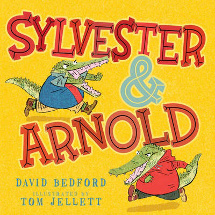
Tom Jellett's illustrations are the perfect accompaniment and offer
a lot to explore about perspective. Even though each page is the
same size, how does he manage to portray the size and fierceness of
Sylvester and Arnold and then dwarf this with his illustrations of
Betty?
There is plenty of scope for little ones to be both the fierce,
tough Sylvester and Arnold and then contrast that with the meek and
mild Sylvester and Arnold as they try to sneak away under the cover
of darkness. Whole-body interaction accompanied by emotions,
expressions and noise!
It would also serve as a great introduction to the research process
if you ask the students what they already know about crocodiles
before you read it. Then, afterwards, discuss which parts might be
true and which parts are made up. Share other fiction stories about
crocs and then contrast these with the factual resources
highlighting the difference between what is written for the
imagination and what is written for information. Introduce the
interpretation of text by showing how the Bedford and Jellett can
let their imaginations roam because their purpose is to entertain
rather than inform. If your non-fiction resources are separate from
the fiction, explain the library layout and where the crocodile
resources are located. And there are dozens of ways each could
present what they have learned to create an engaging display for the
library's walls. Who would have thought 32 pages could contain so
much?
Barbara Braxton
The Poppy by Andrew Plant
Ford Street, 2014. Hbk., ISBN 9781925000313. Pbk. ISBN
9781925000320.
In Flanders fields the poppies blow
Between the crosses, row on row,
That mark our place; and in the sky
The larks, still bravely singing, fly
Scarce heard amid the guns below.
We are the Dead. Short days ago
We lived, felt dawn, saw sunset glow,
Loved and were loved, and now we lie,
In Flanders fields.
This poem, by John McRae, has become one of the most enduring
written about World War I and has provided the most recognisable
symbol of remembrance for Australians and New Zealanders - the
poppy. Although Flanders Fields, itself, is in Belgium, the poem and
the poppy have become symbolic of the whole of that terrible
conflict on the Western Front, and so this new book by illustrator
Andrew Plant is aptly named, beautifully told and superbly
illustrated.
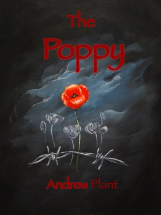
Starting on the front cover with the brilliant red of the poppy set
in front of ghostly images of other poppies entwined in barbed wire
and against a background of stormy black skies, this is a beautiful
'photo-essay' of the story of Villiers-Bretonnneux, which on ANZAC
Day 1918 became the scene of one of Australia's greatest victories
and which forged a bond between two nations that grows stronger each
year. Except the photos are not photos - they are eerily haunting
paintings that tell the story of the building of that bond. Bordered
in black and accompanied by simple text in white, their bright
colours are a stunning contrast which suggests feelings of hope and
future and endurance.
The petal of the poppy is whipped off in the winter wind and blows
across the village to show the Villiers-Bretonneux school, known as
Victoria School, because it was rebuilt through the contributions of
the people of Victoria so that even now the flags of two nations fly
above it and carvings of Australian flora and fauna adorn the school
hall; it flies through the village past the Musee Franco Australien,
and is carried further above the fields and up a broad, low hill to
a tall cross and a great tower where thousands of names are carved -
those who died but whose bodies were never recovered - and then out
over the rows and rows of headstones, some nameless, not even their
nationality known.
But the stories of the soldiers are known and told and not
forgotten. As the winter winds grip the Somme, the Australian and
French flags fly side by side and once again, the land turns red.
But now it is the petals of the poppies, not the blood of the
fallen.
So often our younger students' knowledge of World War I is limited
to the events at Anzac Cove in Gallipoli - here, in this stunning
book is the pathway to their understanding of the much more
drawn-out battle of the Somme and the Western Front, stories our
children should know as well as those students in Victoria School
who see 'N'Oublions Jamais l'Australie' in every classroom. Stories
and a motto which led them to raise nearly $21 000 to donate towards
the rebuilding of Strathewan Primary School after it was destroyed
in the Victorian bushfires, Black Saturday, 2009.
No doubt as the centenary commemorations of World War I begin, we
will see many new titles published but this one that encapsulates
all that we associate with the poppy is a must-have.
Barbara Braxton
Laika the astronaut by Owen Davey
Templar, 2013. ISBN 9781848778788.
(Age: 4+) Recommended. Space travel. Dogs. Laika is a stray dog
scavenging a living on the streets of Moscow when she is picked up
by a group of scientists who train her for a special mission in a
spacecraft. She is the first animal to travel into space, paving the
way for later space journeys. Her rocket disappears but in this
story she has a happy ending.
This is a very poignant story of the first dog, Laika, and her
lonely journey into space. Davey traces her life story in simple
words that will allow children of all ages to learn about the
bravery of the little dog. There is no mention of the ethics of
using animals for experiments, although this book would be a useful
lead in for discussion for older children about this topic. Instead
Laika is pictured as a very lonely little animal who finally finds a
loving home out in space.
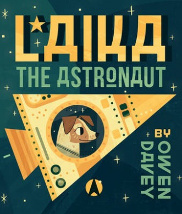
The pictures are very captivating, with the use of deep olive
greens, reds and black against tones of yellow. The shapes are
stylised and especially heart wrenching for those who know what
happens to Laika is the double page spread showing Blast-Off, with
Laika looking out of the rocket's window. The picture is repeated
with the rocket growing smaller and smaller. There are many layers
to the illustrations, and older children and those studying the art
of book illustration will have plenty to uncover.
This would be an ideal book to introduce the idea of space travel
and exploration to children, as well as introducing Laika as a hero
who will be long remembered as a space pioneer.
Pat Pledger
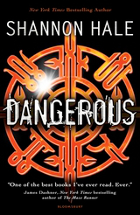
Dangerous by Shannon Hale
Bloomsbury, 2014. ISBN 9781408838853.
(Age 13+) Recommended. Science fiction. Disability. Strong female
character. Maisie Danger Brown is thrilled when she finds out that
she has been selected to go on an astronaut boot camp, she had no
idea just what was going to happen to her. She has been home
schooled all her life and is eager to see more of the world. For the
first time she comes up against excitement, prejudice and meets the
boy of her dreams. And then there is the intergalactic conspiracy
that threatens everyone. What will she be able to do to save her
loved ones and herself?
I am a fan of Shannon Hale books, The
book of a thousand days, and Princess
Academy being favourites, as well as loving her
graphic novels, Rapunzel's
revengeand Calamity Jack. Dangerous is a
change of genre for Hale, with this foray into science fiction and
action. However this book contains her signature wry and amusing
dialogue, an intrepid and clever heroine and an original plot, all
of which make it an entertaining read.
Maisie Danger Brown indeed has to live up to her middle name and
during the course of this adventure story she certainly does that.
She manages to outwit her adversaries, even those who are scathing
because of Ms Pincher, her artificial arm, and she uses all her wits
to work in a team that has accidentally all gained super powers. She
learns about the ethical choices that she has to make (can she let
someone die?) as well as finding about family secrets and family
love. Told in the first person, her sarcastic comments are a joy to
read ('I remind myself that teen brains haven't developed the areas
that are capable of lasting emotional commitment' pg. 404). The
other characters are also fully developed, including Jonathan Wilder
who Maisie finds herself drawn to.
There is action galore for those who enjoy thrilling moments,
including using super powers that have come from aliens, fighting an
evil corporate CEO and saving the world from an alien virus. The
team working with their super powers bring a whole new dimension to
the stereotypes about being superhuman, and to the moral
considerations of using super powers.
A unique plot, interesting setting and in-depth character building
make this a most enjoyable read.
Pat Pledger
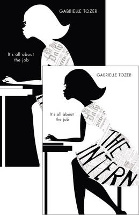
The Intern by Gabrielle Tozer
Angus and Robertson, 2014. ISBN: 9780732297053.
Themes: Careers - Fashion industry, Romance, Coming of Age/
Maturity, Self-image, Eating disorders. The Devil Wears Prada
meets The Ugly Duckling in this Coming of Age story of the
young Journalism student who wins an internship at a Fashion
Magazine. The book reveals the transformation of Josie from the
socially and romantically awkward A-grade student with a recognised
flair with words, to a confident wordsmith who makes the most of her
least desired placement at the city Fashion Magazine office. Her
lack of social and fashion sense, her family distress, and a
couch-surfing stay with a cousin and his dreamy flat-mate give this
story a youthful sense of fun and exploration of life as an 18 year
old. The interview she wins with a high profile boy band star and
the subsequent articles she writes about him launch her into the
spotlight. This attention also creates problems, with significant
repercussions when things unravel in the social media spotlight
after a drunken night out at a nightclub. Friendships that wax and
wane, and form and reform, are woven into Josie's story of
discovering who she is, what she wants and who she wants to share
her life with. There is a 'happy ever after' feel to the book, with
many loose ends getting tied into overly neat bows.
This is a story that will be enjoyed by teen girls who are impressed
by the Romantic Comedy genre. Josie is not from the 'In Crowd', so
this may connect to the young reader or aspiring writer who may have
felt exclusion or has under-valued their own strengths. This is not
a complex story, and although the teenage behaviour described is not
always pure in its focus and interests, in comparison to many books
written about this age group, it is somewhat naive and restrained
(but not completely so). The Intern also gives insights into Magazine culture and the
beauty industry, and the sometimes damaging effects of self-image
issues for many young women.
Carolyn Tull
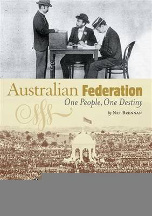
Australian Federation: One people, one destiny by Janette Brennan
Our stories series. Black Dog Books, 2014. ISBN
9781922179944.
(Age: 9+) Recommended. Australian history, Federation.
The imprint of Black Dog Books gives any reader the expectation of a
well researched non fiction book, well told in crisp short
paragraphs with plentiful photos, maps and illustrations to augment
the text. Their series, Our Stories, has hit library shelves
with glee, filling a niche for children to read of Australia's
history without the padding given by many history books. Australian Federation continues their acclaimed style, with
thirteen chapters of between two and four pages presenting such
information such as what we were like before Federation, the people
who led the push for Federation, the struggles the colonies had
before they made this agreement, and finally what Federation means
for Australia. Each chapter is brief and to the point, with easy to
read but meaty paragraphs of information alongside maps,
illustrations, pictures, newspaper cuttings and statistics.
The illustrations included are the known and not so known, from
Roberts' famous painting of the first parliament, to many cartoons
taken from local papers, to photos of the many people involved, and
make fascinating reading and further looking.
As is only to be expected with Black Dog Books' series, there is a
packed timeline, an easy to use index and glossary and a page of
references, including internet sites, all designed to increase the
information available to young readers. A great resource for history
classes.
Fran Knight
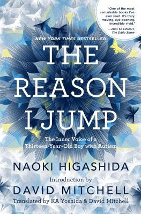
The Reason I Jump: The inner voice of a thirteen-year-old boy with autism by Naoki Higashida
Translated by K. A. Yoshida and David Mitchell. Random House, 2013.
ISBN 978081299486.
The introduction to this remarkable book begins, 'The thirteen
year-old author of this book invites you, his reader, to imagine a
daily life in which your faculty of speech is taken away. Explaining
that you're hungry, or tired, or in pain, is now as beyond your
powers as a chat with a friend . . . Now imagine that after you have
lost your ability to communicate, the editor-in-residence who orders
your thoughts, walks away without notice . . . A dam-burst of ideas,
memories, impulses and thoughts is cascading over you, unstoppably.
Your editor controlled this flow, diverting the vast majority away,
and recommending just a tiny number for your conscious
consideration. But now you're on your own. Now your mind is a room
where twenty radios, all tuned to different stations, are blaring
out voices and music. The radios have no off-switches or volume
controls . . . and relief will only come when you're too exhausted
to stay awake.'
On top of that the editor of your senses has also quit and you are
now bombarded by all the sights, sounds, smells, tastes and textures
of the environment without filters so each clamours equally for
attention; your vestibular and proprioceptive senses are disturbed
so the floor keeps tilting and you have no sense of where your hands
are feet are in relation to the rest of you. Your mother tongue is a
foreign language and you have no concept of time.
Such is the life sentence of the person with autism, and it is a
life that we, as teachers, need to have some concept of as more and
more children on the autism spectrum come under our care. Thus, the
importance of this book. In it, Naoki, who is able to use a device
which enables him to communicate via writing, provides some insight
into what it is like to live in an unfiltered world without the
internal connections to make sense of it.
He starts by writing, 'When I was small, I didn't even know that I
was a kid with special needs. How did I find out? By other people
telling me that I was different from everyone else, and that this
was a problem.' And one of the most consistent messages that comes
through his writing is his concern that his needs and inabilities
are a problem for those around him. Written in a question-and-answer
format, this articulate young man tries to explain some of the
behaviours that are associated with autism so we can understand that
they are not based on defiance, malice, or any intentional motive.
Full of quotable quotes, there is an overwhelming sense of isolation
and a desire to please, and a realisation for the reader that the
greatest gift we can give Naoki and all autistic children is our
time and patience. Repeatedly he begs us 'not to give up' on him.
The autistic child's fascination with numbers which are constant is
explained; their need to order and repeat becomes clear and their
connection to nature made obvious. This latter is underpinned by the
most remarkable illustrations - monotone prints which focus on the
natural lines, shapes and patterns that we so often don't appreciate
because we don't even see them. Interspersed are observations and
short stories that Naoki has written - he says he aspires to be a
writer but it is clear he already is.
This book took me about 90 minutes to read; it will take me so much
longer to reflect on and learn from, and it will change my
understanding for ever.
Barbara Braxton
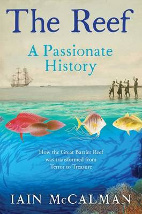
The Reef: A Passionate History by Iain McCalman
Viking 2013. ISBN 9780670075775.
Highly recommended for senior students and staff. This book is
divided into 12 main chapters, each describing key individuals,
either Western explorers, scientists, Indigenous peoples and
castaways, or romantic beachcombers, artists and divers, who have
played a part in revealing the true nature of the Great Barrier
Reef. Beginning with the exciting tale of Captain Cook and the
stressful navigation of a pathway through razor ledges of coral, and
ending with the amazing work of the contemporary scientist, Charlie
Vernon, McCalman gives deep insights into the minds and imaginations
of his participants as well as the context in which they lived their
lives.
I really liked the way the author delved into the motivations of his
subjects such as Willam Kent the 19th century scientist whose
studies of the reef were the result of his attempts to escape from
his past. Also, the story of Charlie Vernon's life would be an
inspiration for any young science student. More importantly,
McCalman has written lucidly and enthusiastically, about the
scientific theory behind coral reef evolution and marine science,
the spirtual importance of the reef, the history of the Queensland
conservation movement and the causes of coral mass extinction.
A key reason for the author's passion and conviction in writing the
Great Barrier Reef's history is that it is like the 'canary in the
coal mine', warning us of the need to be its protectors in the face
of future catastrophe from climate change.
The book includes, a map, photographs, notes, bibliography and an
index. Hardback copy 398 pages. Information is available at the
author's site.
Paul Pledger
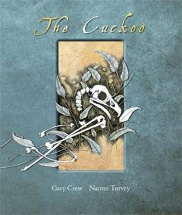
The Cuckoo by Gary Crew
Ill. by Naomi Turvey. Ford St Publishing, 2014. ISBN: 9781925000177.
Recommended. Picture book for older children. About twenty-five
years ago, Gary Crew was my oldest daughter's drama teacher. My
middle daughter was great mates with Gary's son, as they were
mischief makers in the same primary class. When Gary's first novel
was published within 18 months of that time, I naturally was
interested and intrigued to read it. I have been an avid reader of
Gary's work ever since and have enjoyed many of his presentations at
conferences or local news interviews over the years.
There is no doubt at all that Gary's novels are powerful and
compelling but in my opinion it is his own passion for illustrated
books that give even more impact to his 'picture books'.
The Cuckoo is somewhat dark - even bleak- but explores themes all
too common and pertinent. Bullying, neglected and abused children,
forgiveness, independence and self-belief are among analogies that
can be drawn from this text. It has an almost mythical quality
to it and is well enhanced by Turvey's exquisite illustrations which
are both detailed and haunting.
Martin is the singular central character. Without a mother,
tormented by a overbearing father and two brothers, Martin looks to
the forest for solace and the small creatures he befriends become
part of his salvation and strength. The ideas of both sacrifice and
forgiveness are predominant in Martin's eventual triumph.
An intriguing and multi-layered book, this is recommended for older
children for whom it could be a provocation for many philosophical
conversations.
Sue Warren
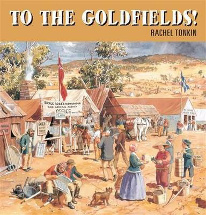
To the Goldfields by Rachel Tonkin
Walker Books Australia, 2014. ISBN 9781922179883.
(Age: 8+) Recommended. Gold rush, Australian History. Set in
Victoria at the time of the Gold Rush this richly illustrated story
tells of James and his family moving from Melbourne to Forrest Creek
near Bendigo, to join his father as he mines for gold. The sights
and sounds of the times are brilliantly recreated here as we see the
squalor of the living conditions, noise and edgy lifestyle of those
who risk all to find gold.
Tonkin's illustrations showcase a goldfield covered with tents and
makeshift buildings, slab huts with canvas rooves, held down by
planks of wood. The numerous men mine with pick and shovel, cradle,
gold pans an explosive, while the women trade, bargain, look after
children and sometimes help the men in their toils. While
acknowledging the work of S T Gill, Snell and von Gerard, Tonkin
also nods to the many goldfield artists represented in museums and
art galleries around Australia. She has used their work to
authenticate her pictures of the gold fields enabling younger
readers to understand what happened there.
Tension comes in the form of troopers, and bushrangers, thieves and
the weather, each adding pressure to the many men hoping to return
to their old lives, richer men.
Walker Books has been republishing award winners from Australia's
backlist of books for the past little while. Rachel Tonkin's award
winning trio, What was the war like Grandma, To the
goldfields, and Papa and the olden days are a welcome
addition to this venture as many copies in school libraries are now
15 years old and need replacing, and also presenting anew to a new
bunch of readers and teachers to be used in classrooms where history
is taught.
Fran Knight
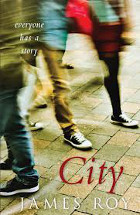
City by James Roy
UQP, 2012. ISBN 9780702249266.
(Age 14+) Highly recommended. Short stories. CBCA Older Readers
Notables 2013. A companion volume to the award winning short story
collection Town (Ethel Turner Prize, Inkys 2008, German
Youth Literature Prize shortlist 2011), City is a
compilation of connected short stories about young people in a city
which feels familiar but which remains unnamed. The young people are
linked in different ways, through acquaintances, or chance meetings
or the poetry of the unnamed Poet who leaves a haiku in strange
places.
These are a series of striking stories that leave the reader with
many unanswered questions and the need to go back and examine
stories for hints to identity and connectedness. Each can be read as
a stand-alone but reading the whole feels a feeling of satisfaction
about guessing some of the connections and frustration about not
knowing others. Some stories stand out. The Driver was so
memorable, as three young men make mistake after mistake in an
attempt to help out a friend. The poor decision making is
highlighted by hilarious dialogue from Mitch, who can see the
stupidity of what he is doing but seems powerless to stop himself
from behaving in a lawless fashion. Toyota of the beast
pulses with the emotions of Vee, who was visited by an ex-boyfriend
and was reminded of the time when 'a bunch of pissed idiots
threatened to gang up' on her. Vulture days tugs the
heartstrings with the story of Josie a pregnant schoolgirl who shows
her writing to a visiting author and learns more about writing and
life than she expects. Threading through the stories are the haikus
of the unknown poet who writes them in strange places, hoping that
strangers will find them.
There are many ideas to explore in City that would have
great appeal to adolescents, all leavened with authentic dialogue
and often funny or poignant situations. Themes like dangerous
driving, drug taking, death of a parent, unrequited love, music and
poetry are linked together in a challenging whole. This would make
an excellent literature circle book or class set for older teens. A
book
trailer is available from Roy's webpage and there is a Sydney
Writers' Centre interview
with James Roy about the collection.
Pat Pledger
Interview with James Roy by Pat Pledger with questions from Fran Knight
James has been in South Australia as a recipient of the May Gibbs Fellowship,
allowing him to stay in an apartment at Norwood for a month to
enable him to write. This venture has seen a number of authors who
are now well known staying in South Australia. Past recipients
include Shaun Tan, Karen Tayleur, Lorraine Marwood, A.J. Betts and
John Nicholson.
1. What are you working on while staying in Adelaide?
I am writing a book about the 1994 Rwanda genocide working with and
told from the point of view of Noel Zihabamwe, who was a 9 year old
refugee who lost most of his family. The challenge is to help the
readers see that the main point of difference between them and Noel
is that his family disappeared overnight. The challenge is also to
write about a big event so that the reader can understand it and not
be traumatised by it. Morris Gleitzman in Once, and John
Boyne with The boy in the striped pyjamas do this. I also
did it in Captain Mack which is about the Burma Railway.
2. Anonymity
Jones has such tough topics in it. How was it received?
Although there was abuse, the book is really about a girl who was
losing control and who was obsessed with a teacher. It is about what
Anonymity does when she receives an unexpected and unreasonable
response from her mother when she tells her of the abuse. Some
children may decide not to eat for example, but Anonymity decides to
get revenge not only on her mother's partner but on the teacher who
has made foolish decisions but has done nothing really wrong. She is
an adolescent who wants to be an adult, but has to accept that there
is fallout because of her actions. Instead of accepting adult
responsibility for her actions she runs.
3. Writing a funny story must be overwhelmingly difficult. Few
authors write comedy, and even fewer achieve a funny book that kids
like. Miss
Understood is very funny with funny dialogue and scenes
that made the reader smirk with recognition and amusement. How was
this achieved (apart from blood, sweat and tears)?
Middle Grade kids find subversion and ignorance of the truth
ridiculous. They recognise and understand an unreliable narrator's
irony and sarcasm and with the problem child in Miss Understood,
it is made clear from the voice what was true, eg. the pyjamas
scene. Kids know immediately that the character is claiming one
thing but is ignorant of the truth. The humour comes from the
misdirection of the truth, but there is also misdirection in the
story, which is not about the father and the man next door but is
about depression, depression by stealth.
4. Your main character in Miss Understood is hilarious. Her
perspective is cleverly written. How hard is it to get that so
right?
Life is inherently ridiculous. With books that are funny, for
example with a Problem Child, I write it first and then go back and
reel it in to an acceptable level. I am a storyteller of character
driven stories, but funny things happen in life.
5. You have written two books for the Lightning Strikes
series, Queasy Rider and Spitting
Image. What constraints are put on authors writing for a
series such as this?
It is imperative to keep the action going, keep it funny and
ridiculous but believable. There is little characterisation in the
series, but it is empowering for kids to be able to read and enjoy a
quick read.
6. The stories in City are edgy and often require a second
read to work out what is going on. What steps do you take to make
sure that you get the issues and background right? I noticed you
consulted with Boori Monty Pryor about one of the short stories in City,
Tipping Point.
The publisher asked about the black and white bird in Tipping
Point, so I asked Boori Monty Pryor whether it was
appropriate. You do have to be careful, and I check with an
authoritative figure when it's necessary.
7. I loved the theme of poetry running through City. Is
writing poetry one of your loves?
I liked writing the poetry in City as it's an eloquent form.
In Town, the people knew each other so the connections were
there, but in City, they didn't even know the people next
door. I used the gender neutral thread of poetry through the stories
to make the connections. I used a whiteboard marker pen on a window
to make the connections in City.
8. What impact on your work does winning an award make? I note that
Captain Mack and 2004 Billy Mack's War were CBCA
honour books, and Town, your short stories won New South
Wales Premier's Literary Award (Ethel Turner Prize), Inkys 2008,
German Youth Literature Prize shortlist 2011, and City was
on the CBCA Older Readers Notables 2013.
I get the feeling that making the CBCA shortlist often has more
impact on a newer author's career that someone who is more
established. I was largely unknown when I won Honour Book for Captain
Mack and it put me on the map. But ultimately I got into
writing to tell stories to kids, not to win awards.
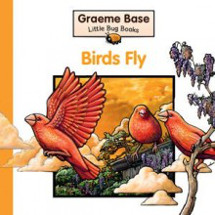
Birds fly by Graeme Base
Little bug books. Viking, 2014. ISBN 9780670077649.
(Age 1-5) Recommended. Animal behaviour. Birds fly but how do other
animals move? In this lift the flap book, Graeme Base looks at the
world of animal action. Included are beautifully illustrated animals
like crabs and dolphins that will delight the senses.
Young children will enjoy this book, first looking at the animal
that is wonderfully drawn and then trying to guess what word will
describe the animal's actions. When the flap is lifted, the reader,
especially if they are an adult, will find a word that may not be
the one they expected but which is a great image of how the animal
moves. For example, dolphins leap and crabs scuttle.
As always, Base's illustrations are rich and vividly coloured and
bring the animals to life. Young children will love the happy
expressions on the animals' faces as they move across the page. At
the end there is a little bug asking if the reader found it,
encouraging users to go back to the beginning to find it and to
experience the vibrant pictures again. The fact that it changes
colour on each drawing is a good opportunity to introduce the idea
of camouflage.
This series is an ideal one to give to very young children as it is
sturdy and well produced. I can also see it being used with young
children who have English as their second language, as they would be
able to easily learn to say and read some new words.
Pat Pledger
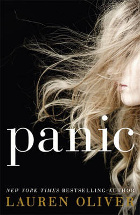
Panic by Lauren Oliver
Hodder & Stoughton, 2014. ISBN 9781444723038.
(Age 14+) Recommended. Thriller. Adolescents. Risk-taking. Poverty.
Heather has never thought that she was the sort of person to put her
life on the line, but she finds herself taking part in Panic, the
game that is traditionally played by graduating seniors because
there is nothing else to do. Everyone puts into the pot and the
prize money offers the winner a way out of poverty and small town
life. Heather lives in a trailer in Carp, a dead end town. Her
mother is an alcoholic, her father dead and all she wants is to
leave for a new life. Dodge is bitter. His sister Dayna, lost the
use of her legs playing Panic, and there is no money to help her
regain mobility. He is playing Panic to get revenge on the family
that caused Dayna's car to crash in the game. But all the players
have secrets and will have to face enormous fear. What will the
players do to win $67,000?
The story Panic brings to the fore the lives that some young people
have when they live in a town where there is little to do. Boredom
ensures that the game will be followed and there will always be
people who will play it in the hope that they will be the winner;
risk-takers who are in it for the thrill and those who see the money
as the only way out. On one level the book is a thriller, keeping
the reader on the edge of the seat as the players participate in
terrifying games and numbers are gradually whittled away leaving
only a few contestants. On another level it is an analysis of the
factors like poverty, abuse, and poor self-esteem that push the
players to the limit.
The story is told in two voices, that of Heather and Dodge. Heather
seems to have no future, hates Carp and believes that her problems
would go away if only she could leave. Dodge is a loner, angry and
determined to win even though he knows firsthand just how badly it
can all turn out. He is in love with Nat, Heather's best friend, who
has problems of her own but who also wants to win. They make a pact
to help each other, while Heather's best friend, Bishop tags along.
There are mysteries to solve along the way - who are the anonymous
judges and how do they know the innermost fears of the contestants?
Will the police be able to stop the game and will anyone die?
This is an enjoyable story that makes the reader think about the
risks that this group of teens will take to make changes and whether
it is money or leaving town that will ultimately change their lives.
Pat Pledger