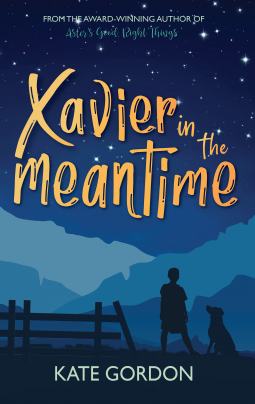
Xavier in the Meantime is a companion book to the wonderful 2021 winner of CBCA Book of the Year: Younger Readers, Aster’s Good, Right Things. This is Xavier’s story, who is Aster’s best friend. Like Aster, Xavier struggles with his mental health, which is manifested in the spectre of the black dog of depression. Fortunately, he is unfailingly supported by his loving parents and Aster and increasingly his psychological support group. Nevertheless, he continuously blames himself for his parents unexplained recent separation. His father has moved back to the family sheep farm. Xavier looks for a way of keeping the black dog at bay and comes up with a plan to not only help himself but the others in the support group. This involves turning the farm into a therapy retreat. Yet the realities of his illness make this a huge challenge.
Kate Gordon astutely creates really endearing rounded characters who face credible situations. Xavier’s self-talk is sometimes confronting but spot on. For example, the list of ways people ignorantly judge people with depression. I love how his illness waxes and wanes but he maintains his flamboyant dress sense. The description of Xavier’s outfits create vivid joyful pictures of him. Aster and some other young characters provide some humour and positivity. The use of affirmations as chapter beginnings becomes powerful as the story develops. Xavier’s growing interest in poetry gives us a different way of understanding his thinking.
Xavier in the Meantime is about knowing that you are not alone and there are good people who will help. It’s also about self-acceptance and learning how to deal with your own form of mental illness. Although the story has some very serious incidents these are cushioned in love from those around him and it is therefore appropriate for young readers with mature tastes. It also has a realistic but uplifting and satisfying conclusion. I believe it is best read following Aster’s Good Right Things and adults will also benefit from Kate Gordon’s insights.
Themes Depression and anxiety, Friendship, Family, Animal rights.
Jo Marshall
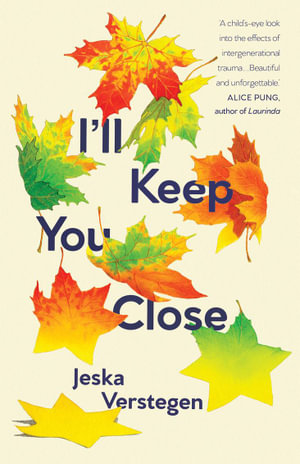
I'll keep you close by Jeska Verstegen
Allen & Unwin, 2022. ISBN: 9781760526917. (Age:11-14) Recommended.
World War II is long over in Europe, but for Jesje (Jeska) the memory lingers in her family and their responses to life. Jesje is 11 years old and a dreamer. Her mother survived the war, but her life is still impacted by the fears and trauma that being of Jewish heritage caused. Jesje’s grandmother (Bomma) is in a nursing home and her memories have become scattered, but she calls Jesje a name that she has not heard before. At the same time, Jesje’s teacher has begun reading a book about World War II, and then Jesje also reads The Diary of Anne Frank. Slowly Jesje starts to put pieces together of her family experience to help her to understand her mother and grandmother. But through it all, Jesje is just a girl who likes to play, who needs to know where she fits in the world and who has a family story that is interesting and sad. The scars of the past need an explanation.
This is lightly written, a gentle naive journey into the horrors of the Jewish experience for many families, even for the survivors. There is a child-like skip and hop through the discovery of Jesje’s family history, with friendship and school issues woven into the tale. It is a lightly poignant telling of a real story of family pain. The author Jeska Verstegen is telling the story of her own family: her grandfather was a Jewish-Dutch publisher who lost his life under the Nazi regime. Her grandmother survived by hiding. Her mother, a small child at the time, was significantly impacted by the need to be circumspect. This book will be a discovery journey for young readers aged 11+. Its naivete will perhaps make it an entry level opportunity to discover something about the Jewish experience during and after World War II.
[NB: The name of the central character Jesje is sometimes interchanged with Jeska within the story.]
Themes World War II, Jewish war history, Family, Trauma.
Carolyn Hull
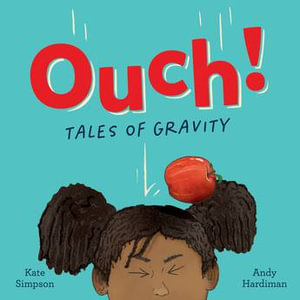
Ouch! Tales of gravity by Kate Simpson and Andy Hardiman
Allen & Unwin, 2022. ISBN: 9781760526610. (Age:5+) Recommended.
For children who enjoy Science facts or those who yearn to understand challenging concepts, this newly released factual picture book, Ouch! Tales of Gravity, will provide younger readers with an entertaining look at gravity. The simple introduction of the falling apple begins the story of how Sir Isaac Newton first discovered gravity. The author, Kate Simpson who is a chemical engineer as well as a creative, then goes on to explain gravity in more depth and detail. The bright and colourful full-page illustrations by Andy Hardiman are the perfect accompaniment to the text and provide the reader with more understanding. A particular standout is the cross-section drawing of the International Space Station which is explaining how the lack of gravity changes how we do things. At the end of the book is a ‘Facts about gravity’ section plus an experiment with gravity that children can try at home or school.
Themes Science, Gravity.
Kathryn Beilby
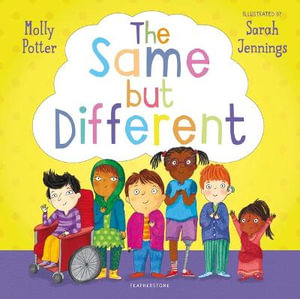
The same but different by Molly Potter. Illus. by Sarah Jennings
The start of the school year is a wonderful opportunity for teachers, carers and children to connect with others in their learning environment. This is often done using literature, games or activities. A late 2021 release, The Same but Different, is a perfect non-fiction book to share with young children in learning about how unique they all are. The introduction titled ‘Dear Reader’ gives a brief overview of the purpose of the book and how differences should be ‘respected, celebrated and enjoyed.’ It is followed by the contents page across a double page spread with delightful illustrations of a diverse range of children. One of the early topics covered include ‘There’s nobody exactly like you’ which has cleverly presented speech bubbles with questions children can ask each other. Other topics discussed consist of looking different, being good at and liking different things, different personalities, opinion and beliefs, different languages, places, homes and families as well as a double page of children using speech bubbles to tell something ubique about themselves. The book also considers how we are the same, what we prefer and deserve. The final pages offer advice about talking with children about diversity and difference as well as a glossary.
Beautifully illustrated throughout with brightly coloured pages, this thoughtful book has a place in all libraries.
Themes Diversity, Uniqueness, Feelings, Well-being, Social & Emotional Learning.
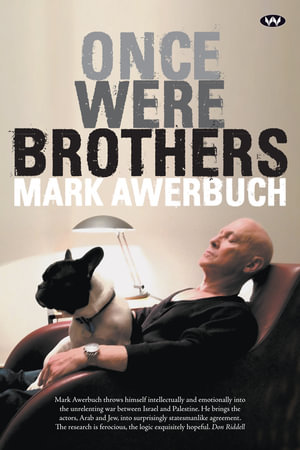
Thinly disguised as a thriller, Awerbuch's novel is a well-constructed exploration of the proposition that a combination of intelligence, good will, and a thorough knowledge of history must surely be able to find a solution to the Israeli-Palestinian conflict. His protagonist Mathis Naphthali has an exceptional mind, polymath, multilingual, and with an eidetic memory. He is kidnapped and given the task of negotiating a peaceful resolution to the long-standing conflict between the two countries.
Mathis, the accountant, has a thorough understanding of the deep-rooted issues, and in fact his responses to questions posed by the delegates at the negotiation table, provide history lessons that go back to the origins of the two kingdoms in pre-Biblical times. But key to his approach is a calmness, honesty and openness that inspires reciprocity by the other participants.
Awerbuch’s book is an argument for reasonableness, understanding and collaboration. He suggests that human beings must be capable of resolving the long-standing grievances and come to a solution that appeases all parties. The characters are real characters, leaders and politicians involved in the conflict, but the dialogue is invented. Awerbuch must have wished that they could reach the understanding that he has imagined.
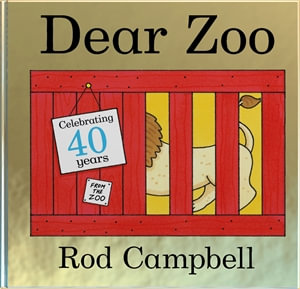
The 40th anniversary edition of this classic children’s book will create another generation of fans when offered this beautiful gold edition, a board book which fits snugly into smaller hands. The lift the flap pages which greet them will be enough to keep them eagerly involved and the story that unfolds showing the zoo animals in all their glory will hold readers spellbound. Campbell, a favourite creator of stories over four decades, uses gentle humour to entice his pre-school readers into looking at a range of animals.
The book offers readers a tale of selecting an appropriate pet as the child writes to the zoo in their quest. Each double page shows a crate delivered to the house with a few words hinting at what might be inside. The big yellow crate which greets the readers when opening the book, has a sign saying ‘very heavy’ and the text tells us that he was too big so was sent back. Opening the flap reveals an elephant, a most inappropriate pet.
The next page reveals a giraffe and children will see its head above the crate, so the reveal will confirm what they have already worked out. Children will love guessing what the new offering might be, eventually opening the flap to reveal the contents of each crate.
Each animal will cause laughter amongst the readers as they see from the words and images that the animal is not what someone would like as a pet. Readers will be able to discuss with the adult the animals they have seen, the animals they might see in a zoo, the difference between a zoo animal and a pet, while taking in the repetition, range of colours and the humour on each page.
This is a wonderful edition celebrating a well known and loved book, ensuring it will continue to be loved by many more generations of fans.
Themes Zoos, Animals, Pets, Humour, Colour.
Fran Knight
If this gets out by Sophie Gonzales and Cale Dietrich
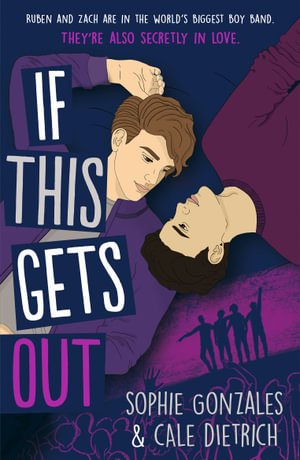
'Saturday' is one of the world's biggest boy bands, and Ruben and Zach are two of the members. The whole band are great friends, with Zach and Ruben being best friends. Ruben struggles under constant pressure from management to stay in the closet, and his patience is wearing thin. Luckily, he has Zach to talk to, and the other members of the band, Angel and Jon. Then the band sets off for a tour of Europe, with an intense schedule and lots of pressure. Ruben and Zach's close friendship progresses into romance, adding a whole new level of demand from their management team. With the potential threat of losing their fan base if this gets out, will they ever be able to be themselves?
This love story is told in dual perspective of the two main characters - Zach and Ruben. The story develops nicely through the whole novel, with the characters and plot all being feasible as a possible real life occurrence. Authentic characters, with flaws and emotions, give this novel depth, as well as keeping readers engaged. Numerous themes are tackled in the book, including looking at the music industry and how it treats members of the LGBTQIA+ community, the pressures involved with being an artist, drugs, drinking and partying (and overdoing it) and standing up for yourself. Fans of Autoboyography by Christina Lauren, What If It's Us by Becky Albertalli & Adam Silvera, as well as the Heartstopper graphic novel series by Alice Oseman will enjoy this male-male romance.
Themes Love Stories, Romance, Contemporary, Boy Bands, Music, LGBTQIA+, Travel, Drugs, Pressure.
Melanie Pages
Here's to us by Becky Albertalli and Adam Silvera
Simon & Schuster, 2022. ISBN: 9781398505209. (Age:12+) Highly recommended.
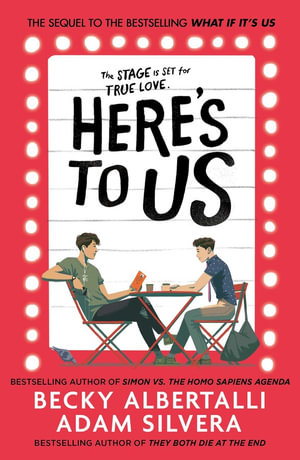
The characters in this teen romance are so likeable and so believable that once started it is hard to put this book down. I hadn’t read the previous novel What if it’s us, but I understood that Ben and Arthur had found each other after various mishaps, became bonded, but then because their lives were taking different directions, and a long-distance relationship wasn’t viable, agreed to part. The sequel picks up a few years later, with Arthur in a tentative relationship with quiet cautious Mikey, and Ben enjoying his time with flamboyant fun-loving Mario. But when Arthur and Ben meet again things become complicated. Are their feelings just that of old friends, or could it actually be true love?
This novel is a collaboration between two well-known writers of young adult fiction, Becky Albertalli and Adam Silvera, with alternate chapters written from the point of view of each of the main characters. Perhaps readers familiar with their work will recognise each voice. It is an interesting approach and it definitely works! We get to know and empathise with Arthur and Ben, and their inner feelings and doubts.
Another good thing about the writing is that the other love interests, Mikey and Mario, are equally interesting and draw our sympathy. We care about what happens to them. Mikey’s story is particularly poignant. He is a vulnerable young person who really tries his best in the relationship and sadly is destined to suffer.
The extended friendship group is also very realistically depicted and one can’t help but love crazy Dylan, a friend to both Arthur and Ben.
I’m sure this book will be as much a hit as its predecessor. It is just such a genuine depiction of young love and angst, working out what is the right thing to do, and making decisions about future directions – a difficult time that many young readers will identify with.
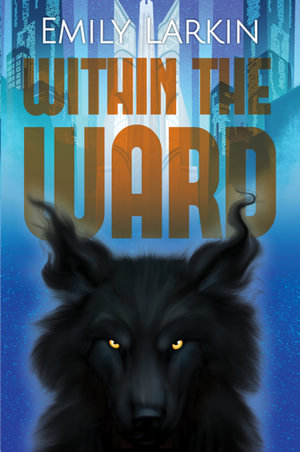
Paige is struggling. Life was hard enough, and then her best friend died and she can't go on. She attempts to make her own exit, but she is admitted to Raydale State Hospital and labeled as a 'Depressive'. Depressives are considered a danger to others as well as themselves, and must undertake the 'Journey', an immersive dream reality where patients face dangerous situations and problems to solve. It's meant to be the cure, but Paige discovers that not everything is as it seems in the hospital, and while she'd been doing her best to stay removed from the other patients, she is soon drawn into their lives. Will the patients ever leave the ward? Can Paige find reasons to live?
This novel explores complex themes revolving around depression, mental health, stigmas, and how society deals with these issues. Depression manifests differently for those experiencing it, which is illustrated well in the book. Difficult topics such as suicide are discussed, and there are a number of references found at the end of the novel for mental health assistance across Australia, such as Black Dog and Beyond Blue. Told primarily from Paige's perspective, mixed in with James, the doctor at the facility, and several other characters, the story is diverse in thoughts and perspectives. The mix of characters is well done, with the relatable and the ones that are easy to hate both being present in the novel. While this novel is primarily a dystopian/science fiction, it is also contemporary for dealing with the particular issues outlined above.
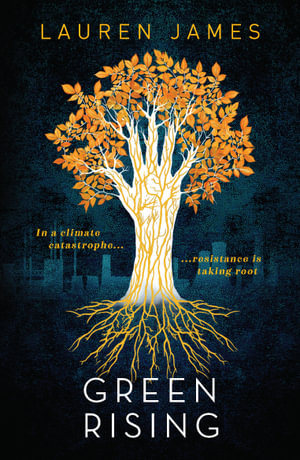
Climate-change activist Gabrielle becomes an international sensation when she becomes the first teenager to exhibit 'Greenfingers' powers - by growing plants from her skin. Theo, in the UK, is the son of a struggling fisherman who discovers his own Greenfingers powers when at sea and his dad's life is in danger. Hester is the daughter of an American energy king and she has fought to keep her Greenfingers powers from emerging, but then she slips up in front of Edgar Warren, eccentric billionaire who is leading the charge to live on Mars, having founded Warren Space and set up a colony on Mars already. These three teenagers are growing up in an ecological catastrophe and their new found Greenfingers powers might be the way to help the planet recover. If they can avoid being exploited, feared and persecuted, and find a way to work together that is.
Written by author Lauren James, founder of the Climate Fiction Writers League, this novel is part of the effort to raise climate change activism awareness. This science fiction dystopian is told from the perspectives of Theo and Hester, with articles, tweets, blogs and other media snippets intermingled throughout. Readers will recognise the influence of Greta Thunberg in this extremely relevant novel regarding climate change and activism. The story is well paced, moving between the two main characters seamlessly. Ideal for readers of other dystopian stories where teenagers are impacted by some environmental or viral factor, and develop powers, such as The Darkest Minds series by Alexandra Bracken.
Themes Dystopian; Science Fiction; Climate Change; Global Warming; LGBTQIA+; Activism.
Sixteen-year-old Australian Taj is living in Bali where life is complex. Idyllic at first, living in Bali is now complicated, since his dad was arrested for smuggling drugs ten years ago. Kimbo, Taj's dad, has been on death row in Kerobokan Prison ever since. Taj visits his father in prison regularly, feeling that life is in limbo with all that is going on. Then an execution date is set, and Taj knows he can't let it happen, he has to do something. Only thing to do? Arrange a prison break and get his dad to Australia. Simple enough, right? Not quite, as Taj discovers. What unfolds is a series of bad breaks, danger, and life on the run. While fighting for his father's freedom, Taj learns more about his family, and starts to uncover truths he never expected.
Set mainly in the Indonesian island of Bali, this action packed coming of age story is fast paced, full of strained relationships, lies and twists throughout. Told from multiple perspectives, the short chapters enable readers to proceed swiftly through the well written story. Readers will find the characters relatable and enjoy learning more about each character as the story progresses. Several common threads are found through the book - surfing, justice and truth. Ideal for fans of contemporary fiction, surfing and readers of true crime, as the death penalty is still controversially in practice today. This is a harsh reality that has been written about really well in the book, with numerous characters having different thoughts about the case described. With partying, swearing, prison life and the death penalty, it is recommended for readers 12 and up, ideally those mature enough to handle the themes.
Themes Contemporary, Surfing,Australia, Bali, Drugs/Drug Smuggling, Prison, Justice, Human Rights.
Melanie Pages
Banjo Tully by Justin D'Ath
Ford St, 2021. ISBN: 9781925804904. (Age:10-15) Highly recommended.
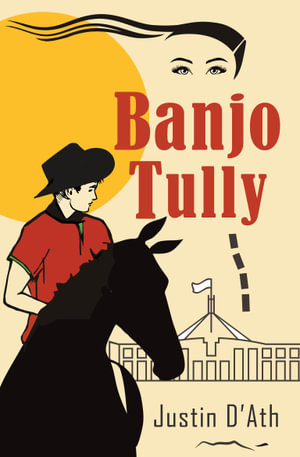
Banjo Tully is an average 15-year-old boy living in country NSW. He is in Year 9 and is an easy-going prankster with a good group of friends and a strong sense of fairness. Banjo’s family own a farm and are living with the impact of a community in severe drought. They have already had to sell their cows, and all around them are other families who are also on the edge – selling farms and closing businesses.
One morning Banjo takes his horse Milly and makes a stand against perceived injustice at his school, 21 kilometres away from home. In doing so he comes to the attention of a Vietnamese girl in Year 10. Mai Le is a well-informed, well-spoken and energetic female character who plays a vital role in increasing awareness of climate change throughout this story.
Mai pushes Banjo to become a poster boy for drought and climate change, by encouraging him to ride Milly over 800 kms to Canberra. Banjo is somewhat unwilling to begin with – the idea is crazy and all he really wants is to be able to keep Milly on the farm, not change the world!
With some fast planning, though, he mounts Milly and heads towards the Climate Emergency Summit to be held in 12 days. The journey opens his eyes to the reach and devastation of the drought, and to the impact that one teenager can have in raising awareness. He is repeatedly aided by strangers along the way who admire his courage and growing conviction, and who all do what they can to help Banjo and Milly.
This book has a host of positive features: likeable and strong protagonists (both male and female), short chapters, love and care of animals, cultural diversity, and Australian setting/issues (drought, climate change, mateship and looking out for each other).
There is a comprehensive teacher resource available including curricular/cross-curricular links for Years 5-8, covering suggestions for use as well as discussion points.
This book could be used as a class text alongside Justin D’Ath’s 47 degrees, with shared themes of Australian environment, animals and different cultures.
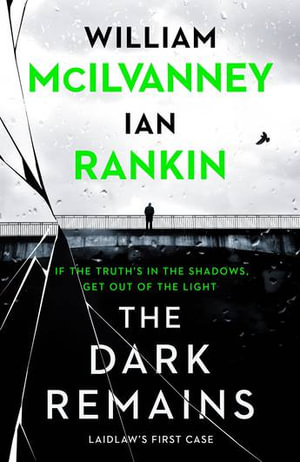
When McIlvaney died in 2015, he left behind a hand written manuscript exploring the first case of his detective, Laidlaw, the lead of his previous novel, simply called Laidlaw. Rankin was given the material to complete for publication and so two well known and much followed actors came together, one Glasgow, one Edinburgh.
It is a wonderful tale, the laconic Laidlaw lives some of his time in a hotel, leaving his wife and children in the suburbs, a situation he explains away as allowing him to get to work more quickly. But he is no longer in love with her, the tedium of being at home disappoints him and he prefers to stay away.
In this book he is teamed with Bob Lilley who is warned of Laidlaw’s singlemindedness, his inability to work as part of a team, placed in this station as a last chance. Lilley must mentor him, and every crime fiction reader will know that Lilley is in for a hard time. But he rolls with Laidlaw’s behaviours and the readers will love Lilley for his handling of a difficult situation.
A gang boss, Bobby Carter has been murdered, one of the four who surround their boss, Cam Calvin with muscle. With his body dumped in the territory of a rival crime boss, Jack Rhodes. Laidlaw can smell a rat, and goes searching for clues which will uncover what is really going on behind the scenes. The dead man had been dating Jenni Love, daughter of a one time football hero of Glasgow, now relegated to being a coach of the lesser teams. Jenni had also been dating a strong arm man for Rhodes, and so things do not seem quite right to Laidlaw.
DI Milligan is in charge of the case and he deals with Laidlaw in a way that gets under his skin, so he rarely shares information or sets foot in the office. But he ferrets away, talking to the most improbable of people, barging into homes where he is clearly not welcome, keeping his eyes and ears open to any changes.
Glasgow in the 70’s is brought to life as Laidlaw takes buses to appointments, visits criminals in their homes, scours the seedy backstreets of the city. And when he finally nuts out what really happened, it is up to him to present the case to the Commander, despite the best efforts of DI Milligan.
A stunning read which will send readers to the other book about this eponymous detective.
Themes Crime fiction, Domestic violence, Glasgow.
Fran Knight
The other Bennet sister by Janice Hadlow
Pan Books, 2020. ISBN: 9781509842049. (Age:Secondary - Adult) Highly recommended.
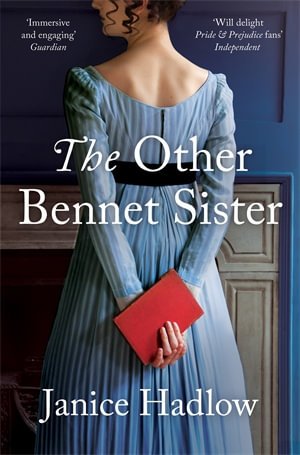
The familiar story of Pride and Prejudice rolls off the pages as we are transported into Regency England where the Bennet family goes about its daily routines, the mother desperately wanting husbands for her five daughters. The first half of the book is a version of Pride and Prejudice, told form a differing perspective, the overlooked third daughter, Mary. It is delightful, recalling one of the greatest of England’s stories, allowing the reader to feel comforted in the knowledge that they are reading something known and loved but with a slight twist. Here are all the wonderful characters, the settings and events which make up their lives. The proposal by cousin Collins is hilarious, introducing Mary to the game of finding a husband and all of its intricacies.
I loved the beginning, recalling known events and characters and drawing out the unloved and overlooked third girl, one passed off by the notorious Mrs Bennet as not having the same marriageable characteristics as her other four daughters. Her hair doesn’t curl enough for her, she is always reading, she is not as pretty as Jane or witty as Lizzie, and so on, and we feel guilty that while reading Pride and Prejudice we have sanctioned her dismissal. And Hadlow strategically presents the other loved characters in a vaguely critical light as they too ignore, demean and disregard their sister.
But in this story she takes on new roles. Once her father dies, she must move with her mother at Lizzie’s home, but finds this stifling. Recalling her aunt Gardiner in London, she writes and is welcomed into that household.
Here, Aunt Gardiner takes her in hand, loving her for who she is, but drawing her out, taking notice of her, dressing her with care, introducing her to their small society of friends. And Mary blossoms under the attention, learning to be comfortable in society, chatting at ease with those around her. She attracts the attentions of two young men, and these two vie for her companionship.
All the while, the same preoccupations as the original shine through: the pride of some and the prejudices of others in this small group of people, until Mary sees through all the cosmetics and makes a decision we can all admire.
This is a wonderful read, and very long. I wanted the end to come far more quickly so engrossed was I in Mary’s taking her life in her own hands.
Themes Jane Austen, Pride and Prejudice, Regency England, London, Lakes district, Wordsworth, Families.
Fran Knight
Britannica's 5 minute really true stories for family time
Britannica Books, 2022. ISBN: 9781913750374. (Age:5+) Recommended.
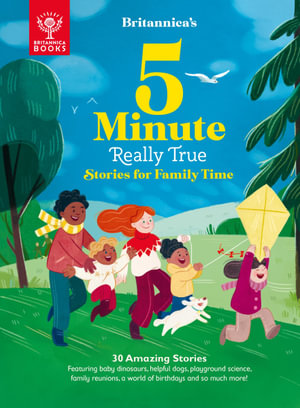
Britannica's 5 Minute Really True Stories for Family Time was written in response to Covid lockdowns, and the amount of time families were spending together. It is a compendium of true stories that take approximately five minutes to read and is a companion to Britannica's 5 Minute Really True Stories for Bedtime. In this latest publication there are 30 stories covering families, both human and from the animal world and how they go about their daily lives. The varied and diverse topics listed on the contents page include such things as homes, celebrations, pedal power, saying goodbye, dinosaurs, the great outdoors, creepy crawly hideaways and playgrounds. Within each six-page spread there are brightly coloured illustrations to complement the clearly presented text as well as labelled diagrams and step by step instructions where applicable. Each topic presents a snapshot from places all over the world: for example, the food bought in the market in Barcelona may be very different to what is bought from a market in Ecuador. The story about ‘Getting Married’ gives information about weddings in India, Japan, Germany, Peru, the Philippines and Australia. Interestingly it states that in Australia wedding guests bring small stones to place in a bowl called the unity bowl for the married couple to take home to remember those who attended their wedding. Other Australian mentions include Coober Pedy, koalas and the Magnetic termite.
This would be an interesting book for those children who enjoy non-fiction and learning something new or as a shared read aloud for an adult and child.
Themes Families, Short Stories, Animals, Facts, Diversity.