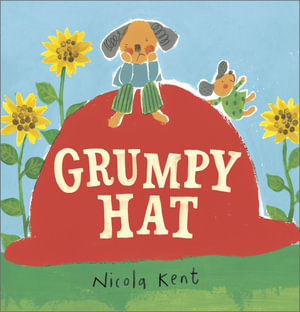
Everyone knows that little sisters can be an-noy-ing! So when Ravi gets annoyed with Ruby and breaks her toy car in a rage, everyone goes to bed upset. Ravi wakes up the next morning with a bright red grumpy hat stuck fast on his head! And he can't get rid of it, no matter how hard he tries. Ravi learns how to swap his grumpy hat for happy socks in this uplifting story about siblings, family life and controlling bad moods.
Everyone has woken up with their grumpy hat on and so this story will resonate with our youngest readers, but portraying a bad mood as an animate object brings well into their world of the concrete and the here and now. Hats can be seen and touched and described whereas moods are more elusive, and little people don't have the vocabulary or the skill to articulate them. So having an ugly, uncomfortable red hat that is "heavy like a log", "itchy as a spider's dance class", "sticky as dough" and "tight like too-small-shoes" not only creates a visual image of the feeling but starts to build their words to describe it.
And while each will have a story to add about a time their grumpy hat was stuck on, they will also be able to talk about a time that, like Ravi, they were able to swap it for happy socks.
Barbara Braxton
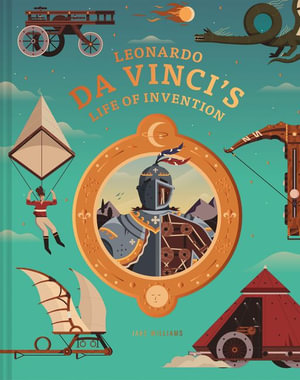
Leonardo Da Vinci's life of invention by Jake Williams
Pavilion, 2022. ISBN: 9781843654988.
Whether you're looking into art, architecture, engineering, mathematics, music or just about anything else, the name of Leonardo da Vinci keeps cropping up. Born in 1452 in a small town in Tuscany Italy, more than 550 years later his inventions and discoveries live on being the foundations of many of the things we take for granted. Known now as a polymath - someone whose knowledge spans many different areas and subjects - he was responsible for so much more than the Mona Lisa.
This new book written to introduce the man, his talent, skill and world to young readers who are as curious as he was, is a fascinating read that follows his life, his discoveries and their continuing impact in a way that is easily accessible and full of illustrations. Through his passion for sketching and note-taking that left a legacy of 'wild ideas, futuristic inventions, fearsome creatures and beautiful works of art', the author has pulled together an authoritative, engaging biography not just of the man but his contribution to his society and ours.
Themes Leonardo Da Vinci, Inventions.
Barbara Braxton
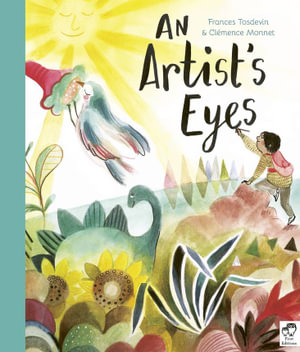
An artist's eyes by Frances Tosdevin. Illus. by Clemence Monnet
Frances Lincoln Children's, 2022. ISBN: 9780711264830.
When Mo looks at the sea, she sees "dazzling duck-egg blue, a swirl of peacocks and the inky indigo of evening" but all Jo sees is blue.
When Mo looks at the forest, she sees "shiny apple-green, the lime of gooseberries and the springy zinginess of moss" and shadows that make the green go darker. But all Jo sees is green, making him more and more frustrated because he can't see what Mo does. But Mo is patient and gradually Jo begins to use his imagination although instead of seeing the shades and hues that Mo does, he starts to see something different...
This is a powerful yet gentle story that reminds the reader that two people can look at exactly the same thing and see it differently- that each of us has artist's eyes that are shaped by our imagination, experience and perceptions and it can take us a while to align them. Monnet's watercolour interpretation of Tosdevin's lyrical text is enchanting and with their shapes, lines and colour choices the reader will view them through Mo's eyes or Jo's eyes or their own eyes...
At the age where our children are exploring a new independence and making a wider friendship group, they look at those around them and think that being like them is the key to "success:" and they try to change who they are to be like those they admire. So this familiar message of being comfortable in your own skin, being the unique individual you are, perhaps even being the 'you' that others admire and seek to emulate is important and cannot be shared too often. So this iteration of that truth is not only important but being a completely different interpretation gives it added reach and recognition. Whether our eyes kiss in the corners or speak to the stars, sees shapes or colours or sparkles, what we see is unique to us and is as valid as what our neighbour sees.
Barbara Braxton
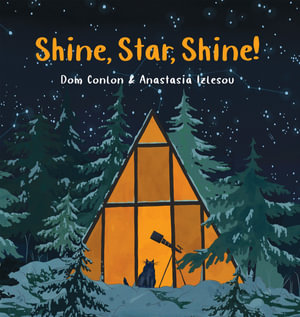
Shine, Star, Shine! by Dom Conlon. Illus. by Anastasia Izlesou
From the author of Swim, Shark, Swim! comes the book Shine, Star, Shine! once again written in the complex poetic language style which sets these books apart from others in the factual narrative range. Our biggest star is the sun, and this story shares how it is so very important in our lives. From where it rises in the east, to night and day, how it ‘ripens the wheat in Idaho, adds fire to spice in Punjab’ and provides a source of growth for flowers and forests from China to Brazil. The sun visits Australia and shares with the reader how it can burn and cause harm. It then travels west, through deserts, and to the North and South Poles where it stays low.
The striking illustrations are presented in a dark pallet of colour with the orange orb of the sun the focal point. There is a great deal of detail in each of the drawings to engage the readers and promote discussion. In particular, the images of the constellations are striking. The author has included Star Facts in the final pages which provide helpful explanations of more difficult words and concepts. This is a book which benefits from being read more than once and discussed with younger children.
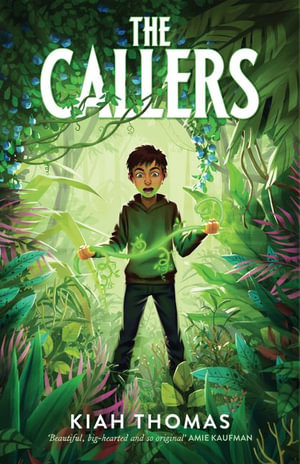
Quin Octavius is an 11-year-old boy who lives in dread of a test he must sit to prove he is a Caller. Calling is a special ability you are born with where you summon things by saying the word and that object appears. There’s no need to grow your own food or buy anything if you are a Caller. His intimidating and powerful mother is Chief Councilor in this world of Elipsom. His sister Davinia, and best friend Cassius, are accomplished Callers. Quin knows he doesn’t have this ability and is mortified that his mother and sister cheat in order for him to pass the test and therefore uphold family honour and dominance. Quin realizes there are people who don’t rely on Calling and live much simpler, happier lives and he questions the way things work in Elipsom. Suddenly he finds himself in another world, Evantra, where he meets and befriends Allie. He discovers the truth about Calling and how Elipsom is abusing the people of Evantra and stealing from them. Quin also learns the truth about himself and his own important gift which may help revive a deteriorating natural world.
The Callers is a very well-paced and readable sci-fi parable about our own world. Currently powerful governments and greedy businesses exploit people and resources and destroy lives and the environment. These are important topics to ponder and I think this novel will work well as a class novel for 11/12-year-olds. There are also ethical issues of honesty, betrayal and questions of loyalty to family. Although The Callers deals with serious stuff this is balanced out with a creative and rich world of maengoberries and rhinodrites. The inhabitants of Evantra have ingenuity and care for each other. Then there are also the heroic characters of Quin and Allie who have hope and principles. The story ended quite positively but abruptly and I think there will probably be a sequel.
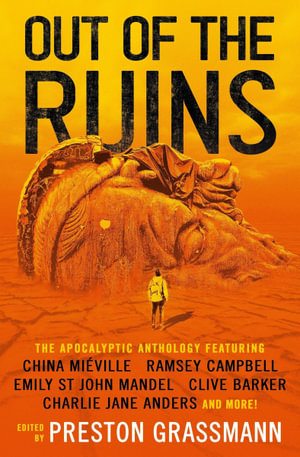
Out of the Ruins is a collection of post-apocalyptic short stories from some big names in science and speculative fiction. China Mieville (The Scar, The City & The City), Emily St John Mandel (Station Eleven) and Carmen Maria Machado (Her Body and Other Parties, In the Dream House) are just a few of the authors featured. The premise of the collection is to look at the end of the world through the ruins left behind. What do we as a species and as individuals value the most? What do we wish to salvage from the wreckage and will we be able to save our humanity? The importance of resilience emerges as a clear theme from beginning to end.
Out of the Ruins features eighteen short stories and two poems. As with most collections of its type, not all are created equally. There are some notable standouts, such as St John Mandel’s ‘Mr Thursday’, written in the author’s famously slow, lyrical and melancholic style. Nina Allan’s ‘A Storm in Kingstown’, with its post-apocalyptic reimagining of witchcraft hysteria, is also impressive.
However, there are also disappointments, including the fact that Clive Barker (Abarat) who is featured prominently on the book’s cover, only contributes a short poem. Some readers will be disappointed with the abrupt ending of many of the stories, particularly those written by their favourite authors. However, this is a common complaint for the short story genre and readers will need to be comfortable with being left yearning for more.
Themes Science Fiction, Post-Apocalyptic, Horror, Short Stories, Speculative Fiction.
Rose Tabeni
Beastheart : Slayer Book 1 by A.H. Blade
Hachette, 2022. ISBN: 9781408363706. (Age:10+)
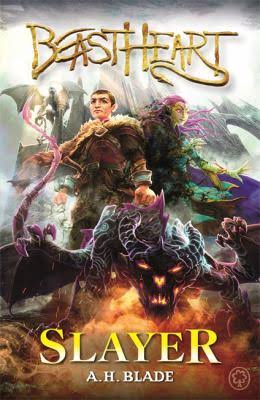
On one level, Slayer, the first book in the new Beastheart series, is a vile and violent book, one that would not be confidently recommended to children. Why one may ask do children need to read about such brutality in such graphic detail? Against this, one must note that Slayer is written by the same group of authors, writing under the same non de plume of A.H.Blade, that produced over 100 books in 20 different series called Beastquest.
A.H.Blade has a huge following of fantasy lovers. While hesitant about promoting this book and during discussion about appropriate book selection, an eleven year old student challenged me with "Why wouldn't you keep it in the library for us! It's just D.& D." (Dungeons and Dragons).
Beastheart : Slayer is the first book in what will be another epic fantasy adventure series. The kingdoms, the worlds, are extremely complex, consisting of complicated alliances and rivalries between and within hierarchical human, elemental and magical kinds. The focus is on creation and destruction of Biblical proportions with " kinds" organised in a style reminiscent of Linnaeus's system of classification. These worlds were created in the beginning. There was an order but humans destroyed it. The new world is run by beasts called the "new kind" and humanity is the bottom class living a frightened slave-like, menial existence.
Our protagonist, Jonas, is a human. He has been blamed and jailed for the mysterious destruction of his village - an act of which he has no memory. To reduce his sentence he has to use his killing power to catch criminals to trade against his sentence. Jonas is hard to like. His killing is a passion within him but there is also a struggle within him and a fear and uncertainty about his history. Importantly, he has a secret, supernatural connection with an invisible spirit which gives him strength and companionship. The reader feels there is hope for redemption for him but it is a long time coming.
The characters and the settings are complex; the plot is complicated and convoluted. A fantasy world is built; violent confrontations and deaths occur. A powerful cinematic world of action and colour is achieved. There is the mysterious past, there is the dangerous present, there is warfare, there is destruction, there are unstable alliances, despair and a vague hope.
Slayer is set in multiverses. Readers who are fluent fantasy readers, who can cope with multiple twists, characters, events and subplots, who can hold multiple threads together and are comfortable with tangled, intricate and sometimes impenetrable layers will enjoy Slayer.
I will test it on the abovementioned student. No doubt the series will be a resounding success!
Themes Fantasy kingdoms, Warfare, Human, magic and elemental realms.
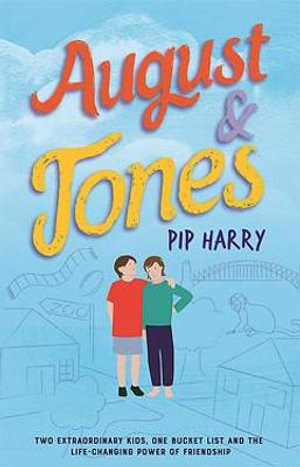
CBCA award winning author of The Little Wave, Pip Harry, continues to display her perceptive understanding of current tween/teenage thinking and concerns in her latest book August and Jones. Harry is able to depict a very strong sense of the place in which her characters operate. As in The Last Wave, characters (in this case Jones and her parents) move from country to city. Harry skilfully evokes the sights, sounds and smells of places. Eleven-year-old Jones moves from the family farm to a typical, small block of units in Woolstencraft in Sydney. Equally insightfully presented are the feelings and interactions of the characters.
Jones is worried about losing her friendships and making new friends in Sydney. August and Jones portrays the shifts of friendship that happen as the interests of the characters change and their proximity to each other changes. Jones is also worried about adapting to city life, about her father's health and about whether the blurry vision that she has is a return of the tumour that she had removed as a child.
Jones finds a staunch friend in quirky August who doesn't want to be the footballer his father wants him to be and whose parents are fighting. As their situations become more dire, the two friends decide to create a bucket list and begin to act on it. Things change dramatically and not always the way they want but sometimes unexpected outcomes arise. The most important thing is love as it turns out.
Harry takes the reader unflinchingly to some very dark and confronting places. A very nasty health issue is diagnosed and the very difficult treatment is followed through. The impact on the children, the parents and the children at school are depicted. Courage in the face of really awful treatment is beautifully drawn and the strength of the friendship, humour and hope break through the dark places.
August and Jones progresses with each alternate chapter told in first person from the viewpoint of either August or Jones. It's a delightfully Australian book and a sensitive picture of what family and friendship means especially when huge health issues are being dealt with and when futures can seem very uncertain. It's about making the most of life and appreciating it through all our senses. It's a novel about the possibilities of life, of resilience and hope and the power of true friendship.
Highly recommended - an easy and engaging read that deals with deep subject matter.
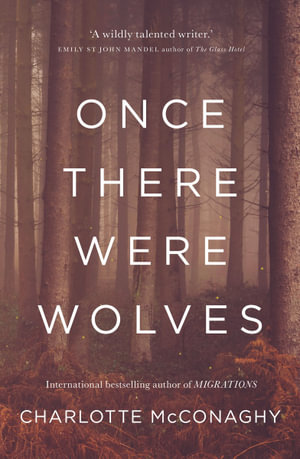
Inti Flynn has come to Scotland with her twin sister Aggie as leader of a group hoping to reintroduce gray wolves into the Scottish Highlands. She, like her sister, is damaged, unable to trust anyone, but as the wolves begin to settle down, she too begins to open up and starts to trust Duncan, the local police chief. Then Stuart, a local farmer, is found murdered, and Inti is determined that blame will not rest with her wolves. But who has killed Stuart? And is Duncan involved as well?
Once there were wolves is a complex and multi-layered story that will remain with the reader long after it has been finished. Gradually the author expertly exposes the mysteries surrounding the traumas that Inti, Aggie, and Duncan have experienced, at the same time building up the tension surrounding the murder of Stuart.
The setting of Scotland and Canada is exquisitely written. The descriptions of the forests and the wolves, the fear that the farmers have of the wolves and Inti’s lack of consultation all draw the reader in.
Inti is a fascinating character who has mirror touch synaesthesia, where she feels the pain of others, and McConaghy uses this to highlight the pain of the animals and the trauma that Aggie has suffered.
The dark themes of domestic violence, the survival of the wolves and people’s damage to the planet are threaded through the book challenging the reader, while the mystery of what happened to Inti and Aggie and who killed Stuart, keep the reader glued to the page. Book Club notes are available. Readers who enjoyed The survivors by Jane Harper may like Once there were wolves.
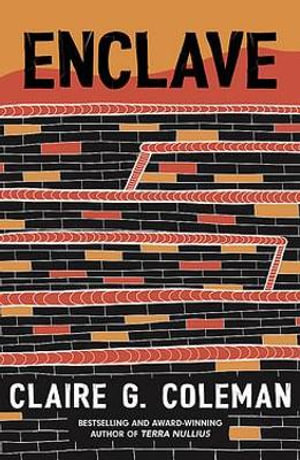
Enclave is Coleman’s imagining of a future world, where people live within a gated community, Safetown, their black servants bussed in from the Wasteland outside its walls. Safetown is a place of constant surveillance, nobody dares to question the government or the propaganda it posts. Christine struggles with the futility of her life, only just beginning to question why things are as they are. The disappearance of her close friend Jack, and her budding interest in the beautiful servant Sienna leads her to explore beyond the boundaries of the world she has grown up in.
Within the dystopian genre, Coleman explores issues of surveillance, alienation, racism, homophobia and exclusion. Her characters are diverse: Christine falls in love with the black female servant, leading to her vilification and expulsion from the world she grew up in. It is only when she is forced into the outside world that she starts to question the corporation controlled media of Safetown. She finds herself rejected and outcast, without any resources, constantly on the run. It is the world of the alien or illegal immigrant, living on the edge.
Although Enclave is set in a dark dystopian world, raising questions about power and manipulation, there is another vision offered of an alternative where people work together to find progressive solutions to world problems. It is a world of acceptance of LGBQTI+ people and of working together to care for each other and the environment.
Coleman’s previous novel with similar themes is The old lie. Her books provide an authentic Aboriginal voice within the dystopian genre.
Themes Dystopia, LGBQTI+, Surveillance, Racism.
Helen Eddy
Time Out! Whodunnit, Eddie Woo? by Eddie Woo & Jess Black
Pan Macmillan, 2022. ISBN: 9781760982997. (Age:7+) Highly recommended.
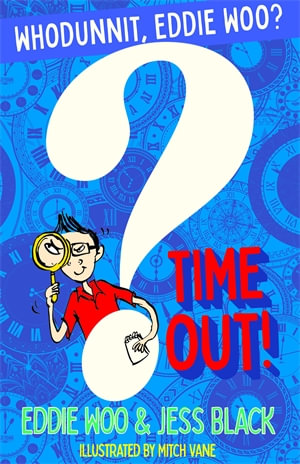
Popular Mathematician Eddie Woo, in collaboration with author Jess Black, has written an entertaining and exciting middle grade adventure. Eddie is beginning Year Six with his best friends, Rusty and DT and this term their classroom is in the Library as the old school hall is being repaired.
Eddie is surprised when he is offered the opportunity to help fix the huge clock from the 1880’s which usually hangs above the entrance to the school hall. He stumbles upon on the first clue with the big hand being an old brass key and begins to see the connection between the quote “Education Opens Doors.” This is the beginning of an exciting adventure with his Super Sleuth pals, Rusty and DT, to uncover a series of clever clues from Henry Cedric James who was the founder of the school and leads to an amazing discovery. Along the journey the children uncover clues in an old-fashioned blackboard, a grand piano, a lighthouse, a cathedral, and a waterfall in a National Park. Their clever investigation helps to solve a mystery but not before they face unexpected danger.
The detailed drawings by illustrator Mitch Vane complement the text perfectly and provide important visual links for readers. The use of interesting mathematical concepts and explanations throughout are a bonus and add depth to this action-packed story. Whodunit, Eddie Woo? Time Out is a refreshing new read that will be very popular with middle-grade readers.
Themes Friends, Humour, Problem Solving, Mathematical Clues, Adventure.
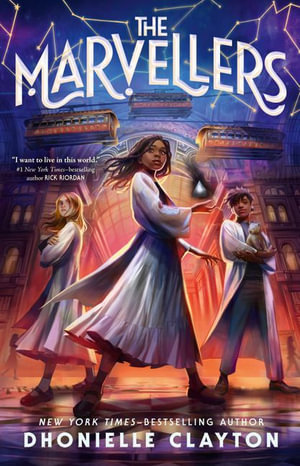
The Marvellers represents a departure for author Dhonielle Clayton from her previous young adult fantasy of The Belles and the modern realism of Blackout. Her latest book is a fantasy adventure for young readers in the style of Harry Potter. Eleven-year-old Ella Durand is of Conjuror heritage, the first conjuror ever to be sent to the amazing school of the Marvellers, the ‘Arcanum Training Institute for Marvellous and Uncanny Endeavors’. It’s like a Hogwarts but very multicultural with students from all over the world, and it’s a whole lot more sparkly. Clayton clearly has a picture in her mind of the magical world she has conjured up and while the curiosities and spangles may be a bit overwhelming the main thread of the novel makes sense and picks up subtly on themes of racism, bullying and exclusion, which she knows so well how to present.
Clayton dedicates her novel to ‘the kids missing from magic stories who started to believe that there was nothing marvellous about them’. Without being too explicit it is apparent that Ella is black, she has twists in her hair, and her family believe in African American folk magic. Her two close friends are also misfits in the new school, and they all have to stand up to discrimination and bullying. Ella is an endearing hero, she is bright and cheerful and remains kind and helpful to people who try to put her down. An equivalent would be Yassmin Abdel-Magied’s bouncing positive character Layla in You must be Layla.
However, Clayton’s magical world allows readers to absorb life lessons about acceptance of diversity, without obvious moralising, and I’m sure readers who enjoy this fantasy will be eagerly awaiting its sequel.
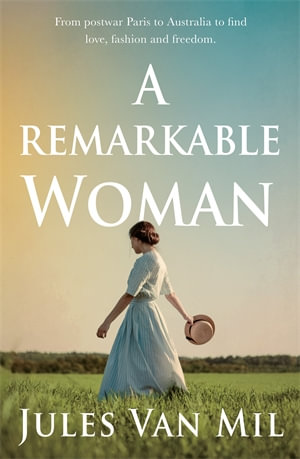
A remarkable woman is the story of Avril Montdidier, leaving behind the traumas of occupied France in WWII, and embarking on a new adventure far away in Melbourne in 1950. She brings with her a deep personal grief, but also a knowledge of Paris couture and a willingness to carve a new life as an independent woman. It is her worldliness, her experience, and her courage that make her a strong and unusual woman in her new environment, and it’s not long before she finds new friends, and new opportunities.
Van Mil’s novel vividly depicts the flourishing fashioning industry of 1950’s Melbourne alongside the outback beauty of a Queensland cattle station. Both environments draw Avril in, until she finds herself at a crossroads, having to make a choice between an ill-fated love and the career she always dreamed of.
Van Mil’s novel draws together themes that still resonate today: domestic violence, alcoholism, and homophobia, and her central character is a person who chooses her own destiny, carving her own future, and also providing for other women not as fortunate as herself. The motto ‘Timing is everything’ becomes a lucky omen, and she finds that her time does come around.
This is a novel for those who love historical romance with a strong female protagonist, and who are interested in the world of fashion. Van Mil brings a long experience of working in the fashion world, an experience that enriches her novel and makes it an enjoyable read.
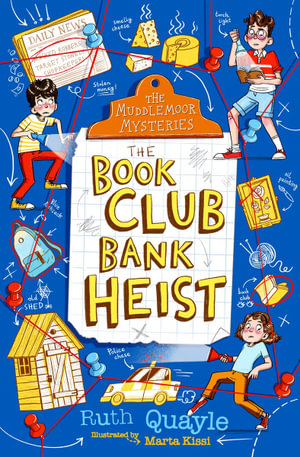
The Book Club bank heist by Ruth Quayle and Marta Kissi
Anderson Press, 2022. ISBN: 9781839131271.
Easter holidays and Joe is on his way to stay with his Granny in Muddlemoor, a quintessential English country village (complete with a vicar fund-raising for a new church roof) and he's very excited because not only does he love going there but his Welsh cousins Pip and Tom are joining him.
But when they discover that a dangerous gang of robbers is hiding in the local area, it seems like this is another mystery for them to solve, and so they start an investigation straightaway. At first, a number of people and places come under suspicion as they follow the procedures in Tom's favourite series of books by ace detective Albie Short, but it's when Granny's Book Group seems to be acting RATHER suspiciously that their focus shifts.. Could Granny's Book Group be the true-life bank robbers? After all, they always seems to be short of cash until Granny seems to start splashing it around, they NEVER talk about books and for another thing they keep going on about a local bank. There's only one thing for it. The cousins must stop Granny getting arrested, even if it means putting themselves in danger.
Told by 9 year-old Joe in the conversational style of the age group with lots of illustrations to break up the text, this is a good story for newly independent readers who like down-to-earth stories that they can feel they are a part of, either as an observer or a participant. Because they're straddling the line between working with the concrete and the abstract, having to be involved and being able to be objective, they will probably join the dots like Joe and his cousins do and they will delight in the way the robbers are eventually caught. A great way to introduce this genre that might lead to classics like The Famous Five, The Secret Seven or perhaps Nancy Drew or The Hardy Boys, each taking them into the world of mystery adventures as well as a time before the internet and mobile phones, maybe even into conversations with their grandparents about books shared and enjoyed.
Themes Mystery.
Barbara Braxton
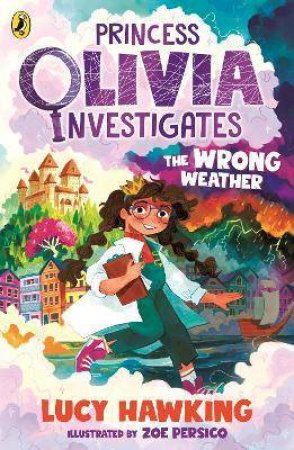
Princess Olivia investigates : The wrong weather by Lucy Hawking
Young Princess Olivia Alez has not really enjoyed her life as a pampered princess and when her parents lose their roles as King and Queen of the Kingdom of Alez, she is quietly excited to be forced to live life as a ‘normal’ child. However, away from the haughty and grand heights of the castle, life is not as Olivia was expecting. The town and country sides are suffering from terrible mistreatment and neglect. The weather is unpredictable, food and water are in short supply and life for the citizens of Alez appears hopeless.
The best thing to come out of losing the right to live in the castle, is that Olivia is forced to attend school for the very first time. With her naturally inquisitive brain, Olivia had read all the books in the castle library, so she cannot wait to learn all that school has to offer. However, school does not go so well initially but thanks to two new friends, Ravi and Helga, she begins to settle in. Olivia questions everything around her but finds her questions being blocked especially those related to weather: in particular the thick, dark clouds that hang over city, the fierce rains or extreme heat, the barren land and the incredible amount of rubbish that litters the rivers and streets. Olivia and her friends set out to investigate the causes of the weather phenomena and climate destruction to see if they can make a difference to their kingdom.
The first novel in a brand-new series by author Lucy Hawking, Princess Olivia Investigates: The Wrong Weather, provides a welcome introduction and explanation to the impact humans are having on the planet. Strategically placed throughout this story are easy-to-understand scientific explanations of volcanoes, water shortages, climate change and extreme weather as well as the importance of trees. The clever graphic-style drawings of the quirky characters and the devastation of the countryside will engage the young reader. In the final pages is an epilogue from Olivia with a conclusion of what was discovered plus a handy glossary and acknowledgements.
Themes Royalty, Climate Change, Friendship, Diversity, Science, Saving the Planet.