Award winning Australian writer of Afro-Caribbean descent, Maxine is well known for her books, amongst which. The Patchwork bike (2016) and 11 words for love (2022) are my favourites. And here is another to add to the list.
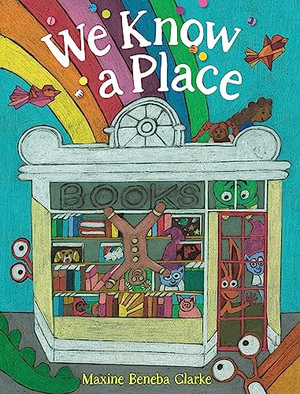
We know a place is revealed in the most amazingly muted colours across beautifully textured pages, each page a mix of the children and book characters, accompanied by sets of eyes peeing out at the reader. The children love going to the local bookshop, the bold little bookshop in Ballarat Street, on Saturday morning. When they come home they are accompanied by the characters they read about, and this week, Mum is happy for the trolls to go back to the bookshop, the bold little bookshop on Ballarat Street. No more pirates, or trolls or monsters or giants are welcome at home, she tells them. No wild things, she says and would prefer them to bring home books about flowers or origami. After they have helped with the chores, note Mum and Dad reading in the lounge while the children ‘help’, over the page we go with the children to the bookshop, characters peering at them from behind posts, down the lane, with eyes bulging out at them as they go. Kids will laugh at the attempts by Mum to keep the odd characters out of her home, and even more when the children say that she will forget this by next week, giving them the opportunity to bring more home. Kids will love recognising the book characters seen on the pages, and feel at one with the engaging images of bookshops throughout the book. Younger kids will see various things that happen in a bookshop: buying books, listening to a story, looking for a book on the shelves, reading alone.
A wonderfully funny homage to bookshops and their workers, the pages are awash with gentle humour and positive images of families and bookshops.
A clip of Maxine talking about poetry and performing her poem about Tick Tock can be viewed here.
Go to Youtube to find Maxine presenting a Ted Talk about herself. It tells you about her background and what she gained from libraries, and her perseverance in trying to get published. Teacher's notes are available frm the publisher.
Themes Libraries, Family, Bookshops, Books and reading.
Fran Knight
Pow Pow Pig Snow action by Anh Do. Illus. by Peter Cheong
Allen & Unwin, 2023. ISBN: 9781761068928. (Age:6-10) Recommended.
In this, the 5th installment of the Pow Pow Pig series, Anh Do treats his readers to a Christmas mystery complete with a Claus family drama and a lesson on judging people by their appearances. For those who haven't read the rest of the series (this reads fine as a stand-alone by the way, providing a brief but fabulous recap chapter) Pow Pow Pig and his mates (Chow Chow Chicken, Barry the Goat and Kung Fu Duck) are from the future and they are the only ones who can go back in time to save the world. In each book they are trying to get to the year 2030 in an effort to convince the rich animals to help the poor animals and avert the disastrous future, however, their time machine inevitably takes them to the wrong place and time.
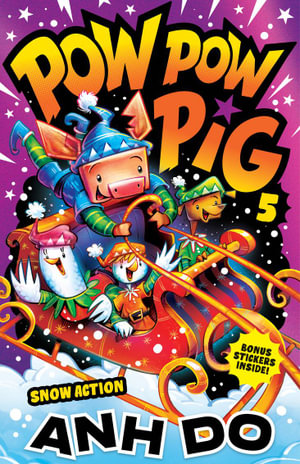
In Snow Action they've landed at the North Pole in the year 2010. They can't do anything to save the world here but the time machine needs charging so they do a little exploring and discover a mystery that just has to be solved. Santa's sleigh and two of his reindeer have been stolen. Who could do such a thing and does this mean Christmas is ruined? Explosive and action-packed black and white illustrations by Peter Cheong take up most of every page and the action comes on thick and fast with plenty of dialogue and simple narration. There is a lovely and overt message about forgiveness and looking past appearances to see what really lies under the surface. The Pow Pow Pig series is a wholesome and fun series to put into the hands (or ears) of any young reader.
Themes Forgiveness, Christmas, Time travel, Mysteries.
Nicole Nelson
Mine! A story of not sharing by Klara Persson and Charlotte Ramol. Translated by Nichola Smalley
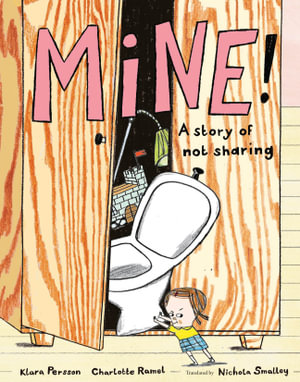
The subtitle highlights the theme of this book, especially as the cover picture shows Sally pushing a toilet into her wardrobe. Dealing with a perennial problem, that of keeping things for themselves, the book will instantly appeal to adults and teachers, older kids and younger, for whom sharing is a concern within their household or classroom.
Nico is coming to play for the afternoon, and Sally doesn’t want him to play with her squirrel, so Mum suggests she puts it into the wardrobe and play with it later. Sally then adds the train and the truck, the fish and the fishing rod. Then this and this, as she keeps giving Mum more things to put into the wardrobe. When Mum leaves the room, Sally keeps adding more. She even shovels her bed into the wardrobe. Then her favourite puppy picture. Not being content with this, she goes into the lounge and takes the TV, sofa and plants. Then the bathroom is cleared of its bath, wash basin and toilet. The wardrobe must be stuffed full, but Sally puts in the kitchen fridge and even Mum. When Nico turns up to play as well, he is packed away.
The startling illustrations will entreat the readers as they peruse the detail on each page, set against the backdrop of Sally’s bedroom and that wardrobe. The images underline the things found in each room, and readers will be amazed at what can be fitted into the wardrobe, thinking about the space inside the wardrobe and the size of each of the things she stores away. One double page will need to be turned around the see the effect of putting everything in the wardrobe, seeing the whole floor empty, comparing it with the double page later on showing all the goods as they spill out of the wardrobe.
When Sally hears lots of noise from inside the wardrobe, she is upset as they appear to be playing without her. She opens the door and all the contents spill out over the floor. And out of the muddle comes a solution to the problem. For now!
Pan Macmillan UK, 2022. ISBN: 9781529039474. (Age:14+) Highly recommended.
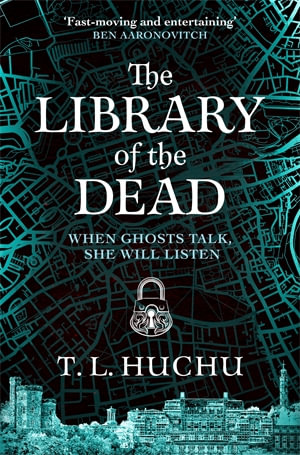
The first book in the Edinburgh Nights series features 14 year old Ropa, a ghostalker. She has the ability to speak to ghosts and communicate messages from them to the living. After dropping out of school to look after her Gran and younger sister, Izwi, Ropa's work as a ghostalker is what keeps them alive. When Nicola, a dead mother, begs her to find her missing son Ollie, Ropa finds herself pursuing the mystery of what has happened to all the children who have disappeared. With her friend Joma giving her access to the magical texts in the Library of the Dead, the Secretary Sir Callendar giving her a sorcerous scarf, and a new best friend Priya Kapoor helping out, Ropa is soon on the dangerous trail of the evil criminals using the children.
Set in a post apocalyptic Edinburgh, the intrepid Roya, accompanied by her faithful fox companion, navigates the dark streets of the city and the dangers of Camelot, the tent city that has been set up for the homeless. Of Zimbadwean descent, Ropa is a strong, principled young girl who uses her mbira, an ancient African musical instrument to talk to the ghosts. The supporting cast of characters, her bestie Priya, Gram, younger sister and Jomo, as well as a range of villians, are all fleshed out fully and add depth to the story. And Ropa's witty asides lighten some of the dark and frightening events in the story.
I look forward to reading more in the Edinburgh Nights series, although people wanting a stand alone story will be happy with The Library of the Dead. Younger readers may enjoy Victoria Schwab's City of ghosts which is also set in Edinburgh.
Allen & Unwin, 2023. ISBN: 9781761180224. (Age:11-14) Highly recommended.
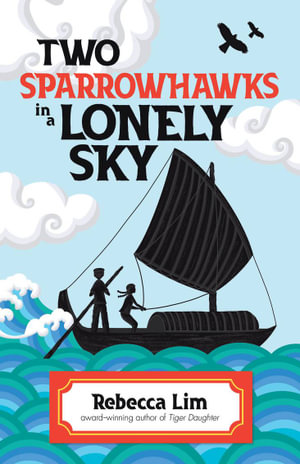
Award-winning author Rebecca Lim whose book, Tiger Daughter was the CBCA Book Of the Year Older Reader winner in 2022, has once again explored the journey of migration from China to Australia in Two Sparrowhawks in a Lonely Sky. In this deeply moving story two young Chinese children, thirteen-year-old Fu and his younger sister Pei, live through extreme hardship in a small village in rural Southern China in the 1950’s. The conditions the children and their mother Yun face after their father Ju vanishes to Australia are deeply disturbing and heartbreaking.
After the tragedy of losing their mother, the two children find strength and courage to make the long journey in search of their father, who in China had been a teacher and activist and was considered an enemy of the new government of Mao Zedong and his Collectives plans. With just a photo, a letter and a menu from a Chinese restaurant in Australia, the children must travel frightening distances trusting that the adults they encounter: Cadre Ling Wei, Sister Zeng, Miss Ewa, Kevin Stevenson and Bob Chen, will finally deliver them into the hands of their father.
The striking descriptions of Fu and Lei’s journey from Southern China to the bustling Hong Kong Harbour and city, and the experiences of living and travelling on the sampan are beautifully written and will bring these places and times alive for the reader. The depth of the characters with their back stories and tenacious zest for survival is powerful, in particular the stories of Cadre Ling Wei and Sister Zeng, whose life experiences are so different yet they have a such strong connection.
This book shares with the reader the plight of people in China in the 1950’s, their struggle to survive each day, their need for a safer and better life for their families and the risks they would take to achieve this. The story also highlights the racist and shameful ‘White Australia Policy’ and in the words of Rebecca Lim in her Author’s Note p. 292-293:
“At some point in our family trees, most of us came from somewhere other than here…This country was never white to begin with, and yet Australia persevered with an immigration policy that sought to ensure that, in Alfred Deakin’s words, the “yellow, the brown, and the copper coloured are to be forbidden to land anywhere.”
Two Sparrowhawks in a Lonely Sky is a compelling story that will engage and provide readers with a vivid glimpse ininto an historical time and place that may be unfamiliar and promote further discussion and research.
Macmillan, 2023. ISBN: 9781035013562. (Age:Mature teens to Adult) Recommended.
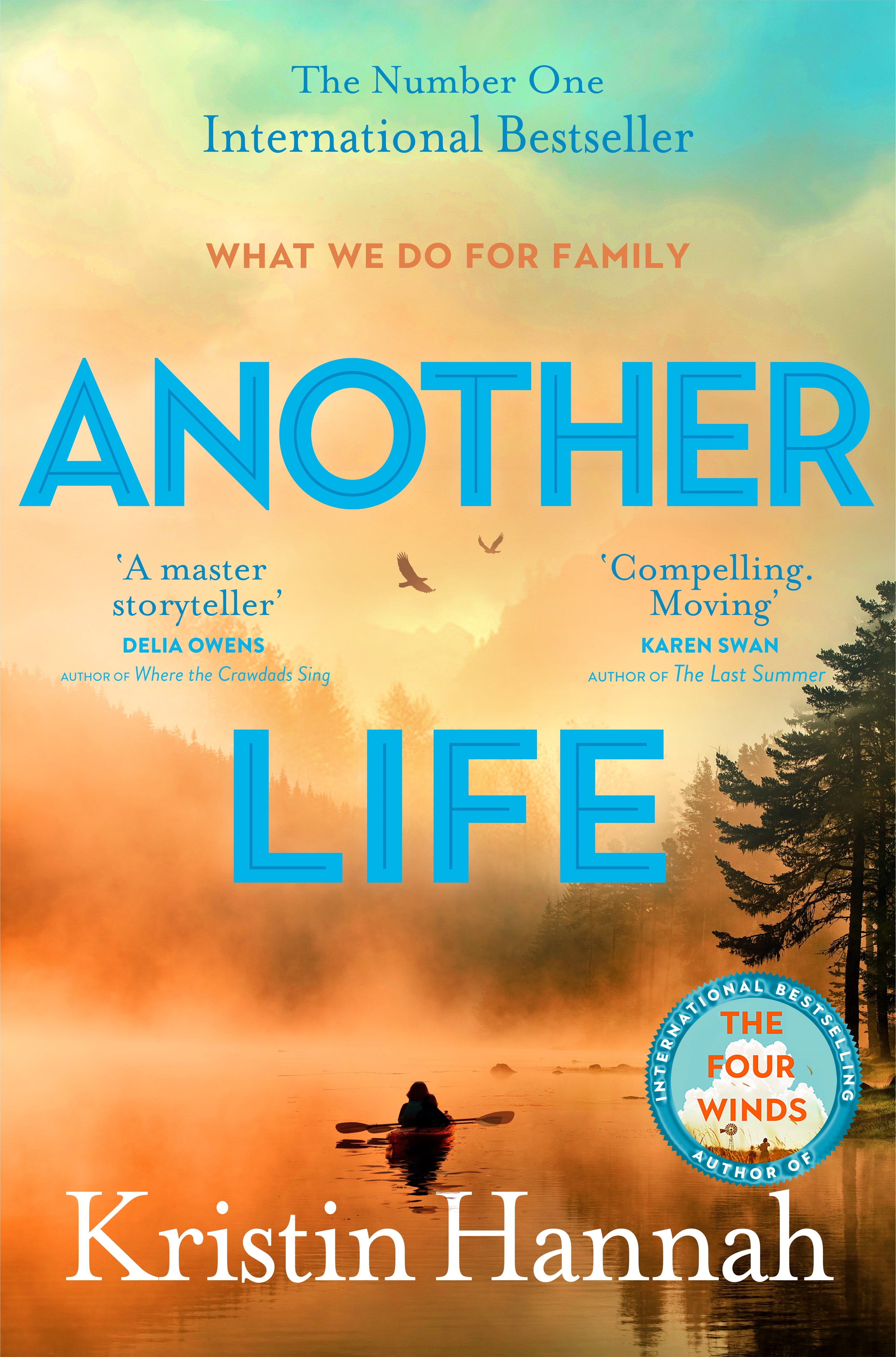
Another Life by renowned author Kristin Hannah will pull at the heartstrings of many readers. Two very different characters, one on the cusp of adulthood and a difficult home situation and the other suffering from a series of personal losses, will connect in the small coastal town of West End.
Angie Malone (formerly DeSaria) has returned home to West End after her divorce. Her marriage to Conlan could not stand the strain of the loss of their baby and their inevitable childlessness. Her large Italian family rally around her and as the family restaurant, the pride and joy of her beloved recently deceased father, is in financial trouble they ask Angie to help them to transform how it operates. This will be a challenge as Angie is up against her formidable mother who struggles with the idea of change.
Seventeen-year-old Lauren Ribido lives on the wrong side of town with a mother who blames Lauren for all the wrong things in her life. Lauren is determined not to turn out like her mother and has won a scholarship to a prestigious secondary college where she has been dating the wealthy David for the past four years. Lauren holds down a job, tries to cover the rent, lives from day-to-day with very little, achieves high grades and is struggling to support her mother. Life for this proud, resilient girl is tough.
Angie and Lauren connect in a way that will bring hope through the darkest of times. Through Angie’s intuition and perseverance, she forms at first a working relationship then friendship with Lauren and finally they become a family. But it is not all smooth sailing and hard life lessons with deep emotional outcomes are learned a long their intertwining journey.
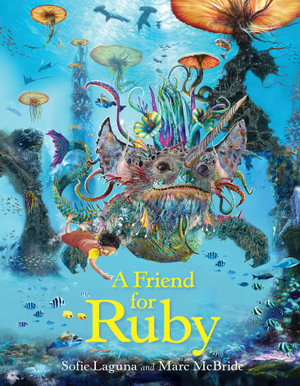
A friend for Ruby by Sofie Laguna and Marc McBride
Allen & Unwin, 2023. ISBN: 9781761067648. (Age:3+) Highly recommended.
Lonely Ruby sees a creature washed up on the shore as she walks home from school. She takes it home with her, leaving it in the cubby house that night. She is so happy to find a friend, especially after the week she has had with other students rejecting her and leaving her out of their games. She wonders what to feed it, so next day drags up some seaweed from the beach, digs up pippies, chases crabs and catches small fish to take to her new friend. It is still hungry so she asks Sarah, the baker’s daughter if there are any leftover cakes. She cleans the creature next day, leaving the garden looking a little dejected and prompting her grandmother to cry out at such a scene.
Realising the cubby was no place for this creature Ruby tries to take it back to the sea but without success. When Gramma sees the animal in the cubby, she develops a plan to let it go back to the sea. Ruby enlists Sarah’s help and the trio row the small boat into the ocean to find similar creatures. The creature is returned to its friends and Ruby finds a friend in Sarah.
The wonderful illustrations using a variety of media including 2B pencil, oil and acrylic paint along with computer art techniques, deserve closer inspection. The vistas of the ocean are engrossing, giving the reader a feeling of being beneath the sea on several double page spreads, while the image of the creature itself is majestic. Readers will love looking at the detail on each page, gasp at the wonderful cubby house and imagine themselves slipping into the little boat to take the creature home.
Ruby’s loneliness is overcome by someone closer than she thinks.
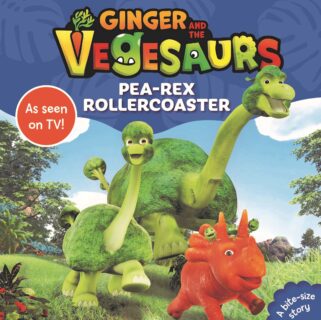
The strongly constructed hand sized board book is an episode in the highly acclaimed and popular ABC series called Ginger and the vegesaurs, which will ensure kids will pick it up. Brightly coloured, with funny images of a variety of fruit and vegetables as the main characters whose story we follow, the book has instant appeal.
In Pea-Rex rollercoaster, the friends meet a herd of Broccolisaurus, and Ginger is amazed at their size. Wasabi and Minty run up the brook’s head and slide down its back. Split does not follow the others, and Ginger has the opportunity to talk about being scared and allays some of Split’s fear by getting closer to the baby Brocc, hoping to introduce them to each other. Of course, this does not eventuate as the baby Brocc is scared of Split.
But lessons are learnt by the end of this disarming story. Aimed at younger children, the text needs an older child or adult to read it aloud, but what fun!
I love the images of the different fruit and vegetables as dinosaurs, so melding two things that kids love, fruit and veg and dinosaurs.
Great fun, lots to laugh at and a tie in with a beloved TV series will ensure these books are never left on the shelf.
Themes Dinosaurs, Humour, Friendship, TV tie in, Read aloud.
Fran Knight
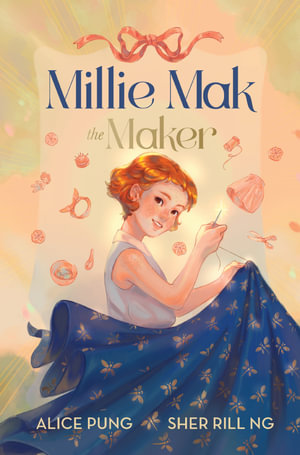
Millie Mak the Maker by Alice Pung. Illus. by Sher Rill Ng
Millie Mak is a shy girl at a new school and has trouble making friends. She lives in a flat with her hard-working parents. She has very resourceful Scottish maternal grandparents and a paternal Chinese grandmother who help her to learn the value of making something new from old, discarded objects. She learns to renovate a doll's house, she turns tea-towels into a beautiful skirt and makes a sunhat from an old bed sheet.
There are two stories in this book, which is the first in the new series. The first story deals mainly with introducing Millie and her family and how she discovers she can make things. Millie must spend her holidays at the local community centre at vacation care. She shyly joins some older girls who seem to take her under their wing and make her time there so enjoyable. She spends hours making things with materials and then goes home with her Granny to renovate the doll’s house, making all the furniture to go inside from recycled objects. What she does with it when she is finished will warm your heart.
The second story describes the way Millie finally makes a friend. When a new girl called Rita joins her class Millie desperately wants to make friends with her, but the Teacher’s pet Geri puts her hand up to help first and Millie must wait for her chance to befriend Rita in her own time. When she does approach Rita, Millie teaches her to hand sew material into a hair scrunchie. So, they join forces to make a stall to raise money at the School Fete by making hair scrunchies and headbands out of old scarves and other materials. It turns out to be the best stall there and the girls’ friendship blossoms in the process.
At the end of both stories there are detailed instructions on how to make some of the things mentioned in each story, along with suggestions about how to explore further opportunities to be creative by doing some research and further reading. A teaching guide is available.
Themes Dressmaking, Needlework, Family, Friendship, School stories.
Gabrielle Anderson
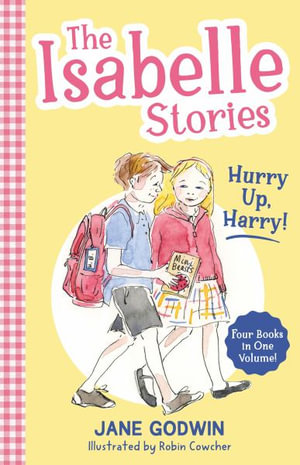
The Isabelle Stories: Hurry up Harry! by Jane Godwin and Robin Cowcher
Isabelle Stories Volume 2 by well-known author Jane Godwin has four different short stories that share events in Isabelle’s daily life:
1. Sleeping Over: Year 2 Disco night and sleepover 2. Forest School: Exploring the forest, building a bridge and an unfortunate accident 3. News and Views: Isabelle shows the class her baby cousin Bibi. Harry B shares some disappointing news 4. Harry and the Isobels: End of year concert where Isabelle is chosen by Izzy to sing ‘Morning Has Broken’ with her and there is a surprise visitor in the audience.
This year Isabelle, Harry B and Izzy are in Year 2 with a new teacher Miss P. It takes a little bit of time to adjust to change and in particular over excited Izzy is struggling to contain her enthusiasm. The children take part in a disco and sleepover on the same night and while it has its moments all goes well in the end. In Chapter 2 the students are very lucky to have one day a week where they attend forest school. Here they can explore nature and on this particular day they also build a bridge across the creek and climb a tall tree. Unfortunately Harry B falls out and breaks his arm but it is not too serious. News and views are shared in Chapter 3 and Isabelle proudly brings in her baby cousin Bibi to show the class. Harry B shares that he is going to live in Alice Springs which upsets Isabelle. He is her best friend and she struggles to cope with her feelings. Harry does ask Isabelle to look after Rowena, his spiny leaf stick insect as it cannot go on the plane, and this helps to ease her disappointment. In Chapter 4 the school concert is being held and Izzy is asked to sing ‘Morning Has Broken’ and chooses Isabelle to sing it with her. It is a great success and Isabelle is overjoyed to see Harry B at the concert. Sadly though Rowena dies and the children bury her in the backyard.
These stories are perfect for newly independent readers who may be familiar with some of the feelings and events taking place. Throughout the book are engaging black and white drawings that will provide visual clues and links for young readers. Of particular interest are the clever letters written by Isabelle which contain words and pictures to be deciphered. An enjoyable read.
Themes Family, School, Friends, Feelings.
Kathryn Beilby
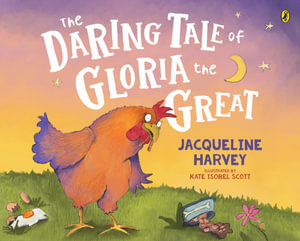
The daring tale of Gloria the Great by Jacqueline Harvey. Illus. by Kate Isobel Scott
A fable about being kind to each other is presented within the gloriously funny story of Gloria the chook, going missing from the farm. Gloria is always doing things differently from the other chooks. She eats the food in the dogs’ bowls, howls just like them, is in your face, and is always very bold, doing her own thing. Until one day she just disappears. The family is intent on hunting down their Christmas decorations and do not hear the quiet noise from below. They look at the hawk in the tree outside and conclude that Gloria was just too slow. The other chooks blame each other for her disappearance, saying they were too unkind. They squabble so much they end up in a great melee of noise and feathers. The noise quietens for long enough for the children to hear that noise again, so they all look under the house where they had gone in their search for the decorations and find Gloria, a little dishevelled but alive. She has eaten the occasional bug to keep alive.
She is treated regally by the family, and given a table of food to eat, even a bed by the AGA. Once again out in the yard, in true Gloria fashion, she shares her stories of her exploits with the other chooks. She is surprised that they are so supportive, and Dulcie tells her that they have all decided to be kind, that difference is no reason to reject others.
The stunning illustrations create another level of humour to the story. Kate’s childhood was surrounded by chooks and so she offers a great deal of fun in her depictions of them. The scenes in the farmhouse, henhouse and farm yard are wonderful and her closeups of the hens fighting over who is to blame will cause hoots of laughter from the readers. I especially loved the images under the house, a lone dejected Gloria looking very small in the darkness, and the contrast between the large, healthy chooks and the newly found skinny Gloria is hilarious.
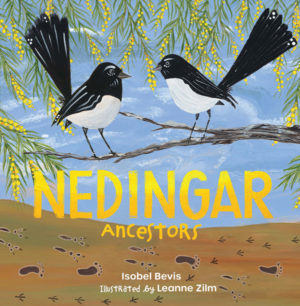
Noongar storytellers Isobel and Leanne have drawn on their love of country and knowledge of its stories to present this inviting, wonderful read aloud tale of ancestors.
A child tells her mother that she wants to meet her ancestors. She has heard of them, listened to people talking about them, and now wants to meet them. She wants to tlak to them and listen to what they know, so helping her know who she is.
Mother tells her that she meets them everyday, she listens to them, sees them all around, she knows them through smells and talks to them.
They can be heard when the wind whistles through the tree, they can be talked to when she listen to the birds and animals and plants, they can be felt through every step she makes on Country. The Ancestors are well known and are strong reflected through mother and child.
The theme of this story introduces Country to us all, how people view their Ancestors, how Country informs all they need to know. Ancestors are all around, offering their insights to the younger generation. All they need do is look, listen, interact, smell and touch.
The illustrations impel readers to look closely at the flora and fauna of the countryside, as the distinctive acrylic images cover each page with clear links to Noongar Country in the south west of Western Australia. Readers will love spotting the animals and grasses and flowers shown in the pages, and I loved checking out the name of the different eucalypts shown with their wonderfully coloured flowers. Western Australia’s glory is shown in all of its vibrancy and Leanne has the ability to put on the page what she sees around her home.
Themes Aboriginal themes, Ancestors, Landscape, Western Australia.
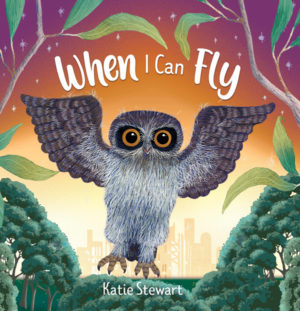
As Little Owl was growing up he could see the city in the distance. He wanted to get closer to be able to see the lights and practised his exercises to make his wings strong. His mother pointed out the moon and the stars and their brightness, but Little Owl was not convinced, he wanted to go to the city.
Eventually his wings became strong enough and off he went, mum telling him she would always be there for when he returned.
Arriving at the city, all seemed what he wanted, but the lights were too bright, they moved too quickly, were too loud and there was nowhere safe to sleep. He looked up at the moon with thoughts of home: he missed the quietness of the frogs, the sight of the moon and stars, and he missed his mum. So he turned right around and flew back home where mum was waiting for him.
A delightful story of ‘there’s no place like home’ will endear itself to the readers. Younger readers will have no hesitation in agreeing with Little Owl going back home, but at the same time admiring his bravery in trying to widen his horizons. All readers will recognise the pull of testing your wings but knowing someone is always there when you return. The comfort of being able to stretch your wings and change direction if it is needed, is there for all younger readers to see.
Author/ illustrator, Katie Stewart has created a gentle and astute story akin to an Aesops’ fable, where an instruction about life is given through a story, without it being too heavily imposed. The gentleness of the owl wanting to go to the city and finding it not to his liking is very telling as he feels confident enough in his mother’s care, to return home.
The double page illustrations will entreat the readers as their eyes sweep across the night landscapes. I loved the endpapers with the beautiful feathers resting gently amongst the leaves.
Themes Owls, Taking flight, Leaving home, City.
Fran Knight
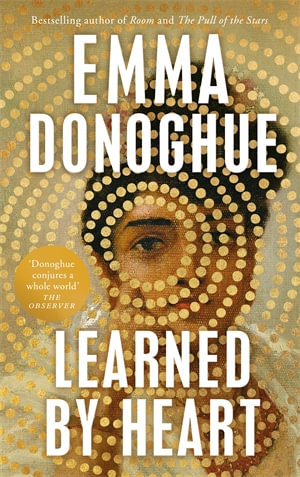
Learned by heart by Emma Donoghue
Pan Macmillan, 2023. ISBN: 9781035017775. (Age:16+) Highly recommended.
It is interesting to consider Donoghue’s latest novel Learned by heart within the context of her other works, Room (2010), The wonder (2016), Akin (2019) and Haven (2022) with their recurring themes of captivity, restraint and personal challenge. In Learned by heart, it is the restraining world of the 19th century boarding school, a world bound up in rules, restrictions and punishments. Eliza Raine and Anne Lister are two young girls thrown together by chance when they are made to share the attic room dubbed the Slope. But perhaps it’s not really chance that has led Mrs Tate to house these two less desirable pupils together in their tiny room. Lister is precocious but impoverished, and Raine, though wealthy, is ‘less white’.
Not being familiar with the story of Anne Lister of ‘Gentleman Jack’ fame, I was most intrigued by the depiction of Eliza Raine, a young Anglo-Indian girl, who with her sister Jane, the progeny of their English father’s relationship with his Indian ‘wife’ in Madras, is sent to a prestigious school in Regency era Yorkshire. Raine is very aware of how others see her as 'foreign-looking... tawny... dingy or plain brown'. Lister however regards her as 'the most beautiful girl I’ve ever seen' and gradually the example of Lister’s enthusiasm and fearlessness builds Raine’s own self-confidence.
Donoghue presents the story of Lister and Raine’s developing relationship from Raine’s point of view, through her letters and her memories of their time together. For Raine, her love once given, is never taken back. The feeling of loss, when their lives part ways, sends her to the mental asylum, whilst Lister goes on to achieve notoriety as a confident lesbian, writer, and landowner.
As Raine herself says “It is a sad story”, a meeting of hearts for a short time. She hopes to be remembered, their love living on in the ‘brown-blood trail of ink’. Donoghue’s novel beautifully brings to life their forbidden relationship, their free-spirited rebellion against the strictures of the school, and their dream of a marriage with exchanged rings. It is a sad romance.
Allen & Unwin, 2023. ISBN: 9781760877002. (Age:10-13) Highly recommended.
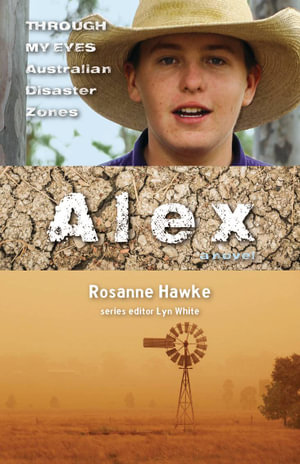
South Australian author Rosanne Hawke has written the third novel in the Australian Disaster Zones series. Alex is the story of a thirteen-year-old boy who lives with his family on a farming property called Spring Park in the Flinders Ranges region of South Australia. This engaging novel is set in 2020 in an area that has suffered significant drought for a number of years as well as devastating bushfires sweeping through the area in 2019.
As a young student living on a farm Alex must travel long distances on the school bus each day but before he leaves he is responsible for doing a number of chores in order for the farm to remain viable. Once home Alex also has a heavy workload as his father is struggling with his mental health resulting from the bushfires and Alex’s mum has taken shifts in the local pub to make ends meet. Alex loves farm life and enjoys nothing more than being with his kelpie Tangi and colt Jago.
Alex’s new neighbour Bonnie and her family have moved in next door with camels. They are training the camels to work with tourists on treks in the outback and this causes concern for some of the region’s residents. Alex and Bonnie become firm friends and spend time together connecting with each other’s animals, helping each other in times of need, battling feral dogs, exploring their environment and most importantly revealing their long-held secrets and worries. Together with Harry another Year 7 student they set up a plastic recycling initiative which draws the whole community together as well as allowing Alex’s dad to find a new purpose in life.
Rosanne Hawke has cleverly interwoven so many important topics into this narrative including the effects of climate change, overuse of plastics, First Nations care of Country, depression, and the history of camels in Australia. The strength and resilience of Alex, Bonnie and the other children, their daily struggles and hopes, how they deal with drought and other life issues are told beautifully in this story. A fascinating read.