Allen & Unwin, 2023. ISBN: 9781761068492. (Age:8-12) Highly Recommended.
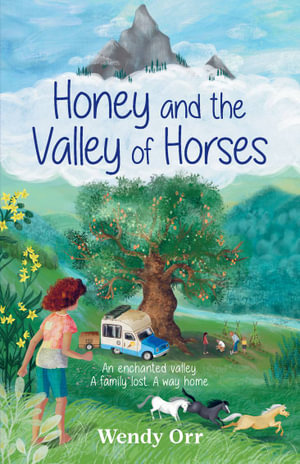
Whimsical and tinged with magical qualities, this is a charming story of a family who escape the ‘big wide world’ in their converted ice-cream truck and end up in a magical valley without a route to return. In this strangely isolated world they spend many years learning to survive and living without the accoutrements of modernity (except for those items they took with them.) The family co-exists with their recently widowed Nan-Nan, with a few chickens that they took with them, a whole lot of love and a very limited supply of reading material. They soon learn to live for an uncertain future, but they also learn to rely on the local horses who, almost by magic, seem to be able to read their needs and befriend and support the human intruders into their magical realm. When the youngsters, Honey and Rumi, have lived for seven years in the valley their father, Papa, gets ill and it becomes clear that they cannot remain in this idyllic environment forever. But are they ready for a return to the world that they no longer know and that they had left behind so long ago?
This is a simple tale told through the perspective of Honey. Her connection to her favourite horse implies a connection and communication that has mystical possibilities. Interspersed throughout the simple tale of survival and ingenuity are chapter breaks with text and email communications from their family who are outside the magical valley and are concerned about their disappearance. The essence of the story though is the resilience of a warmly connected family despite their unusual circumstances. With hints of the Covid landscape that disrupted many lives, this is however just a lovely, warmly joyous story for 8-12 year olds who still consider magical possibilities which older readers might dismiss.
Henry Page has been there for his friends while they have loved and lost. Loved and won. But he has never been in love. He's watched his parents and wanted that kind of love, the love that lasts, the meet in high school and stay forever. While he's picked his best friends, Lola (gay) and Murray (straight) up from the pits of despair of love gone wrong, and always been there for them in their failures and successes, he's just never had that spark. Henry is a good student, busy trying to become the editor of the school newspaper, always had a way with words. Then he meets Grace Town. Transfer student from another high school, in senior year. She's quiet. Elusive. Walks with a cane, dresses in boy's clothes. Doesn't draw attention to herself. But Henry notices her. And when they are put together as co-editors of the school newspaper, their worlds collide.
Told from Henry's perspective, this story is very much a tragic love story. A mix of real time and text format, the story moves quickly from the two characters meeting to becoming established in each others lives. Numerous characters are fleshed out in detail, with the exception of Grace - while described, she is the mystery to be solved through the book, so hints and clues are dropped and readers will make guesses early on. Some characters are a bit 'extra', such as Henry's Australian friend, which is interesting given that the author has lived in Australia. The character is listed as having moved to America in their early childhood and having lost their accent, but that they put it on, and even dress in exaggerated Aussie dress (think Steve Irwin). Some readers may find this endearing, others may find it irritating. The book is otherwise well written, well paced with the usual cadence of the author. Perfect for fans of John Green's The Fault in Our Stars and Adam Silvera's They Both Die at the End.
Themes Romance; Contemporary; Relationships; Tragedy; Hardships; Grief; High School.
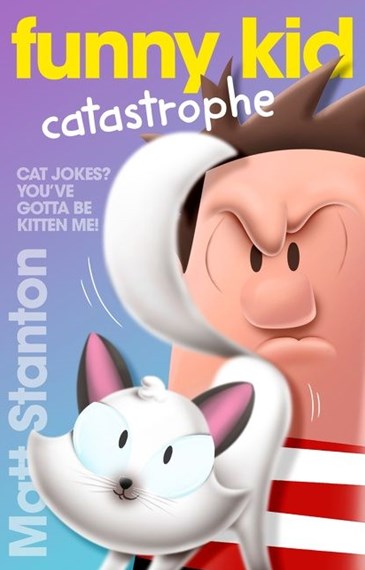
The 1tth in the Funny Kid series, Catastrophe is another hilarious look inside the kid-centric world of Max Walburt. The writing is punchy and irreverent. Black and white cartoon-style illustrations are scattered throughout and while long, the story is fast-paced and easy reading.
Max is dramatic and he starts the story by declaring himself completely done with being the funny kid. He's maturing and because his mum is running for mayor he's pretty sure when she is elected he's going to become the 'First Kid'. His monologue with his pet duck goes something like this: "I'm not saying I want Miss Sweet to go to jail or anything, but if Miss Sweet doesn't show the First Kid the right level of respect, my hands will be tied...". He's already decided on the name of his chauffeur and the size of his security detail when his parents shock him out of his own head with the gift of a cat. A real, living, actual cat. Max is not only fiercely anti-cat but also anti-catperson. So this gift is actually a significant problem. So, while everyone is trying to convince him how great cats are, Max is doing all he can to get rid of it, including persuading his parents to take it back and encouraging the cat to run away.
Pages and pages of irreverent humour ("In the corner, my baby sister, Rosie, has decided to teach herself to read by trying to to climb a bookshelf") and an insight into Max's unbelievable logic and imagination ("Give a person a cow and you're giving them the gift of milk, butter, cream, ice cream, cheesecake, yoghurt...That animal invented dessert. We should worship it") make this an absolute joy to read and your brain, if not your acutal mouth will be laughing. And whilst Max declared himself maturing, there are plenty of cat bum and other toilet humour jokes to enjoy.
Fans of Diary of a Wimpy Kid will adore this series, which is also a perfect next step with longer text for lovers of Weirdo or other heavily-illustrated series.
Themes Humourous stories, Cats, Persuasion.
Nicole Nelson
Too late by Colleen Hoover
Little Brown, 2023. ISBN: 9781408729465. (Age:Adult)
This book, we are told, started out as a 2012 project the author worked on when she was writing her other, very different, books when experiencing writers block. The unfinished chapters were later put on a website for readers to see and they gave feedback as more were written. Writer and readers enjoyed the process and the finished product was released as a free e-book. Now edited and published the foreward of Too Late states that it is in no way appropriate for children or young teens with trigger warnings which include foul language, graphic sexual scenes, murder, sexual assault and drug use.
Sloan is a beautiful college student in a controlling relationship with Asa. He owns the house they live in and Sloan is exhausted as there are parties at the house nearly every night with lots of people and Asa expects her to be there and then provide him with sex every night giving her little time to study. She knows his money comes from drug deals and despises him for it but she needs his money to keep her disabled brother in a care home. Carter, real name Luke, is working undercover with Dalton, real name Ryan, to bust Asa’s drug ring. They have infiltrated his college operation and Carter has been put in Sloan’s Spanish class. In spite of being well trained to keep it as a work assignment Carter feels an immediate strong romantic connection with Sloan, a dangerous development as she is monitored by jealous Asa’s associates. He doesn’t trust anyone and is quick to act where his self interest is compromised. That’s it really, the point of view switches between Sloan, Carter and Asa as the investigation proceeds and the relationship develops and Asa gets more and more paranoid. There is the advertised, sex, drugs and violence but little in the way of narrative arc, the one dimensional characters, supposedly college age, seemed much older, had nothing to recommend them and didn’t develop. Devoted readers of this bestselling author will no doubt find it an entertaining read but I had trouble finishing it.
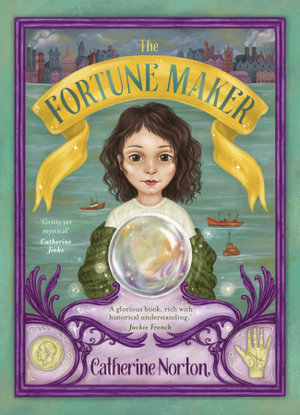
I was quickly enthralled by this exciting story of Maude Mulligan. She and her father are barely surviving in 1913 London. They live in a squalid flat which is sinking into the Thames bog. Her father is killed in an accident at his work on the docks and things become even more grim for Maude. Maude picks up a yellow ribbon that falls from the hair of a wealthy girl called Eleanor and Maude’s life changes. It becomes a mystery as to why Eleanor’s mother and the villainous manager of their failing family business are so keen to capture Maude. The villains pursue her and are nearly successful in catching her on several occasions but luckily Maude escapes. She is cared for and helped by some young politically active suffragists. To Maude’s surprise Eleanor gets involved in trying to uncover the mystery and the two girls travel to Manchester. Enriching the plot is the way Maude keeps experiencing unsettling, strange visions. It transpires that she is a seer and can foretell the future. A skill that is both a curse and a blessing.
Catherine Norton successfully creates a grimy, grotty London prior to World War 1. The suffragettes, precarious unsafe working conditions and poverty add authenticity to this historical fiction. Through Eleanor’s point of view the reader understands the frustration of a girl whose interest in science and learning is considered ridiculous. And from Maude’s point of view, we also learn about Maude’s precarious existence and poor conditions for the working class. There is considerable foreboding about World War I in her visions. I was intrigued by the popular phenomena of the time where people of all backgrounds believed in fortune telling. Fortunately, the story has lighter moments and Maude is a strong heroic character unflinching in her risk taking and positive, despite her many years of hardship. It finishes with an ending suitable for a sequel. I was reminded of a past CBCA Book of the Year winner by Catherine Jinks called A Very Unusual Pursuit which was also a successful blend of historical fiction and fantasy.
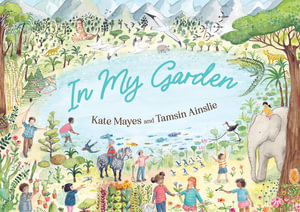
The beautiful and striking front cover of In My Garden will appeal to readers both young and old. This delightful picture book showcases the diversity of gardens from around the world and includes the following countries: Japan, America, Malawi, Iceland, New Zealand, Syria, Laos, Canada, Italy, Brazil and Australia. The front and back end papers, both different but sharing similarities, will provide a clue to the diverse worlds the reader will enter.
Each stunningly illustrated double page spread introduces a child by name and shares the plants and creatures they can see as well as a personal insight into their thoughts and feelings. The language used is reflective and lyrical and is perfectly complemented by the gorgeous water colour images. There is Aiko from Japan who “hears the sound of the sweetest nightingale hidden”, Ari from New Zealand “guards little blue penguins”, Freyja from Iceland “keeps watch through the night for Northern Lights’, Sami from Syria is remembering another garden away from where he now sees “the night sky lights up, fire against the hills”, and for Olivia from Australia “the billabong is her favourite place.”
This wonderful book will be a worthy addition to a home, school or public library. There is so much learning to be shared and discussion to be had around the variety of plants and creatures throughout the world. Teacher notes are available.
Themes Gardens, Nature, Diversity, Countries of the World, Children.
Kathryn Beilby
Roobee Roo: Fun in the sun! by Nico and Candy Robertson
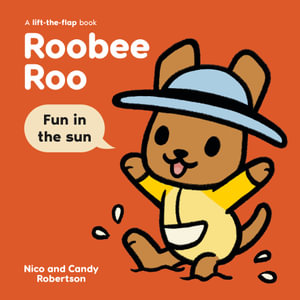
Another in the highly entertaining series of board books about Roobee Roo and her magic pouch is presented in this book, Fun in the sun. Dressed in her beach swim wear which coves her arms and shoulders, Roobbee Roo asks the question about what is in her pouch which gives clues about where she is off to today. Astute young readers will open the flap and spy her beachwear, sun lotion along with a bucket and spade, all tucked neatly into her pouch, and know that we are headed for the beach.
She pops on her sun block and swimmers and puts a large floppy hat on her head. She makes big footprints in the sand and collects lots of found objects which she arranges from the smallest to the biggest. She sees her biggest treasures, Wes and Perri and greets them with a ‘g’day’. She shows them how to leap over the waves, Perri shows them how to pretend to be a fish, and the three build a sand village with a Roobee Roo mermaid.
A wonderful day a the beach is had by the three friends, the board book detailing what things happen at the beach and how they can enjoy themselves, doing a variety of things. The book gives older people the opportunity to talk about the preparations needed when going to the beach and what to watch out for and what is needed to protect themselves. Kids will love following Roobee Roo and her friends as they take the opportunity to take part in the activities that are part of going to the beach. An emphasis on Australian customs and language gives a familiar feel to the story. Information about the authors can be found here.
Themes Beach, Swim wear, Sun screen, Protection, Humour, Lift the flap.
Fran Knight
Lay your body down by Amy Suiter Clarke
Text Publishing, 2023. ISBN: 9781922790460. (Age:Adult - young adult)
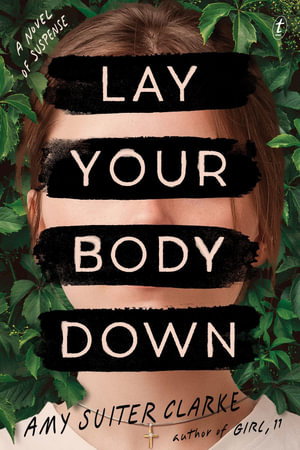
Noble Wife Journey is a 2011 blog from Messiah parish in a small town, Bower in Minnesota. The writer, Eve, applauds the teachings of Pastor Rick “women are created to serve, to be pure, to submit, to be a delight to their husbands.” p2. Eve exhorts readers to subscribe to the blog and learn the tenets as she prepares herself to be a Noble Wife. Shifting to the present, Del, Delilah, is having a hard time; her boyfriend calls off their relationship, her roommate wants her to move out and she learns that her first love, Lars Oback, has been shot dead. Del grew up in the Messiah church where her parents still attend and it is 6 years since she last saw Lars who married her friend Eve. She finds out about the death on social media where it is described as an accidental shooting but Del had a voicemail from Lars just four days earlier, which she left unanswered, he asked her to call him saying “you were right, I’m sorry” p10. The story shifts from the present, as Del returns to Messiah for the funeral, to excerpts from the Noble Wife blog from 2011 and to excerpts from Delilah’s diary starting back in 2012, piecing together Eve’s elevation and Del’s fall from grace in the church. Returning to Bower is difficult for Del, uncovering old wounds and since she left, the church has become more powerful. Eve became a popular influencer through her blog, Pastor Rick published related books and the church now owns many of the local businesses. Del misses the constant support and encouragement she had when she belonged to the church but it had failed her when she most needed it and she chose to leave, now she is back to find out the real story behind Lars’ death and confront her own demons.
I was a bit worried that this was going to be a tirade against the church but rather it illustrated how, when there is a lot to lose, an institution like Messiah church can become excellent at protecting itself. The author was able to show us how “church speak” can manipulate teachings from the bible to shut down debate and retain its power and influence. Significantly in this case, women must unquestioningly respect a man’s authority, submit to leadership and obey God’s will; the different messaging for men and women gives men, especially those in authority, significant power over women and girls and when the wrong man is given that power it corrupts. The plot was a bit thin and the ending a bit weak but I was happy to go along for the ride as the insights into the cult like church and the manipulation of those wanting to belong, have approval and a slice of that power was very well handled.
Themes murder, Cults, American ultra conservative Church.
Sue Speck
Roobee Roo: that's me! by Nico and Candy Robertson
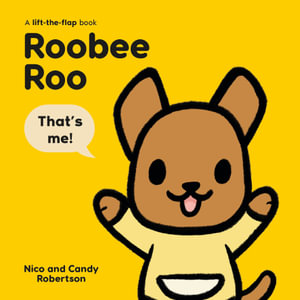
The first in this new series of Lift the Flap books, called Roobee Roo: that’s me, has instant appeal for young children as it is a small, hand sized solidly constructed board book replete with bright colours and few words.
In That’s me, we are introduced to the most endearing of kangaroos, Roobee Roo, who tells us she has two big eyes, two big ears, two big feet and a magical pouch that fills up with new things every day. A sense of anticipation is built up as the days of the week roll by.
On Monday the pouch fills with crayons, and the flap is pulled down to reveal five crayons. On Tuesday the pouch fills with stories for reading at night, on Wednesday it fills with leaves and nuts collected from the bush, on Thursday she finds building blocks, on Friday it fills with snacks, on Saturday it fills with shakers to sing with and on Sunday a fluffy parrot.
Each day encourages children to talk about things which may be in the pouch, learning the days of the week as the story goes on. The things she finds in her pouch are things which can be discussed and talked about between the adult and the child, as some may be unfamiliar to the smaller reader.
And what fun they will have predicting what may be in the pouch the next day. Roobee Roo and her magical pouch is instantly recognised by toddlers who will be excited by the bright illustrations, emphasis on Australian flora and fauna, and that it is the first in a series. And there is a TV show.
New Frontier, 2023. ISBN: 9781922326713. (Age:9-12) Highly recommended.
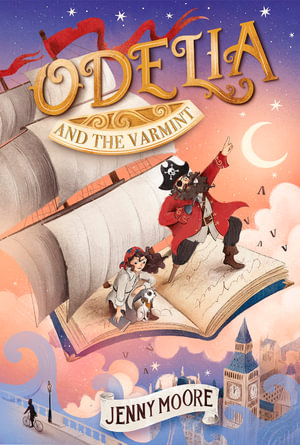
Odelia and the Varmint is a whimsical adventure, full of quirks, surprises, and pirates. Odelia and her mother and infant brother live in Victorian London in near penury following the untimely death of Odelia’s father. Their difficult circumstances may be rescued if only Odelia’s mother’s Pirate adventure novel could be finished and published. Instead, the pirates from the pages of her book visit their house, causing mayhem and swashbuckling havoc. Pirate treasure would be nice, but instead the household becomes the target of a local thief and Odelia and Captain Blunderfuss, the rude, smelly and ‘vocabularily-twisted’ pirate, must rescue Odelia’s young brother from the clutches of a well-dressed thief.
The delight of this book is that fictional characters have managed to leap from the pages of a manuscript and into real life – the dream for every reader. That these characters are also strangely piratical and never tyrannical, and display extremely obnoxious personal hygiene traits, and possess a weird vocabulary that is intensely humorous, will delight young readers. Even though the central character is dealing with grief and difficult circumstances, there is a lightness to this story that is charming and reveals her resilience and determination. Her penchant for discovering word meanings (she was focussed on V words - hence the Varmint in the title) adds another peculiarity to the story and another ray of light. The setting in Victorian England is also a curiosity for children raised with modern tastes and expectations. This will be a story that charms. It is a gentle fantasy, with pirates, and would make a great shared story, but equally will be gobbled up by young readers aged 9-12.
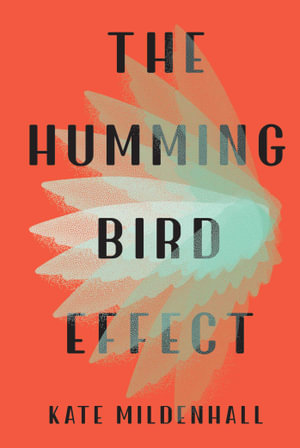
Described as a ‘genre-bending novel’, The hummingbird effect presents four stories from different time periods, and only towards the end do we begin to make the connections. There are Lil and Peggy working at the Footscray meatworks in 1933, Hilda confined to aged care during Covid in 2020, La working in the WANT warehouse in 2031, and sisters Maz and Onyx collecting the pieces in a 2181 post-apocalyptic world. In between chapters, there is a conversation with an AI robot about what human innovations would need to be uninvented to ensure a better world. And then there is ‘Before Now Next’, a repeated poetic section that describes the continuous flow of the river of life.
There are themes that connect the four scenarios. In each there is the issue of exploitation of workers, the growth of capitalism and the dehumanising and relentless pressure to achieve more, in the meatworks factory, in the aged care home, in the Amazon-like warehouse, and even in the ‘Stewardship’ teams of the future. And in each time period, it is women who connect together to help and care for each other.
I found one of the most powerful scenes to be the brooding violence in Peggy and Jack’s relationship, that at any time the angry red cloud could envelop him, and his fury become uncontainable. Mildenhall’s writing puts you right in the scene and you feel Peggy’s anxiety and terror. For others, scenes that will resonate strongly will most likely be the containment of the Covid era, the isolation and loneliness. And then in the WANT warehouse, as in the factory, there is the oppressive workplace demands to continually up targets and outperform. There are so many situations in this book that people will readily identify with, not least being the sense of impending world disaster, a wish to turn back the climate change clock.
The ‘hummingbird effect’ is about events triggering other outcomes in wholly different fields. The AI discussions reveal how each innovation has positive and negative implications, and it is impossible to single out one responsible factor from the complex web of interactions that might lead to the end of the world. The suggestion is that the worst mistake is actually the human race itself.
This may all sound negative, but the uplifting aspect of the 2181 scenario is the friendship and support between the two sisters Maz and Onyx, the fellowship with other caring women, and the feeling of optimism when women work together. All in all, The hummingbird effect would be an excellent book club choice for thought-provoking discussion.
Themes Women, Future, Workers, Artificial intelligence, End of the world, Domestic violence, LGBQTI+.
Helen Eddy
Hello Twigs: Time to paint by Andrew McDonald & Ben Wood
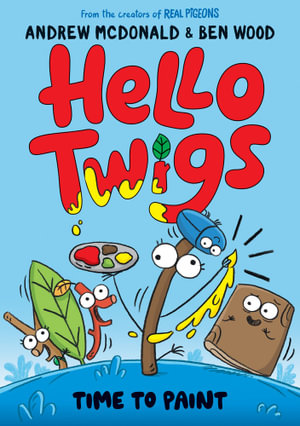
Friends, Ziggy Twig, Red Twig and Stump love to watch Noodle Twig, the artist, paint. Creative Noodle wears the blue beetle as a hat and knows exactly what she wants to paint, she just needs her friends to assemble the materials. Stump helps by mashing up green grass, red berries and yellow leaves while Ziggy holds up a leaf canvas. Red Twig puts the paints together with a huge dollop of red claiming to have ‘equal' amounts. The only problem is that they have no blue paint. The inventive method of getting some of the blue sky involves acrobatics and a see saw but the result, while successful, is unexpected. Time to Paint, one of a Hello Twigs series, has just enough challenging vocabulary for beginning readers developing proficiency as well as for enjoyable reading aloud. The simple graphics and clean clear colours, fun storyline with jokes to be shared, make these a good addition to any school library.There are teachers notes and activities provided on the website.
Themes Friendship, Creativity, Problem solving.
Sue Speck
A curious daughter by Jules Van Mil
Macmillan, 2023. ISBN: 9781761263767. (Age:16+)
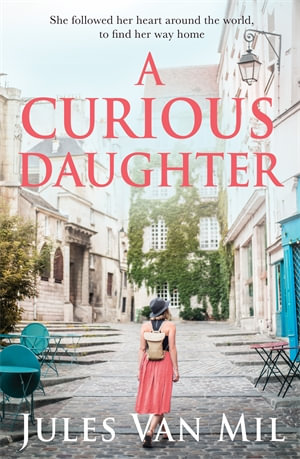
In a prologue dated 1994 Melbourne we see Avril Montdidier-Meredith at her lawyers signing the papers to sell her fashion businesses. Next it is 1979 at Monagan Station Queensland where preparations are underway to celebrate Avril’s daughter, Joy Meredith’s 18th birthday. It is to be a big event at the outback station, attended by many relatives and friends including Joy’s best friend Scarlet and Hugo Lombardi who shows great interest in Joy, and they begin a relationship. Joy is not close to her mother but dotes on her grandfather Henry; when he has a heart attack and dies after the party she is devastated. Soon after the funeral Joy moves into a share house at Indooroopilly with Scarlet and begins to study veterinary science, work part time at a bar and further her relationship with Hugo. It is a busy life and Joy starts to have doubts about her relationship with Hugo, but she does look forward to the evenings when there are live bands at the pub, especially the band Around Midnight. The story follows Joy as she drifts through life following her own path, making her own decisions. There are challenges, but by any standards hers is a life of privilege and there are many choices open to her. This is a sequel to A Remarkable Woman which I haven’t read which must explain why there are so many characters who don’t seem to be part of this story, it also might explain why there is such a sketchy sense of place at the start and why Avril’s fashion business intrudes on Joy’s story.
This is a saga, true to the meaning of the word, a long and leisurely narrative, and will appeal to lovers of this genre and those looking for a sequel to Van Mil’s previous work.
Themes Romance, Rock band, Independence, Travel.
Sue Speck
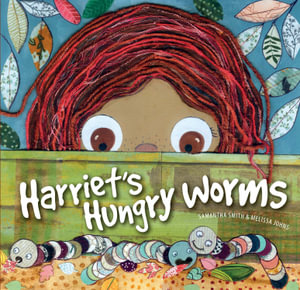
Harriet's hungry worms by Samantha Smith. Illus. by Melissa Johns
EK Books, 2023. ISBN: 9781922539472. (Age:4+)
At Harriet's place it's her brother Fred's job to walk Walter the dog, and her sister Sally's job to look after the chooks. Harriet's job was to take care of the nine-hundred-and-eighty-three worms that live in in the big green box in a shady corner of the garden. Each day she fed them different scraps and waste that the family generated but after a whole week it seemed that they did nothing but eat and wriggle. And then Harriet spotted the tap at the back of the big green box and discovered something quite magical.
There have been some outstanding books helping our young readers understand how they, themselves, can contribute to looking after the environment released recently, and this is one of them. Back in the days of the dinosaurs when I was at school the only thing we learned about worms was that they were hermaphrodites (something I can still recall all these years on) but nothing about how essential they are to keeping the planet healthy and balanced, even helping to reduce methane gas production which is such a contributor to climate change. By writing an engaging story that will appeal to young readers as it takes the reader through worms' menu through the days of the week (a much healthier version of The Very Hungry Caterpillar) with a nod to alliteration as well as some essential worm facts and their foodie likes and dislikes, this is narrative non fiction that will inspire our children to investigate having their own worm farm either at home or at school, as well as understanding the concept of composting and generally giving Mother Nature a helping hand.
Ready-made farms are readily available and many councils offer rebates on their initial cost, although it is easy enough to build one, while there is plenty of advice and information available to ensure the farm is healthy and active. Teachers' notes linked to the Australian Curriculum also offer insight and information to help not only appreciate the story but also inspire the students to be more pro-active about being involved so they too, can feel they are contributing.
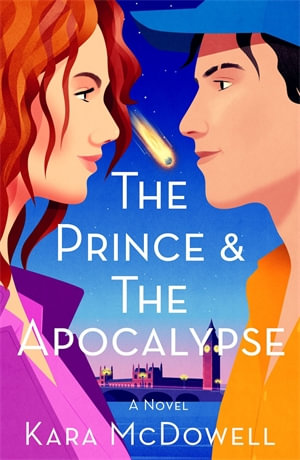
Roller-coaster romance in the face of terrible terror! Wren Wheeler begins the story as an American teen planning her future, quashing her fears, and travelling on a study tour to the UK. Her life, and the rest of the world, goes into freefall when a comet’s path is forecast to catastrophically destroy the earth. Fear overtakes the world. Wren’s accidental encounter with a young male member of the British Royalty gives her opportunity to see a way to return to the family she loves before the end of the world. (Note: This is not the Royal family we know, but a fictional representation – a brave author choice.) But first, does Wren also need to rescue the Prince?
This is such a whirlwind story. An impending apocalypse is perhaps the catalyst for action and romance to be compressed into a very short time span – a real roller coaster. This story catapults the reader into an ‘amazing race’ journey across Europe, in a chaotic and erratic attempt to find a solution to Wren’s problem – to find a way home to her family. Prince Theo, also separated from his Royal family, is in contrast trying to run away from obligation and expectation and stay far from his own family, but he also has the resources to help Wren, provided he can remain hidden from the world. The young teens also become unlikely romance partners in their separate quests, and there is romantic tension for much of their journey. As with all romance stories the road to love is marked by twists and turns and stretches of turbulence, and yet desires rise to the surface at the same time as the young teens are battling with their own inner battles. The overarching torment of the approaching ‘end of the world’ scenario, plus the complications of royal life, adds a complexity to this story that lifts it above most teen romance stories. Recommended for readers aged 14-18 years who enjoy romance and a fast-paced story.
Themes End of the world, Romance, Monarchy, Family relationships, Family expectations.