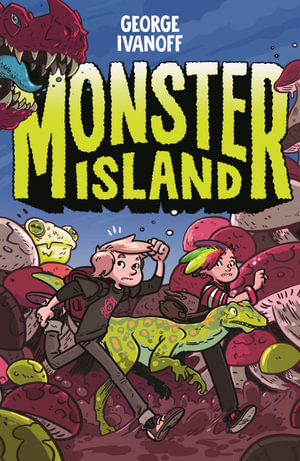
After losing her job at the University, Bernie’s mum (a promising scientist who is interested in Cryptozoology) has been offered a job on a mysterious island in Bass strait. Bernie is 13 years old and worried that his mum might become a “mystery disappearance” in this part of the world, so he decides to stow away in the Limo that collects her and ultimately onto the mysterious ship that takes her to Monster island. He hides out on the island assisted by Ivy, the rebellious daughter of her mum’s new boss. Ivy knows that showing her new friend around the island will annoy her father, but she enjoys introducing Bernie to the unusual inhabitants and plants of the island – most of which are dinosaurs, strange magical giant Fungi and other unusual creatures from the distant past. It is all beyond Bernie’s imagination and soon he and Ivy are not just exploring the island, they are investigating the appearance of some mysterious drones. However, when Bernie is discovered on the island the adults do not believe their story about the threat to the island’s unusual inhabitants from someone outside and so he and Ivy, with the help of Lea-Lea (a very intelligent dinosaur friend) try to figure it out for themselves.
This fast-paced book will appeal to older readers especially those reluctant to tackle longer stories. George Ivanoff is an author based in Melbourne whose books include the You Choose series, the Survival Guide series and the Other Worlds series. Many feature science fiction based themes and characters as well as children solving problems together in quite unusual places. Included are a few handy pages at the back of the book explaining some of the unusual things mentioned in the book encouraging further investigation by the reader.
Themes Monsters, Islands, Dinosaurs, Friendship.
Gabrielle Anderson
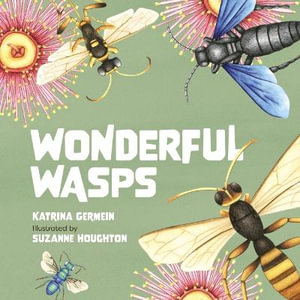
Wonderful wasps by Katrina Germein. Illus. by Suzanne Houghton
With award winning children’s author, Katrina Germein penning the words for this wonderful non fiction book, readers will look forward to a well written, concise book in which every word has a place. Teamed with award winning illustrator, Suzanne Houghton, the illustrations are just as detailed as the words are concise, as beautiful as the written words, making a book to be savoured and referred to again and again. All 12,000 species of wasps found in Australia, do not get a look in, but those that do exemplify the range of these little insects, the part they play in the cycle of life and why they are important.
Told in rhyming stanzas, information about the wasps is in every line. Not European wasps, but hundreds of smaller wasps live to pollinate our plants so they grow and survive, produce fruit and then seed, enabling the cycle to start again.
A question is posed on the first page asking readers what they know about wasps. The European wasp is dismissed as it is plain and everywhere. We are told that this book is about the amazing world of the Australian wasp, beautiful, unusual and colourful. On each page we are introduced to wasps and their traits. The many thousands of them are sky polluters, along with fruit bats and bees. These pollinators and their work ensure the plants grow and produce seed, thus helping out planet’s flora keep on growing.
And many animals live on the wasps: small animals, birds and grubs eat them as part of their diet, if wasps were not available then some animals’ diet would be reduced. The wasps’ egg laying will have readers surprised but this does not reduce their importance to our ecosystem.
German goes on to tell the readers where eggs are also laid and describes the nests built to house them, while a plea for more gardeners to plant native plants which will help wasps survive is added.
An excellent glossary is presented on the last page and the two pages preceding has a double page with more information about wasps, with specific information about those shown in the book.
The information is given about the small group illustrated. And the illustrations are spectacular, showing the insects diversity, colour and beauty. Houghton includes the flora on which these insects feed, begging the reader to go out and look for themselves. The insects are more difficult to spot, as the illustrations show, using a magnifying glass to show the reader. The endpapers show eleven of the insects with their names, to encourage readers to look very closely. Teacher resources are available.
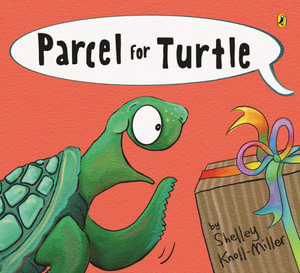
Another in this funny series of books about receiving a parcel will have kids joining in with the humour on each page, anticipating what might be inside. With the advent of shopping on line, many more parcels are being delivered and the expression on Turtle’s face on the title page reflects the anticipation people feel when opening a parcel, particularly one that is unexpected.
The end pages show a group pf sea creatures besieged by pelicans hungry for turtle or octopus or crab. So a parcel for Turtle has them all excited. There may be something to help them get past the pelicans. Could it be a trampoline one asks, only to be told that the parcel is not the right size. Could it be a a remote controlled car to get them across the sand and into the sea, but it's not big enough. A beach umbrella is the next suggestion. All the while the reader will be offering suggestions about how to get to the sea without being spied by the pelicans, and so be reassured when the parcel is finally opened to reveal something they can use to outsmart the pelicans.
A neat rounded story of solving a problem, opening the parcel adds a whiff of adventure for the group. Tension mounts with the pelicans flying overhead, but the puzzle is solved in the end. Colourful, detailed illustrations will delight younger readers anxious to want to know what is in the parcel, hoping that it will help them all get away.
Themes Turtle, Sea creatures, Pelicans, Parcel, Problem solving.
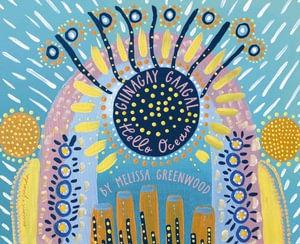
A beautifully illustrated picture book will open readers to the scope of Aboriginal art and design as Greenwood talks about her childhood and what the ocean means to her. Stunning detailed art can be seen on every page as the eye is drawn to the colour, mood and understandings offered.
I loved the swirling images, full of life, showing facets of the children’s days, on the beach. They swim and dance, catch fish, and play games, then watch the whales go by, mothers singing to their offspring.
Before they start they tell the land of their presence, promising to care for her while they are there. They run through the grass collecting bush fruit to go with the pipis.
They collect small sticks and seaweed for their Aunt to make a fire. She cooks a pipie stew for the tired group of children.
This lovely book is an ode to happy days spent by the ocean, from Gumbaynggirr artist Melissa Greenwood, the creator of the outstanding picture books Miimi Marraal, Mother Earth and My Little Barlaagany. Each of these books showcases her work, the beauty and colour of the environment, the breadth of how she is in tune with the land where she was born.
Each page is redolent of the relationship between the family and their environment, the text outlining how they are interacting with the land, the stunning images giving a superb picture of where they are and what they are seeing. Lots of styles can be seen in the images: dot painting, large sweeps of colour, lines and circles, all having meaning to the children as they play.
This book, along with the others in the series, has a great deal of extra information about Melissa, and the text of the book is given in both English andGumbaynggirr, adding another level of interest to the reader.
Young readers will love looking at the detail on each page and saying the words for themselves.
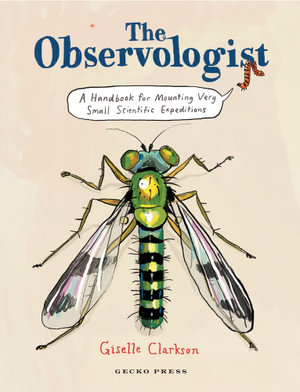
"Observology is the study of looking. An observologist makes scientific expeditions, albeit very small ones, every day. They notice interesting details in the world around them. They are expert at finding tiny creatures, plants and fungi.” p4
So begins this quirky and unique non-fiction book. For both children and adults, this is an interestingly presented book for the curious, those who love to spend time deeply exploring their environment or those who are just being in the moment mindfully observing what is happening around them.
With a very appealing cover showcasing an enlarged green fly, the book is set out in five sections: Observology, A Damp Corner, Pavement, A Weedy Patch and Behind the Curtains. Each section contains graphic-style illustrations, speech bubbles, bold headings, labels, diagrams, and information both handwritten and typed. There is plenty of ‘white’ space on each page surrounding the information and illustrations plus a gentle use of colour in soft tones throughout. At the end of the book is a humorous ‘final exam’ plus a certificate to qualify as an Observologist as well as a very detailed index.
The Observologist has much to offer readers both young and old. The opening chapter looks at the Principles of Observology as well as preparing to begin the journey of observation. There is information about where humans evolved from, scientific names, what instruments are needed, drawing and labelling what you see, and a discussion about invertebrates. Chapter Two heads into what can be seen in damp places. This includes slugs and snails, fungi, woodlice, centipedes and millipedes. Each of the five chapters contain a wide range of interesting facts presented with humour and complemented by cleverly drawn diagrams and images.
This fascinating book will be a valuable addition to a home, school or public library. It will appeal to children who love books about the natural environment as well as those who favour the more visual format of a graphic-style presentation.
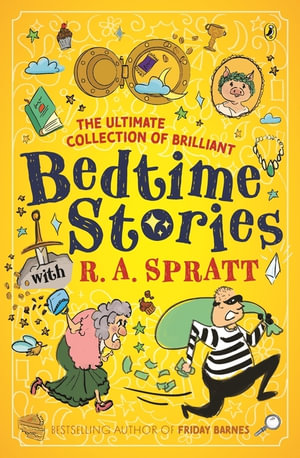
The title “The ultimate collection of brilliant bedtime stories” gives us an idea of the excellence of this collection of stories from the master storyteller, R.A. Spratt. Best known for her Nanny Piggins books and her series featuring Friday Barnes as well as the Peski kids’ books, this collection has snippets from many of her titles, some original material from Spratt’s life and will become a favourite book for bedtime (or anytime) reading.
Many of the stories retold by Nanny Piggins are based on popular fairytales, myths and legends with the Nanny Piggins twists to correct the stories told to her children at school. The tall tales featuring Tammy and Mum are based on Spratt’s real life and are a very funny take on everyday occurrences. Among the stories from the Friday Barnes series is a new story about Friday Barnes that was not included in the published novels – it sits between books 8 and 9 and deals with what happened to Friday while she was in prison. Readers of the series will recognise the stories and where they sit in this popular series and for new readers it will give them an insight into the books to begin the series from the beginning. A weekly podcast of the stories also exists where the author uses her favourite funny voices and expressions to bring the stories to life for those who prefer to listen than read. Here is the link: https://bedtimestories.buzzsprout.com/
Themes Bedtime stories, Short stories, Storytelling.
Gabrielle Anderson
The sun and the star by Rick Riordan and Mark Oshiro
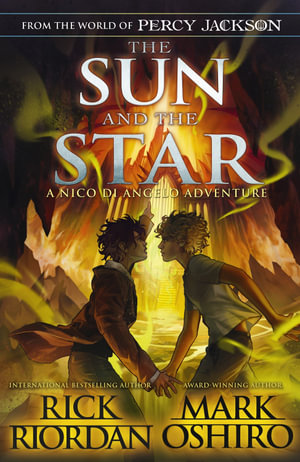
Nico di Angelo is the son of Hades, from the domain of death and the underworld. His boyfriend is Will Solace, the son of Apollo the god of light. This odd combination from the world of Percy Jackson and the Olympians must overcome Nico’s past to successfully negotiate their relationship and their future. Will darkness taint everything that keeps them together or will it dim the glow of their relationship irrevocably? In this story, the two demi-god teens are drawn to a quest back into the underworld to rescue an old titan friend that has been trapped in awful circumstances. The messages to Nico are transmitted through dreams and prophecy, and he must overcome his own uncertainties about returning to the underworld, but this time he will have Will at his side. Does this present a greater risk to their relationship, or will the two teens be able to work together and understand each other more because of the awful challenge they must endure? With monsters and demons at every turn, and a glimpse into the awful corruption and oppressiveness of the Underworld and its gods and their influence, Nico and Will endure the worst in order to find the best within themselves. Is change possible when you have come from the darkest of places?
This is another of Rick Riordan’s journeys into the mythological fantasy world that has captured young readers. In this book we are drawn into the dreadful darkness of evil and its impacts and experience the sour reality of its influence in the mythological power struggles of this fantasy world. It is not easy to travel in the dark. The gay relationship between the two demi-gods is also a pivotal part of the story, as they explore how to stay together despite the disparity of their backgrounds. I can’t say I loved the journey into darkness, but it is thrilling and compelling. The action, and twists and turns brought about by a succession of marauding monsters and agents of awfulness and horror, come thick and fast. The book is exciting and dark but is lightened by the love between Nico and Will and their friends. Sections of the story are revealed through dreams, indicated in the book with a darker background pattern on the page. This is for lovers of the Percy Jackson series but should not be the first book read from the series. It is for readers who can cope with the horrors of the underworld and have a mature understanding of the mythological world, but it is exhausting and uncomfortable travelling to the underworld.
Themes Mythology, LGBTIQ, Good vs evil, Quests, Monsters, Relationships, Change, Romance, Purpose, Thriller.
Carolyn Hull
Hello Twigs: Let's find treasure by Andrew McDonald & Ben Wood
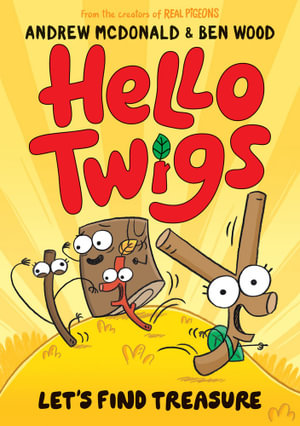
Let’s find treasure is the fourth book in this series of graphic novels for beginning readers, from the creators of Real Pigeons. The four books – Time to Paint, Surprise!, How are you feeling, and Let’s find treasure, were released together and are different colours, each with a different theme. The main characters Red, Noodle, Ziggy and Stump (three twigs and a stump) are best friends. They are funny and lively and are always looking out for each other.
In this story Ziggy wants to be an explorer so she decides she is going to find treasure and the friends all decide to join in. The only problem is that Ziggy is not sure what treasure really looks like. Each friend has an opinion and they set off together collecting some things along the way. When they find a large rock they agree that there is probably treasure on top of it, so Ziggy climbs up to have a look. Unfortunately, she is scared of heights. Her problem makes her realise what treasure really is and her friends band together to save her from the top of the rock. They soon realise that nature and their friendship are the most important treasures of all. This series will stimulate children to appreciate nature and recognise its beauty and usefulness. Through the stories they are encouraged to be creative, innovative and work as a team with their friends.
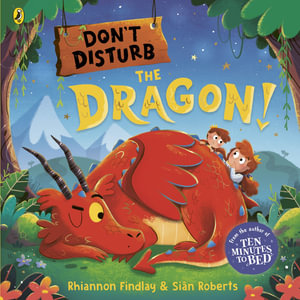
On Wingbeat Island, the princess's little brother has learned to crawl and now she can't find him. So she sets on a quest to discover where he has got to but danger lurks on the journey...
Somewhere near, a huge beast lies, with giant claws and great big eyes . . . DO NOT DISTURB THE DRAGON!
From the author of the enchanting Ten Minutes to Bed series, this is a new adventure that takes little ones on a trek around the island, following the map and encountering things that may be the dragon - or not. It's an opportunity to talk about what they already know about dragons so they can examine the pictures to see if one might be nearby as well as learning that sometimes things might not be as they seem at first glance... The princess takes her anti-dragon kit with her so using their knowledge of dragons they might speculate on what they would add to it to be safe and sure.
The rhyming language and the repetitive text invite them to join in both the fun and the storytelling, as they help the princess on her mission through the forest replete with all the elements that spark the imagination like castles, stepping stones and toadstools, while the island itself has gloomy caves, rapid rivers, enchanted fortresses and smouldering volcanoes, each offering an opportunity to suggest a new adventure in the future - as does the ending!
Like Ten Minutes to Bed, this is a vibrant, engaging story that ticks all the boxes for engaging our youngest readers with the fun and joy of stories and because it is in print, they can return to it again and again.
Barbara Braxton
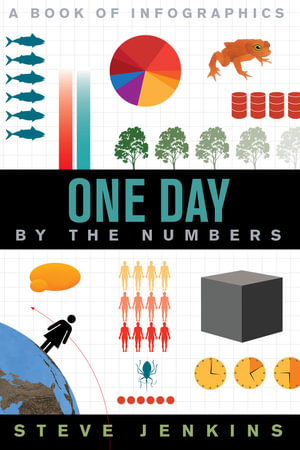
One day by the numbers by Steve Jenkins
HarperCollins, 2023. ISBN: 9780358470113.
What happens around in the world in twenty-four hours? This is another amazing book of infographics from author-illustrator Steve Jenkins as he shares lots of amazing facts and figures, summarised in pictures, charts and graphs in this new book perfect for curious kids.
Some of you may have seen the photos I shared of an intrigued young friend who started reading at 3.30pm and was still going at 7.30pm when I gave him 100 Things to Know About the Unknown recently, and this is definitely another one that will keep him entranced, as it will all our other young readers who have a penchant for non fiction and being enticed down rabbit holes as they strive to find out more about what has captured them.
The perfect evidence for why we need a vibrant non fiction collection.
In this latest addition to the By the Numbers series, readers can explore what happens around the world with humans, animals, and even microorganisms in just twenty-four hours. From how much humans eat and how far migrating animals travel in day to how often lightning strikes, readers travel beyond the clock and into what twenty-four hours looks like on a massive scale. As Europe's wildfires make headline news, we can learn that not only are these fires growing more frequent and more intense, but the equivalent of 125,000 soccer fields is burned by them every day!! And, at the other end of the scale, 16,000 Olympic swimming pools could be filled by the ice melting from glaciers and the Arctic and Antarctic ice sheets every day.
As well as being a model for the presentation of information that students could emulate, this is such an intriguing series it will keep the Xanders of this world engaged for hours, providing even more evidence of the importance of having a vibrant, current and promoted non fiction print collection. Who knows what might catch their eye and capture their curiosity?
Barbara Braxton
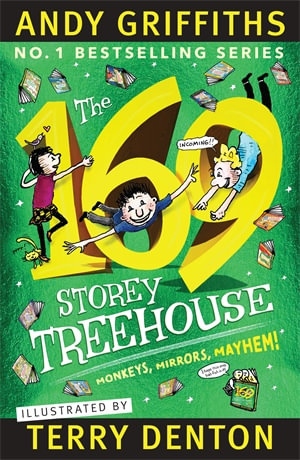
The 169 storey treehouse by Andy Griffiths. Illus. by Terry Denton
Pan Macmillan, 2023. ISBN: 9781760987855. (Age:7-12) Highly recommended.
Every child dreams of building a treehouse in their backyard and for the last 13 years Andy Griffiths and Terry Denton have provided kids with 13 amazing treehouse books filled with magical adventure, hilarious fun and inspiring stories. This is the last of the Treehouse series and it is really going out with a bang! It must have been tricky to find an end to this incredible series, but Griffiths and Denton have outdone themselves providing a bigger than ever treehouse experience for young readers.
The story begins with an unexpected weather event. Terry left the door to the WHATEVER WEATHER YOU WANT dome open, and they must get up there to shut it down before the weather destroys the world. When that is accomplished they find themselves hiding on the Hall of Funhouse mirrors level to get away from the truancy officer who is determined to send them to a proper school. What they don’t realise is that behind the mirrors are their doppelgangers, Anti-Andy, Terrible-Terry and Junkyard-Jill, and they want out. What ensues is an exciting funny story that will keep Treehouse fans engrossed and entertained as Terry and Andy are forced to go to school and the doppelgangers create as much havoc as they want. The Principal is not impressed by the boys' creativity but ultimately they help create a bigger, better treehouse school after a Massive Monkey Mayhem event created by their doppelgangers destroys the old one.
Griffiths and Denton reveal much about the previous treehouses in this book, giving new readers to the series an insight into all the books. The story is typically crazy, and the illustrations are energetic, almost like slapstick comedy in a book. There’s so much to laugh about and it will appeal to the most reluctant, easily distracted reader.
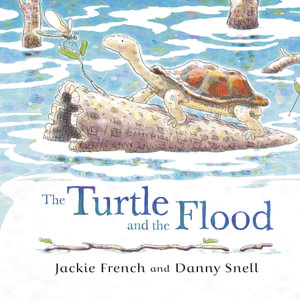
Myrtle, the long-necked turtle can predict bad weather. In this wonderful book she predicts a flood is coming to the waterhole where she lives, and warns the other animals by moving up the hill. During summer she swims in the creek eating moths and frogs, lizards and tadpoles and in winter she sleeps under the dry leaves. During dry times she covers herself with the silt and sand and when it rains, she uses her powerful legs to keep abreast of the water. But one day the river level rises very slightly, so she begins to walk uphill.
Other animals and insects see her and begin to head uphill themselves. When Farmer Finnegan sees the turtle walk uphill she recalls her mother’s words and takes her sheep to the top paddock. Wallabies, snakes, kangaroos and echidnas follow Myrtle’s lead, and when Myrtle reaches her favourite log, she digs herself into the soft sand to waits it out, as dark clouds gather and heavy rain falls. Here all the animals wait and when the turtle heads downhill, they follow her head.
This book is the second for Jackie French and Danny Snell, showcasing their talents in both text and illustrations. Digitally produced, Danny Snell’s images are quite mesmerising, as each page turned offers a different surprise for the eyes in design, layout and picture. On one page, the walk uphill is shown clearly with the uphill gradient taking the eyes towards the top of the hill, while on another the swirling waters of the flood shows its extents as it drags trees and animals along in its force, and other pages use panels to present the animals in their environment. One page needs to be turned on its side to see the full extent of the flooding.
The design adds another level of interest to a wonderful book about our environment, and French adds an author’s note about the turtle at the end of the book.
Themes Long necked turtle, Environment, Australian animals, Australian insects, Flood, Prediction.
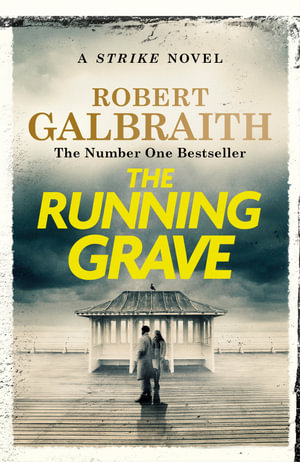
What can I say? Despite the enormous 947 pages of The Running Grave, the author kept me glued to the page as the tension and suspense kept me awake. Add short chapters, often leaving the reader on a cliff-hanger, making it impossible to just read one chapter more, and The running grave left me with a couple of almost sleepless nights. This time Strike and Robin are given the task of rescuing a client’s son, Will, from a religious cult. On the surface The Universal Humanitarian Church advocates peace and help for underprivileged people and addicts but the pair soon uncover mysterious deaths and sinister undertones. Robin goes undercover to try and persuade Will to leave the cult and to find enough evidence to stop the Church’s misdeeds, while Strike delves into the death of the young girl who is supposed to manifest as the Drowned Prophet and traces the few people who have managed to escape the Church.
The author tells the story in two voices that of Robin inside the cult and Strike outside, but for me it was the chapters that traced Robin’s indoctrination that were riveting, and kept me breathless, desperately hoping that she is not recognised. The running grave is an expert and exhausting expose of how a cult works, and a warning – some of the scenes are horrific. By following what happens to Robin while undercover, it is easy to understand the depth of belief under scored by fear that members of The Universal Humanitarian Church have.
Running throughout the story are the threads of the attraction that Strike and Robin feel for each other but deny, and readers will eagerly follow these to see whether there are any positive outcomes. Secondary characters are well developed and the author delivers some surprises along the way.
Fans of the series will not want to miss The running grave and are certain to wish for a future novel featuring Strike and Robin.
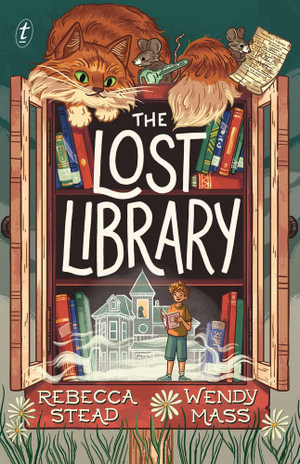
Text Publishing, 2023. ISBN: 9781922790477. (Age:8+) Highly recommended.
The authors of the highly recommended Bob, have collaborated on another middle grade story that will delight its young readers as well as older lovers of books and libraries. When a mysterious free library suddenly appears overnight, guarded by the large orange cat named Mortimer, eleven-year-old Evan, is intrigued. He borrows two books at random and discovers that his father had borrowed one of them when he was a teenager and that they had originally belonged to the town’s library which had burned down many years previously. With his friend Rafe he begins to investigate and starts asking questions that no one seems to want to answer and uncovers answers that will change his life.
Told in three voices, that of Evan, the cat Mortimer, who once lived in the burnt library with his kitten sister, and Al, the reader becomes caught up in each of their stories. Evan is feeling worried about going to a new school, Mortimer wishes that he still had his sister with him, while Al lives in a museum that is haunted. And the mysteries of who started the little free library, how the original town library burnt down and how Evan’s father was involved will be enjoyed by readers who like to solve puzzles.
The lost library is an uplifting story that will leave readers feeling happy. With light touches of fantasy in the form of ghosts who had died in the fire, a gorgeous cat, a father who rescues mice from traps and a strong theme of friendship, this will have appeal as a class read aloud and a story for all book lovers, with its dedication, ‘For the librarians of the past, present, and future.’ Teacher's notes are available.
Themes Books and libraries, Mystery, Change, Fantasy, Friendship,.
Pat Pledger
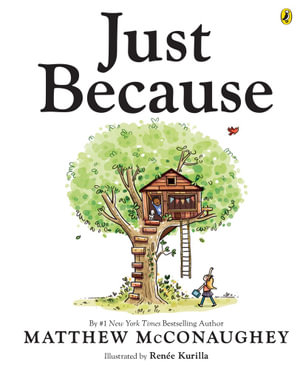
Just because by Matthew McConaughey. Illus. by Renee Kurilla
Penguin, 2023. ISBN: 9781761343582. (Age:4+)
Pairs of rhyming lines present the contradictions that life offers us in a humorous way which will appeal to young readers, and McConnaughey’s lines are supported with equally funny illustrations.
Each set of lines starts with ‘just because’, and then offers an alternative. One that caught my eye was ‘Just because I’m in the race, doesn’t mean I’m fully ready.’
And I laughed out loud at the ideas that came to mind. Kids will enjoy talking about being in the race, and what that means, as they are expected to be in lots of races. At school they are encouraged to compete, especially in sports, while even at home, siblings compete with each other. Being fully ready will bring recognition as we are often in a race or competition, without being aware of it at the start. Kids will be able to see funny sides to this truism: picture a runner without her running shoes or a cyclist without his bike. Another that resonate with me ‘Just because they do not hear you, doesn’t mean you have no voice’. This too will win recognition from children able to detail situations where this has been their predicament. Lots of discussion could emanate from this pair of lines.
The last few pages tell us 'Just because the sun has set, doesn’t mean it will not rise’, and then the ‘just’ disappears and the next set reads, ‘Because every day is a gift, each one a new surprise’, which is a wonderfully positive note to leave this book of surprises.