Ford St, 2008.
(Age 7+) Highly recommended. Congratulations to the author on
tackling such a difficult topic as mental illness in a sensitive and
moving way. Big and Small are machines that work together as a team.
'But some days Big goes a bit wobbly', and Small gets 'a lot worried.'
With the assistance of The Boss and Mechanic, Big gets some medicine to
help him get better.
The book is a wonderful metaphor for a young child living with someone
who is mentally unwell. It is not difficult to substitute an adult for
Big and the story goes through many of the things that a young child
would see when living with an unstable person. Sometimes the pair work
as 'a good team, the best', but sometimes Big does strange and
frightening things. Medicine helps Big, but when he is convinced that
he doesn't need it any longer, the world becomes 'grey and dull'. As
Boss explains, it is not Small's fault that Bgi's computer is not
working properly and this explanation should help relieve children's
fears about being the cause of a parent or care giver's strange
actions. The author doesn't avoid the big issues in this book and it
will be a tremendous help for both children and adults in understanding
mental health problems.
Miller has illustrated this book with fantastic paper sculptures of big
and small machines set against vivid backgrounds of ochre and dark
blue. They are a treat in themselves and their close examination will
give lots of enjoyment, as well as adding to the meaning of the text.
The book ends on a positive but realistic note - Big will always have
problems but with medicine will be OK most of the time. This is a book
that has a place in all libraries.
Pat Pledger
The Trap by Sarah Wray
Faber and Faber, 2008.
(Age 11+) Luke is amazed to find that he has been accepted to go to a
camp in New York State for high achievers. The camp is designed to give
nerdy kids some outdoor activities and work in social situations,
things which some of them miss. But from the start, Luke has
trepidation about the place. One of his room mates, Mark, is a bully,
his friend, Matt, seems nervous, and he is surprised to find Natalie, a
girl he knew at primary school, at the camp. On the first day, Luke
finds a coded note in his cabin and when they work out what it means,
they are excited as to what it will lead them to. Each day builds
tension and fear amongst the campers, and this is increased when they
hear the tale of three campers who disappeared from one of the camps in
the past.
A horror story which will have broad appeal to middle school kids, this
tale has some very creepy moments, made even more so by the strange
counselor Luke has in his cabin.
Fran Knight
Blackthorn by Elizabeth Pulford
Walker Books, 2008 ISBN9781921150470
(Age 10+)When her father dies, Alyana can no longer play the role of
the dutiful daughter and be relegated to a relative's house, learning
to cook and sew. She renounces all attempts at helping her, preferring
to hide out in the nearby forests and survive alone. She has hunting
skills learnt form her father, and feels she is able to stay alive
without help.
But she is naive and needs the help of the man who finds her in the
forest, starving and scared, the one she calls Boar, the man with the
twisted leg. He gives her a puppy and together they survive with the
skills and instincts taught her by Boar. Calling herself Blackthorn,
she denounces all that she knew before and learns to survive in the
forest.
Here she learns more about herself and her limits, and sees for herself
some of the other inhabitants in the forest. An unusual little read
about acceptance and self determination.
Fran Knight
A good arriving by David McRobbie
Puffin Books, 2008. ISBN
978014300403 5
(Age 11+) When Helen's family is evicted from their small farm, Helen
is forced to go and work in the big house nearby. She attracts the
attention of the son of the lord, and in rebuffing his advances, loses
her job. She becomes a friend of the doctor's wife in the village and
when that family decides to emigrate to New South Wales, Helen is
invited along as companion to the wife and nurse to the child. On Board
the Recovery, the family discovers that the ship is also a convict ship.
An interesting look at the migration of a varied lot of English people
to early Australia, A good arriving is broad in it scope. On the
Recovery, Helen finds that the doctor is interested in her, so she must
repel him. The son of the house where she worked is also on board,
offering his protection. One of the sailors also looks kindly upon
Helen, so she must be wary. Below the cabins dwell the convicts and
they are seen but rarely. When they do come on deck, Helen recognizes
one of them, a small boy called Ben who she helped when he was in the
big house as a chimney sweep. She helps him again and this leads to his
release on board ship from the confines of the convict quarters.
This book will prove an easy way of learning about Australia's early
history. The main character Helen, is too modern to be believable, but
kids will enjoy the way she makes her way in the world. Once the
amazing coincidences are forgotten, the story reads very easily,
smoothly taking in historical romance, crime and adventure all rolled
into one. When Helen arrives in NSW, the stage seems set for a sequel.
Fran Knight
War's end by Victoria Bowen
Random House, 2008. ISBN 978174166662
(Age 12+) Gradually waking in a bed not her own, and surrounded by
shadows which flit back and forth, it takes a long time for Nell to
realise that she is in a hospital. Relegated to a back room, she waits
for her father to come and get her, in the mean time helping the
overworked nurses as they scurry between the overload of patients.
Nell has been hospitalized with Spanish Flu. It is 1919. The Great War
has ended, with disease making its way around the world, killing more
people than all the years of the war. When her father finally comes to
pick her up, the two are estranged and the trip home on the train with
her grandfather and father is unsettling. Throughout the trip
conversations between the threesome reveal the suffering of the father
away at war and the despair of those left back home. Stories which many
have had as children suffuse the story, making it all the more
accessible to the intended audience. And these stories are some which
are behind Nell's silence with her father.
Bowen includes a great deal of historical information, and while most
is relevant and quietly part of the story, some is more obvious, as
when Nell's father talks about his time in France. But the novel tells
a strong story with a likeable main character who carries the plot
along. Students interested in this unexpected ending of World War One,
will be intrigued and involved along with Nell as she makes her peace
with her father.
Fran Knight
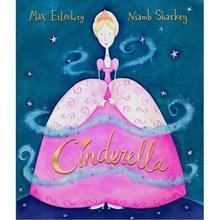
Cinderella by Max Eilenberg
Walker Books, 2008
(Ages: all) A beautiful retelling of the story of Cinderella, by
Max Eilenberg, this book will delight younger readers, older readers
and adults. Those who know the story will take pleasure in hearing it
again and pointing out the minor changes made by this author. Those for
whom the story is new, will be enchanted as Cinderella wins the prince
despite the behaviour of her step mother and sisters.
The illustrations by Niamh Sharkey will intrigue and amaze the readers.
The stepmother is sharp and angled, while her two daughters are
opposites, one large and cumbersome, the other tall and very thin.
Cinderella by contrast, is all she should be, demure, blonde, long
suffering and surprised. The small animals which dot the pages add a
comic element to the story. Each of the invitations to the balls (there
are three) is on a playing card and watch out for the size of the
girls' feet when trying on the glass slipper. All in all an agreeably
presented variation to the traditional story of Cinderella, which will
be a treat for those who read it.
Fran Knight
Cosmic by Frank Cottrell Boyce
Macmillan 2008
(Age 9+) Highly recommended. Liam is desperate to win a trip to a theme
park in China which offers a ride in The Rocket - the biggest thrill
ride in history. The only problem is that the winners have to be dads
accompanied by their children and Liam is only twelve years old. On the
plus side he is taller than average and has an embryo beard. He is also
in the gifted and talented group at school. These, he feels, are the
qualities needed to pass himself off as a dad. Against all odds Liam is
a competition winner and sets off to China with his friend Florida, who
reluctantly agrees to play the part of his daughter.
This is a wonderful story, whimsical, unusual, thought provoking and
funny. Cottrell Boyce confronts some topical issues - the nature of
fame and celebrity, the problem with parents who are either completely
absent or who push their children too far, and the underhand behaviour
of adults who manipulate children to fulfil their own obsessions.
Four winning dads and children arrive in China to discover that The
Rocket is much more than just a theme park ride. It is ironic that Liam
as the 'dad' realises he will be missing out on the adventure of a
lifetime as it is only the children who will venture into space; the
dads have to remain on earth and fill in all the boring forms!
Eventually Dinah Drax, the brains behind The Rocket, decides to offer
an ultimate prize for one of the dads - the opportunity to accompany
the children on their space flight.
Liam wins the prize, but his skills as a dad are sorely tested as drama
and danger threaten the space flight, and he faces up to the
possibility that they may not make it home. Liam's attempts to behave
in a 'dadly' way are superbly portrayed. At what point do you admit you
are scared? How do you make four frightened and argumentative children
do as you say when you are just a kid yourself? You may be gifted and
talented, but there are times when you still need your dad.
Cottrell Boyce has such a direct approach that young readers will
empathise with Liam's dilemmas.
Liam has always felt too big. He has been picked on by teachers because
'a big lad like you should know better,' and the other kids call him
names. It takes a trip to the far side of the moon to put his size into
perspective and make him feel small again.
This is a superb book. It would be an excellent story to read aloud in
upper primary and lower secondary, and should generate all kinds of
discussion and comment. The ending left me with a smile on my face and
a lump in my throat. I'm hoping that Cosmic will make a well deserved
appearance on next year's Carnegie shortlist.
Claire Larson.
Hamlet by John Marsden
Text Publishing, 2008. ISBN 978192135147 1
(Ages: 12+) A modern version of the well known tale of Hamlet is sure
to raise eyebrows when the author tells us that he has made it more
accessible to an adolescent audience. Some will say it is dumbing it
down, but I found it to be better than that. Yes there is an element of
change for change's sake, and I was annoyed at the
sex scenes designed to titillate rather than further the plot, but
Marsden sticks to the storyline, while trying to expose the incredible
decisions Hamlet must make. Sometimes his attempts to translate
Shakespeare's language into a more palatable form, is clunky and
readers will notice the variation of style. Marsden includes some links
between the familiar scenes which draw out some of the possible reasons
behind peoples' actions which will make some events clearer for the
novice.
Hamlet and co are adolescent, Hamlet at boarding school in nearby
Gravatar when he hears of his father's death and mother's remarriage.
He lopes along, understandably trying to make sense of it all, but when
the ghost appears, he is torn. From playing football with Horatio, and
having lewd thoughts about Ophelia, he now must turn to graver actions.
He gives the players newly arrived at the castle, some extra lines to
say in their play and this serves to warn us all that dire deeds will
soon transpire.
When he next sees Ophelia, he is maddening in his response, when he
sees Gertrude he hears something behind the curtain, and stabs, killing
Polonius. Laertes then comes on the scene wanting revenge and Claudius
plots for Laertes and Hamlet to meet in a competition. The end is near
when Gertrude drinks the poisoned wine meant for Hamlet, Hamlet stabs
Laertes with the poisoned sword and is also wounded. Struggling towards
Claudius, Hamlet then stabs the king and dies.
And when is it set? The use of carriages and 'Your Royal Highness', and
the word lavatory mark it as nineteenth century, but when the butler
refuses to change around the furniture because it is not on the list of
things he does, I became confused. Sandwiches appear at Gertrude's
wedding, Hamlet and Horatio play a strange form of golf with racquets,
and talk of playing football on Saturday afternoons.
But perhaps I'm nit picking. Kids will enjoy the thrill of it all;
teachers will give it to kids as an introduction to the play; some
adults will read it to remind them of their schooldays, and some will
read it to find out how the author has remodeled the play to suit a
21st century audience. But many like me, will go back to the play,
eagerly wanting to reread the familiar and entrancing words.
Fran Knight
The pop up dinosaurs galore by Giles Andrease and David Wojtowycz.
Orchard Books, 2008.
(Age 3+) In this fun dinosaur book, the reader gets to see what
different dinosaurs look like. A tyrannosaurus rex chases after a small
dinosaur, a pteranodon swoops through the air, a triceratops nods to
its young, the neck of the diplodocus sways above the trees and the
earth shudders when the giganotosaurus stomps on the ground.
The appealing story about each dinosaur is told in rhyme and would be
good to read aloud. The vivid illustrations are a delight. Each
dinosaur has a quirky face and devilish grin, which should delight a
young audience.
There are lots of tantalising tabs and flaps for the reader to find,
each with fun objects behind. The pop-ups are wonderful and will give a
young user lots of opportunity to learn about the shapes of different
dinosaurs while having a lot of fun.
As with all pop-up books, care is needed to keep the pop-ups intact, so
this is a book to keep safe and treasure.
Pat Pledger
The View from Connor's Hill by Barry Heard
Scribe Publications 2007
Louis Braille Audio. 2007 8 CDs 8 hrs
(Adult) Barry Heard, author of 'Well Done, Those Men', an account
of his experiences in Vietnam, details minutely his boyhood in this
memoir. From the Melbourne suburb of Ringwood, where he spent his
preschool years, to Doctor's Flat, near Omeo in Victoria's High
Country, he vividly recalls his life blow by blow. His amazing total
recall provides clear images of rural life in the 50s and 60s. We
visit country shows, deb balls, football matches, dates at the
pictures, school days and exploring the bush with him. He writes
endearingly of his horse Swanee and his sheepdog Rover, who could play
hide and seek with children and whose death brought shearers to tears.
There is plenty of quiet humour at his own and others foibles.
Mike Bishop captures Barry's voice well in these CDs but each episode
in his life is so meticulously detailed that it becomes more of an
historical record than a gripping autobiography. He describes
rather than reflects on his experiences. Students needing to interview
older people would find much material here; otherwise few students
would bother with this. The narrative would need to move faster
to sustain their interest. Barry's strength is his clear memories
rather than his writing style. Here, he is well and truly 'heard'.
Kevyna Gardner
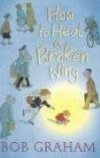
How to heal a broken wing by Bob Graham
Walker Books, 2008
(Age 5-10) Recommended. Bob Graham brings us another one of his thought
provoking and caring picture books. Young Will is the only person who
notices a bird lying on the ground with a broken wing. He carefully
picks it up, and with his mother's help, wraps a scarf around it and
takes it home in his mother's handbag. He finds that 'With rest, and
time, and a little hope a bird may fly again,' even if a loose feather
can't be put back.
Sparsely worded, the beautiful cartoon like illustrations must be
examined closely to uncover all the nuances of the story, with its
emphasis on how one small boy, supported by loving parents, can make a
difference. Every picture has a subtle message, with grey washes
capturing the impersonal feel of the skyscrapers and the uncaring
nature of the crowds in the street. Graham colours Will in a bright red
jacket, making him stand out as a lighthouse of hope against the greys
of the city pavement. Will's house is brightly coloured and also
emphasises the love and hope found there.
This is memorable story about one small boy's ability to notice what is
happening around him and how he reacts with compassion and love.
Pat Pledger
The General by Robert Muchamore
Hodder Headline, 2008
(Age 12+) The Cherub agents are sent to Las Vegas to engage in a
sophisticated war-game at Fort Reagan, a huge military base. American
and British troops are patrolling 'Reaganistan' to support the newly
elected democratic government and rout out terrorism. Hmmm -
sound familiar? The several thousand 'inhabitants' are mainly students
being paid $80 a week to take part. About ten percent are paid extra to
act as insurgents and stir up trouble for the troops. The Cherub team,
under the direction of American hating Kazakov immediately side with
the insurgents and generate spectacular problems by destroying several
million pounds worth of surveillance equipment and causing a mass break
out of violent diarrhoea among the troops. Kazakov and the Cherubs
eventually bring the war-game to a complete standstill and American
General Shirley is left red faced while muttering about unfair play.
This part of the story will certainly appeal to anyone interested in
the military and is right up to date as it deals with the faceless
enemies and urban environments encountered by the modern army.
However, as in the previous Cherub adventure, The Sleepwalker,
Muchamore
presents his readers with a sequence of completely unrelated stories. The
General opens with James, sporting a green Mohican, on a
mission to
infiltrate an anarchist organisation. This is interspersed with another
plot where some of the younger Cherub agents break into a state of the
art Air Traffic Control centre and completely trash it to demonstrate
the ineptitude of the cartoon style security guards. These stories fill
the first 130 pages, but end abruptly and are not referred to again
until the epilogue, some two hundred pages later.
I can't help feeling that Muchamore is growing lazy. There is no effort
to intertwine the plots. Subtlety is absent and none of the characters
are given an opportunity to reflect; one plot finishes and the next
begins in a welter of action and violence. For example, James, after
being severely beaten by the police in the first storyline, does not
appear to remember such dramatic events when captured by angry soldiers
later on in the book. A crashingly obvious flashback would have been
preferable to the complete hiatus we are presented with.
Sensitive characterisation, subtle plots, hints and build-ups are not
Muchamore's forte. Forget sophistication, lets hit 'em with a
sledgehammer. Muchamore is churning them out and I'm not convinced the
formula is working anymore. This is a book that was written in a hurry
and which lets his readers down.
Claire Larson
Ink Exchange by Melissa Marr
Harper Collins, 2008. (Age 15+) Imagine that there were faeries all around you, dark and
dangerous, but only some people could see them. Leslie is a damaged
girl who longs to reclaim her self-esteem and her body and overcome the
pain of her brother's betrayal to the drug dealers who raped her. She
decides that having a tattoo would help her do this and when none of
the conventional patterns appeal, Rabbit the tattooist shows her a
special book of designs. A tattoo, with dark wings surrounding strange
eyes, calls to her and she chooses it, not knowing that it will bind
her to Irial, the eerie faery who is King of the Dark Court.
Compulsively readable, this urban fantasy sweeps the reader along in
the grip of terror for Leslie as she warily treads through the dangers
at home, working tirelessly to pay the household bills as she avoids
her drunken father and deceitful drug-using brother. Add to this the
reader's apprehension about the effects that the tattoo, the horror of
the practices of the Dark Court, and the interplay between Irial and
Niall, the Summer King's lieutenant, and it is one terrifying read.
Leslie's friend, Aislinn, the new Summer Queen from Marr's first book,
companion novel Wicked Lovely, tries to protect her from the
faery
world and sends Niall to watch her, but he too has devastating powers
over humans and his interest in her has to be denied. Other characters
from Wicked Lovely feature, but it is Leslie who captures the
imagination of the reader. It is a story of one girl's attempt to
survive a rape and an awful home life and to reclaim herself. As Leslie
links with Irial, the Dark King, she must also find the strength to
overcome an addiction to the seductive powers of darkness.
This book will read as a stand-alone but having the faery background
from Wicked Lovely would flesh out some of the story. It is a
dark
captivating story, with its themes of rape, betrayal, addiction and
making choices, and left me hoping that more stories about the faery
courts will appear soon.
Pat Pledger
Does a sea cow say moo? by Terry Webb Harshman
Ill. by George McClements.
Bloomsbury, 2008.
(Age 5+) When Flash lands on earth from outer space he is perplexed by
all the words that are used on both the land and the sea and he has
some puzzling questions to ask. Does a school of fish go to school in
the sea? Does a clown fish wear a bow tie and red hair? Jack gets to
answer his queries and the result is a plethora of pictures in his
notebook explaining each one.
The effervescent pictures and humorous play on words make this story
great fun to read. It is written in verse that is occasionally clumsy,
and it would be useful for an adult to practise it first before reading
aloud to get a good rhythm, but the double meanings of the words will
delight children. It would be a useful addition when planning for a
unit on the sea, providing a starting point for extending children's
vocabulary and looking at the underwater environment.
Pat Pledger
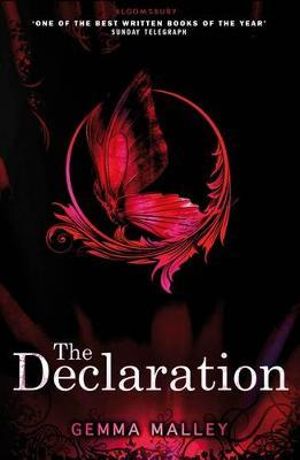
Growing up in Grange Hall, where she has been taught to be subservient, Anna is dismayed when a new boy a little older than herself comes to be trained. She knows her place, keeps her eyes downcast, looks forward to be useful when she leaves, and never, never asks questions. She is a Surplus, a child born to parents who were not licensed to do so. Those who have taken the Longevity drugs to avoid disease, ageing and so death, were not allowed to have children and those who went against the Declaration, had the children taken and put into care where they were taught to know their place and learn to be useful, servants to those who had signed the Declaration.
It is a world in the future, where anti ageing is taken many steps forward, where the stem cells of the young are harvested to make the Longevity drugs. But this means that the authorities must be alert to overcrowding and so steps are taken to keep this under control. A dazzling story, one which foresees the outcome of some of the steps being taken today by science, where questions are asked about the logical conclusion about these experiments. All sorts of ideas pop up in this layered story, stem cell research, license to have children, energy use, global warming, corruption and the exploitation by the first world, of the third world.
The new boy challenges Anna in a way that makes her troubled, sensing in him the downfall that may engulf her as well. When he is sent to solitary, Anna overhears the matron's plans for him, and so she escapes with him. There follows a heart stopping escape to London where an underground movement waits. The second book in the series, Resistance can't come soon enough. This is a tale of a nasty future which is almost visible and certainly possible.