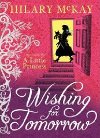
Wishing for tomorrow: The sequel to A Little Princess by Hilary McKay
Hodder, 2009.
(Ages 9-90) This will have universal appeal to all who have loved A
Little
Princess. Who wouldn't want to discover what happened after
Sara's dramatic rescue from the horrors of her attic prison. However,
in this sequel Sara plays only a minor role. The main protagonists are
the host of supporting characters from Miss Minchin's Select Seminary
for Young Ladies - the babyish Lottie, the vile Lavinia, the wicked
Miss Minchin, her weak willed sister Amelia, Melchisedec the rat and
Ermengarde, Sara's hapless young friend.
Whereas first time around they were all foils to Sara, here they have
far greater substance. Who would have thought that Lavinia harbours a
secret desire to go to university and Lottie, always so babyish is
actually spirited and courageous, a kind of female William Brown, with
scant regard for rules or decorum. Miss Minchin is a secret alcoholic
(McKay's clues are humorous, but so subtle, I'm not convinced young
readers will make the connection), while her sister, Amelia harbours
well hidden passions for the local vicar.
Ermengarde, bobbing around in a sea of confusion and anxiety, feels
completely abandoned by the perfect Sara. This more than anything marks
the different eras in which the two stories were written. For Burnett,
influenced by Victorian melodrama and the need for little girls to be
perfect, everything is black and white. Miss Minchin is evil and Sara
has the slightly cloying sweetness of a paragon of virtue. McKay's
characters are human and therefore more balanced. We cannot help but
sympathise with the dreadful Miss Minchin, we admire Lavinia's
single-minded determination and become a little frustrated at the
hapless chaos surrounding poor old Ermengarde. Through it all I found
myself wondering whether Sara, in apparently adopting the 'I'm alright
Jack' approach to life, is really so perfect after all.
This is a thoroughly satisfying read. All the plot strands are drawn
together in an exciting and satisfying denouement, and Sara's actions
in the final chapters do much to redeem her in the eyes of the reader.
We learn too, what ultimately becomes of Sara and her devoted maid,
Becky. This is a great read for all ages and perfect to read aloud to
the girls in your life.
Claire Larson
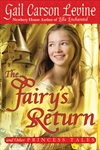
The fairy's return and other princess tales by Gail Carson Levine
HarperCollins, 2009. ISBN 9780061768989
(Ages 8-12) Recommended. Six retellings of fairy
stories by
the Newbery Honor award winning author of Ella Enchanted are
sure to
please all
those who enjoy fractured fairy tales. Ethelinda tries to reward the
good deeds of
one girl while punishing her sister, but her plans go terribly wrong in The fairy's mistake,
based on the fairy tale Toads and
Diamonds.
The
princess test is a hilarious take on The princess and the pea,
where
Lorelei is forced to prove that she is
good enough for the prince. Sleeping beauty will never be the
same once
readers
have been introduced to a princess who is a genius in Princess
Sonora
and the
long sleep. For Biddle's sake sees the green toothed
Parsley turn into
a toad
although she eventually wins the heart of a prince and all ends well.
In The
Fairy's return a baker's son and a princess fall in love. My
favourite
was
Cinderellis and the glass hill, where a farm boy rides
magnificent
magical
horses up a glass hill and manages to win the heart of a princess.
These stories are full of humour and the play on
words is
very entertaining. There are enough elements of the original stories to
sound
familiar but the new twists make them very enjoyable. This book would
be an
excellent choice to read aloud when doing a unit of work on Fairy tales
or
Fractured fairy tales or just to enjoy a good laugh.
Pat Pledger
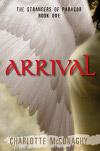
Arrival by Charlotte McConaghy
(The Strangers of Paragor, Book 1 ) Black Dog Books, 2009.
(Ages 12+) Six young humans leap through a portal into another world,
one they know nothing about, one assumes to find out what lies on the
other side. They land in various places in the other world; two, Mia
and Jack don't take part in book 1, but will pop up later. Since this
is fantasy the world into which they are plunged is one of kings,
princes, princesses, elves, phaeries, amazons, a smattering of gods
from various ancient civilizations and of course the odd evil
power-hungry magician.
The world is composed of three major countries all separated by sea;
Cynis Witron, Uns Lapodis and Lapis Matyr as well as a couple of minor
ones. Peace has prevailed over the countries for generations, but
Leostrialhas somehow taken over Lapis Matyr with a small band of
followers and no one seems to know where he has come from. With the
arrival of the six (less two) an ancient prophecy seems about to be
fulfilled.
The story line is not new, nor is the climax of the book, nor the final
victory after a bloody battle. There are a few too many unanswered
questions, why on earth did Queen Columba save Satine from her
execution? Indeed why on earth did King Gaddemar order her execution?
There is also a problem with the characters themselves, Jane in
particular, who is the strong female protagonist, is abrasive, priggish
and unlikeable. Fern a half elvish prince who falls in love with Jane
(who knows why?) is typically heroic but the romantic bond is too
juvenile and frustrating to be believable.
McConaghy is a young writer who has drawn her inspiration from many
sources. There are parts reminiscent of The lion, the witch and the
wardrobe, the Indiana Jones stories and Blyton's Famous
Five tales.
I've no doubt the story line will appeal to girls of a certain age,
especially the romantic interludes, and there are certainly moments
when the action moves at a cracking pace, but there is a lack of
cohesion to the whole story. It seems to have grown like Topsy and
needs more rigorous editing to have it reach the widest possible
audience.
Mark Knight
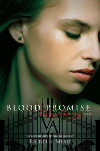
Blood Promise : A Vampire Academy Novel by Richelle Mead
RazorBill, 2009. ISBN 9781921518294.
(Ages:12+) Rose
is feeling unsettled at St. Vladimir's. She's tired of having her life
mapped
out for her. Although she's bonded to her best friend Lissa and is
destined to be her guardian she
feels she has no choice in the matter. She also has other bigger fish
to fry.
She feels she must kill her boy friend Dimitri who has now been turned
into an
evil Strigoi.
Rose
leaps off to Russia, Dimitri's birth place (Siberia to be precise) and
expects
to happen upon him at the airport it seems. Does she know how big
Russia is?
Does she speak any Russian? Does it sound implausible? Does she
succeed? Of
course she does. She kicks lots of Strigoi arse
looking for Dimitri and finds a group of people she didn't know
existed, The
Alchemists. They run around after the dhampir guardians disposing of
the bodies
making sure no nocturnal activities are evident to the human
population. How
they don't notice all these wierdos is beyond me,
but I suspect you're not supposed to do a
lot of thinking whilst reading this series. Rose
of course finds Dimitri's family in a small village in Siberia and is
taken in
as one of the family. Surprisingly they all speak wonderful English so
Rose has
no problems fitting in. She tells the family what happened to Dimitri
and the
village come together for a memorial/funeral service.
Rose
eventually does her usual and treads all over everyone's feelings
whilst
feeling extremely sorry for herself and has to leave the family. She
teams up
with a group of dhampir who hunted Stigoi for kicks. She heads to
Novosibirsk
with them and after becoming leader of the gang and kicking more
strigoi arse
she finds Dimitri, or he finds her and takes her prisoner. Like all
things in
this series her prison is luxurious, beautiful decor, linen,
clothing and food.
Why would a prison be anything else? Rose is caught in a roller-coaster
of
emotions. She knows Dimitri is evil, but does she still love him? Will
he bite
her and turn her into Strigoi as well? I don't need to tell you the
answer,
because you knew what it would be before you read the first chapter.
Similarly
you will be expecting the surprise twist ending!
This
story is riddled with inconsistencies, amazing improbabilities and
unlikely
coincidence but I'm sure it won't matter a jot to the audience this
series of
books has and will continue to hold. Rose like most of her friends and
peers is
brash, spoiled, indulged, beautiful (Rose is more so because she has
bigger
breasts as we keep being reminded all the way through this vampire
soapy) and
to my mind thoroughly unlikeable. It's bound to be popular with the tweenset.
Mark Knight
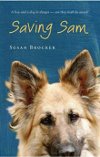
Saving Sam by Susan Brocker
Auckland : Harper
Collins, 2009.
Saving Sam is a
story about a
boy and a dog, and the healing powers of the human-canine interaction.
Ben is a
boy in a difficult family and personal situation. He is being bullied
at his
new school, his father is in gaol and his mother is dead. Ben and his
elder
brother Sam are staying with their Uncle Joe and Aunt Ida, whose
children have
grown up and left the family home. Joe has recently lost his job, is
sitting
around watching television all day and is severely depressed. He does
not want
the responsibility for his nephews and is quite angry at his feckless
brother
for landing the boys on him. Aunt Ida, the aunt-in-law, is much more
welcoming
of the boys, and in fact the portrayal of family life with the aunt and
uncle
is quite warm and affectionate.
Ben
idolizes his
bother Sam, who
is drifting away from him and into bad company. The best thing Ben has
going
for him is his Uncle Joe's recently-acquired dog Layla, who was bought
as a
guard dog from a man at the pub. Layla turns out to be a failure as a
guard dog,
as she has been brutalized in her earlier life and is fearful and
skittish of
human interaction. Ben pleads to be able to take care of Layla who, not
unlike
Ben, has a significant process of recovery and rehabilitation to go
through. It
will come as no surprise that Ben and Layla undertake this journey
together.
Ben
takes Layla to
dog training,
which has many beneficial effects. It gives him an entree into
significant
friendships with a sympathetic female classmate and a Customs officer
who is
the dog trainer, it brings Uncle Joe onside as he and Ben practice
Layla's
training together, and turns the class bully into an ally. At the same
time,
however, the situation with Sam is going from bad to worse.
It
turns out that Sam
has become
involved with drugs, in particular methamphetamines, and a sinister
drug
dealer. This latter turns out to be a Phys Ed teacher at the boys' new
school,
to my mind a highly-contrived and over-exaggerated character, and an
unlikely plot
development. The remainder of the novel deals with the satisfactory
resolution
of the various problems and situations of the 4 main protagonists -
Ben, Sam,
Uncle Joe and (last but not least) Layla.
The
book's heart is
definitely in
the right place - strong anti-drug, anti-gangs message, equally strong
message
about hope and the power of love of animals and family - but
unfortunately at
times the plot feels forced and the writing somewhat didactic. An
unnecessary
sub-plot about Aunt Ida and Uncle Ben's estranged son seems tacked-on,
doesn't
really go anywhere, and is dealt with in a perfunctory manner at the
end of the
novel. There are long detailed sections on the mechanics of
dog-training, of
interest to those interested, so to speak, but possibly not of broader
appeal.
Susan
Brocker is a recognized New Zealand author with more than 50
books to her credit, mainly non-fiction. Having perused reviews of
Saving Sam
in New Zealand journals/newspapers, I should say that my opinion of the
novel is
not widely shared, and in fact those reviews have been pretty good.
Peter Helman
Stop in the name of pants! by Louise Rennison
HarperCollins Children's Books, 2009. ISBN 9780007275847.
(Ages: 12 and up) Georgia Nicolson, official girlfriend of
the
Luuurve God,
Masimo, makes a huge mistake whilst on camp and snogs Dave the Laugh.
Thus
begins her dilemma of having to face her guilt and work out which is
truly the
boy for her. With Masimo holidaying in Pizza-a-gogo land, failing to
contact Georgia
as often as she would like, Dave the Laugh seems to be ever present and
ready
to rescue her whenever necessary. When a family crisis occurs, Dave is
again
there as support.
The ninth in the series, this book is filled with
humour, a
whole new 'vocabularyosity' (for which a glossary is included) and a
raft of
issues faced by the teenage girl. Louise Rennison appears to have a
real
understanding of the psyche of the teenager and writes in a voice which
appeals
greatly. Georgia's
concerns with body image, teachers, boy problems and friendships are
the basis
of some laugh out loud chapters and can be enjoyed both by upper
primary
students, teens and the young at heart. Since the release of the film, Angus,
Thongs
and Perfect Snogging,
these books have become widely sought after and this will be no
exception.
Jo Schenkel
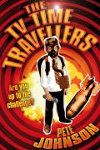
The TV Time Travellers by Pete Johnson
Corgi Yearling, 2009.
(Ages 9+) If you thought time travel was a fantasy, think again, after
all anything seems possible in the world of reality TV. Eleven year
olds, Zac and Izzy win coveted places in a new TV company's reality
sensation - sending children to live as World War Two evacuees.
The conversational style, narrated alternatively by Zac and Izzy, will
have great appeal as readers unravel the stories behind the characters.
Zac has become obsessed with World War Two following his Mum's death
and Izzy lives on the poverty line with her Mum and is a typically
feisty heroine. All the young evacuees hope to avoid eviction and win
the prize of a dream holiday. Johnson concentrates more on the reality
TV competition than life as an evacuee and readers won't learn a great
deal about World War Two, although much is made of the dreary food,
strict schooling and having to perform number twos in the outside lav!
The characters of the children are well drawn, but the wicked TV
pundits; Miss Weed and Mr Wallack are somewhat flat and predictable.
However there is food for thought as the TV Company preys on
impressionable children and, in an effort to raise viewing figures,
they use nefarious methods that threaten serious consequences.
Pete Johnson successfully cashes in on our young generation's obsession
with Big Brother and Britain's Got Talent and good on
him, as he knows
what will make youngsters pick up a book. The TV Time Travellers
will certainly tempt reluctant readers aged 10 - 12 and you could
always add it to a World War Two topic box; it would make an
interesting contrast to The Boy in the Striped Pyjamas!
Claire Larson
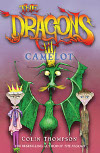
The Dragons 1: Camelot by Colin Thompson
Random House, 2009. ISBN 9781741663815.
Colin
Thompson,
the
author and illustrator of this marvellous book, was born in London on
the
eighteenth
of October in 1942. He has written many books but The Dragons Camelot! was the one that caught my
eye.
Camelot
is
the
first
book of the series The Dragons. More books in the series
will be
released in following years. Camelot
tells
the
'true'
story of the legendary King Arthur and the 'truth' of
dragons. King Arthur is a spoilt little brat who wants everything,
especially mauve
tights, and of course he gets everything. But when Romeo Crick, a boy
who
cannot be harmed by fire, comes along and an incredible secret is
revealed, the
whole of Avalon, their country can be saved!
Dragons
were
a
major
problem back in those days; blocking drains or killing out
whole
populations. But when they block the Castle's drains the King has had
enough! He
sends out four royal messengers to find somebody who is able to slay
the
dragons. But when Romeo Crick's secret is revealed the humans make
peace with
the dragons.
Wow!
This
book
was
so well written and illustrated I am reading it for a second
time! The whole thing with dragons and Kings was simply hilarious! I am
just
itching to read the second book and I will probably read it more than
once as
well! I really do bow and take my hat off for Colin Thompson!
Heidi Bigg (student)
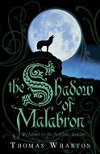
The Shadow of Malabron by Thomas Wharton
Walker, 2008. ISBN 9781406312508.
This
book is about a boy named Will Lightfoot who takes his father's
motorbike for a
ride and gets hurled into the Perilous Realm, which is home to many
great and
mysterious creatures. When Will finds his companion, Shade, who is sent
to
accompany him on his journey home, he realizes that it is not that
simple to
get home, and in order to get home, he must face the 'Night King' and
his army
of fetches and other weird creatures.
Personally,
I didn't like the book because of its supernatural baseline. I mean, if
you
like talking wolves, wizards and weird creatures and Harry Potter type
of books
then yeah, it's a great book.
I
would recommend this book towards 11-15 year olds, especially those who
like
Harry Potter type things, as I said. Enjoy reading this as you get
catapulted
into The Perilous Realm.
Isaac Bigg(student)
Saving Pandas by Dr Carla Litchfield
Black
Dog Books, 2009.
ISBN 978 1742031149.
(Ages
6+) Highly
recommended. This
wonderful production will find a place in every library fuelled by the
excitement of the pair of pandas at Adelaide Zoo. The eyes of the baby
panda
stare out at the reader, inviting them into its world. And what a
world: a
small place in China, hemmed in by agricultural encroachment on their
bamboo
forests, the 2500 adults left in the wild spend 12 hours a day eating
bamboo.
The most astonishing facts about pandas are presented in this little
book,
penned by Dr Litchfield, the conservation psychologist at Adelaide Zoo.
From
the tactile cover to the mass of photos covering every page, this book
has wide
appeal. There is a small glossary and index at the back suited for the
younger
reader, but just as informative for the older reader augmenting their
web
search, or as a first port of call.
On
each page information is given in large clear print, with important
facts
presented boldly. The last few pages clarify the role of zoos in
helping to
protect the pandas, showing clearly what Adelaide Zoo is hoping to
achieve. For a clear, informative, well
presented book about pandas, then this is a treat. The publisher, black
dog
books, produce high quality, well researched non fiction books.
Fran Knight
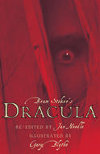
Dracula by Bram Stoker Re-edited by Jan Needle
Walker Books, 2007. ISBN 9781406305814.
(Ages 13+) Recommended. This timeless classic, re-edited by Jan
Needle to make it more accessible to today's young audience, will
thrill
readers just as it did when first published in 1897. Told in diary form
with
newspaper articles and narrative competing for space, the events take
place
over several months in Transylvania and England. Needle has abridged
some of
the diaries and retold the main events in narrative form to move the
story along,
and this with some linking pages makes the whole much easier to read
than the
original.
The diaries of several people overlap, giving
different points of view as to what is happening and building the
tension as
those who are in denial come closer to the truth. Beginning with the
stories of
Jonathon Harker, a clerk sent to Count Dracula's castle in transplants,
the
story develops speed as we realises what a pickle he is in. Jonathon's
fiancee,
the strong willed Mina Murray, also keeps a diary of her account of
what
is
happening to her beloved, and keeps his letters to her while he is
away. Her
best friend, Lucy Westenra, keeps a diary as well, as she falls under
the
thrall of Dracula and needs eventually to be staked. Lucy's suitors
includes Dr
Seward, a diarist who by coincidence runs an asylum next door to
Dracula's
house, and here he has a patient, Renfield, whose behaviour is very
odd. And so
the story is made up from pieces of the diaries of all these
characters, tied
together with narrative pieces.
But it is Van Helsing, the Dutchman, who
first shows them all what they are dealing with after Lucy's death. He
shows
them the woman in her coffin, and convinced they endeavour to kill her
as only
a vampire can be killed: a stake through the heart, removal of the
head, and
the mouth stuffed with garlic.
There are some quite inspiring passages. The
ship coming into harbour at Whitby, carrying the boxes of earth from
Transylvania, and the body of Dracula and his cronies, has lost all of
its
crew, and is steered in by the captain, whose dead body is lashed to
the mast.
The lingering death of Lucy, despite being surrounded by help: the
antics of
Renfield, incarcerated at the lunatic asylum, the workings of primitive
transfusions and so on, all engender a sense of unease and disturbance
to this
fabulous tale.
The superb illustrations add to the
creepiness of the whole (check out Lucy as a vampire on p 218), and it
was a
pleasure to read the cut down original and put all the films, videos
and other
books into some perspective. Recommended for secondary students with a
penchant
for knowing the true story, and an eagerness for horror.
Fran Knight
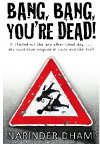
Bang, bang, you're dead by Narinder Dhami
Corgi Books
2009. ISBN 9780552560436.
(Ages:12+) Hearing that
her school is in lockdown because a gunman
is holding a class hostage, Mia realises it is her brother, Jamie, a
boy who
has threatened violence to get himself and his family's problems
noticed. On
her way to the school, Mia recalls her family's plight: their mother, a
depressive, often taking so many pills that she remains asleep for
days, at
other times going on periods of high excitement, resulting in buying
many
things they cannot afford on credit cards she can never pay off. The
family's
lives are blighted by her illness, and despite their trying to get help
from
authorities the two children are powerless.
Mia tells us
of her struggle to find her father, a man
who left before she and her twin brother were born. She makes
appointments with
the local doctor, only to be rejected again by her mother, when she
realises
that she has been brought there by her daughter to be seen herself. Mia
tells
us of the problems she has at school where some of her classmates know
of her
mother's instability.
With several
twists during the novel, the story line
keeps the reader guessing right to the end. The strong character of Mia
holds
the readers' interest and the brother's motives are well defined and
garner
sympathy from the reader. Altogether a most readable novel, with swipes
at the
services there to help people in need but failing to do so, as well as
getting
into the mind of a disturbed family.
Fran Knight
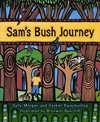
Sam's Bush Journey by Sally Morgan and Ezekiel Kwaymullina
Ill. by
Bronwyn Bancroft. Little Hare
Books, 2009. ISBN 9781921541049.
(Picture
book, Ages 4-7) Sam stays with
his grandmother in the bush, but finds the
place not to his liking. Every time Grandma takes him for a walk, the
bushes
scratch him, the mosquitoes bite and he is ever fearful that the big
gums will
drop limbs upon his head. So he makes excuses not to go for walks,
saying he
has a headache and so must stay in bed. One night he finds himself in
the bush
and hungry, he recalls Grandma's talk about bush food, and finds some
berries
on the bushes. He is thirsty and recalls Grandma talking about the
birds, and
so follows the birds and finds water, when he is sleepy, he looks for
shelter
in the big trees.
All of the
things that Grandma has talked about on their
walks have a meaning which he can now appreciate. The bush is a
storehouse of
food, water and shelter. Next time Grandma invites him to go on a walk
into the
bush, he is happy to go, knowing that he will learn more about the
place
of his
ancestors. Arriving at the waterhole, Grandma comments that the birds
seem to
be greeting him as an old friend. This is a delightfully symmetrical
story which will enrapture those who read it.
Bancroft's
distinctive black outlined illustrations perfectly reveal the things
the boy
will find in the bush. The blocks of colour contrast with the black
making an
easily identified illustrative style which suits these stories so well.
On each
page are different things to watch out for and for kids to notice. The
figures
behind the trees gradually come together holding hearts between each
figure
reflecting the love found in the bush by those who care to look.
Fran Knight
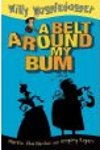
Willy Waggledagger: A belt around my bum by Martin Chatterton
Little Hare, 2009.
ISBN: 9781921272981.
(Ages 8-12) The young Willy Waggledagger, AKA William
Shakespeare, the eleven year old son of a local tanner, is traveling
with the
Black Skulls theatre troupe to perform for Queen Elizabeth. When the
self-appointed 'King of the Faeries' confronts the troupe and demands
they
retrieve his 'Golden Girdle' from the Queen, Willy is given a love
potion to
assist in the task. Things begin to go dramatically wrong when the
potion is
taken by the wrong characters and Willy again has to work hard and fast
to
resolve the situation.
As a humorous novel which shares some
elements of A Midsummer Night's Dream, this romp through the
childhood
of
William Shakespeare is hardly on a par with the works of the Bard. It
is not
brilliantly crafted 'literature' but is nonetheless an enjoyable read
and could
provide children with an introduction to Shakespeare's plays.
Gregory Rogers' illustrations, particularly
the silhouette style used on the cover, add their own unique brand of
humour to
the story. Both cover and title would be likely to draw the child in
and
maintain interest to the end to see how the story concludes. This could
be a
welcome addition as a class read aloud.
Jo Schenkel
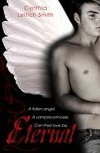
Eternal by Cynthia Letich Smith
Walker, 2009. ISBN 9781406325003.
(Age 15+) Zachary is Miranda's guardian angel but
he has a
problem - he is in love with her. Instead of letting her die he reveals
himself
in the forbidden angel form and rescues her, only to have the King of
the Mantle
of Dracul overpower him and swoop her to off his palace. There Miranda
becomes
a vampire princess, the life of the party. She is expected not only to
drink
blood but to occasionally kill anyone who displeases her. Meanwhile, in
disgrace,
Zachary is given one last chance of eternal redemption, and poses as
Miranda's
personal assistant, planning the King's Death Day gala. Will he be able
to save
her soul and rescue the human Bleeders imprisoned in the dungeons?
This is an entertaining romp of a story, told in
alternate points
of view by Miranda and Zachary. I had quite a few chuckles from the
witty
language, and enjoyed the passing references to Anne Rice and other
vampire
books as well as A tale of two cities. What lifts it above some
of the
other
vampire/angel books I have read recently is the fact that Miranda
manages to
shake off her quiet persona and come into her own by the end of the
story, turning
into a feisty heroine who makes really hard decisions about her future.
Zachary
is an appealing fallen hero who also has a hard time coming to grips
with what
redemption means. Supporting characters are fully formed and lots of
fun,
especially Harrison, the starchy human personal assistant to the Master
and
Lucy, Miranda's best friend, who sets up a blog appealing for any
information
about her disappearance.
Smith's vampire world is well developed, dark and
gruesome,
and there is plenty of action to delight fans of horror and vampire
tales.
There is a companion book, Tantalize, and another one, Blessed,
to
follow.
Pat Pledger