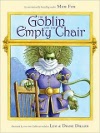
Ill. by Leo and Diane Dillon. Puffin, 2009. ISBN
9780670074211.
(Age: 5+) Highly
recommended. Mem Fox has crafted a
memorable story in the
classic fairy tale tradition, telling the tale of a kind-hearted goblin
who is
convinced that he is too ugly to be seen by anyone. He hides away in
his
castle, until one day he sees desolate farmer, who doesn't seem to be
able to
cope with his chores. The farmer's wife and daughter are also suffering
from
some unspecified loss. The goblin, working at night, helps them out,
believing
that the darkness will hide him. However the family members do see him
and invite
him into their home.
Fox's beautiful
text is studded
with memorable phrases, imagery and repetition. It is a delight to read
aloud,
slowly with emphasis. Beautiful framed illustrations by award winning
duo, Leo
and Diane Dillon, draw the reader into the story. Each page has a
border strip showing
what is happening before the text, and a larger picture that
illustrates a key emotion
of the story. A tiny gargoyle face on both sides of the picture is
fascinating
and adds to the reader's understand of the feelings that the text is
expanding.
Although the family's despair is not explained in the text, there are
clues in
the illustrations. It is these tiny pictures and clues that bring the
reader
back again and again to discover more richness in the book.
Both the text and the illustrations emphasise that
appearances
are not all important and that beauty is in the eye of the beholder.
Compassion
and caring for other people have the power to help heal a terrible loss
and to
join people together.
Pat Pledger
Dreamdark series by Laini Taylor
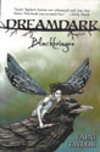
Blackbringer. Firebird, 2007. ISBN 9780142411681. Silksinger. G. P. Putnam's Sons, 2009. ISBN 9780399246319.
(Ages 10+) Recommended. The first two books in the Dreamdark series are
an absolute delight. Once I started Blackbringer, I was unable
to put
it down, as I followed the adventures of Magpie Windwitch, a tiny
feisty fairy, who rides on the backs of a clan of cigar smoking crows.
She is on a quest to rid the world of devils that have escaped back
into the world and are threatening the fairy world. When the Blackbringer
kills Talon Rathersting's father and brothers, he too joins the hunt to
rid the world of darkness. After finishing Blackbringer I
immediately
picked up the sequel Silksinger. In Silksinger, Whisper
is a tiny fairy
with a magical voice, who has to protect the Azazel, one of the
creators of the world. Joined by Hirik, and aided by Magpie Windwitch,
Talon and the crows, she faces a dangerous adversary in her quest to
keep the Azazel and the world safe.
Taylor has created a unique but totally believable world peopled with
spunky fairies and evil villains. This world is vividly brought alive
by beautiful descriptive writing and splendid dialogue, including slang
especially created to suit Magpie.
Her characters are really well developed, each with their own strengths
and weakness, and having a wonderful range of skills. Magpie can weave
the Tapestry that keeps the world together. Talon, a non stereotypical
Prince, is able to knit himself a wondrous pair of wings so that he too
can travel the skies on adventures with Magpie and the crows. Whisper
Silksinger can translate glyphs into song and Tirik wields a magical
sword. Individuals in the crow clan provide a source of laugh out loud
humour, with their cigar-smoking habits and play acting antics.
I found myself flicking through the books to look at Jim Di Bartolo's
gorgeous
illustrations of the little fairies with their
soaring wings, tattooed faces, pointed ears and wind swept hair. They
perfectly complemented the characters of the fairies and added greatly
to the enjoyment of the book.
This is an original and highly enjoyable series with plenty of edge of
the seat adventures to hold the reader's interest. I can't wait for the
next book to be published.
Pat Pledger
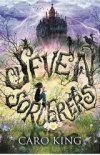
Seven Sorcerers by Caro King
Quercus, 2009.
(Age 10+)
Nin had never liked Wednesdays, but this one was terrible. When
she woke
up she discovered that her brother Toby had disappeared. No one else
remembered
him and none of his belongings existed either. She remembered him being
afraid
of the Bogeyman that he thought was lurking in the corner of the
cellar. When
she found his Monkey toy discarded under
a tree in the garden she knew that he had been taken. Eyes seem to
follow her
and then the worse happened, Skerridge the Bogeyman, tried to take her
and
erased all the memories of Nin from her family and friends. Determined
to
rescue Toby and aided by Jonas a boy from the Drift, a strange land
where
everything seems to be dying, Nin set out on a dangerous quest out to
find him.
What child hasn't imagined monsters hiding in
closets and
dark corners, or thought of skeletons rising out of graves? King has
peopled
her world with a frightening array of fantastic and terrible creatures,
many
drawn from the stuff of these nightmares and childhood fears. Nin has
to face
the tombfolk, mudmen, Gabriel hounds, not to mention Mr Strood and the
Terrible
House where all the stolen children are given to Strood's Death to eat.
The
plot is action packed and the suspense is built up really well as Nin
and her
companions face one adversary after another on their perilous journey
to find
Toby and discover what had happened to the Seven Sorcerers who once
lived in
the land.
King has made her characters come alive. Nin is
always
steadfast and loyal. Almost single minded in her determination to find
her
brother, she still comes to the rescue of Jonas in an amazing feat
against the
Gabriel Hounds and ensures that the mudman, Jik, is kept alive.
Skerridge the
Bogeyman, is a terrific character and provides many touches of
humour that helps to relieve the tension of
the scary adventures that occur. The author also uses him to provide
much of
the background of the alternative world that Nin has found herself in.
Jik the mudman with his strange vocabulary is
a memorable invention. Black and white illustrations of Nin, Jonas, Jik
and
Skerridge give an extra dimension to the characters.
With its combination of fast paced plot and a
wonderfully
inventive, magical world, King has written a story that is clever,
scary and
memorable. It can be read as a stand alone as it comes to a satisfying
conclusion. Readers who enjoyed it will be happy to know that on the
spine, it
says Book one, and will look forward to further adventures of Nin and
her
little band.
Pat Pledger
Shapeshifters: tales from Ovid's Metamorphoses retold by Adrian Mitchell
Ill.
by Alan Lee. Frances
Lincoln Children's Books, 2009.
(Age
11+)Metamorphoses
has inspired writers through the ages. The Roman poet's tales about
interaction between the gods and humans have been adapted as plays,
poems,
music and stories.
Shapeshifting,
or metamorphosis, is a common theme in legends
and folklore. Adrian Mitchell has used it as a metaphor for the
inevitability of
change, bookending his adaptations of ancient Greek myths with his
thoughts
about the subject of transformation. The result has a satisfying unity,
beginning with the creation of order out of chaos and ending with the
creation
of art, represented by the work of the boastful weaver Arachne, who was
changed
into a spider.
Writing
styles vary from prose poems and rhyming verse
to conventional storytelling in prose. Readers can view the resulting
anthology
as a whole work or use the table of contents to dip into the tales of
their
choice. At times, the writing is evocative. At times, it disappoints.
Occasional
facetiousness and colloquial expressions seem out of place. Tense
changes mar
the storytelling. A glossary of the gods and a guide to the
pronunciation of Greek
names are welcome but a brief 'Note on Ovid' seems offhand at the end
of a book
which includes his name in the title. Readers are left to deduce the
connection
between the terms 'shapeshifters' and 'metamorphoses'.
Alan
Lee's vivid watercolour illustrations wrap around
the text on every page. The heroic,
dreamlike
images enhance this large print, quality hardcover publication.
Despite
its unevenness, Shapeshifters is a
visually arresting and effective retelling of some of the world's best
known
myths. The author's reflections about their meaning are sincere and
thought-provoking.
Elizabeth
Bor
Watch me throw the ball by Mo Willems
Walker Books, 2009.
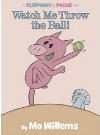
(Ages 2-7) Recommended. Another charming book in the Elephant and
Piggie series, Watch me throw the ball has careful Gerald convinced
that throwing a ball is very serious business while happy Piggie is
thrilled to just have fun. Gerald is determined to show Piggie the
right way to throw a ball, but Piggie is quite happy with her meagre
throws, convinced that she is Super Pig!
The simple line drawings are an absolute delight, the expressions of
the serious Gerald and the frivolous Piggie exquisitely drawn with a
few strokes. Laugh aloud humour, simple sentence construction, a few
words to each page and repetition make this story an ideal first reader.
Pat Pledger
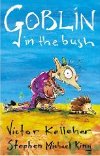
Gibblewort the goblin series by Victor Kelleher
Illustrated by Stephen Michael King
Random House Australia, 2010.
(Ages 7-10 years) This year sees a new edition of the popular series of
stories featuring an ugly, disgruntled and mischievous goblin,
Gibblewort, who originally posts himself from rainy, soggy Ireland to
Australia, in the hope that life will improve. It does not take long
for things to go wrong as he confronts the climate and wildlife of
Australia; life is better in Ireland he decides!
Throughout the series, Gibblewort makes numerous trips home but is soon
posted back to various parts of Australia by his goblin friends. For
the likes of this goblin, nowhere makes him happy. His looks,
smells, habits and his generally unfortunate nature, mean that he
experiences all sorts of tricky situations and surprising adventures.
The author uses this cleverly constructed early chapter book series to
show the abundance of interesting wildlife, weather and landscapes
making up Australia. Stephen Michael King's delightful black pen
and wash drawings give life to Gibblewort's adventures and add a good
deal of humour and anticipation. The human characters are especially
quirky - snow skiers, surfers, greenies, zookeepers and city folk - all
with their own way of dealing with this menace!
The descriptive writing is excellent, and the style and language will
extend the new reader. The adventures of Gibblewort are sure to please.
The books are Goblin in the Bush; Goblin on the Reef; Goblin
in
the
City; Goblin in the Rainforest; Goblin at the Zoo; Goblin
in
the Snow;
and Goblin at the Beach.
Julie Wells
The Red Piano by Andre Leblanc
Ill. by Baroux. WilkinsFarago, Victoria 2008. ISBN 9780980607017.
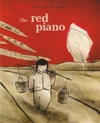
(Ages 6-19) Picture book. The stunning front cover draws the reader
into the text immediately, as
a small Chinese girl walks across a cold barren landscape, carrying
buckets on a pole, but with scraps of music flowing overhead. Straight
away the signals are there for repression and struggle. And so it is,
for this is the story of one of China's international concert pianists,
Zhu Xiao-Mei.
Sent to the country during the Cultural Revolution during Mao Tsetung's
time, Zhu was not allowed to practice her piano, as this was seen by
the regime as decadent and foreign. But after many years of practicing
8 hours a day in Beijing, this did not come easily, so she had her
mother send a piano to her on her commune. There with the help of her
friends and an older woman, each day, after many hours working in the
fields, and then hours of re-education, she secretly went to he place
her piano was kept hidden and practiced her craft.
One evening after being discovered, she was held up to mockery and
denunciation, while the piano was smashed. Her re-education now meant
doing the lowliest tasks in the commune, collecting and disposing of
the waste in the latrines. But all the while she kept her music alive
in her head, until, one day when the leadership changed, she was
summoned to Beijing.
For older readers, the story of one girl and the effects of the
Cultural Revolution will add to their study of China. Facinghistory has
a free study
guide for classes looking at
Red Scarf Girl and Mao's Last Dancer, and this guide has
sections which
could be useful when talking about The Red Piano, giving
students some
of the background. For younger reads, the story of bravery and
resilience will be a wonderful book to have on hand in the classroom or
library when looking at other stories that encourage compassion.
Fran Knight
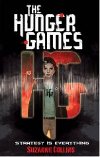
The Hunger Games by Suzanne Collins
Scholastic 2008. ISBN 9781407109084.
(Ages 12+) In a future not too far away, when global warming has
destroyed much of North America, the people left huddle between the
Rockies and the Appalachian mountains, vying for food and water. When
one group wins over the rest, they divide the country into 13 districts
around the capitol, where they live. To stop future wars, a reaping is
held each year when 2 children, one boy and one girl, are chosen by
ballot from the names of all 12-18 year olds in each district, to fight
to the death.
This reality game show taken to an appalling level has the children
taken to a studio where they are preened and plumped for the television
show, beamed over all districts continuously while the game is on. Let
loose into the stadium after some training, they are on their own,
having to survive and fight to live. Several of the districts have an
advantage, being career fighters, with money in their backgrounds,
education and cunning, but many are from poorer districts where
survival is a daily grind.
16 year old Katniss sees her sister, 12 year old Prim, chosen, and
without hesitation, Katniss leaps forward to exchange places with her.
She knows her sister will never survive such an ordeal, let alone kill
someone. So the cat and mouse game begins. Television cameras beam what
happens live, and so Katniss becomes aware that she msut play the
audience, fo they will support her and send her gifts when her food and
water runs out. Part way through the game, the rules change and she is
allowed to team up with the boy form her district, Peeta, and together
they are able to outwit some of the others.
An engrossing tale, well told, The Hunger Games was one of
those rare
books that I could not put down. To have children put in this position
was heart wrenching, knowing that eventually they would have to kill
people they know. Surviving with them in the arena made my hair stand
on end, as you realise exactly what they must do to keep alive
themselves. Each character is individual, all 24 combatants
recognisable and different. The heart stopping moments come thick and
fast, but the reader is never aware of being manipulated or pandered
to. It is a most ingenious book, and I was thrilled to get to the end
to find that this is part of a trilogy.
Fran Knight
The Enemy by Charlie Higson
Penguin, 2009. ISBN
9780141325026.
(Ages
11+) Arran,
Freak, Ollie and Achilleus are limping back to their home after a
failed
scavenging raid. They have trawled the area, finding nothing but a dog
they
killed when a pack attacked them. But they are missing one of the
group, and
must explain to the other children what has happened to Deke. The group
at
home, an old supermarket, fortified against attack, also has news:
another
youngster, Sam, was taken that day. Sam and Deke have one thing in
common; they
were taken by the grown-ups, the rampageous, disease ridden remnants of
those
left alive after the plague.
So
begins this breathless story where things have got out of hand. Those
under 14
are generally alive and fighting for survival, where survival means
scavenging
for food as well as being always on the lookout for the grown-ups who
take them
to eat. When a boy is rescued, he tells them of life at Buckingham
Palace,
which he and his group of kids have called their own. They need more
though to
keep the gardens going and he invites Arran's group to join them at the
palace.
So
begins a journey for the group, and that of their neighbours, to find a
better
place to live, a place of safety. But along the route they struggle to
survive
against the seemingly concerted efforts of the grown-ups. Some of their
number
is killed but they reach the palace with high anticipation. Here they
find that
the leader, David, is not all he seems, and when they are asked to kill
another
group of kids in his way, splits develop in the group.In one horrific
scene, a fighter from each
group, face each other in a duel to the death. Gladiatorial in its
scope, the
end result will see Arran's group stay or find somewhere else to live.
A
winning story about right and wrong, survival and friendship, this
dystopian
novel will intrigue upper primary and lower secondary readers, intent
on an
adventure novel with an overlay of moral questioning. Higson wrote the Young
Bond series of books, and this has
a similar level of violence. A most enjoyable read, with echoes of The
Lord
of
the Flies, it is the first
in a series, and has its own website which
will further excite the readers.
Fran
Knight
The Society of S by Susan Hubbard
Walker
Books, 2009. ISBN
9781406314977.
(Ages:
Secondary) Ari
lives alone with her widowed father in a Victorian house set away from
the
town. There she is home schooled in the morning, and left to her
studies in the
afternoon when her father retreats to the basement to continue his work
with
blood samples. When their housekeeper suggest that Ari is too isolated,
she is
given permission to take the girl into her home, where she meets her
two
children, Kathleen, a girl of Ari's age, and Michael, several years
older.
Through these two Ari learns more of the outside world. Both teens are
stretching the boundaries imposed by their family, and when Kathleen
takes Ari
to her meetings with her friends, where they play at being vampires,
Ari feels
odd. One night, after Ari goes home because she feels ill, she is
shocked to
find that Kathleen has been murdered, and when the police interview Ari
and her
father, she realises that suspicion is falling on them.
Eventually
Ari's father explains that yes, he is a vampire, and suggests that she
too, may
be headed that way. The Green Cross van that comes to the house every
week,
brings blood for him, as he and his group, do not kill for blood,
taking
vitamin supplements and blood from the mortuary. She wants her mother,
and goes
off to search for her, pursuing the vague clues left by others in the
household.
Her quest leads her to Florida, where she finds that things are not as
they
have been described.
Full
of Gothic romance and horror, The
Society of S will have wide appeal to those lower secondary girls
taken up
with the idea of vampires and lonely teenage girls growing up without a
mother.
Odd house servants, strange happenings, a father with heroic looks, a
mother no
one mentions, suspicions about a dead cat and then a murder along with
blood
samples brought to the door, all have an airing in this scary tale. But
it is
not the vampire tale of old. When Ari's father finally tells her who
and what
she is, the stress all the time is about controlling the urges and
taking
precautions against killing. The vampires in this story must choose.
Fran Knight
Magenta McPhee by Catherine Bateson
Random House Australia, 2009. ISBN 9781741664089
(Ages 10 to 14 years) Highly recommended. Magenta sends off a letter to
Sammi magazine outlining how depressed
her Dad has become after his divorce. Thrilled that her letter is
published, with a commendation about her writing style, she decides to
confide in her best friend. Polly is convinced that Magenta will
make
a writer one day, but, in the meantime suggests that internet dating
may be the answer for Magenta's Dad! The two girls take this on
without telling him!
Lianna is the lady who replies to 'Dad's' emails and a meeting is
arranged, with the consequences proving very interesting! The
human
interest in this story will make it a popular read. Character
backgrounds discovered along the way keep the reader involved.
Magenta is writing a fantasy story and we are given snippets of this as
she uncovers new material for her novel.
I enjoyed viewing the interactions between the variety of realistic
characters and sharing their disappointments and laughter.
Catherine
Bateson has a great turn of phrase; an easy, relaxed writing style, and
her storyline is captivating.
As we have come to expect from Catherine Bateson's novels, the dialogue
is appealing and the themes pertinent to today's teens.
Julie Wells
Fran's dozen (baker's) 2009 (a selection of what I have read and enjoyed in 2009) by Fran Knight
Picture books
Cummings, Phil Wang Wang and Funi (How can anyone
pass up Phil's picture book with his familiar rhyming story inviting
small readers to look for the pandas at the Adelaide Zoo. The
illustrations by Adelaide artist Shane Devries, add to the excellence
of this lovely book, a far cry from the usual book published as part of
a merchandising campaign.)
Thompson, Colin Free to a
good home (Thompson's
unusual look at family life had me laughing at loud. Instead of an
animal following them home, the children have a granny. She is adamant
that no-one is looking for her, and makes herself cheerfully useful in
this house. A wonderful multi layered story to enthrall all kids, big
and small)
Middle school
DiCamillo, Kate The
magician's nephew (Conjuring of an elephant
which
falls into the audience, devolves into
a story about family and obligation, and where a person, or animal,
fits into the scheme of things. Peter knows that his sister is alive
and has been told by the fortune teller that her discovery will be
linked to an elephant.)
Flanagan, John Halt's
peril (The ninth book in the
Ranger's Apprentice series, this one is deliberately mystifying.
Flanagan took great glee in setting up a story which had people
guessing as to who might die, and whether Halt would survive this
episode, and just whose funeral is taking place. See my interview with
him on Readplus.)
Millard, Glenda A small
free kiss in the dark (A
marvelous futuristic story shows war demolishing Sydney and a young
girl, Tia, having to find a safe refuge, along with several strangers
who become like a family. A survival story out of the ordinary, finding
positives where none should be.)
Westerfeld, Scott Leviathan
(SteamPunk at its best
with the story of the beginnings of World War One, with the
assassinations of the Archduke and his consort and what may have
happened to their young son. The creatures created by the author are
fantastic, the intrigue believable, and the history in the background,
most credible. And with all that it is a romp, with plenty of adventure
and a brush of humour.)
Teens
Collins, Suzanne The hunger games (Imagine a future
where there are nor wars! But each year two teens are chosen from each
district to fight to the death on behalf of their home area. Usually
the result is a forgone conclusion as one from the warrior district,
with heavy support and advertising rights, and well trained comes out
on top, but this year is different, as Katniss, a skilled hunter, takes
her sister's place. An amazing story of survival and determination,
along with a sly dig at reality TV.)
Henderson, Don Keepinitreal (an entertaining story
concerning the oddest collection of people coming together to save the
local greyhound race course. Set in the western suburbs, the characters
are very real, without being caricatures, the setting tangible and the
action, hilarious.)
Murray, Kirsty Vulture's
gate (Bo and Callum come
together by chance and survive together in a hostile world where women
have all but died out. Callum has been used as a trained gymnast doing
daring tricks on motorcycles to get money for the men that own him and
Bo has hidden since her grandfather died. Australia in a near future
where Bo has a roboraptor to keep her company and help her survive, but
the pair must move across hostile territory to make it to the city
where they expect to find safety.)
Larbelestier, Justine Liar
(Micah's friend Zach has died, torn apart by dogs in the park. Micah
must search her very being to work out whether she was the culprit, and
the story, divided into three parts, Telling the truth, Telling the
true truth and The Actual real truth, will have readers agog as they
try and work out how reliable the narrator really is. I still don't
know.)
Rai, Bali City of ghosts (The Amritsar Massacre in
1919 was one of those incidents I read about in Yr 11 British
Commonwealth History (albeit from one point of view) but reading about
it in this astonishingly realistic historical novel, where both sides
of what happened are shown through a group of quite different
characters makes this one to read and reread.)
Sedgwick, Marcus Revolver (Sedgwick is one of my
favourite authors, and here he tells a survival story with a
difference. A boy is cornered by a man who wants to kill his father,
but father's body is lying on the table in this tiny cabin, snowbound
near Nome. A life and death struggle between the man with the gun and
the lad captures your attention to the end. If anyone wanted something
for those kids hooked on Hatchet, then this is it.)
Valentine, Jenny The ant
colony (Fleeing to London
Sam finds himself getting involved with the lives of the others in his
building of run down flats. Without realizing it he begins to reveal
parts of himself that he wants to keep hidden, and people begin to care
about him and him about them. A stunning climax sees Sam returning to
the rural area where he was born to confront the reason he fled.)
And of course, several goodies have been missed out, so I must
suggest Anna McKenzie's The sea
wreck stranger and
Catherine Jinks' hilarious take on the vampire genre, The
reformed
vampire support group. And I read several that have been
published
before 2009, The giver
(Lois Lowry) and Here lies
Arthur
(Philip Reeve)
Fran Knight
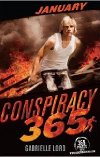
Conspiracy 365: January by Gabrielle Lord
Scholastic,
2009. ISBN 9781741690330.
(Ages 11+) Walking home
one night, Callum is chased by a disheveled
man who warns him that he must stay hidden for 365 days, or else he
would be
killed like his father. Dismissing him as stupid, he watches as the
ambulance
takes him away, but when over the next few days things happen which
alert him
to the possibility of his being targeted by persons unknown, he recalls
all
that the man told him, and strives to keep himself safe.
A clever idea,
Callum has to remain hidden for a year,
and so Scholastic is publishing a book a month for the year in 2010,
following
Callum's desperate survival as he tracks down his would be killers and
those of
his father and strives to find out why this is happening. Fast paced,
action
packed, with a likeable hero, Conspiracy
365 is a winning formula which will be widely read by upper primary
and
lower secondary kids. A website,(www.conspiracy365.com)
accompanies
the
book and kids will find that they can win prizes by accessing the
website.
A breathless,
easy to read series of novels for the middle
school, there are some intriguing differences used in this series to
make it
stand out. The pagination starts at 188 and counts down: the font used
is more
administrative adding to the feeling of a police report and the pages
are
almost diary entry style, with times as well as dates heading each
entry, all
of which add up to an enjoyable twist on the usual survival story.
Inside the
front cover is a Conspiracy Card asking readers to log on with their
own
number, so enabling them to be in the draw for prizes, and inside the
back
cover is a lsit of all 12 books coming out in 2010. Boys will pick this
up because of the story
and the details, while girls will go for the dishy picture of Callum on
the
front cover. Whatever else this will be a hit.
Fran Knight
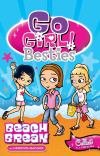
Beach break by Meredith Badger
Go Girl! Besties 1. Hardie Grant Egmont, 2009.
ISBN
9781921502989.
(Age 8-10) Beach break is the first book in the Go
Girl!
Besties and will be welcomed by fans of other Go Girl!
series. Mia is
thrilled because her two best friends are coming to stay at the beach
house
with her during the holidays. She is certain that they will have a
wonderful
time and has lots of beach fun planned. But when Shae and Michiko begin
to act strangely
she begins to worry that they may not stay her best friends.
Meredith Badger has written a book about the
familiar theme
of a beach holiday and what happens when more time than usual is spent
with friends.
Young girls will be sure to identify
with the exploration of friendship and its pressures. They will
sympathise with
Shae who is homesick and Mich who is having trouble telling her friends
her
secrets.
Mia's parents are portrayed in a very sympathetic
light,
caring and understanding but firm about rules for Mia's older sister
who wants
to go to a bonfire on the beach. Mia's character develops as she has to
come to
some hard decisions about whether she should tell her parents about
Rose's
decision to sneak out. With some creative planning by the threesome,
all turns
out well.
Girls will be sure to like this series with its
well organised chapters, likeable
characters and engaging
illustrations by Danielle McDonald.
Pat Pledger
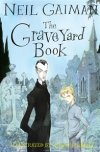
The Graveyard Book by Neil Gaiman
Illustrated by Chris Riddell. Bloomsbury, 2009. ISBN 9780747594802.
(Ages 11- 15 years) This book is highly recommended but probably not
for the faint-hearted. What an unexpected, exciting and intriguing
read. The beginning
of the
story is possibly the creepiest I have read! A toddler narrowly escapes
the murderous intent of a stranger to the house and finds himself in
the safe hands of a community of ghosts in the town's graveyard.
Adopted by these memorable residents, Bod (short for Nobody) grows up
in the graveyard, learning about life and death, yet struggling to
discover facts about his family and background. His adventures
are
exciting and scary, but, though it is implied, the violence is not
directly shown. Bod's world is fantastical but recognisable too -
he
is just like any other child finding his way in the world. There
is
humour in the graveyard - inscriptions on the grave stones are amazing
- and there is wisdom. Enhanced by Riddell's wonderful illustrations,
Gaiman's language is often striking. Consider the description on page
95: 'In the twilight of the graveyard there was a silent implosion, a
flutter of velvet darkness, and Silas was gone.' Silas is Bod's
protector and teacher, a mentor, and one of the most memorable of
players in this great adventure. The Graveyard Book won the 2009 Newbery Award.
Julie Wells