Walker Books, 2010. ISBN: 97819215071.
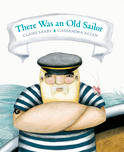
Ages 3 and up. Recommended. This picture book, a re-working of the
nursery rhyme song There Was an Old Lady Who Swallowed a Fly,
uses the
same patterns of rhyme, rhythm and repetition to engage the reader in
this new version. Here, an old sailor swallows a krill which, of
course, makes him ill! Children will know the original tale and be keen
to predict what the sailor is likely to ingest next. With the end of
the original text in the back of my mind as I read, the final pages
seemed to provide a change of style and I found the ending to be
different to that which was expected. Looking back, however, the rhymes
continued and the ending worked. The final double page spread brought
the animals together and gave some unexpected facts about the different
sea creatures featured in the text.
Saxby's story is supported by Cassandra Allen's stylised gouache and
pencil illustrations, portraying the stereotype of the crusty sailor
and the movement of the sea. The pictures hold a certain appeal with
their simplicity and it is likely children will choose to try and
recreate the patterns of the ocean in their own art work.
This would be a good text for children to both contrast with the
original and pattern their own stories around as well as providing a
good 'hook' for teachers beginning a unit on food chains or studies of
the ocean.
Jo Schenkel, Pilgrim School
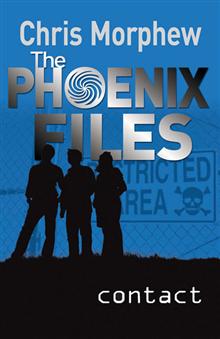
Contact by Chris Morphew
The Phoenix Files: Book 2. Hardie Grant Egmont, 2010. ISBN: 9781921502408.
(Ages 10-15) Highly recommended. The countdown to the destruction of
the human race continues: there are
now just 88 days left! Peter takes over as the narrator of this, the
second book in the series. Although he had at first been dubious about
what he and his friends, Jordan and Luke, had found he can no longer
deny the truth of their discoveries. As the three go about decoding the
messages which have been left for them by Crazy Bill and investigate
the Shackleton Corporation, they realise that they are not dealing with
human beings who have social consciences but a group who want only to
serve their own ends. In the process, they manage to jeopardise the
lives of those who try to help them in their quest to put things right.
Whilst the first book served as a somewhat more gentle introduction to
the various characters and plots which have been hatched, Contact
begins to expose the true evil and the teenagers make some gruesome
discoveries and continue to put the lives of themselves and their
families on the line. They discover the lengths to which Shackleton and
his team will go in order to achieve their aims. One can only suspect
that by the end of the sixth book, descriptions may well become even
gorier and possibly not as palatable to the younger readers. I,
however, am now going to have to wait patiently for the release of the
next title sometime in August!
Jo Schenkel, Pilgrim School
Anonymity Jones by James Roy
Random House, 2010. ISBN 9781741664539.
(Ages 13+) Recommended. 16 year old Anonymity Jones is having a hard
time. Her father has left home, kicked out by his wife when she found
that he had been lying about the conferences he has attended. And she
should know, as she was his secretary when he was first married and
went on just such a conference, causing his first divorce. When
Anonymity visits him, she is very aware that he has become depressed
and morose, to a point where his boss gives him some extended leave so
that he can 'find himself'.
Anonymity's three friends are sympathetic, but two of them have begun
relationships and turn all their attention elsewhere. Tania, the last
of her friends to support her also begins to move away; leaving
Anonymity alone. When mum has her new boyfriend, John, move in,
Anonymity's sister, Raven, moves out, bringing to fruition her dream of
living in Europe for 12 months, during her gap year. Anonymity is
bereft. She turns for sympathy from her art teacher, Chris Moffatt and
has some daydreams about him.
John gives her a new lap top for her art work and one night sits on her
bed to talk to her, coming closer than need be. When he caresses her,
she kicks him out and tries to let her mother know what is going on,
but she takes John's side. Appalled and alone, Anonymity rings her art
teacher, and they sit in his car so that she can pour out her
worries. Later at school, he asks her to attend an art show and
going there, she finds all of her class is there, not just her. Going
home, Anonymity takes action. She breaks into John's computer and
downloads some of the pictures he has taken of her and her sister, and
other girls they have had at their place, as well as some of the photos
he has stored. These she places on his NetBook home page.
Next she gathers her passport from her father's desk and goes to the
airport after hearing her mother kick John out of the house. As an
episode in a girl's life, the story is engrossing and chilling as the
two men take advantage of her situation: one through moving in with the
girl's mother putting himself in an ideal position to prey upon the
girl, and the other, using his position as teacher to aggrandize
himself in her eyes, bolstering the girl's naive idea that she is being
singled out for his attentions.
Tackling a difficult topic such as child abuse requires a resolution of
the problem, so the reader can see that there is a legal and moral
consequence of the abuse. I'm sure that in a classroom, discussions
will range widely over how to avoid situations such as these as well as
the legal consequences of such events, and the places that can be
called upon for help if a child finds themselves in the situation
portrayed.
Fran Knight
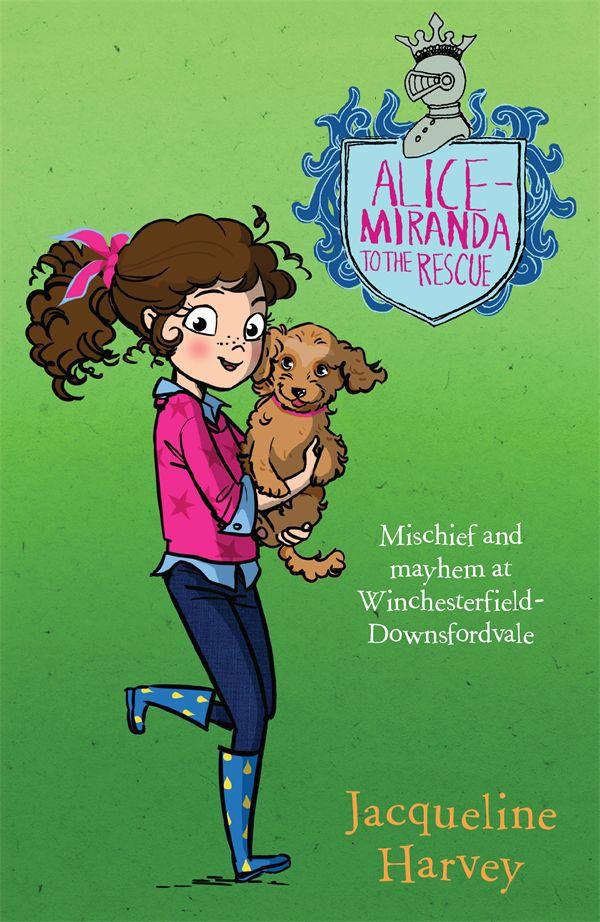
Alice-Miranda at school by Jacqueline Harvey
Random
House Australia, 2010. ISBN 9781741664515.
(Ages
8 and up) Highly recommended. Alice-Miranda Highton-Kennington-Jones
decides,
at the age of seven and one-quarter years, that it's time to go to
boarding
school. Her doting parents know there is no point trying to stop her,
so
tearfully drop her off at Winchesterfield-Downsfordvale Academy for
Proper
Young Ladies. Alice-Miranda, who one would call precocious were she not
so
likeable, immediately makes her mark on the school to the horror of the
mysterious headmistress Miss Grimm, whom nobody has laid eyes on for
ten years.
Miss Grimm sets a series of seemingly impossible challenges for
Alice-Miranda
to face if she is to be allowed to remain at the school. With
determination and
endless optimism, Alice-Miranda sets out to prove she is just the sort
of
student Winchesterfield-Downsfordvale needs. Full of humour and with
very
likeable characters, this book sets a benchmark for a fantastic new
series about
this entertaining young lady.
Donella Reed
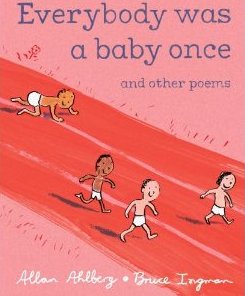
Everybody was a baby once, and other poems by Allan Ahlberg and Bruce Ingman
Walker Books, 2010. ISBN 9781406321562.
(Ages 6-10) This little volume of poems by Ahlberg will be a fitting
addition to a
primary library. Kids will love to pick it up and laugh out loud at the
short, funny poems written by Ahlberg. Many involve a reworking
of old poems and those by Anonymous, as he writes in his dedication,
'With thanks to our old pals, Trad and Anon'. Thus many are familiar to
old hands, although will be very new to the younger set for whom they
have been published. Dirty Bill will be at once familiar, but
the
following poem, Nativity gives a funny slant on that time
honoured
tradition in British schools. Small hairy mouse, containing the
story
of a man complaining about the mouse in his stew is well known to my
age group but will be new and shiny bright to the early readers. Read
out loud or just in a group, these little poems will create enjoyment
amongst its readers, who will take delight in the clever line drawings
of Bruce Ingman.
Fran Knight
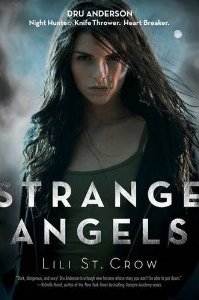
Strange Angels by Lil St. Crow
Razorbill, 2009. ISBN 9781921518324.
(Age 13+) Recommended. Dru Anderson and her father have led a nomadic
existence, travelling
around the U.S. searching for things that go bump in the night. She has
been used to packing up and moving on since her grandmother died and
life with her dad has been anything but dull. She's been drilled to
look after herself, physically and mentally. Outwardly she is self
assured, self contained and confident. But the move to the Dakotas
changed everything. Not only was it bone-chillingly cold but there was
a feeling of menace in the air.
Life changes dramatically for Dru when her father is killed and she has
to deal with the very serious consequences. Not only is she alone, but
there are some very weird 'things' from the 'Real World' that want her
dead. Fortunately, Graves, a Goth from school gives her shelter, food
and a shoulder to cry on. But this means she draws him into her world;
a world of suckers, djamphir, loup-garou or werewolves and zombies.
This tale of horror is a cut above the usual vampire tale. Dru is a far
more believable character than most in the genre and St. Crow keeps the
action moving and the tension high. True there are a couple of cute
guys but they are not given the soap box treatment. If you like a bit
of zombie and vampire in your life give Strange Angels a read
and be
prepared for the next in the series soon.
Mark Knight
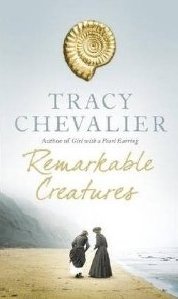
Remarkable creatures by Tracy Chevalier
HarperCollins, 2009. ISBN 9780007311170.
(Ages 15-Adult) Recommended. Chevalier has written a riveting story
about the discovery of fossils in the English seaside town of Lyme
Regis. Based on the lives of two real women, Mary Anning and Elizabeth
Philpot, it tells of the struggle for women to be recognised in a
scientific world dominated by men. Mary Anning, struck by lightning as
a child, uncovers fossils of strange and wonderful creatures in the
cliffs. Her discoveries challenge the accepted ideas of the time about
creation and evolution. However she is given little scholarly or
financial recognition for her work as male scientists force her into a
subservient role of mere gatherer of the fossils not recognising her
intelligence and ability. Spinster Elizabeth Philpot, who has been her
mentor and taught her to read, is also an avid collector of fish
fossils and begins to champion her.
Chevalier has the wonderful ability to bring alive a time in history
and to examine the lives of the women struggling to make a place for
themselves. I found it fascinating to read about Mary Anning's work
with fossils, the way she set up a museum, her collaboration and
infatuation with Colonel Birch and the role of women in the 19th
century. Elizabeth Philpott, poor but of a higher social class, is a
remarkable woman also fighting against the class structure and
prejudice about women of the time.
This is a stunning historical read, an in-depth examination of the
nature of friendship between women; the strictures of social class and
how one woman manages to rise above them to make important scientific
discoveries.
Pat Pledger
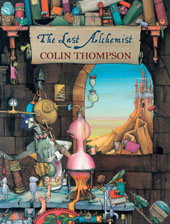
The last alchemist by Colin Thompson
Random
House,
1999 (Reprinted 2010). ISBN:
9781741664171.
(Ages
5 to 95) Highly recommended. With
the new Millennium fast
approaching, the King has ordered Spinifex, his nineteenth alchemist,
to find
the secret to producing gold. Although Arthur, the alchemist's
assistant,
endeavours to watch and assist with the project he perceives values in
life
differently to the King and the alchemist. When sent into the
countryside to
collect gold, he returns with sunshine, canaries, marigolds and egg
yolks,
causing the alchemist to become angry. Spinifex takes his turn at going
to
collect gold but achieves very little. By the time the Millennium
arrives, the
alchemist has gone mad through his efforts and disaster strikes.
Colin
Thompson's zany, intensely
colourful, meticulously detailed illustrations provide a perfect
backdrop to
this cleverly written tale. The reader can either consider just the
somewhat
ordinary text without glancing at the pictures or alternatively ponder
for
hours over the intricate details included therein. A bilby like
creature is
hidden on many pages, along with multiple references to 'Max' the dog.
Escher
like staircases cause one to lose one's sense of perspective and clever
references to gold are used as book titles, for example Gold Comfort
Farm and
How Gold was my Valley. Thompson's books are suited not only to junior
primary
students but to multiple age groups. A wonderful title for any class
discussing
values and endeavouring to discover what is most important in life!
Jo
Schenkel, Pilgrim School
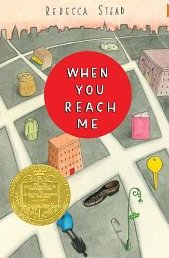
When you reach me by Rebecca Stead
Text, 2009. ISBN 9781921656064.
(Age 10+) Highly recommended. Winner of the prestigious Newbery Medal,
When you reach me is a complex, challenging and ultimately
very rewarding book. Set in the 1970's, it tells the story of Miranda,
as she weaves her way through complications at school, having to walk
past a crazy man on her way home and losing her best friend Sal, who
after being hit by another boy, withdraws from her. Miranda
writes to some unknown person, who has asked her to write down the
events that have occurred. She tells of how her apartment key
disappears and how anonymous notes appear telling her to do strange
things.
Set in New York City, the book gives an intimate look into urban life.
The reader gets to know Miranda's apartment, her school and the deli
where she has a lunch time job with some friends. Characters in the
book are finely drawn. Her mother is determined to win the $20,000
Pyramid game show and I became engrossed in the preparation and
practice that Miranda and her mother's boyfriend, Richard, give her
mother.
She makes new friends and is appalled when she discovers that one of
them, Marcus, fascinated by the idea of time travel, is the boy who hit
Sal.
Miranda is obsessed with the book, A wrinkle in time by
Madeline
L'Engle and themes like time travel, friendship and mystery
thread through
the book. It is a complicated puzzle: why is she receiving these notes,
who has written them, and what is going to happen? Astute readers will
ponder the clues on the way, others like me will rush ahead to see what
happens. All in all a very satisfying book.
Pat Pledger
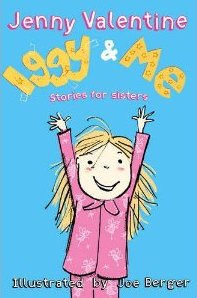
Iggy and me by Jenny Valentine
HarperCollins, 2009. ISBN 9780007283620.
(Ages: 6-10) Award winning author of The Ant Colony and Finding Violet
Park, Jenny
Valentine has created a couple of very funny characters in Iggy and her
older, long suffering sister, Flo. The scrapes they get into will have
instant appeal to middle primary students, who will instantly recognize
all the sorts of things they get up to at home. Iggy's world is
totally self centred, as she marches through the day, expecting
everyone to fall in line with what she wants to do. From cutting her
own hair with disastrous results, finding out what a mirage is, to
demanding that everyone call her Iggy instead of her real name, both
girls in this book will endear themselves to the reader.
Fran
Knight
How to heal a broken wing by Bob Graham
Walker Books, 2008. ISBN 9781406325492
(Ages Junior Primary) Highly Recommended. This award winning picture
book is one that warms the heart and
soul of all readers, and the story it portrays will cause many to
simply go 'ahhh' at its completion. As with many of Bob Graham's
picture books, the premise is seemingly simple. A small boy finds a
wounded bird on the street near the underground. No one else has seen
it or if they have, they have hurried past, or moved around it and not
bothered. The boy retrieves the bird, takes it home and cares for it.
With time and care, the bird recovers from its injury until the family
takes the bird back to where they found it and release it. The
background story of a loving, caring family permeates the story, as the
pictures show the family creating a place for it in their home,
bringing home a bird cage for it, watching it take its first steps and
then flying around their sitting room. The whole is redolent of looking
after what is in your own backyard, of taking time to see what it in
front of you, of being prepared to put yourself out for someone or
something else, of reaching out to help. The implicit storyline
portrays a selfless individual caring about his environment. But more
than this, the whole is based firmly, as are all of Bob Graham's books,
in the family. The heart of his tales show a loving, caring family. The
children are never alone, they have parents there to help and guide
them, to back them up. A beautiful picture book, I love the way Graham
shows the family, the parents concerned not only for the bird but their
child, the looks on their faces showing their apprehension about their
baby. The yellow glow on several pages spotlights the family in
the midst of the moving, uncaring crowd, intent on their own purpose of
rescuing the bird. Children reading the book will love looking at the
crowd of people, the plethora of animal images in the family's home,
the sights of London and finally a bird's eye view of the city.
Fran Knight
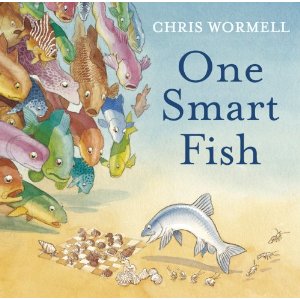
One smart fish by Chris Wormell
Jonathan Cape, 2010.
(Ages 3-6) In spite of an entertaining story and vibrant illustrations I felt short changed by this book. Wormell's smart fish can sing, dance, paint and perform, wowing all his friends. However when this fish visits the 'landside' for his holiday he gazes up the beach and longs to explore. Everyone knows fish can't walk, so Smart Fish makes himself some feet and walks up the beach. He is the first fish, indeed creature to walk on the land and although he returns to his friends in the ocean, change has begun.
Wormell concludes his story by describing how millions of years later other fish began crawling on their fins and in another few hundred million years they grew feet instead, until eventually people emerged. This brief text is accompanied by a fabulous double page illustration of reptiles, dinosaurs, mammals and humans.
On one level this is an entertaining fantasy, but on the other Wormell is introducing the concept of evolution. Modification of species, dominant genes, natural selection and the work of Darwin and Mendel are obviously inappropriate in a story for young children. However, somewhere, perhaps as an epilogue, I would have appreciated a mention of Darwin, and even the word 'evolution' to show children that this is not just a fantasy but the story of our very existence. I think Wormell (or perhaps his publisher) misses a trick here, offering a beautifully illustrated story that could have gone one step further to begin to explain to young children the concept of evolution.
Claire Larson
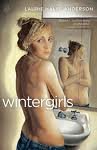
Wintergirls by Laurie Halse Anderson
Text, 2009. ISBN 9781921656149.
(Ages 14+)Recommended. Chosen by the American Library Association as one of their
2010
Best books for young adults, Wintergirls is an unflinching
and
very frightening look at eating disorders. Lia is haunted by the death
from bulimia of her best friend Cassie who had sent her 33 messages
before she died. She is consumed with guilt because she didn't answer
the phone and relives some of the moments that she has shared with
Cassie as well as the struggle that she has with anorexia nervosa.
Anderson has written about a difficult subject in a confronting and
honest way. She describes Lia's descent into the depths of her
disorder, her lies and her feelings about her parents, stepmother and
stepsister . Everyone who has ever dieted will be familiar with the
counting of calories : a muffin (410), an orange (75); and the hard
grind of a treadmill to wear off even more calories. Lia takes dieting
to a new high, always striving to lose more weight and even cutting
herself to forget the shadows that surround her. It is a frightening
portrayal of an intelligent young woman who has been unable to cope
since the death of her grandmother and her parents' divorce.
Lia is offered all sorts of help: she is hospitalised; she visits a
psychiatrist; her mother is prepared to sell her stocks and her father
to get a second mortgage to pay for her medical expenses. However,
Cassie's ghost seems to sit on her shoulder, encouraging her to lose
weight. It is not until she reaches the depths that she confronts
the idea of staying alive.
This is a compulsive, honest and disturbing book.
Pat Pledger
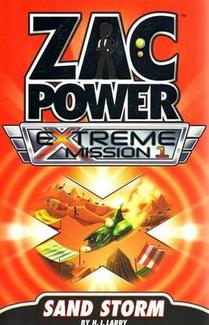
Zac Power: Extreme mission 1: Sand storm by H.I. Larry
Hardie Grant Egmont, 2009. ISBN 9781921564055.
(Ages 6-10) For children who enjoyed the Zac Power books there is a new
series which has four titles, Sand storm, Dark Tower, Ice patrol and
Water blaster. The first in the series, Sand storm, is an adventure
filled story, with Zac Power being dragged off by his grandfather in
the middle of the night on the hunt for a fabulous gadget called IRIS.
Zac is thrilled to go on the mission, but he knows that his grandfather
hasn't been entirely honest with him about the origins of IRIS, which
has been broken up into four parts. Why has that happened? Will he be
able to survive the desert and the tricks of Blackwood and Caz, who are
also after IRIS?
Newly independent readers, especially boys, will be thrilled with this
series. It has plenty of action to keep a young reader going, the
gadgets are fascinating and Zac is an engaging hero.
Pat Pledger
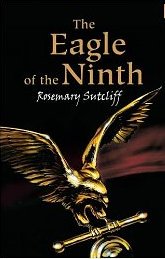
The Eagle of the Ninth by Rosemary Sutcliff
Puffin, 2004 (50th anniversary edition.
ISBN 9780140308907.
Highly recommended. With the release of the film of this book in
September 2010, there will
be enough hype for kids to want to reread this classic tale. New
editions have been released; in the last ten years, along with
the 50th anniversary edition in 2004, and I expect another will be
released as the film opens. Already some citizens of the USA are seeing
the film as criticism of their exploits in Iraq and Afghanistan, and
the publicity is being stepped up. So I retrieved my husband's year 8
copy from the back of the bookcase and began to read. And I was
overwhelmed with glee as I reread one of my favourite authors from my
teens, Rosemary Sutcliff. Her work is undergoing a revival and
no wonder, her novels are exciting, involving, with characters that are
believable, and issues that remain with us to this day. The Eagle of the Ninth is the story of a young centurion, Marcus
Aquila, proudly leading his cohort. It is his first tour of Britain,
and his first command, and he is very aware of the might of the Roman
army and all it does in bringing civilized society to the savages. He
suffers a major injury in an heroic battle against the Painted People,
having then to find another occupation. While recuperating at his
uncle's house, he attends a gladiatorial fight and seeing something
defiant and brave in the young Briton pitched against the gladiator
with a net and trident, asks to buy him as his personal slave.
But Marcus cannot forget that his father was the First Cohort of the
Ninth, the famed legion that was lost and never heard of again, losing
their eagle, the pride of the corps. So he takes on the role of an
oculist, and he and Esca, head north, the place of the painted savages,
to search for the lost 4,000 and their eagle. Adventures come thick and
fast as they roams the villages and settlements of the north, curing
them of eye disease and gathering information. They finally meet a
soldier of the Ninth, who escaped the carnage and settled with a
northern village, he is able to tell Marcus what happened to the legion
and more importantly, his father. Along the way, Marcus learns more
about the people he has been sent to conquer and about himself and
where his future lies.
Fran Knight