On censorship by Ai Weiwei
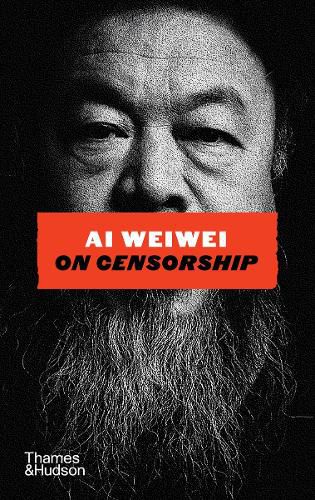
In this latest publication, Ai Wiewei argues that at its core, censorship functions in fundamentally the same way under authoritarian regimes and in so-called free societies. Ai Weiwei is a Chinese artist and activist with a long history of provocation of ideas about art, life and politics. He has experienced censorship in both his home country and in the western world where exhibitions in Paris, London, Berlin and Boston have been cancelled based on comments he has made in social media. Australian readers are only too aware of the penalties for outspoken artists following the cancellations of talks by Randa Abdel-Fattah at various writers’ festivals. Censorship of free speech in Western democracies may be more covert than the censorship based on the official narrative propagated by the state, but censorship continues nevertheless in the suppression and elimination of dissent.
Ai Weiwei has personally experienced China’s discriminatory practices against all artists and particularly those who practice free expression. At the same time, in Western societies censorship communicates that ‘certain thoughts, speech or expressions are forbidden’ and are often attributed with some form of anti-social characteristic; for example, any criticism of Israel’s actions in Palestine is labelled ‘anti-Semitic’.
Such actions compel people to ask: who wields this god-like power to shield obvious darkness and obscure the light of justice, preventing it from approaching fundamental truths and social fairness?
Reading On censorship would be useful for students studying Ai Weiwei’s impact on art, and his social and political activism, providing further context for his body of work. However much of it reads like blanket statements that would have been enriched by more examples from his experience as an artist. For me that was largely compensated by the fascinating photographs he provides of his surveillance by undercover police and cameras, the detectaphone found in his studio, and images from his self-surveillance project. Most iconic is the image of his middle finger gesture to the cameras outside his studio, the gesture of defiance that is an undercurrent to all his work.
Themes: Censorship, Surveillance, Art, Protest, Activism.
Helen Eddy