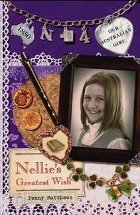
Ill. by Lucia Masciullo. Puffin Books, 2012. ISBN 978 0 1 4 330626
0.
(Ages 8+) Recommended. Australian History. The fourth in the series
about Nellie, an Irish immigrant to South Australia in 1850, has the
girl returning to Adelaide after a fruitless trip to The Burra,
looking for her former employer, Mrs Thompson, with whom she hoped
to find work. But she finds that they have gone, and so she sets out
on the long road back to the town she came from, but this time on
foot. With her shoes falling apart, sick from worry over her friend,
Mary, who she left in an infirmary, Nellie's life looks up when a
kindly farming family give her a bed for the night. They then find a
ride to Adelaide the following day so Nellie arrives back in the
town, eager to find Mary. But the news she receives is not good, and
destitute she finds shelter in the burnt out wreck of the hotel
where she once worked.
This series about Nellie, gives an incredible amount of detail about
the plight of poor female immigrants who came to South Australia in
the expectation of work during the nineteenth century. Many were
sent to the Servant'[s Depot, an institution set up where girls could
go and meet prospective employers, although these were scarce as
Nellie soon found.
This is one of the six books about girls in Australia set in
different times in our history. Each captures the life and times
well, giving younger students a thrilling story set against a
credible backdrop.
The series is well supported by a website with
activities and research assignments, fun stuff and teacher notes.
Fran Knight
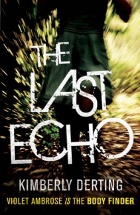
The Last Echo by Kimberly Derting
Headline, 2012. ISBN 9780755389155.
(Ages: 15+) Violet has a strange ability to sense the echoes of dead
bodies and the imprints on their killers. Feeling shunned her whole
life due to her ability, she's recently joined a special
investigative
team of teenagers with powers to solve crimes. Will Violet feel like
she finally belongs? The Last Echo is the third in The Body Finder series which
delves into
Violet's struggles in fitting with a new group, a looming love
triangle
with her boyfriend Jay and the mysterious Rafe, and a serial killer
on
the loose dubbed 'the girlfriend collector'.
It interchanges Violet's thoughts with chilling chapters from the
serial killers perspective. I found these brief interludes
incredibly
disturbing and creepy, and a breather from all the teen drama
occupying
Violets life. The girlfriend collector is not someone everyone can
stomach, as he's incredibly twisted and dark. He kidnaps girls he
fancies from afar, and hides them in a dark room. The novel doesn't
only describe the crime, but delves into the mind of a serial
killer,
which probably makes it suitable for more mature young adult
readers.
Much of the book is melodramatic, with the central focus being
Violet's
insecurities and fitting in with the team instead of the compelling
murder mystery within the book. While Violet isn't a particular
strong
heroine, she is a character that many teenagers could probably
relate
to, even with her strange powers.
While parts of novel are suspenseful and thrilling, other parts are
frustrating and slow moving. When you just want to find out about
how
the killer will be caught, you have Violet mulling over her feelings
between two boys. If you're looking for a bit of a thrill with some
romance and drama thrown in, The Last Echo is for you.
Jeann Wong
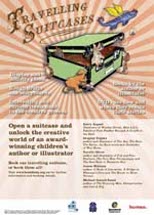
Travelling suitcases (DVD series)
BookLinks and Queensland Government production, 2009. DVD. 10 mins
each.
This is a series of DVDs about Australian authors and illustrators,
exposing their working lives to the viewers. Each author/illustrator
introduces him/herself, then takes the reader through their writing
and
illustrating, from the initial impetus and ideas, to the research
and
then the work. Each DVD is a brief but interest filled introduction
to
the artist and his/her work.
An example which outlines the extent of each DVD is that of
Michael Gerard Bauer. He wrote the Ishmael series and in the DVD
gives
a wholly personal account of his life, inviting the student into his
house and the two areas in his house where he works. He displays the
range of objects (pictures and found objects) that spark an interest
and then lead into a story. For example the Ishmael books began when
he
was looking at a picture of Captain Ahab from the novel, Moby
Dick.
The
opening line of this story is 'Call me Ishmael', so Michael began to
think of the opposite, 'Don't call me Ishmael' and the story grew
from
there. He tells more about the writing process and this leads to the
editing and publishing process as he sits in one for his studies.
This series of DVDs accompanied the Travelling Suitcase Project,
where
suitcases were packed full of information about the
authors/illustrators, Kerry Argent, Michael Gerard Bauer, Gregory
Rogers, Narelle Oliver and James Moloney. Each suitcase included
display ideas, the author's published books, interesting items from
the
author's writing and illustrating life, and drafts and story boards.
Booklinks, along with the Queensland Writer's Centre and the Ipswich
Children's Literature Festival, produced these suitcases with a
grant
from CBC which allowed schools to borrow them for free.
(The website at www.booklinks.org.au/TravelSuitcases.html
gives more information
about this series of DVDs, along with an order form).
For an introduction to the work of these people, these DVDs are a
short, energetic and engaging way to introduce these authors and
their
work, either as a study in the classroom, or simply to give students
a
wider view of that person, or help students with ideas for their own
writing or illustrative work. I can imagine these being used in
English
or Art classes, as well as in the library to great effect.
Fran Knight
A Little Fact, A Lot of Fiction by Deborah Abela
www.deborahabela.com
I am a coward.
I always have been, but I'm a coward who loves to be told scary
stories. Not a good fit, I know, but one that has kept me glued to
spooky takes over many, many years. From Bloody Mary, to the Flying
Dutchman and those spooky disappearances that have occurred over the
Bermuda Triangle, I loved them all and I guess from a young age it
wasn't about knowing had had occurred but the delicious possibility of
what could have happened.
For a writer, the idea of what if is a constant question, swooping
around in our heads like unruly magpies. It's how we operate every day
and fashion stories from a tiny miniscule idea. We look, we ponder, we
ponder some more and the beginnings of an entire novel emerge from
those wonderful lovely two words. It thrills and terrifies me even
after having written twenty novels.
Writers often start from a point of reality and fascination, and
meander or sometimes run from there to create their stories. My novel
Grimsdon began with my frustration about the reluctance to
believe the
science of climate change and became a book about flooded cities and
brave kids fighting sea monsters and evil harbour lords. Max Remy
started from real adventures I'd had, a love of cartoons from my TV
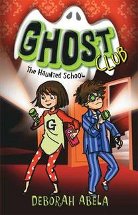
producing days and Mel Brooks' ever funny, Get Smart. The Ghost
Club
series was inspired by my love of Charles Dickens, which led me to the
discovery that he had set up his own Ghost Club in England in 1862. A
club that still exists today.
For Dickens, it began because of a belief in ghosts, of which he said
he saw plenty, but also from his enjoyment of the fact that not
everything in the world could be empirically explained.
This is one of the joys of writing . . . the possibility of what could
happen
next and where your characters could end up? There is a lovely moment
in writing where, instead of me directing the characters, they begin to
move by themselves. They talk and have conversations I'd never
anticipated, they may adopt a stance or attitude or share a belief with
another character that seems to come from them and not me. Peter Carey
calls this the osteopathic click, when all your hard work and thought
that has gone into a character creates a person who feels real and
fleshy, with all their faults and flares.
I borrow from people, too, to help create my characters until they come
into their own. It takes time and patience, throwing ideas and
sometimes characters out who just aren't working.
So from that group of men who came together to discuss ghosts, came my
discovery of them almost 150 years later and the question of . . . what
if I
created my own club that believed in ghosts and two of the youngest
catchers were kids? 11-year-old twins, Angeline and Edgar Usher and
together with a series of misfit characters they help to keep the world
free from pesky and sometimes bad tempered ghosts.
'You can pick on me all you like and tell everyone you know that I'm
weird, but what my family does is no more surprising than someone's mum
who's an accountant or dad who's a fireman. One fixes numbers, the
other fixes fires, our family fixes problems with ghosts.' Angeline
Usher to bully Travis from Ghost Club The Haunted School.
Small scribblings, a series of what ifs and another novel comes to
life.
Walker Books, 2012. ISBN 9781 921977 76 3.
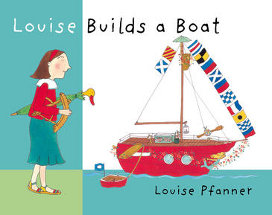
(Ages 5+) Highly recommended. Picture book. Building. As with the
amiable Louise builds a house, this story of Louise now
building a boat after finishing the house which she gave to her sister,
is just as lively and involving, with the determined Louise planning
and executing her dream. Each double page has the boat in progress on
the verso, with its small beginnings growing as she talks about what
the boat will have and the reason for its being there, on the recto.
The boat develops from a shell with a wooden deck, to a boat having a
mast, plank, figurehead and signal flags, each stage being
unambiguously illustrated with boldly coloured drawings against an
unadorned white background.
As the book proceeds, more attachments are added, a reason given for
each new addition. So the readers see the cabin and galley, the anchor,
dinghy and sails, as each is given a reason for its inclusion. Readers
will not only learn the parts of a boat and the reason for their being
built, but will work alongside Louise as she builds her dream, finally
being able to sail around the world visiting friends.
In a classroom this would make an excellent introduction to a unit of
work about building, or boats or world maps. The use of this lovely
book is unlimited and will make an excellent read aloud story, if the
teacher can haul it back from the kids!
Fran Knight
Peacetime for Alice by Davina Bell
Ill. by Lucia Masciullo. Penguin, 2012. ISBN 9780 143306 32 0
(Ages 9+) Recommended. Our
Australian Girl series. Australian History.
The story of Alice continues with the men returning home from World
War One. Some people in Australia have had to contend with the
Spanish Flu, and many people's futures are thwarted by
circumstances of war. Alice's brother, Teddy has returned a
shattered, melancholic man, unable to communicate, listless and
withdrawn, Alice's mother has survived the Spanish Flu, Alice
has
returned to ballet, encouraged by her teacher Miss Lillibet who has
been released from the internment camp.
The background to this story
is a strong reminder of events during and post WW1, and their impact
on the lives of ordinary families.
This particular series of books about Alice in the Our Australian
Girl series, has far more characters than the other books giving a
story more of a whole family rather than just one girl, and it is the
better for it. The family story is fascinating, the members of the
family diverse and evocative of the trials of many families after the
war. While Alice's story itself is not as engaging as some of
the
others in this series, the background more than makes up for this, as
the snippets of how the family is coping becomes increasingly more
interesting than Alice's trials. Set in Perth adds a different
dimension as well, as familiar places are given as the backdrop to
Alice and her family as they recover their equanimity.
As so many of
our novels for children are set in the eastern states, this comes as
a pleasant reminder that life exists outside Sydney and Melbourne.
This series of handsomely produced books with their signature covers,
pages of background information of the life and times under
discussion, a map and diagrams, along with a few illustrations, is
wonderfully supported with a website which has teacher notes, fun
things to do, extra information about the novels as well as many
other resources to add to the interest when they are being read or
being looked at as a class set.
Fran Knight
Australia's greatest inventions and innovations by Christopher Cheng and Linsay Knight
Random House, 2012. ISBN 9781 742755649.
(Ages: 9+) Recommended. Non fiction. Inventions. Published in
association with the Powerhouse Museum, this eye catching book is full
of the most intriguing and fascinating pieces of information about our
inventions and inventors to grab the most fastidious of readers. Boys
will line up to peruse the book and pull out trivia to discuss with
their friends, girls will use the book to cover questions asked in
research assignments and the astute teacher will use the many stories
to add magic to the classroom discussions. As a teacher librarian, one
thing I was always asked for was a book about inventions, and here it
is.
From the expected Vegemite, Penicillin and Sunshine Harvester, to the
surprising, Dual Flush Toilet, Didgeridu and Plastic Banknotes, to the
now unsurprisingly neglected Cafe Bar, each invention is given several
pages of fascinating and broad ranging facts. Divided into sections,
Communication, Health, Agriculture, Household, Energy and Environment,
Leisure, Manufacturing, Trade and Research, each invention begins with
a problem, then how the researchers tackled answering that problem,
then the final result, with a side box of information about the
inventor.
Spray-on skin, for example began with the problem of treating burns
quickly and so reduce the probability of scarring. There follows
several paragraphs about the work of Dr Fiona Wood, a plastic surgeon
in Perth, who in the 1990's grew skin in the laboratory, and from there
improved the skin to become a spray-on skin. She was awarded an Order
of Australia medal for her work which is now used world wide.
This is a fabulously entertaining and informative book, one I have
dipped in and out of for the weeks it has sat on my table, and one with
a range of uses in the classroom and at home, rivaling the Guinness
Book of Records.
Fran Knight
Mortal Combat : Time's Running Out by Martin Chatterton
Random House; Australia, 2012. ISBN 9781742753164.
Recommended for 8-12 years. Mort the 10,000 year old boy is back! In
fact this book begins right where the first leaves off with Mort
battling a headache from time travel in the Retro and confronted by a
submachine gun wielding World War 2 German Stormtrooper protecting
Hitler.
Chaos and mayhem reign as this story travels back and forward in time
from one hilarious episode to the next. Mortimer DeVere is the main
character who along with his sister Agnetha lives on the Isle of Unk.
Their parents return from a 200 year holiday during the story but only
add more to the chaos. Trish Molyneux and her wimpy assistant Nigel
from the Unk Shire Education Department are caught up in the mayhem as
they continue their noble quest to return the children to school at all
costs.
With cloned historical figures like Genghis Khan, Viking hordes,
Spanish Galleons and a pair of hungry T-Rex added to the cast anything
that can go wrong will. Mort needs to find a way to correct the rip in
time he creates when Hitler is taken on a trip in the Retro and history
is altered when he is eaten by the dinosaurs.
Girls will enjoy the fact that Agnetha saves the day, replaces Hitler,
which she has cloned from the bone Genghis saved as a souvenir, and
recovers the item left behind which they are sure has caused all their
problems.
The cartoon like illustrations at the beginning of each chapter, add to
the fun as do the occasional full page illustrations which give younger
readers visual clues to the action. I am looking forward to the next
instalment of Mort's outrageous adventures.
Sue Keane
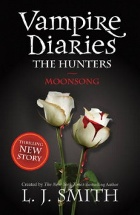
Moonsong by L. J. Smith
The Vampire Diaries: The Hunters Vol. 2. Harper Teen, 2012. ISBN
97800620177703.
A new school and a new life, Elena hopes that, finally, everything can
be normal again - as much as you can with a human, two vampires, a
witch and a hunter as friend, how much normal can you get. Everything
has changed for Elena and even Damon is getting along with everyone,
for a change. Even though Elena has moved away from Fell that doesn't
mean that she left her past behind her. At Dalcrest College, Elena's
new school, students are disappearing from campus and ending up dead.
Everyone is suddenly a potential enemy. Elena and her friends hurry to
find who the killer is before more end up dead.
Elena and her friends are a really tight knit group and I found that
amazing. The ties the characters have to one another is wonderful, they
all act like a family rather than friends. The book is well written and
flows. It's an easy read and is good with all the twists and turns.
Cecilia Richards (student.
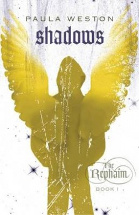
Shadows by Paula Weston
The Rephaim, book 1. Text Publishing, 2012. ISBN 97819219222503.
(Age 15+) Recommended as a light paranormal read. Gaby Winters
is
recuperating from a car crash that has killed her twin brother Jude.
The beauty of Pandanus Beach has helped to heal her body but she is
overwhelmed by the grief of her sibling's death and every night she
has
horrible nightmare of demons and hell-spawn. When Rafa comes to town
she is must come to terms with the fact that because he has appeared
in
her nightmares there may be some truth to the claim that he knew her
brother. What is the truth about the terrible dreams that she
has
about the Rephaim? Where has she come from and who can
she
trust?
I thoroughly enjoyed this book. What was particularly engaging was
the
combination of the realism of the setting contrasted with the
paranormal aspects of the novel. Weston deftly described Pandanus
Beach, the cafe where Gaby worked and the friends that she had begun
to
form relationships in such a way that a very clear picture emerged
of
what Gaby was like and where she lived. The contrast of the terror
of
the nightmares and the threat of the Rephaim seemed just as real as
Gaby tries to navigate through her feelings of who is trustworthy
and
just what is happening around her.
There is plenty of action for fans who enjoy the fight between
angels
and demons, but it is the mystery about who Gaby is and what has
happened to her brother Jude that most intrigued me. The characters
were very well developed and Rafa is mysterious enough to make me
want
to read the next novel in the series to find out just where he
stands
in regard to Gaby and Jude.
This is certainly one of the better paranormal novels that has
appeared
recently and is sure to appeal to fans of this genre. Some violence
and
swearing make it more suitable for older teens. Overall a gripping
and
interesting read.
Pat Pledger
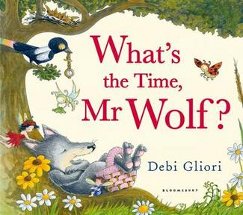
What's the time, Mr Wolf? by Debi Gliori
Bloomsbury Books, 2012. ISBN 978 1 4088 1940 1
(Ages: 4+) Recommended. Picture book. Nursery rhymes. The well known
refrain, What's the time, Mr Wolf? is on most pages in this
engaging
and colourful picture book, extolling many well known nursery
rhymes,
inviting readers to join in and then recognsie the characters and
the
rhymes that they know. Much fun will be had either in the classroom
or
at home, as children, teachers and parents try to find the many
references given.
From being woken at 7 am by four and twenty blackbirds, asking the
time, then hearing his neighbours in their straw, wood and stone
houses
slamming their doors on the way to work, or Red Riding Hood knocking
on
his door with the morning post, Mr Wolf is besieged by people asking
the time or simply interrupting his day. Lots of references to time
and
the passing of time continue throughout the fun filled book until
the
last page when we find what Mr Wolf has been rushing to do.
The references to nursery rhymes in the text are paralleled in the
illustrations encouraging children to find as many characters and
situations that they know about. I can imagine many children will
have
a great time with this large picture book, full of detailed and
colourful illustrations. This will be a book to share, and read over
again, finding something new each time it is read.
Fran Knight
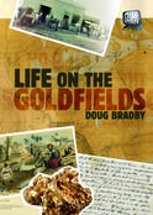
Life on the goldfields by Doug Bradby
Black Dog Books, 2012. ISBN 978 1 742042 13 9.
(Ages: 9+) Recommended. Non Fiction. Australian History. Black Dog
Books' series, Our Stories has produced some fascinating and
most useful books for the home and classroom. Allied to the renewed
interest in Australia's History, these books are concerned with Ned
Kelly, the Kokoda Track, Burke and Wills and the latest, Life on the
goldfields. Each of these books gives an overview of the topic to be
spoken about and the double page on each of the sections is covered
with information, pictures, photographs and maps makes it easier for
the student to read. For this latest book, the recognized format has
changed to make it more text based, rather than small bites of
information. I found this an odd change, considering the different
ways in which students now gather the information they need, but
still interesting, and I am sure students will pick out the
information they are searching for.
For the goldfields, we are firstly acquainted with the reason so
many people wanted to leave England and why and how they did so. I
was surprised to read that so many were literate, and intrigued with
the facts given about the voyage to Australia. Chapters following
include getting to the diggings, life on the diggings, the food and
shelter, how women (diggeresses!) and children fared, the mining
accidents and then finally a summary of what this event did for
Australia. The photographs and drawings are interesting and some are
new to me, while I longed for a map of the places mentioned.
At the back is a useful index, and glossary, and as with the others
in this series, is a pleasure to dip into or use as a research tool.
Fran Knight
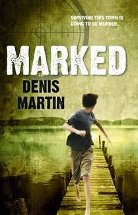
Marked by Denis Martin
Walker Books, 2012. ISBN 978 1 9219 7754 1.
Cully is a newcomer to a small town in New Zealand. There he
is
attracted to and intrigued by a girl whom he would like to know
better. He first sees her whilst he is waiting for the ferry
and
she has an argument with a man. Unsure whether to interfere he
is
saved from action by the arrival of the ferry. When he starts
at
his new school he sees the girl again but she is not inclined to be
friendly. Eventually through a friend he gets to know Kat
although she is still distant. What unfolds from there is an
exciting thriller as Cully begins to learn more about Kat and become
involved in the mystery that surrounds her.
There is a level of violence in the story that is in sharp contrast
to
the peaceful New Zealand countryside in which it is set.
Tension
increases as Cully attempts to find out more and he discovers that
Kat
is being watched by a group of ruthless and brutal people.
The story moves along and the body count rises as the author fills
in
more details and we learn the secrets surrounding Kat and her so
called
mother.
I think this fast paced exciting story will appeal to middle-upper
secondary students who will find the action and hint of romance make
a
good combination with a satisfactory ending.
David Rayner
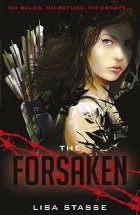
The Forsaken by Lisa M Stasse
Orchard Books, 2012. ISBN: 9781408318805.
(Age: 14+) With an embedded sticker proclaiming, 'If you love The
Hunger
Games read this!', The Forsaken is very clear about
its target
audience.
We are in a future world where North America has joined with Canada
and
Mexico to form a United Northern Alliance (UNA) ruled by a
benevolent
dictator, Minister Harka. The action soon kicks in; we are given a
brief glimpse of a controlling society before being told that once a
year, young people of 16 are given a test. If they fail they are
relocated to an island, ostensibly a gaol, called Prison Island
Alpha.
In only a couple more pages our seemingly placid and cooperative
protagonist is whisked off to the prison and must survive by her
wits
alone.
Alenna is a thoughtful narrator. We have access to her every doubt,
suspicion, and triumph. It sometimes seemed too much was being
explained, analysed, and explored. The plot could have been tighter,
although I appreciate some teenagers enjoy extra details and more
explanation .
Mysteries are set in place, enemies and friends abound, and the
reckless but undeniably attractive Liam seems to have a connection
with
Alenna she finds hard to resist. Many of the secondary characters
struggle to develop authentically. Gadya, the girl who saves and
befriends Alenna, is a moody thing - often in turns angry, snarky,
then
friendly, and of course jealous of the growing friendship between
Alenna and Liam. Stasse has no qualms about killing off characters
we've come to know, which is meant to make Alenna's situation more
dangerous and tense, but ends up seeming unnecessarily violent. Kids
appear and disappear, motives are muddled and unresolved, and the
big
reveal is less than impressive. The Forsaken sets itself up for a sequel, maybe even more.
I'm
not sure
who will read it. It's a little too cerebral for action fans, and a
little too action packed for romance fans. I'm not sure it knows
what
it wants to be. Themes include resistance movements, dystopian
governments, and orphans.
Trisha Buckley
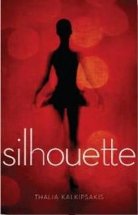
Silhouette by Thalia Kalkipsakis
Hardie Grant Egmont, 2012. ISBN 9781921759659.
Scarlett Stirling loves the strict regime of the dance classes at
the
National Academy of Performing Arts. And she doesn't mind the
blisters
and sweat. When she auditions for a part in a music video she
thinks that she wouldn't get the part. Scarlett ends up with a
part in the video, and when she meets charismatic musician, Moss,
her
life changes. Scarlett is torn between her world with Moss and her
world with all her commitments. Trying to make the two worlds as one
while blow up, so which world will she try and keep alive? Will it
be
Moss she chooses or her love as a dancer?
Silhouette bleeds an insight into the life as a dancer and what it
takes to make it as a professional. The book was slightly
predictable
but was still a very good read. I loved reading about the hardships
Scarlett had to face. The connection Scarlett had with her teacher,
Jack, and her friends was the highlight of the book for me. To read
the
problems that a dancer has to face daily and all the completion that
they have to compete for was great; I never knew how much they had
to
face.
Cecilia Richards (student)