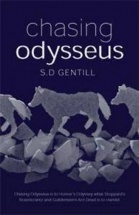
The Hero Trilogy, book 1. Pantera Press, 2011. ISBN 9780980741865.
Hero is abandoned by her mother when she is five. Her mother, a
champion of the Amazons, does not want a child with poor eyesight
and so Hero is left with her biological father Agelaus. Agelaus is a
herdsman who lives in the mountains in a cave with his three adopted
sons. They live a peaceful life until Hero is fifteen, when war
breaks out between the Greeks and the Trojans and the herdsmen are
unfortunately caught in the middle of it.
Based on a Greek myth, the four siblings watch the fall of the city
of Troy and then watch as the herdsmen are blamed for it.
This first book in the trilogy follows the adventures of Hero and
her three brothers as they set out on a quest to clear the
reputation of their people. They encounter many strange people,
wondrous lands, princes and princesses, gods, warriors and grand
adventures. The book begins well but, with all the crazy adventures
the four go on, it gets a little bit hard to follow in the middle.
Then, at the end, as all trilogies do, it leaves you hanging. I'm
sure some readers will like it; Chasing Odysseus did catch
me, but it didn't keep me interested.
Rachel Brabin
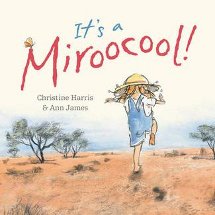
It's a Miroocool by Christine Harris
Ill. by Anne James. Little Hare, 2012. hbk, RRP $A24.99. ISBN
9781921541018.
Audrey Barlow has reached one of the milestones of childhood - she
has
lost
her first tooth! But Audrey lives in the outback, many kilometres
from
the
Tooth Fairy's usual nightly route, so how will she find her way to
Audrey's
bedside and the billy containing that precious prize? Because Audrey
is
clever, she has lots of ideas and spends the day making sure that
the
Tooth
Fairy will find her and goes to bed knowing she has done as much as
she
can
to guide the fairy. But she doesn't count on the fickleness of
nature,
and
during the night all her plans are wrecked. Will she wake up
disappointed
and disbelieving in a tradition that has been around for decades?
The
ending is magical - so much better than a gold coin or whatever
inflation
has put the value of a tooth at, these days. (Miss 6 has her first
wobbly
one, so I wonder if she will also treasure the Tooth Fairy's gift in
the
same way, when the time comes. I will give her this book!)
Many students are familiar with this lovable wonderful character
through the
Audrey of the Outback novels that Christine Harris has
created,
so to
see
a hardback picture book story will just delight them. And if this is
their
first introduction to her, then the promise of a series of novels to
read
afterwards will be greeted with anticipation. Audrey brings a
particular
slice of Australian life to the lives of children who will probably
never
experience it for themselves. Just HOW could you guide the Tooth
Fairy
to
your house when it's not even marked on a map? In fact, Audrey's
ideas
had
such an impact on Miss 6 that now, when she has a problem, we ask
"What
would Audrey do?"
The whole is brought to life by the remarkable artwork of Ann James
which
complements the story perfectly. Even the youngest reader is able to
envisage the isolation of Audrey, feel the dryness, and delight in
the
solutions that Audrey thinks of. The medium, colours and style work
so
well
together to convey the landscape, the actions, the mood and
atmosphere
that
this is the perfect author/illustrator match. We could feel Audrey's
concern
when she realises her predicament; feel her delight and excitement
as
she
carries out her plans and thinks she has all bases covered; and her
anguish
as Mother Nature rears her head. These pictures are drawn by someone
who has
lived Audrey's life.
Apart from the value in having the readers predict how Audrey might
solve
her problem, this book has a particular place on library shelves
just
because of its setting. It is a rich springboard for a
compare-and-contrast
exercise about how children in rural and remote Australia do the
everyday
things that children everywhere must do. It's a superb introduction
to
helping children understand that theirs is not the only life led.
There's
even a song written and sung by Bill Marsh to accompany it available
at
http://www.youtube.com/watch?v=YqG9Wx5d0ZY
that incorporates images that
complement the artwork and take the children to where Audrey lives.
Teaching notes for a range of themes that could be explored are
available
. Audrey even has her own blog and
website.
This one definitely deserves a place on the shelves.
Barbara Braxton
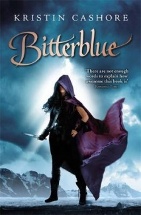
Bitterblue by Kristin Cashore
Gollanz, 2012.
(Age: 15+) Highly recommended.
Bitterblue is
now Queen of Monsea. Leck, her violent father, has
left a terrible legacy which her advisors
would like her to forget about. They want her to forgive all those
who
committed
acts of atrocity under Leck's rule and move forward. Bitterblue
escapes
the
castle and while walking the streets of
her city disguised as a commoner, begins to realise that the only
way
to forge
a new path is to understand the past.
Cashore is a clever author with a deft way
with description and atmosphere. She keeps the reader's attention
with
her
beautifully developed characters and setting and she also has the
ability to maintain
a gripping pace that kept me reading this book virtually in one
sitting.
Bitterblue comes of age by the end of the
book. Her excursions into the wider world where she meets Saf and
sees
how the
common people live give her an insight into what she should do for
the
kingdom.
Cashore doesn't compromise about the difficulties of being in love
and
the
responsibilities that people in different roles must take on in
life.
She doesn't
take the easy way out with the love story between Bitterblue and
Saf.
Instead
she leaves the reader pondering on what it means to be a ruler and
whether
personal needs and wants can come before those of the kingdom.
What I have enjoyed so much about this
fantasy series is that each book can be read separately although of
course
maximum enjoyment comes through first reading the other two books,
Graceling and Fire. Bitterblue is equally
as good
if not better than the first two books and is a joy to read and
think
about.
The
three books in this series are well worth having in libraries. They
are
so much
more challenging than most of the fantasy that abounds at the moment
and are
sure to get discussions going about feminism, the role of women in
society and
the responsibility that being in love can bring. These books are
ones
that will remain on my shelves to be
reread.
Pat Pledger
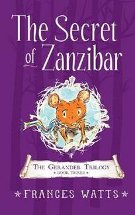
The Secret of Zanzibar by Frances Watts
ABC Books, 2012. ISBN 9780733330650.
Recommended. The Secret of Zanzibar is the final book of the
Gerander Trilogy and brings to the conclusion the adventures of
triplets Alex, Alice and Alistair, Tibby Rose and a cast of
relations and friends.
Time is running out for the members of FIG (Free and Independent
Gerander) as Queen Eugenia of Souris is about to march on Cornoliana
and claim the throne of Gerander. Alex and Alice's mission is to
encourage a mass peaceful protest to prevent the Queen entering the
City, whilst Tibby Rose and Alistair are off to Templeton to enlist
the help of her Godfather Granville, editor of the local paper.
Their mission is to inform the Sourians of the truth of the
occupation of Gerander.
The fortunes of the two groups are followed in alternating chapters.
This allows for the author to build on the suspense as the reader is
left hanging at an important point, then bought back to the story of
the other group. Great for serialisation! The confrontation at the
gates of Cornoliana brings a surprise twist and begs the question
'Where to next?' for both the characters and author.
The characters are mice operating in a fantasy world, but the themes
of freedom and resistance are universal and the situations the young
spies find themselves in, hiding from the Queen's guards or
imprisoned and interrogated are reflective of the real world at the
present time. There are many other themes touched on in the book
including prejudice, freedom of the press, home and family which
would serve as teaching or discussion points.
I love the way the author has taken famous quotes and tweaked them
slightly to fit the story eg. 'You never really understand a mouse
until you consider things from his point of view - until you climb
into his skin and walk around in it,' attributed to Atticus Finch a
wise mouse from the book To Kill a Mocking Bird and 'All that
is needed for evil to triumph is for good mice to do nothing.'
An enjoyable read with something to say.
Sue Keane
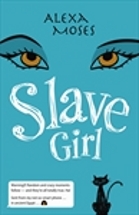
Slave girl by Alexa Moses
Angus and Robertson, 2012. ISBN 0 73229498 4.
(Ages: 10+) Historical fiction. While on an exchange visit to New
York, precocious thirteen year old student, Jenna, wants to be
nowhere near the museum that her teacher has taken her to. She would
do anything to be at the fabulous hair salon she has read about, but
instead follows the cat in the museum back through a portal into
Ancient Egypt. There she is mistaken for a slave girl and given
menial tasks to do, handed from one owner to another because she is
useless at all she is given to do and answers back without a
thought.
I found the girl insufferable, but then I was wanting her to learn
something about Ancient Egypt instead of trying to get back home,.
The background to this novel is marvellous, a tribute to a young
mum's feeding times in the early hours of the morning watching
television, and so readers will certainly learn easily a lot about
Ancient History in reading this story. The tale of the girl did not
hang together as well as it might, but it was still a fascinating
read, one sure to capture the imaginations of its readers of upper
primary school age.
Fran Knight
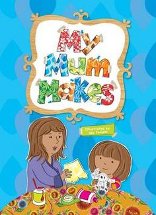
My Mum makes illustrated by Dee Texidor
Lothian Children's Books. ISBN 978 0 7344 1281 2.
This vibrant book is a real celebration of the role that Mum plays
in
the life of the young narrator. From the minute the girl gets up,
Mum
is there, making sure that her daughter is up, dressed and fed. They
do
cooking together, make crafts, play with friends, do gardening (with
a
subtle nod to the growth of organic plants, which reads as a little
smug and pretentious to be honest), oversees rest time, and tucks
her
young daughter in with a story at night.
The girl recognises that Mum is ALWAYS busy doing things, and that
sometimes she has to play on her own (which is a nice balance,
otherwise the message young ones could take away from the story is
that
Mum is a one stop entertainment machine!), and that now Mum has made
something new! A baby!
My only concern with this book is that, in reading it to a young
child
with a new sibling, or a sibling on the way, is that it is setting
them
up for disappointment. It's a very special Mum indeed that can keep
up
all the former activities, right down to the planting of the organic
plants, with a newborn in the house as well. Perhaps the book would
have been better to run a few pages longer, and capture the reality
of
'once baby comes, things will be different, but now I can make
things
for baby'.
Nonetheless, this is a bright, colourful and collage filled
celebration
of a dedicated Mum, and a daughter who knows she has a very busy and
talented Mum. The book touches on Mum having enough love to share
with
2 children, which is always a valuable take away message.
Freya Lucas
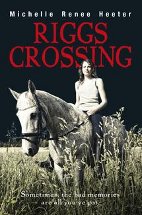
Rigg's Crossing by Michelle Renee Heeter
Ford Street, 2012. ISBN 9781921665707.
A teenage girl is found in the wreckage of a car and requires a
lengthy hospital stay to recover from her psychological and physical
injuries. Little is known about the girl who staff name 'Len' other
than a violent altercation obviously occurred at the scene of the
accident. She doesn't appear to have been registered at birth, isn't
registered with Medicare and may have been home schooled.
Until Len is able to provide more information about her past it is
difficult to know how best to help her. A decision is made to place
Len in a therapeutic refuge for troubled teens where she has access
to professional counselling.
The circumstances under which Len arrives at the refuge are
mysterious and the potential for a thrilling story looms large.
However the story evolves more as an internal monologue of Len's
daily life at the refuge as she seeks to reassemble a sense of
identity. The arrival and departure of other residents, intrusive
counselling sessions and the return of memories from her troubled
life are a few of the issues Len has to deal with. A heightening of
tension is signalled when characters from her past make an
appearance. Unfortunately these developments prove to be
diversions that promise much but deliver little. Consequently, the
conclusion feels disappointing.
Tina Cain
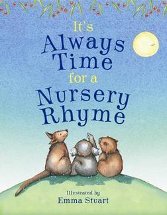
It's always time for a nursery rhyme illustrated by Emma Stuart
Lothian, 2012. ISBN 978 0 7344 1269 0.
(Ages: 6+) Picture book. Nursery Rhymes.
This is a strange book, full of old nursery rhymes, with no credited
author, and illustrations that lack distinction. Purporting to be
Australian themed, the illustrations are similar to those spied
years ago in the Little Golden Books series, and although some have
an Australian theme, which may encourage readers, most do not,
simply following the age old dictum of 'Medieval' costumed figures
drawn to accompany old folk's tales and rhymes such as these.
I am always intrigued by uncredited rhymes and stories, because a
little search allows the reader to find where these are from, adding
to the richness of the story. Round and Round the Garden,
for example is one of those fingerplay rhymes, this collected in the
1920's and finally catalogued in the 1950's. It is a very late poem,
as teddy bears were not invented until early in the 20th century.
For me, this adds a richness to be shared with a class, and I am
sorry not to see it thus authenticated. Many of course, are from Mother
Goose Nursery Rhymes and I feel should be authenticated with
this information if nothing else.
Counting rhymes, repetitive rhymes, old country rhymes, finger play
and body parts rhymes all have a huge role to play in a child's
development, the affinity with words and rhymes, and, not
insignificantly, the closeness and richness of reading something
together, should be supported with a rich and varied diet of rhyming
stories and this book just does not hold up to a close inspection.
Fran Knight.
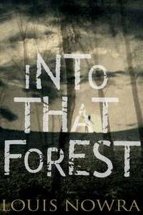
Into that forest by Louis Nowra
Allen and Unwin, 2012. ISBN 9781743311646
(Ages 13+) Recommended. Children raised by animals. Two young girls,
lost in the Tasmanian bush after a boating accident, form the basis
of
this rivetting tale. Hannah has some knowledge of the bush, but the
other, Becky, has none, coming from a sheep farm where her father
and
the local bounty hunter kill all the wild dogs they can. But Hannah
is
more respectful of the tiger with the stripes and dog like features.
Her father, a whaler, has told her stories about wild animals and
she
hates the visits of the bounty hunter to their house.
The girls, about five and six years old are taken in by a pair of
Tasmanian Tigers. The girls become part of their den, learning to
hunt
with their tiger family, suckling, snuggling in with the he and she
dogs, Hannah calls Dave and Corinna, for warmth. The girls become
attuned to sleeping through the daylight hours, waking at night for
hunting and feeding, they learn to hunt in a pack, tearing at
uncooked
flesh and eating it down, lapping the water with their tongues. They
begin to lose the trappings of the life they once lead, abandoning
their clothes, forgetting their language, taking on the growls and
coughs of the animals as the form of communication.
One winter, desperately cold and starving, Hannah leads her family
to
the bounty hunter's shack, where she remembered there were sheep. It
saves their lives, but the bounty hunter now knows a pack of tigers
is
around. He kills the two new cubs, but spots the naked girls in the
bush trying to warn the mother.
An engrossing tale of family and togetherness, of familial loyalty
as
the two girls become part of the tigers' family, running with them
in
the wild, then turning to killing sheep, the one thing sure to focus
the eye of the bounty hunter on them. All the while the reader knows
a
climax is coming, one where all their loyalties will be tested.
Nowra gets into the nitty gritty of a child learning to live with
animals, which raises questions about our society and the trappings
of
civilisation which have glossed over the fundamental issues of
family
life, the basic stuff of survival, closeness, food and shelter.
This astonishing book could be compared with others like it, Dog
boy
by
Eva Hornung (2010) and the much earlier Dogboy by Victor
Kelleher
(1990) along with the stories and fables of old, Romulus and
Remus,
Mowgli, Tarzan and so on, which all have their bases
in
children being
raised in the wild. This would make an amazing text to study for
secondary readers, as the question of what is civilisation is
tantamount to any discussion of what happens in the book. The
environment, the extinction of the thylacine, the treatment of the
Aborigines in Tasmania, are all issues which could have a sound
airing
through the study of this story. Fran Knight
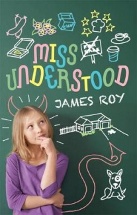
Miss Understood by James Roy
Woolshed Press, 2012. ISBN 9781864718607.
(Ages: 10 +) Recommended. Family and humour. Poor Lizzie. No one
understands her, she sometimes speaks in riddles, often takes people
literally, and tries to help where help is not needed. On one such
day, one in a long line of such days, she ends up setting fire to
the headmaster's portrait and so is asked to leave her school, Our
Lady of the Sacred Wimple. In this winning first person narrative
story, Lizzie becomes home schooled by her mother, and through her
eyes we see that things at home are not as she would like them to
be. Dad is a food writer and some of his reviews have almost ended
in litigation, and Lizzie has found him in tears in his study. The
arguments are becoming more frequent and things are happening to
upset the household.
Their house is one in a cul-de-sac, where display homes are often open
for people to look through. As theirs was once one, they often have
people peering through their windows or just walking in, increasing
Dad's temper outbursts. The empty house next door intrigues Lizzie
as she has discovered that sometimes there is a light left on and
she hears noises. There are pizza boxes in their bin, and the older
woman across the road asks odd questions. Lizzie is working at the
Helping Hand Centre with Miss Huntley and so hears tales of people
helping others through her community service, being done to increase
the possibility of returning to her school.
All of these combine to make a sharply observed inviting story about
a young girl noticing things in her environment, but unsure what
they all mean. The neat parallel of the model homes with the
example of these less than model families, is a strong theme in this
wonderful story as Elizabeth comes to realise that her father is
depressed, and that the man living next door has a similar condition
following his marriage break down. Of course, she tries to help both
men, and the pamphlet given to her father, she passes on to the man
next door. But in the end, the greatest help she gives her father is
being herself.
It is always good to see a novel where families are represented with
all their faults, and trying hard to retain its equilibrium. James
Roy has a knack of presenting families truthfully, and could easily
be compared with those books from the pen of Simon French,
Jacqueline Wilson and others.
Fran Knight
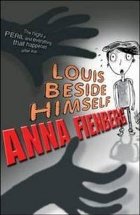
Louis beside himself by Anna Fienberg
Allen and Unwin, 2012. ISBN: 9781742379944.
Louis loves words! Whilst his mates spend their time on more active
pursuits, Louis would prefer to sit at home with the dictionary. It
seems that he is a disappointment to his father who constantly tries
to
challenge Louis to try out his new or 'tried and true' arm wrestling
techniques. When a burglar breaks into the house, Louis fails to use
his skills to protect himself and somehow ends up providing a refuge
for the interloper instead. This leads to a spate of fabricated
stories, as Cordelia busies herself around the house and changes the
entire way in which Louis operates. Not only does Louis' normal
articulate nature disappear when Cordelia is involved but he also
begins to question his place in the family. With his dad suddenly
going
out more often, losing some of his normal concerns and worries and
instead becoming relaxed and happy, things seem to be changing in
ways
Louis doesn't understand. How will he make sense of what is
happening
around him?
Fienberg writes in a humorous and entertaining manner. Including
themes
of family, friendship, acceptance of others despite their
differences,
change and overcoming one's own fears and weaknesses, this novel has
a
lot to offer. With its other main focus being on the power of words,
this could be used as a class novel to read aloud.
Jo Schenkel
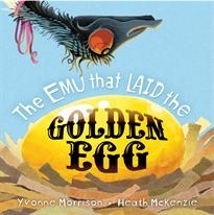
The emu that laid the golden egg by Yvonne Morrison
Ill. Heath McKenzie. Little Hare, 2012. ISBN 978
(Ages 5+) Warmly recommended. Picture book. Rhyming text. Based
loosely on the fable, The goose that laid the golden egg, this
picture book shows an emu inadvertently coming into the range of two
rotten scoundrels. The emu is one of several foraging for food in an
increasingly difficult environment, the end of the town, grabbing
what they can from the roadside and rubbish bins, but our hapless
emu follows a beetle. She looks everywhere, finally spying some
golden grains of corn at the bottom of the creek. She scoops these
up and the very next day lays a golden egg. In finding this amazing
egg the scoundrels plot to kidnap the bird, thinking that she may
produce more golden eggs and so enact their plan. Incarcerated by
the men, the emu eats what she can find, an old boot, a cushion,
part of the chandelier and the knobs form the old bed. Next day the
men find she has laid eggs that closely resemble the things she has
eaten. She returns to her flock content now to forage for her food
along with the others.
In rhyming stanzas, the humour of the words will add to the glee of
the listeners as they hear of the emu and her efforts to gain food,
and the scoundrels in trying to get another golden egg from her.
Read a loud or read in a small group the stanzas add to the fun of
the story with readers predicting what the next words will be.
And all along the story is reiterated in the glorious illustrations,
helping the readers gain a larger helping of humour and wit. Readers
will have great fun with this story, contemplating why the emus have
moved into town and what the illustrator is representing in his
drawings of what the emus are forced to eat. The comparison with the
fable will add another level of meaning to the tale as it is read.
Fran Knight
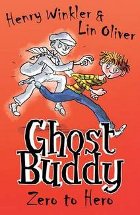
Ghost Buddy: Zero to Hero by Henry Winkler and Lin Oliver
Scholastic, 2012. ISBN 9781407132280.
Recommended 8-12years. Henry Winkler (yes The Fonz from Happy Days!)
and Lin Oliver have collaborated on the Hank Zipzer series since
2003. This book begins a new series starring eleven year old Billy
Broccoli.
Billy has just gained a new stepfather, stepsister Breeze, and moved
into an old house in a new neighbourhood. He is reluctantly about to
start at Moorepark Middle School where his Mother is Head Teacher.
After a less than welcoming meeting with neighbour Rod Brownstone,
the last thing Billy expects to find in his pink bedroom is a ghost
coming from his wardrobe wearing his baseball top and smelling of
oranges. Enter Hoover Porterhouse the Third, aka 'The Hoove', a 14
year old boy who for ninety nine years has been haunting the
property and is invisible to all but Billy.
The Hoove helps a far from confident Billy navigate his issues
around starting in a new school and making friends and together they
manage to handle the bullying of neighbour Rod, with more
sensitivity than Hoove had planned.
Readers will relate to Billy's struggle to be accepted by his peers
and enjoy the humorous situations and witty dialogue as Hoove does
his best to help Billy become cool. There are echoes of The Fonz in
the voice of Hoove, not that the targeted audience will recognise
it.
With a sneek peek chapter of the next Ghost Buddy book included to
whet the appetite, Billy and The Hoove are destined to become
popular characters as we see if Hoove can achieve a passing grade in
Helping Others.
Sue Keane
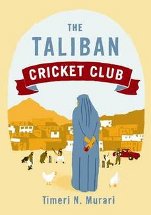
The Taliban Cricket Club by T. N. Murari
Allen and Unwin, 2012. Pbk. 325p. ISBN 978-1-74237-804-6.
Under the Taliban, Kabul is a dangerous place for Rukhsana, a
23-year old journalist, sacked from her newspaper by the
Minister for the propagation of Virtue and the Prevention of
Vice. Like all her countrywomen, she is trapped in her house
unless her Mahram, younger brother Jahan, accompanies her. She is
also completely hidden by her Burka and she is trapped in
Afghanistan, unable to leave to marry her fiance in America until
her beloved mother's fatal illness plays out.
Her subversion takes the form of news items published in the foreign
press about many of the human rights violations she witnesses -
mostly against women. The feisty young journalist becomes the
obsession of Zorak Wahidi himself after a press conference
announcing a national cricket tournament. The winning team will be
sent to Pakistan for training so that Afghanistan may succeed in
their membership bid to the International Cricket Council. Jahan and
his cousins view the tournament as their chance to flee tyranny, yet
nobody in Kabul can play cricket - except Rukhsana who played at
University in Dehli. Cricket becomes a metaphor for responsible
citizenship - something lacking in the government. Rukhsana begins
coaching with philosophy:
'Think of cricket as theatre . . . It's dramatic. It's about
individual conflict . . . It's a relationship between the one
and the many. The individual and the social, the leader and the
follower, the individual and the universal.'
In order to teach her family, Rukhsana assumes the masculine
disguise of Babur. She uses it to avoid Zorak's marriage proposal
too but becomes conflicted by news of her American beau's
marriage. Now she is free to marry her Dehli sweetheart
but in reality, in more danger of becoming one of Zorak's wives.
Will they win the tournament and escape? The Taliban Cricket Club has a lovely tempo and purpose. The dutiful
daughter, sister, friend, lover and citizen attempts to be true to
herself in a brutal, sexist homeland. Young adults aware of their
multicultural landscape would find this novel engaging. In
Bollywood style, Rukhsana and the other characters are lacking
in depth but this undemanding writing is delightful. Like
Cricket, this is an unassuming narrative of worthy themes with
the power to become legend in the style of Slum Dog Millionaire.
Deborah Robins
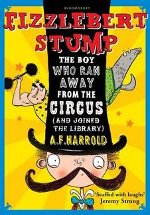
Fizzlebert Stump - The boy who ran away from the circus (and joined a library) by A.F Harrold
Bloomsbury, 2012. ISBN 978 1 4088 3003 1.
This is a quirky story with an unusual storyline.
Fizzlebert had grown up in a circus. His father was the circus
strongman and his mother a circus clown. His days were spent
engaging with the variety of people who live and work in the circus.
After an unexpected meeting with a group of local school children
Fizzlebert finds a book. The advice from his circus friends is to
return it to the library. But Fizzlebert doesn't know what a library
is so he sets off one morning to try and locate it in the local
town. Locate it he does however in his enthusiasm to join the
library he is deceived by a couple whose intentions are not good.
The remaining story has us following Fizzlebert through some
adventures until his parents realise he is missing and come to find
him. The format of the text and storyline will not appeal to
everyone however good triumphs over evil in the end.
Tracy Glover