UQP, 2017. ISBN 9780702259586
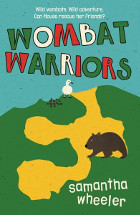
(Age: 8-12) Highly recommended. Conservation. Wombats.
Confidence. Mouse (real name, Minnie) is a young girl who needs to
stay with her Aunt Evie for an extended period in rural South
Australia while her parents are overseas. Mouse reflects her name in
that she is shy and lacking confidence and the thought of going to a
new school fills her with fear. Anxieties are set aside when Mouse
discovers that Aunt Evie shares her house with a rather affectionate
Wombat and a curious duck. Living in a rural environment, Mouse soon
discovers that local farmers do not share her enthusiasm for the
friendly wombats. A new friend who also shares her passion for
wombats and a school project that gives her a reason to explore ways
that wombats can co-exist with their human neighbours creates the
'Wombat Warriors'. Even in the face of opposition, Mouse's concern
for the safety of her friend and for the threatened wombats gives
her reason to speak out and make a difference.
There is enough adventure and emotional growth in this story to make
it interesting on a number of levels, and will appeal to animal
lovers and those concerned about environmental issues as well.
Carolyn Hull
Baby Band by Diane Jackson Hill
Ill. by Giuseppe Poli. New Frontier Publishing, 2017. ISBN
9781925059779
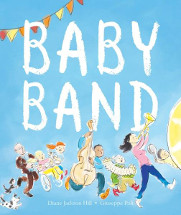
(Age: 3-5) Ukulele playing author Diane Jackson Hill's new picture
book Baby Band celebrates the power of music, its ability to
create moods and emotions and bring a community together. Giuseppe
Poli's charming pen, ink and watercolour illustrations support the
emotional tones of the simple text.
In an apartment block, the residents live separate lives; they never
interact, share a meal or notice each other's activities. On the
front endpapers, each one engages with the park musicians, singers
and dancers individually, while a pregnant mother rests alone on a
bench. Everything changes when the baby arrives in apartment 8A,
this little one cries all the time, day and night. Mum tries
everything to stop the loud wailing, to no avail. Everyone on level
8 is annoyed and nobody stops by to help. Time passes and the little
boy discovers the pots and pans, he laughs as he clangs the lid and
saucepan together. His noises cause the grandma next door to scream,
the teenager in 8C to dance and stomp and slowly through the
apartments, the music brings the place to life. Doors are flung open
and everyone hoots and hustles their way to the rooftop. Where did
the baby go? Is he somewhere safe and quiet? The final endpapers
show everyone singing, dancing and celebrating the joy of music
together at the park bandstand. Baby Band is a pleasing story, one that looks at the
importance of music in people's lives, as it brings a community
together, celebrating diversity and making the world a better place.
Rhyllis Bignell
Welcome home, Harley by Jess Black
Little paws series. Random House, 2017. ISBN 9780143781776
(Age: 7+) Recommended. Dogs. Guide dogs. One in a series called Little
paws, this is a collaboration between Random and Guide Dogs
Association of Australia, bringing short easily read stories about
dogs to life for the newly independent reader. In this title, Lexie
and Tom go to the information session with their parents. Here they
learn all about the aims of the training schedule and what is
expected of them as trainers. The two are very excited when they
meet their dog, Harley, and learn why the dog was named. Given a
carrier, food, bowls and collars the family sets off home to
introduce the dog to their family home. Here it will stay, gaining
valuable training in what it means to be in a family and given a
wide variety of experiences. After a few hiccups in which the
children learn as much as the dog about being in a family, they
settle down to training the dog both at home and at preschool. Easy
to read, short, with some illustrations, these will appeal
enormously to the early reader and they will learn a lot along the
way about guide dogs, having a dog in the family and the
responsibility and care of an animal.
For more about these books see the Guide
Dogs Blog.
Fran Knight
Somewhere else by Gus Gordon
Viking, 2016. ISBN 9780670078851
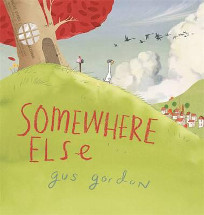
Some birds fly north; some birds fly south; some birds take the bus
... but George Laurent doesn't go anywhere. It seems he is too
busy baking his scrumptious pastries to be able to explore the
world. Even when his world-travelling customers try to tempt him
with descriptions of a sunrise over the Andes, or Paris by night,
even the Alaskan tundra in autumn, George always has an excuse -
even the ironing is more important!!
But come the bleak, cold days when all his feathered friends have
disappeared to warmer parts and George is left alone, his only
remaining friend Pascal Lombard drops in looking for somewhere warm
for winter. He is puzzled that George has not gone with the others,
and slowly he manages to eke out the truth - George Laurent, baker
extraordinaire, does not know how to fly. When it was flying lesson
day all those years ago he had been doing something else and since
then he had just made excuses not to - even though he really would
have liked to have been able to go somewhere else. Pascal, who
believes he has a knack for solving tricky problems, is determined
to teach George how to fly but it is not until they see a picture in
a newspaper...
This is an engaging tale which will resonate with many children -
having a zillion reasons for not doing something you can't but are
expected to be able to do. As a teacher I was a master at detecting
avoidance behaviour because I lived it at home with my son, so as
soon as I started reading I knew there was an underlying issue. But
astute readers may well pick it up in the clues in the amazing
illustrations which use a variety of media, particularly collage.
From the carefully selected advertisements of old styles of luggage
on the endpapers, Gus Gordon has skilfully used pieces of print from
all sorts of sources to add depth, mystery and humour to the
exquisite illustrations. Every time you read it there is more to
peruse and ponder.
Time to get out the atlas and discover the places that George's
friends went and maybe even investigate the concept of animal (and
human) migration. Why are they always on the move? We can tell the
seasons where I live by the variety of birdlife that is present so
perhaps it's time to do an inventory of the local birdlife over time
- perfect real-life context for data collection and interpretation.
Or perhaps a physiological investigation into how most birds fly but
some can't and how this has been translated into human flight. Then
there is the philosophical question about "no place like home" as
George and Pascal discover something familiar is missing from their
travels. Some children might even learn from George and seek help to
find pathways around their own difficulties.
I love picture books that seem to be written for one age group but
with some consideration can transcend all ages, offering the prefect
reason to return to them again and again apart from just being an
absorbing story. A CBCA Notable for 2017, I was surprised this did
not make the shortlist.
Barbara Braxton
How to bee by Bren MacDibble
Allen and Unwin, 2017. ISBN 9781760294335
(Age: 12+) Highly recommended. Bees, Dystopian fiction, Poverty.
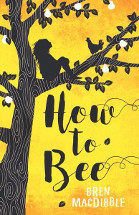
Peony just wants to be a bee. She sees the others fall from the
branches of the fruit trees where they pollinate the flowers, and
knows the foreman will want two replacements the next day. Only ten
years old, she is quick and nimble, and she is thrilled to be able
to help her grandfather in keeping their little family fed. But her
mother arrives from the city with promises of better times if Peony
will only come with her. She struggles and runs away, but is
eventually recaptured and once in the city, sees her mother's life
for what it really is, a menial servant to the rich.
This is an eye popping addition to the genre looking at where our
society is going. The huge gap between the haves and have nots is
wider than ever, with one simply slaves to the other, with no power,
money or housing, while the use of pesticides has wiped out the bee
population and so flowers must be pollinated manually by the farm
workers, the lowest of the low. These people live in sheds on the
properties with no hope for ever making a better life for
themselves. But for Peony this is where her heart lies, with her
family.
Peony learns her new role in the city but yearns for home. In
becoming friendly with the housebound daughter of her employers, she
agrees to teach her to be brave, while Ez will show her how to leave
the city. Together the two plot Peony's escape, Ez becoming more
confident as each day goes by.
When Peony finally escapes she must hitch a ride in a truck
returning to Goulburn Valley, and then must walk thirty kilometres
to their farm.
Her tenacity shines through, her strength of character and purpose
draw her on to reach her goal, and with a new friendship and a
change in the life of bees, finds that the future looks bright.
This charming story with the determined Peony at its heart will
enthrall middle school readers.
Fran Knight
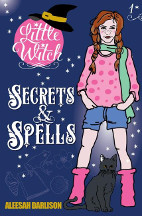
Little Witch: Secrets and Spells by Aleesah Darlison
Allen and Unwin, 2017. ISBN 9781925520101
(Age: 8+) Highly recommended. Courtney is going to be stuck in
Mixton Bay for her summer holidays. She won't have any friends, TV
or pizza as her parents redecorate and ready her unknown
grandmother's house for sale. Courtney might not be happy but the
trip is also hard on her Dad. He hadn't seen or spoken to Delia, his
mother, for a very long time and didn't even attend her funeral.
As Courtney explores the house, she discovers a box labelled with
her name. Inside is a spell book, her grandmother's spell book.
Courtney is now more excited to be in Mixton Bay and meeting 12 year
old surfer, Justice, also helps. Thanks to Justice's friendship with
her grandmother, Courtney starts to learn more and more about Delia
including the fact that she was a witch and helped people. Throw in
a talking cat and Courtney never wants to leave. Now, she just needs
to get her Dad to believe and then persuade him and her Mum to stay.
Secrets and Spells is set somewhere in an Australian
beachside community. It has just enough intrigue to keep readers
reading, giving just a small taste of magic with some funny results.
The text is descriptive and easy to read and a great introduction to
this first book in a new series. It is highly recommended for
readers aged 8+ and will appeal to girls.
Kylie Kempster
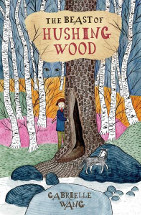
The Beast of Hushing Wood by Gabrielle Wang
Penguin, 2017. ISBN 9780143309178
(Age: 9-12) Recommended. Threads of magical fantasy, Eastern
mysticism and mythology weave their magic in this lyrical narrative
written and illustrated by Gabrielle Wang.
Ziggy Truegood is a spirited and imaginative eleven-year-old girl
who has an elemental connection to the world around her. She lives
with her mother in a house surrounded by the dark forest of Hushing
Wood. While the townsfolk fear the evil they perceive lurks amongst
the thousand-year-old trees, Ziggy enjoys the forest's sensory
beauty, finding comfort in the whisper of the stretching branches,
the earthy smells and familiar pebbly trails.
Haunted by premonitions of a huge silver beast drowning her on her
twelfth birthday, Ziggy seeks guidance to understand her frightening
dreams. With the help of her Grandpa Truegood, mute Big Bobby Little
and her friend Petal, Ziggy looks for answers. Ziggy's fear
increases when she notices a silver animal lurking in the woods at
night. Who can unlock the mysteries of why she can see spirit
animals and why has the forest become a fearful place?
When strangers Raffi Tazi and his grandfather arrive in town,
wearing different clothes, speaking a different language, the
townsfolk are concerned. With the aid of a little jade bottle,
guidance from her grandfather and the help of her friends, Ziggy
rises to meet the challenges her birthday brings.
Gabrielle Wang's imaginative fable, is filled with beautifully
crafted descriptions, richly detailed settings and characters that
face real issues - a family breakup, physical differences, the
feeling of alienation and bullying. The Beast of Hushing Wood
is complemented by Wang's intriguing watercolour illustrations of
small detailed elements and lively scenes. This novel is just right
for dedicated readers who enjoy fables and tales of magical realism.
Rhyllis Bignell
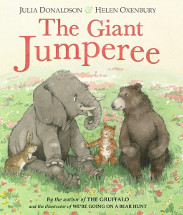
The Giant Jumperee by Julia Donaldson
Ill. by Helen Oxenbury. Penguin, 2017. ISBN 9780141363820
(Age: 3-6) Recommended. Something is hiding in poor Rabbit's burrow,
scaring the forest animals. The creature hiding inside announces
'I'm the Giant Jumperee and I'm scary as can be!' Each of Rabbit's
friends offers to help remove the intruder. When Cat slinks up to
burrow ready to pounce, he is greeted by the creature's taunting
remark - 'I'll squash you like a flea!' Bear offers to knock him
down with his big paw however, he is told 'I'll sting you like a
bee!' This mysterious animal certainly knows which buttons to press
to scare each one away. Mummy Frog stands at the each of the burrow,
arms akimbo, eyes wide open, determined to sort out the problem.
She's not concerned and challenges the Giant Jumperee to appear on
the count of three! Out jumps her Baby Frog, happy to have scared
all the animals. Mummy Frog is not amused while Elephant, Rabbit,
Bear and Cat lay back in the green grass, laughing at the trick
played by the little frog.
Donaldson's uncomplicated story uses rhyme and repetition to delight
the young audience. Oxenbury's colourful paintings are delightful;
they show the range of emotions each animal feels as the Great
Jumperee defeats them. This gentle story is just right for
predicting the outcome and engaging a Preschool or kindergarten
class.
Rhyllis Bignell
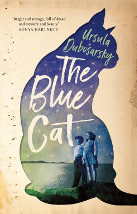
The blue cat by Ursula Dubosarsky
Allen and Unwin, 2017. ISBN 9781760292294
(Age: 9+) Highly recommended. World War Two, Refugees, School,
Family. This beautifully written story of the dislocation of
children through war reveals a young girl, Columba, intrigued by the
new boy in her school, Ellery, a refugee from Europe who cannot
speak. She and her friend, Hilda befriend the lonely boy and the
three search Sydney's Luna Park for a lost cat. It is 1942, the
Japanese are to the north and rumours about what is going on and
what will happen frighten them. First Singapore falls, then Darwin
is bombed, each adding a new level of fear within the families and
with their teachers. Hilda is a master at passing on the most
amazing of stories, insisting they are true. Small things occur in
the background, blacking out windows, cars driving without their
lights on, water rationing, while pages in the book are devoted to
advertisements and government orders and instructions, offering the
reader a taste of what life was like during war in Australia.
But the blue cat is like a shadow behind them all, first coming
ashore and following the neighbour home, disappearing during the air
raid drill and seen by the American soldiers near the shore. The cat
parallels the story of Ellery the refugee. Fear stalks them all, and
losing Ellery at Luna Park is a trigger for Columba's imagination to
soar. She experiences what has happened to Ellery and his family and
she when taken home remains in bed for some days. Then the boy, like
the cat disappears.
Dubosarsky's silken prose wraps itself around the reader, touching
them with the haunted innocence of children, hearing adult concerns
but not understanding the adult words. The fear of encroaching war
touches them all. And the readers, like the children, see things in
episodes, episodes that touch their lives, then move on, people that
are there and then not, incidents that loom large, but then fade
away.
As with all Dubosarsky's books the background is impeccably
portrayed and on her website are links
and images of the research behind her book.
Fran Knight
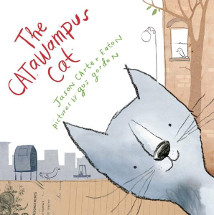
The catawampus cat by Jason Carter Eaton
Ill. by Gus Gordon. Penguin, 2017. ISBN 9780143785583
(Age: 4+) Recommended. Cats, Animals, Humour, Difference. An out of
alignment cat enters the picture. It leans to one side, and strolls
crookedly into the town. As it makes its way through the streets it
has a powerful effect on those around it. There are people
everywhere. Mr Grouse the grocer tries to straighten the cat. He and
his wife haven't spoken nicely for years, but in looking at the
cat's lean they notice their lost wedding ring under one of the
fruit barrows, and all is put right between them. Bob Long the
hairdresser is cutting hair. Looking at the lean of the cat causes
him to cut the woman's fringe on an angle, but she loves it. A house
painter busy at his boring work watches the cat walk by so putting a
zigzag stripe of paint across the mayor's house. But he loves it.
Many other things happen which the cat initiates from his askew
point of view, encouraging the population of the town to see things
differently, to do things differently, to take chances. I love the
librarian who takes the wrong book off the shelf, one about building
a boat, and then takes to the seas.
The population decides that being catawampus is a good way to be,
and set about hanging their town to be out of alignment, while the
mayor calls the Tuesday that the cat appeared, a special day each
year to celebrate.
The humour in the story is replicated and augmented by the hilarious
illustrations. The bemused cat appears on every page, sprinkling his
magic on the populace, encouraging them to see things differently,
while the endpapers show his journey through the town.
A wonderful story to talk about with early readers, touching on the
acceptance of change, of looking at things differently, of seeing
things from another's perspective.
And I was surprised to learn that catawampus is an actual word, and
worth looking up.
Fran Knight
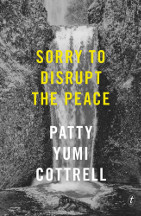
Sorry to disrupt the peace Patty Yumi Cottrell
Text, 2017. ISBN 9781925498431
(Age: Senior secondary) Recommended. Helen Moran, the first person
narrator in this first novel by Patty Yumi Cottrell, lives in a
shared apartment in New York. She has a part-time job caring for
troubled young people and sees herself as an organised and
functioning member of society. However, there are signs that her
life is not as controlled as she suggests. As proof of her
competency she presents a pamphlet that she wrote purporting to give
advice on how to survive in New York. The advice includes stealing,
lying and distorting the facts. When her uncle rings with the news
that her adoptive brother has committed suicide Helen decides to
return to her adoptive parents to investigate his death. Her parents
are astounded and uneasy to see her, an odd reaction, it seems. The
reader begins to understand that Helen is not what she believes
herself to be. As she reminisces about her upbringing she reveals to
the reader a difficult and friendless childhood. In her home in
Milwaukee her behaviour indicates both euphoria and depression as
she swings from mood to mood in her search for information. There is
black humour in her extreme actions; she puts the funeral flowers in
buckets containing bleach, she eats all the cake intended for the
wake, on the way to the funeral, in the car in which her brother
killed himself, she gets a flat tyre and has to walk, so missing the
funeral. She interrogates her brother's friends in search of clues
about his decision to kill himself, but ultimately it is the
document that he has left on his computer that gives her answers,
and gives the readers more evidence about Helen herself. Her brother
felt that he could be of most use to the world by donating his
organs; he suggested in his document that he believes Helen to have
undiagnosed bipolar disorder. His reasons for dying are not totally
convincing but his understanding of his sister seems accurate.
Despite her possible disorder Helen is a perceptive commentator on
her adoptive parents' lives and the values of both her home town and
those she associates with in New York. It is also possible to see
the novel as a discussion on the difficulties of being Korean
adoptees, in this case their adopting parents offering charity but
not a lot of love, it seems. The book is written in deceptively
simple prose and so is a quick read but offers rewards to a more
sustained look. It does discuss suicide and the difficulties faced
by those with mental differences so perhaps should be recommended
with care.
Recommended for senior students.
Jenny Hamilton
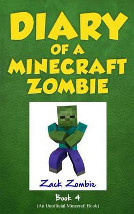
Zombie Swap by Zack Zombie
Diary of a Minecraft Zombie bk. 4. Scholastic, 2017. ISBN
9780986444166
(Age: 7+) This popular fan fiction series is presented as Zombie's
diary and in this junior novel, he has swapped bodies with his
friend Steve the Villager. This sets the scene for much awkwardness
at school and home, for many new and difficult situations and of
course, plenty of gross humour. Zombie discovers what it is like to
be a human; there are problems with wearing clothes, using the
SHA-WUR, what is SO-AP and how to use a TA-WOOL. Zombies normally do
not spend a lot of time cleaning their bodies, they have holes in
their faces and bodies and love to smell and be filthy.
Human school is a very scary place, Steve is a very popular guy and
Zombie finds it hard to fit in, andn know what to do, what to say
and how to act. His normal life is opposite. Steve has to live with
the Zombies, Creepers, Skeletons and Slimes of Minecraft, and try to
fit in as well. There are plenty of difficult situations for Zombie,
luckily, Steve's friend Alex is there to guide him through the
pitfalls. He even competes in the PVP Death Match Tournament with
his new human friend Eli, and together they learn how to rely on
each other and defeat the other team. Zombie Swap is another humorous addition to the series, just
right for Minecraft fans who enjoy reading about their favourite
characters and their zany lives.
Rhyllis Bignell
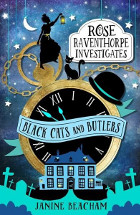
Rose Ravensthorpe Investigates: Black Cats and Butlers by Janine Beacham
Little Brown Books for Children, 2017. ISBN 9781510201286
(Age: 9+) Recommended. This has been one of my favourite reads of the past few weeks. Described as The Clockwork Sparrow meets Downton Abbey it is really energetic and engaging novel.
Rose is meant to be a properly brought up young lady but somewhat rebels against this classification and when butlers all over London begin to be murdered including her own beloved Argyle, Rose determines to find out the truth.
Set in an Edwardian period Rose teams up with her not-so-bright friend and discovers a hidden world of secret guardians of York – butlers sworn to protect and serve.
Amidst complications of grave robbers, her father's mission to destroy the opium trade from the Far East and an over-the-top magician, Rose becomes a trusted ally of the butlers' secret society. As the butlers wield their concealed rapiers, Rose unravels the dark reason behind the murders and triumphs exultantly.
Despite the darkness of the murders this is what I would describe as a 'fun' read. The prose simply rolls along and one must turn the page quickly to keep going until the denouement.
With mystery and history and a judicious splash of humour, this is a terrific addition to your library shelves for readers from around 9 or 10 upwards.
I'm definitely looking forward to the next instalment!
Sue Warren
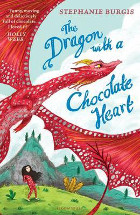
The dragon with a chocolate heart by Stephanie Burgis
Bloomsbury, 2017. ISBN 9781408880319
(Age: 9-12) Highly recommended. The dragon with a chocolate
heart is a wonderfully woven fantasy adventure that should
come with a warning - needs to be read while drinking hot chocolate
and sampling a large box of delicious chocolates! Stephanie Burgis
combines the world of dragons, the forces of magic and brings a
feisty hero to life. She sets her novel in traditional old world
town - Drachenburg - where chocolate houses vie for royal favour.
Aventurine is a young dragon desperate to escape her boring family
life. When she leaves her family caverns filled with golden treasure
to search for her own dinner, the young dragon is tempted by a cup
of sweet smelling hot cocoa from a mysterious food mage. In an
instant, she changes from a colourful scaly dragon into a wingless
human girl. Aventurine learns to adapt to her human body and sets
off down the mountain into town. She meets scoundrels and townsfolk
out for their own good and runs away from the first couple who just
want an unpaid servant.
After some twists and turns, she meets young Silke who help her with
suitable clothing and she finds a job as apprentice chocolatier at
the Chocolate Heart. Her passion for chocolate and her love of
finding the perfect flavours is beneficial for the business.
Burgis writes a rich and engaging fantasy narrative, filled with
delicious sweet descriptions and cups of special hot chocolate to
delight the royal family. Her setting amongst the delights and
dramas of life in Drachenburg with all the behind-the-scenes details
of the chocolate shop, the secret recipes, spicy touches, and the
well-rounded characters add to the warmth of the story. How can the
feisty young girl save the town from the attacking dragons who
happen to be her own family? The dragon with a chocolate heart explores the themes of
acceptance, courage, resilience and making the right choices, a
wonderful story for fantasy fans and just right for Middle Primary
students.
Rhyllis Bignell
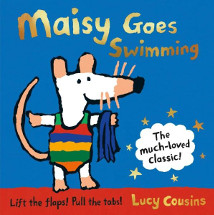
Maisy goes swimming by Lucy Cousins
Walker, 2017. ISBN 9781406374049.
(Ages: 3-5) Illustrator and author Lucy Cousins first created her
Maisy Mouse character in 1990 and her picture books continue to be
much loved family favourites to share with youngsters all over the
world.
Walker Books have published the delightful interactive story of Maisy
goes swimming as a 25th anniversary celebration. Now a new
generation of toddlers can help Maisy get ready for swimming at the
pool. The young mouse is dressed for winter in many layers of
clothes and she needs to put on her bathing suit. First, her blue
hat and scarf come off, next her big brown boots and red coat. Each
spread show the ever-patient mouse waiting for our help, as we lift,
slide and open the sturdy flaps. Next comes more colourful layers,
grey cardigan, green trousers, until at last we pull down her orange
bloomers! At last, it is time for Maisy's colourful striped swimsuit
and she is ready for the pool. Maisy goes swimming is an entertaining book to share with a
young child, to prepare them for swimming lesson and to stimulate
their engagement with picture books, developing their pre-reading
and motor skills.
Rhyllis Bignell