Allen and Unwin, 2017 ISBN 9781760296469
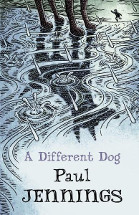
(Age: 6+) Highly recommended. Grief, Animals, Dogs, Survival,
Courage. Jennings introduces his readers to a boy who can no longer
speak. He and his mother lives near a town where she does fruit work
to keep them going. The boy had a dog, Deefer, but he had been
killed by the next door neighbour after the animal killed some ducks
on his farm. Since then the boy has been unable to talk.
He tries to enter a competition nearby to win some money to help his
mother, but in climbing the mountain to the start of the race, he
sees a van roll over the cliff and into the ravine. He goes after
it, finding that the driver has been killed, but has left his dog.
He and the dog make their way back home, through the dense, dark
forest and over a ramshackle railway bridge, the boy puzzled that
the dog can no longer walk, until he realises that this is the dog
from the circus, trained to do tricks. He learns not to use some
commands, like freeze and sit and decides to make the dog unlearn
these.
Twelve months later the boy and his mother receive a visitor who
insists that the dog is a circus dog and wants to have him back.
This poignant story of a lonely boy and his mother will resonate
with younger readers. The boy who has no voice lives in straightened
circumstances, the children at his school bully him, and now that he
cannot speak, their torment is merciless. Meeting a dog that cannot
walk, brings all of his courage to the surface as he carries the dog
through the forest and back to his mother.
The illustrations by Geoff Kelly add to the atmospheric tale of
courage overcoming adversity.
Fran Knight
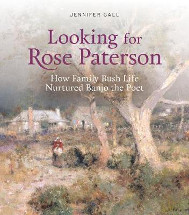
Looking for Rose Paterson: How family bush life nurtured Banjo the poet by Jennifer Gall
National Library of Australia Publishing, 2017. ISBN 9780642278920
Highly recommended. Themes: 19th Century Australia; Pioneer life;
Women in Early Australian history; Banjo Paterson. This is an
absolute gem! Jennifer Gall discusses the life and letters of Rose
Paterson, the mother of Banjo Paterson, and has allowed us to enter
into the daily life of a woman of wit and incredible fortitude. Rose
was born in 1844, and the times were very different for women.
Jennifer Gall makes comment on the strengths and circumstances of
this amazing woman - one among many of the time - whose documenting
of her life and family circumstances in rural NSW, in her letters to
her younger sister, gives us a glimpse of the limits and
restrictions of women of the times, and also their joys. Because of
a series of difficult financial circumstances her family wealth was
not what she might have expected. She was bound to be financially
dependent on her husband, with a continuous responsibility for
making a home suited to raising a growing family, and having sole
responsibility for the education and welfare of those children while
her husband was away. Into this social position, with the added
impositions of limited healthcare, domestic burdens, and implied
loneliness, we meet a woman of intellect, who is a faithful and
lively correspondent to her sister.
Jennifer Gall has unwoven the one-sided conversations from the
thread of her letters and put them into a historical framework, but
she has also revealed the attitudes and humanity of the mother of
one of Australia's iconic Bush poets. The collection of photographs,
art reproductions, historical sources, Banjo Paterson poetry
references and excerpts from the letters (alongside copies of those
Primary sources) is a historical treasure. And this is so
pleasurable to read! The discovery of Banjo Paterson's influences
and his upbringing is worth reading, as is the brief glimpse into
farming, childbirth, education, social life and women's rights from
the very personal perspective of one woman in the late 1800s.
Carolyn Hull
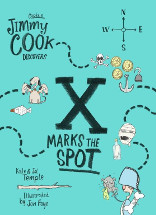
Captain Jimmy Cook discovers X marks the spot by Kate and Jol Temple
Ill. by Jon Foye. Allen and Unwin, 2016. ISBN 9781760291945
(Age: 10+) Highly recommended. Humour. Australian history. School.
Jimmy Cook and his friends gather together implements to dig a hole
behind the toilet block at school. Jimmy has found a dinosaur
footprint and being the explorer that he is, wants to dig for
dinosaur bones. He has already picked out names for this new
species. Only Conrad brings a spade so the trio goes to the
maintenance shed where they borrow several spades, but while there
Jimmy's eagle eyes spy out a map of the school with a large X on it,
and he knows X marks the spot where buried treasure lies. They are
off an adventure once again, and just as well Jimmy keeps a journal
of their exploits. Fans of this inventive 'descendent' of James Cook
will understand the journal that is kept daily, marking the weather
and various objects pertinent to their deeds. But the whole school
gets wise to their digging and soon the playground and school
surrounds is a mess of holes.
The accompanying wonderful illustrations which dot the pages are a
treat. This book, the second in the series will increase the numbers
of followers of Jimmy Cook.
Fran Knight
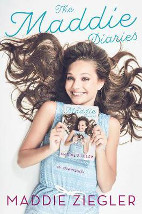
The Maddie diaries a memoir by Maddie Ziegler
Harper Collins, 2017. ISBN 9781460753750
(Age: 11+) Biography. Maddie Ziegler was born in 2002 in the US and
commenced dance lessons at an early age. She started appearing on
the US reality show Dance Moms at age 8.
The singer Sia a fan of the show, detected something special in
Maddie and asked her to appear in Sia's video of the world wide hit
song Chandelier. Since then Maddie has become known world
wide and has appeared in all Sia's videos.
This memoir charts her journey to stardom in a chatty and readable
style. Maddie comes through as a thoroughly nice, grounded hard
working young person. It highlights her awe at working with famous
actors, singers, choreographers. Her fame continues to spread with
her work as a judge on 2016 show So you think you can dance: the
next generation and touring with Sia in the US and Australia.
The book includes lots of drawings by Maddie - another of her
talents - and coloured photos.
At the end of most chapters a section on Dear Maddie, where
questions related to teenagers (bullying, self image, problems with
parents/teachers, etc) are answered in a positive and empathic
manner.
Hints on make up, clothes, etc are included as well as sections
where friends and colleagues write about Maddie. Sia (whom Maddie
now considers as family) provides the Foreword.
This is a positive uplifting memoir from a very young hardworking
star. The memoir will appeal especially to 11+ aged girls and all
those interested in dance.
The book is a New York Times best seller.
Ann Griffin
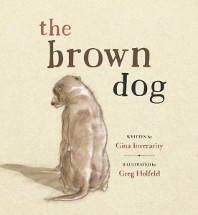
The brown dog by Gina Inverarity
Ill. by Greg Holfeld. Working Title Press, 2017. ISBN 9781921504747
(Age: 5+) Recommended. Depression, Mental health. When the brown dog appears at his house, Henry knows he usually only stays for a day or so, then goes off somewhere else. But this time the dog stays. He sleeps on the end of his bed, and stops Henry from doing things he likes doing. When Sam next door asks him to play football Henry's response is 'Nah, not today, sorry'. When Dad suggests riding his skateboard, he declines, with 'not right now'. Sometimes the dog lays in front of the door, stopping him from going to school, and sometimes the two sit under a tree, Henry pretending to read while others play.
Readers will easily make the parallel between Henry and the dog. The dog is a metaphor for how Henry is feeling and children will recognise the times when they feel low, or a friend feels sad.
The wonderfully sombre pen and ink wash illustrations, reflect Henry's mood as he rejects all attempts about him to lighten his mood. The dog is a marvelous tool in the story, reflecting Henry's mood but also adding a sense of friendship to the boy who rejects all else.
Holfeld's illustrations of the boy at the start of the book, sad, sedentary, alone, are stunning. Children will easily articulate words which describes how Henry is feeling. When his grandfather comes the feeling lifts a little. Henry and the dog are pleased to see him, movement is shown on each page, Henry is no longer still and quiet, and there is a little colour on each page.
What a wonderful vehicle to discuss issues in the class, The brown dog can be linked with several others about depression which have been published recently for children: I need a hug (Aaron Blabey) Huff (Anna Walker) and Blue whale blues (Peter Carnavas)
And the last line, 'it's my move, Grandpa' is redolent with meaning.
Fran Knight
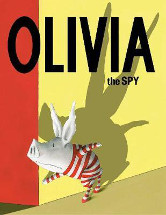
Olivia the spy by Ian Falconer
Olivia series. Simon and Schuster, 2017. ISBN 9781471164224
(Age: 5+) Highly recommended. Spying. With seven books about Olivia
published, children will be thrilled to see another outing for this
wonderful character.
Olivia is in her mother's bad books, again. She has used the blender
to make a blueberry smoothie, but in spite of being told to be
careful and not overfill the appliance, she does, and it splashes
all over the kitchen leaving a ghostly outline of Olivia on the
wall. She puts dad's white shirts in the washing machine with her
red socks! The reader knows she is in trouble, and will snigger
happily anticipating where the story may take them. She overhears
her mother on the phone, complaining of Olivia's lack of foresight,
asking whether she will ever grow up, and suggesting that she might
have to be sent somewhere else to find some sense. Olivia finds that
she is interested in what her mother says, and resolves to listen in
whenever she can. She becomes a spy, and blends in with her
surroundings to overhear conversations.
Readers will laugh out loud at her attempts to remain hidden,
pointing out her features concealed on the pages.
But of course she hears something which is upsetting, she overhears
the word 'institution' and asking her teacher next day what this
word means, finds that sometimes it means a prison.
She is distraught and so when her mother tells her she has a
surprise and to get ready to go out, she is ready to be sent to
prison. Imagine her delight when it is the ballet they come to see,
but there is another twist in the tale for readers, as nothing
Olivia does is straightforward. A cautionary tale told in the most
delightful way, Olivia's adventure will have readers laughing out
loud as they recognise the adage 'eavesdroppers never hear anything
good about themselves'. Wonderful illustrations compliment the
story, showing Olivia in all manner of disguise as she attempts to
avoid being seen.
Fran Knight
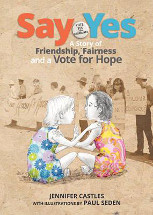
Say yes: a story of friendship, fairness and a vote for hope by Jennifer Castles
Ill. by Paul Seden. Allen & Unwin, 2017. ISBN 9781760294670
(Age: 8+) Recommended. Voting. Referendum. Australian history.
Aboriginal history. The story of the 1967 referendum which gave
Aboriginal people the right to be included in the census as well as
the right to a federal government making laws on their behalf is
given in this non fiction story told through the eyes of two
friends. It seems a sorry thing that Aboriginal people were not
included in such basic rights prior to 1967 and will, I imagine,
shock many readers.
An event that occurred fifty years ago is revisited here with the
question of how much things have changed for Aboriginal people. Two
young girls sit together on a hot summer's day but when they decide
to go to the swimming pool, one is not welcome. They go to the
pictures but again, one is not welcome. When her grandmother is ill,
and the family tries to board a train to go and see her, they are
told they are not allowed to leave their state. Basic things but the
law of the time restricted what Aboriginal people were allowed to
do.
As a consequence, two women in particular stood up and demanded that
the law be changed. Jessie Street and Faith Bandler were at the
forefront of the referendum debate, asking for change to occur. An
overwhelming number of Australians (90.77%) voted yes to the
question put to them, and as a consequence, Aboriginal people are
included in the census and laws made by the federal government apply
to them as citizens of Australia.
In this simply told tale, it is salutary to see that such laws
existed, that Aboriginal people were not seen as Australian
citizens, and so to ponder the question about how far things have
changed.
Fran Knight
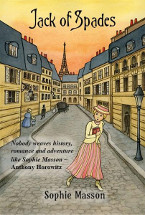
Jack of Spades by Sophie Masson
Eagle Books, 2017. ISBN 9780994528001
(Age: 13+) Recommended. Mystery. France. Historical fiction. Spy
stories. Mystery, spies, hints of romance and adventure are linked
together in this drama for teen readers. Sophie Masson has set this
story in 1910 France and has introduced a young British heroine
(Rosalind, or as she prefers, Linda), who is unwittingly seduced
into a political mystery involving potential 'terrorists' keen on
destroying the socio-political status quo. Linda's father, a
renowned Shakespeare expert, has gone missing. Linda's impressive
common sense and independent thinking, with her ability to read
clues and interpret meaning is put to the test. Who can she trust,
and is her own life in danger?
This book is written in a style reminiscent of early 20th century
crime or spy novels. The opening chapter is perhaps a little
'clunky' as Masson attempts to give background detail in order to
introduce Linda and the 1910 setting. But the action ramps up
quickly and the suspense and dramatic urgency (with a small dose of
humour en route) is interlaced into the spy scenarios. Without the
sophistication of an adult spy novel, it will still appeal to young
readers who will connect with the young, intelligent protagonist. It
is suited to readers aged 13+, with some capacity for understanding
political movements that might lead to terrorist action with
murderous intent (eg Fenians, Nihilists), but who enjoy mystery and
adventure. The 1910 setting adds appeal, simply because it is a
reminder that the world used to have to function without mobile
phones, internet and email and the rapid spread of information. A
spy novel in this time was heavily reliant on mailed letters!
Carolyn Hull
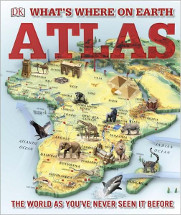
What's where on Earth? Atlas ed. by Chris Hawkes
DK London, 2017. ISBN 9780241228371
This is an ideal reference tool for young readers who want to see
the world at a glance, rather than having to click through screens
that can become confusing and lost. Clearly divided into 10
sections - each continent, Early Earth, Polar Regions, The Oceans
and Reference - it brings the planet's geography alive with 3D maps,
lots of pertinent facts and illustrations about the landscape,
population, landmarks, climate and wildlife. Each section also
takes a particular focal point and expands on it - South America is
the Amazon Basin; Australia and Oceania is New Zealand - providing a
ready reference tool that kept both Miss Nearly 11 and Miss 6 poring
over its pages on a recent wet afternoon.
Globes and maps have a fascination for children - they love to
discover where they came from, where their family and friends might
be and also the settings of their favourite stories so to have a
book that provides not just maps but so much more is a treat.
While many school libraries are doing away with their reference
collections, having a beautiful volume like this on permanent
display so students can flick through it at their leisure will not
only grab their attention but may have them demanding more
information about a particular region.
Miss Nearly 11 was particularly fascinated by the Early Earth
section as she knows Australia is ancient and we regularly drive
through an area littered with huge granite boulders, the remnants of
long ago mountains now weathered away. Miss 6 liked Australia
but also New Zealand where she had a holiday in 2015!
Definitely something for everyone which would be a superb addition
to the collection that students will keep returning to.
Barbara Braxton
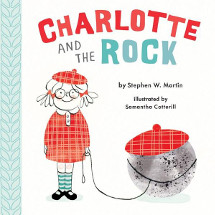
Charlotte and the rock by Stephen W. Martin
Ill. by Samantha Catterill. Random House, 2017. ISBN 9780143785309
Like many young children, Charlotte wanted a pet. She didn't care
what sort of pet, even a pig would do, so she was very surprised to
see what her parents bought her for her 6th birthday, it wasn't a
dog, or a cat, or a hamster or even a pig - it was a rock! A large
rock.
Even though it wasn't quite what she expected, nevertheless she
tried to remain positive and look for its good points. It was a good
listener, quiet, easy to train, and hypoallergenic. But it was
tricky to take it for walks, and wouldn't eat her broccoli and the
teacher didn't believe her homework excuse. But being resourceful
she soon learned to make the best of her pet and learned to love it.
She would just like it if it could love her back. And then one night
...
Even though the rock appears to be an inanimate object, both
Martin's text and Catterill's illustrations give it a life through
Charlotte's interactions with it. There is subtle humour in this
story that will appeal to young readers, especially as Charlotte
attempts to take her rock for a walk and for a swim, and there is
more to discover with each reading. This is a story about dealing
with the unexpected, looking on the bright side and being careful
what you wish for. It is positive and uplifting and will bring a lot
of joy to young readers.
Barbara Braxton
Beyond the bright sea by Lauren Wolk
Corgi Childrens, 2017. ISBN 9780552574303
(Age: 10+) Highly recommended. Historical. Belonging. Sometimes a
book comes along that lingers in the mind and Beyond the bright sea
is one of those wonderful lyrical and heart wrenching stories.
Twelve-year-old Crow was found drifting in a small boat when she was
just a few hours old. Rescued by Osh, a lonely man, she has been
brought up by him and Miss Maggie, a neighbour across the sandbar.
She is a curious person and when she sees a fire on the island
across the water, she begins to piece together her own history. Her
discoveries lead her and her companions into danger, as the mystery
of her birth and the strange occurrences on the island of Penikese
in Massachusetts begins to unfold.
Beautifully described, the life that Crow leads on the island in the
1920's comes alive. She is intelligent and intuitive and really
wants to know where she came from and why many people avoid her. She
is dearly loved by Osh and Miss Maggie but discovering why she was
set adrift as a new born begins to obsess her. As she uncovers the
truth surrounding her birth, she also begins to understand the true
meaning of family and belonging.
At the same time, Wolk has woven in a mystery surrounding Penikese,
the island that had been the home of lepers in the past. Crow is
integral in solving who is the evil man haunting the island and what
has happened to long lost pirate treasure.
The Note at the back of the book details the research that provided
the background of the leper colony and the shipwrecks that occurred
in the seas surrounding the islands.
Beautifully written, this is an outstanding story. With its focus on
belonging, identity and prejudice it would make a wonderful read
aloud or a class novel or literature circle novel.
Pat Pledger
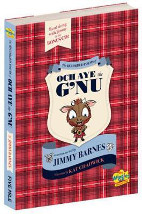
The recorded poems of Och Aye the G'nu by Jimmy Barnes
Ill. by Kat Chadwick. Five Mile Press, 2017. ISBN 9781760407070
Hardcover, 96 pages and CD
(Age: 4+) Recommended. The Recorded Poems of Och Aye the G'nu
is a wonderful collection of funny, rhyming stories written by Jimmy
Barnes in collaboration with The Wiggles. From the inviting tartan
cover to the bonus CD with Barnes's distinctive voice and animated
reading, accompanied by musical trills and interludes, this is a
delightful experience. Kat Chadwick's fun line drawings bring the
characters to life.
Young Och Aye the G'nu is a talented wildebeest who loves to sing,
dance and play the bagpipes, dressed in his Scottish kilt. He is a
crowd pleaser who enjoys the accolades of his fame, and even the
Queen and the Prince and the Great Grand Wazoo love to watch his
antics. 'Every wildebeest needs a good friend who is true' and Kanga
fits this supportive role very well. He is there to cheer him up
with African songs when Och Aye is missing his homeland and even to
share food and blankets.
In seven easy to read chapters Och Aye experiences a sea cruise,
buys new shoes, gets the flue, sings the blues and celebrates a
birthday.
Listening to the CD adds to the fun and excitement of sharing these
humourous tales, perfect for families and classes as they join in
and predict the rhyming words. The Recorded Poems of Och Aye the
G'nu is ideal for a young reader to develop their confidence
and independence. A wonderful text to use for Early Years English,
students can build on their understanding of patterns of repetition,
and use the writing style to create more adventures for Och Aye and
Kanga.
Rhyllis Bignell
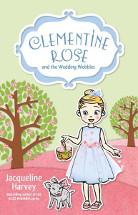
Clementine Rose and the wedding wobbles by Jacqueline Harvey
Ill. by J. Yi. Penguin, 2017. ISBN 9780857987907
(Age: 6-10) Highly recommended. Themes: Weddings, Family Life,
Mothers and daughters, Mysteries, Film making. Penberthy House is
buzzing with excitement; everyone is busy with the wedding
preparations, the presentation of Basil Hobb's film documentary on
historic homes and of course there is another mystery to solve.
Clementine Rose is positively 'fizzing with excitement', she is
nervous about introducing the film in character as her great
grandmother and concerned about the possibility of her flower girl
dress not being finished on time. Clementine's great Aunt Violet
changeable character and secretive actions cause some concern as
well. One minute she grumpy and hiding secret letters and the next
she's busy dashing through the countryside chasing the missing
wedding flowers.
Harvey's characters are wonderfully named, beautifully described and
imbued with range of enjoyable qualities. Of course, there is the
over-the-top wedding planner extraordinaire Sebastian Smote, whose
visions include an aviary filled with doves and a cherub fountain
for the front garden. He greatly tests Aunt Violet's patience as
well. Why does she become overly protective of young Clemmie and why
does the mysterious guest from Sweden threaten their family's
happiness? The wedding celebrations, the ceremony and reception are
a delight to read; there is the delectable wedding feast, the
stylish dancing, the dessert dilemma and Clementine Rose's near
disaster with her flower girl dress.
Jacqueline Harvey's series are extremely popular, as they contain a
perfect mix of adventure, fun, mystery and excitement. In this
thirteenth novel in the series, Clementine Rose finally understands
more about her family origins and realises that a true family is all
about those people who love you and care for you.
Rhyllis Bignell
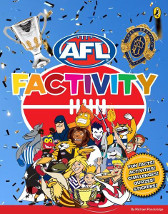
AFL Factivity 2 by Michael Panckridge
Puffin, 2017. ISBN 9780143785330
For those who follow AFL this bright colourful, carefully
constructed factivity book is the ideal accompaniment as fans of all
ages can test their knowledge, learn new things and participate in
some brain-tingling activities that focus on their favourite sport.
Some of the activities are challenging, such as writing a player
profile for the back of the Crunchy Crispies cereal pack; others
will require some research while there are also the usual word
searches and the like. However, it can also be used as a teaching
resource as many of the activities can be made open-ended, having
students apply the challenges to a sport of their choosing or to
have them create a similar challenge for their chosen sport.
Developing your own crossword involves a lot more than just
completing one.
Hooking kids into learning by engaging them with their passion is a
surefire way of getting them to learn-by-stealth so even the most
reluctant readers can find something that will help them understand
reading does have a purpose, it can be fun and it IS for them. A
double sheet of stickers at the end could add to the motivation!
Barbara Braxton
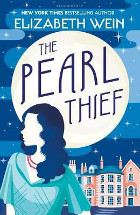
The pearl thief by Elizabeth Wein
Bloomsbury, 2017. ISBN 9781484717165
(Age: 14+) Highly recommended. Crime fiction. Scotland. Historical
fiction. Prejudice. When Julia returns from Switzerland to help her
family clear out her grandfather's estate before a school takes over
the house, she arrives a few days early and goes for a walk in the
valley, aware it will be for the last time. But she wakes three days
later in hospital, hair shaved and a blinding headache, while the
nursing staff treat her with contempt. She was found unconscious by
a group of Travelers and the resultant newspaper headline and her
scrappy clothes did not endear her to the hospital staff. Prejudice
against the Travelers was well ingrained in the 1930's. But back at
home, where she and her family are living in just a few rooms while
they pack, she finds that her Grandfather's pearls are missing, the
pearl price paid by the Travelers generations ago to use the land
each year, along with those he found in the waterways on their
estate. But when the curator sent from Oxford to catalogue the
estate's trove, also vanishes, Julia begins to take a closer
interest in the artefacts and the man's disappearance. With her
memory of the circumstances when she was struck slowly returning,
she puts herself in danger. She wants to find out what happened to
her, and in trying to find more evidence in the water where she was
when hit, finds a jar with the stolen pearls. She and her brother,
Jamie, alone with the Traveler twins Euan and Ellen who rescued her,
make a decision about what to do with the pearls. And again they are
all in danger.
With a wonderful setting amongst the hills in Perthshire this page
turning story with hints of the nineteenth century stories of
Stevenson and Scott, as well as nods to Robbie Burns, the tale will
appeal to mid secondary readers who relish crime stories. With
elements of a cosy but full of rounded beguiling characters, a touch
of romance and a style which will remind readers of Agatha Christie,
Patricia Wentworth or Dorothy Sayers, this is
a prequel to the highly successful, Code name Verity, and Rose
under fire. The pearl thief will delight readers with
its setting, construction, characters and plot twists. Wein cleverly
shows the changing attitudes to women through Julia and Ellen, and
their changing circumstances reflect the changes in society as a
whole, as the titled family moves from its ancestral home, and the
Travelers find it difficult to find a place to camp.
Fran Knight