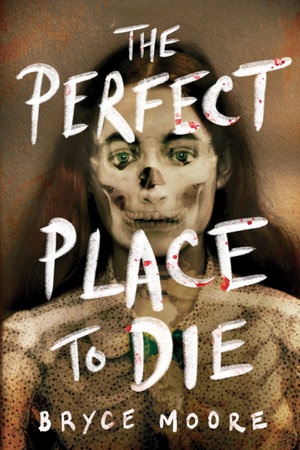
This young adult book tells the story of a young girl who escapes her abusive father to find her missing sister. In 1890’s Chicago it is hard for a young girl to be listened to by men.
Zuretta is determined to find her sister Ruby who has disappeared. Everyone keeps telling her that she has just run off and forgotten her, but Zuretta refuses to believe it and is determined to find out what happened to Ruby. She learns very quickly that not everyone is who they seem, and it is important to be careful who you trust. Zuretta does, however, find someone to help her with her search for her sister.
The mysterious Castle where she finds herself working appears to have lots of secrets, mysterious rooms and doors that go nowhere.
Eash chapter starts with a note from the killer, and this adds to the intrigue as you try and work out who it is. The suspense in this book it well written and keeps you guessing right to the end, with several twists that are unexpected.
This is a well written book that draws the reader in.
Through the twists of chance, a young boy in North Korea, 1991, comes into the possession of a strange book left behind by a rare visitor to the country, a book whose cover depicts a giant red troll abducting a near naked woman. It is the ‘Dungeon Masters Guide’, the core rule book for the game of Dungeons and Dragons. The images within the comic frames arouse Jun-su’s curiosity, and he determines to learn English in order to understand it better. Thus starts a journey that will lead him to the glory of recognition as a linguist and poet by the Supreme Leader, and then to the downfall of imprisonment and torture. The book changes Jun-su’s life in ways that he could never have predicted.
Theroux has actually been to North Korea as part of a strictly supervised tour by a delegation of journalists, with the climax of the visit, the Mass Games celebration of the country’s 70th birthday. In his video he comments on how he was never sure whether what he was seeing was real or just for show. In Theroux’ novel The sorcerer of Pyongyang, Jun-su has been brought up with the myths that glorify the Great Leader Kim Il-Sung, and Dear Leader Kim Jong-Il. People ascribe to the propaganda and live in fear of ever being caught out as irreverent or unfaithful. Behind the façade of the happy dedicated Korean life is fear of being arrested and sent to labour camps. The guide book to Dungeons and Dragons also introduces a fantasy world but it is one where the game players can choose their own adventure, undertake heroic deeds and slay monsters. It fascinates Jun-su; he and a core group of friends enjoy exploring the game. However, as one astute student points out, Jun-su appropriates the role of mastermind coordinator of the challenges.
In the Korean world controlled by the Supreme Leader there is no freedom, no adventure. Instead there is an ever-pervasive fear of false allegation, betrayal and disappearance. The fear is overwhelming; no one is immune to coercion, not even a mother or a lover. Betrayal leads to nine years imprisonment for Jun-su, with torture and labouring in a re-education camp.
Theroux has based his novel on stories collected from refugees who have managed somehow to escape from North Korea. That, combined with his own experience of visiting the country, provides a compelling insight into the totalitarian state, its mix of subservience and fear, and the power of propaganda. The sorcerer of Pyongyang combines aspects of fantasy, romance and thriller; at the same time providing insight into the reality of life for people in a very different, highly secretive society.
Themes North Korea, Totalitarian state, Fantasy, Propaganda, Surveillance, Fear.
Helen Eddy
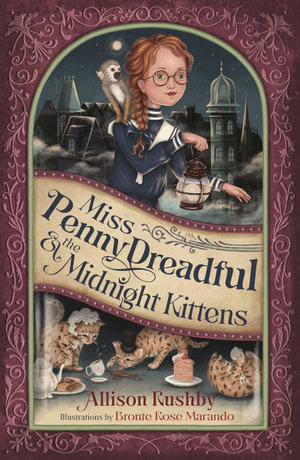
Miss Penny Dreadful & the Midnight Kittens by Allison Rushby. Illus. by Bronte Rose Marando
Nabbed again for drawing images of her teachers in her notebook, Penny is summoned to the Head Mistress’s office where she is met by her Aunt Harriet an adventuress and author, and her companions, a squirrel monkey called Jones and a strange spider-limbed man called Mr Crowley. They face the dreaded Miss Pugh and Harriet simply asks Penny if she likes the school. The decisive answer causes Harriet to extract Penny from the terrible school, taking her on the road to adventure. The first of these involves a group of kittens who come to life at midnight in Mr Toddington’s Museum, a collection of the strange and macabre. Penny and Harriet wait at midnight to catch a glimpse of the supposed bewitched kittens after seeing them during the day, a group of neatly arranged stuffed animals. But at midnight they indeed do come alive, cavorting in their display case, playing with each other. But Penny recalls her teacher’s mantra, use your logic, do not believe everything you see. And in looking more closely she helps to uncover a fraud.
Finding a sobbing girl in the stables early that morning, she spies the live kittens, about to be taken by a taxidermist because they have grown too big to be in the display. While Aunt Harriet is busy writing her next instalment, Penny takes charge, wanting to expose the fraud and save the girl from further sadness. She takes Lucy to see Lord Linkford who she met yesterday explaining loudly about the beauty of the stuffed animal museum and they strike a deal. The deal satisfies them all, except perhaps Mr Crawley and his associates.
A marvellous adventure story, steeped in the curious, will appeal to a wide audience, wanting sharp characterisation and an involved, winning, well told plot. And the first in a series adds to the thrill.
Themes Orphans, Adventure, Fraud, Taxidermy.
Fran Knight
Sugar by Carly Nugent
Text Publishing, 2022. ISBN: 9781922330741. (Age:16+)
Persephone has a name that is a struggle! She is also living in the pain of grief since the death of her father. Devastation seems to follow her at school and at home. And her blood sugar stats are a constant companion, and this companion is not a friend. Diabetes makes her life difficult at every turn. But it is the guilt of thinking that she could have done something to prevent her father’s death and her strange view that her diabetes is her punishment because of it, that drives Persephone’s angst. She lashes out and punches a fellow student, gets in trouble regularly at school and has a painful relationship with her disengaged and grief addled mother. When she is the first person to find a young woman dead on the walking track in the bush, her strange views on why bad things happen and what people deserve in life become even more twisted. Despite her foul behaviour (and language) she still manages to make connections with the dementia-affected woman on the bush track, with the abuse victims who are sharing the house with them, with the friend of the deceased woman and with two school aged teens who seem to accept her roller-coaster life experience.
Torment fills this book. It is a powerful journey through very difficult circumstances and in the mind of dysfunctional thinking brought on by trauma and grief. Persephone’s family circumstance and her anger and lack of acceptance of her diabetes lifestyle are understandable but very problematic. The foul angst-laden language of the young teen is very tough to read. It is so thick with swear words, from adults and teens alike, that it is unappealing. Despite that, there is a measure of hope at the end of the story, but the choices of many of the characters in the story are just awful. This is a dark story that is more like an emotional firestorm with multiple ember attacks, than a hopeful story revealing that grief does not always destroy lives completely. I cannot recommend this book because of the pain of all involved. Persephone’s lack of a considered and healthy response to diabetic control is also very worrying, although this has natural consequences in the book. Only readers aged 16+ should attempt to read this book. It is very like the moody, sombre stories from Vikki Wakefield and the fierce emotional struggle that is portrayed raises many concerns; it is dark and fraught on many levels. Teacher's notes are available.
Themes Diabetes, Grief, Guilt, Family trauma and abuse.
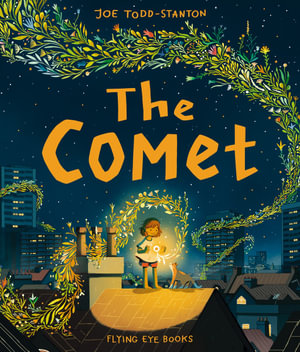
What a delightful book! Ultimately uplifting The comet traces the life of Nyla from the time when she sees stars and a comet in the sky above her country home, through a time of change when she must move to the city as her father has a new job, to when the apartment she lives in eventually becomes a home that the family loves.
Nyla is very unhappy in her new apartment in the city. Her father is very busy with his new job and does not have the time to spend with her that he had in the country. She can only see seven stars in the sky ‘and there are no sounds of waves to fall asleep to.’ One night she sees a comet falling to earth and a magical tree sprouts out of the light. Here the illustrations take over and the reader sees the most wonderful plants and flowers weaving through the sky. Then all is revealed – Nyla has painted the walls and floors and boxes in the room. At first Dad does not see that it is a comet but something magical starts to grow and the whole family turns the apartment into a home.
The illustrations beg to be examined again and again, as there are so many details to look at. I loved the double page spread turned sideways to show all the different families living in the building and the final endpapers show how happy Nyla has become in her new home. The love between Nyla and her father is heart-warming and is a standout in the book.
Joe Todd-Stanton tackles the difficulties of moving house and managing change for Nyla in a very relatable way, the narrative flowing smoothly when read aloud. The comet is picture book that could become a firm favourite at home and in a library.
Themes Moving house, Change, Comets.
Pat Pledger
Antarctica The Melting Continent by Karen Romano Young and Angela Hsieh
What On Earth Books, 2022. ISBN: 9781913750534. (Age:10+)
Antarctica is one of the most isolated and harshest environments on the planet, often referred to as "the final frontier".
From her harbourside home in the very south of the South Island of New Zealand, as a young girl in the 1930s my mum would watch the ships head southwards to the ice, literally the next stop after they left the safety of the port of Bluff. And she began to dream. In 1968, after years of dedication and hard work, she broke the "petticoat ban" and she too, joined those sailing south from Bluff - on a converted fishing trawler that was the precursor to the luxury liners of today, as Lars-Eric Lindblad pioneered Antarctic tourism and she became the first female journalist to go south.
The Magga Dan tied up at McMurdo Sound, 1968.
Fifty+ years on and it is so different - or at least the getting there is, and the presence of women is no longer a novelty and the issue of where they might go to the toilet no longer a primary barrier!
Today, in the southern summer, tourist trips leave regularly for the ice, although most often it is via South America to the Antarctic Peninsula as the crossing of the Drake Passage is usually only about two days while scientists are there all year round and women work alongside the men. So, this new book provides an up-to-date view of this isolated continent in a narrative that draws on the author's own experiences as well as extensive research and interviews with scientists, combining a unique personal perspective with up-to-date information about the land and its inhabitants, the investigations being undertaken and the discoveries being made such as studying climate change to investigating ice cores almost a million years old to learn about the history - and future - of our planet. There is still so much to learn and do and the book's scope offers many opportunities for students' interest-driven investigations.
While most of its readers probably won't have the wherewithal to afford a trip on one of the many ships that have made it a bucket-list destination, perhaps this book will inspire them to take another route under the Australian Antarctic program and dare to dream - just as my mum did all those years ago! For that truly was "Dreaming with eyes open..."
When a young woman, Skylar Edwards, is found murdered in Buckstown, Alabama, a corrupt sheriff arrests the last person to see her alive, Andy Dubois. It doesn't seem to matter to anyone that Andy is innocent. What starts off as a case of trying to get an innocent young man off of death row, turns into a much bigger and more dangerous problem than any of them had imagined.
The style in which this book is written with each chapter being written from a different characters point of view, makes for great reading. The chapters are written to reflect the different characters personalities adding extra depth to the story. it also added extra levels that keeps the reader guessing as to what is going to happen next. There were a couple of times during this book where I was convinced I knew what was going to happen next and then the story took a twist and something unexpected occurred. This is a very well written story that draws the reader in and keeps you hanging on right to the end.
This story showed how someone in power can use their power to manipulate the system to get the end they desire, even if it is wrong.
The manipulative lengths the district attorney Randal Korn went to, too achieve his goal was impressive, he was determined to let nobody get in his way, he didn’t care who he had to take out to achieve his end goal as long as he achieved his goal. All he wanted was to send someone to the death penalty.
The main characters in this book have their own unique personalities that show through adding further depth to the story. They each have their own stories that show through as they deal with the situation that is presented to them.
A very talented writer.
I highly recommend this book.
Themes Murder.
Karen Colliver
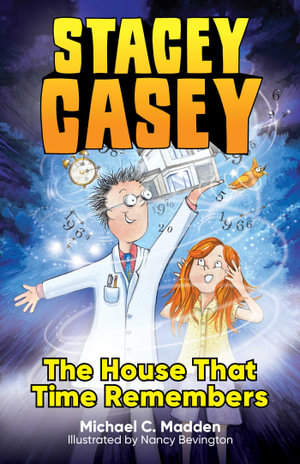
Stacey Casey: The house that time remembers by Michael C. Madden
Big Sky, 2022. ISBN: 9781922615886. (Age:7+) Highly recommended.
Stacey Casey’s father is an inventor. One morning, that started like any other Stacey’s father called her to the basement in great excitement telling her that he needed her, and she would not be going to school that day. Stacey trying to explain to her father that she had to go to school as she had a math test, but her father was not listening, he was so preoccupied with his discovery. When the doorbell rings Stacey runs to answer it finding her best friend Oliver, who follows her to the basement to talk to Stacey’s father. Suddenly there is a strange noise, and the house feels like it is shaking. Stacey’s father becomes more excited telling them that he has done it. When Stacey and Oliver question him he explains that he has created a time machine. Stacey and Oliver are sceptical as most of his inventions don’t work. Stacey tells her father that they must go to school but when Stacey and Oliver walk out of the house they are no longer in the present. They quickly go back to Stacey’s father who tells them that they are now in 1964. Stacey askes if he can get them home again and he replies he should be able to just needs to make some adjustments. Once the children get over the initial shock, they are excited to go and explore their local town as it was in 1964.
Stacey and Oliver have several encounters with famous people while they are in 1964, they also find themselves in trouble for something they didn’t do.
They finally make it home again, but I think this is just the beginning of Stacey and Oliver’s adventures.
This is a fun story written in an easy-to-read manner.
Themes Inventions, Time travel.
Karen Colliver
My Baba is the best by Bachar Houli. Illus. by Debby Rahmalia
A wonderful story about the strong relationship between a father and his daughters is presented by former AFL player, Bachar Houli. The young girl tells us about what she does with her father: a strong, bearded man who loves to be always active and doing something. He gives the best hugs, and the three are often in their backyard, keeping fit, the young girl trailing him with her bicycle as he runs. He takes the girls fishing, one of his favourite leisure activities. She has her own rod and needs help in reeling in the fish. The family sometimes go to the movies, but even better is staying home to watch a film together with a large bucket of butter popcorn. At night Baba comes into their room to pray with them as they go to bed, asking for protection while they sleep. Excitement is in the air as they prepare to go camping, the young girl writing a list of what they need to take. On the way she feels carsick and so must sit in the front seat with Baba! Once there, they put up their tent and prepare wood for the evening fire, making sure they each have a good stick on which to toast the marshmallows.
Each activity is shown as a collaborative effort within the family, underlining its strength and durability, recognising the special bond between fathers and daughters.
At night they play card games with the help of their head torches, and go to bed watching a kangaroo that comes to inspect their campsite.
A loving look at the father-daughter bond just in time for Father’s Day in September, is a delight. Smiling happy faces beam out from every page as they do so many thing together. Kids will love recognising the things they do with their fathers, and tell stories of what makes their father the best.
Indonesian artist, Debby Rahmalia gives a wonderful authenticity to the portrayal of a Muslim family, with the visit to the mosque, their participation in Eid after Ramadan, their visits to relatives after Friday prayers and the family prayers at night. Readers will be eager to find out the meanings of some of the unfamiliar words which dot the story, but finding that the family presented is not that much different from their own.
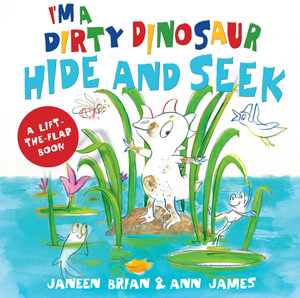
Fans of I’m a dirty dinosaur and I’m a hungry dinosaur will be immediately attracted to another story about the little dirty dinosaur, this time aimed at the very young in a lift-the-flap, sturdy board book format. The dirty dinosaur is looking for his friends, Bird, Bee, Frog and Fish, and little fingers must lift the flaps to see if they are hiding behind them. Each double page spread has two flaps, one with the dirty dinosaur’s friend hiding behind it and another with the words 'Not here!' The repetition of 'Not here!' will be enjoyed by children who will love to call it out and useful for beginning readers.
The rhyming story makes the book lovely to read aloud. Children’s vocabulary will be enhanced while gaining vivid images of the dirty dinosaur’s friends from phrases like this:
Where is Fish? Quick and slippery. Silver tail flippery.
Ann James’ illustrations are very appealing. The little dinosaur, with his cute face, cheeky grin and wide eyes prances through trees and flowers, stops by a pond strewn with water lilies and finally can be found making a huge splash on the final page. The soft pastel drawings are outlined with black crayon and minute details like little dragonflies and snails crawling up reeds will intrigue readers.
This is a lovely activity book that will intrigue and interest little children.
Themes Humour, Dinosaurs, Hide and seek, Read aloud.
Pat Pledger
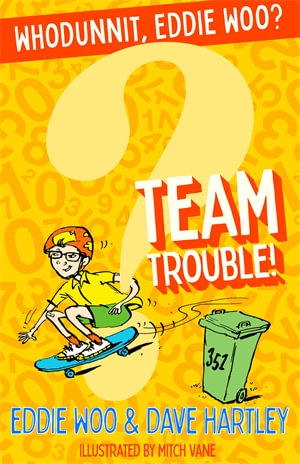
Team Trouble! Whodunnit, Eddie Woo? by Eddie Woo & Dave Hartley
Pan Macmillan, 2022. ISBN: 9781760983000. (Age:7+) Highly recommended.
In Whodunit, Eddie Woo? Team Trouble Eddie Woo has collaborated with author Dave Hartley, to write an adventure book full of problem solving and super-sleuthing. This story begins with the three best friends, Eddie, Rusty and DT practising their skateboarding skills. This is one area that super-sleuth Eddie does not shine in and as the friends are entering the school’s annual Triple Threat Quest, a competition where teams compete across three subjects: performing arts, academics and sports, Eddie has to prove he will be an asset to the team.
However, there is a more pressing problem at hand. The nursing home where family friend Mr Appleby lives is suddenly being closed down within the week. The nursing home has been bought by Blade Industries and the regular staff have been replaced by dubious carers. Mr Appleby secretly leaves clues for Eddie, Rusty and DT, and along with unexpected support from Eddie’s parents, they have a task in hand to find out the sinister side to Blade Industries. When it is realised that the number of Swift Parrots have begun declining dramatically from the area where the care home is, it is up to the Super Sleuths to investigate and prove that Blade Industries is involved in illegal bird smuggling.
Both this book and Whodunit, Eddie Woo? Time Out! are wonderful reads for middle grade students who enjoy humour and action, and those older readers who are challenged by more lengthy novels. The illustrations are perfectly placed and the use of a variety of different text presentations keeps the reader engaged.
Themes Friends, Humour, Problem solving, Mathematical Clues, Adventure.
Kathryn Beilby
Dancing with memories by Sally Yule. Illus. by Cheryl Orsini
With its heart firmly in a teaching mode, this educative story will be used in many classrooms and homes where dementia is the topic for discussion. And used alongside such timeless books as Mem Fox’s Wilfred Gordon MacDonald Partridge (1997) and Phil Cummings’ Newspaper hats (2016) children will get some idea of what has happened with their older family member.
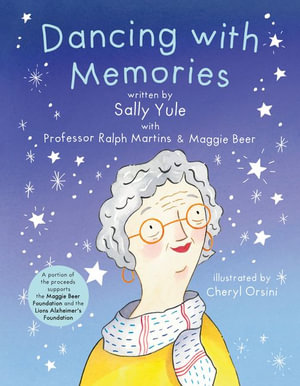
Sally Yule working with Professor Martins has created a story of an older woman and her dance with memories. Memories that come and go, memories that are sometimes foggy and sometimes clear. She has her favourite walks, knows her neighbours and parks, and routinely walks to the park to meet her friend and his dog. She remembers that her family loves her. She remembers her grand daughter’s wedding is today and so sets off. She has forgotten that her daughter is calling for her. She boards the bus then finds she is in a an unfamiliar place. But walking further finds she is not far from home.
Here she meets her daughter and they set off for the celebration, where she remembers to dance at the wedding.
This charming story with a very happy ending will have wide appeal to younger readers who will be able to relate stories of someone they know who has a failing memory. Notes at the end by Professor Margins help give information about this disease, Dementia, and will help younger readers understand the disease that they see in their family.
Illustrations by Cheryl Orsini are most inviting, showing an older woman and her routines. I love the double page which shows what she can remember: she walks and writes, gardens and sings, sometimes cries and laughs. An appendix by Maggie Beer emphasises the colourful, diverse diet needed by the very young as they develop, and this is followed by a number of recipes which promote this, giving variety to school lunch boxes.
Themes Diet, Dementia, Ageing, Recipes.
Fran Knight
Haven: A small cats big adventure by Megan Wagner Lloyd
Homeless kitten Haven is enticed by the smell of baking bread and stumbles into Ma Millie’s house to find a safe and loving home. Haven enjoys her protected life in Ma Millie’s isolated cottage which is situated at the edge of the forest, until Ma Millie becomes very ill and can no longer care for Haven or herself. Haven manages to leave their home in search of help and attempts to find assistance from their nearest neighbour Jacob.
Haven’s adventures take her back through the dangerous forest, the home of the fox and the bobcat. The fox helps Haven and decides to be her ally, assisting her quest to visit the town and track down help. Their adventure proves to be full of dangers and unknowns with the domesticated Haven unaware of the wider world but even a fox is not safe when a wily bobcat is on the hunt.
Haven and True (the fox) develop a close friendship but Haven will still eventually have to face the hardest test of all-by herself.
Megan Wagner Lloyd is the author of the graphic novel, Allergic and has written several picture books including Finding Wild.
This small novel deals with issues such as friendship, trust and self-confidence. There is a death in the story but this is handled with sympathy and understanding.
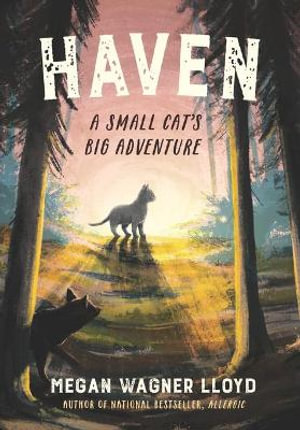
The appealing cover features both Haven the cat and the fox and the text is broken up into 38 small easy to read chapters.
I recommend this book to readers aged 7 to 10 years.
Themes Friendship, Trust, Self-confidence.
Jane Moore
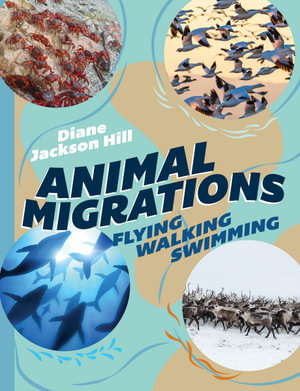
Animal Migrations: Flying Walking Swimming by Diane Jackson Hill
Retired Australian Primary School teacher, Diane Jackson Hill, has written an entertaining book about animal migration that will appeal to primary school aged children in both Australia and beyond. This informative and attractively presented book provides snapshots of migrating animals from across the globe. The journeys are long, dangerous, and often arduous yet will surprise the reader with how complex and determined each species is to reach their destination.
The book begins with gorgeous endpapers in soft pastel colours and tiny white images spread across the pages. This is followed by an acknowledgement of First Nations Peoples, the Gunditjmara of the Victorian south-west region, and the Canadian Plains Cree tribe Elder Dr Winston Wuttunee. The contents page has ten chapters listed, beginning with ‘What is animal migration’ and ending with ‘Helping Hands’, a chapter that looks at how humans can help. In the final pages is a world map, further reading and resources, glossary and index.
The author has shared the incredible journeys of mammals such as the Straw-coloured fruit bats that fly in a colony of approximately 10 million from the Congo to Zambia to feed on a particular ripening fruit, birds like bat-tailed godwits that fly 11000kms in nine days non-stop and insects such as the well-known Monarch Butterfly that flies 3000 kms south to miss the freezing winters in North America. Each and every journey is fascinating. The presentation of the information works perfectly for younger readers with stunning well-captioned glossy photographs, text and fact boxes clearly differentiated, plus tables, diagrams and clever graphic-style images.
This book would be a valuable resource for a home, school or public library. Teacher resources are available.
Themes Global Animals, Migrations, Tracks, Threats, Survival.
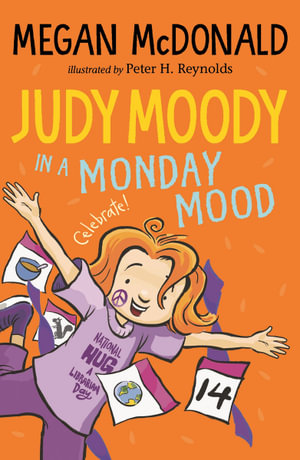
Judy Moody in a Monday Mood is the sixteenth book in the much-loved series Judy Moody, written by Megan McDonald. This story is filled with fun and amusement, but be prepared, ‘cos Judy Moody is in a mood!
Judy Moody has woken on a Monday and she is being mopey. Who likes Mondays? Mondays aren’t Saturday pancake days, and Mondays aren’t anything exciting days. But when she goes to school and it turns out that this Monday is unlike any normal Monday, she is inspired. This Monday turns out to be a day when her year 3 teacher, Mr T has decided to mix things up a bit and today turns into a pop, pop, popping great day. This gets Judy thinking up some great ideas. Why not mix things up every day, and create special days all the time?
Judy, with her brother Stink, get together and think of different special days to celebrate throughout the week and have some fun. But what happens when you get to a fun day like Saturday? Can you possibly think of a day that will make your Saturday even ‘funner’?
Megan McDonald has created another light-hearted and entertaining story that is engaging and moves quickly for one venture to the next. Complemented with excellent illustrations by Peter Reynolds to provide further enjoyment, young readers will not be disappointed. This would make a suitable read for children who are past the emerging novel stage and looking for a slightly longer text. Featuring many illustrations, this text is not too overwhelming, and combined with larger, well-spaced out print, it makes for an easier intermediate read. For young children who enjoy a character with a bit of spunk and ingenuity, Judy Moody should not be missed.