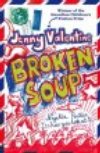
HarperCollins, 2008 ISBN 978000722965 9
(Age 14+) Rowan's mum is a vegetable, filling herself with medication to stop the
pain of her son's death, while Rowan keeps the house in order, cares
for her 6 year old sister and shops and feeds the family. Her father
left some time before, berating Rowan that she doesn't see him much
anymore. But Rowan cares for them all, not just those she lives with.
An extraordinary character, she has an amazing amount of responsibility
and is seemingly composed and together.
A boy picks up something from the footpath, gives it to her, telling
her that she dropped it. She cannot believe him, but making friends
with the older Bee at school, realises that it is a negative and when
Bee develops the picture, it is of her brother, Jack. Rowan looks for
the boy who gave her the picture, wanting more information. But he
cannot enlighten her, and together with Bee, there is a mystery to be
solved.
Not the usual journey for a group of friends, Broken Soup is an
unexpected read. The three main characters are quite different and the
circumstances outlandish, but Valentine brings the threads together
mesmerizingly, wrapping them up with smart dialogue and zappy clever
settings. The three are always real, their families easily recognized,
yet the story is original and encompassing. A wonderful follow up to
last year's winner, Finding Violet Park, Broken Soup
defies
pigeonholing and will please middle to upper secondary students. (don't
google the author's name, it is also the name of a sexually explicit
porn site!!)
Fran Knight
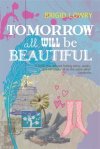
Tomorrow all will be beautiful by Bridget Lowry
Allen
and Unwin; ISBN 9781741751604; 2007; p/b; 174pp
(Age Middle Secondary) A collection of poems and short stories
woven around the theme of relationships.
The variety of writing within the book could be used to spark a number
of writing activities for students, eg, poetry, alphabet and comments
under different topics - the one in the book is on girls names, letter
or email writing. There are comparisons too – the one in the book uses
the topic 'there are two kinds of people'.
So, while the book could easily be read and enjoyed as the collection
of writings, I kept being enthused by the different activities I could
use so many of the pieces for with students.
Sue Johnston, Marden Education Centre Library
Note: Shortlisted for the New Zealand Post Book Awards 2008 for Young
Adult Fiction.
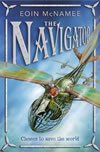
The navigator by Eoin McNamee
HarperCollins, 2007.
(Age10+) Owen is a loner, shunned by other people because of his
father's supposed suicide and his mother's inability to cope. He seeks
refuge in his Den, but one day is accosted by a tiny man, the
Sub-Commandant, who takes him to a group of people called the
Resistors. Owen finds himself caught up in a battle between the Harsh,
an eerie group who use the cold to turn back time, and the Resistors
who are fighting to keep time normal.
McNamee has gathered together an interesting cast of characters. Owen
comes into his own, and begins to understand the meaning of courage and
sacrifice. Cati and Wesley, Owen's new friends, are brave and feisty.
Dr Diamond is an eccentric inventor who speaks backwards when time
affects him and the evil Johnston and his cohorts are convincing
villains.
Boys in particular will enjoy the inventive machinery and the exciting
trip to the frozen north, while trying to work out what the Mortmain is
and why it is vital to the outcome of this fight of good versus evil.
Pat Pledger
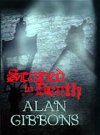
Scared to death by Alan Gibbons
Orion, 2007.
(Ages 13+) Award winning author Alan Gibbons has written a tense and
scary thriller set in modern East London. One night when travelling on
the tube Paul meets the strange and daring Redman. Fascinated by his
new friend, Paul is lured into doing things that he wouldn't normally
consider: joyriding, staying out overnight and drinking. Then terrible
things begin to happen – a young student Paul had met at a party is
murdered and a teacher is scared to death near the place where her body
had been found. Paul is forced to confront the truth about his
dangerous new friend and discovers shocking facts about a family curse.
This has all the ingredients for a thrilling read. The murders are set
against a backdrop of Jack the Ripper's London and Paul gradually
realises that he is part of a fight against an ancient evil. His time
travelling journeys to different periods of history will enthral his
young readers.
Paul is a very normal boy who loves his mum and his girlfriend Netty
and readers will identify with someone like themselves. His character
contrasts with the frightening, elusive nature of Redman and adds to
the tension in the story.
Readers will enjoy this supernatural thriller, with its frightening
thrills and tense action. The prologue will entice even reluctant
readers and the cliffhanger ending should have fans coming back for
more in the second book in the Hells Underground series.
Pat Pledger
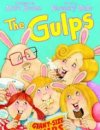
The Gulps by Rosemary Wells
Illustrated by Marc Brown. N.Y., Little Brown, 2007
(Age 5+) The Gulp family pack up their Dreamliner van ready to go
on a holiday to Dizzyworld but disaster strikes on the way! The van
stops and no matter what they throw out to lighten the load, it won’t
start again.
"The car says no! declared Dawn. "This family‘s too fat to roll!"
Farmer Spratt comes to the rescue, but the Gulps, with the exception of
Dawn, adore take away food, don't eat vegetables, watch TV instead of
exercising and find that they are too fat to manage the smallest farm
chore.
As Dawn says, "Somebody’s going to have to exercise and eat right" so
that the van will start again and they can continue on their holiday.
Wells' text and Marc Brown's illustrations make a delightful
combination in getting the exercise and healthy eating message across.
The Gulps, outfitted with rabbit ears, are humorously portrayed, and
children will delight in identifying signs like Belly Up Burgers. Dawn
is a great role model as the only family member who loves
vegetables and isn't taken in by fast food and sugar snacks.
According to the cover, the illustrator lost 15 lbs while drawing the
pictures for this book as he contemplated the message of the Gulps!
This could be a useful book to have available when looking at
healthy eating and exercise habits and the limitations that being
overweight can bring. Teachers may need to use it in a sensitive way if there are overweight children in the class.
Pat Pledger
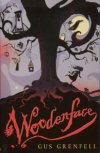
Woodenface by Gus Grenfell
Usborne, 2007. (Ages 10+) This is a frightening story set in the year 1650, in a real village in the Yorkshire Pennines. Gus Grenfell vividly tells the story of Meg a young girl who believes that the wooden figures she carves have the ability to move and speak to her. There is the Seeing-Eye, which helps her see things when she is not present, Dilly-Lal who dances and Bolly-Bolly who has been carved from a special yew tree. Meg is accused of witchcraft and flees her village hoping to meet her father who has been selling cloth in a nearby town. However disaster has also befallen him when he is charged of stealing cloth and put in goal. Meg is forced to help her father and fight the evil demon that stalks her with the assistance of some travelling performers.
Grenfell has written a compelling and fast moving story with magic and superstition at its core. His writing is very vivid and brings to life a time when people believed that demons could possess people and ancient wood had the ability to come alive. The smells and scenes of 17th England, its marketplaces, taverns, travelling performers, cemeteries and woods and the horror of the gibbet are all skillfully portrayed.
All the characters, including minor ones, seem real. The evil Mr Sutcliffe who is ready to lie and murder to get his own way and the dithering minister are well portrayed as are the children who mature as they face adversity. The power of good versus evil is a central theme and permeates the story.
This book has been put on the longlist for the Branford Boase Award. It is a memorable if frightening read. Pat Pledger
Allira's gift by Paul Collins and Danny Willis
Five
Mile Press, 2007
(Ages 11+) Richly illustrated by Danny Willis, this fantasy hardback
novel, sweeps the reader along in a whirl of adventure and danger.
Gerald Hart takes his two children, Allira and Stephen, to the castle
home of his father, Fergus, who has disappeared. Allira often sees
strange things that no one else notices and she keeps the dragon she
glimpses near the castle a secret. More surprises are in store for her
as she discovers the alternative world of Grymm, where a fierce battle
against evil is being waged and she finds hidden depths of strength and
courage
The novel has immediate appeal to an Australian audience because of its
setting in Victoria's bush, with possums, gum trees, a bunyip and the
Calder Highway, blending with the more traditional fantasy elements of
a castle, goblins, dragons and trolls.
The strong female main character will appeal to young girls, and there
is plenty of action, fights, hideous characters and bloodshed to engage
boys. The illustrations stretched my imagination. I especially enjoyed
the pictures of Allira and Stephen, and felt that they were people I
knew well. They contrasted well with the quirky drawings of the unsung
heroes in the Hall of Fame.
The story ends on a frightening cliffhanger which didn't worry me as an
adult as I assumed that all would be resolved in the next book in the
series. However this may worry younger readers. Fans of this book could
move onto Diana Wynne Jones' Chrestomanci series and The Foundling
by
D.M. Cornish.
Pat Pledger
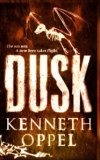
Dusk by Kenneth Oppel
Faber and Faber 2007 (Ages 10+) Highly recommended. A thrilling page-turner with prehistoric bats as the main characters, Dusk is a story that will linger in the imagination. Dusk is a little chiropter who belongs to a colony that dwells in a tall tree. He was born with a difference – he can flap his wings and fly while his relatives can only glide. Outsiders are not welcome and it is not until the colony is under threat that he comes into his own.
This is a wonderful survival story told by an award-winning author. It is set in a time when dramatic changes are occurring on earth. The dinosaurs are dying out and meat eaters have emerged. The chiropter colony, once safe and happy on an island, is viciously attacked by tree climbing mammals. The colony is forced to use Dusk’s echovision, which helps him to see at night, and his flying ability to lead them to a new home.
The reader is swept along with the sheer adventure of the story and becomes immersed in Dusk's struggle to find a place for himself and the parallel tale of Carnassial who is the first in his tribe to eat meat. Both fight to survive in a harsh and evolving environment. Oppel subtly get his reader to think about extinction and the fight for survival.
Characters are finely drawn and very appealing. The family relations are vividly described, with Dusk's relationship with his sister Sylph and father, Icarion, the colony's leader, adding depth to the story. The moral dilemmas facing the groups about hunting and killing species are explored with the destruction of the eggs of the terrifying saurian.
This story is a winner. It will be welcomed by fans of Oppel's previous books about bats and new readers will be want to continue on with other books. Pat Pledger.
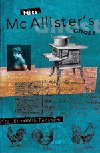
Miss McAllister's Ghost by Elizabeth Fensham
UQP, 2008 When Wilf comes home scared out of his wits, talking about a ghost, his siblings decide to investigate. Hardly missed at home, it is an opportunity to go off together. What they find, an elderly woman living by herself in a forgotten part of the neighbourhood, untouched by the twentieth century, is at first, unsettling, but as the children get to know her, they become involved in the routines of Miss McAllister's life.
The children take on the tasks around her house, gardening, chopping wood, cleaning, and cooking, all the while asking questions and learning about life in the past. When Michael spots a face at the window of the stable, then they investigate further and so are more completely drawn into her world, protective and helpful.
This is a most unusual read, partly because it does not go down the path expected when reading about a ghost story, and because it gives so much detail about how people lived a century ago, it seems like a social history book, and I found myself less interested in the story, although I am sure middle school readers will not be so easily strayed from the path. The religious touches too, make it different, and they underline the dissimilarity between the life Miss McAllister led as a child, and that of the protagonists. I enjoyed the read immensely and it will be a winner in schools, but I found the lack of resolution of the cruelty of the children's father a small niggle. Fran Knight
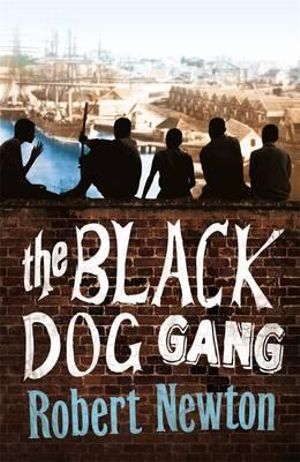
The Black Dog Gang by Robert Newton
Penguin 2007 (Age 11-14) When Maggie is taken to the Quarantine Station with plague, Frankie and his gang come to regret their money making scheme, catching and selling rats to the health inspector. The time is early twentieth century and the setting is the Rocks in Sydney, a haven for poverty and rats, culminating in the outbreak of the plague in those early years.
Frankie and his friends attend the Ragged School, set up for the children of the poor workers who live there. Some are well off with loving families, but others suffer brutal treatment at the hand of alcoholic fathers and cruel men. It is a time of death and cruelty, dealt out not only by fathers, but also the principal of the school.
A terrific and at times, harrowing, read about a time hardly heard about, The Black Dog Gang realistically captures the times and the fear with which some children lived. I found it hard to read (tears) and I am sure middle school readers will lap it up. Fran Knight
Juicy Writing by Brigid Lowry
Allen
and Unwin, 2008
Subtitled Inspiration and Techniques for Young Writers, Juicy
Writing
will be a boon for all aspiring writers, young and old. Often asked by
students for help in their creative writing, it is great to see such a
well produced and informative guide. In the past, books by Hazel
Edwards and Eleanor Nilsson have been indispensable, but this new guide
by award winning adolescent writer, Brigid Lowry, is set to be used by
a wide variety of aspiring writers. Her light touch makes the book most
accessible, and she gives advice with humour and enthusiasm.
The five easily read chapters go through the different needs for an
aspiring writer, from journals and the need for an inquisitive mind, to
where to look for ideas, to 'funking it up', to lots of ideas to get
started The list of starters intrigued me, and I can see many
teachers getting good mileage from these sections. Easy exercises too,
litter the pages and kids could as easily use these at home or with a
group of friends, as a teacher in the classroom. The book will have
wide appeal to students, teacher and librarians. Lowry discusses
narrative as well as poetry, offering suggestions for writers of both
genres. Several chapters were a surprise, giving advice that I had
never heard of making me immediately think of how I could use it. Such
a chapter is the one entitle 'Dialogue'. The Glasgow Rules outlined by
Lowry make marvelous sense and would appeal to young writers.
It is well worth a look at the book for your library or classroom, as
it offers a huge range of suggestions in an easy to read format.
Camp Creepy time by Gina Gershon and Dann Gershon
Random House 2007
(Age 10+) Einstein P. Fleet is at the summer camp from hell. Sent away
for 8 weeks by his long suffering parents, Einsten, a 13 year old
computer freak and consumer of Twinkies, discovers that the brochure
describing its many activities, lake and swimming pool is completely
false. The only friends that he makes are a ghost and an alien and he
must try and save the campers from conniving camp counsellors.
Readers, especially boys, will enjoy the humour surrounding bodily
functions and the scary scenarios. Einstein is an interesting problem
child with his penchant for worse case scenarios and his computer
empire. The book is an easy read.
Film rights have been commissioned for this wacky story by actress Gina
Gershon and her brother Dan and it certainly would lend itself to a
funny horror film with its werewolves, vampires and mummies, aliens
from outer space and highly exaggerated characters.
Pat Pledger
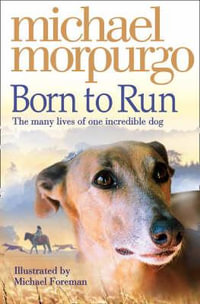
Best mate by Michael Morpurgo
Ill. by Michael Foreman. HarperCollins 2007
(Age 10+) A winner for all animal lovers, this heart-warming story from
an award-winning author relates the story of a greyhound as he goes on
an adventurous journey through life. On his way to school, Patrick
spies a wriggling sack in the canal and rescues a mass of puppies, one
of which he gets to keep. The reader might expect that this would be
the start of a wonderful life for Best Mate, the little greyhound
puppy, but it is only the beginning of a series of traumatic, sad and
ultimately uplifting events as he goes from one owner to another.
This is a compulsive yet easy read as Morpurgo weaves a series of
interrelated stories around the adventures of one dog and how they
influence the lives of the people around him. The reader will be warmed
by the way Patrick responds and grows with a dog as a best mate;
thrilled by BrightEyes’ speed as a champion greyhound and saddened by
the treatment of greyhounds when they are too old to race. The author’s
description of the dog’s loyalty to the runaway Becky and his career as
a protestor for the rights of the aged are wonderful.
Michael Foreman’s quirky illustrations add a dimension to the young
reader’s understanding of the plot and greatly enhance the reader’s
knowledge of greyhounds, their speed and racing skills.
A great story that would be good to read aloud, this book comes highly
recommended.
Pat Pledger
Seams of gold by Christopher Cheng
National Museum of Australia Press, 2007 (Making Tracks) ISBN 978 1876944520 (Age 8+) Danny is staying with his uncle while his parents visit relatives in China. Since the mining accident, uncle has sewn for a living, doing all sorts of repairs for the miners, as they slave over their diggings looking for gold. Grudgingly Danny accompanies his uncle, aghast when he tells him that he should sew too. Sewing is women's work, but things turn out that sewing is Danny's work as well, as he realises that sewing has an important place in the community.
A delightful story full of the sight and sounds of the goldfields in the middle of the nineteenth century in New South Wales, when many Chinese people came to work the mines, Cheng recreates the feelings of being a Chinese person at the diggings, where their skills were sought after. He based his story around a small sewing basket at the National Museum, part of a collection of objects gathered from the NSW goldfields. Fran Knight
Note: Discussion questions and other activities can be found at Making tracks.
Diego's pride by Deborah Ellis
Allen and Unwin, 2008 (Age 11+) Diego has escaped from the cocaine traders in the Bolivian jungle and now must survive. Luckily he is found by a cocalero family, and he helps them harvest their coca crop before taking it to market. But some sell their crop for cocaine, and the USA funds the Bolivian government to destroy the crops, so the police move in and destroy the family crop, pulling up their plants and trashing their farm. Destitute the family joins with others to blockade the bridge on the highway between the major cities, in protest about their loss of income.
Here Diego learns about grass roots activism, helps the families in their plight and narrowly avoids being hurt himself. Through the kindness of a local policeman, he finds his way back to his family in Cochabamba where he is able to help the police track down those who kidnapped him in Diego, run. A wholly satisfying read, Diego's pride will broaden our students' view of the world and how it works, encourage their sympathy for the poor and oppressed, and gain some understanding of the political nature of the cocaine trade. Fran Knight