Doubleday, 2008.
Even though I have never forgiven Ms Blackman for the cliffhanger at
the end of book 2 of Noughts and Crosses and the long long wait
for the
arrival of book 3, I was so pleased to see that another of these books
was to be published that I literally danced around the room!
And it is as brilliant as its predecessors. Absolute genius. The
series begins after the bomb, with Callie-Rose still having not told
her family the real truth. Tobey and Callie-Rose finally get it on, but
Tobey is slowly realising his dream of getting off the estate through
hard work and qualifications won't be as uncomplicated as he hoped.
After a few conversations with Dan, his seemingly wealthy best mate,
who makes deliveries for a local gang, he makes an ill judged decision
which leaves Callie-Rose in a critical condition in hospital.
Determined to avenge her injuries, Tobey dices with death by trying to
play the two local gang leaders off against each other with shattering
consequences. Roll on book number 5!
Nikki Heath
The Dangerous Days of Daniel X by James Patterson and Michael Ledwidge
Doubleday, 2008
(Age 10+) Daniel is a 15 year old alien, sent to Earth with his parents
to hunt out and destroy a long list of evil aliens. Unfortunately for
Daniel, his parents are both killed when he is only three years old
leaving Daniel to fend for himself. Unlike Earth children however,
Daniel has many powers that help him to survive, such as the ability to
transform himself into just about anything, travel at turbo speed, and
imagine what he wants into being, which together with a highly
intelligent brain, makes him quite able to look after himself. Daniel's
on a very dangerous mission to continue the work of his parents, which
means finding the nasty aliens on the list headed by the very evil
Ergent Seth, an alien whose main aim is to totally destroy Earth. In
addition, Daniel is also determined to hunt out and destroy the very
nasty Prayer who killed his Mum and Dad. Daniel's mission takes him
across the United States and back to his home planet of Alpar Nok,
during which his powers are challenged by forces much more experienced
than his.
This is a fast, action-packed adventure that's quite graphic and
violent in parts, including the fact that Daniel gets shot in the
stomach and has to hold it together. Probably not for the faint hearted.
Marilyn Coleman
Twisted Tales - Six fairy tales turned inside out by Richard Tulloch Ill: Terry Denton.
Random House Books ISBN: 9781741662740
(Ages 7-12) There are quite a few books out there that have
taken the good old fairy tales and given them a twist. This one
does it well and with enough difference to make it worth a look.
There is a horrified lizard, friendly wolf, a princess who can't sleep,
a deaf kingdom, two naughty greedy children and a cow with magic
ploppies.The stories we know and love are told from a
perspective we may not have thought of before.Children will like
the humour used throughout the book, just the right amount of 'gross'
to keep them interested.
Great to use when doing a unit on fairy tales to get students thinking
from another's point of view.Overall an easy to read and
entertaining take on old stories.One thing that did not quite
sit right with me however was the pictures for the 'Lies in the Woods'
story.Hansel and Gretel are supposed to be two fat roly poly
pigs who have eaten too much junk food, however I feel the pictures do
not portray this enough.The children in the drawings are not
roly poly looking and I have concerns in this day and age about body
image, when several times in the story they are described as grossly
overweight.This in itself may be a good point of discussion with
students.
Zana Thiele
The secret of Spirits Bay by Stephen Barker
HarperCollins Publication 2008 ISBN 9781869507251
(Age 10-14 years) Tom Bowman family's life is difficult.He has
come to New Zealand with his Dad and is waiting for his mum and sister
to join them. He is starting a new life in a different school and
trying to make new friends. The thing in his life that he loves
to do is to run at Spirit Bay. Soon Tom slowly makes a friend with a
local teenager, Ana and an old Maori man called Mata.As he
trains for an important race, Tom sees another boy running in the
distance. The only problem is that nobody else sees him.
Slowly he and his new friend unravel the secret behind the mysterious
boy, who is also called Tom, and the reason why he is running at Spirit
Bay.Are there secrets at Spirit Bay that involve the past?
Can Tom and Ana understand the clues behind this mystery before a
disaster occurs again at Spirit Bay?
Frances Kranendonk
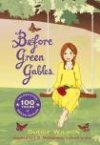
Before Green Gables by Budge Wilson
Puffin 2008
As a child I was fortunate enough to be read to and I am eternally
grateful to my Mum for introducing me to Anne of Green Gables. I was
intrigued and also slightly dubious when I heard that someone had
written a prequel to L M Montgomery's classic story. How could anyone
apart from L M Montgomery herself get into the mind of that red haired,
stubborn, romantic, impetuous whirlwind that is the Anne Shirley we
know and love?
Budge Wilson writes with a confident sensitivity that draws out the
story of Anne's early life. Before Green Gables is peopled with
immensely complex characters. After Anne's parents die she lives with
the Thomas family - father is an alcoholic and mother is struggling to
keep her growing family together. Both characters are shown warts and
all and the reader is reminded of the little things that affect Anne's
life - nobody in the family holds conversations and Anne is never
thanked for anything. At the age of nine Anne moves to another family
which, due to the woman's propensity for having twins, includes eight
children under the age of five. Much of Anne's stoicism must stem from
these early experiences.
Hints regarding Anne's future are offered. She already hates her red
hair, but feels her nose (inherited from Bertha, her Mother) is quite
pretty. She names a pond 'The Pool of Mirrors', a precursor for 'The
Lake of Shining Waters' perhaps. Her love of words and books is clear
from the start. There is even a mention of the puffed sleeves she so
desires that form the basis for one of the stories in Anne of Green
Gables. Anne is desperately lonely and creates an imaginary friend in
the glass reflection of her parents' old bookcase. This friend, Katie
Maurice, is a huge solace to Anne during her time with the Thomas
family. When she has to leave the bookcase and Katie behind her grief
is palpable. The value she places in later books on her bosom friend
Diana is understood.
This is a book for Mums, aunties and female role models to read aloud
to the girls in their lives. There is so much to discuss and savour -
it's definitely a book to be shared. All in all I was enchanted and on
finishing moved straight on to my old favourite Anne of Green Gables.
The transition was seamless. What greater compliment could I give?
Claire Larson
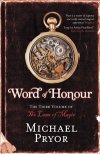
Word of honour by Michael Pryor
Random House Australia, 2008.
ISBN 9781741662818
(Age 12+) Recommended. A rip-roaring adventure in The laws of Magic
series sees the aristocratic Aubrey Fitzwilliam and his friends George
and Caroline fight off another attempt to start World War 1. Aubrey and
company are starting their first term at university but get side
tracked by an assault on a new submersible ship, an attempted
assassination of Lady Rose, Aubrey's mother, and the reappearance of
Mordecai Tremaine, who is determined to take over Albion.
The series is particularly interesting because of the laws of magic in
the alternative Edwardian universe of Albion. Magic is prevalent and
practitioners are taught to manipulate it and many inventions are
powered by it. The reader is swept from one amazing adventure to
another; never being sure what magical occurrence is going to happen
next. And all the time it is a continual struggle for Aubrey to keep
body and soul together, as he has miscalculated a spell and is
technically dead.
Aubrey is a fascinating if sometimes annoying hero, with character
flaws that the feisty Caroline is starting to iron out. George, the
trusty Albion farmer's son, is the steady voice of reason. Mordecai
Tremaine, a sinister villain, keeps the reader gasping with his evil
and the minor characters are all fleshed out and believable. Flashes of
humour add spice to the story.
Both boys and girls will find this series enjoyable, but it is best to
begin with the first book Blaze of glory to gain a good
understanding
of the setting and the main characters. Older readers who enjoy this
series could go on to the wonderful Vorkosigan series by Lois McMaster
Bujold. All in all, a very satisfying and enjoyable read.
Pat Pledger
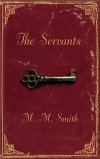
The Servants by M.M. Smith
HarperCollins, 2008. ISBN 978000726193 2
(Age 10 - 14) Mark is eleven years old and trying to deal with his
mother marrying again; a man who David does not get along with. They
have to move from London to Brighton and now his mother is sick and his
step dad is taking control of his life. Then he meets an elderly
neighbor who lives in their basement, in old servant's quarters.
She tells Mark a secret and shows him what lies behind the locked,
mysteries wooden door. Things suddenly go from bad to worse for
Mark and his inquisitiveness is aroused. With that a mystery is
unraveled and the only people that can help him are ghosts.
Boys will enjoy this book as will readers who love fantasy books.
Frances Kranendonk
Comment: Michael
Marshall Smith is a five-time winner of the British Fantasy Award.
Pat Pledger
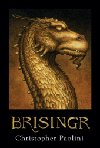
Brisingr by Christopher Paolini
Doubleday, 2008. Brisingr is the third book of the Inheritance Cycle, the fourth
will
bring the cycle to a close. I was apprehensive when beginning this book
because I hadn't read the other two. There is a useful synopsis of
Eragon and Eldest which helps to bring you up to date
with the story so
far. It goes without saying, however that having read the other books
is an advantage especially early on in the narrative. In many ways
Brisingr brings many of the threads of the story into a cohesive
path
ready for the finale which is yet to come. At almost 750 pages there
are a considerable number of questions to which we find answers.
Eragon and his dragon Saphira are again the star characters, with
Roran, Eragon's cousin the other action hero. The Empire, and
Galbatorix at its head, are still powerful and becoming even stronger.
Despite The Varden, Elves and Urgals joining forces and with the aid of
a dragon rider victory appears a remote possibility. Galbatorix seems
to gain in strength, and without knowing how, the forces ranged against
him are at a great disadvantage.
The Varden find that some soldiers of the empire have extraordinary
power, in that they feel no pain and fight on despite horrific
injuries. The Empire's dragon rider and very young dragon seem to be
drawing on a source of power unknown to any of the magicians. Their
power and strength may soon be too strong for Eragon and Saphira to
conquer.
Eragon no longer has the sword given him by Brom and needs another.
When he seeks to enlist the help of the Dwarfs he also takes time to
visit Ellesmera and the Elf Oromis. He needs to know the secret of
Galbatorix' power and see if Solemnbum's prophecy about his new sword
is true.
There is plenty of action interspersed throughout the narrative, with
Roran's heroics featuring heavily in his battles with the Empire's
armies. But it's not all brute force and swords there is also intrigue
aplenty with plots and schemes among the diverse allied forces that are
more used to fighting one another than being comrades in arms.
This is a fantasy of the Lord of the Rings genre. It has many
of the
hallmarks of Tolkien; humans, elves, dwarves, dragons, magic and most
of all the fight between good and evil. Eragon is a heroic figure but
he is racked with guilt and pain at the death and destruction he
causes. He is also bound by oaths he has sworn to various individuals,
not least the one he swore at the Menoa tree, one he doesn't even know
the terms of. Fans of Paolini will enjoy this latest episode but
fantasy readers in general will appreciate the scope and depth of
Paolini's imagination.
Mark Knight
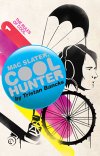
Mac Slater, Cool Hunter by Tristan Bancks
Random House Australia, 2008.
(Age range: 10-14) Mac Slater and his mate Paul are inventors.
The story begins with Mac and Paul trying out their latest invention, a
flying bike in front of an assembled crowd of fifty people on Kings
Cliff. As is often the case things don't go quite according to plan and
Mac ends up battered and bruised. Dejected from another failed attempt
they head to find Mac's mum who has a stall in the local market. Whilst
there they are approached by two business men with a proposition - to
become Coolhunters! Mac and Paul are amazed that these men would
consider them innovative enough to be part of an online vlog which
reports on the coolest things around. Their quest is to report for a
week on the 'cool' goings on of Kings Bay with the prize being a trip
to New York. The only problem is that Cat DeVees, the hottest girl in
school, is reporting too and at the end of the week's trial only one of
them will be chosen. Cat appears to have the upper hand as the week
begins and Mac is struggling for newsworthy items. Mac however has
underestimated the strength of family and friends and the power of self
belief.
A sequel to this novel is due out in February 2009.
Tracy Glover
Comment
I found this to be a rivetting read, with plenty of action and two
engaging, nerdy heroes who are prepared to try astoundingly dangerous
things in their quest to trial their inventions.
Pat Pledger
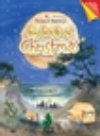
Roland Harvey's big book of Christmas by Roland Harvey
Allen and
Unwin, 2008.
(All ages) Full of colour and fascinating bits of information and
sidetracks, this reprint of the highly successful 1986 tome will fill a
hole in library collections. My copy is in serious need of weeding, and
so will many copies in school libraries, as this is a much used book.
This update, reissued showing the changes that have occurred over 20
years, reveals the traditions which surround Christmas for much of the
Christian world, the customs in many countries, whether they be Muslim
or Christian, and with an emphasis on what happens in Australia.
The book is divided into four sections; The story of Christmas (a
retelling of the story of the birth of Christ and then how that
traditions developed, with an emphasis on what happens here; Christmas
around the world (a trip through Europe, Middle East, North and South
America and Australia, showing how the customs are celebrated);
Activities (a sprinkling of things to do in the classroom) and Carols
(a reprint of the music and words of the more traditional carols,
thankfully rewritten, as the 1986 issue was very hard to follow)
Thus we have a most useful book for home and classroom, showcasing the
different customs and traditions of Christmas, full of fascinating
facts and followed up with things to do. Recipes pertaining to
each country round off the information give. I found it a most
interesting and useful book when it first appeared and the updates make
it even better for today's classrooms. Harvey's illustrations are
charming. Just a pity there is no index.
Fran Knight
Peka-Boo the smallest bird in all the world by Eliza Feely
Allen and Unwin, 2008. ISBN 978-1-74175541-1
(All ages) Highly recommended. What a unique book! Life as the smallest
bird in the world can be 'tough-witchetty'. Peka-Boo has to crack an
egg twenty times his own size to arrive, and then finds that he can't
keep up with his big brothers. When he is too tricky his mother sends
him to stay with Kapecki, the weirdest, deaf bird in the bush. How can
Peka-Boo get his attention and solve the enigmatic puzzle he poses?
The language is refreshing and the imagery is remarkable in this book.
It is sprinkled with unusual Australian sayings like 'gobdropper',
'feral feathers', and 'stone quiet' that make the readers stop and
think. Descriptions like 'Our family tree must have more shoots than a
mouldy potato' conjure up wonderful images in the reader's mind and all
are in keeping with the interests that a little bird would have. The
humour of the story is most appealing and the reader will want to go
and listen to magpies and kookaburras to hear their sounds.
The bird characters are also engrossing. Peka-Book is an exuberant
little attention seeker with a wonderful family that the reader will
fall in love with. Kapecki is wise and happy to spend time with the
smallest bird in the world.
The black and white illustrations of Peka-Boo and his family contrast
with the vivid colour of the surrounding bush. There is much to
discover on a close examination of the pictures: humourous little
asides and labels add to the fun. Lively sketches of Peka-Boo doing
things like riding snails and screeching at Kapecki are very enjoyable
and it is fun to find the tiny magpie in the illustrations.
This is a most rewarding book as each time it is read, new things are
found to think about and new images spring from the pictures. I loved
it and can see it as a future, timeless re-read.
Pat Pledger
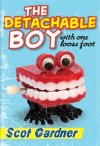
The detachable boy by Scot Gardner
Allen and Unwin, 2008. ISBN 9781741753455
(Ages : 10-13) Over the Pacific, in his suitcase, John wants to go to
the toilet. He manoeuvres his arm to get Ravi's grandfather's pen
knife, cuts the tape, hops out and reassembles himself. He opens some
of the boxes around him to satisfy his hunger, but when the flight
attendant sees them decides they all need to be examined. Fainting
women all around, John reassembles himself and gets out of there. He is
off to rescue his friend, Crystal, kidnapped from Australia, and a
message on his mobile has led him to the USA.
Here, he climbs his way down an underground bunker, finds Crystal,
escapes, is recaptured, both rescued by Ravi and the trio goes through
an extraordinary set of adventures before they return home in time to
tell their parents they have been at a school camp for the week. A set
of bizarre happenings, all bound up in this delightfully silly story,
littered with slightly off jokes and puns will be sure to please middle
to upper primary kids as they laugh out loud at the antics of the
children whose appendages can be removed. Scot Gardner's books have
always been a treat to read and this is no exception.
Fran Knight
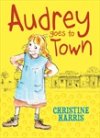
Audrey goes to town by Christine Harris
Little Hare Books, 2008.
(Age 8-12) The adventures of Audrey take a twist when her family
relocates to Beltana, a town in South Australia's Flinder's Ranges, for
a month. Here they board with Mrs Patterson, known in the town as
Patterson's curse, a noxious weed. But Audrey's inquisitive nature and
endearing ability to put people on their back foot, undermines the
prickly nature of the woman at every turn.
Mrs Patterson takes on Audrey as a project, wanting to teach her
manners, how to knit and behave like a lady. Audrey in turn wants to
find her good side, and beguilingly does so as she talks the older
woman into wearing a yellow ribbon and coming along to the Beltana
dance. Ann James' perfect illustrations keep us guessing until the very
last chapter about what Mrs Patterson looks like, and her sly little
glance at Audrey is enough to make any reader's heart melt.
Christine Harris' ability to make places and people come alive is
nowhere more evident than in this, the second of the series, Audrey of
the outback. Younger readers will readily see with Audrey's eyes, her
new home, the dusty wide streets, the houses, the people who live
there. She innocently compares her house with that of Mrs Patterson,
revelling in the different rooms, the windows, the linoleum and the
table, but soon longs for the dirt floors and glassless windows of her
home. Beltana now is little more than a ruin, but Christine Harris
fills the place with life, revealing it in its useful days before the
railway bypassed it. And along the way, readers will learn many of the
expressions and words no longer in use, and fittingly, there is a
glossary of 'interesting words' to help people remember them.
Fran Knight
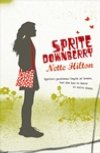
Sprite Downberry by Nette Hilton
Angus and Robertson, 2008. ISBN
978073228548 7
(Age 11-14) Highly recommended. Sprite's refuge is her family; her dad,
the artist; mum, the fun loving woman who starts things but never
finishes them; and Mozz her little brother. Nits stray into her hair,
and her school friends reject her, saying she is dirty. But she still
has her family. When her family begins to unravel, and her father stays
away one night, Sprite goes to school the next day, hopeful that he
will return that evening. But her class mates talk of seeing her mother
at the clinic, and call her a druggie, which sets the precarious Sprite
off, and she hits one of her tormenters. Returning home she finds
her mother has not left her bed and is too full of sorrow and remorse
to think clearly.
This is a fearless book, showing a family in disarray, the young girl
left to look after the mother and her brother. She holds onto the
belief that her father will return, all the while piecing together the
bits of information she has learnt about her mother; the sweet tobacco
smell when she smokes, the fact that she has gone to a clinic, the
overheard argument between her parents when her father told her to get
rid of it before the police found out. She begins to realise that her
mother has an addiction, and this addiction has permeated all their
lives.
One of the many highlights of this book is the lack of recrimination.
Hilton presents the story as any story of any child who may be in
trouble. This is a family in crisis, with a child called on to make
adult decisions about herself and her family. Children reading it may
be shocked at the behaviour of the mother and possibly the father, but
it will open a window into the lives of some of their classmates, and
for those for whom this story has resonance, what a marvel for them to
see that they are not alone and that there can be a resolution.
And most appreciatively, it is in the third person, making it not just
another angsty sub-teenage novel told in the first person, but a
rounded, informative story about a family from a benevolent and
omniscient point of view.
Fran Knight
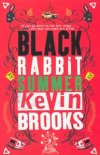
Black Rabbit Summer by Kevin Brooks
Penguin Books 2008.
(Age 15+) As a huge fan of Kevin Brooks I fell on this book - two
of his previous novels Candy and Kissing the Rain are
in my opinion
near perfect. Black Rabbit Summer tells the story of Pete -
sixteen,
lonely and a little depressed and the events that catapult him and his
friends into disaster. This is a summer of change. Everyone has left
school, friendships have drifted and Pete is losing touch with the
people he grew up with. A call from his former girlfriend results in a
trip to the fair with his old friends. Undercurrents bubble away,
fuelled partly by the drugs and alcohol that are now on the scene. The
night ends in tragedy when two of the group go missing - streetwise
Stella and damaged Raymond. Are their disappearances connected? Is
someone with a troubled mind capable of murder?
Stella's body is discovered and Raymond, still missing, becomes the
prime suspect. But Pete is convinced of his innocence and sets out to
prove it, exposing the real perpetrators in the process and putting his
own life on the line.
The plot is gritty and realistic but for me Brooks' story never really
takes off. At over four hundred pages this is a weighty tome that in my
opinion could have been pruned by at least a quarter. Brooks' fondness
for stream of consciousness results in lengthy forays into minute
detail which become irritating after a while and I was exasperated at
how slowly the story developed.
This book is relentlessly grim. The characters are flawed and dark and
I found it hard to empathise with any of them apart from Raymond, and
he disappears early on. There is plenty of shock value which may
impress young readers, but I found the whole story strangely flat.
Brooks packs a lot into this novel: homosexuality, abuse, drugs,
murder, knife crime, blackmail - but for me the tide of 'issues' was
just too overwhelming. In comparison it made me recall one of the
seminal teenage novels: Junk by Melvin Burgess, scenes from
which
remain with me to this day. Black Rabbit Summer had much less
of an
impact and I finished this book with a sense of relief.
Claire Larson