Allen and Unwin, 2008. ISBN 9781741753455
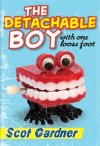
(Ages : 10-13) Over the Pacific, in his suitcase, John wants to go to
the toilet. He manoeuvres his arm to get Ravi's grandfather's pen
knife, cuts the tape, hops out and reassembles himself. He opens some
of the boxes around him to satisfy his hunger, but when the flight
attendant sees them decides they all need to be examined. Fainting
women all around, John reassembles himself and gets out of there. He is
off to rescue his friend, Crystal, kidnapped from Australia, and a
message on his mobile has led him to the USA.
Here, he climbs his way down an underground bunker, finds Crystal,
escapes, is recaptured, both rescued by Ravi and the trio goes through
an extraordinary set of adventures before they return home in time to
tell their parents they have been at a school camp for the week. A set
of bizarre happenings, all bound up in this delightfully silly story,
littered with slightly off jokes and puns will be sure to please middle
to upper primary kids as they laugh out loud at the antics of the
children whose appendages can be removed. Scot Gardner's books have
always been a treat to read and this is no exception.
Fran Knight
Audrey goes to town by Christine Harris
Little Hare Books, 2008.
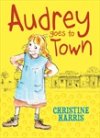
(Age 8-12) The adventures of Audrey take a twist when her family
relocates to Beltana, a town in South Australia's Flinder's Ranges, for
a month. Here they board with Mrs Patterson, known in the town as
Patterson's curse, a noxious weed. But Audrey's inquisitive nature and
endearing ability to put people on their back foot, undermines the
prickly nature of the woman at every turn.
Mrs Patterson takes on Audrey as a project, wanting to teach her
manners, how to knit and behave like a lady. Audrey in turn wants to
find her good side, and beguilingly does so as she talks the older
woman into wearing a yellow ribbon and coming along to the Beltana
dance. Ann James' perfect illustrations keep us guessing until the very
last chapter about what Mrs Patterson looks like, and her sly little
glance at Audrey is enough to make any reader's heart melt.
Christine Harris' ability to make places and people come alive is
nowhere more evident than in this, the second of the series, Audrey of
the outback. Younger readers will readily see with Audrey's eyes, her
new home, the dusty wide streets, the houses, the people who live
there. She innocently compares her house with that of Mrs Patterson,
revelling in the different rooms, the windows, the linoleum and the
table, but soon longs for the dirt floors and glassless windows of her
home. Beltana now is little more than a ruin, but Christine Harris
fills the place with life, revealing it in its useful days before the
railway bypassed it. And along the way, readers will learn many of the
expressions and words no longer in use, and fittingly, there is a
glossary of 'interesting words' to help people remember them.
Fran Knight
Sprite Downberry by Nette Hilton
Angus and Robertson, 2008. ISBN
978073228548 7
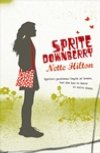
(Age 11-14) Highly recommended. Sprite's refuge is her family; her dad,
the artist; mum, the fun loving woman who starts things but never
finishes them; and Mozz her little brother. Nits stray into her hair,
and her school friends reject her, saying she is dirty. But she still
has her family. When her family begins to unravel, and her father stays
away one night, Sprite goes to school the next day, hopeful that he
will return that evening. But her class mates talk of seeing her mother
at the clinic, and call her a druggie, which sets the precarious Sprite
off, and she hits one of her tormenters. Returning home she finds
her mother has not left her bed and is too full of sorrow and remorse
to think clearly.
This is a fearless book, showing a family in disarray, the young girl
left to look after the mother and her brother. She holds onto the
belief that her father will return, all the while piecing together the
bits of information she has learnt about her mother; the sweet tobacco
smell when she smokes, the fact that she has gone to a clinic, the
overheard argument between her parents when her father told her to get
rid of it before the police found out. She begins to realise that her
mother has an addiction, and this addiction has permeated all their
lives.
One of the many highlights of this book is the lack of recrimination.
Hilton presents the story as any story of any child who may be in
trouble. This is a family in crisis, with a child called on to make
adult decisions about herself and her family. Children reading it may
be shocked at the behaviour of the mother and possibly the father, but
it will open a window into the lives of some of their classmates, and
for those for whom this story has resonance, what a marvel for them to
see that they are not alone and that there can be a resolution.
And most appreciatively, it is in the third person, making it not just
another angsty sub-teenage novel told in the first person, but a
rounded, informative story about a family from a benevolent and
omniscient point of view.
Fran Knight
Black Rabbit Summer by Kevin Brooks
Penguin Books 2008.
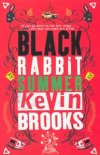
(Age 15+) As a huge fan of Kevin Brooks I fell on this book - two
of his previous novels Candy and Kissing the Rain are
in my opinion
near perfect. Black Rabbit Summer tells the story of Pete -
sixteen,
lonely and a little depressed and the events that catapult him and his
friends into disaster. This is a summer of change. Everyone has left
school, friendships have drifted and Pete is losing touch with the
people he grew up with. A call from his former girlfriend results in a
trip to the fair with his old friends. Undercurrents bubble away,
fuelled partly by the drugs and alcohol that are now on the scene. The
night ends in tragedy when two of the group go missing - streetwise
Stella and damaged Raymond. Are their disappearances connected? Is
someone with a troubled mind capable of murder?
Stella's body is discovered and Raymond, still missing, becomes the
prime suspect. But Pete is convinced of his innocence and sets out to
prove it, exposing the real perpetrators in the process and putting his
own life on the line.
The plot is gritty and realistic but for me Brooks' story never really
takes off. At over four hundred pages this is a weighty tome that in my
opinion could have been pruned by at least a quarter. Brooks' fondness
for stream of consciousness results in lengthy forays into minute
detail which become irritating after a while and I was exasperated at
how slowly the story developed.
This book is relentlessly grim. The characters are flawed and dark and
I found it hard to empathise with any of them apart from Raymond, and
he disappears early on. There is plenty of shock value which may
impress young readers, but I found the whole story strangely flat.
Brooks packs a lot into this novel: homosexuality, abuse, drugs,
murder, knife crime, blackmail - but for me the tide of 'issues' was
just too overwhelming. In comparison it made me recall one of the
seminal teenage novels: Junk by Melvin Burgess, scenes from
which
remain with me to this day. Black Rabbit Summer had much less
of an
impact and I finished this book with a sense of relief.
Claire Larson
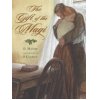
The gift of the Magi by O. Henry
Walker Books, 2008.
(All ages) This beautifully illustrated book, recreates the story of
the Christmas presents given by a married couple to each other, in such
a way that the story is given extra breadth and depth. Many will know
the story. A young couple, living in impoverished circumstances in a
flat in an American city, sell one of their possessions to buy the
other a present. The girl sells her hair to buy her husband a watch
chain, and he sells his watch in order to buy her combs for her hair.
It is a wonderful story of the selflessness of giving, of love and
marriage, of the custom of giving presents, begun by the magi on the
first Christmas.
The illustrations expose the poverty of their lives, the dirt and grime
of the city, the haven that is their flat. The preponderance of brown,
grey and white underscores the paucity of their lives, as she counts
out her small money, saved to buy him a present. Students of all ages
will immediately see the irony of the story, and will readily pick up
the echoes in the illustrations. A lovely picture book which will be
read by many, particularly at Christmas, when present giving becomes
the opposite of what is shown here.
Fran Knight
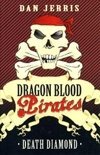
Death diamond by Dan Jerris
Lothian, 2008. ISBN9780734410719
(Age 9-12) The first in the series, Dragon Blood Pirates, Death
diamond
is a funny, tongue in cheek story of 2 boys transported back in rime to
the age of piracy. Redolent of Pirates of the Caribbean, and with
touches of many other pirate stories and themes, this series of novels
will fill a niche for readers of early chapter books. 80 pages long,
with large print and many funny drawings by Rory Walker, this book is
easy to read and follow.
Al and his friend, Owen are searching a chest in the attic, when they
find themselves on a rock in the ocean. Rescued by the crew of The
Booty, they are offered maggoty biscuits for tea, and that is just
the
first of their problems. Following the treasure map is the crew of
another ship, The Tormenter, with their hideous captain, Snotty
Nell.
Each side tries to outwit the other as they search for the treasure
through a cave with mantraps, clues and lots of danger.
A funny tale with lots of hilarious episodes, all giving a passing nod
to famous stories and films, this book will have appeal to kids looking
for an escape to another world.
Fran Knight
Big and me by David Miller
Ford St, 2008.
(Age 7+) Highly recommended. Congratulations to the author on
tackling such a difficult topic as mental illness in a sensitive and
moving way. Big and Small are machines that work together as a team.
'But some days Big goes a bit wobbly', and Small gets 'a lot worried.'
With the assistance of The Boss and Mechanic, Big gets some medicine to
help him get better.
The book is a wonderful metaphor for a young child living with someone
who is mentally unwell. It is not difficult to substitute an adult for
Big and the story goes through many of the things that a young child
would see when living with an unstable person. Sometimes the pair work
as 'a good team, the best', but sometimes Big does strange and
frightening things. Medicine helps Big, but when he is convinced that
he doesn't need it any longer, the world becomes 'grey and dull'. As
Boss explains, it is not Small's fault that Bgi's computer is not
working properly and this explanation should help relieve children's
fears about being the cause of a parent or care giver's strange
actions. The author doesn't avoid the big issues in this book and it
will be a tremendous help for both children and adults in understanding
mental health problems.
Miller has illustrated this book with fantastic paper sculptures of big
and small machines set against vivid backgrounds of ochre and dark
blue. They are a treat in themselves and their close examination will
give lots of enjoyment, as well as adding to the meaning of the text.
The book ends on a positive but realistic note - Big will always have
problems but with medicine will be OK most of the time. This is a book
that has a place in all libraries.
Pat Pledger
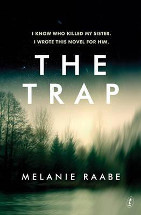
The Trap by Sarah Wray
Faber and Faber, 2008.
(Age 11+) Luke is amazed to find that he has been accepted to go to a
camp in New York State for high achievers. The camp is designed to give
nerdy kids some outdoor activities and work in social situations,
things which some of them miss. But from the start, Luke has
trepidation about the place. One of his room mates, Mark, is a bully,
his friend, Matt, seems nervous, and he is surprised to find Natalie, a
girl he knew at primary school, at the camp. On the first day, Luke
finds a coded note in his cabin and when they work out what it means,
they are excited as to what it will lead them to. Each day builds
tension and fear amongst the campers, and this is increased when they
hear the tale of three campers who disappeared from one of the camps in
the past.
A horror story which will have broad appeal to middle school kids, this
tale has some very creepy moments, made even more so by the strange
counselor Luke has in his cabin.
Fran Knight
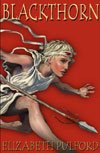
Blackthorn by Elizabeth Pulford
Walker Books, 2008 ISBN9781921150470
(Age 10+)When her father dies, Alyana can no longer play the role of
the dutiful daughter and be relegated to a relative's house, learning
to cook and sew. She renounces all attempts at helping her, preferring
to hide out in the nearby forests and survive alone. She has hunting
skills learnt form her father, and feels she is able to stay alive
without help.
But she is naive and needs the help of the man who finds her in the
forest, starving and scared, the one she calls Boar, the man with the
twisted leg. He gives her a puppy and together they survive with the
skills and instincts taught her by Boar. Calling herself Blackthorn,
she denounces all that she knew before and learns to survive in the
forest.
Here she learns more about herself and her limits, and sees for herself
some of the other inhabitants in the forest. An unusual little read
about acceptance and self determination.
Fran Knight
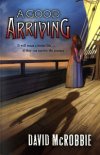
A good arriving by David McRobbie
Puffin Books, 2008. ISBN
978014300403 5
(Age 11+) When Helen's family is evicted from their small farm, Helen
is forced to go and work in the big house nearby. She attracts the
attention of the son of the lord, and in rebuffing his advances, loses
her job. She becomes a friend of the doctor's wife in the village and
when that family decides to emigrate to New South Wales, Helen is
invited along as companion to the wife and nurse to the child. On Board
the Recovery, the family discovers that the ship is also a convict ship.
An interesting look at the migration of a varied lot of English people
to early Australia, A good arriving is broad in it scope. On the
Recovery, Helen finds that the doctor is interested in her, so she must
repel him. The son of the house where she worked is also on board,
offering his protection. One of the sailors also looks kindly upon
Helen, so she must be wary. Below the cabins dwell the convicts and
they are seen but rarely. When they do come on deck, Helen recognizes
one of them, a small boy called Ben who she helped when he was in the
big house as a chimney sweep. She helps him again and this leads to his
release on board ship from the confines of the convict quarters.
This book will prove an easy way of learning about Australia's early
history. The main character Helen, is too modern to be believable, but
kids will enjoy the way she makes her way in the world. Once the
amazing coincidences are forgotten, the story reads very easily,
smoothly taking in historical romance, crime and adventure all rolled
into one. When Helen arrives in NSW, the stage seems set for a sequel.
Fran Knight
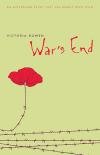
War's end by Victoria Bowen
Random House, 2008. ISBN 978174166662
(Age 12+) Gradually waking in a bed not her own, and surrounded by
shadows which flit back and forth, it takes a long time for Nell to
realise that she is in a hospital. Relegated to a back room, she waits
for her father to come and get her, in the mean time helping the
overworked nurses as they scurry between the overload of patients.
Nell has been hospitalized with Spanish Flu. It is 1919. The Great War
has ended, with disease making its way around the world, killing more
people than all the years of the war. When her father finally comes to
pick her up, the two are estranged and the trip home on the train with
her grandfather and father is unsettling. Throughout the trip
conversations between the threesome reveal the suffering of the father
away at war and the despair of those left back home. Stories which many
have had as children suffuse the story, making it all the more
accessible to the intended audience. And these stories are some which
are behind Nell's silence with her father.
Bowen includes a great deal of historical information, and while most
is relevant and quietly part of the story, some is more obvious, as
when Nell's father talks about his time in France. But the novel tells
a strong story with a likeable main character who carries the plot
along. Students interested in this unexpected ending of World War One,
will be intrigued and involved along with Nell as she makes her peace
with her father.
Fran Knight
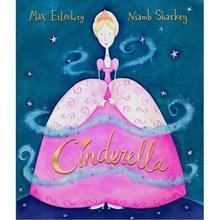
Cinderella by Max Eilenberg
Walker Books, 2008
(Ages: all) A beautiful retelling of the story of Cinderella, by
Max Eilenberg, this book will delight younger readers, older readers
and adults. Those who know the story will take pleasure in hearing it
again and pointing out the minor changes made by this author. Those for
whom the story is new, will be enchanted as Cinderella wins the prince
despite the behaviour of her step mother and sisters.
The illustrations by Niamh Sharkey will intrigue and amaze the readers.
The stepmother is sharp and angled, while her two daughters are
opposites, one large and cumbersome, the other tall and very thin.
Cinderella by contrast, is all she should be, demure, blonde, long
suffering and surprised. The small animals which dot the pages add a
comic element to the story. Each of the invitations to the balls (there
are three) is on a playing card and watch out for the size of the
girls' feet when trying on the glass slipper. All in all an agreeably
presented variation to the traditional story of Cinderella, which will
be a treat for those who read it.
Fran Knight
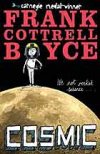
Cosmic by Frank Cottrell Boyce
Macmillan 2008
(Age 9+) Highly recommended. Liam is desperate to win a trip to a theme
park in China which offers a ride in The Rocket - the biggest thrill
ride in history. The only problem is that the winners have to be dads
accompanied by their children and Liam is only twelve years old. On the
plus side he is taller than average and has an embryo beard. He is also
in the gifted and talented group at school. These, he feels, are the
qualities needed to pass himself off as a dad. Against all odds Liam is
a competition winner and sets off to China with his friend Florida, who
reluctantly agrees to play the part of his daughter.
This is a wonderful story, whimsical, unusual, thought provoking and
funny. Cottrell Boyce confronts some topical issues - the nature of
fame and celebrity, the problem with parents who are either completely
absent or who push their children too far, and the underhand behaviour
of adults who manipulate children to fulfil their own obsessions.
Four winning dads and children arrive in China to discover that The
Rocket is much more than just a theme park ride. It is ironic that Liam
as the 'dad' realises he will be missing out on the adventure of a
lifetime as it is only the children who will venture into space; the
dads have to remain on earth and fill in all the boring forms!
Eventually Dinah Drax, the brains behind The Rocket, decides to offer
an ultimate prize for one of the dads - the opportunity to accompany
the children on their space flight.
Liam wins the prize, but his skills as a dad are sorely tested as drama
and danger threaten the space flight, and he faces up to the
possibility that they may not make it home. Liam's attempts to behave
in a 'dadly' way are superbly portrayed. At what point do you admit you
are scared? How do you make four frightened and argumentative children
do as you say when you are just a kid yourself? You may be gifted and
talented, but there are times when you still need your dad.
Cottrell Boyce has such a direct approach that young readers will
empathise with Liam's dilemmas.
Liam has always felt too big. He has been picked on by teachers because
'a big lad like you should know better,' and the other kids call him
names. It takes a trip to the far side of the moon to put his size into
perspective and make him feel small again.
This is a superb book. It would be an excellent story to read aloud in
upper primary and lower secondary, and should generate all kinds of
discussion and comment. The ending left me with a smile on my face and
a lump in my throat. I'm hoping that Cosmic will make a well deserved
appearance on next year's Carnegie shortlist.
Claire Larson.
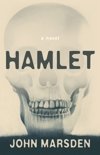
Hamlet by John Marsden
Text Publishing, 2008. ISBN 978192135147 1
(Ages: 12+) A modern version of the well known tale of Hamlet is sure
to raise eyebrows when the author tells us that he has made it more
accessible to an adolescent audience. Some will say it is dumbing it
down, but I found it to be better than that. Yes there is an element of
change for change's sake, and I was annoyed at the
sex scenes designed to titillate rather than further the plot, but
Marsden sticks to the storyline, while trying to expose the incredible
decisions Hamlet must make. Sometimes his attempts to translate
Shakespeare's language into a more palatable form, is clunky and
readers will notice the variation of style. Marsden includes some links
between the familiar scenes which draw out some of the possible reasons
behind peoples' actions which will make some events clearer for the
novice.
Hamlet and co are adolescent, Hamlet at boarding school in nearby
Gravatar when he hears of his father's death and mother's remarriage.
He lopes along, understandably trying to make sense of it all, but when
the ghost appears, he is torn. From playing football with Horatio, and
having lewd thoughts about Ophelia, he now must turn to graver actions.
He gives the players newly arrived at the castle, some extra lines to
say in their play and this serves to warn us all that dire deeds will
soon transpire.
When he next sees Ophelia, he is maddening in his response, when he
sees Gertrude he hears something behind the curtain, and stabs, killing
Polonius. Laertes then comes on the scene wanting revenge and Claudius
plots for Laertes and Hamlet to meet in a competition. The end is near
when Gertrude drinks the poisoned wine meant for Hamlet, Hamlet stabs
Laertes with the poisoned sword and is also wounded. Struggling towards
Claudius, Hamlet then stabs the king and dies.
And when is it set? The use of carriages and 'Your Royal Highness', and
the word lavatory mark it as nineteenth century, but when the butler
refuses to change around the furniture because it is not on the list of
things he does, I became confused. Sandwiches appear at Gertrude's
wedding, Hamlet and Horatio play a strange form of golf with racquets,
and talk of playing football on Saturday afternoons.
But perhaps I'm nit picking. Kids will enjoy the thrill of it all;
teachers will give it to kids as an introduction to the play; some
adults will read it to remind them of their schooldays, and some will
read it to find out how the author has remodeled the play to suit a
21st century audience. But many like me, will go back to the play,
eagerly wanting to reread the familiar and entrancing words.
Fran Knight
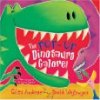
The pop up dinosaurs galore by Giles Andrease and David Wojtowycz.
Orchard Books, 2008.
(Age 3+) In this fun dinosaur book, the reader gets to see what
different dinosaurs look like. A tyrannosaurus rex chases after a small
dinosaur, a pteranodon swoops through the air, a triceratops nods to
its young, the neck of the diplodocus sways above the trees and the
earth shudders when the giganotosaurus stomps on the ground.
The appealing story about each dinosaur is told in rhyme and would be
good to read aloud. The vivid illustrations are a delight. Each
dinosaur has a quirky face and devilish grin, which should delight a
young audience.
There are lots of tantalising tabs and flaps for the reader to find,
each with fun objects behind. The pop-ups are wonderful and will give a
young user lots of opportunity to learn about the shapes of different
dinosaurs while having a lot of fun.
As with all pop-up books, care is needed to keep the pop-ups intact, so
this is a book to keep safe and treasure.
Pat Pledger