Ill. by Babette Cole. Bloomsbury, 2008. ISBN 9780747552499
(Ages: 4-8) Recommended. Hamilton has written an amusing, affectionate
tale of a father-daughter relationship that is not to be missed. Daisy
is all tucked up in bed and weary Dad says 'If I were you, I'd snuggle
down and go to sleep.' This sets Daisy imagining what it would be like
to change places with her father. She dresses him in a pink tutu, feeds
him porridge and then gives him a ride in her stroller down Main St.
She does all the things that she likes such as eating chocolate fromage
frais and going to the zoo. In turn, Dad decides that he can watch TV
and play while Daisy does the household chores. What does Daisy think
of this exchange?
The rhyming couplets are very enjoyable and will have young children
predicting what will come next. Hamilton has Daisy and her father using
language that they would have heard each other use like Daisy telling
her father that she will take him to the zoo if he 'were very, very
good'. This appealing style keeps the story rolling along.
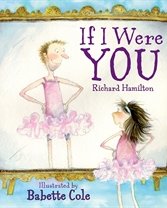
Babette Cole's illustrations are a delight. Children will find the
pictures of a stubbled-faced Dad, with his hairy chest and skinny legs
sticking out of a pink tutu, really amusing. Daisy is portrayed as a
happy-go-lucky little girl who enjoys having fun. The small, often
humourous details in the pictures such as the plump cat and untidy toys
add a lovely dimension to the story and attentive children will gain
endless pleasure looking at them.
This book with its zany illustrations and great rhythm would be great
fun to read aloud and a follow up activity could be to have the
children decide what they would do if they changed places with their
father or mother and how their parent might behave as a child.
Pat Pledger
30 Australian sports legends by Loretta Bernard and Gregory Rogers
Random House, 2008. ISBN 978174166286 3
(Age 10+) In 30 short chapters, Loretta Bernard gives bite sixed chunks
of information about sports and their participants in Australia.
Supported by a sound index with an easily read contents page and
illustrations by Gregory Rogers, the book will find a place in primary
libraries where students will want to read about sports and sportsmen
and women, either for class work or leisure.
Each chapter gives a potted history fo the sport at hand. In the
chapter on hockey, for example, is a paragraph detailing where
Australian hockey stands in the world, followed by a summary of their
success at the Olympic Games. Several paragraphs outlining specific
hockey players then follow, and the chapter is finished off with
snippets of information which younger readers would find interesting.
With chapters on AFL, hockey, paralympics, speed skating and sailing,
there is enough information for most students. Whether they be reading
for information or just using the book at home to dip in for interest,
the book will please many.
Fran Knight
The curious case of Benjamin Button by F. Scott Fitzgerald
HarperCollins, 2008.
(Ages: 10+) Poor Benjamin Button was born an aged man, much to the
embarrassment of his parents, living in Baltimore in the 1860's. His
father did not know what to do with this stooped, 70 year old with a
long straggly beard, hobbling beside him. Passing the slave market he
thought he should sell him, but he took him home instead. As father
aged, Benjamin became younger, and at a ball in 1880, he saw a woman
and fell in love. She accepted his proposal, despite the loud cries
from those around him, but she wanted an older wiser man, not realising
that Benjamin, looking 50, was really 20. Initially successful, their
marriage became strained when Benjamin became more agile and youthful
looking as she aged. Tied to a docile wife, he joined the American army
and served in the Spanish American War, where he was decorated for
bravery. Returning home, he was faced with the sad realisation that his
wife no longer cared for him, so he attended university, but as his
brain became younger, so did his attention span and his ability to take
in new ideas. Eventually he went to school, then kindergarten, and
finally was cared for by a nanny.
An unusual short story by one of the world's greatest writers, this
tale turns the normal progression of man on its head. As he gets
younger, Benjamin experiences the sorts of things younger men
experience, but the reader sees it all from a totally different
perspective. There are digs at American society along the way,
prejudice, social climbing, disparity between old and young,
universities, self made millionaires. Fitzgerald quietly mocks some of
the accepted institutions and precepts as he looks at youth and age.
This handsomely produced hardcover, designed to intrigue and delight
the readers of the 70 odd pages, has been published to coincide with
the release of the film.
Fran Knight
Tales of terror from the Black Ship by Chris Priestley
Bloomsbury, 2008.
(Ages: 11 +) Recommended. I'm so relieved that I read this before
buying it for my primary school library. This is definitely NOT
suitable for primary children and even at 11+ I would add a
proviso that it's not for the sensitive or faint-hearted. I feel
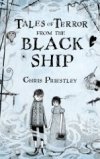
the front cover is a little deceiving: depicting two small children
holding hands and looking rather anxious and with a cartoon spider
hovering overhead. I predicted something fairly innocuous - nothing
could be further from the truth. However with the age caveat in mind,
this is a fantastic book and Priestly the master of terror.
Set during an unspecified time in history when smugglers and pirates
abound, Ethan and Cathy are unwell. Their widowed father has set off to
fetch the doctor and during his absence both children suddenly feel
better and are able to welcome a mysterious visitor to the coastal inn
where they live. To while away the time the stranger spins them a yarn,
and then another, and then another. Each chapter is a complete story in
itself, ideal for a ghostly bedtime read. The tales he tells are full
of menace, all the more so because they are about the everyday turned
foul - the terrible repercussions of a child's laugh, the horror of
flesh eating snails. There's a fair bit of gore and plenty of sinister
suggestion that will leave many readers feeling unsettled, this one
included!
The true identity of Ethan and Cathy and their mysterious visitor is
revealed in a marvellous twist. This is traditional, eerie storytelling
at its best. Priestly does not talk down to his readers and I had to
use the dictionary more than once to look up an unfamiliar word.
Just one further point, I have always been against the idea of
'recommended ages' being printed on books, but I think somewhere on
this book should be a warning that younger readers may be frightened by
the content, or perhaps I'm just reinforcing the nanny state? I would
be interested to know what other readers think!
Claire Larson
The boy who could fly by Laura Ruby
HarperCollins, 2008. ISBN:
9780007210107
(Age 10+) Sequel to The wall and the wing, this is another
original
fantasy set in New York. Gurl is now living with her long lost parents,
The Richest Couple in the Universe, and her friend Bug is busy making
advertisements and doesn't seem to have time for her. Gurl's classmates
at the posh school make her life a misery, and she can't even turn
invisible to get away from them because she has promised her parents
not to use her skill. But when a vampire appears outside her window,
Gurl just has to do something!
There is action and adventure galore in this off-beat story. A
fearsome octopus and a giant sloth are two of the fabulous monsters
that Gurl and Bug have to contend with, as well as a strange artist
called the Chaos King and scary vampires. While all the action is going
on, Gurl, or Georgie as she is now known, has to contend with the rich
bullies in her class, and yearns for her old friend Bug who seems to be
totally engrossed in gaining publicity for himself.
Ruby has combined an engrossing mix of adventure and an insightful look
at the meaning of friendship and the complexities of being rich and
famous.
Pat Pledger
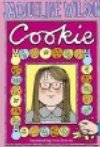
Cookie by Jacqueline Wilson
Random House, 2008. ISBN 9780385613972
(Age 10+) When Beauty's father becomes even more abusive and critical
of the girl and her mother, Dilly, the pair decides to leave their
'happy home'. Dilly and Beauty have put up with derision and nastiness
all their lives with Mr Cookson, the owner of a development company. He
treats them as if they were his servants, expecting Beauty to live up
to the name he gave her, expecting Dilly to be the subservient wife and
mother he needs to advertise his houses. All should be happy, to
parallel his ads, but it is not. Beauty would dearly love a pet, and
when a friend gives her a rabbit for her birthday, her father leaves
the hutch open and the bunny is killed.
Mr Cookson is unrelenting in his victimisation and bullying of his
small family, and this all comes to a head at Beauty's birthday party,
where her class mates, invited by her father, see his behavior first
hand. The girls from the private school her father insisted she attend,
reflect Beauty's father's bullying, and it is a relief to her when she
and her mother leave.
I found the constant bullying overwhelming, and it was a relief to me
when the pair reached the sea, and fell under the wing of a kindly
older man for whom Dilly began to work. The story resolves itself
happily and will be most pleasing to the readers to see the girl and
her mother finally develop some independence. Beauty and her mother are
almost indivisible in their lives with Mr Cookson, and while younger
readers will sympathise with Beauty, older readers will feel for Dilly,
a young woman who relied on her attractiveness to marry almost as soon
as she left school, rather than develop her talents.
Fran Knight
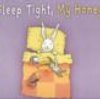
Sleep tight, my honey by Lisa Shanahan
Ill. by Wayne Harris. Hachette,
2008.
(Ages: 3+) Alice is a gorgeous bunny, but she just won't go to sleep at
nights. Lily and Monty do everything they can think of to get her to
sleep. They consult Grandma who advises them to sing a lullaby,
Tortoise, who suggests putting her into a shell, and Possum who thinks
she needs a big hairy pouch. Butterfly believes that a cocoon would do
the trick and Bat is convinced she needs to sleep upside down. Nothing
works, until Lily finds the perfect solution!
Young children who have a baby in the house will know about the noise
that can keep everyone awake at night. Shanahan has written a story
with a memorable refrain: 'Sleep tight, my honey, You gorgeous bunny'.
Children will enjoy repeating this as well as making the crying Waaa
waaa noises that baby Alice makes. Along the way they will
incidentally
learn about the nocturnal habits of many animals.
The illustrations by Wayne Harris are a delight, with beautiful
lavender, blue, yellow and pale orange colours. Alice has an engaging
grin on her little face during the day and a wide-open mouth to show
her displeasure about being left alone at night. The Rabbit family is
portrayed as a warm and caring extended family, where love is very
evident.
This is a book that pre-schoolers will enjoy, and that adults will love
to read aloud.
Pat Pledger
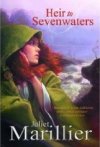
Heir to Sevenwaters by Juliet Marillier
PanMacmillan, 2008.
(Age 15+) Recommended. What a thrill to find a new book, which can be
read as a stand alone, from the Sevenwaters series. It comes after the
books, Daughter of the forest, Son of the shadows and Child
of the
prophesy. If this is the first book that a reader tries from
Marillier,
its strong storyline, courageous heroine and wonderful setting of
medieval Ireland and the Otherworld will be sure to entice the reader
to sample more from this author.
This is the story of Clodagh, the third daughter of the lord of
Sevenwaters. She a practical, domesticated young woman who supervises
the household when her ageing mother is pregnant. At her sister's
wedding celebrations, she meets taciturn Cathal, who guards many
secrets. When her infant brother is replaced with a changeling creature
and Cathal disappears, she must gather together all her courage and
determination to rescue her brother from the Fair Folk.
Clodagh's talents appear to be ordinary but when she has to act, her
selfless love gives her the ability to be brave and to find a way into
the Otherworld, the kingdom of the amoral king, Mac Dara. She is
willing to find a way to help the lonely Cathal, and to see beyond his
curt manner and difficult childhood. In an interview
Marillier talks
about the big themes of love, loyalty, courage, faith, honour, which
all abound in this book.
I couldn't put Heir to Sevenwaters down: I was so engrossed in
the
emerging characters of the book, its forest setting and the sheer
adventure and peril that faced Coldagh and Cathal. I loved the story of
the changeling, Becan, the love that Clodagh had for him, and the
developing romance between Coldagh and Cathal with all its difficulties
and misunderstandings. Marillier's flowing language brought her world
to life for me, and I hope that there will be more books in this series.
Pat Pledger
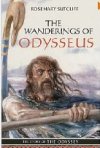
The wanderings of Odysseus by Rosemary Sutcliff
Frances Lincoln
Children's Books, 2008.
ISBN 978 1 84507 828 7
(Ages 10+) This reprint of Rosemary Sutcliff's retelling of The Odyssey
will have new followers as the readers dip into the stories they may
have heard or tales of names that are vaguely familiar. The Odyssey
tells the story of Odysseus as he and his men returned to Ithaca after
the Trojan Wars. The men have not seen their families for ten long
years, years which have taken their toll on their friends and allies.
The 15 stories presented here include many that are familiar, Cyclops,
the Enchantress, and the Isle of the Dead, for example, but many are
not so familiar and will thrill readers anew.
Sutcliff, who died in 1992, was an award winning writer of historical
fiction, and this book underlines why she was held in such high esteem.
The writing is flawless, uncomplicated and flowing. Even when the
reader knows some of the story, it is like reading it anew. Sutcliff
adds gravity and a world view in her retelling which gives the reader a
wider perspective of the tale at hand.
Fran Knight
Nyuntu Ninti (What you should know) by Bob Randall and Melanie Hogan
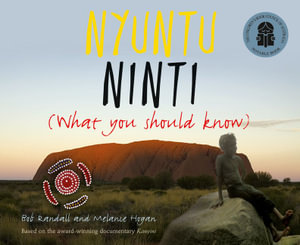
ABC Books. (Age: Primary school) A stunning book of photographs for younger children, Randall shows how the Anangu people of Uluru related to their land as he was growing up. The book was produced in conjunction with a documentary film, Kanyim, an Aboriginal word which ties love and responsibility. These twins of life in the desert ensured that the land was cared for and now Randall is hoping that the negative attitudes of today can be erased with Aboriginal and non Aboriginal people working together showing love and responsibility for their environment. Each double page spread shows an old photograph, taken a generation or two ago, paralleling the culture today. So we have a wonderful photo of an arid landscape coming alive with everlasting daisies, small shrubs and trees after some rain has fallen, while on the next page is a group of children taken several generations ago, showing how they use part of the land. Further on, an older picture of an Aboriginal family digging under a tree for food, is contrasted with a photo of Bob Randall holding some grubs and wild peach that he has collected. Today and yesterday are again contrasted. Each page shows the reader in some way about the struggle for existence then and now, and makes the dedicated reader look more closely at the land on which these people lived. The book, with Randall's simply wise words on each page underlines the ancient culture that is at the heart of Australia, and impels those who spend time reading and thinking about the book, to seek a better future for all. Fran Knight
Bog Child by Siobhan Dowd
David Fickling Books, 2008.
(Ages: 12+) Fergus is 17, in the middle of A-Levels and with his heart
set on a place at Aberdeen University to study medicine. The only
problem is that real life keeps getting in the way - namely his brother
Joey's prison sentence at The Maze for his involvement with the IRA.
Joey's decision to embark on a hunger strike in support of Bobby Sands
and other 'prisoners of conscience' has a huge impact on Fergus and his
family. Set in the Irish border town of Drumleash, Bog Child is
the
story of Fergus' incredible discovery, his first love affair and his
desperate attempt to save his brother from starvation.
At first I was unsure how the discovery of a 2000 year old body,
protected by the peat marsh, would link with an account of IRA activity
and the troubles, but Dowd effortlessly weaves Fergus's incredible find
with his anguish and fear for his brother. In an attempt to persuade
the IRA to call off the hunger strike Fergus agrees to work for them,
transferring small, anonymous packages across the border. As a keen
mountain runner he can do this easily. During his fell runs Fergus
meets Owain, the young Welsh soldier manning one of the border
crossings, and the two form an uneasy friendship. Indeed both Owain and
Fergus are called in to help move the Celtic body discovered in the
peat.
Fergus christens the young girl he finds Mel and the gradual uncovering
of her tragic story connects the reader to Joey's situation. I felt a
little uneasy that Dowd was drawing parallels with Mel's plight to that
of Bobby Sands and other hunger strikers. Memories of the Enniskillen,
Omagh and Warrington bombings will still be raw for many people, but
that is perhaps the greatest strength of Dowd's novel. She reminds us
of the human cost of intense belief - people willing to die of
starvation for a cause, and their mothers, fathers and brothers who
have to suffer the anguish and bitterness that this involves.
There are flashes of humour. Fergus's discovery of the content of the
packages he has been transporting for the IRA must be one of the most
unexpected and funniest I've read in a long time.
As we have come to expect from Dowd this is a brilliant story,
emotional but sparing, humorous yet brimming with anguish. However, I
do wonder how today's teenagers will view a novel set during a period
of history they will probably know little about. Will they truly
understand the strength of feeling the Maze prisoners experienced?
Perhaps thanks to the energy and power of Dowd's writing they will.
This is a fascinating story with characters that leap off the page. Try
it with your keen, sensitive readers. They are certainly in for a treat.
Claire Larson
High crime in Milk Bay by Moya Simons
Walker Books, 2008 ISBN 978 1
921150 60 1
(Ages 10+) The second in the series, The Walk Right In Detective
Agency,
has David and Bernice intrigued by the new family which has moved in
across the road form David's house. It seems a little bizarre that
David saw a child when the family moved in, but on enquiring at the
house, was told no child existed. His antenna works overtime.
In the meantime, Bernice and David have been asked to find Mr
Butterworth's missing goats, find out who has been pinching the flowers
in the municipal gardens, and try and work out who gave Cherry a note
asking her to the dance. All makes very funny reading, and when most
crimes seem to dissolve into each other, the detectives easily solve
the case.
Upper primary readers will enjoy the thrill of the chase, and see the
clues left by the author for the reader to arrive at the conclusion
along with David and Bernice, although sometimes, they will beat David
and Bernice to the end. A solid, funny and well written series,
the distinctive covers will make the set easily recognizable. Fran
Knight
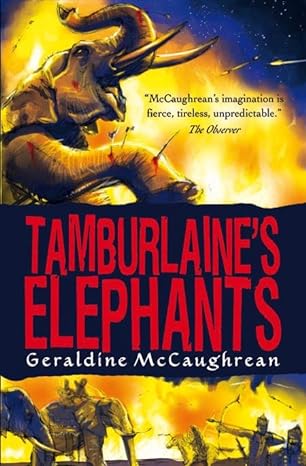
Tamburlaine's elephants by Geraldine McCaughrean
Usborne, 2008.
(Age: 10+) Highly recommended. This reissue of the wonderful
Tamburlaine's elephants in a paperback edition will encourage
many more
students to read this highly accessible historical story about two boys
meeting in the heightened tension of Tamburlain's sweep across Asia.
The warrior, Rusti, is determined to be the best warrior in the army,
facing the enemy with determination and grit, until he meets an
elephant, and the elephant's keeper, Kavi. Both boys learn new
things about themselves as their lives intertwine, and their need for
survival is paramount.
An incredibly exciting story, based on impeccable historic research,
Tamburlaine's elephants will give the reader an insight into the
armies
of the Mongol invaders, and the use of elephants, and their training.
And in the background; Kavi's marriage to his sister in law, the way
armies moving across the landscape, the unbelievable organisation of
these armies, the descriptions of the cities of the past,
contrive to make the story seem absolutely real.
Fran Knight
Themes India - History, Friendship, War, Elephants.
Fred the croc by Matt Zurbo and Sarah Dunk
Hachette, 2008. ISBN 976-734410856
(Ages 5 -7) Fred, the show-off crocodile, decides that the attention
from his adoring tourist audience who throw him peanuts and dead chooks
isn't enough, so he snaps up two of them, leaving only a camera and a
cap. The picture in the camera is developed and Fred is an instant
success, with a TV spot, sports nights and ads. Eventually he becomes
old news. What can he do to get back into the limelight?
The story flows along with plenty of zip to captivate a young audience
who will delight in the evil antics of Fred and his many ways of
getting attention. They will also appreciate the underlying theme of
fame, how fickle it can be and what some people will do to achieve it.
Children will delight in the bright and colourful illustrations in this
book, particularly the pictures of Fred's open mouth as he goes to
chomp on his victims.
This is a great read aloud book. It is a lot of fun to listen to and
look at, and has the added advantage of a theme to make young minds
think.
Pat Pledger
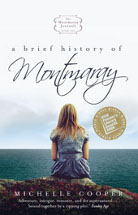
A brief history of Montmaray by Michelle Cooper
Random House Australia, 2008.
(Ages 13+) Sophie Fitzgerald lives on the tiny island of Montmaray in a
dilapidated castle. Hers is a small tight knit community. Her parents
are dead, her uncle, King John is mad. Together with her 17 year old
cousin, Veronica, who has been forced to take on the responsibility for
the kingdom, and her sister Henry, who is a tomboy, she has to contend
with a strange life. Contact with the outside world is restricted to
letters from her aunt and brother in England, and occasional visits
from Simon, the housekeeper's son. When Sophie receives a journal for
her 16th birthday, she decides to keep a record of what is happening in
her life. It is 1936 and things are changing in the world. When two
strangers appear on the island, Sophie is forced to recognise that life
is changing around her.
This is definitely a book that girls will enjoy. The romantic setting
of a crumbling castle and decaying ideals of royalty will appeal as
will the picture of an isolated family life, where the young girls have
had to grow up with no real parental supervision. The characters are
memorable, and the reader will become engrossed in the life that Sophie
describes as well as the hints of danger and adventure.
The device of using the entertaining and descriptive journal entries of
the fanciful Sophie gives the reader an easy and enjoyable entry into
her eccentric family life. A picture of the decay of the castle, and
the difficulties of receiving anything from the outside world because
of the dangerous sea entry are all vividly brought to life. The book
also contains literary references and quotes from such classics as
Pride and Prejudice and The Tempest. These add an depth to the story
and will appeal to those who love to read.
The historical background of the Nazi regime, Hitler and Mussolini also
raise interesting issues. Reading group discussion questions at the end
of the book look at truth and wisdom, the Spanish Civil War and the
options for women.
The unusual blend of history and the romantic setting, combined with
the coming of age of Sophie, will be sure to appeal to appeal to girls
who want an imaginative and thoughtful read.
Pat Pledger