Doubleday, 2008. ISBN 9780385613705.
(Age 10- adult) Highly recommended. A Printz honour book and winner of the JHunt award, Nation is a wonderful thought provoking book from an award winning author. Mau, a young islander, has paddled alone to a haunted island as part of his rite of passage to manhood. While he was there, a disastrous tidal wave has devastated his home and left him the sole survivor of his tribe. Meanwhile Daphne, distantly in line for the British throne, and travelling to meet her father, is shipwrecked by the same wave and ends up on Mau's island. Together they must try to claim back a life, and build up a home as gradually a slow stream of frightened refugees join them. Facing starvation, the grandfather spirits and a strange secret, the two band together.
Pratchett's humour is low key but very effective. He softens the harsh picture of the deadly aftermath of the tidal wave and the trials of rebuilding and learning about another culture with lots of humorous incidents, like the time when Daphne serves Mau hard scones flavoured with dead lobsters, or when she learns how to make beer.
It is the complex themes and thinking that make this book stand out.
Pratchett says in his author's note: 'Thinking. This book contains some. Whether you try it at home is up to you'. He challenges his readers to examine culture, politics, religion and imperialism, while telling an engrossing story with two memorable main characters in Daphne and Mau, and a set of well rounded secondary characters. Mau questions everything especially the religion of his ancestors, and reluctantly slips into leadership of the small band. Daphne, too, has to accept the hardships that leadership thrusts upon her.
This is a rich rewarding book that will stand the test of time and will lead to much questioning about how we look at other cultures and what makes civilisation.
Pat Pledger
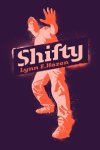
Shifty by Lynn E. Hazen
Allen and Unwin, 2008. ISBN 9781741755909.
(Age 12+) Soli, whose nickname is Shifty, because he shifts in
and out of trouble, has a new foster mother Martha, and new foster
siblings, Sissy and baby Chance. Martha is the sort of person who
trusts 'the good in people, even when the bad part is showing up more
than anything else', and Shifty is happy to stay with her. However a
new social worker is critical of the care being given, and Shifty is up
to his old tricks of driving a car without a licence and parking
illegally. Can he manage to stay out of trouble and make a new home for
himself?
An engrossing and heart warming story; this book draws the reader in
from the first page. Shifty tells his story in his own words, which are
often humorous and heart-rending and he makes the characters in this
tale come alive. He discounts any accountability for his actions,
moving the blame to other people when he gets caught, but Sissy,
scarred and withdrawn, is able to show him that he can take care of
others and be more adult. Shifty in turn is prepared to act as Sissy's
big brother and help give her a feeling of family. Martha, their foster
mother, is such a big hearted woman that the reader is cheering her
along in her attempts to keep this little family intact.
This is a rewarding book. It describes the trauma of being an abandoned
baby, in the case of Shifty, or coming from a cruel, abusive family as
Sissy has, or a mother on drugs like Chance. The need to belong and to
be loved and the importance of family are emphasised. The strong themes
of family love, homelessness and taking responsibility for your own
actions are portrayed very well, and reluctant as well as able readers
will enjoy Shifty's exploits and angst.
Pat Pledger
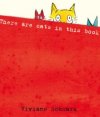
There are cats in this book by Viviane Schwarz
Walker, 2008. ISBN
9781406300949
(Age 3+) Highly recommended. What an innovative novelty book! The story
starts with the text on the inside section of the dust jacket,
instructing the reader to 'Come play with the cats in this book, Tiny,
Moonpie and Andre' and instead of a title page, the text reads: 'The
cats aren't on this page'. The reader is invited to turn the pages and
play with the cats, winding wool, exploring cardboard boxes, having a
pillow fight and being flooded with fish.
The brightly coloured cats are adorable and Schwarz has drawn each one
with its own identifiable face and character. The book has strong flaps
that lift and the cats involve the reader in what's happening by
requesting that a page be turned, or a cat be helped.
With wonderful illustrations that are bold and brightly coloured, a
story that pulls the reader in and the fun of a pop-up book, this is a
winner as a read aloud, a bedtime story and a beginning reader. Walker
Books have even provided knitting patterns for each of the cats!
Pat Pledger
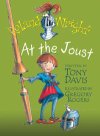
Roland Wright at the joust by Tony Davis
Ill. by Gregory Rogers. Random House, 2008. ISBN 978174166329 7
(Ages: 7-12) This book highlights many positive human qualities,
including friendship, loyalty and perseverance. It is the third novel
in the Roland Wright series and shows Roland's progress as a page at
Twofold Castle.
Roland, supported by his pet mouse Nudge, is continuing on his path
towards becoming a knight and has been improving his sword fighting and
jousting skills under the mentorship of his hero, Sir Lucas.
While Roland is looking forward to his first tournament, Jenny
Winterbottom, a neighbour from his home village, unexpectedly arrives
at the castle and becomes a surprising ally of Roland. The startling
events of the tournament and the tension created by the antagonistic
Hector, significantly impact on Roland's attitude. He achieves a
greater understanding of what it truly entails to be a knight who
maintains a sense of courage, loyalty and compassion, in spite of the
unfortunate events that often arise in life. Roland is taught to
remember the difficulties and rejoice in the triumphs.
Tony Davis appears to have thoroughly researched the medieval era and
any unfamiliar terms are unobtrusively explained within the story. This
novel can be easily read and understood without reading the previous
books in the series. The characters are well rounded and all make
important contributions to the plot and the illustrations and language
are charming and often comedic. This story is likely to absorb
children's attention as they begin to care about Roland and his
ambitions and want to accompany him on his future adventures.
Louise Illingworth
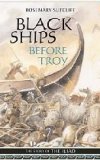
Black ships before Troy by Rosemary Sutcliff
Frances Lincoln
Children's Books, 2008.
ISBN 9781845078270
(Ages 10+) Black ships before Troy is the retelling of the story of The
Iliad, the tale of the Greek ships going to Troy to take back Helen,
taken by Paris, the son of the king of Troy. This book tells of the
nature of the god of discord, Eris, leaving a golden apple before the
three goddesses, with the words, To the fairest, written across it.
This caused the discord which finally erupted into the Trojan Wars, and
so set in train the events which followed. A fabulous retelling which
will appeal to upper primary readers.
Fran Knight
Say hello by Jack and Michael Foreman
Walker, 2007
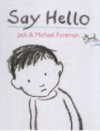
(Ages: 5-8) A deceptively simple picture book with a powerful message,
Say hello tells the story of a young boy who is left out and all
alone,
watching while other children have fun playing together. 'When
someone's feeling left out, low, it doesn't take much to say...
'Hello!' is the underlying message.
Michael Foreman's sparse black and white illustrations alleviated with
some blue lines and a red ball, complement the story's theme of
loneliness and sadness and bring to life the longing of the isolated
boy to be part of the group. The joy on his face when he is included is
a delight.
This picture book is on the 2009 Cilip Kate Greenaway Medal longlist
and is sure to help children to identify with those who are left out of
activities. The idea of just saying 'Hello' is a simple way to helping
children to feel included. The end papers contain many different words
for saying hello and will be fun to use. Discussions about loneliness,
friendship, inclusion and bullying could be engendered from the book.
Pat Pledger
The Game Players of Titan by P.K. Dick
Voyager, 2008. (Age 15+)Unfortunately,
the late P.K. Dick is probably best known for movies made from his
stories rather than the books themselves. As the man behind such iconic
movies as Bladerunner and the Arnie cult classic, Total
Recall and
more recently Speilberg's Minority Report, it's sometimes easy
to
forget just how great a writer Dick really was. Although not his most
well known work, and certainly not his best, The Game Players of
Titan explores many of Dick's trademark themes; the nature of
reality,
artificial intelligence, psychic powers and drug (or otherwise) induced
hallucination.
The
story, set in a post apocalyptic America, centres around one of Dick's
typically neurotic protagonists, Pete Garden, who we are told has just
gambled away his wife and half of California. Devastated by war with an
alien species and wracked by radiation, the Earth has cooked up a way
for the virtually sterile population to rebuild itself; a privileged
group of people gamble vast swathes of property and spouses in the hope
that ultimately they will have 'luck' and produce offspring. The
concept is weird, even for Dick, but it makes for an interesting plot.
The story begins with Pete trying to find a way of re-winning his
beloved Berkley, at the same time warding off his suicidal tendencies.
However, the story quickly develops into a thriller in which nothing
and no one is quite what they appear to be.
Although
not a masterpiece like The man in the High Castle or Do
Androids
Dream of Electric Sheep, The Game Players Of Titan still
manages to
entertain and perplex in true Dick style. Dick is always asking
us
what it really means to be human and that's what really sets him apart
from most other sci-fi novelists. His characters are painfully human
and their fallibility makes them, and his books, all the more likeable.
Michael Pledger
The volcano book by Dr Gill Jolly
black dog books, 2008. ISBN 978
174203027 2
(Ages 8+) What a delight to hold and read all that is the best in
presentation, design, photographs and writing of an information book.
Kids will love to read this book from cover to cover or dip in to
gather information, or read a chapter or two before bed. Subtitled,
Erupting near you, the book entices the reader with a cartoon volcano
as the A in the title word, and the stunning picture on the front of a
group of houses in the foreground with an erupting volcano behind. What
child could resist opening the book? Inside the interest level is
maintained with maps, photos, illustrations a glossary and short index.
Each double page spread sets out one of the volcanic eruptions, such as
Krakatoa, Vesuvius, Mount St Helens, and Stromboli, amongst others.
Each has a side panel with a map and a drawing about the volcano. The
information given is concise, but with enough detail to satisfy the
middle and upper primary reader.
Each photograph used is an eye popping experience, giving the reader a
bird's eye view of what molten lava is like, or a body from Pompeii, or
a school bus buried by lava, or the destruction of Montserrat. The
photos chosen will have students' imaginations running wild with
excitement. The last two pages are devoted to several escape stories,
and these round the book off nicely.
Again, black dog books has produced an information book that serves as
an exemplar to other publishers.
Fran Knight
One beetle too many by Kathryn Laskey and Matthew Trueman
Candlewick
Press, 2008. ISBN 9780763614362
(Ages: 10+) This strange picture book, concerning the life of Charles
Darwin is neither one thing nor the other. Written in the form of a
wordy story, it purports to be a biography, presenting Darwin's early
life, culminating in the voyage of The Beagle in 1831. He
collected specimens from all over South America, filling the ship with
animal bones never seen before; shells collected from the tops of
mountains and finch skulls from the Galapagos Islands. He sometimes
came into conflict with the captain of the ship, over the ideas
developing in his remarkable brain, questioning the story of the ark
and the great flood of the Bible.
Back in England he spent many years, refining and developing his ideas
on how the animals of the world emerged. His first published book, his
journal of the voyage of The Beagle, appeared ion 1839, and his
tome which described the ideas he developed, On the origin of species,
finally appeared in 1859, with similar success as the journal, but
arousing much controversy. Laskey devotes much space to the idea
prevalent at the time, that god created the earth, man and the animals,
trying unsuccessfully to explain why Darwin's book was controversial.
So we have a biography/picture book, attempting to make Darwin's life
and ideas accessible to readers in junior primary school, but using a
text that is difficult to read and illustrated in such a way that
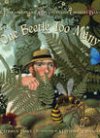
makes Darwin an eccentric cartoon character. The facts given in the
book are sound but if it is to be an information book, why not use the
marvelous techniques used by better non fiction publishers: time lines,
fact boxes, side panels, photographs etc. I missed that reinforcement
of information, and came away with just a story of a strange man who
did not discipline his children. People wanting information about
Darwin and his ideas will need to look further.
Fran Knight
Lord of the animals by Fiona French
Frances Lincoln Children's Books,
2008. ISBN 978184507916 1
(Ages: 4+) This retelling of a Native American Creation Myth was first
published in 1997, and tells the story of how man was created by the
Coyote which created the world. Each animal is asked what he would have
as the lord of the animals, but each has a different idea, based on
their own attributes. Coyote asks them to fashion their own idea in
clay, and then as they sleep, their clay models are swept away by the
river, and only the one made by Coyote remains.
When he breathes life into his model, man stands up with the legs of a
bear, the sight and hearing of the deer, the skin smooth like a fish,
and with his ability to swim, and most of all, the cunning and
cleverness of the coyote.
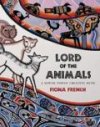
Fiona French uses the patterning of the Indian Nations to fashion her
bright, angular drawings, recalling the detail on the hem of the Indian
woman's dress, the decoration at the top of the tipi, the saddle on the
horse and the armbands on the warrior. The story is taken from two
sources quoted on the publication details page, and is a story of the
Miwok Indians of what is now California. The book, a reprint, is a
beautiful introduction to the myths and legends of the Native
Americans.
Fran Knight
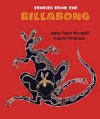
Stories from the billabong by James Vance Marshall and Francis Firebrace
Frances Lincoln Children's Books, 2008. ISBN 9781845077044
(Age: 8+) I approached this book with trepidation. The cover, colour
and
illustrations all reminded me of many illustrated books from the 1950s
and 1960s when books of Aboriginal stories were first produced, without
Aboriginal verification or involvement and told wholly from a European
perspective. These books told Aboriginal stories as if there was one
nation, without regard for the variety and difference between the
groups spread over an area larger than Europe.
Dipping into this book I found, initially that I was wrong. There is
regard for Aboriginal ownership. Stories are authenticated and the
illustrations are done by Francis Firebrace, a Yorta-Yorta man from the
northern Victoria, southern New South Wales region. Acknowledgment is
given on the fly leaf that the stories are from the Yorta-Yorta people,
and in the introduction on page 6, a nod is given again to those
people.
But going further, the stories are from a range of areas. They are not
all from the Yorta-Yorta people, nor do they remain in the Murray River
district of western Victoria. The stories range from Central Australia
(The lizard-man and the creation of Uluru) to Northern Australia (Why
brolgas dance and How the crocodile got its scales) to Queensland (Why
frogs can only croak). And I cannot imagine many of them being told
around a campfire in the Australian desert, as most are set in much
wetter areas.
So I was disappointed. There is a need for a well illustrated,
educational book of authenticated Aboriginal stories reflecting the
range and variety of Australian flora, fauna and land forms, involving
Aboriginal people in all stages of production, but this is not it.
Fran
Knight
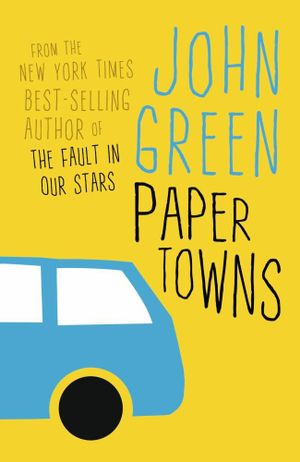
Paper towns by John Green
(Age 13+) This deliciously funny story about the relationship between two people, Quentin, Q to his friends, an 18 year old unspectacular nerd and his next door neighbour, the beautiful and most unpredictable Margo Roth Spiegelman, will have readers rolling with laughter. The opening chapter details one night when Margo, distraught by the fact that her boyfriend is sleeping with another, takes revenge. And what revenge. She wakes Q in the middle of the night, enlists his help with his mother's car, and takes him to a supermarket where he buys a strange assortment of disparate goods, then spends the night with her, exacting revenge on the people who have been a part of the conspiracy to keep her boyfriend's liaison secret. During the course of the night, Q sometimes detects a wistfulness which is unlike his strong, confident friend, and he is aware that her strings may be coming unraveled.
When over the next few days, Margo fails to turn up at school or home, her parents, tired of her antics, change the locks on their door. Q is distraught, and following what he believes to be clues left behind by Margo, becomes closer to her than he ever imagined. He drives large distances across Florida, using Whitman's Song of myself as a guide, tracking down the places she has stayed.
But it is graduation night that he finally assembles the clues, and works out where she is. Together, he and his three friends drive to New York State to find her, and her paper town. What could have been a sentimental journey becomes one of revealing themselves to their friends, and Q realising that no one really knows another. Although he has lived next door to Margo all his life, he doesn't really know her or what motivates her. A funny, sometimes desperate look at friendship and relationships, this novel will be eagerly read by middle secondary and senior school readers, and impel them to look more closely at those around them. Fran Knight
Chains by Laurie Halse Anderson
Bloomsbury, 2009.
(Age 11+) Highly recommended. The harrowing story of slavery in the
Americas is given full reign in
this tightly controlled story about Isobel, a young girl, who along
with her five year old sister, Ruth is sold onto another after the
death of her mistress. The girls had been told they would receive their
freedom, but the person to whom they are sold treats them with disdain
and coldness. The plight of young girls, slaves in a household, where
they are expected to be up before dawn and go to bed after everyone
else, is told in punishing detail. Living in New York, the fact that it
is 1770, adds a greater terror to their lives.
The American War of Independence is all around them, in their household
where the owners are loyal to the British, to the streets crammed full
of soldiers, to the shops, closed through fear of reprisal, to houses
being burnt to the ground, to the prisons where captured American
soldiers are starved and left to rot, their naked bodies thrown into
common graves. The air is full of war and spying and death, and Isobel
becomes a go between for several captured soldiers and their officers,
allowed to live in boarding houses.
It is a time of fear and retribution, and Isobel knows full well to
stay
out of her mistresses' way, but falls foul of her often enough to incur
dreadful punishment. This amazing story will thrill its readers, and
they will gain an awful insight into the role of slavery in the
foundation of the United States of America, and the personal lives of
girls taken from their parents and made to live lives of drudgery and
fear. Isobel's story will be continued in the sequel, Forge.
Highly
recommended for upper primary and lower secondary readers.
Fran Knight
Tender morsels by Margo Lanagan
Allen and Unwin, 2008. ISBN
9781741147964
(Age 16+) Published as an adult book in Australia, and young adult in
the US, this is an engrossing, horrifying tale of Liga, a young girl
who is abused by her father and raped by a gang of village youths. Liga
lives in a medieval-like community, where there is little help for a
young girl and less compassion for one who has a fatherless child.
Unable to tolerate her situation any more, she mysteriously manages to
retreat to an alternative universe where all the people are kind, and
where she brings up her two children, quiet Branza, and inquisitve
Urrda. It is a world which lacks conflict and danger. Inevitably the
real world intrudes on the trio in the form of a dwarf looking for
treasure and boys transformed into bears, and Urrda, longing to
explore,
makes her way across the border to reality. Eventually all three must
adapt to a place where good resides beside evil and kindness beside
cruelty.
The first section of this book is harrowing with its descriptions of
incest, abortion, gang rape and the effect it has on Liga. I felt
unable to continue with it and put it aside for a couple of months
until positive discussion on Adbooks,
an online US based young
adolescent literature group, motivated me to
finish it. The second half was less traumatic and very thought
provoking. How much can we live in a fantasy world before the real
world intrudes? Should we retreat from the real world or live in it
fully? How much protection should a parent give a child and when do
they allow adolescents to move forward from the safety of the family
home? How does a parent help their children when they discover that the
real world is often hard and cruel?
Lanagan's writing is superb and she has created unforgettable
characters and events. This is not a book for the faint hearted with
its violence and dark themes, but it is a memorable coming of age story
for a mature and intelligent reader.
Pat Pledger
Victor's quest by Pamela Freeman and Kim Gamble
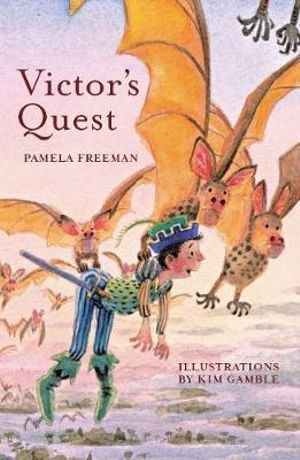
Walker Books, 2008. ISBN 9781921150319 (Ages 7+) When Victor is sent on a quest by his mother, the queen, to find a princess to marry, Marigold the gardener gives him a series of small pots containing balms and ointments to use. Knowing that he is not too clever, she gives him strict instructions, and he finds on his quest, that they come in very handy indeed. He gives the wounded bat some salve for its wounds; the blind eagle is given some sight restoring balm, while the witch with the calloused and rough hands is given some rosemary and glycerin to put her right. Each body that he helps repays his kindness when he finds Valerian, trapped behind a garden full of overly large and ferocious chickens, keeping her captive. Although not a princess, Victor does save her and brings her back to the queendom to marry her, just as his mother instructed. This delightful story was shortlisted for younger readers in the 1997 Children's Book Council of Australia awards, and has been republished by Walker Books, along with its sequel, Victor's challenge. Fran Knight
 Doubleday, 2008. ISBN 9780385613705.
(Age 10- adult) Highly recommended. A Printz honour book and winner of the JHunt award, Nation is a wonderful thought provoking book from an award winning author. Mau, a young islander, has paddled alone to a haunted island as part of his rite of passage to manhood. While he was there, a disastrous tidal wave has devastated his home and left him the sole survivor of his tribe. Meanwhile Daphne, distantly in line for the British throne, and travelling to meet her father, is shipwrecked by the same wave and ends up on Mau's island. Together they must try to claim back a life, and build up a home as gradually a slow stream of frightened refugees join them. Facing starvation, the grandfather spirits and a strange secret, the two band together.
Pratchett's humour is low key but very effective. He softens the harsh picture of the deadly aftermath of the tidal wave and the trials of rebuilding and learning about another culture with lots of humorous incidents, like the time when Daphne serves Mau hard scones flavoured with dead lobsters, or when she learns how to make beer.
It is the complex themes and thinking that make this book stand out.
Pratchett says in his author's note: 'Thinking. This book contains some. Whether you try it at home is up to you'. He challenges his readers to examine culture, politics, religion and imperialism, while telling an engrossing story with two memorable main characters in Daphne and Mau, and a set of well rounded secondary characters. Mau questions everything especially the religion of his ancestors, and reluctantly slips into leadership of the small band. Daphne, too, has to accept the hardships that leadership thrusts upon her.
This is a rich rewarding book that will stand the test of time and will lead to much questioning about how we look at other cultures and what makes civilisation.
Pat Pledger
Doubleday, 2008. ISBN 9780385613705.
(Age 10- adult) Highly recommended. A Printz honour book and winner of the JHunt award, Nation is a wonderful thought provoking book from an award winning author. Mau, a young islander, has paddled alone to a haunted island as part of his rite of passage to manhood. While he was there, a disastrous tidal wave has devastated his home and left him the sole survivor of his tribe. Meanwhile Daphne, distantly in line for the British throne, and travelling to meet her father, is shipwrecked by the same wave and ends up on Mau's island. Together they must try to claim back a life, and build up a home as gradually a slow stream of frightened refugees join them. Facing starvation, the grandfather spirits and a strange secret, the two band together.
Pratchett's humour is low key but very effective. He softens the harsh picture of the deadly aftermath of the tidal wave and the trials of rebuilding and learning about another culture with lots of humorous incidents, like the time when Daphne serves Mau hard scones flavoured with dead lobsters, or when she learns how to make beer.
It is the complex themes and thinking that make this book stand out.
Pratchett says in his author's note: 'Thinking. This book contains some. Whether you try it at home is up to you'. He challenges his readers to examine culture, politics, religion and imperialism, while telling an engrossing story with two memorable main characters in Daphne and Mau, and a set of well rounded secondary characters. Mau questions everything especially the religion of his ancestors, and reluctantly slips into leadership of the small band. Daphne, too, has to accept the hardships that leadership thrusts upon her.
This is a rich rewarding book that will stand the test of time and will lead to much questioning about how we look at other cultures and what makes civilisation.
Pat Pledger