Frances Lincoln Children's Books,
2008. ISBN 9781845078850
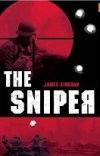
Ages 11+ With the German Army advancing, and the Russian Army still
nowhere to be seen, Stalingrad is the last hope of stalling the army
until help arrives. Going to school one day, Tania is surprised to find
that they are assigned to fill sandbags to buffer the petrol storage,
and the next few days, they are taken away and trained to use
anti-aircraft guns. But later, when she takes a message to the army,
she is drafted into a sniper training crew, and from there is smuggled
back into Stalingrad to do what she was trained to do, kill Germans.
Base on a true story, the tale of this sixteen year old schoolgirl is
riveting. We hear of her training in anti aircraft guns and then their
use, followed by her sniper training and then putting that into action.
Each step of the way takes us further into this young girl's life and
how it was changed by war. The astonishing thing is that she survived
the battle of Stalingrad, credited with many kills, and Riordan,
working in the Battle of Stalingrad Museum in 2002, was invited to meet
her, a little old woman sitting in the corner. From their discussions
and discussions with others, following her death , Riordan wrote this book,
a fitting tribute both to her bravery and those of all children caught
up in war.
Fran Knight
Broken Glass by Adrian Stirling
Penguin, 2008. ISBN: 9780143007982
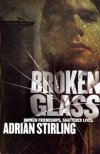
(Age 15+) Broken Glass is a typical, small country town with a
wheat silo, a pub and an abattoir where most people work.
Fifteen-year-old Danny Clarke is dying to get out of town and find some
excitement in his life. When Nile Monahan moves in from the city with
his Mum and an attitude, Danny sees him as an alternative to the
boredom he experiences. Nile likes to test the limits and Danny is
attracted to his anti-social behaviour that contains elements of danger
and thrills. Things, however, get rapidly out of control; Nile goes too
far and ends up in a correctional centre. Danny is left in Broken Glass
and, as Nile's best friend and supposed partner in crime, has to bear
the contempt and hatred of the townsfolk. Danny is starting to get his
life back on track when Nile is released and returns to Broken Glass.
Danny tries to keep his distance, but when he sees his younger sister
Leanne being attracted to Nile, he decides to take matters into his own
hands, with chilling results.
Comment: this is a grim story about evil and the possibility, or
otherwise, of redemption. It poses the question of whether everyone is
capable of committing evil, given the right circumstances. It contains
themes of rape, suicide and murder and contains strong language. It
would be suitable for senior fiction.
Marilyn Coleman
Belmont and the dragon by Mike Zarb and Robin Gold
Random House, 2008
ISBN 978 1 74166 320 4
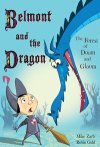
(Ages: 6-9) The orphan Belmont looks longingly through the
gates of his orphanage at the lovely Princess Libby as she rides out
for her daily ride around the park. But it is not the princess he is
really looking at, it is her guard of majestic knights. He longs to be
one. Finding that he can escape this place he does so, following the
guard into the park, a place of doom and gloom, where he meets the fire
breathing but inept dragon, Burnie. Hearing the cries of the princess,
the two are glavanised into action, saving her from the clutches of the
evil Redwitch and her sometime companions, Zonk, Chester and Bertah.
All comes right in the end as Belmont receives the reward he has
dreamed of, being an honorary knight of the realm.
A cute easy to read story for early readers, this story will please the
most fastidious of children. The drawings by Robin Gold, chart the
adventures of Belmont, against the background of the city of Old York.
Things are turned upside down, as older readers will recognize features
form new York, Magical Square Gardens, Centaur Park, and so on, adding
to the humour of the story.
Fran Knight
Purple snow by Eric Lobbecke
Random House Australia, 2008. ISBN
9781741662450.
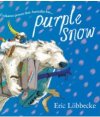
(Age 3+) On a fabulous trip, Cockatoo travels to the North Pole to see
white snow at Polar Bear's home. He meets seals, penguins and a walrus,
but finds that there is not as much snow as he imagines because
pollution has warmed everything. The animals really need snow to make
them feel better and the only solution for Cockatoo is to offer them
purple snow. Everyone laughs at the idea of snow being a purple colour
but Polar Bear decides to travel to Australia to see it.
Children will love Lobbecke's zany illustrations of the animals.
Cockatoo, wrapped up in a long scarf and wearing enormous boots is
especially appealing and the inquisitive penguins going through his
suitcases will produce some giggles. Thought provoking contrasts
between the freezing Cockatoo at the North Pole and the sweltering
Polar Bear in Australia are drawn well.
Children will have fun guessing what the purple snow is, and observant
readers will see where Cockatoo took Polar Bear to see it. With its
themes of environment, weather and friendship, this will be a unique
and beautiful book for the library.
Pat Pledger
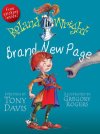
Roland Wright : brand new page by Tony Davis
Random House, 2008.
ISBN 9781741662306
(Ages 7+) The second in the series of stories about Roland
Wright, will not disappoint, as the boy has now made it to Twofold
Castle, where he is to be a page, one of the many servants of
King John. His father and brother, Shelley along with their friend, Sir
Gallawood accompany him to the castle, and leave him in the care of the
constable of the castle, from whom he will learn some of his duties. He
quickly learns to curb his impatient tongue and taken to his room,
finds that the page does not have a comfortable bed in his own room
that he was expecting. But more disappointments are in store.
A funny look at a boy's growing confidence in an unusual place, Roland
Wright will hold the interest of readers in middle primary school as he
learns to find his way around the castle, the bullies and the other
pages.
Fran Knight
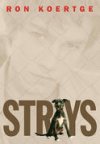
Strays by Ron Koertge
Walker Books, 2008. ISBN 978140631612 4
Arriving at his placement with the inept Mrs Ervin, and another boy to
be placed in tow, Ted thinks more about the dogs in the neighbourhood
than the Rafters, the couple that has taken him in. Mr Rafter secretly
tells him that he is in the upstairs room with Astin, who is about to
graduate and so age out, when the room will be his own. But Ted is
still stunned, coping with the fact of his parents' deaths and the fact
that he is an orphan in the care of the state. He is confused, reticent
and alone as he unpacks his meagre possessions and places them in his
side of the room.
The only things Ted communicates with are the animals, as he talks to
those that pass by, understanding their grumbles and foibles, better
than he understands his own. Luckily the other two boys he is placed
with are open and friendly and soon Ted finds himself talking more
openly with people around him, including those at school, and
understanding animals less.
I loved this book, as it tells of Ted's gradual ease back into society,
helped along by Astin and his friends. The gentleness of the book
struck me, there is no violence or outrageous behavior, but it is warm
and non threatening, and Ted responds to this. He develops, despite the
social worker, and the strange couple he lives with, into a young man
with a future.
Fran Knight
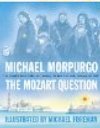
The Mozart question by Michael Morpurgo
Walker Books, 2007.
(Ages 10+) Sent by her boss to interview the best violin player in the
world, Lesley is given one imperative command, not to ask the Mozart
question. At the violinist's house in Venice, Lesley is awkward and
tongue tied, unsure of how to start. The amazing Paolo Levi is in front
of her, a junior reporter given her first big assignment because of her
boss' skiing accident. Inadvertently she asks the question, totally
ignorant of its meaning, and because of her innocence, Paolo decides to
tell her.
Morpurgo has created an exceptional way to tell children of the horror
of the concentration camps in Europe during World War 2. Paolo tells
Lesley of his parents and the hidden violin. Seeing a violinist in the
streets, he learns to play the instrument, and when one day, he takes
the busker back to his home, to reveal to his parents his skill, the
three realise that they know each other. They were all violinists at a
camp, where they were forced to play in an orchestra while people were
killed in the gas chambers.
An emotional read, one that reinforces that a secret is just a lie,
tells of the camps and their horror through what happened to one
family, particularising the many images we see of the dead and dying at
these places. It is Morpurgo's gift that he can tell children of such
places with humour and a positive point of view, allowing children to
absorb what happened there. Foreman's illustrations stress the calm
nature of Venice and the pot of tea is repeated at the start and finish
of the book, drawing the reader into the familiar after reading about
this dreadful episode during war.
Fran Knight
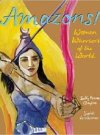
Amazons! Women warriors of the world by Sally Pomme Clayton and Sophie Herxheimer
Frances Lincoln Children's Books, 2008. ISBN 9781843076603
(Age 9-12) Seven stories from around the world make up this go-girl
book, which is well worth a place in a library collection. Ranging from
the story Queen of the Amazons, set in Greece, to Durga
demon-slayer,
set in India and Warrior princess set in Egypt, this terrific
collection retells stories that illustrate the bravery, cunning and
intellect of its heroines, as well as something about the culture of
the country. After each story is a section that contains either facts,
interactive games, tips or quizzes about how to be an Amazon today. I
particularly liked the Amazon spell, based on a 6th century Sanskrit
hymn that starts with:
Help me face this challenge,
Slay the demons of fear.
Help me listen to my dreams
Show me self-confidence..
Sophie Herxheimer's illustrations are sure to please with their bold
colours and representations of heroines and events that reflect the
different countries that the stories originated in.
The collection would be a good one for a teacher or parent to read
aloud, and girls will enjoy the messages about strength, intellect,
courage and love and being the best that you can be, as well as having
great fun with the interactive sections.
Pat Pledger
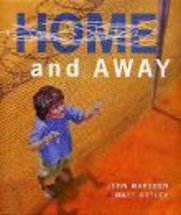
Home and Away by John Marsden and Matt Ottley
Hachette, 2008.
ISBN 978073441056 6
Picture book, unpaged
(Ages: middle school to adult) The irony of the title will have
immediate appeal as readers recognize that the TV show of the same
name, with its emphasis on dysfunctional families is far removed from
the story unfolding before them. This book will shock; it will draw
kids in with its take on home and what that means. Not the frippery of
the television show of the same name, but a no holds barred look at
what it means when you and your home are separated, irretrievably.
Told in diary format, the narrator tells of the days following an
invasion and how it affects the family. With little detail, the family
is introduced in the first four pages, then the fifth page, April 27,
with the deep red colour of blood reflected through the aquarium, war
begins. Over the next four pages, the war is described, again sparely,
but the childlike illustrations mirror the horror of what is happening.
By August 29, rations are being handed out to the homeless, and on
September 16, the stark realistic illustration shows the scared and
undernourished family sitting by a candle, talking about what to do.
All around is black, the features of the family stand out in bleak
contrast. The alternate page illustrations depicting a child's drawings
underscore the brutality of what is happening, and the diary written on
scrap pieces of paper, reiterates the transitory nature of their lives.
What a time could be had in a class when this book is teamed with Shaun
Tan's, The Arrival, Mahtab's story by Libby Gleeson, Soraya
byRosanne
Hawke and Boy overboard by Morris Gleitzman among others. All
point to
the differences between our students and our safe lives, with kids
elsewhere, those who have no home. Tomorrow when the war began and its
sequels, all gained credibility because they put Australian kids into
the shoes of having to fight for their home, and this carries the same
theme. The picture of the bombed Sydney Harbour Bridge, the possum on
the road, point to the story being set in Australia, and so engenders
empathy from the readers, as the usual story of refugees is turned on
its head.
The statistical evidence, that one in 7 of the world's population is
homeless is hard to ignore, and Marsden and Ottley have made that
statistic as close to home as they possibly can.
Fran Knight
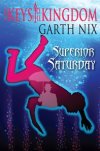
Superior Saturday by Garth Nix
(Keys to the Kingdom series) Allen and
Unwin, 2008.
(Ages : 10+) Saturday's adventure in the Keys to the Kingdom
series has been much anticipated, and does not disappoint. Arthur
is in receipt of the fifth key, but has realised that the Nothing is
growing ever more rapidly. He tries to find help, firstly from Dr
Scamandros, who makes Arthur realize that he is growing bigger and
stronger, and then from the Old One, but none can answer his questions.
Using the fifth key to go through the mirror to the citadel, Lord
Arthur is held back a little by Scamandros holding onto his shirttails.
But once there, they are galavanised into action. Suzy has taken on the
mantle of general, wearing the clothing which denotes her status, and
she is amazed at the powerful, strong man before her. Lord Arthur is
expected to save the House.
Nix always creates a most magical place where ideas, words and
descriptions meld into one, making a story line at once easy to follow,
but demanding that the readers always use their imaginations, taking
hold of the ideas presented, using their intelligence to make sense of
the world created before them. Arthur and his allies must hold out
against the increasing power of Superior Saturday and find the sixth
key to stop the destruction happening all around them.
The many followers of Arthur's quest will be eager to read this and
then the seventh and last in this excellent series. For those impatient
to find out more, then the website,
can be trawled.
Fran Knight
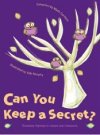
Can you keep a secret? Timeless rhymes to share and treasure
Selected
by Mark Carthew. Ill. By Jobi Murphy. Random House, 2008.
This collection is a very appealing mix of well known nursery rhymes,
songs and lullabies. All the popular favourites such as Mary has a
little lamb can be found here as well as lesser known rhymes from
different cultures.
The book is well organised into different sections containing nursery
rhymes, playtime rhymes, action rhymes, counting rhymes, finger plays
and lullabies. Instructions are often given to enhance their use, and
this would be helpful for parents and early childhood teachers. The
origin of the rhymes is given when known.
Murphy's illustrations are gentle and humourous, and complement each of
the rhymes, and the soft but luminous colours are a delight. Each of
the sections is colour coded to make it easy to find the rhymes, and a
padded cover and ribbon bookmark give it a handsome appearance.
Grandparents would find this a great book to give as a gift, and it is
a very useful book to have in the library collection or for
kindergarten teachers to have as a handy reference for song and story
time.
Pat Pledger
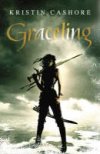
Graceling by Kristin Cashore
Gollanz, 2008.
(Age 14+) Recommended. If you had the power to kill with your bare
hands, what would
you do with it? This is the question that faces Katsa, whose grace
gives her the power to do just that. Katsa was born with one blue eye
and one green eye, and this distinguishes her as a Graceling, a person
who has a special talent. Her talent for killing is unscrupulously used
by the king and to help allay her guilt, Katsa starts a secret council
that tries to stop injustice. When Po, another royal Graceling, arrives
at the court, looking for his grandfather who has been kidnapped, Katsa
joins with him to solve the mystery.
With Katsa, Cashore has created a strong, independent character that
girls will love. She has to deal with the guilt that besets her when
she carries out her cruel king's commands as well as the fact that she
cannot trust anyone except her cousin. She explores the meaning of her
grace, loyalty, freedom and love at the same time as she demonstrates
her warrior skills.
Katsa has to identify what her talent is and how it should work for her
because sometimes a grace is not as obvious as it looks. She gradually
realises that you don't have to be what other people expect of you but
if you have a grace, then there is a great responsibility to use it
properly. This theme of making a talent work and being good at
something, of working out what is right for the individual pervades the
story, both in using a grace and when contemplating marriage with Po.
Cashore has created a unique world, with an unforgettable heroine and
lots of action. Fans of Tamora Pierce's Alanna series and Robin
McKinley's The blue sword will love it.
Pat Pledger
The magician of Hoad by Margaret Mahy
Harper Collins, 2008. ISBN
9781869507640.
(Age 13+) Recommended. I am a great fan of Margaret Mahy and this book
didn't disappoint. Heriot Tarbas is a simple farm boy who has had
strong visions of another boy during his life. When he is forced to run
from his home he is led to Diamond, a city that is ruled by the King
and a Hero. On the edge of the city, he meets his destiny: a Hero, a
Magician, a noble girl and a mad prince. Forced to work as a magician,
he befriends Dysart, the strange prince and helps Cayley, a
fascinating, homeless fugitive. The King of Hoad is attempting to bring
peace to the country, but he is surrounded by nobles, whose allegiance
is uncertain, and the Hero is hungry for power for himself.
This is a coming of age story. The reader becomes engrossed in Heriot's
growth from a young boy tending animals and vegetables and plagued with
dreams, to a magician, who performs at the king's request. He questions
his powers and what he should do with them. In the meantime Linnet, the
young noble girl and Dysart the prince also face dilemmas in their
quest for love and a place in the kingdom, and the enigmatic Cayley
hones her war-like skills..
Although there is plenty of action in this story, this is not the usual
fantasy. It demands that the reader follow the characters' emotions and
actions carefully to work out what is happening. It is a challenging
but ultimately satisfying read, with beautifully written prose, a
fascinating main character and two strong females.
Pat Pledger
After the Flood by L. S. Matthews
Hodder Children's Books 2008
(Ages 8+) Highly Recommended.A boy's home destroyed by flooding.
A new life in the country. Friendship, conflict and the odd adventure
thrown in. Another run of the mill story? Well not exactly. After the Flood introduces a world where mobile phones are
precious
possessions to be preserved for emergencies and powered by solar
energy. This is a society where pampered pets are a thing of the past
and animals have to work. It's a place where cars are a rarity, where
'The Menders' has replaced most other shops and where extremes of
weather batter and boil the countryside.
After Jack and his family move to a small village he meets Michael,
sickly and bored, an invalid who is cared for by his sister. Their
friendship is sealed by the arrival of Van, a frightened and
unpredictable horse that Jack longs to care for and train. Jack and
Michael work hard, hoping that perseverance and kindness will tame the
wild horse. When a tornado wreaks havoc through the village Van's help
is needed to reach a trapped and injured man, but will the untried
horse be able to rise to the challenge?
L. S. Matthews is a master of the cliff hanger. The opening chapters
describing the disastrous flood suck the reader straight into the
action and are nail biting stuff. Characters are entirely believable as
is the picture Matthews paints of a society ravaged by climate change.
But as if that is not enough Matthews plays her final card on the very
last page, a twist that left me speechless. Fantastic Stuff. Read it
with your upper juniors. You're all in for a treat!
Claire Larson
The tall man by Chloe Hooper
Hamish Hamilton, 2008 ISBN 9780241
015407 276p Hbk
(Age: Senior Secondary/adult) Beyond the political rhetoric of
intervention and dysfunctional Aboriginal communities, The Tall Man
focuses on what happened in one community, Palm Island, off the
Queensland coast, in 2004. There, despite the findings and
recommendations of the Black Deaths in Custody Inquiry of 1990, an
Aboriginal man, Cameron Doomadgee, died in the cells on the island,
after being arrested for swearing at Senior Sergeant Chris Hurley, a
decorated and experienced Police Officer who stands 200cm tall. Chloe
Hooper a journalist, had never heard of Palm Island, but asked by the
counselor representing the Aboriginal community, Andrew Boe, to cover
the proceedings of the inquest and write a few articles for the daily
press, she accompanied him to the inquest.
The few articles which would take only days expanded into a book: one
which retells the story of Cameron's arrest and death and its enormous
and far reaching consequences, with the tension of a well written crime
novel, a page turner, but all the more breathtaking because it is true.
Hooper gives a potted history of the Aboriginal residents of Palm
Island, brought to live in dormitories, taken from their families,
marrying and having children, continuing to live on the island, the
only home they know. The end of the missionaries saw alcohol and the
abuse of that substance led to 7 police permanently stationed there. In
this paradise, there seemed to be an ever-present and increasing line
dividing the black and white residents. But it is not only the
black culture that Hooper explores, she also includes the Queensland
police culture, with its investigations and commissions. That police
force has been under a microscope for some years, and this death in
2004, refocused media attention on its operations yet again.
The inquest was adjourned twice, keeping everyone in limbo until it
resumed. In the intervening years, Cameron's son, Eric, hanged himself,
and the community became even sadder and more tense. The description of
the trial and verdict is numbing, as Hurley is pictured by the police
and some media as a victim. The postscript that he is now trying to
have his name removed from any responsibility in Cameron's death is
telling of the power of the police in Queensland.
For students looking at Aboriginal Studies or Australian History, for
those wanting a book about justice and injustice, or relations between
black and white, or just an involving read, then this book fits the
criteria. Foremost a story of a shocking event in our recent past, The
Tall Man impels us all to look more closely at what is happening in
minority communities.
Fran Knight