Random House, 2008.
ISBN 9781741660715.
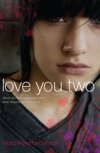
(Age 15+) Pallotta-Chiarolli won great acclaim in 2000 for her family
history Tapestry. Her new novel, Love You Two, continues to explore
themes of culture, heritage and relationships within the Italian
community she knows and understands.
Pina's voice is strong and courageous - she is independent but forever
faced with the deep seated, confining views of many of the older
generation in her family. One day Pina makes an extraordinary
discovery which tosses her views to the wind. Her steadiness is
shaken and she runs away to stay with a favourite uncle. Here her
world is thrust about again with another discovery about the nature of
her family.
It seems as if Pina is teetering on the edge of a cliff - how will she
unravel these family secrets and what consequences will they have for
her life?
Pallotta-Chiarolli's characters are well drawn - strong and
memorable. It is easy to become part of Pina's world, experience
her confusion, frustration and heart ache. The Italian flavour of
the story is well conceived - humorous asides at the Italian way of
life sit alongside a deep respect for its culture. There is also
a strong sense of needing to recognise Italian life in a modern world
and to be accepting of changing attitudes. Life in these
communities in Australian cities can be a battle for many, for many and
complex reasons.
The book confronts these problems well, though the subject matter may
be too large for the scope of the story. Palotta-Chiarolli's
issue is with recognising the array of possible relationships in a
family without discrimination - I sense that she tries to encompass too
much here - the storyline becomes contrived and unbelievable in parts.
The subjects of gender, sexual and family diversity make this a mature
read.
Julie Wells
This morning I met a whale by Michael Morpurgo
Walker Books, 2008.
ISBN 9781406306460
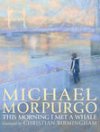
(Ages 8+) A plea for world sanity is startlingly presented by Morpurgo,
aimed squarely at children, as he describes what the whale says to a
child he meets on the Thames early one morning. Younger readers will
accept the whale's speaking with aplomb, readily taking its words to
heart. The boy, Michael, walking along the Thames, bird watching, sees
a whale. It seems to be looking directly at him, so he goes further
down to the shoreline to view the animal more closely. The whale speaks
to him of the horrors around the world, pollution, war, tearing down of
rainforests, and impels the boy to do something abut it.
When he writes all this down, in the second part of the book, his
teacher asks him to read his story to the class, and then when he tells
them that it is all true, they deride him for lying. But, later in the
day, news comes that the whale is stranded in the Thames and the boy
rushed to help. His affinity with the whale and the dying of the mammal
while people are trying to help it convinces his class that he is
telling the truth.
As with many of Morpurg's stories, what may seem on first reading, a
strange unbelievable tale, is on rereading and contemplation, a multi
faceted, well written fable for our times. He endows animals and
children with the sort of fibre missing amongst adults, and so
encourages children to see the world in a different way. For thoughtful
readers and classes where world issues are discussed, this book will be
read and reread.
Fran Knight
Cowboy baby by Sue Heap
Animated DVD read by Kevin Whately. Walker
Books, 2008.
(Age 2-5) Cowboy Baby won't go to bed unless he has all his toys with
him so Sheriff Pa sends him off to find Texas Ted, Denver dog and Hank
the Horse. He puts on his hat and boots and goes out into the desert to
find his friends. But even when he has them, he decides that it isn't
time to go to bed and plays hide and seek with Sheriff Pa.
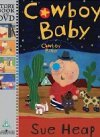
The whimsical story is beautifully illustrated with the bright bold
reds, oranges, greens and blues of the desert landscape, and simple
line drawings for the people. Cowboy Baby is delightfully cute with a
large, round head and a tiny hat, and his toys have gorgeous grins on
their faces. The print is large and bold.
This tale would be respond very well to being read aloud. An animated
DVD of the story, read by Kevin Whately, who has a beautiful rich
voice, is a welcome addition to a delightful story. A great story for
bedtime, or afternoon rest time.
Pat Pledger
Cruisin' by Brian Caswell
Woolshed Press, 2008.
ISBN 9781741663440, p/b, 149pp.
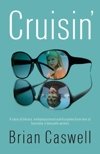
(Age 12+) With an appealing teenage voice Brian Caswell invites us to share a holiday with Jules Macaffrey and his mother aboard The Polynesian Queen, destined to be a two week 'holiday cruise of a lifetime'. Jules recalls that his mother hastily bought raffle tickets, wrapped only in a towel when the Girls' Brigade called at the door, and promptly dumped the said tickets in a hallstand drawer which he likens to an 'archeological dig'.
Reluctantly, Jules joins his mother, along with Aunt Pru and her 'weird son Adrian', to make up the winning four tickets for the 'ideal nuclear family'. Jules' father has long gone and his grandparents had already booked to see the Holy Land! On board Jules is prepared to share time with retired couples and spoilt juniors, but, in fact meets an interesting array of characters which make life at sea busy and challenging! He is besotted, at a distance, by Jenna Hamilton, glamorous and aloof. He is victimised by Barry Barnes, a kid just out to cause trouble. He is worried by the antics of his cousin Adrian. His only friend is Suzi, and she is trapped in a wheelchair. This cruise is going to be an interesting one!
Brian Caswell creates a light and lively story around these unlikely cruisers!
The conversations are fast and humorous; the situations are pieced together with plenty of action and coincidence. Largely Jules' story, each chapter is alternated between his and Suzi's viewpoint - this makes for a better understanding of character overall, and provides greater depth to a rather light-hearted but clever read. This will appeal to most teenagers and it is well written.
Julie Wells
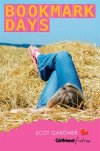
Bookmark days by Scot Gardner
Allen and Unwin, 2009. ISBN 978174175
578
7
(Age 12+) Another book in the series, Girlfriend Fiction published by
Allen and Unwin,
will be eagerly snapped up by the adolescent girls in your school. Scot
Gardner is a tried and true author whose books never fail to please and
this is another.
Set in a small rural community, the tale turns around two girl cousins,
Avril and Katie, who see each other most holidays when Katie and her
family come to the country from Melbourne to stay. This year, however,
things are different. Katie's parents have split, although no one is
supposed to know, and Avril, home schooled, has spied the boy next
door, Nathaniel, and has developed quite a crush.
But Nathaniel's family and that of Avril do not speak. Something
happened many years ago which has caused a rift between the two
families, and so Avril and Nathaniel must be most careful about when
they are seen together. Katie brags about her sexual experience to
Avril and when both girls go to the local show, things become heated.
Avril forces the now drunk Katie into the car and they drive back to
the farm, finding along the way that the next door neighbour's car has
overturned. Stopping to help, Avril saves the day, ensuring Nathaniel's
father gets help.
But things escalate again when the girls go to camp overnight with
Nathaniel; and his friend. Found out by the warring grandfathers,
Nathaniel's grandfather seeks them out, ordering the girls home, and
the boys back to their home., Finally Avril takes control of things and
forces a compromise between the families. It is a neatly resolved story
of long held misbeliefs and bad relationships between families, and
will be eagerly read by early secondary girls.
Fran Knight
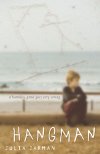
Hangman by Julia Jarman
Andersen Press 1999, reissued
2008.
(Ages 11+) Highly Recommended. Hangman is one of those novels
that sucks you in, grabs you by the throat, gives you a good shaking,
and leaves you weak, wrung out and hugely satisfied.
Danny is different - he understands Latin, is fascinated by History and
bumbles along in his own world, oblivious to the rules of the
playground and the necessity of fitting in. Asked to leave the safety
of his private school because of poor academic results, he is dropped
into Lindley High, a bog standard comprehensive with its fair share of
bullies.
Toby knows how to fit in at Lindley High. He's good at football, has
the right haircut and can stand up for himself. Danny and Toby know
each other because their families are friends and Toby is filled with
trepidation when his mum asks him to befriend Danny and help him settle
into his new school. Toby knows exactly what will happen if he starts
going around with a geek.
Jarman wracks up the tension as life at Lindley High becomes
increasingly traumatic for Danny. The insidious nature of the bullying
drips away, eroding his confidence and sense of identity. Characters
spring to life. Nick, one of the main perpetrators is particularly well
drawn and Jarman explores his motivations, so we do have some
understanding and even sympathy towards his hatred of Danny. Toby
vacillates between pity for Danny and frustration that he doesn't stand
up for himself and fight back.
During a school trip to Normandy the bullying flies out of control as
the steady build-up of nasty comments, name-calling and ostracising
lead the power hungry Nick to force complete meltdown on poor Danny.
Jarman explores the issues of responsibility. When is it wrong to 'dob'
someone in it? How far are parents responsible for the actions of their
children? How do you extend the hand of friendship to someone
'different' without being ostracised yourself?
Danny witnesses two blackbirds attacking an albino blackbird. The
children visit the Peace Museum at Caen where they see evidence of
people persecuted during World War Two because they were different.
Occasionally the similes may seem forced, but Jarman never preaches.
The voices that come through are those of the children themselves as
Jarman builds to a catastrophic denouement that kept me on the edge of
my seat until the final page.
A powerful, fast moving, thought provoking read for both boys and
girls, Hangman would make an excellent class reader for lower
secondary
students.
Claire Larson
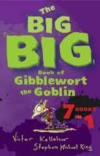
The big big book of Gibblewort the Goblin by Victor Kelleher
Random
House Australia, 2008 ISBN 9781741663150
(Ages 8+) Kelleher has now written seven of these short books for
younger
readers, of the adventures of a Goblin called Gibblewort. Each
adventure shows his worst characteristics, and each lands him in some
very hot water as he tries to lie or cheat his way out of a situation.
Number one, Goblin in the bush tells of his efforts to get to
Australia. Once he gets here, the illustrator and author have a great
time introducing their character to the range of animals, birds and
reptiles resident in the bush. The illustrations will have readers in
stitches as Gibblewort finds the Australian wildlife to his chagrin.
And so on they go, telling neat little stories about Gibblewort, ending
with number seven, where he tries his hardest to get sent back to
Ireland, only to find himself back on Australian shores. Great fun and
most appealing to younger readers.
Fran Knight
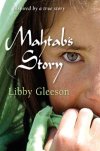
Mahtab's Story by Libby Gleeson
Allen and Unwin, 2008. ISBN978 174175
334 9
(Ages 11+) In the middle of the night, Mahtab's parents wake her with
her clothes ready at the end of her bed. She must dress quickly and
quietly if they are to escape from their Taliban controlled city. So
begins a hectic and heart stopping journey across the mountains into
Pakistan where they wait for 8 months for news of their father who had
gone ahead. Taking a plane to Malaysia and then Indonesia they then
board a boat heading for Darwin. The journey is perilous and they
hesitate to think of what may lie ahead.
In its bare bones, the story is one of many such stories: escaping a
hated ruling junta, putting their lives into the hands of others,
separation, hunger and even death, that make up the history of
Australia. But this story is very recent, these people, vilified by a
former government, now make up a growing part of our population and
their stories, part of our consciousness and history, must be told.
Gleeson interviewed a number of girls whose experiences mirror that of
Mahtab, to get the story right, and she has succeeded brilliantly. The
emotions evoked in this book will stay with the reader, encouraging
sympathy, acceptance and tolerance.
Along with Rosanne Hawke's vivid story, Soraya the Storyteller, and
Morris Gelitzman's Boy Overboard, and Deborah Ellis' wonderful series
about Parvana and her friends, these novels give our students an
opening into another world, far apart from their own, and reflect the
stories of some of our students' lives, enabling us to develop
understanding and empathy.
Fran Knight
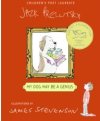
My dog may be a genius by Jack Prelutsky
Greenwillow Books, 2008. ISBN 97006623862 3
(Ages 6-8) With over 50 books of poetry published, and the first
Children's Poet
Laureate in the USA, Jack Prelutsky has a deserved reputation for his
poems containing a lot of different word play. From the 4 line simple
play upon word sounds such as I thought I saw, where he uses the
letters, B, C, I and Y to make a rhyme, to the more complex poems
containing 32 lines of rhyming poetry about something silly like, I
often mow the bathtub, each poem is different and engagingly silly, and
sure to please lower primary students.
Not only will they amuse and attract younger readers, especially when
read aloud, they will form a basis for poems to be created in the
classroom, using some of this poems as a template for their own
work. I am climbing up a ladder, for example, has words going
from the cautious to the nervous to the plain scared the higher the
climber goes. I can imagine this being used as a template for other
poems about something a child may be doing. But whatever is done with
the poems, or however they are read in the classroom or at the library,
they are all fun, and the illustrations only increase the enjoyment
that smaller children will gain from this book.
Fran Knight
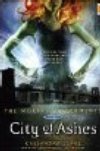
City of ashes by Cassandra Clare
Walker Books 2008.
(Ages 14+) Fans of the Twilight series will eat up The
Mortal
Instruments books. City of ashes is the second novel in the
series
following City of Bones, with a third to be published in March.
The
books need to be read in order. In City of ashes, Clary Fray is
having
problems. She has discovered that she is a demon-slaying Shadowhunter
and that her father Valentine, is determined to destroy the world. Her
mother is still in a magic induced coma and her world is inhabited with
werewolves and demons. She had thought that she was in love with Jace,
but it looks as if he might be her brother and she has to control her
feelings for him. Moreover, the dependable Simon, who has been in love
with her forever, has changed and somehow she has to track down her
father and save the world!
For fans of urban fantasy, this is a suspenseful and engrossing read.
Clary is a strong character, who isn't afraid to take the initiative.
There is lots of action and some quite scary moments, in particular an
episode when Clary meets the Queen of the Underworld. The wicked
Valentine also keeps the conflict and emotional tension rolling along
at a cracking pace.
The love interests are quite compelling: not just the triangle of
Clary, Jace and Simon but the relationship developing between Alec and
Magnus Bane. The adult characters are also charismatic and the reader
becomes quite involved with the unrequited love that Luke has for
Clary's mother.
I enjoyed the first two books in this series as they were exciting and
well written, and it was compelling following Clary's growth in
strength and independence. I'm looking forward to the third book.
Pat Pledger
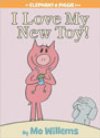
I love my new toy by Mo Willems
Walker Books, 2008. ISBN
978-1-4063-1471-7
(Ages 3-6) Recommended. Piggie has a brand new toy that she can't wait
to show Elephant. She loves her new toy but doesn't know what it does.
Elephant thinks that it may be a throwing toy, and tosses it into
the air. When it comes down, it has broken into two. What will Piggie
do?
This is a delightful first reader, with large print, few words on each
page and amusing line drawings that complement the text. The characters
are lovable and the theme of the importance of friendship that runs
through the story is excellent.
Not only would it enthrall a young child just beginning to read, it is
also a great book to read aloud. It is a worthy winner of the 2008-2009
Cybils
award.
Pat Pledger
Easy library displays to promote reading by Fran Knight and Pat Pledger
Pledger
Consulting, 2009.
A
little gem for those of us who, despite our best intentions, find
putting
together displays time consuming and difficult to get done amongst the
myriad
of tasks and responsibilities in the library.Once
again the experience and skills of Fran Knight and Pat Pledger are
brought
together in this LinksPlus
publication for the benefit of teacher librarians, school support
officers, and
library helpers. In particular this booklet would be of great use to
new staff
in school libraries and those people working in small libraries to use
throughout the year.
The
display ideas are based on a calendar of yearly events, some familiar
such as
ANZAC Day and Australia Day, as well as some not so familiar events
including
International Day of the Dog, World Press Freedom Day, Homeless Day and
Banned
Books Week! For each of the listed events there are ideas for
activities and
displays as well as related websites. The authors have then created
lists of books
which support that event. The lists are
comprehensive and as such lists do, will also generate further interest
and
ideas. The booklet lends itself to having notes added. The list of
banned books
is fascinating but I leave that to the reader to explore! A section of
general
display ideas completes the booklet and includes some motivating ideas.
This
resource has to be followed by Easy Displays 2 as we will all
want more!
Jane Toop
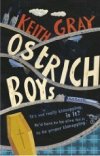
Ostrich boys by Keith Gray
Random House, 2008.
(Age 13+) Highly Recommended. A compelling exploration of
friendship, trust and loyalty driven by a punchy storyline and three
very realistic and likeable teenagers.
Unusually in teenage fiction girls take a back seat as Gray explores
friendship among boys. In one telling episode Kenny's new girlfriend
questions just how supportive boys are of each other, suggesting that
they never talk in depth or discuss their emotions. For Blake, Kenny
and Sim actions certainly speak louder than words. Enraged by the
hypocritical adults present at the funeral of their friend Ross they
want retribution and justice. In a moment of madness they steal Ross's
ashes and head for Scotland to the place he always longed to visit.
Along the way they meet numerous colourful characters and in true Road
Trip tradition encounter some very hairy situations. However as the
title suggests the three friends are hiding both secrets and emotions
which begin to unravel as it becomes clear that the circumstances
surrounding Ross's death are not as straightforward as they first
appeared.
This is a complex plot that unfolds gradually and inexorably, testing
friendship and loyalty to the limit. Gray has such a sureness of touch,
driving the Road Trip plot with consummate skill and empathy and using
episodes of black humour to relieve major tensions and anguish. By the
denouement I felt I really knew these boys and I didn't want to leave
them behind.
Try this one with your male readers. Fans of Kevin Brooks are sure to
love it.
Claire Larson
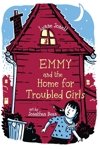
Emmy and the Home for Troubled Girls by Lynne Jonell
Illus. by Jonathan Bean. Random House Australia, 2009. ISBN:
9781741663280 (pbk)
(Ages: 10-13)This intriguing book features Emmy, a girl who has
made an amazing discovery. She has learnt how to communicate with
rodents, and when necessary, shrink to a size where she can enter the
active and vibrant rodent city.
In this second book in the series, Emmy and her best friend Joe and his
little brother Thomas become involved with the plight of five girls who
have mysteriously gone missing. Emmy's evil ex-nanny Miss Barmy became
a rat in the previous story and is now suspiciously conspiring to
ingratiate herself with the inhabitants of rodent city and Emmy wants
to know why. Furthermore, the controlling Miss Barmy and her parents
are secretly holding the five now miniature-sized girls captive in
their attic.
In contrast to all of these bizarre circumstances, Emmy is attempting
to befriend a group of girls from her school and bring a greater sense
of normality into her life. But it is proving difficult with her
frequent conversations with rats, chipmunks and other talkative
rodents. Eventually Emmy achieves her goals with a great deal of
teamwork from new and old friends and is able to overcome her
embarrassment at her involvement in the rodent world. She learns to
appreciate the support and friendship that the rodents provide and
gains a new level of self acceptance in her life.
In this novel, American author Lynne Jonell has written a complex and
detailed story with many twists and unexpected events. It may be
helpful to readers to have completed the previous novel Emmy and
the
Incredible Shrinking Rat to familiarise themselves with the many
characters and settings in this book. Some of the language and
references may suit an older primary school aged audience. The text
size is larger than you might expect and could encourage children who
may not otherwise attempt a book of this length. The illustrations by
Jonathan Bean provide a flip book style effect which is a fun addition
to the novel and the cover artwork is also appealing. A level of
tension builds throughout the story and will inspire a capable reader
to determine how Emmy and her friends resolve their many difficulties
in a pleasing conclusion.
Louise Illingworth
Stella Maris Parish School
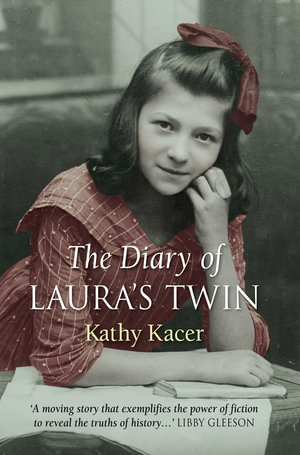
The diary of Laura's twin by Kathy Kacer
Allen and Unwin, 2009. ISBN 9781741756678
(Age: 11-14) Although many books have highlighted the trauma of the
Warsaw Ghetto during the Holocaust, the 1941 diary entries of Sara
Gittler balance the expectations of present day twelve year old Laura
Wyman. Laura complains that collecting $1000 door to door for the
African Well Fund should show her commitment to her impending Bat
Mitzvah. Plagued by friends quoting Beatles' lyrics, a steady stream of
school assignments, and ninth grader bullies, Laura is not impressed
when her Rabbi suggests that she contact the elderly Mrs
Mendelcorn. After all, she has already read 'The Diary of Anne
Frank' and feels she already knows a lot about the Holocaust.
Young Sara's diary entries are immediate, descriptive and
compelling. She mourns her loss of school, books, medicine,
personal freedom and fresh food. The distinction between the lives of
these two young girls is exemplified in the story of Sara's friend
Deena, who treasures the few coloured pencils and scraps of paper that
she has been able keep. David, Sara's fourteen year old brother is more
aware of the outside world and his involvement in underground
activities adds a sense of hope in this desperate life. He scrounges
bread, risking his own life.
By late 1942, the diary includes disturbing examples of starvation and
brutality. In parallel, Laura's ordered world is provoked by vandals
desecrating a local cemetery. Laura learns the power of honesty and the
strength of standing up for personal beliefs.
The black and white photos interspersed throughout add a sense of
realism to this disturbing tale. The inclusion of real individuals
(Janusz Korczak, the teacher who supplied hope to orphans, teenage
Mordechai Anielewicz and other Resistance fighters), adds power to
narrative. But most compelling is the realisation that war affects more
than soldiers.
It would be interesting to compare this to Yellow Star by
Jennifer Roy.
I found The Diary of Laura's twin more believable than the
approach in
Yolen's The Devil's Arithmetic and more accessible to
adolescents (but
less academic) than John Boyne's Boy in Striped Pajamas.
Pauline Crawford