Allen and Unwin, 2009.
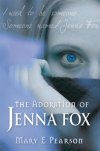
(Age 13+) Highly recommended. Who is Jenna Fox? Is she the miracle that
her parents call her? Why is
she hidden away? When Jenna wakes up after 18 months in a coma, she
can't remember the devastating accident that she was in, and what she
can recall about the person she was from before her accident doesn't
add up. Mary E. Pearson has written an engrossing story about medical
ethics and what it means to be human. Set in the not too distant
future, the book paints an enthralling picture of just where medical
science could take society.
Teenagers will identify with Jenna's angst. Not only is she uncertain
of who she is and how she got there, but she has parents who adore her,
but who totally control her and seem to be keeping dark secrets from
her. As Jenna gradually learns to do things and pieces of her memory
come back, she is faced with the dilemma of working out how much of a
person is needed to be human, and what makes a human. She begins to
make conscious choices about what she does and who she wants to be, and
it is this that reveals her humanity.
This is a gripping read and raises many interesting questions that
could engender lively discussion about the limits of medicine in a
world of scarce resources and where science should go. Toss this theme
in with free will and parents' right to choose to keep their child
alive, a fascinating heroine, some love interest and family tension,
and you have a rivetting read.
Pat Pledger
The thing about Georgie by Lisa Graff
HarperTrophy, 2008.
ISBN 9780060875916
(Age: 9-12 yrs.) A school story about fitting in when you
have a disability.
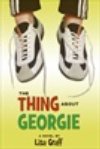
The cover of this book has two feet encased in sneakers dangling in
space. As both laces are completely undone it suggests something weird
or sinister is afoot. A strange choice for a feel good book about
what it is like to be a child dwarf. The reader is invited to
perform simple tasks, e.g. touching your left ear with your right arm,
at
random places in the book and then is reminded that Georgie can't do
these things.
Georgie is a normal child with loving, musician parents and is in the
American equivalent of upper primary school. He has a good friend but
his world is shattered when firstly he learns he will no longer be an
only child and secondly he falls out with his friend. Life becomes even
more unbearable when Jeanie the Meanie is forced to be his partner for
the class projects on American presidents.
Written in a very easy to read, fluent and nicely paced style, this
book would be enjoyed by any middle to upper primary student. It
is
very American in its 'message' ending and some terminology, e.g.
barfing for vomiting. It's pleasing to see, however, such words
are not
changed for the Australian audience as they would be in a vice versa
situation.
The characters in this book behave like real children and many children
will identify with the feelings that Georgie has. He has to deal with
abuse in the same way as many 'different' children do. The
adults are
caring without being patronizing and the themes of being accepted for
who you are and that everyone has hidden strengths, are, of
course,
relevant to all. Recommended for any primary school library.
Kevyna Gardner
The incredibly boring monotonous family by Phillip Barry
Pan Macmillan, Sydney. 2008
ISBN 9780330424127
(Age: 8 to 11) An entertaining comedy.
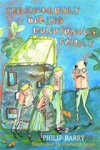
Despite the off putting title of this book it is a fun read. The cover
and interior have Quentin Blake type illustrations by Charlotte Lance,
and the book had a Roald Dahl-esque humour, with unattractive
characters made entertaining by the lively writing. The Monotonous
family has the most boring life one could imagine, even down to eating
choko sandwiches and vinegary porridge every day and listening to
tapes of Pi to the nth degree on the way to school! It is all in
the realm of fantasy (except Good Weekend magazine recently
featured a family who lived on only raw meat, raw milk and raw cheese!)
One day a gold key mysteriously comes their way and it opens the door
to a life of fun for the two children, Stan and Ann. Suddenly they
experience food (mountains of glorious food) colour, toys and modern
clothes .
However, only Ann can handle it, and she learns how to have fun at home
and school, making friends for the first time in the process. Stan
gorges on the food, Mr. Monotonous is threatened by it all and cowers
in his room and Mrs. Monotonous becomes obsessed by how to become rich
by duplicating the gold key.
Ann has to sort her family out and much nonsensical hilarity and mayhem
ensues before all ends happily. How people react to change is a
theme entertainingly tackled here.
Scattered throughout the book are commonplace cliches, e.g. dead as a
doornail, which receive a humorous scrutiny as well as introducing
readers to them.
This would be a marvellous book to read aloud to middle primary
students, many of whom would be likely to borrow it for themselves
later and then be encouraged to go on to read Roald Dahl.
Kevyna Gardner
Miki Falls: Spring by Mark Crilley
HarperCollins. 2008.
(Age: 10-14) This graphic novel is a simplified version of the
Japanese Manga comic novels, adapted to Western tastes.
Miki is a young Japanese student beginning her senior year at High
School and is much like her counterparts here. She is attracted to, and
mystified by, a new male senior student who refuses all contact with
other students. Showing much determination and courage, Miki manages to
befriend him and finally learns his secret. It is a page turner but the
plot is based on the weird premise that there is only a finite amount
of love to go around!
This graphic novel would suit upper primary and reluctant or poor
secondary student readers.
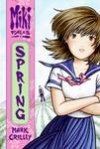
It is in grey and white but the pictures are large and the print easy
to read. There is a lot of variety in each page without it having a too
busy feel. The language is minimal whilst introducing students to a
sprinkling of reasonably sophisticated words. The artwork seems
competent to me, with much emphasis on eyes and hair in faces and
minimal treatment of mouths and noses. There are a few Japanese temples
in the backgrounds but otherwise the setting and culture could be any
western city.
Kevyna Gardner
Off to war: Soldiers' children speak by Deborah Ellis
Allen and Unwin,
2009. ISBN978 1741756791
(Ages 11+) I reviewed this book for Magpies in a manuscript version, so
it's great to see it in its final version, with its cover cleverly
focusing on a child seeing his battle clad father off to war. What
better cover to have on a book in which Deborah Ellis has interviewed a
range of children about their fears and hopes for their families when
one or both parents are in Iraq or Afghanistan.
It is scary reading. Many of the children report that their parents
have become more aggressive since returning, and my heart went out to
the child who reported her father had not spoken to her since coming
home. War and its effects are well documented for soldiers, but this
must be a first, interviewing the kids and how they feel. One child has
her pillow sprayed with her father's aftershave so she can sleep, and
many children reported not telling their own fears to their parents,
because they did not want them to be worried. A large number knew
little about the places their parents were or what they did, but many
reported enjoying the camps and excursions organized for kids of
overseas parents.
The children interviewed ranged in age between 5 and 17, with many
being about 12. It is salutary reading, how the lives of these children
have been changed because of their parents' decisions. Most did not
want to join the army when they grew up. Using this in a class where
books are being read of children at war, would be a fitting addition to
your class' knowledge and understanding.
Fran Knight
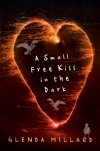
A small free kiss in the dark by Glenda Millard
Allen and Unwin, 2009.
(Ages: 10 to 14) Glenda Millard has managed to capture the reader and
take them on a journey of discovery in a story filled with strong
characters and unexpected events.
Skip has a talent for drawing and a desire to explore the world around
him. Tired of the restraints of school life he decides to take off and
try his luck. He befriends Bill, a street dweller and fellow artist.
Sharing a passion for art, they begin to visit the State Library,
exploring the treasures held within. One morning unexpectedly Skip
wakes up to find the world as he knew it has changed and so must he to
stay alive. As Bill and Skip begin their pursuit for safety they meet
Max, Tia and her baby Sixpence. Together they seek to survive in a
environment that is ever changing.
This is a thought provoking story about friendship, adversity,
resilience and the power of determination.
Tracy Glover
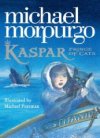
Kaspar, prince of cats by Michael Morpurgo
HarperCollins, 2008.
(Ages : 8+) The bell boy at the Savoy Hotel in London, Johnny Trott
finds himself
in an exalted position when the Countess Kandinsky becomes friendly
with him because he spends time with her cat, Kaspar. At first the cat
is aloof, but over time, they get to know each other, and so when the
Countess dies, Johnny Trott is the obvious choice of a carer. But he
must hide the cat, as he is not allowed to have a pet, and some of the
other staff help him. Johnny Trott has not had a easy life, and is
lucky to have a job in Edwardian London. He becomes friendly with a
young girl whose family resides in the Savoy, and together they spend
time with the cat.
Johnny saves the life of the young girl, and as a reward, her wealthy
American parents stop his sacking from the hotel and take the cat as
their own. He is allowed to come and see them off on their trip back to
America on the Titanic, and at the last minute, becomes a stowaway.
The night the ship strikes an iceberg is told in detail, with striking
illustrations from the pen of renowned Michael Foreman, making the
sinking of the ship far more real to the child reader. With the family,
orphan Johnny as well as the cat to think about, no reader can be
unaffected by the description of the sinking of this ship.
A riveting read, bound in an attractive but oddly sized paperback,
brimming with illustrations, this story will hold the interest of
middle primary readers, eager to learn about the Titanic, but also
wanting a good read.
Fran Knight
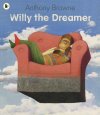
Willy the dreamer by Anthony Browne
Walker Books, 2008. ISBN
9781406313574
(All ages) Highly recommended. A reprint of the wonderful Willy the
dreamer is a treat for all. Willy the chimp dreams of being a film
star
or a singer, a sumo wrestler or a ballet dancer. Willy dreams.
Browne has produced a book that goes beyond the ordinary. He gives his
dreamer a beautiful background of surreal paintings by such famous
artists as Magritte, Van Gogh and Dali and a fabulous ape version of
Alice in Wonderland. At the same time he has hidden a banana in each
illustration and young readers will thoroughly enjoy going through the
book and finding just what Browne has done with the banana. The
illustrations are humourous and all of the characters have fabulous
expressions on their faces - from the poignant sad face of a beggar, to
the smug complacent expression of a king.
This is a picture book that can just be enjoyed for its lovely
illustrations and whimsical story. However it is also a book that calls
to be examined closely; for the reader to find out about the real art
that forms a background to the story and thus enjoy the humour even
more. Perhaps they could make up fantasies and dreams of their own.
Pat Pledger
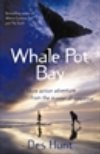
Whale Pot Bay by Des Hunt
HarperCollins, 2009. ISBN 9781869507305
(Ages 8+) Des Hunter very cleverly tells a tale of mystery, adventure
and intrigue, interwoven within a story of a young boy who has to cope
with big adjustment in his family life.
Whale Pot Bay, the setting for this story, is described as a New
Zealand beach paradise, isolation and tranquillity its biggest selling
point.
Jake and his dad live in Whale Pot Bay contented with their quiet life
together. Jake's mum ran from the bay soon after Jake started school;
the isolation was too much for her. Life went on very nicely for Jake
and his Dad, they worked together at the service station, surfed and
fished when they liked, ate what they liked and worked till midnight if
they wished! A life they were both very happy to maintain forever or so
Jake thought.
Soon after Jake's thirteenth birthday, with the introduction of Vicky
and Stephanie, life as Jake knew it certainly did change. What was Jake
to do, would he survive, could he get things back the way they were,
was there a way out?
Milton Summer, international rock star, establishes his retreat in the
bay, living in splendour on top of the cliff. Stephanie is Milton's
biggest fan, Milton wants to surf, Jake can teach Milton. Their
separate lives come together as their mutual love and concern for the
whales needs to bring them into action, they would do anything to save
them. Sounds like a perfect match, what could go wrong?
Jake and Milton's quiet life quickly disappears as the mysteries of the
Paparazzi, Tsunami, and a madman unfold as Jake and his friends
are
challenged trying to save Pimi the whale and her yet to be born calf.
This is an easy to read story with adventure, mystery and intrigue on
every page. A great story for young boys and girls, although I think
the
cover may not be so appealing to them.
Margaret Unsworth
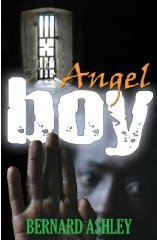
Angel Boy by Bernard Ashley
Francis Lincoln, 2008.
(Ages 9+) Bernard Ashley is such a giant of children's literature that
I had high expectations of Angel Boy, but I was in for a
disappointment. This is a short novel that may tick boxes regarding
certain criteria but fails in its bid to tackle serious issues for a
younger audience.
Leonard Boameh is Ghanaian. Bored during the school holidays he decides
to sneak out and go on a day trip to Elmina, a tourist destination
these days, but once the location of a fort where slaves were
imprisoned before being shipped to America. On his journey he meets
some English tourists and tags along when they visit the historic fort.
However, Leonard is snatched by a group of street children who imprison
him and force him to beg for them. Leonard is terrified and desperate
to escape.
The sights and sounds of Ghana do not burst into life and Ashley does
little to convey any sense of place. The plot regarding the historic
fort is clearly intended to educate children about the plight of the
slaves, but is too rushed and the description of the fort could have
come from a tourist brochure - I felt no connection with slaves torn
from their families and facing probable death on the slave ships.
I felt little empathy for Leonard's predicament either, although he is
eventually rescued by his father. Great. Bernard Ashley goes through
the motions, but I think children will struggle to connect with this
story set in a culture that will be completely new to most and which
needs a surer touch to make it come alive.
This is an 'issues' novel which is inappropriate for the intended age
group. A novel such as Elizabeth Laird's Garbage King tackles
the issue
of street children in far greater depth, offering a more rounded
picture of their situation - but of course it is aimed at older
readers. In Angel Boy the street children are just the bad guys
-
hardly fair. Ashley also hints at young girls falling victim to
predatory men - something which readers may pick up on. So you need to
be comfortable about fielding potentially awkward questions too!
Ashley does what he can, but in 100 pages it is not enough. Go back to
what you are best at Mr Ashley, writing gritty, fast moving novels -
for teenagers!
Claire Larson
Screw loose by Chris Wheat
(read by Kellie Jones) Louis Braille Audio, 2008. ISBN 978174212196. 7 and a half hours on 7 discs (Ages 12+)Highly recommended. Chris Wheat's funny and wry look at a group of students at Vistaview High School is brought laughingly to life with Kellie Jones' fast and furious reading. The pace of Kellie's voice suits the story well, as the students rush from one chaotic incident to another, from the classroom to the river, to Chelsea's house, back to the river, to Zee's house, where Angelo is hiding in the cupboard, to the principal's office where Chelsea is pitching the idea of a school rowing team, similar to the one at her private school, from which she has been expelled. It's a breathless and highly entertaining look at a disparate group of kids finding their way in life. The story opens with Angelo, recently made a Cockatoo, a member of the AFL young guns team, trying out for the real thing from their headquarters in Tasmania. He has fallen foul of the hierarchy and they are making demands that he ditch his strange girlfriend and take someone more normal, someone they will choose. His Turkish girlfriend cannot be seen with him, lest her parents find out and send her back to Turkey to live with her grandmother. Their friend Craig has a girlfriend, Matilda, recently brought back to civilization from the desert, where she was brought up by dingoes. She happily licks and sniffs people, and rolls over for her stomach to be scratched. This unlikely group of students will have you and your class laughing out loud as they try to set up a rowing team, evade Zee's parents, cope with their parents' separation and stage an event between the state school and two private schools in the area, aiming for communication between the 3 schools. And all brilliantly brought to life with this pacy and involving reading by Kellie Jones. Fran Knight
Snake and lizard by Joy Cowley and Gavin Bishop
Text Publishing,2009.
ISBN 9781921351969
(Ages 7+) A group of short stories about the antics of friends, Snake
and Lizard will be readily used in classrooms where friendship and
getting along
are under discussion. The two animals are often at odds but each learns
the give and take of friendship as the stories develop.
When they first meet, both animals are trying to get a share of the
sun. Snake has his tail across the path Lizard wishes to walk upon, and
will not move. They argue for a time, revealing some of their
personalities to the reader, and in the end compromise, sharing the
area for both to keep warm. A smile and a thank you from Lizard is
enough for the cooling to begin between them.
Delightful little bite sized stories with enough in them for a
discussion to ensue will make these a happy addition to a classroom
library. Cute illustrations and a good sized print, all bound together
in a handsome book with folded end papers for use as bookmarks will
ensure its use as a sound present for an early reader. Positive stories
of friendship, told with brevity and humour are hard to find, but here
is one to suit all needs.
Fran Knight
How to ditch your fairy by Justine Larbalestier
Allen and Unwin 2009.
(Age 12+) Recommended. Wow! What would it be like if you had your own
personal fairy? In New Avalon most people have an invisible fairy that
does something special for them. There are good hair fairies, shopping
fairies, boy attracting fairies and charisma fairies. Charlie has a
parking fairy and anytime that she is in a car, the driver will always
find a park. She finds it really annoying because she is constantly
pestered, and sometimes bullied, to ride with people in order for them
to get a park. She decides to ditch her fairy because of the bother.
She gets together with Fiorenze who has a boy magnet fairy and they do
their best to find a way to get rid of their pesky fairies for good.
This is a funny laugh-a-page story with a great heroine in Charlie who
does her best to ditch her fairy, while building up a romance with
Stefan the new boy and avoiding demerits at New Avalon Sports High.
Along the way she learns about friendship, relationships, love, and
widening her horizons while having some pretty amazing adventures.
I read this totally enjoyable book in one sitting. It was a great
experience to be introduced to an intriguing premise about personal
fairies - who hasn't been with people who can always find a park, or
who always have good hair or who always attract the opposite sex? New
words like 'doos' - meaning enjoyable, or awesome, leap out from the
page and the writing is terrific. But the best part was the indomitable
Charlie who loves sports, loves her sports school and keeps on trying.
Pat Pledger
Mahtab's story by Libby Gleeson
(Allen and Unwin) Louis Braille Audio, 2008. Read by Caroline Lee, 5 hours on 5 CDs. ISBN 978 1 74212 115 4 (Ages All) Evocatively read by Caroline Lee, this moving and poignant story of one family's journey out of Taliban held Afghanistan to Australia, where there is hope of a new life, will have middle school students enthralled. Not only have they to escape at night, leaving all their possessions behind, they must hide in a truck going across the mountains to Pakistan, where their father is told to go to Australia by himself, making the family stay behind in a 2 roomed hovel, hidden and alone. The story that Libby Gleeson writes, based on interviews with refugee Muslim children and one girl in particular in Western Sydney, rings true at every word. The book is the story of many Australians, and is all the more distressing because it is in our recent past. The perilous trip, taken by the mother and her three children, from Pakistan to Australia is heart wrenching, and the telling makes it more so. There is quite a difference between reading it on a page, and hearing it read out loud. Their trip from Indonesia and arrival in Australia is not what they expected, and their incarceration in a detention centre, will bring home to our students the cruelty and disillusionment of such places. Caroline's voice has just the right tone, enabling her to recount the words of all of the family with ease. Listeners will have no difficulty differentiating between the children and adults, the guards and the grandparents. The slight catch in her voice as she reads of the family's life under the Taliban, and their journey east, invites the listener into the desperate world of this family. Along with Rosanne Hawke's vivid story, Soraya the Storyteller, and Morris Gelitzman's vBoy Overboard, and Deborah Ellis' wonderful series about Parvana and her friends, these novels give our students an opening into another world, far apart from their own, and reflect the stories of some of our students' lives, enabling us to develop far greater understanding and empathy, than that shown by our governments. Fran Knight
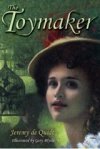
The Toymaker by Jeremy de Quidt
David Fickling Books, 2008. (Ages 12+)
Highly recommended. This is a stunning debut which is extremely
difficult to pigeon hole. I deliberately delayed reviewing it as it
engendered such strong reactions from me.
The cover features a dewy eyed girl, in the Anne of Green Gables,
Polly-Anna tradition. However, The Toymaker is a thriller with more
than a hint of horror, so not only is the cover completely misleading,
it immediately dismisses 50% of potential readers as boys will hate it
on sight. Once you get past the cover, Gary Blythe's illustrations are
outstanding. His picture of the terrifying Valter has a nightmarish
quality and would have made a far more stunning cover. Why oh why do
publishers still make this mistake? Let's hope they rectify it for the
paperback edition.
It's hard to believe that this is a first novel and Jeremy de Quidt is
certainly a name to watch out for. Set in the past, probably the
Victorian era, the prologue introduces a sinister toymaker who has
devised a way of using animals' hearts to bring his toys to life. As
the main story opens, Mathias, a conjuror's boy is mystified when, on
his deathbed, his grandfather hands him a tiny piece of screwed up
paper. For some reason this paper is wanted by the sinister Dr Lieter
who uses his henchman Valter to try and obtain it. Valter is a
terrifying character and the author builds a delicious sense of
paralysing fear every time he appears.
Mathias is befriended by Katta who tries to protect him. The two
children meet the mysterious Koenig who rescues them from Valter's
clutches, but only on condition that Mathias and Katta help him
discover the mystery of the scrappy piece of paper.
De Quidt explores the dark side of the human condition - cunning,
greed, jealousy and revenge are all part of his elaborate plot.
Katta is a particularly dark character, hell bent on revenge against a
boy whose random attack caused her to develop epilepsy. Unlike most
children's books, de Quidt follows through that desire for revenge,
describing in gruesome detail precisely how Katta exacts it. I admire
de Quidt for being more daring than most in his exploration of
maliciousness and retribution.
The first two thirds of the book would be suitable for able top
juniors, but this is a gothic tale of nightmarish proportions, and the
harrowing ending took even me by surprise. The power of de Quidt's
writing is both his strength and part of the problem - his descriptions
of Katta - her heart cut out and placed inside a doll to bring it to
life are profoundly disturbing, and make this a novel unsuitable for a
younger or more sensitive readership.
A fantastic novel, but be careful who you recommend it to. If you can
get them past the cover, both boys and girls of twelve plus will lap
this up, but it's not for those of a sensitive disposition.
Claire Larson