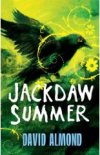
Hodder Children's Books, 2009. ISBN 978034088198 9
The summer Liam plunges his knife into Nattrass, is the summer he
begins to grow up. Before that summer he is unaware of life going
around him, content with his friends and school, family and village. He
is aware that his best friend is growing away from him, finding a
girlfriend, no longer interested in camping out and war games, looking
ot the future. He is aware that Nattrass, the school bully and a former
friend is goading him, turning up at places where he thought he was
alone, exerting power over him. But after he finds a baby in the old
ruins near his home, things change.
Liam and his family visit the child in its foster home and meet two
other foster children, the enigmatic Oliver a refugee from Liberia,
looking far beyond his 13
years, and Crystal, a refugee from appalling
foster homes after her family died in a fire. When Crystal and Oliver
turn up at Liam's place they expect Liam to help them escape and hide
from the police. But Nattrass is watching.
A most unusual story, Jackdaw Summer is the story of Liam's
awakening
to life around him. He learns that life is not always fair, that he has
a role to play in life and must work out his part in it. The stories of
Oliver and Crystal shake Liam's safe existence, the abandoned baby
becomes a catalyst for his family and the wildness of Liam, camping out
and playing at war is most successfully contrasted with the reality of
Oliver's background and that of the other boy Nattrass, while this is
all underscored by the reality of the war games being played in the
hills by the Army Reserve. A thought provoking read, students will find
that they continue thinking about the nature of humanity, war,
refugees, families and the beast within us for a long time after the
last page is read.
Fran Knight
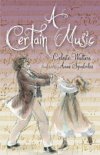
A certain music by Celeste Walters
Random House, 2009
ISBN 978174166333 4
(Age 7-10) Recommended. A gentle story set in the Vienna Woods of a
loner and lonely
child (who is always called 'child' or 'Liebling'), who is enchanted
with Beethoven's music and finds unexpected joy and happiness in
listening to the man seated at the piano playing the most beautiful
music she has ever heard. The plot is simple, but the richness of
the descriptions of the surrounding woods, cottages and market place
make the story come alive. It's an unusual way to introduce young
readers to the joy of classical music and in particular Ode to Joy,
but
the reader is drawn to the sympathetic portrayal of the child, her
Mutti, Beethoven and later her Father. Anne Spudvilas' black and
white illustrations add another dimension to the simple charm of the
book. It's a tragic story of a father who likes to drink and
eventually finds work in the army and a Mother who coughs up
blood. But the overwhelming feeling belongs to the child who is
sweet and caring and understands the worries of a brilliant
composer. The end is quite special.
The font is close. Sensitive readers will enjoy this short story
(121pp).
Recommended for Middle Primary, especially girls.
Sue Nosworthy
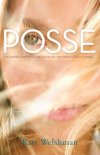
Posse is targeted at teenage girls with the story revolving around
girls from a Sydney private girl's school on a year 11 camp.Amy,
the main character, comes from a split family and lives with her mother
and grandparents.The grandma has a narcissistic personality
disorder and is a control freak over everyone.The vagaries of
teenage friendships are examined closely through the school setting.
Sixteen year old Army is having a lesbian relationship with a younger
student but also has a group of five peers, her posse, through which
much of her daily interactions take place.
At the school camp both Amy and her friend Clare are attracted to
Bevan, a good looking instructor (and trainee minister) and this causes
some jealousy. Both strive for his attention and end up alone in his
room at different times.Allegations of sexual impropriety are
made and the story follows how Amy's friends, parents and the teachers
react to this.
This first novel of Kate Welshman, appears a bit contrived and seems to
take quite a while to reach a conclusion. However, the themes of sexual
experimentation and teenage life should prove popular with secondary
school aged girls. Could possibly be used for a middle school text or
for health / personal development lessons examining the adult - junior
relationship issue, responsibilities and ethics.
Kay Haarsma (Salisbury East HS)
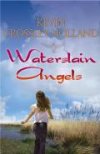
Waterslain Angels by Kevin Crossley-Holland,
Orion children's books,
2008. ISBN 9781842556917.
Ages 10+
When an angel's wing is found in the attic of the local church, Annie
is agog with stories of the times of Cromwell and the destruction of
the idolatrous. The town of Waterslain believes the angles were all
destroyed, but Annie and her friend, Sandy, think otherwise and set out
to find them. Fourteen angels in all decorated the medieval church,
flying high above the worshippers. Sandy, recently returned with his
mother from USA, is a geeky young lad, worried about his future in the
town of his mother. His father, now dead, was an American airman,
stationed in the area during WW2, meeting Gracie and taking her back to
the states when the war finished.
It is the 1950's, and children are not adhered to indoor games and
television and computers as they are now, but free to roam the wilds of
the countryside and follow their noses in spying out a clue of two.
Crossly-Holland readily evokes the most beautiful of settings for his
story, and develops a clutch of rounded characters to intrigue the
reader. Some heart stopping sequences will thrill, as the children
firstly climb into the church tower, forbidden because of the bees,
then clamber through a cellar under the church when the tide is coming
in, and finally descend a well in the church yard, convinced that the
statues lie at the bottom.
A beautiful story of finding what is lost and of renewing the past,
Waterslain Angels is one of those books you will want to keep.
Its
underlying themes about the shaping of history and of forgiveness, make
this book a superb read aloud in middle to upper primary schools.
Fran Knight
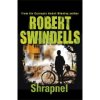
Shrapnel by Robert Swindells
Corgi, 2009. ISBN 978 0 552 559300
(Ages 10-13) When young Gordon finds a gun hidden in the chimney of his
brother's
room in their London home, he is agog. His brother is rarely home, and
in his late teens, has not enlisted in the services, and he is never
home to receive his call up papers when they arrive. Gordon, however
knows where he hangs out and waits for him. When confronted with the
story of the gun, Raymond tells Gordon that he is a government spy,
doing underground work in secret, and enlists Gordon's help. Gordon is
sent to buy a model plane which he is then to let fly over the fence of
a nearby factory. Gordon does this three times, believing himself to be
helping fight the Germans, but the third time, police are involved and
Gordon runs.
A thriller about one boy's involvement in bigger issues than school,
and the collection of shrapnel, Swindell's story gives readers a
different perspective of war at home. With airplane battles overhead,
buildings being bombed, people rushing to their shelters and students
collecting shrapnel to sell to their classmates, the story has an
authority which will intrigue its readers.
Fran Knight
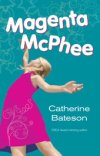
Magenta McPhee by Catherine Bateson
Woolshed Press, Random House Australia
(Age range: 8-12) Catherine Bateson is a talented writer who
continually captures the eye of the Children Book Council of the Year
judges and for good reason.
Magenta is a strong character shaped by the circumstances of her life
and the overwhelming desire to help those close to her - particularly
her recently divorced father. Written in the first person we learn
initially of Magenta's concern for her father and then her quest, with
the help of her 'best friend' Polly, to find him happiness. Magenta's
approach may be a little unconventional but her intentions are pure
gold and the results prove to be beneficial for both her father and
herself. Paralleled against this is her mother's marriage preparations
and her historical novel 'project' both of which are influenced by her
family circumstances.
An easy read novel that provides the reader with a sense we may have
not heard the last of Magenta!
Tracy Glover
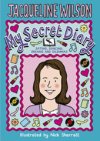
My secret diary by Jacqueline Wilson
Doubleday, 2009. ISBN 9780385614429
(Ages 12+) A treasure trove of information and snippets of stories to
hold
anyone's interest, especially those enthralled with the writing of
Wilson, this diary, full of entries from her own diary at 14, is
augmented with extra information and a plethora of photographs,
drawings and book covers.
Subtitled, Dating, Dancing, Dreams and Dilemmas, the book reveals the
life of a teenage girl in 1960. Wilson has plundered her own diary of
that year, and added her own comments from now, explaining her
relationship with her parents, things she and her friends did, her
trials at school and what was happening in the wider world.
So we hear of the books she read and their impact upon her, the writing
she started and put aside, the novels she wrote, poems, drawings, all
things creative. It is a most rewarding peak into an author's life and
the things which influenced her to become the writer she is. I love her
work, it is ground in a sense of social justice, leans heavily on her
own background, and particularizes those people who are rarely met in
children's novels, the ordinary children going about their daily
business of school, home and family.
For those who love Wilson's work and want to know more about her, for
those who want a look at an author's early life, for those who simply
want a good read, then this diary format is ideal.
Fran Knight
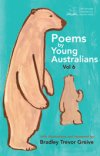
Poems by Young Australians by Taringa Foundation
Random House, 2009.
ISBN 9781741664065
(Ages: 11- 14) Recommended for both primary and high school
libraries. Poems by young Australians vol 6 is the latest
anthology of poems published by the Taronga (as in the zoo) Foundation
Poetry Prize. The prize was launched in 2003. This volume consists of
the prize winning and other selected poems submitted for the 2008
competition. The competition provides a unique opportunity for students
to have their poetry judged by a panel of judges and subsequently
published. The foreward is written by Bradley Trevor Greive, author of
the successful Blue Day book.
There are three categories in the competition; junior, intermediate and
senior. The youngest contributing poet in this volume is 5, the eldest
19 years old. The poems range in length from five lines to eight pages
and there are a variety of styles.
The theme of the competition was Bears so some of the poems reflect
this theme. There are also several poems on the theme of Animals and
the Environment. Delightful black and white bear illustrations by
Bradley Trevor Greive add to the visual appeal of this title.
The Poem about anything by Melissa Liu aged 14 reflects the freshness
the young writers in this anthology bring to their poems. Creative
writing class by Samantha Hartley aged 11 is a poem that takes the
form of an imaginary dialogue between student and teacher. Not
anymore by Claudi Fletcher aged 14 laments the kookaburras that have
disappeared. Those crazy politicians by Ben Maltby aged 12 is a poem
about politicians. There are three poems written by classes, all on an
environmental theme and there are several shape poems.
The increasingly crowded curriculum means that poetry can be
overlooked. This title is a valuable resource for teachers and students
in their enjoyment and study of poetry. Jenny Brisbane, Richmond
Primary School
Crime Stories by David Belbin et al.
Evans Publishing, 2009. ISBN 9780237536183
Sci-Fi Stories by Mary Chapman et al, Evans Publishing, 2009. ISBN
9780232536190
(Ages 10+) These two small books (about 60 pages long) each has 4 short
stories along the theme of the book. Each story is written by one of
the authors on the cover, and each story is written in large type face,
with a clear, easily read font. The stories are easy read, will provoke
discussion in a class room, but are equally easy to digest if reading
alone. They are part of a series of books called Shades Shorts
and will
fill a niche for those students who want something thin to read.
The first story in Sci-Fi Stories will intrigue. It tells of a hated
teacher, showing the students a chimaera in a tank in the science
laboratory. Told that it had no feelings the boys realise that it shuns
the teacher as much as they. There are hints of a society removed form
ours, when the teacher hits the students with an electric shock to
demand their attention.
Each of the stories is easily absorbed, and will fit the bill for those
students seeking them out, providing a quick read, and possibly a
template for writing their own. Fran Knight
Vibes by Amy Kathleen Ryan
Hachette, 2009.
ISBN 9780734411068
Well recommended for adolescents. Kristi is a teenager who believes she
can hear what people are thinking about her and these feelings are
usually negative. She has an interesting sense of teenage
superiority and combined with technology, is isolated from her peers
and family. It's a well scripted novel with many zany and quirky
incidents, all focused on Kristi's belief in her paranormal
ability. Many current and relevant themes of self awareness, self
absorption, family issues and high school are woven into the
story.It's an absorbing read, perhaps encouraging the reader to
look at themselves in a less critical way. The voice is female
and American, and the male characters are strong, different and
believable.
Sue Nosworthy
The night they stormed Eureka by Jackie French
HarperCollins, 2009.
ISBN 978073228548.
(Ages 10+) Highly Recommended. An historical novel by Jackie French is
at once informative, entertaining and enlightening. The readers learn a
great deal about the subject, without spending hours pouring over
history texts, they imbibe a wonderful tale, well told, and at the end
of the book, know that they have been reading something by an
accomplished writer, one who makes the story flow along, effortlessly
taking the reader with it.
Sam, a young girl on the run form her abusive family, spends the night
huddled next to a gravestone with the names Puddleham. In the morning,
she is woken by someone calling a name, Lucy, and she finds she has
slipped in time to the mid nineteenth century. Her protectors, Mr and
Mrs Puddleham, are walking back to their camp, where they supply the
miners with meals, and Sam is readily taken as their son and helps them
with their work. But it is 1854, and Sam knows from her history books,
that a stockade is about to be built, and many miners slaughtered by
the police and troops for daring question their lot in life, the hated
miners license and their lack of voting rights.
The background detail of this momentous time in Australia's history is
given ingeniously by French as the reader follows Sam's life on the
goldfields. Through her twenty first century eyes we see the gulf
between miners and police, the rich and poor, the powerful and those
without power. Because she asks questions, we hear of the miners'
lives first hand, and empathise with Sam as she tries to keep her
adopted family out of harm's way, all the while, marveling at the
difference between this family and that of her own back home. She
returns to the twenty first century a wiser young girl, able to see how
she can make changes in her own life. As with all of French's books,
there is an ample appendix giving more information as well as some of
the recipes alluded to in the story.
Fran Knight
The escape by Robert Muchamore
Hodder Children's Books, 2009. ISBN 9780
340956489
(Ages 11+) Children escaping form the Nazis in war torn France will
have readers
wanting more, and this being the first in a series called Henderson's
Boys, by the creator of the Cherub series, will be a winner for readers
from upper primary to lower secondary. Muchamore introduces all the
characters seen by older generations in films made in the 1940's and
1950's, revived again in the 1970's and now again appearing on our
screens. The cold blooded Gestapo chief, pulling teeth from a 12 year
old boy without compunction, the village priest who has seen it all and
still risks his life sheltering refugees, the suave British (of
course!) spy Charles Henderson, the helpful people along the way, all
rolled into this highly readable and page turning story.
Alternate chapters tell the story of brother and sister, Rosie and
Paul, escaping Paris before the German Army in 1940, with their father.
He has important documents needed by the British. Marc on the other
hand is an orphan, raised in a brutal environment, taking his chance
when a plane crashes nearby to make his escape. Each group of children
makes its way through appalling circumstances to survive despite the
war around them. When Rosie rings Charles Henderson, she unwittingly
talks to the Nazi operative, and Marc, inside the house hears most of
the conversation, and is able to pass this on to Henderson, who
develops a cunning plan. They all turn up together, after many deaths
along the way, and the stage is set for sequels.
An exciting and thrilling story well told, will ensure that the series
is as successful as the Cherub series before it.
Fran Knight
Pearl verses the world by Sally Murphy
Walker Books, 2009. ISBN 9781
921150937
(Ages 8-12) Pearl is in a group of one at her school, everyone else is
in larger
groups. In class when her teacher asks them to write a poem, it is
expected that it rhymes, and Pearl can only do non rhyming poems. At
home, her mother cares for her grandmother, now unable to get out of
bed, and needing constant care by Pearl and her mother. Pearl's
grandmother was her great friend, but now, she hardly knows she is
there. Mum is at a loss to know the right thing to do.
At school Pearl is upset by one of the girls in her class, who is
spiteful and jealous. When the principal comes to take Pearl to her
office, she is convinced that she is about to be admonished for
something, but instead she is told that her gran has died. There
follows the funeral and to her surprise her teacher attends, telling
Pearl's mum how good she is at essays and poems. Initially Pearl did
not
want to speak at the funeral, but the night before she becomes inspired
and writes out a poem to read.
Returning to school, Pearl finds that her classmates are friendlier and
the boy, Michael wants to be her friend. Her teacher praises Pearl's
poetry and asks the whole class to write a non rhyming poem too.
A delightful story, Pearl is an endearing character who invites the
readers' sympathy for her situation both at school and at home. It is a
circumstance with which many readers will identify, and the outcome,
handled so well in this non rhyming set of poems, is as predictable as
it is compassionate. This little book will engender many discussions
about death and dying, bullying and friendship in middle to upper
primary schools.
Fran Knight
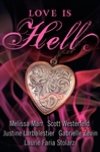
Love is hell by Scott Westerfeld et al
Harper Teen, 2009.
ISBN 9780061443046
(Ages 13+) Five supernatural stories about love by some of the best
supernatural writers for today's teens is sure to find a ready
audience. Scott Westerfeld and Justine Larbaleister, along with
Gabrielle Zevin, Melissa Marr and Laurie Faria Stolarz, contributed
stories to this volume. Students loving
this genre will find real pleasure n the stories presented here. Sleeping with the Spirit, the first in the volume, a story by
Laurie
Faria Stolarz, will have readers relishing the tale of a girl moving
into a home where a grisly murder took place years ago. She cannot
sleep with the host of the murdered boy tormenting her into
wakefulness. Only when she stays awake to listen to him, does she
realise what she can do to help.
Love is the theme in all five stories, but the supernatural twist will
be most appealing to lower secondary students looking for something a
little different.
Fran Knight
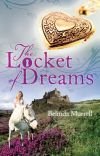
The locket of dreams by Belinda Murrell
Random House, 2009. ISBN 9781741662917.
Recommended especially for upper primary girls. Based on her own
grandmother's story, Belinda Murrell has captured the atmosphere of
Scotland in 1858. Modern day Sophie, whilst staying with her
grandmother Nonnie and wearing Scottish Charlotte's golden locket, time
slips to Charlotte and Nell's Scottish home. Later, when the
girls' fortunes are undone by a scheming uncle and aunt they sail to
Australia to live a completely different life with one of their
Mother's cousins, Annie McLaughlin and her caring family. Here
they find love, acceptance and fascinating experiences. Their
Australian journey includes encounters with bushrangers and fighting a
fire. The story of the box Nonnie showed Sophie begins the
enchanting tale. Sophie slips whilst wearing the locket into
Charlotte and Eleanor's lives but this also helps Sophie cope with her
own family issues. The story fits the historical fiction genre
well, but the time slips are not always as smooth as they could
be. Nonetheless, it's a delightful read. I note that Tom's
Midnight Garden by Philippa Pearce is once again on the shelves
as is Kirsty Murray's Market Blues both of which are well worth
reading.
Sue Nosworthy