Angus and Robertson, 2009.
ISBN 9780732287672
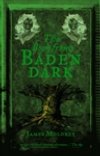
(Ages 8-13) The Book from Baden Dark draws together the
characters Bea, Fergus, Nicola and Marcel, heroes of The Book of
Lies,
in a new quest. Marcel is now a powerful magician and is able to
decipher the real story concealed in The Book from Baden Dark. With
Bea, half elf and half human, who is in search of her lost grandfather,
and Fergus, Marcel ventures into the secret underground world of
Baden Dark. The three discover and combat powerful forces, including
what seems to be the source of evil in the world. However, Marcel's
powers have outstripped his ability to control them and he is in danger
of making a decision that would irrevocably commit him to the
Underworld and harm his friends. Ultimately he chooses the human world
and is saved by the skill and loyalty of Bea, who eventually joins him
in Elstenwyck where Nicola is now queen. Many favourites characters,
including Gadfly, from The Book of Lies reappear and the plot
is
engaging. Those who enjoyed the earlier work will also enjoy this.
Jenny Hamilton
Heroes of the valley by Jonathan Stroud
Doubleday 2009. ISBN
976038561402
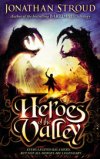
(Ages 11+) Recommended. As a fan of The Bartimaeus trilogy, I eagerly
read this stand alone novel featuring Halli, 'a cumbersome stump of a
boy, with hands like ham joints and a low, swinging gait' (pg 11), who
delights in tales of long gone heroes. Aud, the only daughter of the
House of Arne, treats the legends with cynicism, but is just as daring
as Halli. When Halli plays a practical joke, an old blood feud is
reignited and he sets out on a quest to avenge the murder of his uncle
and discover the truth about the legends and the terrifying Trows who
guard the borders of the land.
Stroud has set up a believable land, reminiscent of medieval times,
cold and hard. Twelve Houses control the valley, and each has legends
of great heroes who have defended its borders and put the Trows to
flight. Halli's much admired hero is Svein, who in all the tales that
he has heard, has beaten the monsters and conquered the land. However
as he moves away from his small manor house, he discovers that the
other houses have heroes who have done exactly the same thing, and he
is forced to reconsider how legends are made.
Humour permeates the narrative and would make this a good book to read
aloud. The two main characters, with their clever exchanges and
teasing,
are typical teenagers with a belief in their own immortality, and their
witty exchanges are a delight. There is also plenty of action and
suspense to keep the reader interested. But it is Stroud's ability to
build up atmosphere and give the reader a terrifying glimpse into his
monsters that makes this book stand out.
Quite different from his Bartimaeus trilogy, this hero's quest will
linger in the reader's mind.
Pat Pledger
A book for kidz by C.J. Dennis
Black dog, 2009. ISBN 9781742030944
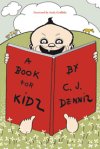
(All ages) Highly recommended. A reprint of C.J. Dennis' original book
with his own illustrations is a treat for all. Dedicated by the author
to 'All good children over four and under four-and-eighty' and with a
new introduction by Andy Griffiths, A book for kidz contains
entertaining poems and two short stories. The tongue in cheek humour
and the contagious rhyme and rhythm and easy tone ensure that it is
accessible to people today.
The tongue twisting fun of the poem, The triantiwontigongolope,
describing an unknown insect, is one of the most memorable poems and
will prove to be just as popular with children today as it was when it
was first printed in 1921. Hist
is another sure-fire winner with its
touches of chilling suspense and delicious sense of humour.
I recall fondly many of the poems found in this book from my childhood
and then reading them and teaching them to a receptive audience later
as a teacher. Many are timeless and can be read for sheer enjoyment and
stimulation of the imagination like the thought-provoking poem, You
and
I.
Others would fit in beautifully with classroom themes such minibeasts
(The ant explorer), and the history of transport, (The
tram-man, The porter, Going to school). Other
themes like occupations (The sailor, The
teacher), and the circus (The circus) are also covered.
This is a fabulous collection that deserves a place in every library.
It is wonderful to see such an engaging Australian classic being
reprinted.
Pat Pledger
Highway robbery by Kate Thompson
Bodley Head, 2008. ISBN 9780370329574
(Age 6-12) Highly recommended. Winning a Bistro Books Judges Special
Recognition Award as an exceptional stand-alone novel for emerging
readers is an indication of the quality of this memorable book. When a
tall man in a flowing cloak asks a young beggar boy to look after his
magnificent black mare in return for a golden guinea, he is determined
to do the job properly even though there are many temptations around
him. He is hungry and ragged and allows two young girls to pet the
horse in exchange for some bread. Toothless, a shifty looking
character, wants to buy her, and he is sorely tempted to take the
money. After soldiers accost him and he discovers that the mare belongs
to Dick Turpin and is the legendary Black Bess, things begin to get
very difficult for him. Should he trap and betray his hero?
Told
in eighteenth century language by the street urchin, who speaks
directly to the reader, this is an engrossing tale with an unexpected
twist at the end. The reader is kept in suspense as the boy tries to
make the right
decision in the face of great danger. There are also many poignant
moments as the boy relates his poverty and longing for affection.
Illustrated by Jonny Duddle, the black ink pictures,
which are featured on almost every double page, add to the charm of the
book. Black Bess is drawn as a magnificent creature, and the beggar boy
is wide-eyed and appealing. There is a chilling double page
illustration of soldiers galloping along, sabres flashing and a
fascinating four-panel depiction of the boy's escape from the Captain.
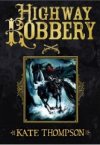
What a gorgeous production this book is. The cover is black velvet with
gold embossed print and has a wonderful coloured image of a highwayman
riding a superb black horse. A splendid book to read aloud, for
the newly independent reader to
linger over and read again and again, or just for people like me who
like beautiful books, this is a treasure to keep.
Pat Pledger
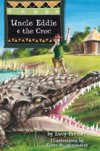
Uncle Eddie and the croc by Lucy Farmer
Black dog, 2009. ISBN 9781742030517
(Ages 6-8) A book for newly independent readers, this sequel to Uncle
Eddie and the hippos, follows the adventures of Uncle Eddie who looks
after a national park on the shores of Lake Wakka Wakka. One day he
finds a large crocodile sunning itself in front of his house in the
Zambian bush and after unsuccessfully trying to move it on before it
frightens the tourists, he goes to the local chief for advice. The
chief comes up with a cunning plan to scare the crocodile away, but it
has disastrous consequences.
This is an appealing book that will attract young readers with its
scary picture of a crocodile on the front cover. Croc facts, found at
the back of the books will intrigue the reader and a glossary
describing an African chief and African animals will be welcome. The
vivid colours of the African bush and the compelling faces of Uncle
Eddie, the chief and the scouts illustrated by Kevin Burgemeestre will
add interest to the story.
Pat Pledger
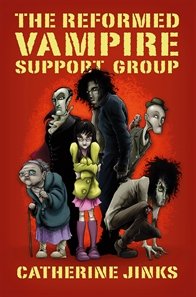
The Reformed Vampire Support Group by Catherine Jinks
Allen and
Unwin, 2009.
ISBN 978174175672 2
Highly recommended. Picking up a Catherine Jinks novel is akin to
eating Haighs chocolate.
The richness is overwhelming and while it is in your hands, you are
very aware that this is the best. There is nothing like it, it will
stay with you and keep on nourishing you a long while after it is
finished. And reading this pushes all other vampire novels which have
littered the scene lately, simply out of your head.
The group meets every Tuesday evening with Father Ramon for support and
companionship. Their lives are not those of the mythology, they are
despondent, some almost wishing death, fed up with their diet of guinea
pigs, and the continual cramping and illness which pervades their
nights. The young girl, Nina, is one of the last to have been infected
by Casimir, who arrived from Europe in the nineteenth century. Several
of their number tracked down all those infected by Casimir and gathered
them together to support each other so they would no longer go out and
fang people.
But one day they find Casimir has been killed. The usual things have
happened: a silver bullet, a stake through his heart, head removed form
his body, leaving behind just a pile of ash. Stunned they set out to
investigate the murder. This takes Father Ramon, Nina and Dave to Cobar
in the west, and they uncover an appalling pair of men who have live
bait fighting on their farm. But not dogs or cocks, they have found a
werewolf and it is this young man who is forced to fight, each full
moon. for vast amounts of money to enrich his captors.
Laugh out loud, clever, witty and with a vocabulary that warms the
soul, The Reformed Vampire Support Group is magnificent. Each of the
characters is sharply defined and the reader cares about what happens
to them all. Full of heart stopping escapades, I read this book
everywhere but the shower, as I followed Nina and Dave in their quest
to hunt down the killer.
Fran Knight
Curly saves Grandma's house by Sally Morgan, and Ambelin, Blaze and Ezekiel Kwaymullina
Ill. by Adam Hill
Random House, 2009.
ISBN 978741662931
This middle primary novel is an easy read with large print and
cartoonish pictures of magical creatures called Fents and Grents. The
Fent called Pook, who looks like a long- haired furry seal, lives
with Curly and was introduced in the first book, Curly and the
Fent. It would help to have read this book first, but you will
still discover that Pook has magic powers, eg inducing dreams in
others, and is a rival of the nasty tricksters, the Grents. Both
fantasy types are only seen by those with the Sight. The antics of
these creatures are a subplot to the main themes of corruption at local
government level and uniting divided families. Curly, about 10, learns
that his grandmother is about to have her home bulldozed by the mayor
who is going to sell the land for a marina and become rich. Curly sets
out to thwart the scheme.
The family characters and Pook are vividly and realistically drawn,
whilst the mayor and police seem stereotypes. The plot seems to be
designed to create a political awareness amongst this age group, rather
than realistically capture an event. This may be Sally's contribution,
with the fun of the Fents and Gents perhaps coming from the
children authors. Well written, its 'message' approach may limit
its appeal, worthy though it is.
The book ends with a new crisis, so that you want to buy the next one
to see what happens.
Kevyna Gardner
Mrs Lincoln's dressmaker by Lynda Jones
National Geographic,
2009. ISBN 9781426303777
(Ages 10+) A picture book format but with a large amount of text, this
book is aimed at upper primary and lower secondary students interested
in the history of the USA. It is the story of the relationship between
the president's wife, Mary Lincoln and her black dressmaker, Elizabeth
Keckley. Told chronologically, the tale covers the days of
slavery, up to Lincoln's inauguration, the Civil War and his
assassination and the years following his death.
The two women met when Elizabeth was developing a sound business in New
York making dresses for women of fashion. A seamstress as a child, she
had developed a strong business in the south before buying her freedom
and moving north. She sought out Mrs Lincoln's business, eventually
becoming firm friends with the woman. But when Mr Lincoln was killed,
Elizabeth gave up her business to try and help the almost destitute
Mary Lincoln, eventually losing all credibility herself and dying in
poverty.
A fascinating look at the history of the USA in the middle of the
nineteenth century, the book has many photos which readers will pore
over. The book reveals the life of a slave in the southern states,
alongside that of a woman brought up with slaves to command. Most
interesting is the life of Mrs Lincoln after the assassination, and the
downfall of Elizabeth Keckley, in trying to help her friend.
Surprisingly, considering the publishers of the book, there are no
maps.
Fran Knight
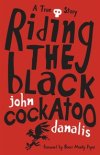
Riding the black cockatoo by John Danalis
Allen and Unwin, 2009. ISBN 9781741753776
This true story starts with John, a mature age white Australian, taking
a token 'indigenous writing' course as part of his university studies
in 2005. In one of his tutorials, he inadvertently blurts out; 'That's
nothing: I grew up with an Aboriginal skull on my mantelpiece'. The
shocked reactions from his fellow classmates cause ramifications that
take John, and his family, on a long journey of introspection.
Growing up in the 60's and 70's John had never thought to ask why an
Aboriginal skull, named 'Mary' was displayed on the family mantelpiece.
With amazing honesty John recalls the prejudices, not only the general
ones of the times, but of those of his parents. He states that'do
gooders were tolerated. Abo-lovers were despised,' and that interaction
with aboriginals was a one way mirror. One looked but didn't interact.
Such was the insidious nature of racism in Australia at the time.
John's decision to return 'Mary' from Melbourne to her Wamba Wamba home
near Swan Hill took him on a long self-discovery tour of Aboriginal
history and culture. His recollections are riveting and educate
the reader equally well. He examines how institutions like museums
often regarded aboriginal remains as trophies and were reluctant to
hand them back. We learn that aboriginal people are often reported
falsely in the media. Even on the two dollar coin a generic
aboriginal caricature is used, not a specific individual, as happens
when white people are depicted. The patience, generosity and
forgiving attitude of most aborigines is illustrated again and again.
The ceremonial handover of the skull reconciles past and present for
John and his parents. His father said afterwards, 'I've had to rethink
60 years of attitude'. John becomes somewhat obsessed with chasing more
information on the aboriginal culture and this leads to some personal
problems. His journey is well summarised in the statement,
'you're just a whitefella who's learnt to listen.'
This unique book should be required reading in all upper secondary
classes, and especially Australian history. Teacher's
notes are
available via the publisher's website. Australians who grew up in
the 1960-70's will also find great interest in this book.
Kay Haarsma
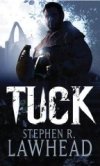
Tuck by Stephen Lawhead
Atom, 2009. ISBN 9781905654130
(Age: 13+) Although Tuck is the third in the series in this retelling
of the Robin Hood legend it can be read as a stand alone novel. Tuck,
the rather corpulent friar we are all familiar with, takes his place in
the Lawhead version in a different way than that we are used to. He is
as fond of his ale and food as we would expect. His part in this
particular telling, however, is a major one.
The setting of Lawhead's tale has moved to the Welsh marshes where
William Rufus' hold is not quite as firm as in England. The wild
primordial forest gives Rhi Bran and his followers protection and
sustenance, with their greatest advantage being the long bow, its range
and devastating fire power used with small raiding parties or in
battle. Tuck provides Bran with a different sort of intelligence than
usually seen in Robin Hood stories. Tuck is able to go where Rhi and
the rest of his band are unable to go. As a mendicant friar he is
welcome in most places high or low, and his basic understanding of
Latin, French, Welsh and English makes him an invaluable tool against
the Normans or Ffreinc as the Welsh know them.
Lawhead's story is an exciting one, but because he is essentially
retelling a very well known tale it plays out conventionally. The
characters are those we're used to, the names vary with the change of
setting. The author also gives a pronunciation guide at the beginning
of the book and how seriously this is used depends entirely on the
reader.
The ending gives reasons as to why the story has come to be now set in
Sherwood Forest and in Nottingham in a very clever and satisfying way.
A good rollicking read that will give pleasure to any of the vast
number of Robin Hood followers. The first two books in this series are
Hood and Scarlett. Suitable for secondary readers.
Mark Knight
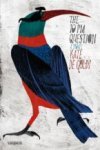
The 10 pm question by Kate De Goldi
Allen and Unwin, 2008
ISBN 9781741757354
Highly recommended. I greatly enjoyed this well written book which
tackles the themes of
early teenage angst and relationships, depression and adult
agoraphobia. Its appeal lies largely in the believability and
likeability of the characters, many of whom can be described as mildly
eccentric in the English way. It was not immediately obvious that the
book was set in New Zealand, but the cultural tone is refreshingly
different to Australia.
Although thirteen year old Frankie is squeamish and neurotic, his
concerns undoubtedly reflect many normal teenage worries and the
author's skill in sharing what is going on in his head creates empathy
and care for him. Frankie has a lot to worry about with his mum being
agoraphobic for the last nine years, and he feeling unnecessarily
responsible for her in the way that sensitive children do. Plus a
new girl suddenly appears in his life and threatens not only his
relationship with his good mate Gigs, but also his carefully created
stability and order. The book is set over some four months with
each chapter set about two weeks later than the last one. Despite its
serious theme there is humour and vivid detail aplenty.
Frankie's caring family are individual but normal characters and his
three maiden aunts are unforgettable in their unsatiable zest for
life. You wish you had aunts like this. The teacher, Mr A,
is a character we no longer see in schools, more's the pity. In
Sydney, the new girl, Kate De Goldi creates a remarkably confident,
non-conformist and likeable young lady who succeeds in spite of a very
unstable background. She and Frankie have life lessons for each other
but this isn't a 'message' book. I liked the way De Goldi creates
characters who are original, creative, different, likeable and
accepted. We need more like them in these increasingly conformist
times. So what if the family calls dad 'Uncle George', his mum never
steps outside the door and Frankie doesn't get to Camp? They all still
have a lot going for them!
I felt the title and cover design of a bird did not do justice to the
book, given how teenagers are so visually driven, and how real the
people in it are. More discerning readers in all secondary years will
enjoy this book. Its 'old-fashioned' tone is like a breath of
fresh air.
Kevyna Gardner
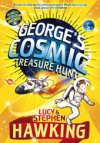
George's cosmic treasure hunt by Lucy and Stephen Hawking
Random House, 2009.
(Age 9+) In an exciting new adventure, we see the return of
George and Annie following the success of Lucy and Stephen's first
novel George's Secret Key to the Universe.
George is devastated when his best friend and fellow space adventurer
Annie moves to the United States with her family. It isn't long before
George receives an invitation to join Annie and he soon realises all is
not as it seems. Annie needs George's help to solve clues that she
believes are being left by aliens and soon another mission to outer
space is underway. We're introduced to a new friend, a computer
genius named Emmett who drives the inseparable pair crazy to begin
with, before they realise Emmett's invaluable skills to get the super
computer Cosmos working again so they can solve the clues and save
planet Earth.
As with the original story, the authors have cleverly weaved fact and
fiction together. Annie's scientist father Eric provides George with a
unique book The User's Guide to the Galaxy, which contains
interesting
space facts in simple dialogue. The middle of the book contains some
incredible photographs of space. These visual stimulations are further
enhanced by fantastic illustrations by Garry Parsons.
With a return of favourite characters including the evil Dr Reeper,
this sequel is sure to delight space adventurers all over again. The
factual boxes appear intermittently throughout the story and The
User's
Guide to the Galaxy has been used cleverly to blend these in with
the
main story. Stunning pictures, factual information presented in a
simple manner, a great adventure story and a lesson in forgiveness
combine to make this a fantastic novel for young readers. This is a
highly recommended book for boys and girls, especially those reluctant
readers and children beginning to explore novels.
Alison Woodward
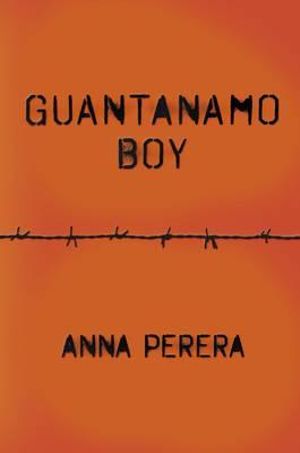
Guantanamo Boy by Anna Perera
HarperCollins, 2008, ISBN: 9780732288952 (Age 15+) Guantanamo Boy is a shocking story, particularly if, as the author asserts, it is inspired by real events. Khalid is an average fifteen year-old kid from Lancashire in England. He loves hanging out with his mates, playing football and online computer games. He also fancies Niamh, a new girl at school. Khalid's Mum is from Turkey and his Dad is from Pakistan and so when his grandmother dies back in Pakistan, Khalid's family travels to Karachi to visit his aunts. Khalid has a cousin called Tariq who lives in Lahore and whom he has never met, but they communicate over the Internet. One night, Khalid and Tariq are playing Bomber One, a computer game that Tariq invented, when armed men storm into the house where Khalid is staying, seize Khalid, cover his head with a hood and throw him into the back of a van, where he's kicked and beaten. This is just the start of a long and harrowing journey during which Khalid is deprived and tortured into admitting he's a member of Al Quaida and part of a terrorist plot to blow up cities around the world. Having supposedly confessed to his crime, Khalid is then taken to Guantanamo Bay and held in Camp Delta in appalling conditions and subjected to the most inhumane treatment. It takes two years before his innocence comes to light, during which Khalid's mind slips in and out of sanity. Thoughts of his family, his home in England and Niamh are all that hold him together. This book is told in a simplistic manner to appeal to younger readers and with an obvious bias. Nonetheless, it is an important and topical story, though quite disturbing. It would be suitable for senior fiction. Marilyn Coleman
Guantanamo Boy by Anna Perera
HarperCollins, 2008,
ISBN: 9780732288952
(Age 15+) Guantanamo Boy is a shocking story, particularly if,
as the
author asserts, it is inspired by real events. Khalid is an average
fifteen year-old kid from Lancashire in England. He loves hanging out
with his mates, playing football and online computer games. He also
fancies Niamh, a new girl at school. Khalid's Mum is from Turkey and
his Dad is from Pakistan and so when his grandmother dies back in
Pakistan, Khalid's family travels to Karachi to visit his aunts. Khalid
has a cousin called Tariq who lives in Lahore and whom he has never
met, but they communicate over the Internet. One night, Khalid and
Tariq are playing Bomber One, a computer game that Tariq invented, when
armed men storm into the house where Khalid is staying, seize Khalid,
cover his head with a hood and throw him into the back of a van, where
he's kicked and beaten. This is just the start of a long and harrowing
journey during which Khalid is deprived and tortured into admitting
he's a member of Al Quaida and part of a terrorist plot to blow up
cities around the world. Having supposedly confessed to his
crime, Khalid is then taken to Guantanamo Bay and held in Camp Delta in
appalling conditions and subjected to the most inhumane treatment. It
takes two years before his innocence comes to light, during which
Khalid's mind slips in and out of sanity. Thoughts of his family, his
home in England and Niamh are all that hold him together.
This book is told in a simplistic manner to appeal to younger readers
and with an obvious bias. Nonetheless, it is an important and topical
story, though quite disturbing. It would be suitable for senior fiction.
Marilyn Coleman
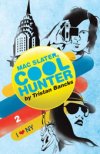
Mac Slater, Cool Hunter 2: I love NY by Tristan Bancks
Random House Australia, 2009.
(Ages: 10-14) After successfully winning the title Coolhunters
Mac Slater,
his Dad
(as chaperon) and Paul his fellow inventor head to New York to
attend the Imaginator Festival of Inventions and Creativity - the prize
for winning the Coolhunters competition. Unfortunately all does not go
according to plan on their arrival in New York. Speed and Tony the
Coolhunter bosses are nowhere to be found, traffic conditions challenge
Mac's dad and their accommodation is less than ideal. When they arrive
at Madison Square Gardens to attend the festival they are stunned at
their inability to enter. Fortunately a simple plane delay has held up
Speed and Tony and before long Mac and Paul make contact - things seem
to be back on track. Once again their task is to discover 'cool'
happenings around New York - they know this isn't going to be easy. As
is the case with Mac and Paul things have a way of backfiring! But then
they meet Melody and discover a hidden world of wonderful inventions.
However they also come across a secret too mind blowing to keep. The
consequences of revealing what they discover, though, have almost fatal
results.
Having really enjoyed the first novel involving these characters I
found this sequel a little lacking.
Tracy Glover