HarperCollins, 2009.
ISBN 978073228548.
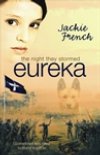
(Ages 10+) Highly Recommended. An historical novel by Jackie French is
at once informative, entertaining and enlightening. The readers learn a
great deal about the subject, without spending hours pouring over
history texts, they imbibe a wonderful tale, well told, and at the end
of the book, know that they have been reading something by an
accomplished writer, one who makes the story flow along, effortlessly
taking the reader with it.
Sam, a young girl on the run form her abusive family, spends the night
huddled next to a gravestone with the names Puddleham. In the morning,
she is woken by someone calling a name, Lucy, and she finds she has
slipped in time to the mid nineteenth century. Her protectors, Mr and
Mrs Puddleham, are walking back to their camp, where they supply the
miners with meals, and Sam is readily taken as their son and helps them
with their work. But it is 1854, and Sam knows from her history books,
that a stockade is about to be built, and many miners slaughtered by
the police and troops for daring question their lot in life, the hated
miners license and their lack of voting rights.
The background detail of this momentous time in Australia's history is
given ingeniously by French as the reader follows Sam's life on the
goldfields. Through her twenty first century eyes we see the gulf
between miners and police, the rich and poor, the powerful and those
without power. Because she asks questions, we hear of the miners'
lives first hand, and empathise with Sam as she tries to keep her
adopted family out of harm's way, all the while, marveling at the
difference between this family and that of her own back home. She
returns to the twenty first century a wiser young girl, able to see how
she can make changes in her own life. As with all of French's books,
there is an ample appendix giving more information as well as some of
the recipes alluded to in the story.
Fran Knight
The escape by Robert Muchamore
Hodder Children's Books, 2009. ISBN 9780
340956489
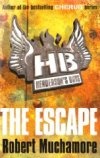
(Ages 11+) Children escaping form the Nazis in war torn France will
have readers
wanting more, and this being the first in a series called Henderson's
Boys, by the creator of the Cherub series, will be a winner for readers
from upper primary to lower secondary. Muchamore introduces all the
characters seen by older generations in films made in the 1940's and
1950's, revived again in the 1970's and now again appearing on our
screens. The cold blooded Gestapo chief, pulling teeth from a 12 year
old boy without compunction, the village priest who has seen it all and
still risks his life sheltering refugees, the suave British (of
course!) spy Charles Henderson, the helpful people along the way, all
rolled into this highly readable and page turning story.
Alternate chapters tell the story of brother and sister, Rosie and
Paul, escaping Paris before the German Army in 1940, with their father.
He has important documents needed by the British. Marc on the other
hand is an orphan, raised in a brutal environment, taking his chance
when a plane crashes nearby to make his escape. Each group of children
makes its way through appalling circumstances to survive despite the
war around them. When Rosie rings Charles Henderson, she unwittingly
talks to the Nazi operative, and Marc, inside the house hears most of
the conversation, and is able to pass this on to Henderson, who
develops a cunning plan. They all turn up together, after many deaths
along the way, and the stage is set for sequels.
An exciting and thrilling story well told, will ensure that the series
is as successful as the Cherub series before it.
Fran Knight
Pearl verses the world by Sally Murphy
Walker Books, 2009. ISBN 9781
921150937
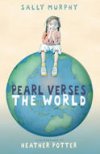
(Ages 8-12) Pearl is in a group of one at her school, everyone else is
in larger
groups. In class when her teacher asks them to write a poem, it is
expected that it rhymes, and Pearl can only do non rhyming poems. At
home, her mother cares for her grandmother, now unable to get out of
bed, and needing constant care by Pearl and her mother. Pearl's
grandmother was her great friend, but now, she hardly knows she is
there. Mum is at a loss to know the right thing to do.
At school Pearl is upset by one of the girls in her class, who is
spiteful and jealous. When the principal comes to take Pearl to her
office, she is convinced that she is about to be admonished for
something, but instead she is told that her gran has died. There
follows the funeral and to her surprise her teacher attends, telling
Pearl's mum how good she is at essays and poems. Initially Pearl did
not
want to speak at the funeral, but the night before she becomes inspired
and writes out a poem to read.
Returning to school, Pearl finds that her classmates are friendlier and
the boy, Michael wants to be her friend. Her teacher praises Pearl's
poetry and asks the whole class to write a non rhyming poem too.
A delightful story, Pearl is an endearing character who invites the
readers' sympathy for her situation both at school and at home. It is a
circumstance with which many readers will identify, and the outcome,
handled so well in this non rhyming set of poems, is as predictable as
it is compassionate. This little book will engender many discussions
about death and dying, bullying and friendship in middle to upper
primary schools.
Fran Knight
Love is hell by Scott Westerfeld et al
Harper Teen, 2009.
ISBN 9780061443046
(Ages 13+) Five supernatural stories about love by some of the best
supernatural writers for today's teens is sure to find a ready
audience. Scott Westerfeld and Justine Larbaleister, along with
Gabrielle Zevin, Melissa Marr and Laurie Faria Stolarz, contributed
stories to this volume. Students loving
this genre will find real pleasure n the stories presented here. Sleeping with the Spirit, the first in the volume, a story by
Laurie
Faria Stolarz, will have readers relishing the tale of a girl moving
into a home where a grisly murder took place years ago. She cannot
sleep with the host of the murdered boy tormenting her into
wakefulness. Only when she stays awake to listen to him, does she
realise what she can do to help.
Love is the theme in all five stories, but the supernatural twist will
be most appealing to lower secondary students looking for something a
little different.
Fran Knight
The locket of dreams by Belinda Murrell
Random House, 2009. ISBN 9781741662917.
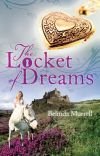
Recommended especially for upper primary girls. Based on her own
grandmother's story, Belinda Murrell has captured the atmosphere of
Scotland in 1858. Modern day Sophie, whilst staying with her
grandmother Nonnie and wearing Scottish Charlotte's golden locket, time
slips to Charlotte and Nell's Scottish home. Later, when the
girls' fortunes are undone by a scheming uncle and aunt they sail to
Australia to live a completely different life with one of their
Mother's cousins, Annie McLaughlin and her caring family. Here
they find love, acceptance and fascinating experiences. Their
Australian journey includes encounters with bushrangers and fighting a
fire. The story of the box Nonnie showed Sophie begins the
enchanting tale. Sophie slips whilst wearing the locket into
Charlotte and Eleanor's lives but this also helps Sophie cope with her
own family issues. The story fits the historical fiction genre
well, but the time slips are not always as smooth as they could
be. Nonetheless, it's a delightful read. I note that Tom's
Midnight Garden by Philippa Pearce is once again on the shelves
as is Kirsty Murray's Market Blues both of which are well worth
reading.
Sue Nosworthy
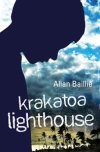
Krakatoa Lighthouse by Allan Baillie
Puffin Books, 2009. ISBN 9780143303596
(Ages 10+) The son of the lighthouse keeper, Kerta is aware as is all
the village
of the islands nearby where the volcano, Krakatoa, looms over the
landscape. Kerta is friendly with everyone and when the telegraph
master offers him the job of taking the telegrams to the people living
in the town of Anjer, he readily accepts. He sees Hassan steal the
gunpowder, and sees Hassan's father chained up by the Dutch. He sees
the ships in the bay, particularly the Dutch vessels with a load of
tourists going to climb the mountain. And he is immensely proud of his
father's work keeping the lighthouse operating.
Asked to join one of the ships, he accepts reluctantly, because he is
aware that the dark spirit, Orang Aljeh is waiting. His climb up the
side of Krakatoa is fraught with danger as the mountain rumbles,
blowing pumice and ash over all the tourists and his party must run for
their lives back to their ship. The year is 1883, and Kerta and his
family live within the sights and sound of the mountain that
spectacularly exploded, leaving ash in sunsets around the world for
years after.
Baillie thrillingly tells the story of the Krakatoa eruption through
the eyes of this young Indonesian boy. Through him we see the fear
begin to spread as the ash and clouds of steam and pumice become bigger
through the month of August. When the massive explosion occurs, we are
with him clinging to life in a palm tree, as the three tsunamis roll
across his village, taking all with them. Baillie invites the reader to
feel the dread of this most famous of volcanic eruptions, as Kerta
survives the blast. Baillie is able to put his readers in the mind of
his characters enabling them to empathise with events far away in both
time and place. And along the way we have hints of colonial rule,
suggestions of the development of opposition to colonial rule, village
life, the working of steam boats in the Indonesian waters, and an
amazing array of detail about Krakotoa itself. A wonderful story for
upper primary people.
Fran Knight
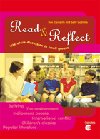
Read and reflect: literature discussion in small groups by Dee Clements and Sally Godinho
Curriculum
Press, 2009.
Highly recommended. Book clubs for children! Dee Clements and Sally
Godinho have developed a model for a 'Classroom book club' which gives
primary school children the chance to explore literature by sharing
their ideas about a text. Both authors are experienced and thoughtful
practitioners whose understanding of literature and teaching are
evident throughout the book.
The objectives and organisation of the model are explained in brief
statements followed by dot points. The model's relevance to critical
literacy, Bloom's taxonomy and De Bono's six thinking hats is neatly
summarised. Strategies for guiding discussions are set out in clear,
user-friendly language which will be appreciated by teachers, support
staff and volunteers alike. Reproducible assessment and reflection
tasks have been prepared for students and teachers. The structure of
the program is logical, clearly explained and educationally sound.
Two aspects of this resource give it broad appeal. Firstly, the
frameworks for discussion are based on themes not specific titles.
While lists of recommended books are provided, some with brief reviews,
the model itself will not date. Reproducible pages are generic.
Teachers can return to the book for guidance time and again, knowing
that the model will retain its relevance and value even if they select
different titles. Secondly, insightful sections on 'Small group
discussion', 'Building group skills' and 'Creative questioning' can be
applied across the curriculum. Read and reflect is an unassuming title for a book which
combines a
framework for enriching literature study with an unwavering focus on
successful classroom organisation. It is one of those books which
teachers can trust when they plan their guided reading programs because
it has been written by authors who know what works in the classroom.
Elizabeth Bor
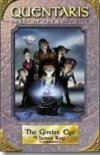
The gimlet eye by James Roy
Quentaris, Series 2, Book 3
Ford Street Publishing, 2009
ISBN 9781876462772226
(Ages 10+) Recommended. Quentaris is still floating in the sky
even though the Archon is dead. His corrupt nephew Florian is the
unscrupulous ruler. Tab Vidler, an apprentice magician, who as
part of the Navigator's Guild has sought and entered new vortexes, now
finds many of her friends have been 'demoted, corrupted or simply
vanished' (p9). Using her mind reading ability and with the help
of a rat, she speaks with Skelka, now in prison. It is up to Tab and
her friends who have been kidnapped to find the Yarka, and gather the
treasure for the corrupt ruler. As in much fantasy, the story becomes
convoluted and exciting. An interesting read for lovers of this genre.
The novel can be read alone (as I have), but I suspect the overall
enjoyment comes from the whole series. That different well
established authors have written the previous books can be an
interesting challenge for the current reader.
I hope readers will be enthused to go on to read Isobelle Carmody and
the Obernewtyn series (still not finished), but an enchanting ride into
other worlds as is Phillip Pullman and his Dark Materials.
Sue Nosworthy
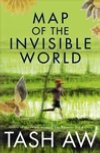
Map of the invisible world by Tash Aw
Harper Collins,
2009.
(Ages 14+) Adam and Joshua are brothers who've been separated since
their
adoption from an Indonesian orphanage. They have led very different
lives. Joshua has been brought up by a wealthy Malaysian family, whilst
Adam has lived his live simply on a remote Indonesian island with Karl,
a Dutch-Indonesian. Indonesia is unstable: Sukarno has rejected the
West and is courting aid from the Communist Bloc, students are staging
increasingly violent demonstrations and Westerners are no longer
enjoying their privileged life style.
When Karl is removed from his home by the army Adam is left to ponder
his future. His life with Karl is simple and frugal, though, one of
comfort compared to many others in his village. His education has been
nurtured by Karl, he speaks English, but Karl has ensured he is an
Indonesian and has discouraged any attempts by Adam to learn about his
Dutch heritage or language.
Joshua's life with his brother and sister is very different. Joshua is
indulged by his Mummy, while Bob and Farrah his adopted siblings seem
to be in awe of him. But his life is aimless, his thrills coming from
drugs and driving recklessly in the dark. He has memories, and feelings
of guilt, about his younger brother whom he protected in the orphanage
and then left abandoned when he was taken by his new family.
When Adam tries to find Karl in Djakarta he meets some people from
Karl's past, including Margaret a self assured American anthropologist,
as well as Din, who seeks to use Adam's innocence for his own violent
political purposes. Eventually Adam finds some answers to many of the
questions he's been asking for years. On the other hand, Joshua seems
as aimless and doomed as ever, while Margaret's self assurance is
steadily unraveling. She seems unable to read the Indonesian people,
something she always believed she could do, and life itself no longer
holds the truths she once confidently espoused.
A good read for senior students, looking for a different coming of age
novel or who is interested in Asian Studies, this novel gives a great
background into Indonesia in the Sukarno years.
Mark Knight
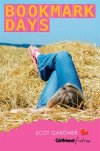
Bookmark days by Scot Gardner
Girlfriend Fiction series
Allen and Unwin, 2009. ISBN 9781741755787
(Ages 10 -14)
The story takes place on a sheep farm in rural Australia. It parallels
country life and city life through the eyes of two cousins, Avril and
Katie. Intertwined in the story is a feud between neighbours -
the Carrington's and the Stanton's. When Avril meets Nathaniel she is
unaware of the link between their families and as their friendship
develops the feud between the two families escalates. However Avril is
sure she has an ally in her grandmother and just hopes she can help to
resolve the long standing hostilities.
Whilst Katie's behaviour has Avril worried - she is unaware that Katie
is hoping the break on the farm will help her with the breakup of her
parents.
This is a story filled with typical family challenges and events.
This series has filled a niche in the teenage girl market and has
utilised the talents of many well known Australian authors.
Tracy Glover
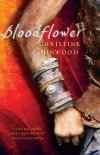
Bloodflower by Christine Hinwood
Allen and Unwin, 2009.
(Age 13+) Bloodflower is a book by "an exceptional new talent"
Christine
Hinwood. The story charts the aftermath of a war between the Uplanders
and Downlanders. Like most war and conflicts through history, the
devastation of changing political boundaries result in displaced
families, and new customs and allegiances being made.
The central hero of the story, Cam, returns to his small village of
Kayforl from the war minus an arm, but as it turns out a whole lot of
new found respect from the enemy and victorious reigning royalty. In
Kayforl, however, his disability means he is treated badly, resulting
in
him spending his time drinking away his sorrows at the tavern, when not
resigned to doing "women's work". His time away at war and his injuries
have also meant that his betrothal to the neighbour's daughter,
Graceful Fennister, had been annulled. This further added to Cam's
grief and sense of belonging in the new post-war world to which he had
returned damaged.
Parallel to Cam's story, Diido is an orphaned refugee girl who is also
reeling from the aftermaths of the war. Whilst effected in different
ways by the war, Cam and Diido have very similar problems with their
sense of identity and as a result are destined to meet.
It was hard to make out which category or genre for which Blood
Flower
should be placed as the book seems to jump around a fair bit between
styles and genres: fantasy, history and romance. This book presents a
good analysis of the total aftermath of war - social, political and
cultural. Because of the nature of the story and the words used, this
book is probably recommended for more regular readers of fantasy,
historical and similar books of this nature. Whilst the themes of
prostitution and teenage menstruation are covered fairly subtly, this
book certainly wouldn't be recommended for children under the age of
13.
Adam Fitzgerald, Paralowie School R-12
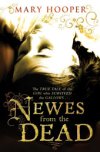
Newes from the dead by Mary Hooper
Random House, 2008.
(Ages 12+) The story of Anne Green, a woman hanged in Oxford in 1650,
for infanticide and then returning to life just as she was about to be
dissected by the doctors from the Oxford College of Physicians, makes
terrifying reading, as Hooper recreates her thoughts in her coffin,
recalling her life up to that moment.
Anne Green was a scullery maid in the house of the Reade family,
friends to the King, Charles 1. There she unfortunately attracted the
attentions of the grandson, Geoffrey, who promised the earth to get her
compliance. Finding herself pregnant, she sought help form the local
cunning woman. When the child was born dead she was accused of
infanticide and sentenced to hang.
Younger teen readers, particularly girls, will find this book of
great interest. Not only does it go into some details about the various
seductions imposed upon the girl by the grandson of the house, it also
details the work she does in the house, and reinforces the giant gulf
between the rich and poor in Cromwellian England.
The background described by Hooper is fascinatingly realistic, and the
story of Anne Green, enthralling. I found myself getting frustrated,
however, with the 'bodice ripper' style of the narrative, wanting to
get to the nitty gritty of the girl's survival after such an horrendous
event, not the machinations of the grandson and his eventual marriage
to a wealthy young woman.The event and its aftermath are played
by the author to garner the most excitement and this too I felt was too
long. But the story is gripping. The detail of the hanging and its
aftermath is sure to make all readers anti capital punishment.
Fran Knight
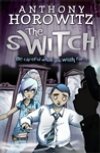
The switch by Anthony Horowitz
Walker Books, 2009. ISBN 9781406305715
(Age 11+) Highly recommended. Previously published in 1996.
The title of The switch gives a clue to the book theme which revolves around the consequences of a thirteen year old boy wishing he was someone else and the body swap that evolves.
Tad Spencer, comfortably at home in Snatchmore Hall, with an affluent lifestyle filled with overseas trips, a chauffeur, housekeeper, and nanny is transposed into Bob Snarby, the son of not so loving fairground workers. His home becomes an unhygienic caravan, and he is co-opted into burglaries.
Even Bob finds that living as some one else is far from perfect, as he found his more toffy life a little suffocating. Efforts by Tad to regain his former life almost result in his death as he stumbles upon conspiracy and murder in his father's cosmetics business. Issues such as the ethics of how products are tested; arms selling; and the exploitation of poorer cultures are all woven into the storyline. The final chapters are really creative and give constant surprises to the reader.
The Switch will be thoroughly enjoyed by upper primary and secondary students and particularly by boys. It is so entertaining that most will read it in one sitting.
Kay Haarsma
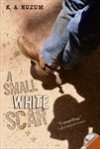
A small white scar by K A Nuzum
Harper Trophy, 2009. ISBN 978006075641 3
(Ages 13-15) A Small White Scar is the story of self discovery
for
Will, who wants
desperately to be a rodeo star. He feels restricted and tied down at
the family ranch. His twin brother, Denny, has Downs Syndrome and it
has been Will's role to be mother, teacher and role model to Denny
since their mother's death some years before.
Will believes that he is a man and wants to leave the ranch, earn prize
money at the local rodeo and then make a living as a cowboy on cattle
ranches. His plans are countered by Denny who follows him everywhere.
When he makes his move to ride at the local rodeo, followed by Denny,
Will is forced to make choices between his expectations and his guilt
at leaving not just Denny but his father and the ranch, behind.
This is an engaging story, set in the 1940's in Colorado cattle
country. It gives insight into relationships on a number of levels:
those between animals and people, particularly horses and their riders,
between the brothers and between father and son. The resolution is
perhaps not the expected one, nor even the final one, but it is one
which fits the characters. A satisfying read for 13-15 year olds.
Mark
Knight
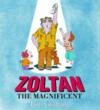
Zoltan the magnificent by Bob Graham
Lothian Children's Books, 2008.
ISBN 9780734410689
(Age 4-7) Recommended. Jack's Dad never seems to have enough time for
his family. He leaves for work very early and comes home late at night.
Sometimes Jack has to get out of bed just to see him. When the family
goes on holiday, Jack is certain that it is his mother who will be fun,
but he is in for a surprise!
Bob Graham creates a wonderful, warm family with ordinary ups and downs
in an environment easily identified by children. Many may recognise the
father who works really long hours and seems to be serious all the
time, and feel relieved when he shows that he has a fun side when he
relaxes on holidays.
Humour permeates the story both in the text and the cartoon like
illustrations. There are many funny moments that will have the reader
chuckling aloud. Incidents like Leo the dog sucking Grace's dummy just
when they are about to embark on a bus journey to the seaside and peas
rolling across the restaurant floor are beautifully woven into the
story.
Holidays can give everyone a chance to learn things about family
members and the discoveries that both Jack and his father make are
heart warming. This is a wonderful story of family life and unity.
Pat Pledger