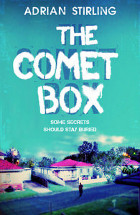
Penguin, 2011. ISBN 978 0 14 320610 1.
(Ages 12+) Recommended. Life in the 1980's is stunningly recreated
for
this story of suburban life, surmounted by routine and expectations
adhered to, of problems hidden under the carpet and never spoken of,
of
boys wanting more than the life being offered. Andrew and his
nuclear
family live in the outer suburbs, where the fields ver the road are
being remodelled for a new suburb and supermarket, the trees torn
down,
large tracts of land reshaped, and tunnels dug for huge cement
pipes.
It is the year of Halley's Comet, and Andrew's teacher asks the
students to make a wish and place it in the Comet Box in the room,
to
be reveled next year. Andrew steals the box, wanting to know the
secrets of his classmates and finds things about many of them that
he
has never noticed before.
But one day, after a loud argument at home, his sister, Amelia,
disappears, and this changes the way people speak to him and his
family, and the way the family operates. Loaded down with a lack og
knowledge of what is happening within his family, Andrew seeks
refuge
with his best friend, Romeo, and together they become aware of other
things in their suburb which have been kept secret.
A story overflowing with the sights and sounds of suburban
Australia,
languishing under its own vision of Nirvana, the veneer of
respectability and contentment is eroded away by the ugliness
underneath. Andrew is not told anything, he must work things out for
himself, adding pieces of information together to eventually
understand
why his sister disappeared and why when brought home by the police,
she
runs off again. All the while the comet is drawing closer, and the
secrets Andrew knows about his classmates must be returned to the
box
before anyone knows. The comet signifies change in the community,
and
while many of the issues which the children see as important to them
remained unresolved, Andrew's family at least brings things to the
surface.
Fran Knight
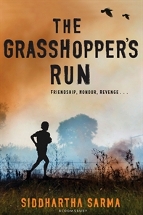
The grasshopper's run by Siddhartha Sarma
Bloomsbury, 2011. ISBN 978 1 408809402.
When the Japanese army invades India in 1944, self obsessed and
deranged Colonel Mori orders the wholesale slaughter of the entire
population of an innocent and unsuspecting village. Justifying the
massacre on the pretext that the village could be hiding units of
the British Army, Mori is in reality driven by vicious cruelty and a
lust for military power and recognition.
Uti, a village youth who survives the initial attack, lies in wait
and kills soldiers before being subdued and then horrendously
tortured.
Siddhartha Sarma then introduces the character Gojen who has been
Uti's close companion throughout his life, to the degree that they
considered themselves brothers, having shared tribal ceremonies,
education and family interaction.
As a gifted sportsman and academic, Gojen has enjoyed great success
whilst studying at a European college in Bengal and is not troubled
by any sense of inequality amongst his Colonial peers.
When he learns of the village's fate and the death of his soul
brother, Gojen returns home traumatised and seeks to assist in
avenging Ut's death by providing information gathered from British
Military Intelligence. The boy practices target shooting and the
reader appreciates that he is an accomplished long distance marksman
who naturally desires to apply his skills against the Japanese.
Gojen's father is relatively wealthy as an indigenous noble and
forbids his son to join the foray into a battleground where the
defending British are frantically mustering reinforcements against
the seemingly unstoppable Japanese might.
Defying his father, Gojen sneaks out and joins other villagers
intent on seeking revenge. The journey to find Mori is slow and many
cultural relationships and local references are introduced, making
the narrative difficult to follow for those unfamiliar with Indian
social history.
In the turmoil of battle, the story gathers pace and the reader
understands that the local Indians act in spite of, rather than in
support of, the British who they still regard as an occupying force,
albeit a more benign and constructive one compared with the
Japanese.
Gojen wrestles with his own fear and Uti's spirit as events unfold.
Rob Welsh
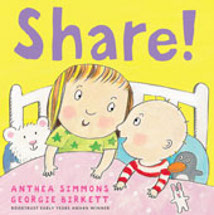
Share by Anthea Simmons and Georgie Birkett
Random House Australia, 2011. ISBN 978 1742750996.
(Ages 3-5) A board book for the very young is aimed
specifically at teaching younger children to share. The young girl
and
her baby sibling are separate entities at the start of this tale, as
the girl tells us how she loves her fluffy teddy, and her books of
animals and her puzzle, but so does the baby and so mum's voice off
page calls out that she must share her things, despite what happens
to
them as a result. Many children will identify with the young girl
dismayed at her younger sibling's messing her things, and identify
the
voice calling out for them to share. After a few pages, the girl
asks
her mother whether she should share, changing the premise for the
story. So the two begin to share things, her drink and her paints
and
her bath, and the girl begins to lessen her resistance to her
sibling's
interference.
At the end, the two are in bed together, and the baby asks the girl
to
share his bed, with the pair sharing their mother's hugs at the end.
This is a wholly delightful little tale, teaching the idea of
sharing,
and making it easier for the adult reading the book to the children
to
introduce the idea of sharing and pointing out the ways of sharing
that
can happen in a family.
Fran Knight
How I stole Johnny Depp's alien girlfriend by Gary Ghislain
Chronicle, 2011. ISBN 9780811874601.
(Age 12+) Recommended. David meets Zelda when she becomes a patient
of his father, a renowned psychiatrist, looking after troubled
youth. Zelda, who believes she comes from the planet Vahalal, is on
a quest for the perfect mate and the picture she shows David is one
of Johnny Depp. David, immediately smitten by her green eyes and
mean ways, follows her on a frantic chase to find Johnny, jumping
across the rooftops of Paris, stealing his mother's clothes and
going to a weird shrine which would take then to Vahalal, if the
tattoo key is used.
This is an absolute scream of a book. I was hooked from the moment I
started reading it and laughed my way through the smart dialogue and
action packed adventure. Ghislain takes a hilarious look at male
celebrities with such comments as 'Brad Pitt, Johnny Depp, Robert
freaking Pattinson! I don't care. We will abduct every single
Hollywood stud if it will bring us back to Vahalal'. He also makes
some very funny observations about how girls get hooked by celebrity
looks and the impact of designer clothes and furnishing of the
wealthy. David's mother is a very high powered woman whose designer
clothes, in particular, a little bikini, proves too much of a
temptation for Zelda the warrior woman. David trails behind her,
trying to pick up the pieces at his mother's beautifully appointed
apartment, and finally enlists the aid of his stepsister Malou in
their quest to track down the elusive Johnny Depp.
David is no pushover. Zelda may come from a planet where men are not
valued at all but David is smitten and is determined to get the girl
and he takes the reader on a wonderful romp while he tries to figure
out how he can do that. There are over the top ideas and action in
this book, but it so amusing, fast paced and engrossing that I was
happy to accept even the most improbable things and just enjoy the
ride. I also loved the setting, first in the countryside of France
and then in the wonderful city of Paris.
I think that it would make an excellent suggestion for reluctant
readers, who are after something fairly short and easy to access,
while eager readers who are after something different and amusing
will really enjoy it.
Pat Pledger
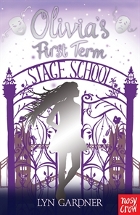
Olivia's first term: Stage school by Lyn Gardner
Nosy Crow, 2011. ISBN 9780857630162.
(Age 11+) Recommended. Olivia and her younger sister Alicia, who is
known as Eel,
are free spirits. Their childhood so far has been spent as
members of a circus family. Their father Jack is a famous
highwire walker, and Olivia joins him in the performance. Tragedy
had struck several years earlier when the girls mother died in an
accident, and tragedy strikes again when Jack is injured. Jack's
only option is to place the girls with their maternal grandmother -
a
woman who blames him for taking her only daughter away. Olivia
and Eel discover their grandmother runs a well known and highly
regarded performance school called Swan Academy. While Eel
embraces the school and all it has to offer, Olivia pines for her
old
life and her father. Olivia's first term is a delightful story with believeable
characters. Olivia's strong personality is displayed in various
situations, and her angst at being away from her father is clearly
presented. The secondary characters have been fleshed out enough
for the reader to feel a connection with them. There is the
'typical' group of characters which are often found in books aimed
for
this market. The mean girl is a bully and a showoff, but because
of her good looks and wealth is fawned over by the other students.
Gardner also has the poor but talented girl trying hard to fit in,
and
willing to do almost anything to achieve popularity. Olivia's
first term explores the issues of family, loss, harrassment,
bullying
and ostracism. This book would appeal to upper primary students,
although Gardner at times uses quite sophisticated language, which
may
mean it was intended for an older age group.
Sharon Kretschmer
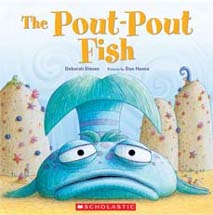
The pout-pout fish by Deborah Diesen
Ill. by Dan Hanna. Scholastic, 2011. ISBN 9781 74283 006 3.
Picture book. The pout-pout fish with its very 'botox' filled lips,
lies at the bottom of the ocean disconsolate. His lips are big and
glum
looking, putting other fish off. He asks many fish, his friends,
about
what to do, but they all ask him to smile, not to be so glum, turn
his
lips upside down. Fish ask him not to greet him with a scowl, but he
cannot help it, it is the way his lips just are. Eventually he lies
upside down on the bottom of the sea and a fish going by, seeing his
lips upside down, kisses him, on his beautiful kissable lips. This
turns his life around.
Told in rhyme, the story will entice younger readers to predict what
will happen with the rhyming lines and offer suggestions for words
that
rhyme with the line before. The illustrations will prove enticing
for
curious readers, seeking out all the sea creatures shown on each
page.
And of course, all end up kissing the glum looking fish, encouraging
the students to talk about the value of appearance and judging
people
by their appearance.
Fran Knight
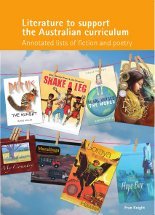
Literature to support the Australian curriculum: annotated lists of fiction and poetry by Fran Knight
Pledger Consulting, 2011. ISBN 978 187667825 8.
Recommended. Once again Fran Knight lends us her prodigious
knowledge of children's and young adult literature to support and
extend our students' experiences of quality literature. It is well
nigh impossible for busy teachers and teacher-librarians to keep
pace with the publishing scene. We rely on wonderful people such as
Fran Knight to guide us through the myriad of works published. She
lets us into the secrets of which books are worth us exploring with
our students.
In this publication Fran has collected together many of her
favourite titles and sorted them into the Cross-Curriculum
Priorities of the Australian curriculum- Aboriginal and Torres
Strait Islander histories and cultures; Asia and Australia's
engagement with Asia and
Sustainability. Each category is sorted again into 3 age bands:
Entry level - Year 3; Year 4-6 and Year 7-10. Also included are very
useful chapters on Poetry, Class Text suggestions and Read Alouds
for Entry level- Year 6.
In this way she enables teacher-librarians to be ahead of the pack
and encourage teachers to pick up on the Cross-Curriculum Priorities
which may be overlooked in the initial flurry of preparation to
teach the new curriculum topics. Similarly the chapter on poetry
supports the strengthened emphasis on poetry in the English
curriculum. Given one of the English curriculum's underpinning foci,
'the close analysis of literary works' and thus the need for schools
to access class texts, the chapter on class texts is very timely.
The publication, which is well designed, being clear and easy to
access, includes a useful index of authors. It will prove a real
'boon' to busy teacher-librarians and teachers.
Diana Warwick
Editor's note: A sample of the book and order form is available at http://www.readplus.com.au/resources.php
Interview with Dawn Meredith by Fran Knight
Interview with Dawn Meredith by Fran Knight
Meeting an author in a bookshop leads to all sorts of discussions
about
books and their future, and so talking to Dawn Meredith at Mary
Martin's on the Parade, Norwood, led us in quite different
directions
surrounded by the end product of the work done by people such as
she. I am grappling with all the ideas about the future of
books,
now that the digital age is here, but not so Dawn. She is adamant
that
there will always be a place for books, the tactile and intimate
awareness of the book cannot be replaced by an electronic gadget. I
am
hopeful that she is right, and looking at her blog tells me
that this belief is heartfelt, as her mission statement confirms:
her
desire is to get kids away from computers and back into reading.
Armed
with a concern such as this cannot be easy when faced with the array
of
computers and electronic devices now attached to modern kids, but
she
espouses the view that while these are necessary they need to be
tempered in their use.
A special eduction teacher, Dawn is now training to be a counsellor,
as
she feels that much of her work with remediation of kids' learning
is
dependent upon counselling. Between writing and studying, she works
at
a writers' centre and offers writing workshops herself, while
working
at the Springwood Children's Learning Centre. Through these she sees
the end result of kids who have lost their way with reading and so
spends a lot of time teaching reading and writing. This is reflected
in
the workshops she has taken while in South Australia with schools at
Victor Harbor and in Adelaide. A gig at Victor Harbor Primary School
saw her workshopping 23 classes during the week, and her open door
policy at lunch time meant that many more children were able to
spend
time on a one to one basis, sharing their writing and ideas.
Dawn has had a number of books published, some in the wonderful
Livewires Real Lives series, telling the stories of some of
our
foremost citizens in an easy to read, direct style suitable for
those
readers who find reading more difficult. These include those by
Dawn,
Sir Donald Bradman and Tony Lockett, and although out
of
print, are
likely to be reprinted soon, so popular is this series. Pearson
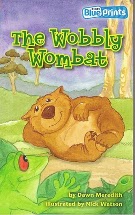
Education has also published The Wobbly Wombat, by Dawn and
several
other books in the successful Blueprint series by Pearson, feature
her
work. The Wobbly Wombat is about bullying and the way to
overcome it,
as wombat, small for his age and a little wobbly on his short legs
is
derided by others. He retreats to the forest where he meets a
variety
of animals who tell him how to overcome the intimidation he
receives.
Their sage advice helps him achieve this, and in a smart resolution
learns that he has friends. Her story, The Anything Shop is
soon to be
released by Wombat, a relative newcomer to the publishing industry
in
Australia.
Her two books in the Livewires Real Lives series espouses
another of
her missions, that of creating books for boys. She believes that
many
boys do not have a significant male in their families to mentor
their
reading and so it is important for boys to be targeted in schools. A
display which caught her eye at one Adelaide school, had an array of
photos of the male staff reading, a promotion by the library to
encourage boys into its doors (scroll down to June 16 on her
blog for more
information. )
Armed with such resolve to encourage boys reading and focus her
books
on the needs of those within the school community to overcome
bullying,
there will be more books on the shelves by Dawn Meredith, so watch
out
for them.
Dawn has been in South Australia as a recipient of the May Gibbs
Fellowship, allowing her to stay in an apartment at Norwood for a
month
to enable her to write. This venture has seen a number of authors
who
are now well known staying in South Australia. Past recipients
include
Shaun Tan, Karen Tayleur, Lorraine Marwood and John Nicholson.
More about the May Gibbs Fellowship can be found here.
While in South Australia, Dawn has been working on several projects
for
publishers and we wish her well.
28/6/11
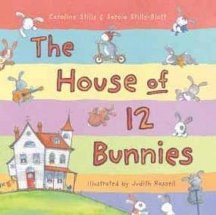
The House of 12 Bunnies by Caroline Stills and Sarcia Stills-Blott
The House of 12 Bunnies by Caroline Stills and Sarcia Stills-Blott
Ill. By Judith Rossell. Little Hare, 2011. ISBN 9781921714405.
(Age: Preschool to Yr 2) In the house of 12 bunnies, it is nearly
bedtime but Sophia has lost something. Unfortunately, this is not an
orderly, organised household and Sophia has a difficult time finding
what she is looking for. But Sophia needs it if the bunnies are ever
to
get to bed to sleep peacefully so she perseveres.
And the young reader perseveres with her, having the most delightful
time finding all the other items mentioned in the text, and, at the
same time, trying to work out what it is that Sophia is looking for.
Miss 5-on-Sunday and I had a great time with this book, not only
finding the items but also thinking about the sorts of places we
could
look in the kitchen, the dining room, and even outside as well as
the
sorts of things we might find there. (This sort of classifying and
categorising is the very beginning of information literacy - putting
like with like to be organised.) We did
get distracted when we searched the piano though, because maybe the
item was inside it and the only way to find that out is to sit down
and
play a few notes! But, because Grandma had had a sneak peek at the
last
page, eventually we were able to find just what we (and Sophia) were
looking for, right where we left it.
This book works on so many levels. Its storyline is engaging and
intriguing because the readers doesn't know what Sophia has lost so
has
to predict; its illustrations are rich and detailed and as well as
finding all the items, they have to be counted to ensure they are
all
there; there's scope to explore colours, patterns and designs; and
each
page has a different preposition of position (maths and mapping) to
explore. It's very clever and reflects a sound understanding of the
needs of this age group, so while it entertains it subtly educates.
It
can be read over and over with something new to focus on each time,
and
just cries out for all sorts of follow-up activities, both at home
and
at school.
Linking literacy, numeracy and information literacy can be a
challenge
but this book nails it. It's a great opportunity to show our
classroom-based colleagues that information literacy is integral to
everything and that we can offer more than literature appreciation.
Barbara Braxton
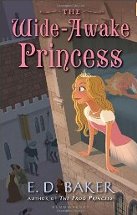
The wide-awake princess by E.D. Baker
The wide-awake princess by E.D. Baker
Bloomsbury, 2010. ISBN 978 1408807576.
(Age 11+) The wide-awake princess can be described as a
magical journey
with
twists and turns on every page and it will make the reader think
twice
about the many fairytales they have read as younger children. This
novel is aimed at girls, aged 11+, who are independent readers but
adults alike will enjoy it too (I know I did). The author, E.D.
Baker,
incorporates a variety of fairytales, from Hansel and Gretel
to
Rapunzel, as we follow the story of Sleeping Beauty.
Our main character is Annie, the younger sister of Sleeping Beauty
(or
Gwendolyn as she is known in the text). She is the only one in her
land
who is not affected by magic - a handy gift to have as she and her
friend Liam search the lands for princes, hoping one of them will
have
the power to wake her sister and her kingdom from a deep sleep. It
was
a joy to read a story with a strong female lead who rescues the boys
rather than having to be rescued by them!
Annie and Liam invite many princes to come but who will be the one
whose kiss will wake Sleeping Beauty - spoiled Clarence, Digby who
spends too much time in the tavern or maybe Emilio who used to be a
frog? And what about Liam? It's only on this journey that Annie
starts to learn more about him. What is his secret and will it
affect
Annie forever? Could he be the one with the magical kiss?
Kylie Kempster
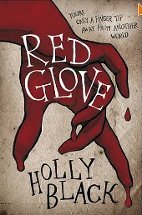
Red glove by Holly Black
Curse Workers Book 2. Orion Books, 2011. ISBN 9780575096769.
(Age 14+) Recommended. The second in the series, following White cat,
lives
up
to
the promise of the first and is another compulsive read
from Holly Black. Cassel Sharpe is having problems. He has discovered
that he is a transformer, a powerful curse worker who can transform
anything he touches into something else. His brothers have manipulated
his memories and he doesn't realise what he has done. When Philip, his
older brother is murdered, the FBI recruits him to find the killer. He
has one clue, a picture of a woman in red gloves who entered his
brother's apartment. While investigating he is confronted with more
visions of what he had done while under the influence of his brothers
and worse of all, Lila, the girl he loves, has been placed under a love
spell by his mother and he knows he can't trust her emotions.
After a slightly slow start, as I didn't have White cat on my
shelves
to refresh my memory about preceding events, the pace picked up and I
found myself engrossed in Cassel's dilemmas. I really like the
character of Cassel and the fact that it is told from the point of view
of a boy, who tries to be good, but is surrounded by the Mob and his
dodgy family. But being good by Cassel's standards usually means a con
of some sort and Cassel has the ability to con the best of them.
The idea of someone having the ability to transform objects is
fascinating and I loved the gory descriptions of what Cassel had
transformed. It's also thought provoking to imagine just how much
self-control a worker who could transform needed to have. Imagine if
you lost your temper easily! Whether curse workers should be protected
is
also explored with Daneca, Cassel's friend, waving banners and her
lawyer mother being prepared to help Cassel (after a small con on his
part!)
The love interest was also handled really well. It was refreshing to
see a young man trying to do the right thing and not take advantage of
Lila, and the surprise conclusion will have me coming back for the next
episode in their relationship. But the love interest, while very
important, is not the central focus of the book. It is whether Cassel
can resist the lure of becoming an assassin, and try to remain true to
the goodness in his character.
Holly Black has written a unique and fascinating book, with enough
twists and turns to appeal to both boys and girls. I can't wait for the
next in the series.
Pat Pledger
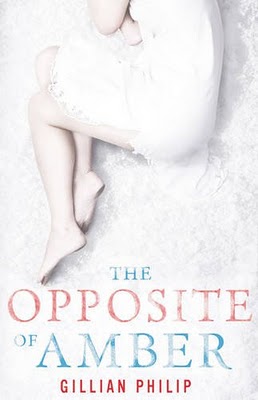
The opposite of Amber by Gillian Philip
Bloomsbury, 2011. ISBN 9780747599920.
(Age: 15+) Recommended. 'Words are powerful': Ruby tells us
this at the
beginning of the novel but it takes time to fully realize the truth of
this statement. Ruby is careful with words, she uses them sparingly.
Words change lives, words cause harm; silence is safer.
After their mother died, Ruby and her sister Jinn lived together in
their council home. Although Jinn was only 19, she was caring and
competent, and capably adjusted to running the household and caring for
Ruby; at least she did, until Nathan Baird arrived on the scene.
One by one girls are taken. Murdered. The police know it is the
same perpetrator, but he is clever. He leaves the girls in water,
destroys all evidence. Ruby notices the girls, remembers reading the
newspaper articles, knows how close to home the murders occur. She
isn't scared: he murders prostitutes. The Opposite of Amber is a powerful and absorbing novel. Ruby is
a
strong and self-reliant character who takes life seriously. She
understands the impact one life can have on another. She understands
the importance of choosing her words carefully and choosing when to
stay silent.
Sue Mann
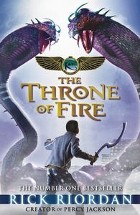
The Throne of Fire by Rick Riordan
The Kane Chronicles. Puffin, 2011. ISBN 978 0141 335667. The Throne of Fire is the much awaited sequel to The Red Pyramid. The
extraordinary adventures of Carter Kane and his sister Sadie whose
Egyptian roots have come forward in time to thrust them into the
perennial war between good and evil. The Kanes and their cohorts gallop
at break neck speed as the forces of evil build to threaten the
existence of Earth itself. The powers of the ancient Egyptian gods have
to be learned, as does the use of the mysterious conduit of the duat.
They achieve their goals by the skin of their teeth but leave the
reader wondering what will happen next - and when will the third in the
Kane Chronicles be ready. The young teen readers (and older ones too)
who enjoy a complex adventure with an Egyptian flavour will love this
carefully crafted read.
Sue Whittaker (Primary teacher librarian)
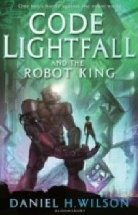
Code Lightfall and the Robot King by Daniel H. Wilson
Bloomsbury, 2011. ISBN 978 1408814192.
Code Lightfall is the unlikely name of a shy boy whose best friend, his
grandfather, is missing presumed dead. During a school excursion to the
place where his grandfather was last seen, he falls (like Alice in
Wonderland), down a hole to an amazing place of metal and robots.
Wilson has created a novel land where grasses, bugs, walls
transport - everything is made of metal, but has individual personality.
Code adapts to this world quickly learning that everything has recently
been programmed to disassemble. With the help of a quirky Slaughterbot
he unwittingly created, and Peep, a robot bee like creature who
befriends him, Code is drawn to the centre of the robot world with the
twin desires of stopping the disassembly and maybe finding news of his
grandfather. An unusual, surprising ending with hints of more to come.
This very readable, linear style novel will appeal to students in years
4-6.
Sue Whittaker (Primary teacher librarian)
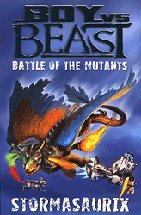
Stormasaurix by Mac Park
Boy vs Beast: Battle of the Mutants. Pop and Fizz/Scholastic Australia,
2011. ISBN 978 1921684296.
First thought - this reminds me of a computer game! A good tactic to
encourage young boys to read!
Beast vs. Boy Stormasaurix is aimed at independent readers aged 7 to 9
years and uses short sentences to help make keep meaning
clear and to give a sense of excitement. The large font is also a good
way to encourage young readers to try reading a short novel as it
makes it seem like there isn't a lot to read. Pop and Fizz and
Scholastic have used black and white illustrations which show the cards
of different beasts as well as other computer style images such as
controllers, communication devices and secret lairs. Part of the text
even uses a comic strip to explain what happens.
Our story begins with a prologue, introducing any new readers to the
background information they might need to help understand the storyline
of the series. We meet young Kai Masters, a border guard who defends
the human world against the different beast worlds. In this book,
he is headed for the Wind Land. Kai is in training to
become a border captain and the more battles he wins, the more battle
gear he collects (hence my computer connection). Kai and his
dogbot, BC3, head off on this mission to stop the chaos in the Beast
Worlds but let's hope he has chosen the correct battle gear as he flies
in to confront wild dust storms, rock birds and a new mutant beast -
the Stormasaurix.
Kylie Kempster