Walker Books, 2011. ISBN: 9781406336825.
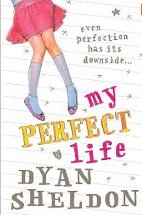
Recommended. For those who were desperate to return to Dellwood High
after Confessions of a Teenage Drama Queen, your chance has
arrived! My
Perfect Life, the sequel by Dyan Sheldon, follows Lola Cep and Ella
Gerald on their mission to beat Dellwood's queen bee, Carla Santini, at
attaining the role of Student President. But Ella and Lola couldn't be
an anymore different pair of allies. Ella Gerard has everything; her
own phone, her own television, her own video and even temperature
control. Her life is perfect. So it's a wonder to everyone how she can
be best friends with the eccentric, outspoken and obstinate Lola Ceps.
When the girls discover Carla is running for President, after many an
argument, they finally agree on doing everything they can to ensure she
doesn't win the votes of their peers. And so My Perfect Life
evolves,
with Lola and Ella relentlessly battling against Carla to see who will
win the top spot . . . with hilarious consequences! From their posters
to
their rallies, each girl running for president constantly attempts to
better the other, providing the reader with 229 pages of amusement and
entertainment as the easy-to-relate to characters embark on their
journey to win!
Throughout the novel, the diversities between the two main characters
arise and their friendship is challenged. However, they overcome these
disputes with the help of their mutual goal, proving that opposites do
attract and that friendship conquers all. The novel also explores the
road to self-discovery, the importance of self-confidence, and
expresses that all it takes to achieve your dreams is trying your best.
Having read this book from cover to cover without putting it down once,
I found My Perfect Life to be a light, enjoyable read which
stood out
due to its unexpected ending!
Lucymarie Silvestri (Student)
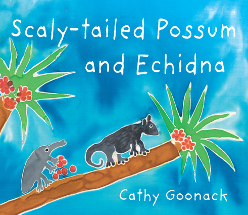
Scaly-tailed possum and echidna by Cathy Goonack
Ill. Katruna and Marlene Goonack, Myron Goonack. Magabala Books, 2011.
ISBN 089 1 9212449 19 0.
(Ages 4-7) Warmly recommended. Aboriginal People - Dreaming. This
story
of the scaly-tailed possum and the echidna and how each came to be,
following the echidna stealing food from the possum's pandanus tree,
will delight younger readers, for whom the book is a comfortable size
to hold. With bright, energetic pictures and bold colours, the book
will have instant appeal.
When the scaly tailed possum came down from its pandanus tree, the
echidna took its opportunity to climb it and steal the nuts. When the
possum returned, it fought the echidna and when the echidna fell, the
thorny parts of the tree stuck into him, making him spiky too. He
grabbed the tail of the possum and to this day his tail is smooth while
the rest of his body is furry.
The story tells the younger readers just how these animals came to be
that way, and shows the power of the Wandjina, the great spirit, in
meting out appropriate punishment for wrong doings. This is a story
from the Wunambul people of North West Western Australia in the
Kimberley region, and this story is retold by the Goonack family.
Photos at the front of the book shows the story being passed onto the
younger generation, while the books is augmented by a superb map and
information about the animals in the story and the writers and
illustrators. For more information about Magabala's stunning range of
books
see the website.
Fran Knight
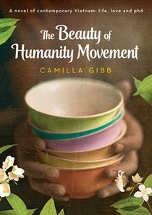
The Beauty of Humanity Movement by Camilla Gibb
Atlantic, 2011. ISBN 9780857891716.
Old man Hung, a Vietnamese pho maker is the centre of this complex tale
from which inter-generational stories of artistic martyrdom, romance,
survival and family drama radiate. Pho, (what Westerners would consider
a beef broth), is to Hung's loyal customers a work of art having deep
cultural significance. As a boy, Hung was sent from a country village
to Hanoi in the 1930s to work with his uncle and the nation's torment
at the hands of foreign powers is conveyed to the reader through his
ruminations.
French Colonialism, Japanese invasion, post-war portioning, hostilities
between the North and South, intervention by China, Russia and America
all contribute elements to this evolutionary tale which might have been
irretrievably bleak. Somehow, the irrepressible spirit of Hung, who
symbolises the tenacity and stoicism of his people carries the reader
through a mire of appalling suffering, Buddhist teaching, familial
devotion, courage and political philosophy are the armour which
protects the characters against oppression, cruelty and corruption.
Depiction of mindlessly destructive agrarian reforms which caused
wholesale starvation and political machinations which were little more
than bloodthirsty purges are unfortunately historically accurate and
mirror the Chinese and Russian experience of extreme Socialism. This is
not a wholly bleak story however. The optimism shown by the characters
in the more benign political climate of Doi Moi (where trade and
private ownership is allowed) is captivating and provides hope.
The presence of an American born Vietnamese woman who deals in art and
who hopes to understand the fate of her politically defiant father
brings about interaction with locals who are endearing for their
respect, decency and wonderful humour.
The book is more than a lesson in political history. This is a deeply
spiritual story, yet the reader also comes to understand the
characters' celebration of simple pleasures. This is particularly
evident in the constant references to food, made more noticeable by the
suffering caused by starvation in earlier times.
Rob Welsh
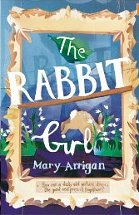
The rabbit girl by Mary Arrigan
Frances Lincoln Children's Books, 2011. ISBN 978 1 64780 156 2.
(Ages: 10+) Warmly recommended. A charming tale of two different
families coming together over a sketch of a girl with a rabbit, this
will appeal to a wide audience, as two stories, one set now and the
other set during World War 2, coincide.
Mallie and her mother, Sarah are at odds. Sarah just cannot keep a job
and so the pair finds it hard to make ends meet. Mallie pushes her
mother to start drawing again like she used to but to no avail.
Unbeknownst to Sarah, Mallie takes a part time job in a pet shop after
school, where she befriends the older man who owns the place.
For Sarah's birthday, Mallie buys her an attractive drawing of a girl
with a rabbit from the local secondhand shop and they display it
proudly in their tiny flat. When the pet shop owner and his son come to
tea, the man is distraught, telling the two women that the picture is
his, accusing Mallie of stealing it from him.
In alternate chapters we learn of the old man's background, that during
the war he was evacuated to Lake Windemere and there met a young girl
and a painter. This story of his war time life comes together with the
two women in today's London. This is an involving story with an easy
introduction to children at war and what happened to the more than one
million children evacuated from London, as well as giving a background
to a well known children's illustrator who lived in Lake Windemere.
Fran Knight
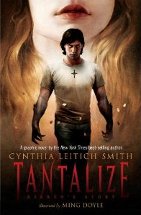
Tantalize: Kieren's Story by Cynthia Leitich Smith
Ill. by Ming Doyle. Candlewick, 2011. ISBN 978 0 7636 4114 6.
Kieren, as a hybrid werewolf, is to join an urban Wolf pack to master
his shift. He will have to leave everything behind and that includes
Quincie. When the chef at Quincie's family's restaurant is murdered,
Kieren decides he must find who his killer is. The new chef brings
trouble and Kieren has his theories about him. Kieren has to protect
his Wolf identity and Quincie but can he do that when he is the main
suspect in the murder case. With Kieren's friends can he find the true
killer and protect Quincie? But how much more can Kieren hide his shift? Tantalize: Kieren's Story is dark and thrilling. I loved that
Kieren
does everything he can to protect Quincie. The illustrations are
beautiful and add that extra depth to the storyline. It has a great
mixture of werewolves and vampires and unexpected twists and turns that
kept me reading. I loved reading Tantalize: Kieren's Story.
Cecilia Richards (Student)
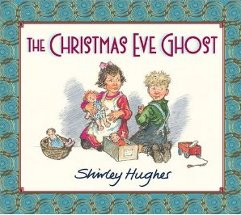
The Christmas Eve Ghost by Shirley Hughes
Walker Books, 2011. ISBN: 9781406331073.
(Ages: 5-9) As soon as I opened this book, the classically Shirley
Hughes illustrations transported me back to childhood times spent with
Alfie and other titles whose stories I cannot remember but whose
illustrations remain lovingly stowed within my memory. As Shirley
herself says illustrations in picture books should flow over the pages
and children should feel as though they too are within the story they
are hearing, seeing or reading. The superb illustrations within this
book are certain to do just that. In addition, the tale itself is
engaging and beautifully crafted and will satisfy the adult reader as
much, if not more so, than the young audience.
Shirley wrote this story using memories of her time growing up in
Liverpool in the 1930's so children will be fascinated by the everyday
life of hardship led by Bronwen, Dylan and their Mam. While the
differences between the childhood life of today and that of the 1930's
are obvious and make for great talking points what this book really
highlights is the classic nature of children in their innocent
acceptance of others and their ability to inspire hope and
open-mindedness in others. The message is a simple one of Christmas
goodwill and it is one we could all benefit from remembering.
This story is rather lengthy with extended text on some pages but is
perfect for some shared magical moments between a child and their
parent or grandparent.
Nicole Smith-Forrest
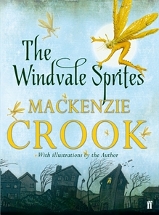
The Windvale Sprites by Mackenzie Crook
Faber and Faber, 2011. ISBN 9780571240715.
(Ages: 7-10) While exploring the damage inflicted by a 'not technically
a hurricane' storm on his small town young Asa Brown makes an
extraordinary discovery. Blown into his back garden from the nearby
Windvale Moor and floating in his fishpond is a six inch long creature
with a strong resemblance to what could only be described as a fairy.
Not a 'wand waving Tinkerbell' as the author points out but a 'wild
creature' with antennae, pointed ears and sharp thorns on the outside
of each limb. Mackenzie Crook is an unlikely author of this magical and
heartening tale. He is also responsible for the unique
illustrations scattered throughout the book. As an actor best known for
his work as Gareth in the British comedy The Office I was expecting
this to be full of dry humour and as a debut novel I was not highly
expectant. However, while this is not a literary masterpiece I really
enjoyed the characters, the plot and the style of this story. Asa's
mission begins with his quest to make sure that fairies are not
commonplace and leads him to discover the hidden and long forgotten
secrets of eccentric 19th century scientist Benjamin Tooth. In an overt
subtext his motivation changes throughout the book as he first dreams
of being the famed 'discoverer' of these creatures to declaring
himself a conservationist as he discovers the horrific treatment they
have been exposed to in the past. In the end Asa discovers more than he
bargains for and his promise to protect these creatures culminates in a
bizarre but charming conclusion. The dialogue and character
development within this story is superb, witty and convincing. The
sarcastic librarian Mr Trap is a particular joy! I can quite honestly
say I enjoyed every page.
Nicole Smith-Forrest
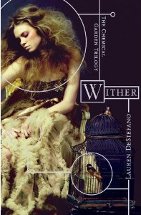
Wither by Lauren DeStefano
HarperVoyager, 2011. ISBN 978-0-00-738698-7.
(Age 14+) Dystopia. Science fiction. In a world where genetic
engineering has gone astray, 16 year old Rhine Ellery and her twin
brother desperately keep themselves alive. A virus that kills off their
young people has defeated scientists, who had attempted to create
perfect babies and longer life. In a society that has gone haywire, all
girls die when they are 20 and young men when they reach 25. When Rhine
is kidnapped by a rich man and chosen to be one of three sister brides
for his son Linden, she knows that this is not a life that she can
tolerate and together with Gabriel, a servant in the household, she
plots an escape.
DeStefano has created a very frightening, claustrophobic world where
the three sister brides live in a comfortable prison with a library and
beautiful gardens, but they have no freedom or control over what they
do.& With Rhine are Jenna, a 19 year old young woman who has given
up all hope, and Cecily, an orphan, who has never know anything better
and longs to be Linden's favourite. Rose, Linden's first wife and love
of his life, is dying, and the three girls are faced with what it is
like to die at the age of 20. The servants in the household are very
young and educated only for the duties that they must perform: hair,
make-up, dressmaking and serving. Ruling with a fist of iron is
Linden's cruel father, who experiments on bodies, trying to find a way
to overcome the virus.
The premise of the book reminded me of The handmaid's tale by
Margaret
Atwood, which would be a good choice to send more able readers to if
they like the ideas behind this story. It is of course, written for
adolescents and is an easier read. The beautiful girl on the
front cover and the fairly low key love interest will attract teenage
girls.
The themes of genetic engineering gone awry, the callousness of a rich
society toward poor children and the belief that women have little
value other than to produce babies or entertain men, will all raise
issues that teen readers can explore with relish. The book is
quite dark and is not an escapist read. People who like dystopian
themes will be able to continue with the next two books that are
planned for this series.
Pat Pledger (SA)
Editor's note: This review was first published in Fiction Focus.
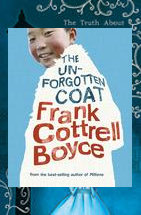
The Un-Forgotten Coat by Frank Cottrell Boyce
Walker Books, 2011.
Recommended for ages: 10+. To me The Un-Forgotten Coat is a
whimsical tale and its characters seem intangible and enigmatic. While
this may make the story feel a little less realistic or identifiable it
also adds to the overall sense of wonderment, especially when reading
the true story the book was based on. Full of hope and open-mindedness,
the main character, a Year 6 girl from the small English town of
Bootle, yearns to get a glimpse into the lives and homes of others. The
reader quickly gets drawn into her fascination with new ways of
thinking and looking at things as she becomes friends with two
immigrant children from Mongolia. What she doesn't expect is that the
new arrivals to the school do not have the mysterious and exotic
belongings and life that she imagines. For a brief moment the three
children guide themselves into a imaginative world where they all feel
like they belong before plummeting back to reality. This book is
incredibly appealing aesthetically due to its resemblance to an old,
yellowing notepad and the addition of the striking polaroid photographs
which are an integral element of the story. Despite this I think the
sheer beauty and sugary sweetness of this book somewhat masks the very
real refugee story lying inside it. In addition the book is written
from the perspective of the main character, now an adult, reminiscing
about this childhood event and while I really enjoyed reading it I
cannot decide whether children will feel any sense of connectedness
with the characters or the story. This is a very short story; however I
think it will have greater appeal for older children and would be a
great classroom read aloud text for stimulating discussions around
refugees and immigration issues.
Nicole Smith-Forrest
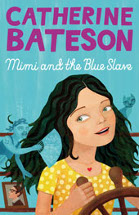
Mimi and the blue slave by Catherine Bateson
Woolshed Press, 2010. ISBN 978 1 86471 994 9.
(Ages 10+) Warmly recommended. Death. When Dad dies unexpectedly, Mum
and daughter, Mimi are bereft, Mimi turning to her imaginary friend,
Ableth, her blue slave for comfort, and Mum taking to her bed. Their
secondhand shop downstairs is running out of stock, and people have
stopped coming around with Mum giving excuses not to see them. Mimi
returns to school, knowing that people will treat her oddly for a
while, and is surprised when the one who does not, Fergus, is the by
she likes.
But some people do notice Mum is not around nay more and that the shop
hours have been reduced and she no longer attends the auctions to buy
stock. And Mimi takes action as well, discussing what to do with Ableth
and now Fergus. When one of Mum's friends takes her
to a course in IT, Mimi insists on being left home alone, but someone
steals into their shed, causing fear for both women.
Mum's friend Guy takes Mimi to one of the auctions and there she meets
some of the family of buyers who sell on what they buy. They all ask
after her mother, and take time out to talk to Mimi about what to do.
Mimi has been looking for a dog to protect her when Mum goes out again,
and finds one at the auction, the last of the litter of one of Mum's
friends.
Gradually Mum recovers from her depression, taking more control over
what is happening, with the help of Mimi and her aunts, plus some of
the friends, so that their first Christmas without Dad is loving and
joyous, thinking about the future and remembering good times in the
past.
A charming story, Mimi and the blue slave creeps up on the reader,
stealthily showing the situation and its solution but all the while
enveloped in the care and love of family and friends.
Fran Knight
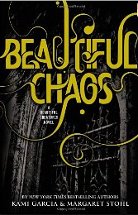
Beautiful chaos by by Kami Garcia and Margaret Stohl
Razorbill, 2011.
(Age 14+) The third in the gothic, paranormal Beautiful creatures
series, Beautiful chaos continues the story of Ethan and Lena,
a Castor
girl, who has changed everything in the world with her supernatural
powers. Gatlin, the small Southern town where Ethan lives, is besieged
by swarms of locust, heat waves and crippling storms. Mrs Link is
declaring that the end of the world is nigh. Ethan is being haunted in
his dreams with vision of falling and death and is losing small pieces
of his memory,while Amma is visiting strange people with voodoo
powers. Will they be able to mend the crack that has opened up between
the Castor and Mortal worlds?
As with the first two books in the series, which are essential to read
first, the action and plot move along at such a swift pace that I found
it difficult to put this book down. There were many twists and turns
that kept me guessing. It seemed obvious that someone would die but who
would have the unhappy ending that is hinted at on the blurb? Amma's
visits to the voodoo man were intriguing and her fear was palpable.
As in the other books the well written main and secondary characters
and the small town setting make the story so interesting. Lena is
desperately trying to come to terms with her powers, while Link, the
ever steady friend is coping with his transformation into Linkabus and
trying to woo the unattainable Ridley. Ethan and Lena's love story
develops in a satisfactory way, but Beautiful chaos centres on
Ethan
and the suspense that is engendered by his nightmares.
With a cliff-hanger ending that was a surprise, although there were
plenty of hints on the way, fans of this series will be waiting
impatiently for the next book.
Pat Pledger
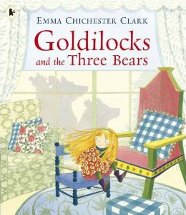
Goldilocks and the three bears by Emma Chichester Clark
Walker Books, 2011. ISBN 978 1 4063 3075 5.
(Ages 5+) Picture book. Nursery tale. This retelling of an old
favourite Nursery Story, with the overlay of a moral tale, is given
another outing in this new version by Emma Chichester Clark. Everyone
knows the story of Goldilocks and the three bears, but this one has a
few tweeks to give it some difference to the other versions. The moral
at the end, for example, is given more stress, as we see Goldilocks
hiding under her bed, vowing never to poke her nose into other people's
houses again.
And Clark's illustrations too, gives the retelling of the Goldilocks
story a different look, so Goldilocks' hair stands on end when found by
the bears, and as they watch her running away, they laugh together.
Readers coming to this story will love the small changes and be able to
compare it with other versions they have read. They will also delight
in the plethora of things to look for and find in the Bears' house. It
will be well used as a book in its own right, but also one to compare
and contrast with other versions.
Fran Knight
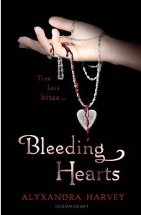
Bleeding Hearts by Alyxandra Harvey
Bloomsbury, 2011. ISBN 9781408814970. Bleeding Hearts is a really enjoyable novel that has action,
thrill, love and mystery. It is also the fourth in the series, The
Drake chronicles.
Late teenager Lucy is the star of the book, being the main character
and the one with the connections to the Drake family (a family of
vampires in which includes her best friend and boyfriend). It all
changes when Lucy's cousin from the city, Christabel, unknowingly
threatens to reveal the Drake's secret, especially when she comes face
to face with a Hel-Blar, one of the most dangerous vampire/monsters you
have ever encountered.
At the beginning of the novel, the annual Blood moon Vampire council
meeting is in process. Solange (Lucy's best friend and the Vampire
Princess of the Drakes) is avoiding Lucy for reasons unknown, and is
acting suspicious after almost drinking a poisoned batch of blood. The
Drakes have their hands full when they are called to help prevent the
rising of the Hel-Blar, Blue skinned monsters that smell like a marsh
and horribly like rotting mushrooms and to run the Blood moon. Everyone
is [erplexed when a messenger arrow arrives with a message from Saga
(whoever that is). Nobody has a clue to who this stranger is. Could she
have had anything to do with the poisoning of Solange's blood? The end
of the novel is wrapped in action and thrill as Christabel goes
missing, what could have happened to her? Everyone is suspicious of the
Hel-Blar, considering their recent population boom.
This novel is excellent and keeps you bound until the end. If you
haven't read the others in the series, it doesn't matter, it still
makes sense and is a brilliant book. I would age this book early to
mid-teen.
Sarah Filkin (Student)
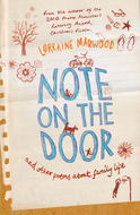
Note on the door by Lorraine Marwood
Walker Books, 2011. ISBN 978 1 921720 61 1. Note on the Door is a book of poetry aimed at children and I would
recommend it for children aged 10+ to adults. Lorraine Marwood explores
topics of everyday life from snapshots of family life and burning cakes
to adventures at the beach and the birth of a baby. The poems are
descriptive and entertaining and as you read they are telling their own
little stories that you can relate to yourself.
It is a good collection to expose children to as many read poems that
rhyme, the type of poetry that most children are exposed to as they go
through school. The collection is also a good teaching tool for the
classroom as children are exposed to the different ways poems can be
set out for the best impact on the reader.
Kylie Kempster
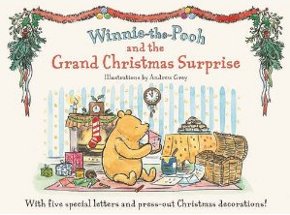
Winnie-the-Pooh and the Grand Christmas Surprise by Andrew Grey (illustrator)
Based on the Winnie-the-Pooh works by A.A. Milne and E. H. Shepard.
Hardie Grant Egmont, 2011. ISBN 9781742970295
'Nothing is better than a surprise Christmas letter!' Pooh is
stumping home through the snow from Christopher Robin's house, humming
a little hum,
when he has an idea. Next day, Piglet, Christopher Robin, Kanga, Roo,
Tigger, Eeyore and Owl all receive mysterious letters telling them to
go to the North
Pole at luncheon. Piglet is very worried that Pooh has been kidnapped
by
Hostile Animals or a Heffalump so they all go to see Rabbit for advice.
But Rabbit also has a letter, and, appointing himself in charge, he
leads them off to
the North Pole where they find . . .
This is the most delightful story in the traditional Winnie-the-Pooh
style that is my favourite. It has beautiful coloured illustrations
akin to
the originals of E.H. Shepard with the added excitement of five real
letters in
envelopes, as well as something special in Pooh's envelope.
I know
whose Christmas
stocking this book is going into, but if your students love Pooh and
the
excitement of opening envelopes then this is just perfect. Maybe they
could
pretend they have been invited to the North Pole too and create an
acceptance card for
Pooh or a Christmas card for all the friends. Lots of ideas for this
special time of the year.
Barbara Braxton