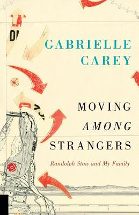
Moving among strangers: Randolph Stow and my family by Gabrielle Carey
University of Queensland Press, 2013. ISBN 9780702249921.
(Age: Senior Secondary) Gabrielle Carey has written an intriguing
and unusual investigative memoir, which explores the life of
Australian writer, Randolph Stow, through a rather tenuous link she
has made after reading a few pieces of correspondence that Stow
shared with Carey's mother. The reasons for setting off on a quest
to discover more about Stow is not very clear but what follows is an
insightful picture of a man who, after great literary success,
uproots and leaves Australia for England, where he lives out the
rest of his days. With her journey Carey discovers details about her
mother's life that she did not previously know and, consequently,
she explores the relationships she has with her sister, father and
the extended family. Carey's life is not unlike Stow's in many ways.
She achieved great fame with Kathy Lette for Puberty Blues
(1979), moving on to write more about the spiritual. She undertakes
a journey, which will also help her come to terms with the loss she
has suffered through family. Stow was bitter about the Australia's
inability to care for its indigenous people as well as its failure
to appreciate his work and artistic life in general.
Considerable space is given to analysing Stow's stories, not in a
deep literary sense, but almost in passing, which gives the reader a
wonderful overview of his work. There is little in print now,
although The Merry-Go-Round in the Sea (1965) is readily
available. (Midnite is another story this reader would like
to revisit). As well as recalling his letters, Carey quotes such
memorable lines from Stow's stories, that we wonder why his name has
been rather lost to time. Hopefully, this book of Carey's will renew
interest in such a writer of vision and beauty. Its great value lies
too, in showing how stories come about from finding connections
between people and places. Moving Among Strangers will be of great interest to more able
school students who are also interested in discovering more about
out writers and the Australian literary tradition.
Julie Wells
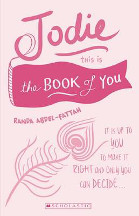
Jodie : this is the book of you by Randa Abdel-Fattah
Omnibus Books, 2013. ISBN 9781742990101.
(Age 11+) Highly recommended. Jodie: this is the book of you tells
the story of a Year 6 student, Jodie, as she comes to terms with
divorce and being part of her Dad's new family. Jodie and her
friends discover what seems to be a magical book in which cryptic
poems appear. Jodie feels connected to the original owner of the
book and uses the poems to guide her jumbled life. Jodie tries to
break up her Dad's new relationship, feels guilty about feeling
happy with her Dad's new family and finally interprets one of the
poems in a positive way. This interpretation helps her forge a
better relationship with her new stepsister and makes her realise
they are more alike than she knew. Jodie: this is the book of you is an inspiring story of a young
girl's refusal to let bullies put her down while tackling topics
that are relevant to many children today. It is easy to read and is
highly recommended for girls aged 11+.
Kylie Kempster
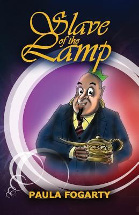
Slave of the Lamp by Paula Fogarty
DoctorZed Publishing, 2013. ISBN 9780987345271.
(Age: 11+) Slave of the Lamp is the story of Rufus and his decision
to get a job - the only way he will ever get his new computer! Rufus
is hired by a genie to go back in time and help out heroes
from the past. This story brings characters such as Aladdin, Theseus
(from Greek history) and Sinbad to life. During the school holidays,
it is Rufus's job to help the heroes. They call him by rubbing the
lamp. Rufus enjoys the adventures despite some of the dangers. Slave
of the Lamp is descriptive and full of adventure. It would be
enjoyed by girls and boys aged 11+ and is a great way for children
to read about these classic characters as a boy from modern times
helps them out.
Kylie Kempster
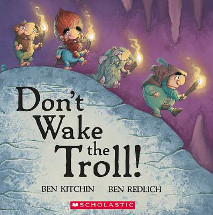
Don't Wake the Troll by Ben Kitchin
Koala Books, 2013. ISBN 9781742760605.
The text is aimed at readers aged 7+ but it is highly recommended
for everyone. Don't Wake the Troll is the story of a group of
dwarfs determined to get their treasure back from the troll who
stole it. The author uses descriptive language and humour to make it
funny and engaging. As the dwarfs get closer and closer to the
troll they realise how much noise they are making. The dwarfs stop
their noise but will a single gold coin be their undoing?
This is a great story to introduce narrative writing in the class and the
use of adjectives is a good way to model how children can engage
their readers more. The illustrations are cute and could be used to
help children with their writing. It is also appealing to many ages
- parents to read to their children or older children to read alone.
Kylie Kempster
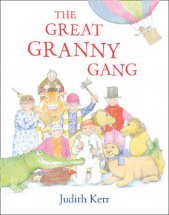
The great granny gang by Judith Kerr
HarperCollins, 2013. ISBN 9780007467921.
(Age 3+) Recommended. What a wonderful fun look at great grannies,
the youngest eighty-two. They get up to all sorts of capers,
including babysitting a crocodile, taming lions, repairing chimneys
and going ballooning. When a gang steals all the goodies from a
baker, the granny gang comes to the rescue and stops the thieves.
Told in rhymes, this is a glorious celebration of older women and
this time of great grannies, rather than the usual grandmas found in
picture books. They do dangerous and daring things and all are still
active and on the job. Their exploits are humorous and often
dangerous, but can bring a smile to the face. They completely rout
the gang of young boys, who repent their wrong doing, and then they
enjoy the fruits of their endeavour - lots of yummy looking cakes
made by the baker's mother, another great granny.
The illustrations are in soft pastels, with each granny having a
distinct character and clothing. The animals are equally individual
and the crocodile with its wide grin is particularly appealing.
This is a book to read aloud and to celebrate the fact that great
grannies can be amazing.
Pat Pledger
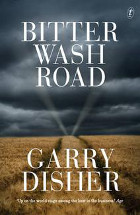
Bitter Wash Road by Garry Disher
Text, 2013. ISBN 9781922079244. Recommended for older readers. Bitter Wash Road adds to Garry
Disher's growing reputation as a writer of crime fiction. The novel
is set in thinly disguised towns in South Australia's mid-north.
Hirsch, or Constable Hirschhausen, is in exile from the city and his
career seems to be in abeyance because he has given evidence against
a corrupt officer and is suspected of being corrupt himself. His
life seems to be threatened as a cardinal rule of the force is that
police do not grass on fellow police. Hirsch quickly learns that his
colleagues in Redruth are not to be trusted and do not trust him.
They also seem to be involved in a number of crimes, some petty but
some not. He survives an attempt to set him up and an official
enquiry, and is then asked to investigate in secret an under-age sex
ring. When a young girl is found dead by the side of the Barrier
highway Hirsch wonders about her possible involvement. He is also
suspicious about the supposed suicide of a farmer's wife, and the
possible involvement of the police officers who seem overly keen to
claim the death as suicide. Meanwhile he becomes established in his
small community as someone who cares and wants to be positively
involved in community life. As Hirsch builds trust he learns more
about the victims and the power brokers in the area, and it becomes
clear that the deaths are connected. The plot is resolved in a
suspense filled scene when Hirsch is confronted by a .303 armed trio
who have decided that the easiest way out is to kill him and dump
his body down a mine shaft. He is of course saved but in an
unexpected way, and in the course of tying up the loose threads
learns some unexpected truths about his sergeant. The plot is
tightly woven and the characters believable while not totally
predictable. Hirsch, an incorruptible but not infallible policeman,
is dealt with warmly. Another strength is the description of the
landscape which is understated but accurate, and lyrical without
being obtrusive. The novel is recommended for older readers.
Jenny Hamilton
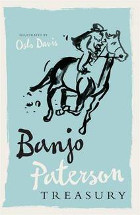
Banjo Paterson Treasury by Banjo Paterson
Ill. by Oslo Davis. Random House, 2013. ISBN 9780857980069.
I confess. I am an unabashed fan of Banjo Paterson.
Since being introduced to his work as a newly arrived immigrant by
being enthralled with the movie 'The man from Snowy River' (the only
movie I have ever seen where the audience sat through the credits
and then applauded), I have loved his work to the extent that when I
sorted my CD collection recently, I found I had three sets of the
works by Wallis and Matilda who have set many of the poems to music.
The first lines of so many are so familiar... 'Once a jolly swagman
camped by a billabong', 'I had written him a letter', 'There was
movement at the station', 'Twas Mulga Bill from Eaglehawk that
caught the cycling craze', and each is featured in this treasury as
well as a host of not-so-familiar poems, illustrated by
cartoonist Oslo Davis.
Because of my passion, many of my students found themselves
exploring the works too, and more than one listed Paterson as their
favourite poet. Apart from the beauty of the language, the
stories they tell and the insight into the life of the times, I
found the poems made perfect introductions for a whole range of
lessons whether it was Year 3 putting their own illustrations to
'Waltzing Matilda' and 'Mulga Bill's bicycle', using 'The man from
Snowy River' as the catalyst for an investigation into the situation
of brumbies in Australia's high country, or stirring up a debate
amongst teacher education students at the Australian Catholic
University by asking if the little fellow in 'A bush christening'
was any less christened than one who had gone through a formal
church ceremony!
Paterson's works are part of the Australian heritage and psyche and
this latest collection in its paperback or ebook format is perfect
in size and price to keep with you at all times so you can delve
into them for pure pleasure or you can share them with the next
generation who need to know these words.
Barbara Braxton
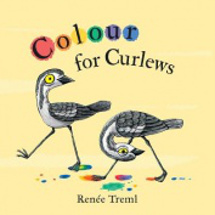
Colour for curlews by Renee Treml
Random House, 2013. ISBN 9781742759210.
Two somewhat drab but curious curlews find an artist's brush and
some paint, and run off with yellow, red and blue. It's not
long before they are no longer drab. Then Bowerbird gets busy
with the blue paint, and Brolga with the red and suddenly this trend
has gone viral! So many colours and so much fun, and off they
go to show their friends. Then along comes the very tired
wombat from Renee's first book and puts his body down for a nap,
right where the paints have all merged into a brown puddle.
But those curious curlews that caused him so much grief in that
first book come back... and they have paint
brushes!!!
Ms Treml seems to have her finger on just what makes a great picture
book for younger readers. Rhythmic, rhyming text, colour,
humour, fun, an ending that leaves room for the imagination and some
tidbits about the birds is the bonus and could lead to an
interesting investigation of why birds have colours, and how there
were so many variations from just three tubes of paint.
Living where I do, I see a range of beautifully coloured birds every
day - they have certainly dipped into a paint palette as rich as Ms
Treml's imagination!
Barbara Braxton
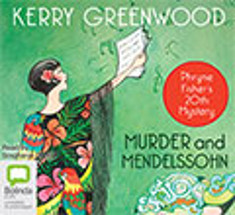
Murder and Mendelssohn (Audio) by Kerry Greenwood
Bolinda, 9 CDs, 11hours, 23 mins. ISBN 9781743178812. Allen and
Unwin, 2013. ISBN 9781742379562. 2013.
(Age: 14+) Highly recommended. Crime, Historical fiction, Humour.
The Hon. Miss Phryne Fisher's twentieth adventure brimming with
daring and sleuthing from start to finish, is replicated in this
fine audio version, published by Bolinda. The reading brings to life
the many characters in the story, Phryne of course, with her droll
comments, her household, Dot, Seth, Jane, Mr and Mrs Butler amongst
others, with the stalwart ever present Jack Robinson. Stephanie
Daniel puts her considerable acting abilities to good use with her
wonderful voice taking on the range of characters introduced in this
book. She makes them all distinct and recognisable, without
resorting to parody to achieve the effect she aims for. The calmness
of the narrator's voice contrasts vividly with the excitable and
slightly arch voice that denotes Phryne, while her depiction of the
men in her life rings true.
This story concerns the death of a quite disagreeable conductor,
rehearsing a semi professional choir in Mendelssohn's Elijah.
The list of suspects is long and varied, and when a mathematician
arrives on the scene, ready for his illustrated lecture after the
rehearsal, Phryne finds his assistant is a long lost friend. John
Wilson resumes the affair which he and Phryne had during the end of
the Great War, both knowing that his affections are focussed on the
mathematician, Rupert Sheffield. The conductor, Tregennis died from
poisoning or suffocation, and Jack Robinson enlists Phryne's help in
sorting out the suspects, while she telegraphs an old acquaintance
in England searching for information about the enigmatic Sheffield.
And joins the choir herself to further her investigations and keep a
watch on the many suspects. When the replacement conductor is also
killed, tension between the choir members increases.
Entwined with this story are the turf wars between criminals wanting
power over the docks in Melbourne and Williamstown as Phryne helps a
young woman escape the clutches of one of the bosses, who may or may
not be linked to Sheffield.
This is a wonderful story, a mix of MI6, stories from the Great War,
criminal activity on the Victorian waterfront, kidnapping and
murder, as well as the more personal stories of Phryne and her
household, all of whom support her in her often hair raising
adventures. Listening to the story recounted by Daniel is a treat
and shines a light to which other recorders of audiobooks can only
aspire. Highly recommended.
For more information about Bolinda audiobooks go to http://www.bolinda.com/aus/
and for a more detailed look at Kerry Greenwood's marvellous
concoction of Phryne Fisher, go to http://www.phrynefisher.com/
Fran Knight
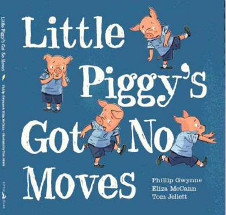
Little piggy's got no moves by Phillip Gwynne and Eliza McCann
Ill. by Tom Jellett. Little Hare, 2013. ISBN 9781921894251.
(Age: 3+) Warmly recommended. Picture book, Dancing, Confidence,
Having a go. In repetitive and rhythmic lines, the story is laid
out. The Pig Family has no moves - they cannot dance at all.
Grooving, moving, boogeying, even the hokey pokey - all beyond them.
The other animals try their hardest to get Little Piggy to try out
on the dance floor at the school social, but he resists, saying the
family mantra, that piggies have no moves. But the music takes over
and his feet begin to tap, then twirl, then cha cha, then rumba, then
tango, then disco, going through all the dance moves there are, much
to the delight of his family and the other animals.
An infectious look at trying something new, of not being hampered by
what people have said in the past, or restrictions placed upon you,
the story encourages children to 'have a go', to try something new,
developing the confidence to be different.
Jellett's illustrations add another level of humour to the tale,
showing the wonderful Pig Family in all their finery going along to
the social, but being content to watch from the sidelines. There is
always much to seek out in Jellett's work: the patterns used for the
clothing, the different styles of housing, the subtle touches of a
time past with the hopper windows and the TV chair, the divans, and
bare floor boards at the school hall.
The combination of the three authors is a winning one.
Fran Knight
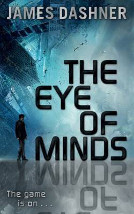
The eye of minds by James Dashner
Doubleday Childrens, 2013. ISBN 9780857533142. ebook ISBN
9781448174195.
(Age: Lower secondary+) I am not a gamer though I can count several
among my circle of friends but I can appreciate a fast-paced and
complex plot with very believable characters - even though some of
them are 'virtual'.
The action and tension of The Eye of Minds reminded me of The
Matrix film with its slickness, blurring of reality and
virtual reality and the ominous presence of evil (substitute 'Mr
Smith' for 'Kaine').
Michael, Bryson and Sarah are three 'VirtNet' friends. They have
never met in the 'Wake' but have shared and survived many virtual
experiences, both good and bad, using their combined extraordinary
hacking skills and technical savvy.
When they are recruited by mysterious government officials to help
track down a diabolically clever cyber terrorist known only as
Kaine, the 'game' becomes deadly serious.
Forget about creating wild fantasies in the virtual world, this is
far more like creating horrific nightmares.
In this futuristic space, playing by the rules is forgotten as
Michael and his friends run the gamut of colossal risks,
demonstrating qualities of pluck, intelligence and initiative.
The text is written in a straight forward way which will ensure
accessibility by reluctant readers, while the presence of both boy
and girl protagonists will lend appeal for both genders. The
first in the Mortality Doctrine series, this novel from the
author of the New York Times bestselling Maze Runner series,
as well as the 13th Reality series and The Infinity ring, will be a
sure fire winner with many young adult readers - especially those
who are into the gaming action.
The moderate violence may be unsettling for some readers and thus
recommended for Lower Secondary and up.
Sue Warren
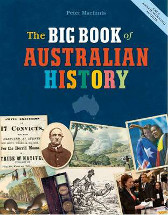
The big book of Australian history by Peter MacInnis
National Library of Australia, 2013. ISBN 9780642278326.
(Age: Primary and Secondary) Highly recommended. From the National
Library of Australia comes this richly illustrated book that
encapsulates Australia's history from its birth in ancient times to
right now, touching on all the significant periods in our
development and examining why we are who we are.
But this is no ordinary, dry, dusty history tome - this is from
Peter Macinnis whose passion is to squirrel out the unusual and the
unknown and bring them to life with his wonderful wordsmithery. So
as well all that you would expect from a book with this title, there
is so much more as Peter puts on his investigator's hat and goes
searching for why and what and who. So even though it's a
dip-and-delve book, the text is written in such an engaging way that
you want to keep reading, and the notes and illustrations make you
want to keep exploring. From the ancient megafauna which roamed this
land to the presence of Australians on the world's stages, this book
charts the nation's history in a way that educates and entertains
and keeps you flipping the pages. Each section has tempting tasters
that make you want to find out more. For example, there's a quote
from Albert Facey's A Fortunate Life in which he says he
believes Simpson (of Simpson and his donkey fame) should have
received a Victoria Cross, which makes you ask, 'Well, why didn't
he?'
If you are familiar with Peter's other books such as The
Australian Backyard Naturalist or Curious Minds: The
Discoveries of Australian Naturalists then you will know how
thoroughly this new title has been researched and how well it has
been written. It is a must on the shelves of every school library -
primary and secondary.
Barbara Braxton
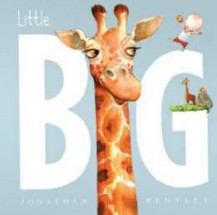
Little big by Jonathan Bentley
Little Hare, 2013. ISBN 9781921894442.
(Age: 3+) Highly recommended. Picture book, Size, Siblings. A
giraffe forming the middle letter of the word big on the front cover
invites the readers to open the book and see what it is all about.
Baby brother is little and admires his brother nonchalantly sitting
cross legged on his chair eating his toast, a big boy. He longs to
be big and tries various schemes to be big but they do not work. If
he had big legs like a giraffe he could race up the hill, or big
hands like the gorilla he could take out cookies from the jar and
eat them, or a big moth like the crocodile, then he could tell his
brother to go to bed. But a big monster might scare him under his
bed, until he finds out just who is under the monster mask.
A lovely story of siblings and their relationships, of trying to be
bigger, of the difference between big and little, the illustrations
beautifully match the whimsy of the tale, the watercolour textures
adding a layer of softness to the crocodile, gorilla, monster and
giraffe. Watch out for the monster's shadow, the way the animals
emanate from the boy's backpack, the difference between what a
bigger animal can do and then cannot do. The whole adds up to a
loving sibling relationship, where the older by cares for the
younger, so much so that he is the monster, wrapped in a sheet, and
because he is big he can peddle the little trike with his brother in
the back.
Fran Knight
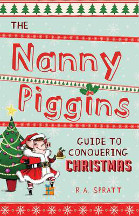
The Nanny Piggins guide to conquering Christmas by R. A. Spratt
Random House Australia Children's, 2013. ISBN 9780857980922. ebook.
ISBN 9780857980939.
Where most of us are merely content to survive Xmas, the inimitable
Nanny Piggins ably provides us with a foolproof guide to
triumphantly trouncing Christmas into submission.
Interspersed with a hilarious Christmas story, Nanny Piggins (with
the aid of her trusty assistant R. A. Spratt) supplies pig-approved
recipes, handy hints for everything from fashion to how to get the
best results from Santa and festive games.
If you think Christmas with your relations is abysmal, just reading
about the scrimmage between the deadly dull Green extended family
and the wildly eccentric Piggins clan will definitely give you some
relief.
Readers who have not yet encountered the subversive and flamboyant
Nanny Piggins can read this as a stand-alone, though will no doubt
be rushing the shelves to catch up with the first eight books in the
series.
Wacky and wonderful, this handy compendium would be a perfect
addition to your Christmas reading list/display - or a very suitable
alternative to boring socks and undies for any reader 8-12 years on
your Xmas shopping list.
Sue Warren
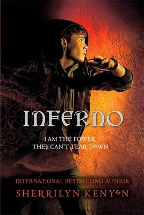
Inferno by Sherrilyn Kenyon
The Chronicles of Nick, bk 4. Atom, 2013. ISBN 9780749957735.
(Age 13+) Highly recommended. Nick Gautier is turning sixteen - and
much of what goes with that normally holds true for Nick, like
getting his driver's licence, breaking up with one girl but taking
up with another, not to mention troubles at school except . . .
Nick's licence is conjured by his Dark-Hunter protector Acheron, the
girl, Kody, he broke up with has supernatural Nekoda powers and a
mission to kill him (albeit unwillingly) . . . while the new girl
pursuing him hotly, Casey, is also not what she seems. In fact, the
real Casey has been 'occupied' by a dangerous demon intent on
destroying Nick and absorbing his powers.
Those who have followed The Chronicles of Nick from the
beginning of the series will understand the danger in which Nick
stands at this point of his life. As the Malachai heir, Nick's
powers are increasing exponentially, particularly as those of his
Malachai father are waning. Nick's only hope to avoid being the most
powerful of all evil beings and the destroyer of the entire world is
to be resolute in resisting the darkness, while commanding and
controlling the elements that beset him.
In this new episode, New Orleans appears even more so to be
inhabited by so many different preternatural forces that Nick's
chances of surviving seem slimmer than ever - particularly when his
enemies summon an ancient force so powerful that even those wielding
immense power fear it. With characters from the previous novels,
Caleb, Kyrian, Bubba, Simri, Ambrose along with Nick's feisty mother
Cherise still expending every possible energy to keep him safe, Nick
is faced with new combatants - Hel hounds, Mara, Zavid and more.
Only Nick's strength of character can keep him from the evil dangers
surrounding him - that and staying alive.
I will not fail in this.
While he might be a Malachai, he was also a guardian. Somehow, he
was going to defy the odds that condemned him. And he would save the
lives of those he loved.
Highly recommended for young adult readers 13 and up who enjoy
supernatural fiction - and aren't afraid of the dark.
Sue Warren