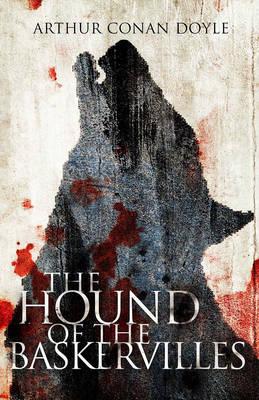
The Hound of the Baskervilles by Arthur Conan Doyle
Ill. by David Mackintosh. Alma Classics, 2015 (First published in
1901-02). ISBN 9781847494962
Highly recommended. Themes: Myth and mystery; Detective story. I
confess to never having read a Sherlock Holmes text before, and I
apologise to devotees of Arthur Conan Doyle works; but I do claim to
have viewed interpretations of the detective tale in screen texts
and regularly enjoy a good Crime and Detective narrative. This book
has been republished as a 'Classic' tale for a new generation of
readers and it is worth reintroducing the younger generation to the
original Sherlock Holmes as he makes sense of small inconsequential
clues to uncover the mystery of the Hound of the Baskervilles. The
Hound has been the part of the legend of the Baskerville family in
their life on Dartmoor in England, and its lingering evil influence
reappears with fatal consequences. Holmes, and his faithful and more
trusting friend - Dr Watson, together become entangled in solving
the mystery of the threatening menace of the Hound on the moors.
This story is written in the language of the late 19th and early
20th century, with extensive description and sentences and
vocabulary that are definitely not from the digital era. ' . . .
though I have not finally made up my mind whether it is a benevolent
or malevolent agency which is in touch with us, I am conscious
always of power and design.' (p45) However for any young reader
prepared to journey back in time, this is a wonderful excursion into
history in both a literary sense and in opening up a window into a
time and place that cannot be revisited except through the pages of
a book. And there is a compelling mystery that needs solving as
well. (This text also includes some background notes about Conan
Doyle and the characters within the narrative.)
Carolyn Hull
Ralf by Jean Jullien
Frances Lincoln Children's Books, 2016. ISBN 9781847808189
(Age: 4+) Recommended. Fire, Dogs, Animals, Pets, Family. This
unusual family pet, Ralf, gets into many places he is not welcome.
He is found in the bath when Mum is taking a shower, under Dad's
feet when he is ironing, in between Mum and Dad when they go to bed,
lying across the family as they watch television. Dad orders him
out, and so he goes, off to his kennel where he can sleep all alone.
Here everything is very quiet, but Ralf smells something, and
realises that the house is on fire. He tries to get back inside but
cannot get through the little door, stretching his body as he
wiggles through. He runs upstairs but cannot wake anyone, so decides
that he will get the firemen. They arrive in the nick of time, and
Ralf's elongated body makes a superb rescue slide for them to get
from their window to the ground. After this Ralf is welcome
everywhere, and his elongated body is enough reason for them to buy
a bigger house.
Gwendal le Bec and Jean Juillien have collaborated to produce Ralf,
and it is hoped that they will produce more stories of this
complexity, layering stories of families and their pets alongside
fun and adventure and a heart stopping moment when the family is
saved by the dog. Deceptively simple, the text is supported by a
wondrous illustrative technique, with bold colours, black line
drawings and cartoon like words usually shouted at Ralf.
Fran Knight
Who's had a poo? And lots of other questions by Anton Poitier
Ill. by Tracy Cottingham. The Five Mile Press, 2016, ISBN
9781760400781
(Ages: 3-5) This 'spot the difference' book is quite a unique
concept, but it does not seem as well thought out as it could be.
Each spread features the same animals but on each page one or more
of the animals have moved or been altered and the reader is asked to
spot the difference/s. The target audience of pre-schoolers are
asked to spot such things as 'who is splashing water around?', 'who
is now upside down?' and 'who is taking a nap?'. Some of the
questions require the reader to compare a page with the previous
one, for example when looking at which animals have swapped places
or changed colour. Some require more analytical skills, such as 'who
is ready for lunch?' which requires the reader to infer meaning from
the animals' behaviour (for example, the panda is holding bamboo and
the duck is diving down into the water). Others provide humour, such
as 'who's done a poo?' which is sure to make pre-schoolers giggle.
The beauty of this book is the opportunity it provides to kick-start
conversations between adult and child. It asks the reader to
investigate each page closely and in some parts to make some
inferences from what they see. Parents who use the book well will
help children develop their analytical skills by discussing how they
know the dog is ready to play or what makes the crocodile look
fierce. However, it is a little limited in allowing this as on some
pages there is only one animal that has moved or changed. For
example, in 'who's showing off?' only the peacock is showing off as
he has his feathers spread; the other animals are unchanged. In
addition, some other questions are very simplistic (eg. 'who's had a
baby?' and 'who's found a friend?').
This will work well as a one on one shared activity with parent and
child rather than as a group read-aloud or for independent perusal.
Some children may tire of this quickly after they already know the
answers, while others may enjoy repeat readings.
Nicole Nelson
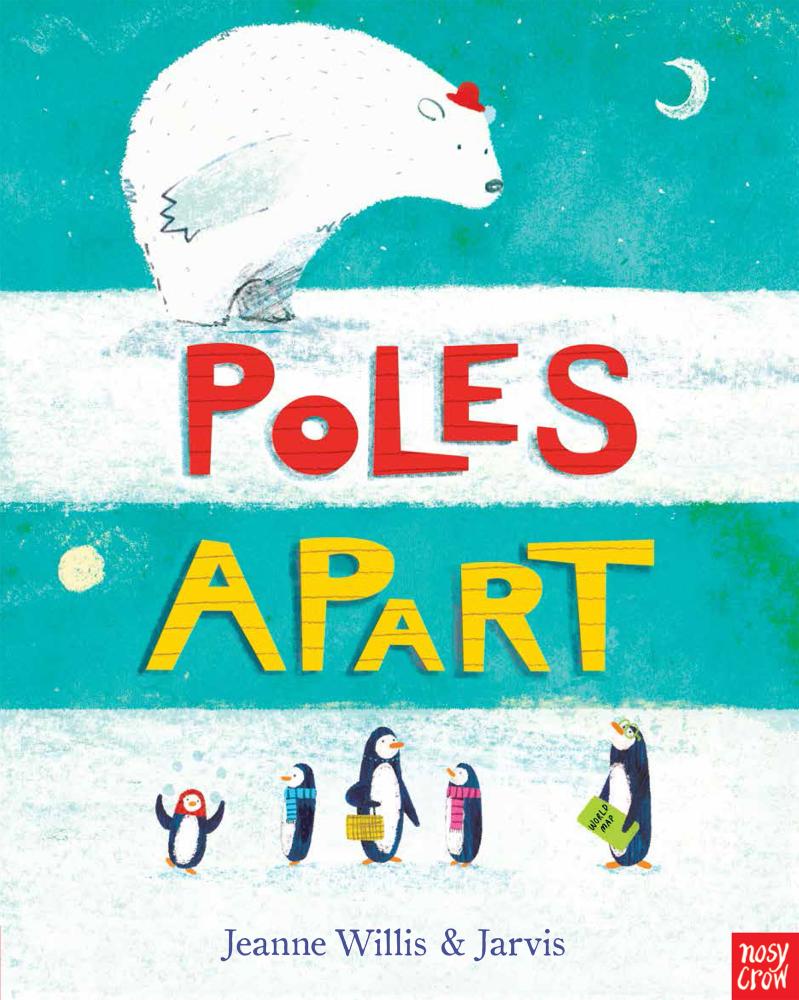
Poles apart by Jeanne Willis
Ill. by Peter Jarvis. Nosy Crow, 2014. ISBN 9780857634924
Picture book. Everyone knows that penguins are found at the South
Pole not the North Pole. But when the Pilchard-Browns get lost on
the way to their picnic. things change. Mr and Mrs and Peeky, Poots
and Pog find themselves floating on an iceberg that drifts through
days and nights until they discover a strange something on another
iceberg. It turns out to be Mr White the polar bear who tells them
that the South Pole is 12 430 miles in the opposite direction!
But Mr White has always wanted to go to the South Pole and so the
Pilchard-Browns follow Mr White - always on the lookout for a picnic
place. The ice floe they are on isn't safe with killer whales
floating around, and America was too busy - and it wasn't home. Even
though England was charming it still wasn't home. And so the journey
continues, through countries large and small as they make their way
south. But still no place is home, not even for Mr White.
This is a quirky story, aptly named for the theme that runs through
it that even though we can follow our dreams there is a place for
each of us that is home. Just as we journey through life we can meet
many different types who can still be friends even though everything
about us is poles apart. It could be a good read-aloud for new
students starting school for the first time to show that friends can
come from many different places, as well as reaching out to those
new to this country so they can see themselves in a story. It might
even serve as a vehicle for a class version - if Mr White and the
Pilchard-Browns visited all the countries represented in our class,
where would they go? It could be an engaging introduction to getting
to know each other, as well as mapping.
More to this than meets the eye.
Barbara Braxton
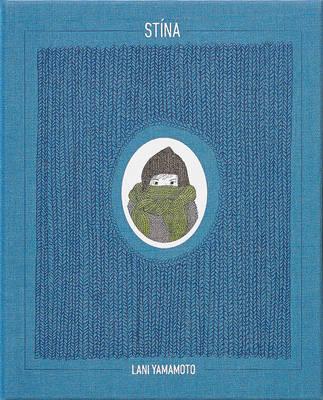
Stina by Lani Yamamoto
Bloomsbury, 2016. ISBN 9781851778584
(Age: 5+) Highly recommended. Scandinavia, Cold, Friendship,
Iceland, Inventions. Stina does not like the cold. Even in summer
she bypasses the pool, and avoids the evening breeze. She loves to
be home snuggled up tightly within her duvet. But in winter, she
cannot even go outside, the cold is too much. She prepares for
winter by bringing in lots of wood, putting aside a store of food,
having a basket of wool ready to knit, building a pile of books to
read. She is fully prepared to stay indoors the whole winter long.
She knits warm clothes, socks and mittens, invents ingenious ways of
getting her food from the kitchen without leaving her bed and of
getting food from the fridge without getting a chill of cold air
when the door is opened. But one day she peers out of her window and
sees some children playing in the snow. She wonders what the snow
would taste like.
A sudden storm blows the children to her door, and she lets them in.
They are surprised at how warm it is inside her house and take off
their outer layers. She teaches them how to knit, makes them cocoa
and learns how to whistle.
When they leave she is alone. She decides to do something about it
and uses her sewing machine to make an outside coat from her duvet
and goes outside to meet her new friends, finding that running
around and laughing makes her very warm.
This delightful story of friendship overcoming hurdles was first
published in Icelandic in 2013 and published for a wider audience by
the Victoria and Albert Museum, London in 2015. It is quite
wonderful in presenting the universal quest for friendship, and the
detailed illustrations make a wonderful contrast to the styles we
are used to.
Lani, who has lived in Iceland for twenty years was fascinated with
the way Icelandic nicknames work. Her Icelandic title, Stina
Storasaeng means 'girl with big duvet', and from that idea, Lani
developed the tale of a young girl whose house is a prison because
of her fear of the cold. Winning the Nordic Council for Children and
Young People's Literature Prize, is a highlight in her career.
Fran Knight
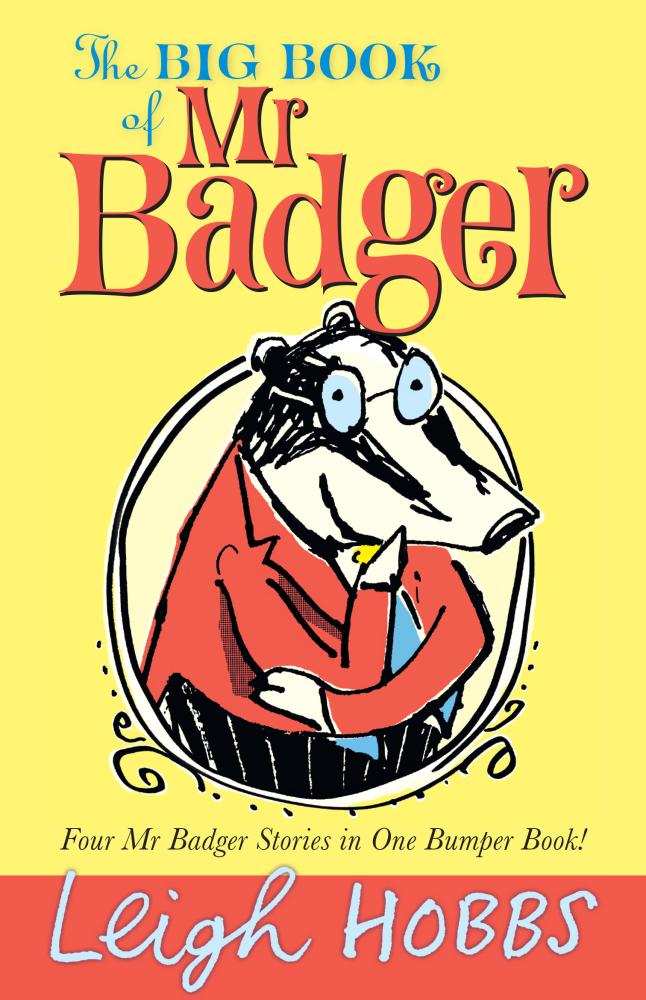
The big Book of Mr Badger by Leigh Hobbs
Allen & Unwin, 2016. ISBN 978 1 76011 243 1
(Age: 7+) Highly recommended. Humour, Series, Hotels. The four
wonderful stories, Mr Badger and the big surprise, Mr
Badger and the missing ape, Mr Badger and the difficult
duchess and Mr Badger and the magic mirror, are
presented in one volume for readers in primary school. Mr Badger,
the Special Events Manager at Boubles Grand Hotel in London, is very
proud of his position as the third generation of the Badger family
to work here.
In the first story, he and his assistant, Miss Pims have a special
day to oversee. The granddaughter of the owners of the hotel, one
Sylvia Smothers-Carruthers, is an unpleasant child who has invited
206 of her friends with the instructions that they must bring a
present and must not dress up. Miss Pims and Mr Badger have their
work cut out as the child rips open her presents and finally has the
huge cake fall on her. But Mr Badger saves the day, as he is well
prepared.
The second story concerns the large stuffed animal in the large
glass case in the foyer of the hotel. Mr Badger uncovers its secret
when it goes missing one night, and is able to put things right
without the ape or Mr Smothers-Carruthers even being aware of what
he has done.
The third and fourth stories, about a difficult duchess and a magic
mirror, are just as funny as the first two, exposing Mr Badger's
skills at his workplace beautifully and revealing more of Sylvia's
nastiness and yet another secret within the hotel. Me Badger is an
engaging character, and we learn a little of his background as we
read. Most telling is the foreword which shows how Leigh Hobbs first
developed the idea of Mr Badger, so adding another level of interest
for the reader. I love Mr Badger and the illustrations throughout
the book will cement his character in every reader's mind.
Fran Knight
Brotherhood in Death by J.D. Robb
In Death bk 42. Piatkus, 2016. ISBN 9780349410777
(Age: Adult) Mystery. Rape. Eve Dallas is on the trail of another
murder, this time the cousin of her close friend, Dennis Mira. But
as she delves deeper into why he was kidnapped and tortured, she
uncovers shocking things about the high profile world in which he
operates.
This is the 42nd book in the series, but it can be read as a
stand-alone. Each of the books has a new mystery and there is always
enough back story about Eve and Roarke's relationship and her
friendships for a reader new to the series to become comfortable. In
this book, the mystery was a dark one, involving rape and its
effects on its victims. The themes of abuse of power and revenge
were examined in depth and raised questions about when it was right
to punish a wrong doer or when the justice system should do the
punishing. It is not a book for the faint-hearted and its scenes of
torture and gang rape are disturbing.
As always, Robb keeps the tension and suspense high, as Dallas and
her band of investigators follow one lead after another. The path to
solving who has committed the crimes is a complex one, and needs all
the skills of Eve, Roarke, Peabody and the forensic team to solve
it.
An interesting facet of Brotherhood in death is the
examination of Eve's relationship with Charlotte and Dennis Mira,
who are wonderful and caring characters. The case brings back bad
memories for Eve who has flashbacks to her abuse as a child and with
the help of her friends, tries to come to terms with her memories.
This is a chilling and absorbing mystery that will engage fans of
J.D. Robb and keep new readers engrossed.
Pat Pledger
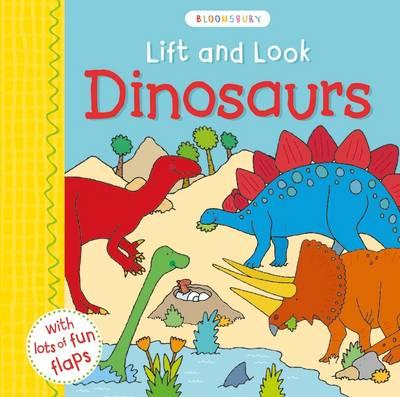
Lift and Look Dinosaurs
Bloomsbury, 2016. ISBN 9781408864067
(Age: 0-4) This new Lift and Look board book series from Bloomsbury
is reminiscent of the Usborne lift and look board books for young
children. These books, which could be classified as very basic
information books for babies, speak directly to the reader ('Look at
that . . . ! Who could it be?'), thereby encouraging a shared
dialogue (presumably the child would respond to the text).
Additional interactivity is supported with flaps to lift on each
page in order to find the dinosaur. Bright, simple illustrations
show different prehistoric environments (forest, sea, volcano) and
in each can be seen part of a dinosaur (tail, beak, nails, horns).
When the flap is lifted the whole animal can be seen and is named
(eg. 'It's Imogen the Ichthyosaurus').
This is a thick board book with hardy flaps so it should stand up to
the demands of very young children. This series is suitable for
young children to explore independently as well as for a shared
story, and may lead to further discussion. The preschool target
audience will enjoy lifting the flaps to find the information but
some children towards the older end of the age range may find it too
simplistic.
Nicole Nelson
Royal Flying Doctor Service series by George Ivanoff
Ill. by Marie Pena. Random House Australia, 2016. Remote Rescue. ISBN: 9780857988768 Emergency Echo. ISBN: 9780857988782
(Age: 9-11) Recommended. George Ivanoff's outback adventure series
have been written in collaboration with the Royal Flying Doctor
Service. Part of the purchase proceeds support this valuable
aeromedical and primary health care provider. Each stand alone story
is situated in a real outback or country location with a map,
coordinates and information about the area's history and geography
included. Marie Pena's dark covers and inside illustrations set the
tone for these dramatic stories. The author has included factual
information that describes the patient's injuries, symptoms and
treatments, this adds to the realism of the narrative.
In Remote Rescue, on a family road trip from Adelaide to
Uluru, Dad decides to camp at Farina, a deserted ghost town located
on the Oodnadatta Track. Sam, Dawson and Emma enjoy games of hide
and seek chasey, hiding in the ruined buildings. Their fun comes to
a sudden halt when Dad falls into old rubble-filled cellar,
seriously injuring his leg. Ten year old Dawson runs all the way to
the main road to summon help. Fortuitously, Burt and Gwen stop to
help and they call the RFDS on their satellite phone. Dawson stays
by his father's side, administering first aid, carefully following
the medical instructions given over the phone by the nurse.
Arrangements are soon made for Dad and Dawson to be taken by
ambulance to Maree, then airlifted to hospital in Adelaide. Burt and
Gwen continue to help drive both cars and the two girls to Maree.
Mum is happy to meet all the family when they reunite in Adelaide at
the hospital.
In Emergency Echo, Alice and Ben live in Mount Magnet, six
hours away from Perth on the Great Northern Highway. When twelve
year old Alice doubles over in pain whilst playing a friendly game
of cricket with her friend Ben, she doesn't think anything is wrong.
Ben suggests she must have eaten some strong tasting kangaroo. Alice
doesn't want to worry her mother who's busy running the local milk
bar and looking after her young brother Lewis. Her stomach pain
continues to worsen as they slowly walk home, and Ben realises he
needs to phone an adult for assistance when Alice becomes nauseous.
Luckily Grandad understands Alice needs a medical exam at the
Outreach Service and Ben pushes the sick girl down to the Outreach
Service in an old wheelchair. With a wild storm approaching Alice
and Grandad are quickly loaded on-board ready for a bumpy flight to
the hospital. Will Alice's appendix rupture before they arrive? To
calm the young patient down as the storm rages, both Grandad and
Doctor Helen share their medical rescue stories.
Rhyllis Bignell
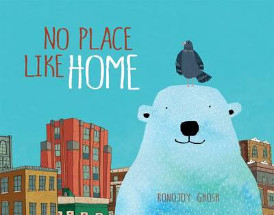
No place like home by Ronojoy Ghosh
Random House, 2016. ISBN 9780857988461
(Age: 4+) Highly recommended. Humour, Polar Bears, Home, Journeys.
Polar bear, George, lives in the city but is very homesick and this
has made him grumpy. He sets out to find his home but has to try a
number of places to find which is truly his. He leaves the crowded,
cramped city and hitch hikes his way to find his home. He lies in a
tree, but realises this is not his home, he tries living on a
mountain but is afraid of heights, he tries the desert but his is
too hot, then the sea, but it is too wet and sometimes scary.
Eventually he gets into a little boat and rows and rows, finally
finding a strange white land.
He likes the cold and the ice, he likes the snow upon his tongue, he
likes everything he can see, and decides that this is home.
Children will love the journey taken by George, looking for his
home. They will recognise the different places he tries and be able
to tell the reader that this is not where George should be and be
able to give reasons why it is not his home. They will revel in
George's travels, understanding that there is a place where we all
feel at home.
The illustration of poor George looking so sad on the cover will
entice younger readers to open the book, and see why he is so sad,
grinning with him at the end when he finds his place on earth.
Children will love the stylised depiction of a variety of habitats
and be able to recognise which animals live in those places.
This is a fun introduction to the idea of habitat, of animals being
linked to one place, of being taken out of their own environment, of
the meaning of the idiom, No place like home.
Fran Knight
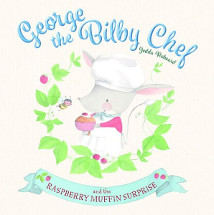
George the bilby chef and the raspberry muffin surprise by Jedda Robaard
Five Mile Press, 2016. ISBN 9781760067113
(Age: 3-6 years) Themes: Cooking, working together, friendship.
Robaard, a Melbourne-based author and illustrator, has created some
delightful children's storybooks that utilise her talent for drawing
animals, and has enjoyed recent success with her Little Creature
series of board books. This, the first in a new series, centres on
bilby George, who lives beneath the roots of an old eucalyptus tree
and loves to cook. Tucked away in a pocket inside the back cover is
a recipe card for the raspberry muffins George bakes in the story.
In Raspberry Muffin Surprise, George wants to bake something
extra special for Betty Echidna's birthday. Unfortunately, George
can be a little forgetful, so it is lucky that he has his friends to
help him. Little Bee knows where the raspberry patch is, Maggie the
magpie is able to shake the raspberries out of the bush and Bert the
mouse has an umbrella that is perfect for carting raspberries.
Robaard uses a cast of Australian animals and lovingly brings them
to life with soft, warm illustrations. A subdued colour palate of
greens, browns and yellows suits the Australian setting and the
animals are rounded to give them a friendly and cuddly quality while
still retaining realistic integrity. The text itself is overly
detailed in parts, due to its effort to highlight the
characteristics of the individual animals (Bert can be very grumpy,
George is a bit silly and likes to sing nonsense songs, Maggie is
very helpful) and how they work together. However, it flows really
well, is calm, gentle and unrushed and is not onerous to read.
There is a lot to like about this new series, including the
fantastic illustrations, the focus on sharing and working together
and the recipe card that encourages children to get active in the
kitchen (there will be one in each of the books in the series).
Nicole Nelson
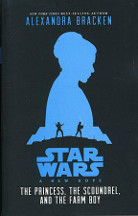
Princess, the scoundrel, and the farm boy by Alexandra Bracken
A New Hope : Star Wars Episode IV. Chirpy Bird, 2015. ISBN
9781760125097
(Age: 9 - low teens) Highly recommended. I am a relatively new Star
Wars fan. having only watched the new movies I was not really
familiar with the Star Wars Books and I found this book really
interesting and exciting.
I liked the way the book was written in the 3rd person and was told
from each of the main characters' point of view. It was a good way
for me to get to know each of the characters and understand their
personalities.
Leia was my favourite. She was very brave and always did what she
thought was right, even if it seemed risky. I really related to her
and loved how clever she was and how she was both physically and
mentally strong.
The book was very easy to read and well suited to readers from 9 -
low teens. Highly recommended to Star Wars fans and others who enjoy
adventure and action books.
Hannah C.(yr 6 student)
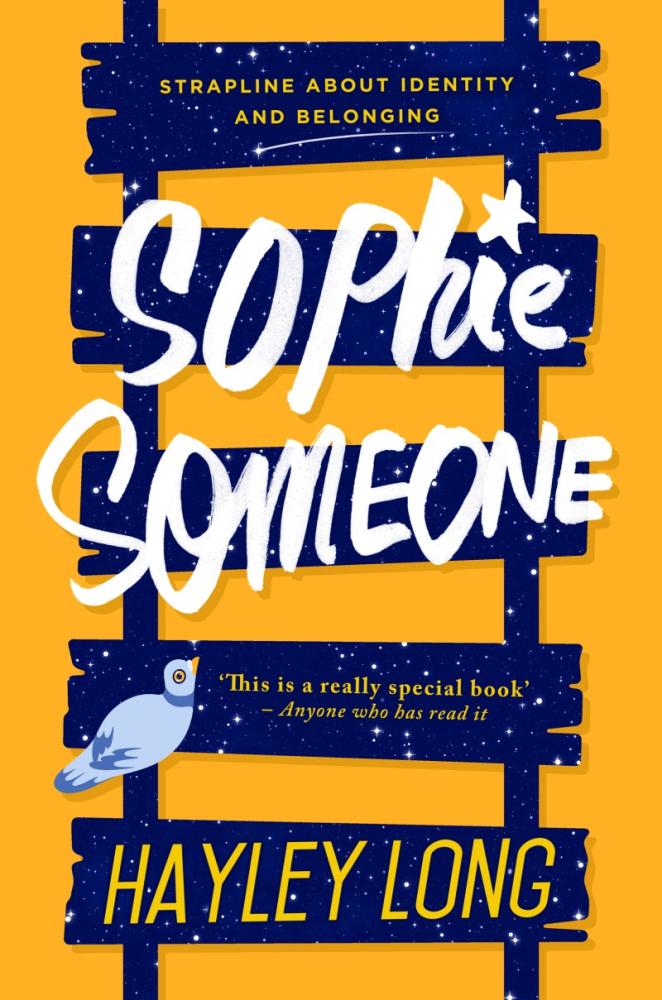
Sophie Someone by Hayley Long
Hot Key Books, 2015. ISBN: 9781471404801
(Ages: 12+) Recommended. Within this heart-warming tale, Sophie
tells her life story, in the only way she dares tell it: code
language. Sophie's describes her early life, in which she moved with
her mother from an unknown place to Brussels where the majority of
the story takes place. She describes the way that her family settle
into this new abode, and takes the reader into her school life where
she meets her best friend, Comet, a character who makes a recurring
appearance within the novel. Throughout the story, Comet and Sophie
go on a few adventures, which guarantee a gripping tale, as well as
explore the ins and outs of friendship, and that sometimes, there
are things that are difficult to talk about, even to your best
friend.
The relationships explored in the novel are compelling, each with
its own unique and distinct lesson for the reader, and which are
revealed at appropriate and respective points of the novel. The
relationships that Sophie has with her family are relatable and
truly express real family dynamics, as well as highlighting the
importance of family.
The main themes within the novel are that of the importance of
self-identity, trusting our moral compasses, being who we are
despite the odds, realising that it's never too late to challenge
ourselves and never giving up; lessons which are not only vital for
personal growth and development, but also to ensure a memorable and
inspiring novel.
From the beginning of the book, Sophie's unique writing style is
demonstrated. She uses code words amongst regular language, in order
to tell her story and although this may make for a challenge for
younger audiences, the context of the words often allow for an easy
translation. Sophie Someone has vibrant, realistic characters that make
for an engaging read, as well as an opportunity for the reader to
unravel Sophie's story along with her. This novel was a truly
beautiful read, in which I looked forward to reading every page, and
helping Sophie uncover the secrets she was so desperate to learn. Sophie Someone is not a book that is easily forgotten.
Daniella Chiarolli (Student)
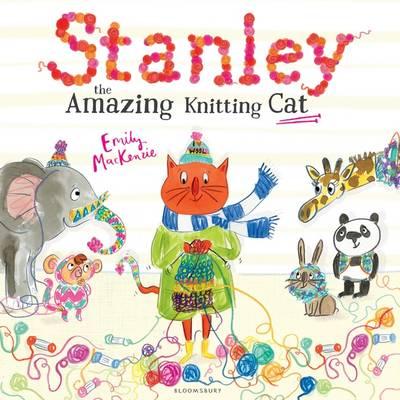
Stanley the amazing knitting cat by Emily Mackenzie
Bloomsbury, 2016. ISBN 9781408860489
(Age: 4-8) Recommended. Themes: friendship, knitting. Stanley is not
like other cats who enjoy chasing mice and napping in the sun.
Stanley has a passion for knitting. His many animal friends, in
paddocks and zoos far and wide, all benefit from his craftiness. The
bunnies all have warm balaclavas, the giraffes have neck warmers and
the elephants have trunk tubes. But when Stanley runs out of wool
for his entry in a knitting competition, he has to unravel all the
garments he has given to his friends. Crocodile is particularly
disappointed - 'Not my pants!' he says. Not to mention how cold they
all are without their winter woollies! Stanley realises that his
friends are much more important than winning the competition and
that what he loves about knitting is that he can make others happy.
Bright, bold watercolour illustrations with crayon detail for the
knitted garments gives this book a unique look. The long, colourful
crayon lines for the wool look fantastic and make the knitted
components stand out and remain distinct from the other elements on
the page. The vibrant and active illustrations and the fast-paced
text lend a frenzied and excited feel to the story and there are
many age appropriate splashes of humour throughout.
Nicole Nelson
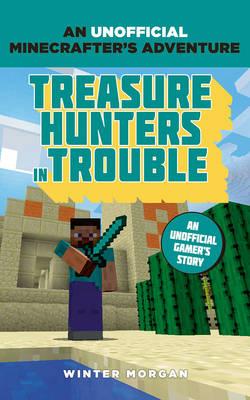
Treasure hunters in trouble by Winter Morgan
An Unofficial Minecrafter's Adventure bk 4. Bloomsbury, 2015.
ISBN: 9781408869673
(Age: 7-9)For Minecraft fans. Winter Morgan's Unofficial
Minecrafter's Adventures are written purely for young
Minecraft gamers. She writes in an easy to read style with her
action adventure peopled with very simplistic characters who are
involved in an episodic treasure hunt. True fans enjoy her Minecraft
story lines, filled with familiar creatures, fighting battles,
traversing underground and above ground landscapes - swamps, caves
and farmlands. This pixelated 3D block-building game is a worldwide
phenomenon and many junior novels and player guides have been
published for the enthusiasts.
This is the fourth book of the series and Henry, Lucy, and Max have
been captured. Kyra and Steve are joined by Alex and Will on their
quest to save their friends. Unfortunately, they are sidetracked by
the lure of treasure, battle slime balls, use Parkour to travel
across the mountains, discover treasure in underground caves and
battle the Ender Dragon.
The story ends with a promise of another book to come, with Steve
investigating their journey home through the dangerous jungle.
Rhyllis Bignell