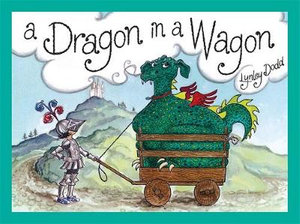
First published in 1988, this board book edition of A Dragon in a Wagon is perfect for young ones, who will appreciate its simple rhymes and matching illustrations. Beginning readers will also enjoy being able to read much of the story for themselves. "Susie Fogg took Sam her dog along by Jackson's Stream. As as they walked Susie talked, and dreamed a wishful dream". Her dream is for a more exotic pet...perhaps a snake eating cake? Or a whale in a pail? The simple rhymes are perfect for young children and their emerging phonological awareness and older children could be encouraged to come up with their own rhymes. It could also be used alongside the similar title Frog on a Log.
This is another truly timeless Lynley Dodd tale that will delight all young Hairy Maclary and Slinky Malinky fans.
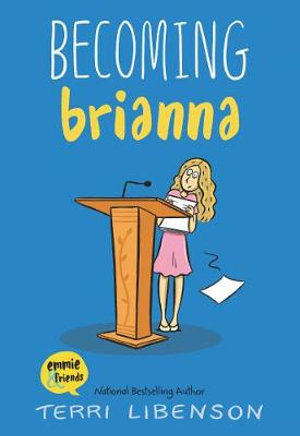
Thirteen-year-old, geeky, pizza loving Brianna is struggling through the minefield of Middle School wondering the usual things kids do at this age and questioning herself about everything at every turn. In this story she is persuaded by her Jewish mother to undertake her bat mitzvah (the female version of the bar mitzvah). This requires a lot of study for Brianna, let alone the embarrassing thought that she will have to be in the spotlight to perform the required prayers in Hebrew and make a speech in front of friends and family. Middle school children will love the way Brianna doubts herself constantly and copes with the changing scenery of her friendships through this process. The opportunity to be in the popular crowd at school also forms part of the conflict between Brianna and her one best friend.
The author cleverly explains how Brianna tackles this stressful time in her life by writing some parts of the story in the past and others in the present as her bat mitzvah approaches. The book is set out as notebook style chapters with speech bubbles highlighting the dialogue between characters, alternating with graphic panel chapters which make it very understandable and attractive to a wide variety of readers. The book is also highly informative about the Jewish faith and provides a glossary of Jewish terms at the back of the book.
Like Terri Libenson's previous books in the series Emmie & friends this book can be read alone. It is the fourth in the series set in the same school, so the characters go across all the books with the first three books being Invisible Emmie, Positively Izzy, and Just Jaime.
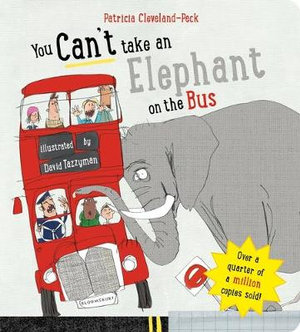
This board book edition of the bestselling title will delight young listeners with its rollicking rhyme and humourous illustrations. The ludicrous pictures of animals taking inappropriate forms of transportation (monkeys in shopping trolleys, seals driving cars, whales riding bicycles) will have children laughing with incredulity and the lines of reasoning provide plenty of opportunity for animated 'what would happen?' type discussions. The solution that the animals come up with for their travel dilemma will also amuse children, who could also be encouraged to come up with their own mode of transport for the animals. David Tazzyman's scratchy and quirky illustrations are a perfect match for these chaotic and crazy hypotheticals.
This is a perfect read aloud for children of all ages and this board book edition makes it just right for little hands to explore independently or with an adult. A timeless tale that is sure to become a classic.
Allen & Unwin, 2021. ISBN: 9781760526030. (Age:3+) Highly recommended.
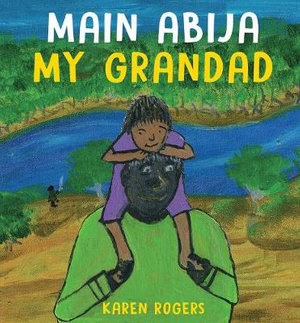
A moving account of her relationship with a beloved grandfather is made all the more poignant with the use of the language of the Ngukurr people of Arnhem Land in the Northern Territory (Kriol).
Aboriginal language in a picture book cries out to be spoken. A clip of Karen reading the story in both Kriol and English can be found on the Allen & Unwin website. And this can then be spoken by children as the story is told. Kids young and old will enjoy finding the Kriol word for things in the English version, practising them and joining in as the story is told.
Hearing the story told in Kriol is stunning.
A range of things to do in the classroom when reading this book can be found on the publisher's website.
Karen Rogers recalls the school holidays she spent with her grandfather at Wuyagiba east of Katherine. Here she learnt the stories of the environment from him, through language and Dreaming stories, he explained whose Country it was. It was he who told her about the sugarbag and showed her how to get into the bees' nest in the trees for the honey. He often carried her on his shoulders, and looked after her when her mother was ill and had to go to Darwin. They went out on his horse and stayed at the stock camps on the station where he worked as a station hand. He was also a wise and repected elder. When she married and had children they spent time with the older man learning to hunt and fish, collecting sugarbag just as she had. When he died she was sad, but in her grandchildren she sees the interest they hold for things she learnt from her grandfather and is pleased that she can pass on what she learnt from him.
This beguiling tale of growing up in Arnhem Land with a respected and loved grandfather will bring nods of recognition from children who have a close relationship with their parent's parents. But overall they will see a cherished relationship, as the older man passes on his knowledge to the younger child and she in turn repeats and loves the elder for his expertise and wisdom.
A homage to a loved grandfather the book evokes the world of Roger's childhood and what she learn from the older man and is now able to pass on. In so doing she captures the stories, culture and environment of Arnhem Land, impelling us to care for it as her grandfather did.
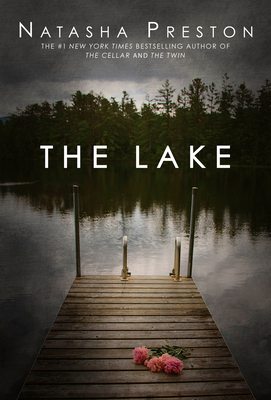
Childhood best friends Esme and Kayla return to Camp Pine Lake as counselors in training. They are both thrilled to be back but hold onto a dark secret. The last time they were at Camp Pine Lake, something bad happened. Really bad. They never told anyone about it, but someone out there knows what they did. And they want revenge. The Lake never forgets.
Author Natasha Preston presents us with another heart stopping thriller. Esme, observant, smart, quiet and paranoid and Kayla, pretentious, social, animated and anxious, the two main characters battle with their own guilt of what happened ten years ago all whilst trying to provide an exciting summer camp experience for the children. The characters can come across as cliche, the "plain Jane" brunette, the popular blonde, the jock, the mysterious boy, the damaged villain. Each has their own story and carries their own secrets. As the threats start coming in and become more targeted and violent, secrets start to reveal themselves and everyone becomes a suspect.
The plot starts off fairly slowly, giving us time to get to know the characters and witness their newfound relationships start to blossom. From early on readers find out exactly what happened "last summer", quickly escalating to a heart stopping, griping finale that leaves readers thinking . . . "BUT WHAT HAPPENS NEXT?!" In traditional Natasha Preston style, the book ends with a huge cliff-hanger, with no indication of a sequel. Lovers of YA thriller will enjoy this story, with constant twists and turns that will leave you constantly looking over your shoulder and perhaps avoiding dark forests for a while.
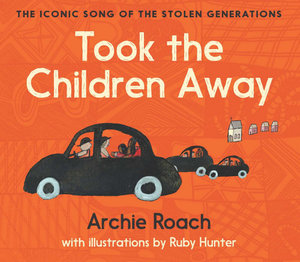
Took the children away by Archie Roach. Illus. by Ruby Hunter
Simon & Schuster, 2020. ISBN: 9781760857219. (Age:All) Highly recommended.
Archie Roach first wrote Took the children away as one of the songs on his debut album, Charcoal Lane released in 1990 on the Mushroom label. Archie and his late wife, Ruby Hunter published the song as a book with Ruby's stunningly unambiguous illustrations in 2010.
It is fitting that a new edition be published not only to honour its unparalleled contribution to understanding and Reconciliation but to reach a new audience as the song marks its thirtieth anniversary. All readers will be shaken anew at the sentiments expressed in this now iconic song, and be touched by the photographs of Archie, Ruby and their families.
This wonderful hard cover edition reprises the song in full, and along with Ruby's illustrations, tells the disturbing story of the Stolen Generations, where Aboriginal children were taken by the authorities from their homes, their families, their culture, to be raised elsewhere. This wrench from their families imposed untold hardships on all concerned. Those who years later were able to trace some vestiges of their families, had to be satisfied with reminiscences from uncles and cousins rather than their own parents who had since died. This double blow has been a heavy burden to carry.
In this edition, Roach has included a few photos of himself and his parents, several of Ruby, but more from their married life, raising their own children as well as fostering others.
Tears will flow readily as the song is read and sung, the illustrations perused and the photos combed, while the healing power of music, especially apt with Archie and Ruby's story, shines forth as Archie's song ends on a note of resilience and survival, 'the children came back'.
The song has touched people from all over the word: other Indigenous groups with stolen children have taken this song to their hearts.
A Youtube clip of Archie Roach singing his song can be found here.
Charcoal Lane peaked at number 86 on the ARIA Charts in April 1991 and was certified gold in 1992.
In his introduction to this edition, Archie Roach explains that he sees life in terms of a circle and when that circle is broken for whatever reason, the good thing about a circle is that it can be joined up again. And this is done by joining hands. His charity, the Archie Roach Foundation, which seeks to help those caught up in the youth justice system can be located here.
For guidance in using this book in the classroom, Archie Roach has worked with the ABC to produce a series of informative clips supporting the book.
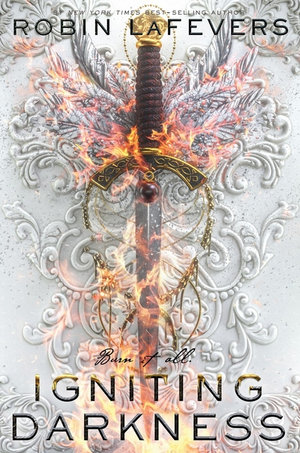
LaFevers brings this duology to a stunning conclusion in Igniting darkness. Following the adventures of Genevieve in Courting Darkness Sybella and Genevieve find themselves in the French court. Genevieve has been left alone for many years waiting for the call from the convent which never came, and has become the friend of the King, trying to guide him on a more tolerant path. She has unknowingly drawn attention to the convent and the assassin nuns and must use all her ingenuity and wit to help Sybella and to keep herself safe. Meanwhile Sybella has the arduous task of attempting to guard the Queen, the Duchess of Brittany. Sybella's younger sisters, in grave danger from her evil brother, have been spirited out of the court, under the protection of her love Beast, and Sybella is in danger of being accused of treason.
This is historical fantasy of a very high calibre. At the end of the book, the author recounts who are the real historical figures and the mixture of unique fantasy with novitiate nuns of St Mortain trained as assassins and real history makes for a heady and engrossing tale. Court intrigue is described vividly, and it is not difficult to imagine the scenes of the king and his advisors, church and state, and the manipulations going on by power hungry people.
The relationships between Sybella and Beast and Genevieve and the prisoner that she helped escape add an extra dimension to the book and will thrill any reader who enjoys some romance in their reading.
I am very sorry to see this series ending and look forward to whatever Robin Lafevers writes in the future. Readers who have missed the His fair assassin series, Grave mercy, Dark Triumph, and Mortal heart will certainly want to go back and find out more about the nun assassins, while other readers would enjoy Lumatere chronicles by Melina Marchetta and any book by Leigh Bardugo.
Themes Historical fantasy.
Pat Pledger
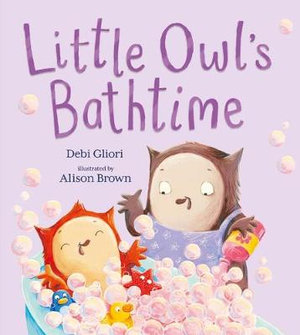
Little Owl's bathtime by Debi Gliori. Illus. by Alison Brown
The latest in a series of books about Little Owl (Little Owl's Bedtime, Little Owl's Egg), this title will resonate with parents and children alike. Adults will recognise the battle to get children into and then out of (!) the bath and young listener's will identify with Little's Owl's bathtime blues and imaginative adventures. Alison Brown's (SnowBear, You Make Me Happy) gorgeously sweet illustrations seem to jump right off the page, perfectly portraying Little Owl's pizzazz and spunky attitude and bringing the characters to life.
Little Owl is a master of imaginative play and is guarding a castle when Mummy Owl says it is bath time. A predictable response from Little Owl ("NO, NO, NO, NO!" and some foot stomping) is met with mum entering the play space in order to negotiate. "Perhaps Puffle could guard the castle while you have your bath", she says. Her entreatment to find the bath toys in the "foamy foothills of Bubble Mountain" is enticing, as is the marshmallow reward for capturing every one but Little Owl is still not sure. Mum meets every protest or attempt at procrastination with an imaginative solution but ultimately Little Owl wants to keep playing...baths are boring. Finally Mummy Owl's creativity gets Little Owl in the bath where he has so much fun (of course, there is water all over the bathroom) that he doesn't want to get out.
This is a beautiful reminder to parents of positive ways to deal with everyday bathtime battles and encourages them to approach the problem from the child's point of view. Perhaps it will even spark the imagination of young readers (and parents), giving them a new perspective on boring bathtimes.
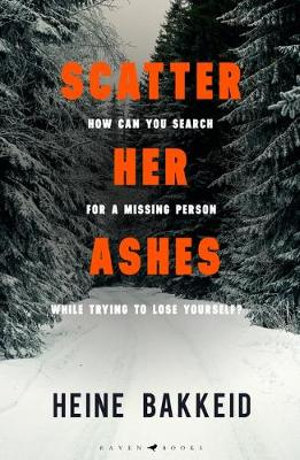
Thorkild Aske is employed by Milla Lind a successful Norwegian author, to find two missing girls. The ex-police officer, Robert Riverholt, that Milla once used was shot in the head by his wife, who then suicided. Not the most auspicious beginning for Thorkild.
Aske is ex-police as well but has a multitude of issues: his ex-wife, his dead girl friend as well as his failed suicide attempt and his current dependence on prescription drugs! He is unsure why he has been chosen. Milla's explanation that it is to help with the plot of her final novel begins to lose traction after a while. The story that the missing girls, Siv and Olivia, have run off from a home to Ibiza also fails to hold water when Asked discovers they willingly got into a car at a bus stop, presumably because they knew the driver. Police do have an investigation on the runaways Iver Isaksen and Kenneth Abrahamsen and seem to know about their history and their previous Ibiza adventure.
Aske begins to think the girls may have been murdered which is confirmed with the discovery of other bodies that show similarities especially having mobile phones held to their ears. He finds they also have high levels of potassium chloride B in their blood which implies being injected probably by someone they were familiar with.
The investigation takes a different turn when Millar reveals to Aske that Olivia is her daughter. She wants to have a relationship with her after coming to terms with the emotional trauma of Olivia's conception and early life and not being able to cope and giving her up when she was three years old. Aske also believes there are other complications. He is deliberately targeted in a hit run attempt which leads him to doubt if Riverholt's murder was committed by his wife. He begins to suspect Svein Borg of the murders of several people who in the past have been identified as suicides and he may have taken Siv and Olivia.
Bakkeid has woven a narrative in which the landscapes of Norway play a significant role. The complicated characters of Milla and Aske and their tortured relationship add to the unorthodox story line. The revelations in the end reveal several damaged characters, Svein Borg and the unnatural relationship with his mother and Askes need for his "happy pills" to keep him functioning and able to relate to those around him. Eventually truths are revealed and these free Thorkild Aske to return to his bedsit and a different future.
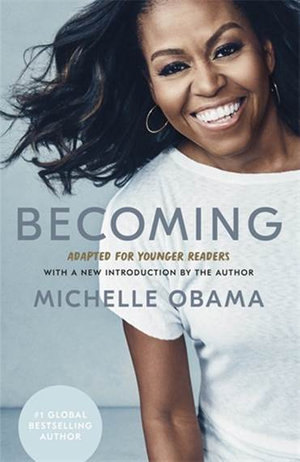
We have all seen the pictures of Michelle and Barack Obama – seemingly the perfect presidential couple, and the image of a loving family with their two daughters. But as Michelle Obama reveals in her autobiography, it wasn't always easy. She and Barack had very different personalities but their common values united them and saw them through the difficult times in their life together. This edition is adapted for younger readers and seeks to provide an inspiration for girls and young women, particularly black women, to believe in themselves and strive to achieve their dreams.
The hardback edition, with over 400 pages, may seem a bit of a challenge for the intended younger readership, but the three sections, 'Becoming me', 'Becoming us', and 'Becoming more' are broken up with an attractive collection of colour photographs that draws us into her life. As the titles suggest, the first section is about her childhood in a working class family in Chicago, then her relationship with Obama and his political campaign, and then their time in the White House trying to achieve their vision for the nation.
Michelle Obama was not always the confident woman she now appears; as a girl she was often plagued with doubts about whether she was ever good enough. But she was blessed with hardworking parents that wanted the best for her, and always encouraged her. That and her own competitive spirit meant that she pushed herself to study and achieve the best she could, ultimately graduating from Princeton with a law degree.
Her relationship with Barack was one of opposites: she was meticulous, organised and driven, whist he, though a serious thinker, had a more easy-going calm approach to life. It is fascinating to read of how they complemented each other to become a team, united to meet the challenge of balancing family and political life.
As First Lady, Michelle Obama implemented a range of projects aimed at empowering girls, and encouraging all children to lead more healthy lives, and it is good to read about her achievements while in the White House, but I think the part that will connect with most readers is the early school years trying to break past the low expectations of her teachers and prove that she could do anything if she put her mind to it.
Themes Autobiography, Women, Self empowerment, Determination, U.S. politics.
Helen Eddy
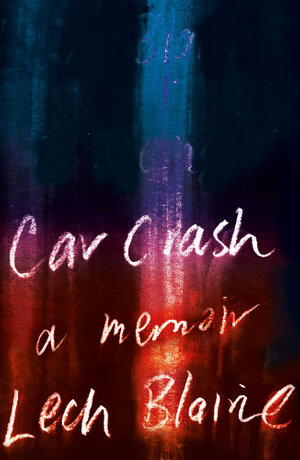
Car crash : a memoir by Lech Blaine
Black Inc., 2021. ISBN: 9781863959698. (Age:Senior Secondary, Adult) Highly recommended.
This book is impossible to put down. The writing is compelling and the humour dark. The characters are richly drawn, complex and their language is real.
This book is based on real events. It begins in 2009 in Toowoomba, but the real story begins much earlier. It was meant to be a short trip back from a barbecue - with five in the car and two in the boot. The car crash kills three young men, leaves two on life support - and one walks away. His name is Lech Blaine. Is he as unharmed as people think?
In the aftermath of the accident country town rumours and social media hype propel the story of the crash in all directions. Was it drugs, alcohol, speed? The number of people at the barbecue increases exponentially and grief becomes a team sport. Lech was impervious to the grief, and in an altered state. He felt the pressure to perform in just the right way via social media and through interactions with the media circus that surrounds a fatal collision. Survivor guilt meant that he felt he had to succeed on all levels and become the prime minister.
This book tackles class and masculinity through his exploration of his relationships with family and friends. His parents are larger than life and their lives were inevitably shaped by the politics of the time and the toxic masculinity that is the heartbeat of many country towns and cities across Australia. In a community where it is socially acceptable for alcohol and drugs to numb the pain of existence, the reader is led to consider the ways that confronting, and talking about, grief could be less damaging and destructive.
Simon & Schuster, 2021. ISBN: 9781471194153. (Age:7+)
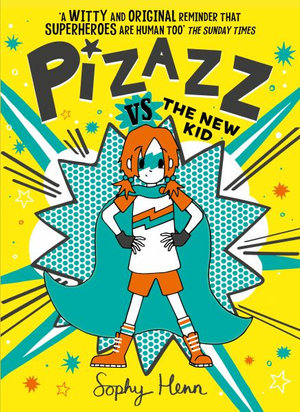
Pizazz vs the new kid is the second instalment in the Pizazz series by UK author and illustrator Sophy Henn. It's a cheeky, witty story told in first person by the chief protagonist Pizazz. Pizazz is a schoolgirl who is trying to fit in to her new school but this is a little difficult for her because she happens to be a superhero. She comes from a family of superheroes and it is such a nuisance to her because they are routinely called out to perform superhero feats and it just gets in the way of leading a normal life. Pizazz comes up against the "popular" girl group at school and they set her up in competition with another new "kid" at school who also happens to be a superhero. In the process, Pizazz learns about what is important and how to negotiate the "Serenas" of the world.
The message is good. The scenarios are relatable. The narrative is accompanied by graphic style illustrations and at times breaks into pure graphic comic style. The book is densely illustrated; the typography very, very much a standout feature. This means that the reluctant reader may be encouraged to read this book. Any child who is into graphic novels like Diary of a wimpy kid and Dog man could be interested in the Pizazz series.
The language in this text is chatty and very much like it is straight out of the mouth of a sassy primary aged child. Sophy Henn has captured the vernacular and the energy. The sentence structure is frequently run on so this is not the book that will encourage correct writing of English. It is chat not literature but it has its place in encouragement of the struggling reader. The message also is useful. At the end, the class photo shows that the "good kids" actually do get chosen to take leadership roles in the school and the cool girls end up with roles such as "school princess, "cutest cupcake" and "Bonny Baby." Probably the irony of that will escape the younger reader.
Pizazz vs the new kid is a fun romp and another light addition to a graphic novel or hybrid graphic/ prose collection. An easy read for young students in the primary years.
Themes Super heroes, Fitting in, School life, Mean schoolgirls, Family.
Wendy Jeffrey
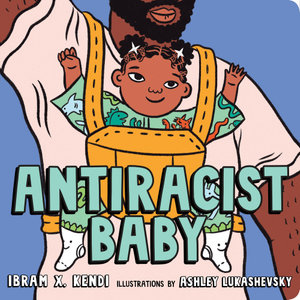
Antiracist baby by Ibram X. Kendi. Illus. by Ashley Lukashevsky
Penguin, 2021. ISBN: 9780241512388. (Age:8+)
Antiracist Baby by Ibram X. Kendi will be an important read for sharing at any times but is made even more crucial by the "Black Lives Matter" movement. The book begins with the statement 'Antiracist baby is bred, not born' and is therefore taught to be racist from an early age by the adults in their lives. The reader is then presented with nine steps to make 'equity a reality':
1. Open your eyes to all skin colours. 2. Use your words to talk about race. 3. Point at policies as the problem, not people. 4. Shout, "There's nothing wrong with the people!" 5. Celebrate all our differences. 6. Knock down the stack of cultural blocks. 7. Confess when being racist. 8. Grow to be an antiracist. 9. Believe we shall overcome racism.
Under each step is clever rhyming prose to expand on what is being discussed. Some of the language used is quite complex for younger readers and the glossary at the end is a welcome addition. The illustrations are bright, colourful and depict a range of different cultural and social identities. As well as a further reading section there are some ideas for parents and care givers to begin this necessary conversation about racism.
Themes Anti-Racism, Young Children, Values.
Kathryn Beilby
His only wife by Peace Adzo Medie
One World, 2021. ISBN: 9780861540723. (Age:Adult) Recommended.
A wedding without a groom! Apparently it is possible in a Ghanian traditional wedding. When Eli's business commitments prevent him from attending his own wedding, his younger brother is able to be his stand-in. The family of Afi, the bride, prepare the celebrations, and Eli's family pay the bride price in presents. There are photographs and videos so that Eli can catch up on his wedding afterwards.
It doesn't seem a very auspicious start, and Afi has concerns, because the whole thing has been arranged by the wealthy businesswoman known as Aunty, Eli's mother, in a calculated plan to draw him away from the despised Liberian woman he has become involved with. For Afi, agreeing to marry a man she hardly knows is the opportunity to lift herself and her widowed mother out of poverty, study at a fashion school . . . and everybody says that Eli is a good man.
This intriguing start to the story quickly draws the reader in; and the varied personalities and customs of the families in Ho, a village in Ghana, are described with humour, so it becomes hard to put the book down. As events unfold, Afi develops from a shy and compliant village girl to become more assertive about her expectations of life as a married woman.
It is Afi who provides the narrative voice, so we do not meet the 'other woman'; we only know what Afi has been told, and we share her fears and prejudices. As the story progressed I did find it a bit troubling that in a story about female empowerment, no sympathy was given to the Liberian woman, even though her situation is not unlike that of another woman that Afi befriends.
For the most part Medie's novel presents as an interesting and warmly humorous take on a Cinderella story, with fascinating scenes of Ghanian life, but the twist at the end gives it a punch that lifts it to another level and provides food for further reflection and discussion.
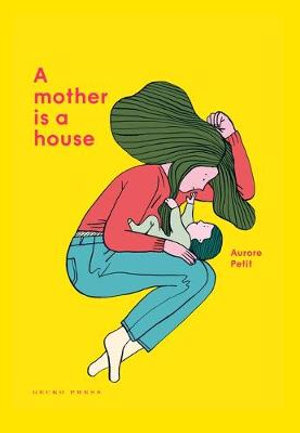
A mother is a house is written by French author Aurore Petit and has been translated into English. It is a smaller picture book which would be perfect for sharing with younger children. It covers all aspects of a mother's role in the life of her baby and toddler with simple rhyming text and vividly coloured illustrations. A mother is many things to her young child and this book very clearly encompasses many of these important attributes. While the title feels rather bland and unappealing, the sentiments expressed in the book will resonate with both children and mothers alike.
An interesting gift for a new mother or Mother's Day.