Allen & Unwin, 2021. ISBN: 9781760878573. (Age:8-12) Highly recommended.
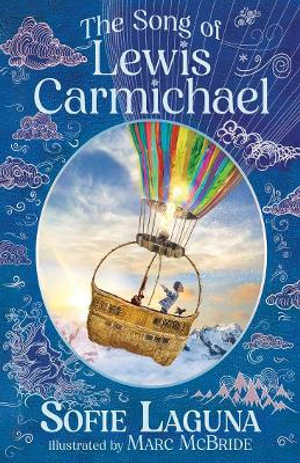
The Song of Lewis Carmichael is a beautiful book for children. It is written by Sofie Laguna and illustrated by her husband Marc McBride. Both Laguna and McBride are highly acclaimed in their fields; writing and illustrating respectively. They have two young sons and this may partially explain how and why two such talented, creative people could collaborate to produce such a book for children. This is the kind of book that takes children to another dreamlike and yet seemingly real world of whimsical adventure. It is a delight.
There is an old-fashioned quality to the drawings which are done by hand with 2B pencil in Adobe Photoshop. The font is unusual in that it is blue on white and the story is about cold, cold places. Mathew Zajac, a young boy, is our central character. He is a lonely, only child who is obsessed with the North Pole. He feels that he is a disappointment to his parents because he doesn't understand how to enter the games of other children. He feels that his parents need another child to compensate for his shortcomings.
One night Mathew is woken by a crow that enters his dormer window. The crow, Lewis Carmichael, invites him on an adventure to the North Pole. Mathew and Lewis sail off in a beautiful hot air balloon. Great danger and adventure befalls both of them. Lewis is Mathew's constant companion throughout and as the story unfolds so does the song that Lewis sings about Mathew. Mathew learns to face down great fear, solve difficult problems (like how to adjust the gas release and pressure in the balloon) and to triumph over complete exhaustion in his struggles with the fierce polar weather, the Arctic Wolves and a deadly mother Polar Bear. With the encouragement of Lewis Carmichael, Mathew prevails and matures enough to say to his parents on his return, "I need you to trust me to find my way."
There are inexplicable, magical aspects to The Song of Lewis Carmichael. There is a crying sound that Mathew keeps hearing and responding to. Not everything is clear. The whys and the wherefores exist, as in all good stories, for the reader to ponder. The story unfolds within a time-slip... a cleft between two worlds...a dream.
This is wonderful storytelling and a chance for children to travel into the world of imagination and dreams. Wait - was it a dream or did Mathew really sail off to the North Pole and return all in the space of a day? Young boys aged around eight years would really benefit from reading this book and being transported to the harsh and wonderful world of the Arctic in a hot air balloon with a boy their own age and a crow called Lewis Carmichael.
Themes Arctic, Friendship, Finding courage.
Wendy Jeffrey
Get back in your books! by Rory H. Mather. Illus. by Shane McG
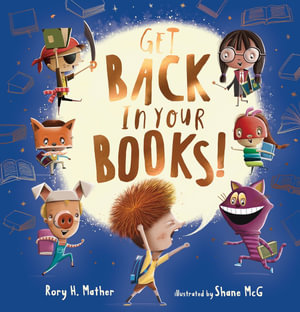
I doubt there is a child or adult who has not been involved in a Book Week celebration of some sort of another. It may have been at a school or kindergarten, local library or play group, but the theme is the same: get reading, get involved and dress up. And this is the basis of the latest book from Mather and McG, promoting Book Week, as the main character is confronted by an array of characters normally seen in books.
Arriving at school, he usually heads for the library but on this particular day he is amazed to see Wally sitting by the pot plant, and instead of the librarian a buffalo greets him, while a fox runs past. Over by the picture books a caterpillar is being greedy while three little pigs trot by. But then a bunch of wizards mix things up in a puff of smoke, and pirates inhabit the paperback stand. A smiling cat is the last straw and he rummages for a megaphone and intones loudly, ‘get back in your books’, but the laugh is on him when they take their masks off to reveal his class, all dressed in costume ready for the Book Week Parade.
A nice salute to an annual event around Australia, the underlying humour in both the text and illustrations will please young readers. The rhyming text will bring smiles of recognition as readers predict the rhyming word and say it out loud as it is read, or mull over the characters and the books they appear in, or look closely at the illustrations, recognising characters that appear. Children will love working out how they can make masks to fit a favourite character, and look through the dress up box to create a costume for the coming event.
Themes Book Week, Parade, Book characters, Dressing up, Humour.
A new book in the wonderful Nature Storybooks series from Walker Books will always create excitement amongst younger readers. They will know from reading Kookaburra or Dingo or Koala or Big red kangaroo that they are in for a treat: not only is there an exciting story, but a non fiction text accompanies it. The dual texts are drawn together with superb illustrations sure to please every set of eyes opening the pages. And every word is true.
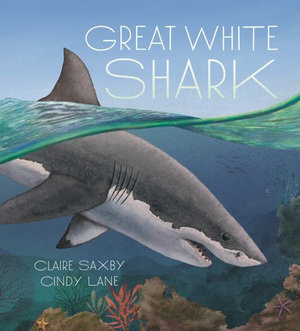
The great white swims menacingly across the front cover then opening the book, the end paper reveals the animal looking at the reader with a threatening pair of eyes and lots of teeth. Kids will love it and turn the page over to read the rest of the book. What an opening to this most informative of texts and revealing of images!
The shark has seven pups in her belly and must feed. Trawling the ocean with her acute sense of smell and a sixth sense called electroreception, she finds a pod of seals. A pup has strayed from the group and is an easy target. She grabs it. She swims on, eating something that is not food she spits it out, but finding a turtle grabs it with her serrated teeth and swallows it down, later expelling the bits she cannot digest. She gives birth to her pups then swims away.
All through the story, brief non fiction paragraphs are added to augment the readers’ knowledge of this animal. These complement the story, as we follow the shark as she finds food then a place to give birth. We learn about its size and weight, its teeth and senses, its habits and way of eating, swallowing things whole, then expelling what is not wanted, turning their stomachs almost inside out to get rid of shells and bone.
The magnificent illustrations sing in her debut children’s book, as artist Cindy Lane captures the sights of the ocean from the vast expanses of water, to the reefs close to the coast to the groups of animals to the death of a turtle in a sea of bubble, to the cold of the deep. I loved looking out for various living creatures in the ocean, and thought about her use of sea water and found objects, while marvelling at her use of pencil and water colour, along with digital collage. This beautiful book, full of interest and information has a page devoted to more information at the end of the book, above a useful index. All adds to its use and purpose, making it the first point of call for those wanting to know about this animal and its habits. Teacher's notes are available.
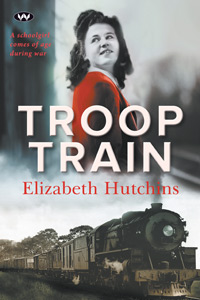
Rosemary Lister is fourteen years old, living in Adelaide, Australia, as World War II rages on across the world. Australia has not been immune, with Darwin being bombed and brave Aussies going off to fight for freedom. This includes Rosemary's father, who has been missing for some time, with the family unsure if he is dead or alive, missing or a prisoner of war. Given a journal for her fourteenth birthday, Rosemary decides to fill it with information about their everyday lives and the comings and goings so she can remember everything to tell her father when he comes home. If he comes home. Rosemary's life is further uprooted by the announcement her mother makes that they are moving to the country to help her mother's sister run a farm.
This historical World War II novel, set in Adelaide during the 1940s, has been meticulously researched by the author, with accurate historical facts. Switching narratives throughout the novel, it is written primarily from the point of view of Rosemary as she writes in her diary. Spanning several years, the novel allows for character growth as she experiences different aspects of growing up. With regular references to life in Adelaide in the 1940s, as well as political history and aspects of the war relevant to Australia, this novel depicts life and customs quite precisely. Further to this, the description of farm and country life is spot on, with hard work and camaraderie being central to those living and working on the land.
Themes Historical Fiction, War Stories, Australia - World War II, Country Life, Farm Life.
Tunnel 29 is an amazing story – a revelation of the risks that some Berliners were prepared to take to escape the restrictions of the East German-sanctioned Berlin Wall or to help those they loved to be reunited.Helena Merriman has documented the inside story of the Tunnel under the Wall and the rescue. The tunnel was built in secret from West Berlin and yet filmed by a CBS film crew, that enabled 29 East German residents to escape to freedom. From both sides of the wall, tunnellers and those seeking freedom from the oppression of East German life, there was great risk and yet they persisted. With great skill Merriman has also outlined the political context that enabled post-war Berlin to become divided in such a physical way, and led to many within Berlin, East and West, becoming spies and informers for the East German Stasi. Into this very political story there is the human angle of the participants, those who survived to tell their story or whose Stasi files were released to reveal the personal history and difficulties they faced. With an NBC film crew also documenting the actual tunnelling and escape, and with considerable political fallout possible if it was discovered, this is a story that reveals the tensions of the Cold War and the impacts for so many in the East and the West.
This is a memoir and a respectful biographical journey into the lives of people who lived in a time of considerable tension. It is powerful and yet surprisingly warm to everyone involved. Even the spy who could potentially betray the operation is portrayed with great humanity, and it is obvious to the reader that this was a miraculous escape and a time of great difficulty. Merriman’s slow unravelling of the story is compelling, almost in the style of a novel, but it is always a piece of non-fiction tunnelling through the truths of a real, but tense, event. I can highly recommend this book to readers interested in political history or real human drama. It is an adult text, but could easily be read and appreciated by younger readers aged 16+
Themes Berlin Wall, Freedom, International politics, Post-World War II – Cold War.
Carolyn Hull
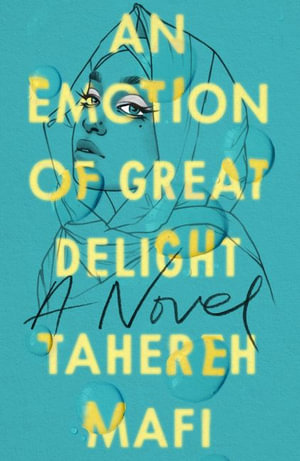
An emotion of great delight by Tahereh Mafi
Electric Monkey, 2021. ISBN: 9781405298261. (Age:14+) Recommended.
Shadi spends her time, head down, trying to avoid conflict, as a young Muslim girl in an aggressive environment, the post 9/11 world of 2003, around the time that the United States entered into war with Iraq. She is American, but constantly identified as alien because of her hijab, threatened by belligerent police, and taunted by fellow school students. She has promised her mother to never react, never make a scene, so she is quiet, her feelings repressed.
Mafi’s writing is outstanding in describing Shadi’s inner turmoil, the feelings that bubble below the surface; a portrayal of victimhood that is exacerbated by the cruel revilement she receives from her former best friend Zahra. On top of that, Shadi’s home life is falling apart, her brother killed in a car accident, her father in hospital, and her mother lost to grief. Her sister Shayda has become angry, the two girls each holding different views about the cause of their brother’s death. And Ali, the boy that Shadi is drawn to, seems lost to her.
At times the emotional descriptions seem torrential, never ending. There are some bright moments, but the threads tend to get lost. Mafi’s depiction of the lost and lonely girl, envious of the warm and welcoming home life of her former friend Zahra, is particularly moving, a very realistic portrayal of an anguished and suffering child.
The writing is powerful, and will bring tears to the eyes. However I think there comes a point where the reader shares Ali’s exasperation at Shadi’s failure to stand up for herself. But perhaps that is realistic; in real life, people don’t suddenly become heroes. There is no magical happy ending. Mafi brings the story to a climax that may be a little confusing and unsatisfying to the reader, but in reality patterns that have been established over years will not be easily resolved. There is hope, but not a magical resolution.
Young adolescent readers will not fail to be drawn into Shadi’s emotional world. It is gripping. Also, the depiction of friendship that deteriorates into spitefulness, and the experience of daily Islamophobic bullying, are particularly powerful. Readers will feel empathy for Shadi’s plight and gain greater insight into the world of the person cast as the outsider.
Themes Grief, Loneliness, Islamophobia, Bullying.
Helen Eddy
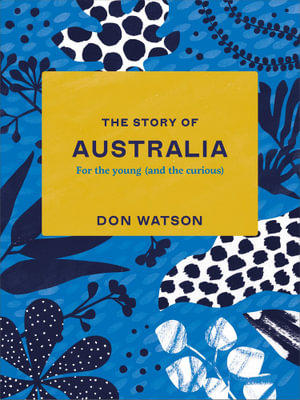
The story of Australia by Don Watson
Black Inc., 2021. ISBN: 9781760641139. (Age:10+) Highly recommended.
The striking gentle blue cover of The Story of Australia: For the young (and the curious) draws the reader in to a very special and important book. Don Watson, who has written previously for adults, has created an easy-to-read non-fiction book that covers all aspects of Australia’s history, from ancient times to our contemporary era. What sets this book apart and more in tune with today’s thinking is that it explores and explains our history from both an honest and meaningful indigenous perspective, interlaced with a non-indigenous perspective. Reading the first two chapters about Ancient Australia and Aboriginal Australia sets the reader on a chronological path to finding out how Australia grew over time and the successes, struggles and injustices that ensued. Throughout the book, the author has written openly about landmark events such as the massacre at Myall Creek NSW in 1838 of twenty-eight Aboriginal men, women and children or World War Two in which nearly 40,000 Australians died and the great Eddie Mabo and the land rights debate of the 1990’s. He shares the plight of women convicts in colonial times and the effect of the Great Depression on the Australian people. The diverse topics covered provide a wonderful snapshot of how our country has grown and changed. Each chapter ends with a profile of a famous Australian including the likes of the Mungo Woman, Caroline Chisholm, Mary Gilmore, Albert Namatjira and even Kylie Minogue. The book has a detailed contents page and extensive index, as well as photographs and illustrations on each page to break up the text into manageable chunks. The clever use of footnotes displaying the dates ensures the reader can either follow the history through from cover to cover or research a certain period.
This book is an important read for late primary to upper secondary students as well as adults who may need to rethink Australia’s history from a different perspective. The Story of Australia: For the young (and the curious) would be a valuable addition to a classroom, public or home library.
Themes Australia, History - Ancient, Indigenous, Colonial, Contemporary.
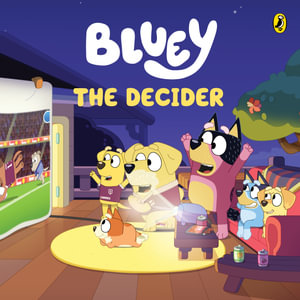
All the avid fans of Bluey, the very popular ABC children’s show, will be thrilled to see another book about Bluey and her family. This time Mum is going off to a baby shower and Dad will be putting Bluey and Bingo to bed. Even though Mum promises to kiss Bluey goodnight when she comes home, Bluey is unhappy and apprehensive because it is always Mum who puts them to bed. Will Dad be up to the task, and will Bluey overcome her fears?
The story line will resonate in families who have children who are worried about change. Bluey is so used to Mum putting her to bed that it takes a lot of effort on the part of Dad to keep her occupied. He organises playing follow the leader and then pushes the duo on the swings. But it is not until Bluey uses her imagination and sets up her own baby shower to play with that she settles down.
With a durable cover and thick pages, Bluey: Daddy Putdown will withstand much use from young children. Illustrated with the iconic Bluey characters, the bright colours are gorgeous, and the details will be ones that children love. Bluey’s baby shower is so cute, with all the toys sitting in a circle, each with different expression on their faces. And for carers there are some very funny moments that they will appreciate.
Another happy, feel-good book in this series that is sure to be popular with young children.
Themes Change, Bedtime, Families.
Pat Pledger
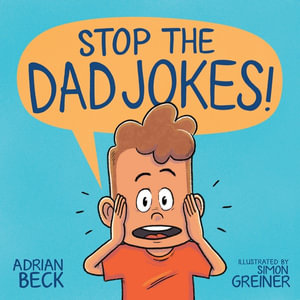
Stop the Dad jokes! by Adrian Beck. Illus. by Simon Greiner
Anyone who has had to listen to corny jokes will empathize with this young boy who is off too the zoo with his dad. He thought it was going to be fun until Dad told a joke. Dad insists that it is every dad’s mission to tell Dad jokes, and goes on to demonstrate how the giraffe, lion, crocodile, elephant, leopard and other animals all like to tell jokes. And then on a double page spread, are some very weak, funny jokes ('What do you call a pig doing karate? A pork chop!') that will have the young set giggling themselves silly.
The rhyming narrative lends itself to being read aloud and will be a source of much fun and laughter in the family. Greiner’s illustrations, in bold colours, outlined in black, are also a source of amusement, especially the long-suffering expressions on the faces of all the young offspring, both human and animal. It is not difficult to imagine the author and illustrator getting together to laugh about the jokes that they share in this very funny book.
Ideal for Father’s Day, reading the Stop the dad jokes! will be a source of happiness and will have everyone laughing.
Themes Humour, Jokes, Fathers.
Pat Pledger
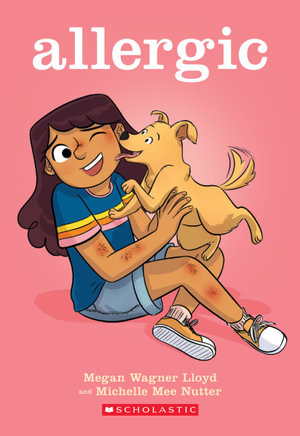
Allergic by Megan Wagner Lloyd and Michelle Mee Nutter
It is Maggie’s tenth birthday and she has been promised a puppy but when they go to get it she has an allergic reaction. She had set her heart on having a dog; her twin brothers have each other and her parents are expecting a new baby; a dog would be hers, filling a gap in her life. However allergy tests show she has a severe reaction to anything with feathers or fur and having a dog is out of the question. To make things worse Maggie is anxious as a boundary change means she has to start at a new school leaving her friends behind. Determined, Maggie sets out to find a pet alternative that doesn’t have fur or feathers and a new neighbour turns out to be a new friend to help with the quest. Meanwhile a course of injections over the next few months aims to alleviate Maggie’s severe allergic reactions. There is no instant cure for Maggie’s allergies but she learns to manage her condition with help. There are a lot of setbacks as she negotiates a difficult period in her life but a loving family and a good friend help her through the difficult times. She is able to develop stronger relationships and move towards a rich and fulfilling future.
This colourful comic style graphic novel is well paced with some strong characterisations particularly in the depiction of a loving family being supportive of each other. It is an engaging story with some valuable information about allergic reactions. Megan Wagner Lloyd's website has a page of ‘Megan’s Comics/Graphic Novel Writing Resources” that some might find useful and Michelle Mee’s website has some inspirational examples of her illustrations.
Themes Allergies, Pets, Family, Friendship.
Sue Speck
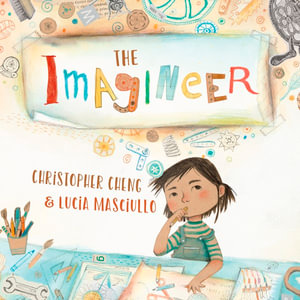
The Imagineer by Christopher Cheng and Lucia Masciullo
National Library of Australia, 2021. ISBN: 9780642279682. (Age:3+) Recommended.
Penny was an imagineer - one of those clever people who can create in their head and then craft with their hands. All day long she would look at the everyday things around her and imagine how they could be used in a different way, like turning an umbrella upside-down to catch the rain and use its unique shape to funnel the water into a mug with a tap. She was always pulling things apart and then twisting and turning, screwing, taping tying until they were back together again - sometimes as they were but usually not.
Her imagination knew no limits as she sketched and planned but sadly the little apartment where she lived was not as large. However, Grandpa lived in a much larger house, one where he had lived for a very long time and the rooms were packed! When Penny first visited, she was in seventh heaven. The treasures to be explored... And then she discovered the shed!
Between them, Christopher Cheng and Lucia Masciullo have used their imaginations and their incredible skills with words and pictures to craft a thoroughly entertaining tale that is rich in all those elements that make the very best stories for children - I had to check there were only 34 pages because there was just so much packed in even though the text is just the right amount. The final foldout page is just adorable and young readers will spend hours just poring over its possibilities, lighting their own imaginations.
And because it is a publication from the National Library of Australia, there are vignettes of the tools that are mentioned in the story with brief explanations of what they are and how or why they were used (because even the grown-ups sharing the story won't be old enough to remember, let alone use them, unlike me who still has some of them). It is such a clever way of taking youngsters back to Old Worlds so they can see how things have evolved over time and allow them to speculate on how their own imaginations might develop them further. Teacher's notes are available.
To use Chris's own words, this is a "most wonderful, phantasmagorical, increibleacious, stupendorific" read.
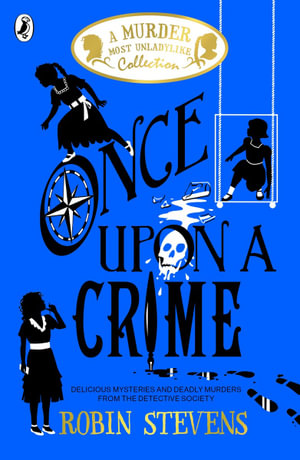
For those who can't get enough of the A Murder Most Unladylike Collection here are six more mysteries in the one book entitled Once upon a crime. There is a waiting list for this book at our school already and all of the previous books are out on loan. In Once upon a crime, Robin Stevens serves up more "delicious mysteries and deadly murders" involving the same characters: Daisy Wells, Hazel Wong, The Junior Pinkertons and Hazel's little sister May. Daisy and Hazel are now just that little bit older, fourth formers at Deepdean School, with older girls' concerns emerging including love interests. May is following in their footsteps with the ambition to be the greatest spy ever.
The murder cases in Once upon a crime occur between January 1936 and September 1939. Locations of the murder cases are quintessentially English and include St Pancras Registry office during Uncle Felix and Miss Livedon's marriage, the mummy room in the British museum, Saltings Beach, the hills country outside Weston Boys' School, onboard the SS Strathclyde and a flat in London. The second world war is a backdrop to the stories. It seems distinctly likely that Hazel's uncle and aunt are involved in the spy game during the war and their attitude to life is a fertile and encouraging influence on the young detectives. In The case of the Missing Treasure, Uncle Felix actively delivers progressive clues in the form of riddles for the children to decode.The children involved in each specific detective case narrate their story in first person. As in the previous books in the A Murder Most Unladylike Collection, methodical case notes are kept where murder suspects lists include active observations, witness reports, times and motives. Most cases are solved through a process of elimination and often there is a dramatic confrontation between the murderer and the young detectives.
These books are very funny. They are, as The Daily Mail states - "simply spiffing" and as The Telegraph states - "A feelgood blend of Malory Towers and Cluedo." Robin Stevens is the Agatha Christie for younger readers of today. Part of the fascination for today's readers is the era depicted and the life and adventures of English boarding school girls and boys growing up during wartime in England. At the back of Once upon a crime is a timeline that depicts the cases solved by the detective society from 1934 through to 1939 and there is a letter from the author... " At the moment I'm writing a brand-new series called The Ministry of Unladylike Activity...
Look out, Robin Stevens is writing more of these very English, very thrilling stories, full of fiendish villains, codes to crack and crimes to be solved. Once upon a Crime is recommended to readers who enjoy light hearted whodunits.
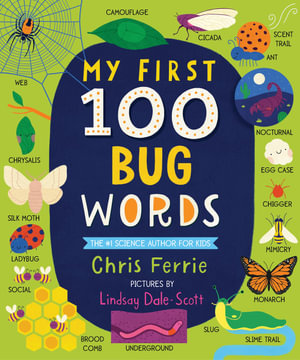
The duo Chris Ferrie (physicist and mathematician) and illustrator Lindsay Dale-Scott have come up with another fascinating book containing 100 bug words. Each double page spread of this brightly coloured board book features a category of insects and 8 to 12 words associated with those insects. The book opens with the familiar group of Bees, wasps, and ants and contains the word colony, showing ants taking food to the nest following a scent trail. On the opposite side of the page are the words Yellow jacket, Spider wasp, Honey bee, Bumble bee all illustrated, while there is a brood comb for the honeybee and the bumblebee is shown pollinating a flower. The spider wasp is solitary while the honeybee is social. An amazing amount of information is given just on these two pages, with the gorgeous illustrations expanding the reader’s knowledge.
The following pages include Centipedes and Millipedes, Worms, Gastropods, Spiders, Scorpions Ticks and Mites, Flies, Beetles, True bugs, Mantises and grasshoppers, and finally Butterflies and Moths. All follow the same structure, with appealing illustrations. There are simple words for the very young and more complicated scientific labels that will engage the interest of the older reader, while adults will enjoy learning more vocabulary as well.
Young children will be introduced to new words and concepts about bugs, while recognising familiar insects like butterflies and spiders. This sturdy board book will stand up to a lot of handling and its padded cover will intrigue the user. Reading this book with young children is a clever way of increasing vocabulary and encouraging curiousity and learning.
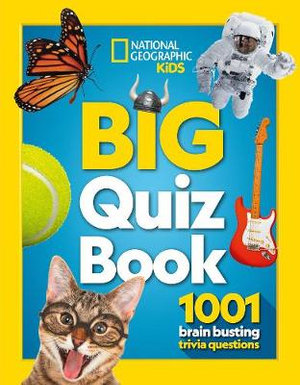
Big Quiz Book: 1001 Brain Busting Trivia Questions
National Geographic Kids, 2021. ISBN: 9780008408961. (Age:8+)
Twenty years ago, while hanging out the washing, I had an idea for a quiz for students in Year 5 and 6 that would be about Australia and Australians and be made freely available online so students all over Australia could participate to develop their information literacy, their digital literacy and communication skills. The Quizzard of Oz was a huge success both online and off when I eventually offered it on CD so schools weren't tied to my timeframe of marking 150 quizzes each Monday night!
When the name and concept were hijacked and patented by an app company, the quiz eventually morphed into Backpack Bear (because I didn't have the means to fight a legal battle) and to this day, students are demonstrating their love of these sorts of trivia contests by eagerly competing.
So this new publication from the ever-popular NatGeoKids is the perfect addition to any teacher's or family's collection if they want to tap into this fascination. Arranged in 9 categories (covering geography, history, creatures, science and technology, space, sport, music and the arts and food) there are 69 separate quizzes of multiple choice or true-false questions (including answers and a lot of fun facts) as well as a monster tie-breaker. While participants might guess at the answers, there is also scope to investigate them thoroughly and perhaps discover a whole lot more about the topic at the same time.
Properly credited, the questions could become the basis of a new quiz set by a teacher to occupy students during this time of lockdown, encouraging both the student and their family to get involved in the research, or for those what-do-I-do-when-I'm-finished? moments as an alternative to the 'read a book" answer. I know from my experience the hours it can take to build quizzes with questions so to have 1001 on tap would be very welcome. And a link to the Nat Geo Kids' website would be a bonus as there are even more quality activities there. Suddenly, staying at home is looking very entertaining!
Barbara Braxton
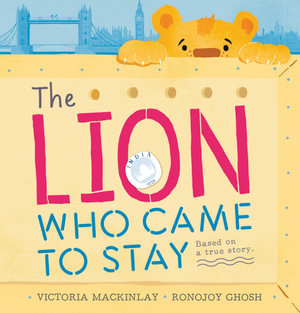
The lion who came to stay by Victoria Mackinlay and Ronojoy Ghosh
When Francis’ parents returned to England from India, they brought with them a present from the Maharajah. Francis had asked for a baby elephant, but this proved to be too large, so when Francis opened the animal crate on Christmas Day, a baby lion popped out its golden head and charmed them all. Francis and the lion, called Singh, the Sanskrit word for lion, did everything together: they looked at the sky above them, searching for falling stars, wandered around Singh’s new home in London, looking at the sights and after many unsuccessful attempts, Francis eventually taught Singh to roar. But one day when Francis needed to go back to boarding school and his parents to return to India, a fateful decision had to be acted upon. The family made its way to London Zoo in a black taxi cab, there to leave Singh in his new home.
After that Francis visited frequently, Singh pushing himself up to the bars to be petted and stroked. The lion died in 1940, but lived on through the cubs he fathered with the lioness, Bessie. He was always a popular and polite exhibit in the zoo, as stories of his background were told.
This charming tale, beautifully illustrated by Ghosh, with a level of humour behind the images which will make readers laugh, will also bring tears of recognition to readers who have had a pet and known the sadness of separation. Readers will sympathize with both characters, Singh and Francis as they make the best of the fate that is placed before them. But it is a happy tale, one of love and friendship, companionship and togetherness, themes that will stay with the reader after the book is closed.
Some may like to look up a similar story, that of Christian the lion, bought at Harrods in London in 1969.
Themes Lions, Friendship, Zoos, India, Family, Separation.