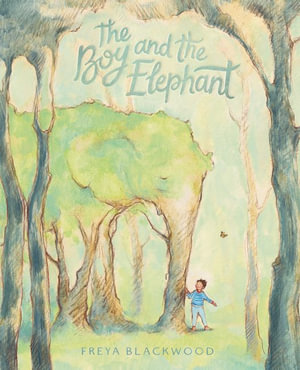
A lonely boy lives in an apartment building in the city. Evocative pencil and watercolour illustrations cover the first few pages, revealing his routinely solitary life. Alone, he gets out of bed, dressing himself and getting ready for school, no one else in evidence, hurrying by himself through the noisy streets filled with people, cars and trams, sitting by himself in the playground once he gets to his inner city school surrounded by concrete. At home dad works in the study, no time for the forlorn lad fending for himself. He makes his tea and takes a tray to the lot next door to sit with his friends. The stunning illustrations paint a sadness, an uninterrupted loneliness encompassing the boy’s life. We feel his loneliness, his anonymity in the crowds: home and school devoid of any comfort.
But next door is an overgrown space where he goes to read and visit.
Blackwood weaves the trees into shapes of animals that befriend him, animals that comfort him in his solitary life. And readers will all breath a sigh of relief: he is not alone. But another twist appears as the block of land is sold and each tree marked with a cross, ready to be cut down. Readers will gasp in horror with the boy as he sees what will happen, appalled that his friends should be destroyed. Blackwood’s illustrations lead the reader to feel with the child as he ponders what to do. And he finds a solution.
Blackwood’s amazing images are outstanding. Out of a forest of captivating images, several stand out for me: the elephant is part of the tree the boy sits beneath, the foliage coming together to make his shape, the pale greens contrasting with the night views as the trees escape the developers, their shadows looming against the blues of the buildings at night. And I love the looks inside the boy’s house, the stairs, detritus, the bedroom with the things he loves. His loneliness is palpable, and all readers will have heart stopping moments as the tale unfolds. Every page held me, as it will for every one who reads it.
Blackwood’s work is a meld of softness and hardness: we see hints of a broader environmental theme - the destruction of habitats, contrasting with the heart stopping images of a lonely boy doing what he can to save it. This gentle wordless picture book shows that we can all take a stand.
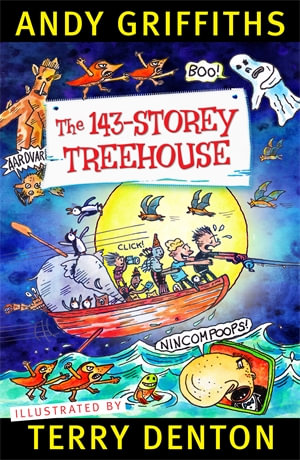
The 143-Storey treehouse by Andy Griffiths. Illus. by Terry Denton
Pan Macmillan Australia, 2021. ISBN: 9781760786236. (Age:6+) Highly recommended.
I found this book very entertaining. The illustrations are hilarious in this fast-paced, action-filled novel by Andy Griffiths. Some of the new levels to the treehouse include a word-o-matic, recycling depot, camping ground, and super big stuff storey.
The adventure begins with Andy and Terry playing scrabble, and Andy getting angry, again! He decides he needs a holiday, just the two of them. Not sure of this though, because their previous experiences haven’t been all that pleasant. However, they are due to write another book, so Mr. Big Nose sends a reporter and a photographer with them to do an exclusive story of their holiday.
The holiday turns out not to be just the two of them, and not quite as relaxing as they thought it might be especially when Andy gets chopped in half by the pax (axe). His two halves have to be stapled back together.
What’s a camping trip without having to make do with what you have? What’s the fun if you bring all the food with you? You wouldn’t have the experience of going fishing in a boat built for two, but with many more people occupying it. Toasted marshmallows by the fire, and spooky ghost stories to end the day sounds good, doesn’t it? Well, maybe, just maybe, that doesn’t go as planned either.
Do the friends escape the hobyahs? They sound very scary. After saying they weren’t scared of anything, they will have to follow Jill on the hunt for hobyahs. She assures them they are close, because she has seen their footprints. Just what have they done to all their friends? You’ll have to read the book to find out!
Themes Adventure, Fantasy, Friendship.
Natalie Fisher
How to repaint a life by Steven Herrick
University of Queensland Press, 2021. ISBN: 9780702263156. (Age:14+) Highly recommended.
Another heart-warming story from Herrick is sure to please his fans and is one that I couldn’t put down. How to repaint a life has Isaac leaving behind a difficult life with a violent father and finding a new chance in a small town. When he leaves the bus he has just his backpack and a small amount of money and his chief concerns are finding a place to sleep and something to eat. When he meets Joan, the owner of a small cafe, he is met with kindness and she gives him the chance to turn his life around, offering him a job and letting him try some new ideas to keep the café going. Meanwhile, Sophie, in her final year at school, is facing the future and thoughts about leaving town and going to art school. Both want to repaint their lives and try new ventures.
Strong themes of domestic violence, homelessness, bullying and loneliness are contrasted with bravery, kindness, art and family love. There are some wonderful portrayals of adults in How to repaint a life. Sophie’s parents are loving and caring. Her father is quirky and his approach to solving local council problems while humorous are also very practical. Joan’s decision to help a young man in need and to trust him makes a huge difference to Isaac, giving him a place to grow and leave the past behind. Isaac and Sophie are both characters that young adults could identify with, while supporting characters are very well fleshed out.
This would make a great class novel or literature circle text with its universal themes of overcoming the past and looking to the future. Extensive teacher’s notes are available.
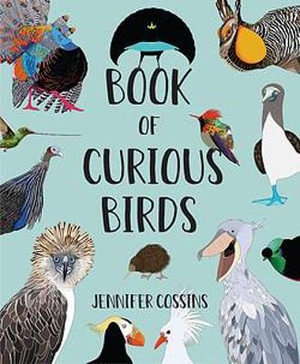
Book of Curious Birds is a stunning look at ordinary and bizarre birds from all over the world. Written and illustrated by well-known writer Jennifer Cossins, this book will introduce you to both familiar and unfamiliar members of the bird population.
The Contents page lists twenty-six birds all having a double page spread. This leads into the introduction where the author talks about her fascination with birds and gives a general description of the types of birds you might find and learn from in the book. Each bird has a page of facts with a title, sub-title, location, wingspan, length and conservation status section followed by information well-spaced in paragraphs, with one coloured highlighted fact of interest. The second half of the spread is a gorgeous glossy illustration of the bird under discussion.
The information shared will fascinate young readers. For example, did you know that the Shoebill or giant-billed stork from Central and East Africa have a habit of pooing on their own legs to cool themselves down when it is too hot? Or that the North Island Brown Kiwi found in New Zealand has many features that are more like mammals even though their closest relatives are emus and cassowaries.
As well as being the perfect book to peruse through, this book would provide a wonderful resource for school students when doing research for report writing. The interesting text is presented clearly and is easy to read and comprehend. At the end is a Glossary, Acknowledgements and information about the author. The Book of Curious Birds is a valuable addition to any home, school or public library.
Themes Birds.
Kathryn Beilby
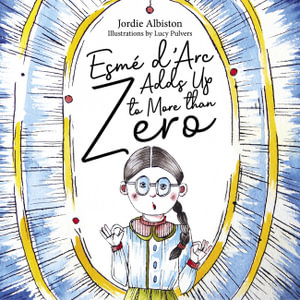
Esme d'Arc adds up to more than zero by Jordie Albiston. Illus. By Lucy Pulvers
Little Steps, 2021. ISBN: 9781922358592. (Age:5+)
This third book by poet and author Jordie Albitson takes the reader on the journey of Esme d’Arc, who is portrayed in the illustrations as a child but who appears to think she is only a zero. This quirky story tells of how Esme tries to overcome her inadequacies of just being a zero and with the support she has of her friends, a puppy named Pepe, a duck called Kwack and a doll called Polly she eventually becomes a hero.
This book is loosely written in a narrative poetry style format and is at times both confusing and almost nonsensical. The detailed illustrations are essential components of this book as they help the reader to understand the gist of the story.
Themes Friends, Fantasy.
Kathryn Beilby
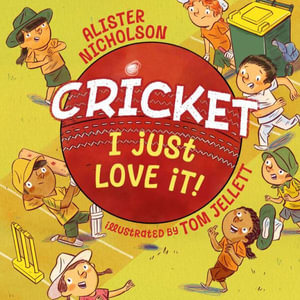
Cricket I just love it! by Alister Nicholson. Illus. by Tom Jellett
Allen & Unwin, 2021. ISBN: 9781760526801. (Age:5+) Highly recommended.
With the endpapers outlining some of the aspects of cricket, this book with its lively illustrations will please all comers. The zany words that absorb cricket fans are all there: wide, appeal, Yorker and duck plus a few I had not heard of, all designed to inform the uninitiated. The final endpaper gives potted stories using the words learnt, all designed to inform, please and tickle the funny bone. Kids will love reading of the sport, this book out just in time for the summer season, which will see teams arrive from across the world to play in Australia. Well, that is the plan!
In rhyming pairs of lines, the story is outlined of a number of children playing their favourite game. The verses include nearly all the words associated with the game, reinforcing the images and text on the endpapers, and shows the kids playing at school, in the garden, on the street, in the hallway at home, on the beach and on an oval. Each place reveals different games with different rules. In the hallway, catching is most important to avoid smashed windows and crockery, in the street, a safe place should be sought, on the oval, whites are worn and spectators watch from behind the fence.
We are shown a child’s equipment, and some of the strokes a cricketer may make and on one double page an outline of the field is presented so that understanding positions like mid on, gully and cover are less enigmatic for the beginner. Famous names are included which will whet the appetites of readers, eager to find out more about these people who the children wish to emulate. Practice is stressed as the main characters talk about their dreams for their future in cricket; wearing the baggy green and scoring one hundred at the G.
A wonderful introduction to Australia’s favourite game, this engaging book is informative and involving as the reader learns lots about the sport and is prompted to try it out for themselves.
Themes Cricket, Sport, Community.
Fran Knight
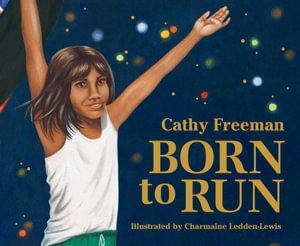
Born to run by Cathy Freeman. Illus. by Charmaine Ledden-Lewis
Cathy Freeman, one of Australia’s greatest athletes, has told her story in a beautifully illustrated picture book for readers both young and old. From Cathy’s very happy childhood in Queensland to the world stage of the 2000 Sydney Olympics, this story is an important one to share.
Cathy was a shy and quiet child who had incredible talent as a sprinter. She was encouraged to run from an early age and had amazing support from her family throughout her career. Unfortunately, Cathy experienced hurdles along the way, the most disturbing being racism. She relates to the reader how as a young child at a country zone athletics meet, she won four out of five events, but the medals were given to the white girls who came second. This treatment of Indigenous Australian athletes is a shameful reflection of society at the time, but it did inspire Cathy to dream to be the first Aboriginal person to win an Olympic medal. At the age of 16, Cathy was chosen to represent Australia at the Commonwealth Games in Auckland, New Zealand in the 4x100 metre relay and became the first Aboriginal to win a Commonwealth gold medal for track and field. Sadly, her eldest sister passed away not long after and Cathy became determined to always run for her.
Her journey to Sydney 2000 had its ups and downs but Cathy was determined that the gold medal for the 400m would be hers. Cathy’s role in the Sydney Olympics Opening Ceremony was an incredible achievement and her 400m race was outstanding. Her gold medal was for all Australians but especially her people.
Born to Run is a valuable book for home, school and public libraries. Young children who long to achieve great things will be inspired by Cathy’s story.
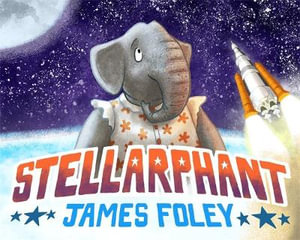
I love endpapers, and the first endpaper shows us long lines of framed photographs of male astronauts in the Hall of the Hero at Space Command. Each of them begs a second look, and eager eyes will notice not only the absence of women, but that the bottom row depicts photos of animals. Questions will explode, encouraging readers to read further.
Stella wants to be an astronaut, but the people at Command Centre think of a raft of excuses to deter her. She is able to overcome each of the reasons, showing them that their reasoning is flawed.
She is an elephant, but as she rightly points out, other animals have flown in space. She would not fit any of the space suits, so she sews her own. She has not had any training, so she trains. She has no crew, so she amasses one. Every time the people in charge (men) come up with a reason to impede her desire to be an astronaut, she is able to deflect their misgivings and provide a solution.
The story is wonderful, modelling never giving up, to always keep trying, to question and offer solutions. Stella reveals clever solutions to each of the obstructions put in her path and in the end she wins out, to the betterment of all her friends who now adorn their own Hall of Astronauts.
Readers will love Stella, with her frilly sleeves and big brown eyes, walking boldly into the Command Centre. They will eagerly spot the different animals dotted through the story, and watch out for the touches of humour that appear on each page. The receptionist at the Command Centre who keeps on tapping his keys and drinking his coffee when Stella approaches, signals the comic tone of the illustrations, ensuring readers will watch out for more digs at our modern world. The plethora of crew cut men adorning the walls shows the lengths this organisation has taken to be exclusive. Readers will laugh at the comparisons between the endpapers at the start and end of the book, love the fold out page with its witty look at the new astronauts, and pore over the last endpaper with its list of just what has been sent into space. Astonishing.
A great read aloud, an informative introduction to the idea of space travel as well as promoting inclusivity, Stella is an engaging character who will cheer readers with her positive outlook. Teacher's notes are available.
Themes Space, STEM, Inclusivity, Discrimination, Animals, Space travel.
Fran Knight
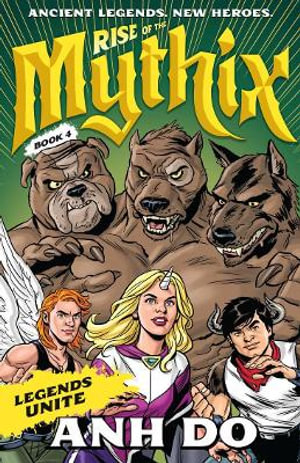
Legends unite by Anh Do
Rise of the Mythix book 4. Allen & Unwin, 2021. ISBN: 9781760879068. (Age:9-13) Highly recommended.
Legends Unite by Anh Do is the fourth book in the exciting and engaging Rise of the Mythix series. The story begins with a violent battle between the frightening three-headed Cerebus and the heroes. Unfortunately, Minh the Minotaur has been knocked out, Jimmy the Griffin is in hiding waiting for the opportunity to strike and Kelly the Unicorn has been left alone to fight for their survival. They eventually escape with Stanley their supportive offsider and head back to Capitol City. Once there they are provided refuge by Jimmy’s brother and wife, but it may not be as safe as they think. Meanwhile the evil Collector and his partner in crime, Crickshaw, are plotting a dastardly act to draw the Mythix out of hiding. By painting the moon in three separate parts during a lunar eclipse, the Collector has forced the heroes to try to find each part hidden all over the city. Without the moon the weather becomes destructive and causes havoc all over the country. The trio plan to go in search of each painting after receiving insider information as to where they are. They successfully achieve this but not before their mythical powers and their friendship are put to the test in all sorts of ways. The Collector will stop at nothing to rid the world of the Mythix and unleashes another terrifying creature, his once loyal Aitkin transformed into Medusa. Jimmy succumbs to the Medusa’s power and the story will be continued.
Anh Do writes with a great understanding of what will appeal to middle grade readers. This illustrated series is exciting, full of danger and drama, as well as in this latest book, a hint of a developing attraction between Kelly and Jimmy.
Themes Fantasy, Myths, Dystopia, Adventure, Power, Good vs Evil, Friendships, Danger, Families.
Kathryn Beilby
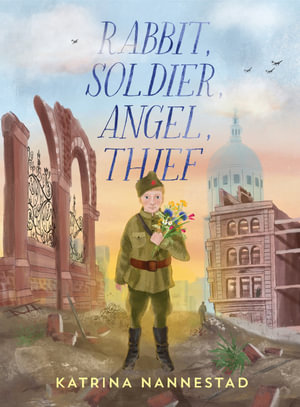
Rabbit, soldier, angel, thief by Katrina Nannestad
At the beginning of this compelling story, we meet Sasha who is mute, traumatized and in a Berlin hospital. His memory and ability to talk are unlocked as he collects things which were significant to him during the war, such as feathers and spoons. He gradually retells his harrowing and brave survival story to the caring staff and patients. Sasha's story starts in 1942 and he is 6 years old living in a near idyllic Russian village. The Germans inflict violent retribution on villagers supporting the partisans, including Sasha’s mother and sister. His sister implores him to run and hide but when he returns the village has been razed to the ground. After the destruction of his home, he is taken under the wing of a division of The Red Army, who he travels with until the end of the war. A major part of the story takes place during the Siege of Stalingrad when the Germans were forced to surrender because they were cut off from food supplies and the severe Russian winter took its toll on their troops.
Nannestad successfully creates an endearing character in Sasha, who grows from a timid child to a more self-assured boy soldier. She based this work of historical fiction on a real Russian child soldier. Knowing this makes the story more significant. There are many likeable characters who become Sasha’s army family but principally it is Major Scruff who is Sasha’s protector and father figure. Nannestad gently teaches her readers about the horrors of war through Major Scruff’s words of wisdom to Sasha. As WW2 progresses Sasha learns that the “German monsters” are human too and his own Russian soldier friends are capable of retribution. The audience for this story is quite young, 10+, and Nannestad deftly tempers the necessary violence with Sasha’s contemplative voice, kindness, and humour. People die but this is never bloody or graphic. I liked the use of memorabilia collections, and it was an effective device for helping the story unfold. It was an easy read and reminded me of Gleitzmann’s “Once” series.
Themes War, Love, Kindness, Death, Survival.
Jo Marshall
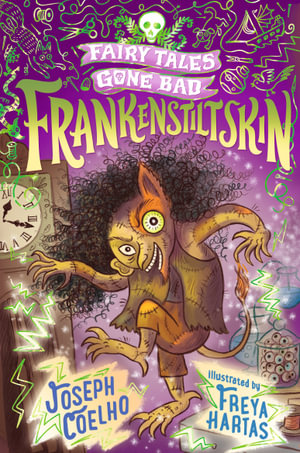
Frankenstiltskin by Joseph Coelho. Illus. by Freya Hartas
Frankenstiltskin Fairy Tales Gone Bad, written by Joseph Coelho is a story cleverly written in poem, and with a wildly wicked twist on the Brothers Grimm classic Rumpelstiltskin. Using ingenious alliteration and rhyme throughout story, the reader is easily immersed and enthralled in the storyline.
Briony is a taxidermist and the king searches for an expert to not only stuff animals but bring them back to life. As with the storyline of Rumpelstiltskin, her father gets carried away with his tales of his daughter’s greatness and agrees that she can in fact bring “life back to the dead”. The king immediately takes her to his mystical castle. There she is told to bring back to life all his son’s dead creatures. The king is not fond of animals and doesn’t realise or appreciate the beauty of nature. Briony is the opposite. She is very in tune and even has the ability to delve into the animals’ past life before she performs her taxidermy role. However, she has never been able to make them breathe and walk and run again. Enter the little ugly creature who has this ability. How far will Briony go to appease the king? Will this strong and determined girl be able to change her circumstances, flee her captors, change their outlooks on nature and survive to tell another story?
Coelho is a highly acclaimed author of poetry, plays and picture books. This bold yet bizarrely twisted story is the second of a three-part series of the classics and brings back the brilliance of the old masterpieces, looking at the morals and underlying meanings of each tale. The book is also filled with engaging illustrations by Freya Hartas. These give the reader another opportunity to connect with the text and provide extra visualisation of the story.
Frankenstiltskin Fairy Tales Gone Bad is a story that will keep readers engaged and eager to find out how everything will end. It will also make a great read aloud with its poetic flow of rhyme, rhythm and awesome alliteration. I can’t wait to read the next one!
Themes The Classics, Problem solving, Storytelling, Nature.
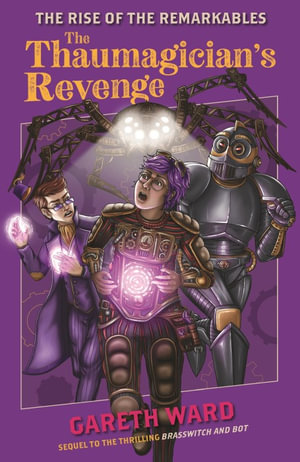
After Plum's devastating betrayal where Wrench only just managed to stop his evil plan as well as just scraping through the Minster Schism event, Wrench finds her powers are diminished and her faith in others hanging by a thread. As Cabal Thirteen's Brasswitch, her low level powers are a safety issue, and her mechanoid boss, Bot, instructs her to continue practicing with the new thaumagician, Vexanna. All the while Wrench and Bot continue to investigate rouge remarkables, and trying to locate Plum. As Wrench struggles with her confidence, the Cabal Thirteen team is continually battling with Captain Flemington who wants to destroy them and all other Remarkables. Unsure if she can trust anyone anymore, unsure if she will ever regain her full power, Wrench faces numerous challenges. Lucky she has the Remarkables of Thirteen to give her support.
The second book in The Rise of the Remarkables steampunk series, following Brasswitch and Bot, The Thaumagician's Revenge is action packed, dramatic and humorous. Well suited to middle grade students, this steampunk book set in the Victorian era gives readers adventure and mystery while weaving magic throughout. Covering relevant topics such as self-doubt and confidence issues, prejudice, trust and relationships, readers will find Wrench relatable. Delving deeper into Wrench's history, the book also covers revenge and the difficulty of letting go. The characters called Remarkables face prejudice and as a Remarkable, Wrench attempts to battle her mixed emotions as well as helping to educate others. With plenty of laughs as well as action, this steampunk novel is enjoyable.
Themes Steampunk, Prejudice, Good and Evil, Magic, Revenge, Mystery.
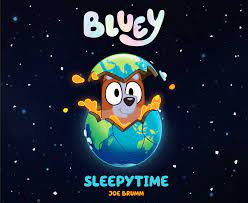
Bluey Sleepytime is a captivating story about Bingo who decides that she wants to be a big girl and sleep in her own bed. Mum reads her a bedtime story about space, before tucking her in and reminding her that she is always here if Bingo needs her.
Taking her soft toy Floppy to bed with her, Bingo dreams about going on an intergalactic space trip. The reader sees the world as an egg, cracked open by Bingo who trips off on her adventure. She passes another planet egg that has been cracked open and wonders who has left it. On the next page the reader sees that Bluey has woken up, wanting a glass of water, but by the time Mum gets it, he has gone to bed with Dad. Meanwhile Bingo finds a cosy spot between Bluey and Dad, while Mum curls up in Bingo’s bed. All the bedhopping will bring smiles to the adult reader’s face, as Mum and Dad struggle to get some sleep.
Sleepytime, was named by the New York Times as one of the Best Television Episodes of 2020 and the book reflects that quality. It is large, with a hard cover, showing Bingo cracking open the world egg, with splashes of yolk spilling over the sides, all against a black night background. There are surprises for the reader with large fold out pages, and the iconic figures will please the young child.
Sleepytime is a heart-warming story about a young child moving towards independence, surrounded by loving family members who are always nearby if she needs them.
Themes Bedtime, Independence, Family love.
Pat Pledger
Mr Bat wants a hat by Kitty Black and Laura Wood
New Frontier, 2021. ISBN: 9781922326218. (Age:3-6)
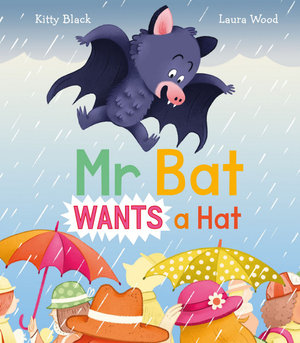
Mr Bat is a happy bat. He loves swooping, flapping and making friends with insects (before he eats them!). But when he spots people wearing hats he realises what he has been missing all his life. He simply MUST have one. It is the most beautiful, glittery, flowery hat that makes his eyes pop with love, and after snatching it from a helpless baby's head Mr Bat has two voices in his head: the first says 'Oh. A sad baby. She likes hats too', while the second says 'Too bad!'. Children may be awed or amused by Mr Bat's absolute selfishness as he awards himself the 'Best Dressed Bat Award' to an exasperated audience of animals. But his conscience finally gets the better of him; he swoops in and returns the hat to the still-screaming baby. 'I like hats too, but this one belongs to you', he whispers. Young listeners will see how his good behaviour is rewarded, as the baby hands him her socks. Mr Bat is delighted - 'hats are so last season anyway'. The last page, showing Mr Bat coveting a pair of roller-skates, provides perfect post-reading discussion material.
This is a good book for conversations about not taking things that belong to others, doing the right thing, fixing mistakes and about kindness begetting kindness. The moral of the story is completely front and centre and it acknowledges the difficulty of making the right choices and how sometimes we can be conflicted between getting something we want and being kind to others. The simplicity of the story is what makes this perfect for the target age group, all of whom will identify with Mr Bat's dilemma or of being in the position of the baby and how it feels to have something precious taken from them. This can lead to discussions about how we can pause to look at things from someone else's perspective before taking action. It also provides opportunity to talk about what to do if you have a friend like Mr Bat, as in the story the friends are just going along with his appalling behaviour rather than calling it out. Some people might be put off by Mr Bat being rewarded for giving the hat back, considering he stole it in the first place, but I think for children it's a perfect example of how mistakes can be fixed, and if taking the perspective of the baby, how we can be forgiving.
Described as 'speculative fiction' Eugen Bacon's collection of short stories are a highly original mix of myth, sci-fi, supernatural, and dystopian genres that provide a black, predominantly female, exploration of issues including gender, class, migration, military dictatorships and climate change. That might sound like a wildly eclectic range of themes, but that is exactly what Bacon manages to achieve with her imaginative and intriguing stories rich with poetic language and imagery.
In the titular short story, the 'danged black thing' is 'Embu', the sleek black laptop that Champ, the narrator, buys for her husband, Slade. The notebook is described in sexual terms as a 'dark truffle', and 'black velvet', a seductress that gradually wraps Slade in the silk of her web, until the jealous Champ is driven to smash and destroy her rival. But that is not the end of the story . . .
'The water runner' is a futuristic story of a water starved planet where water runners have the job of harvesting salvageable fluids from the dead. Picking up on this theme, another story 'When the water stops' describes volunteers giving 'bleeds' for their water content, until volunteers are exhausted, and yet blood must still flow for the survival of the species.
For me the most touching story was 'Still she visits' set in a psychiatrist's room with Segomotsi remembering her little sister Mokgosi, her name meaning 'a call for help', a sweet little sister who always stood ready to defend and protect; a little sister who dies of AIDS back in Africa, whilst Segomotsi is 7,000 miles away in Melbourne, unable to visit.
There are a variety of other stories, fascinating to read. Transit Lounge is to be commended for publishing this collection by a Tanzanian-Australian computer scientist turned author, whose work has, in the main, only been published in the U.K. and the U.S.
Themes Short stories, Dystopia, Technology, Cultural diversity, Black experience, Migration, Women.