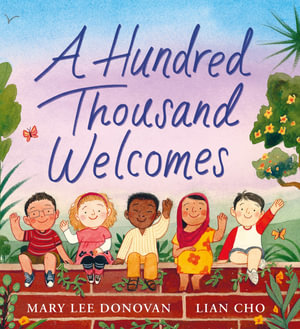
A Hundred Thousand Welcomes began as research by the author, Mary Lee Donovan, into how to say welcome in as many different languages as possible. She then gathered information on the customs of welcome from around the world and from this collection of welcomes and traditions this very appealing and diverse book was produced. The important introduction explains the reasons behind the saying of ‘Welcome’ and its use in cultures and religions across all continents. Following the introduction is a clever rhyming story spread across the book which showcases ‘welcome’ in thirteen different languages. The languages of welcome chosen for this publication are English, Indonesian, Modern Standard Arabic, Spanish/Castilian, Mandarin, Japanese, Bengali, German-Standard, Hindi, Modern Standard Urdu, Bashkir/Bashkort and two endangered languages, Gaelic/Irish and Lakota Sioux. On each page is the phonetic spelling of the welcome to enable the correct pronunciation. This is also expanded on in the final pages of the book with further interesting information given about the languages chosen. The bright and colourful illustrations by Lian Cho focus on the sharing of food in the welcoming of family, friends or strangers to homes.
A wonderful resource for a home, school or public library.
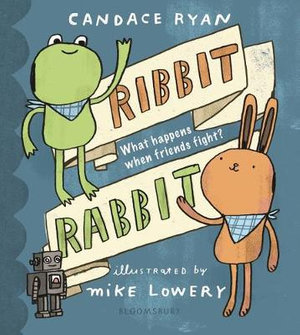
Subtitled, What happens when friends fight, this little board book delivers a life lesson within its pages. A great read aloud, the repetitive words and variations of the words, ribbit and rabbit, will tease and test the readers, and listeners will laugh with glee at the way the words are used, and sometimes misread. Prediction will come into play as the listeners read along and verbalise the next words after multiple readings.
Best friends, Ribbit and Rabbit do everything together: they find monsters in the dark with their torches, they go swimming together, and eat peanut butter sandwiches together. But sometimes they do not get along.
Stylish illustrations will make the reader laugh out loud at their antics, particularly when the words 'ribbit' and 'rabbit' are changed to 'nip it' and 'nab it' as their friendship becomes strained. I loved the variety of words used, parodying the character’s names, Ribbit and Rabbit, and younger readers will too, saying the words out loud, checking out the rhyme and recognising the change that a single letter can make.
The disagreement over a toy escalates and they find themselves utterly alone with their toys. They both know what they must do to repair their friendship and take steps to resolve their argument.
All is right with the world and their friendship is back to what it was.
Marigold's newly merged family consisting of her mother, brother, step father and step sister, have been fortunate enough to have secured a free house from her mother's new job with the Sterling Foundation. While it means moving across the country from California to the midwest city of Cedarville, given recent events, it might be the fresh start she needs. Arriving in their new neighbourhood, the family can't help but notice how every house on the block but theirs is run down. And from the moment they arrive, there's something off. The construction workers all evacuate the property in a rush every day at the same time, household items vanish, doors open on their own, the lights are on, then are off, shadows walking down the hall, foul smells... And Piper, Mari's 10 year old step sister, says her new friend wants Mari gone. Who is her new friend? What happened to the boarded up house next door? What else is Cedarville hiding?
This thriller/horror is set in current day America, with a protagonist dealing with anxiety, past addiction and obsessive behaviours. While battling her cravings for the very thing that got her into trouble, Marigold gives readers an example of someone dealing with personal battles, and how this can impact those around them. With a steady pace through the book, the highly tense moments are written very well, building suspense and developing the characters so readers can relate to them. Compelling in a subtle way, readers will be able to get through the book quite quickly, especially as mysteries appear throughout.
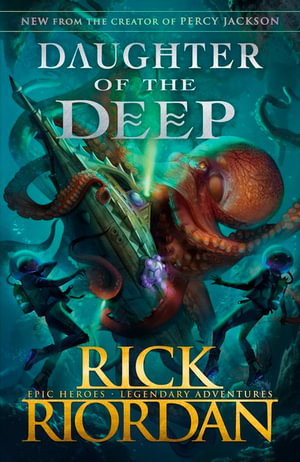
Ana Dakkar’s family are part of the fabric of the Harding-Pencraft Academy, an institution focused on training new generations of oceanographers and explorers, with additional defensive capabilities. Ana, as the youngest child in her family is still working out her place and purpose in this phenomenal school with its long history. She becomes a witness to a devastating attack on the school and then is thrust into the leadership of her fellow surviving classmates as they discover the long-lost vessel, the Nautilus, made famous in Jules Verne’s incredible tale of the 20000 Leagues under the sea. The rise to leadership comes with great responsibility and she must overcome her own insecurities and her own personal grief to work out what to do. The setting includes underwater action and creatures to love and fear. Ana also must rely on and encourage her classmates and friends as they reveal their talents in the technology and oceanography field. The growth in them all and the power of friendship over personal glory is revealed as the excitement and tension ramps up.
Rick Riordan really knows how to write a compelling adventure and woven within this amazing story are snippets and insights of the classic detail of Jules Verne’s original story. Even though I have not read the original (apologies to lovers of Verne’s writing), this reimagining in a modern and technology-rich world has all the right ingredients to be loved and cherished by a new generation of readers. There are moments of humour mingled amongst the high tension and action, and many characters to love. I can envisage that this book will not stay long on our library shelves and will be avidly peer-recommended amongst young readers.
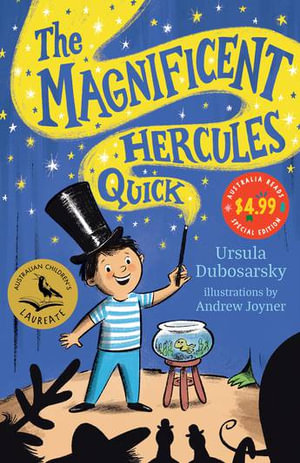
The Magnificent Hercules Quick by Ursula Dubosarsky. Illus. by Andrew Joyner
Allen & Unwin, 2021. ISBN: 9781761065712. (Age:5+) Highly recommended.
This story written for Australia Reads (and so costs a mere $4.99) is about a boy who does a series of odd jobs for his most unusual neighbours, to earn money to buy a magic kit.
Hercules Quick who lives with his Aunt Alligator and her friend, Sylvie the tadpole, dreams of being a magnificent magician. Supported by his two friends, he offers odd jobs to his neighbours, and unsurprisingly his neighbours need his help. He does a range of things for them all: he helps Professor Calamari whose eight arms and lies just are not enough to do all he wants, does a spring-clean for Queen Claude, even though it is the wrong season and venturing into her dark and gloomy basement apartment requires all his determination, helps the Elk family upstairs going on a picnic while second-cousin-twice-removed stays at home to have a rendezvous.
Need something done? Ask Hercules Quick. Only ten cents!
Each job well done helps fill his sock and eventually he is able to buy his kit of magic tricks.
A hilarious story about a not so ordinary boy who does a series of odd jobs for his group of eccentric neighbours, The Magnificent Hercules Quick is a wonderful sequel to Ask Hercules Quick, and readers will look forward to his next appearance.
Sydney born author Ursula Dubosarsky always wanted to be a writer and now has over 60 books for children and young adults, published around the world. She has won awards, including the NSW Premier's Literary Award a record five times, and nominated for both the Hans Christian Andersen Award and the Astrid Lindgren Memorial Prize. Ursula Dubosarsky is the current Australian Children's Laureate.?Acclaimed Adelaide illustrator Andrew Joyner has illustrated many of Ursula Dubosarsky's picture books. Short-listed for many awards, including the CBCA Awards and children's choice awards, Andrew's books have been published in more than twenty-five countries.
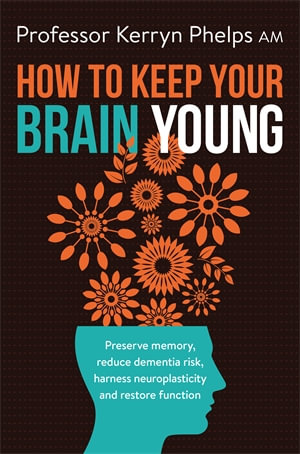
How to keep your brain young by Professor Kerryn Phelps
Macmillan, 2021. ISBN: 9781760781774.
Professor Kerryn Phelps AM shares how to preserve memory, reduce dementia risk, harness neuroplasticity and restore brain function in this thoroughly researched and incredibly detailed book on how to keep your brain young. It covers aspects from brain basics to what can affect your brain, to what you can do to support your brain and then a plan for keeping your brain young. Kerryn Phelps does her best to keep the science simple for those reading the book, while still keeping it interesting. Looking at the lifespan of the brain from conception (even pre-conception) through to end of life stages, this book has information on all age levels, including things to watch out for in certain ages. With over 300 pages of research, tips and anecdotes, this book is great for those who want to learn about dementia and other brain related medical issues.
As one of Australia's most trusted GPs, Kerryn Phelps has written an immensely useful book regarding care for, and maintenance of, a healthy brain. Full of suggestions relating to physical health as well as mental health, there are countless things we can do to assist ourselves in keeping our brain young. Eating healthy, exercising, learning new skills, getting adequate sleep and healthy relationships are all key aspects of assisting your brain stay young. Reading the book will give even more suggestions, as well as things to look out for and avoid (illicit drugs, excessive use of alcohol, smoking and so on). One of the chapters even discusses the benefits of having pets, and as I've had pets my whole life, I recognised the benefits that were mentioned.
Themes Science, Health and Nutrition, Brain, Medical Science, Dementia, Neuroplasticity.
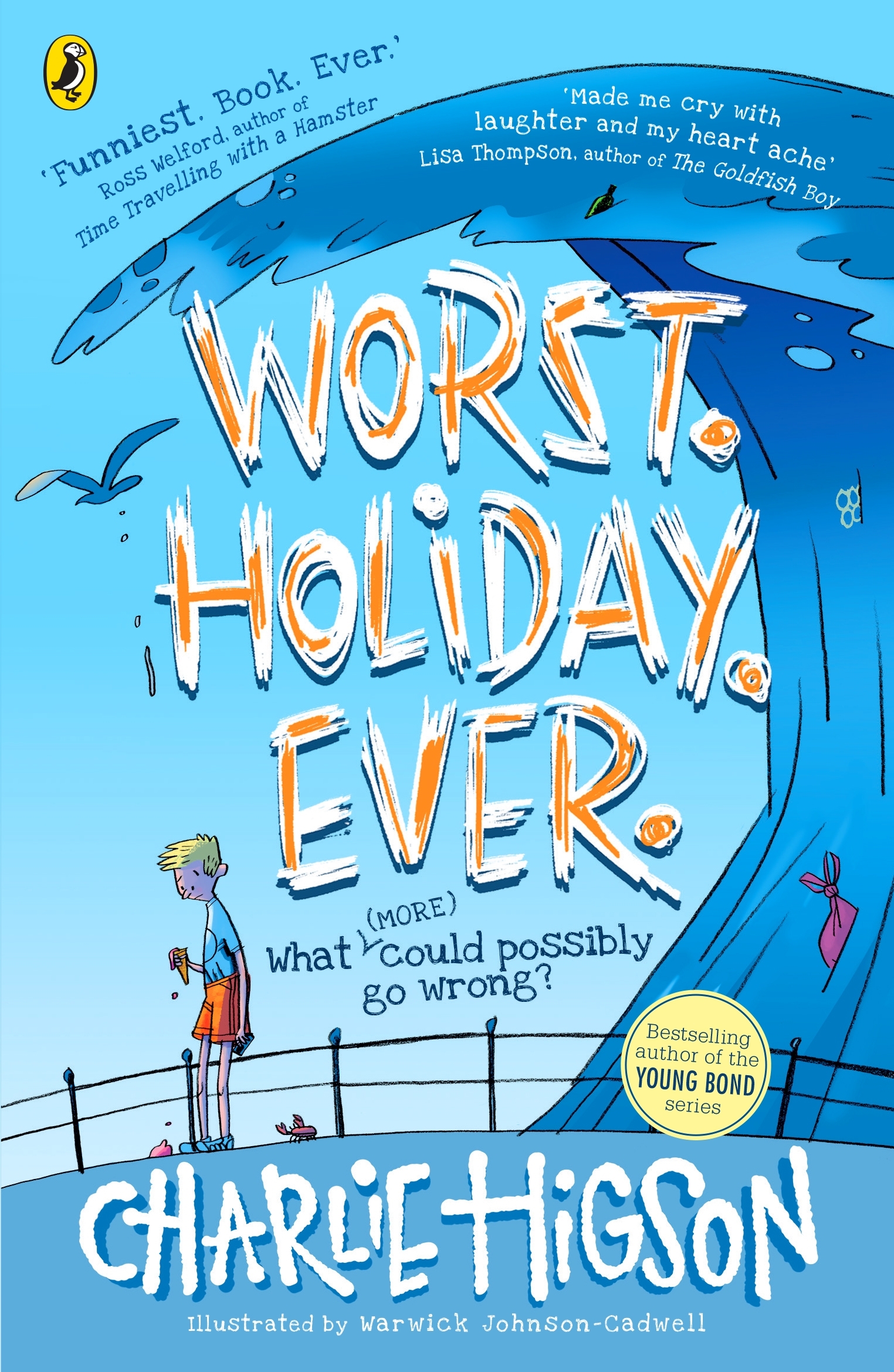
A hilarious new book by bestselling author Charlie Higson.
Do you remember the first couple of sleepovers or camp you did as a kid? The fear and new feelings of being away from home, family and your comfort zone. Well, Stan a twelve-year-old boy who is a shy, sheltered kid and worrier is off on holiday to Italy with his fifth best friend Felix and Felix’s family who are a bunch of strangers. Oh! What could go wrong?
We meet Stan at the airport and he introduces us to his Duck It List while on holidays (opposite of bucket list), a list of things not to do. And you can probably guess ….. he ends up doing more than half of the things on the list. His mum is also a list maker.
At the airport Stan meets an older couple, Simon and Emma, who he boards the plane with to Italy (total strangers to him but part of Felix’s family). And his adventure begins.
Will Stan let loose and have fun? Or will it be his worst holiday ever?
Written in a first person narrative we see the world in Stan’s eyes. He is a great observer so we learn lots about the kids and adults he spends his holiday with. Anything can happen on holiday. New foods, spontaneous conversations and adventures. There’s lots of laugh-out-loud scenes, moments of frustration and agony as we follow his holiday adventure. He mixes with different people and discovers not everyone is perfect or has a perfect family. At the same time Stan is also concerned about his dad, who back at home had been admitted to hospital with a heart condition and his mum won’t give him details.
I enjoyed reading Worst. Holiday. Ever. And think it’s a great book to read if you suffer anxiety in doing new things. Stan discovers on his holiday that he can overcome some of his fears without really trying and finds out that he enjoys the things he has not tried to do before due to fear.
Also, loved the cover and illustrations by Warwick Johnson-Cadwell throughout the book.
If you like a good laugh, this is a great book to read.
Themes Personal and social, Holiday adventure, Humour.
Yeap, definitely a new fan of Matthew Reilly. I will be missing in action over the next couple of months reading more of his books. Matthew Reilly is the internationally bestselling author of the Scarecrow series, the Jack West series. His books are published in over 20 languages with worldwide sales of over 7 million copies.
Big bonus that he is an Aussie.
The final book in Matthew Reilly’s, Jack West Jr. series starts with a bang! It picks up where The Two Lost Mountains book finishes. Don’t let this scare you from reading due to being book 7. I have never read any of the series and quite enjoyed reading this book on its own. A few times I scratched my head thinking what has happened in previous books but the story was easy to follow and hard to put down because I wanted to know what was going to happen next. When I finish this review I’m definitely going to start the series from the start.
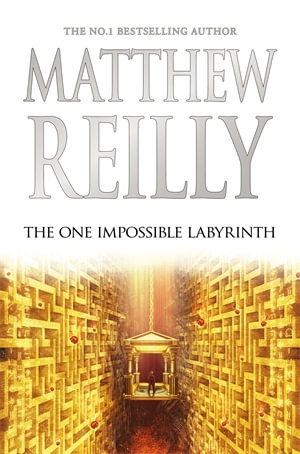
The One Impossible Labyrinth starts with Jack (a humble Aussie Hero) and his crew racing down a heavily booby-trapped tunnel when a small red figure falls from the ceiling and starts trying to bite his face off. Oh what a way to start a book, straight into action that doesn’t stop till the end. Jack and his crew are on a mission to save the universe from The Omega Effect which is only three days away. Just like in Indiana Jones movies, Jack and his crew are running behind in the mission with another four teams in front of them chasing the same goal while leaving booby traps and hurdles behind to stop Jack. Yes, this book reminded me of Indy and also another favourite series of mine Dan Brown’s, Robert Longdon series with The Da Vinci Code. Action packed adventure involving history and mythology trying to solve puzzles to get to the prize and saving the world.
Jack’s team is split into several groups with their own adventure around the world on the same mission. This book is mainly focused on Jack with the other stories mentioned in-between.
I can’t say too much about the story line because of spoilers but I love how Reilly managed to use real today places and historical ones and also putting a spin on mythology as we know it to come up with amazing story to saving the world from THE OMEGA EFFECT, while also using the importance of family and friends of all kinds.
If you love good against evil, heart stopping moments, tense battles, epic puzzles to solve and way over the top action this is definitely the book or series to read. And definitely for adults or mature readers.
Themes Action, History, Mythology.
Maria Komninos
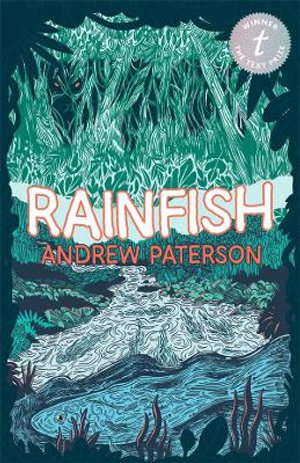
Rainfish by Andrew Paterson
Text, 2021. ISBN: 9781922330963. (Age:14+)
Aaron lives on ‘struggle street’ in a small town in far north Queensland with his mother and older brother Connor. His father is an absent presence with no connection to the family. At the turning point in life when moving from Primary to High School, Aaron passively decides to join an older boy in a theft from the local church. From this point on Aaron is hounded by the guilt of his actions (or his inaction) and is unable to escape the creeping company of this cloud on his life. Appearing in his mind as a black panther, Aaron continues through the summer of transition constantly struggling with what to do next and living with the fear of being found out. At the same time, his mother starts a new relationship with Pete, Aaron’s friendships and relationship with Connor are stretched and the small community where he lives is inundated with a phenomenal flood event. Going fishing and hooking the Mudcod, otherwise known as the Rainfish, prior to the flood also raises concerns for Aaron as he considers whether his actions caused the inundation.
This is a poignant story inside the worries and concerns of the naive young lad and the environment of the far northern tropical community is almost a character of imposing nature as the story progresses. Although the metaphor of the panther is understandable as Aaron deals with guilt, I suspect that a crocodile would have made more sense as the menacing embodiment of guilt in the Australian tropical environment. There are moments when you want Aaron to be revealed as a participant in the crime and punished accordingly for the theft and his lies and deception, but then Andrew Paterson has also created sympathy for the young boy who is quietly battling the changes in his life, the powerlessness of youth and the struggles of identity in a poor isolated community. The discussion about the use of the ‘F’ word amongst Aaron’s young acquaintances creates a blot in my mind about this book, I understand its inclusion, but I wish it wasn’t necessary. This is a somewhat pessimistic story, and the conclusion is anti-climactic and with only the merest glimmer of hope in the mire of hopelessness and yet it is compelling in a dark and sad way – a lot like a swampy mire has its own intrigue and mystery. I am not sure if this is a story to recommend to a young audience, I suspect that the metaphorical depictions could best be recognised and appreciated by older readers, even though the main character is quite young.
Editor's note: Rainfish won the 2020 Text Prize. Teacher's notes are available.
Themes Guilt, Fear, Family, Boyhood.
Carolyn Hull
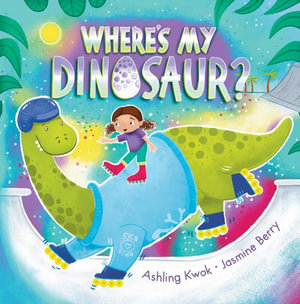
Where's my dinosaur? by Ashley Kwok and Jasmine Berry
‘There’s something growing in Mummy’s tummy. Daddy says it’s my new playmate.’ However, if you are a young person who loves dinosaurs then the new playmate is certain to be one. Excited imagining continues for what else the new playmate might be – a puppy? Maybe a chick or a bunny? A range of hidden dinosaurs on each page add to the interest.
The young girl even has a name chosen for her dinosaur playmate. The illustrations and colour are lively and add humour complementing the text.
But the new addition to the family is not a dinosaur. It’s not a bear or an elephant. A very funny, wide mouth opened, exclamation ‘Where’s my dinosaur?’ is sure to bring a smile.
The ending is wonderfully constructed, with the adjustments and change of a new sibling thoughtfully presented.
Cate Telfer
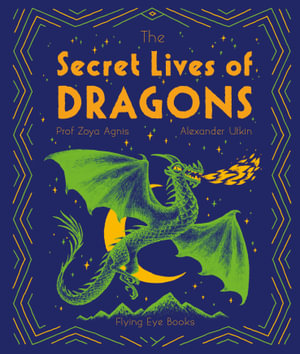
The secret lives of dragons by Prof Zoya Agnis and Alexander Utkin
"Deep in the cold mountains of a distant land, there was once a magnificent kingdom of dragons. The songs of dragon families echoed across its peaks, and priceless treasures were hoarded in its caves. But what happened to this kingdom?"
From stories like The Paper Bag Princess to the drama of Smaug's arrival in the opening scenes of The Hobbit, both before and beyond, dragons have been a common entry to the world of fantasy for our young readers, sparking the imagination to go on wondrous adventures. For some, just being engrossed in the particular story is enough, but for others, there is a desire to know more and for them, this book is the answer.
It contains everything a curious mind wants to know to become an expert Drackenosopher just like the esteemed author, Zoya Agnis. Through clever illustrations and readily accessible text, they can learn to identify the different dragon families, name the most fearsome dragon slayers, the bravest of Drackenosophy scholars and everything else there is to know about the beautiful dragons that we share our planet with.
About 20 years ago, there was another series of books like this (this series also includes The Secret Lives of Mermaids and The Secret Lives of Unicorns) and it became the perfect vehicle for transitioning young readers into the world of non fiction as we took a topic they were fascinated by and started exploring information books. In fact they came up with the slogan, Fiction = Imagination; Non Fiction = Information, something I have used in many instances since then. This would serve the same purpose.
Whenever I make a storybook cushion or a journal or author kit featuring a dragon, I know I will only have it for a short time, such is the popularity of these fantastic beasts. Adults and children snap them up immediately, such is the fascination with and popularity of this creature. So this is the perfect book to be the centrepiece of a display and promotion featuring fantasy promising to take readers on magical adventures. A must-have if you have fantasy lovers amongst your readers.
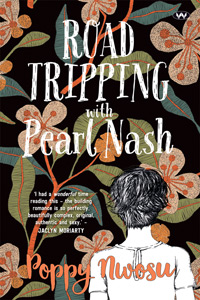
This is the first book by Poppy Nwosu that I have read, and I absolutely loved it! I will be sure to find her other books, Making friends with Alice Dyson and Taking down Evelyn Tait. Pearl Nash is a 17-year-old girl, on a mission to save her friendship with Daisy her best friend for years. Daisy has a boyfriend now and seems to only want Pearl around when its not convenient to be with her boyfriend. She had planned to take a road trip to an end of year party at a beach shack with Daisy but ends up giving Obi Okocha a lift instead – Daisy wants to travel with her boyfriend Lachlan and Obi has been left at the service station, waiting for a lift. Pearl and Obi have not been the best of friends over the years and Pearl is not happy having him as her passenger. However, on a detour to find her grandmother, who is not answering her phone, Pearl and Obi get to know each other.
Nwosu examines some big themes in Road tripping with Pearl Nash, all served up with humour and leaving the reader feeling good as ways to solve problems are gradually revealed. The dynamics of friendship plays an important part in the story as Pearl gradually navigates her way to understanding her feelings about Daisy and her willingness to drop everything to be with her unlikeable boyfriend. Pearl’s family has its troubles too, her father and his brother have not spoken to each other for years, and her grandmother is still missing her grandfather and her home in the country. And Obi is a wonderful character, with his big smile and wise comments, and the racism that he faces is subtly handled as is the growing relationship between the pair.
The countryside plays an integral role in the book. Each chapter is headed with the name of an Australian native plant, some familiar like lilly pilly and some to research like Peninsula guinea flower, and there are descriptions of the bush as Pearl and Obi drive along the isolated highway. The coastal dunes and the beach shack where the end of year party is held will also be familiar to many readers.
This would make an ideal literature circle book or class set with topics that would appeal to teenagers. There are some triggers like underage drinking and parties, but all are handled very well, and the book leaves the reader feeling uplifted and optimistic.
Themes Friendships, Family relations, Racism.
Pat Pledger
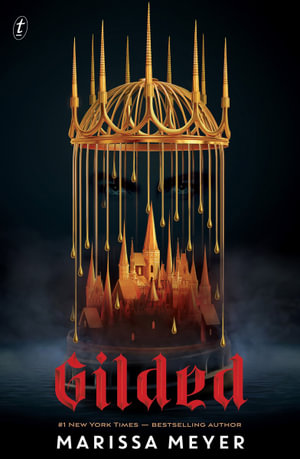
Gilded by Marissa Meyer
Text Publishing, 2021. ISBN: 9781922458292. (Age:14+) Highly recommended.
I am a fan of retellings of fairy tales and Gilded, although 500 pages long, kept me engrossed until the end, and left me wishing that its sequel was available. Serilda is a poor miller’s daughter known for telling incredible stories. When she encounters the evil Erlking on his wild hunt she makes up a story about being able to spin straw into gold and her lies lead her into trouble. The Erlking takes her to his castle and commands her to make the gold. In desperation Serilda summons a boy named Gild to help her and gradually she uncovers some of the secrets of the castle.
This retelling of Rumpelstiltskin is dark and has all the trappings of fairy tales: high towers, fairies, a cruel hunt, dungeons and wraiths. Meyer keeps the story moving along at an engrossing pace while ensuring that the characters that she peoples Gilded with are easy to relate to. The young children that Serilda tells stories to are particularly relatable, and the reader is left wondering about Serilda’s mother and her disappearance. Serilda is clever and innovative, using her skill as a storyteller to get her out of trouble. Gild as befits a ghost like figure is less clearly drawn and has the reader asking questions about his origins and abilities and the ancient curse that has been put upon him.
The unexpected twists and turns, some heart-breaking moments and secrets that are gradually revealed, all will keep the reader engrossed until the cliff-hanger ending that will ensure that the sequel is picked up. Detailed teacher’s notes are available.
Themes Fairy tale retellings, Fantasy, Evil.
Pat Pledger
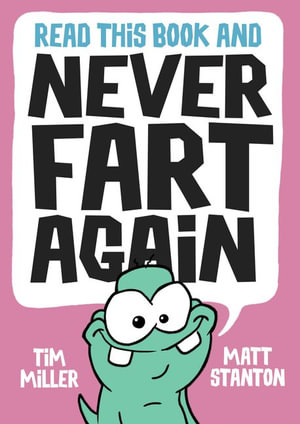
Read this book and never fart again by Tim Miller and Matt Stanton
ABC Books, 2021. ISBN: 9780733339042. (Age:5-8)
Fans of the Fart Monster series of books will love this latest picture book installment. This DIY guide to ending noisy, stinky farting is structured as a conversation between Ben and his Fart Monster friend. Most of the pages feature no background illustration and just Ben and Fart Monster and speech bubble dialogue. This makes the book perfect for independent reading by those children reading the Fart Monster short chapter books. It also works well as a read aloud though, with beautifully written and humourous dialogue that will have everyone chuckling. Fart Monster may not be into curing his own farts, but he is very knowledgable on the subject and has a magical book: Farts Anatomy: How to cure the common fart. Chapter One involves squeezing your cheeks together, Chapter two involves sticky taping the rear and Chapter Three involes hula hooping while wearing a pineapple hat ('the tummy twisting confuses the fart and it forgets where your bottom is.') The names given to farts will have lovers of toilet humour in stitches (room clearer, tootin' trumpet, under-thunders) and the ending will leave a smile: 'YOU CAN'T STOP A FART!!!' says Fart Monster as he rolls around on the ground guffawing with laughter.
Like the other Fart Monster books this is ridiculous and sometimes disgusting but is sure to entertain and amuse.
Themes Bodies, Humourous stories.
Nicole Nelson
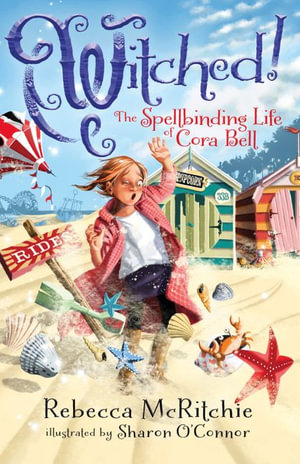
Witched: The Spellbinding Life of Cora Bell by Rebecca McRitchie
In Jinxed! The Curious Curse of Cora Bell, the first in this series, we met eleven-year-old Cora Bell who is a foundling with no memory prior to her life with the elderly Dot and her cat Scratch. They live in a room hidden behind a wall in the crowded, industrial city of Urt, where everyone looks out for themselves, and their survival is dependent on scavenging and trading such as rare and exotic things - apple seeds, silver forks, shoe polish amidst fierce competition. Life takes a terrifying turn for Cora when she finds a few words scribbled on a piece of paper. She takes it home and says the words aloud. Suddenly, two plump, hairy fairies named Tick and Tock crash land in her path to warn her that she is in terrible danger. Cora has unknowingly summoned a sinister creature known as a Jinx. Jinxes eat magical beings and once they have a scent, they never forget it. Cora is thrown headfirst into a world filled with magic, necromancers, shape-shifters, enchantresses, fairies, nightwalkers, witches and giants as her home is destroyed, her family goes missing and she's pursued by the menacing and powerful Jinx.
The second episode, Havoc! The Untold Magic of Cora Bell continued the story and now this is the final in the series. Cora is racing against time. With her beloved guardian, Dot, badly injured, she must face fearsome werewolves, gross beetle worms and a vengeful warlock in order to save her. But as questions about her long-lost parents arise, Cora and her fairy friends begin a search for the one person who might hold all the answers. The one person who disappeared the same night Cora's parents did ...
Will Cora finally discover the truth about her family? Or will the evil syphon return to finish what he started, and destroy Cora once and for all?
Miss 10, a capable reader (although not as avid as her older sister) loves this series because she sees herself as Cora with hidden magical powers and she becomes fully immersed in the story. It was one of the first of these more 'grown up' novels she tackled alone and while she will be thrilled to have the final in her hands, she will also be sad to know it's the end of something that has carried her through the tricky, long days of lockdown boredom. Nevertheless, it has really helped her develop her independent reading skills as she became so engrossed in it and she is ready for more. IMO, that a story is endorsed so whole-heartedly by its intended audience is the best review and so this is a series that has a place in any library collection.