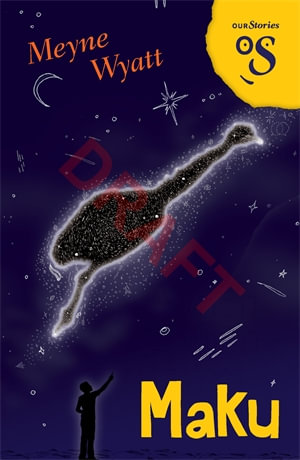
Pan Macmillan, 2022. ISBN: 9781760987756. (Age:5-8) Recommended.
Our Stories is a new Australian chapter book series for early readers. Written by various authors and edited by Randa Abdel-Fattah, they set out to tell stories about diversity, anti-racism and inclusion. They are stories written and illustrated by diverse Australians about children living on First Nations lands, or as Abdel-Fattah herself says 'stories to help kids accept each other. And themselves'. Other titles include When Granny Came to Stay by Alice Pung and the yet to be published 29 Things You Didn't Know About Me by Solli Raphael. The series is characterised by large, spaced-out text with bold monochrome illustrations.
This title, Maku, written by performer, writer and director Meyne Wyatt, tells the story of a young boy named Maku who loves watching movies and going bush with his nan and pop. His outback adventures with them are made even more special because he doesn't live with his family (it isn't explicit but the story implies he is living with a foster family). Told in the third person, we are told that Maku has moved around a lot and gone to lots of schools. When the kids at his new school tease him about his name (which means witchetty grub) and his teacher challenges him to come up with his own idea for a movie, he thinks of a way to create a superhero persona for himself, just like in his favourite movies. On his weekend in the bush with his nan and pop, who work as Park Rangers, he enjoys listening to the stories about their conservation work, as well as Dreaming stories. They also talk with him about being part of the Stolen Generation. Maku uses all of these understandings and conversations within his movie outline, which has a main theme of overcoming adversity, and shares it proudly with the class.
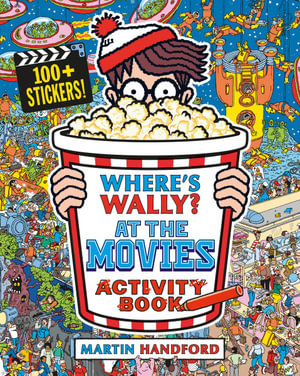
In this latest Where’s Wally? release young children can join Wally as he goes behind the scenes at the movies. The activities begin with an introduction written in the traditional serve of popcorn container where the reader is encouraged to find the ‘Wally Spotter Award’ presented in the shape of an Oscar. Throughout the book there is the opportunity to find broken items, search for Wenda, detailed colouring in pages, work out who the close up is of, find tiny pictures in the reels of film, write your own movie clapper boards, match silhouettes to each scene with a friend, complete a wobbly word ladder, do a red carpet recall test, create your own cool characters, match the script to the scene, as well as over 100 hundred stickers to use. There is so much to do in this book it will keep children entertained for hours. It would be a perfect gift for ‘Where’s Wally?’ fans of all ages.
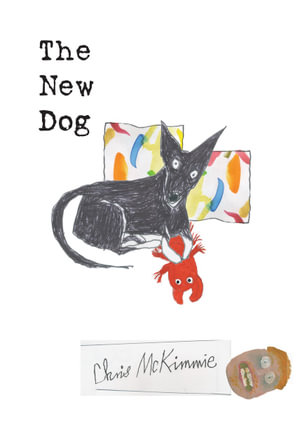
Ford Street Publishing, 2022. ISBN: 9781922696045. (Age:3+) Highly recommended.
McKimmie’s books are always such a treat. A kaleidoscope of fascinating images, created using a variety of media, each page prompts the eyes and thought processes with highly original dazzle. I love working out what has been used on each page: is it collage, pen and ink, biro, material, water colour or pencil, while sometimes a child’s hand has helped. The new dog on the front cover stares out at the reader with a toy lobster under its front paws. He is introducing himself to the reader. Over the page he tells us that his lobster is one of two left after Maisie gave him seven when he first arrived at the house.
Teddy has gone and left behind a range of dog necessities to make him feel welcome, including the water and food bowls, cushions to sit upon, and a box of stuff with the toys Maisie brought him. He loves to dress up and chew things, throw pot plants into the air, and when he escapes into the yard, he loves to dig. After that comes his least favourite thing, having a bath, although the next page reveals something many dogs hate even more: thunder and lightning.
Each page the new dog reveals a little more of himself, the illustrations giving a slightly different picture of the dog and his place in his new home. The strangely happy look we see on the front cover is belied by his throwing, digging and chewing, barking and vomiting. We see him learning to live with a new family, a situation many children will recall in their own homes.
But when he shows his certificate for being good, readers will laugh out loud at the irony of a certificate that does not reveal what he is really like.
One day he eats a whole loaf of bread, wrapper and all that he finds in the kitchen. The next day he is very sick and stays in bed all day.
He loves barking, particularly at birds and possums, so we know that this must keep everyone awake all day and night. He loves books but we see from the illustrations that this means their destruction. And thankfully he loves a pocket of sunshine in the back yard, where he can rest.
This loving story of a new dog in the family will thrill young readers, as they see the contrast between the dog’s image of himself and that of the family. Kids will laugh out loud at the comparison, knowing from their own experiences how apt these images are.
And just when the story finishes, over the page is a list of the dog’s behaviours to show the vet. Another source of mirth and hilarity for the audience.
Themes Dogs, Behaviour, Point of view, Acceptance.
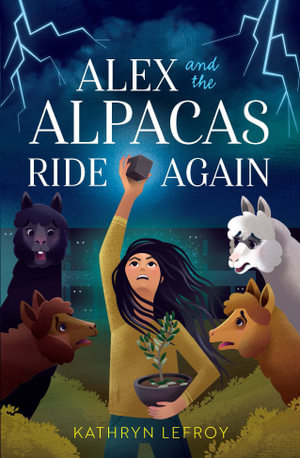
Alex and the Alpacas Ride Again is the second book in the exciting Alex and the Alpacas series, written by Kathryn Lefroy. Once again, the story will keep you captivated until the very last page. This novel will appeal to readers who loves adventure, ancient mythology and magic, not to mention also being entertained by a few talking alpacas.
Protagonist, Alex, is an 11-year-old girl who lives in Melbourne. She thought all her adventures and excitement had ended when Kiala, the ancient spirit of destruction had previously been trapped by her binding ritual. Unfortunately, it appears that Kiala has become too powerful for the small tree she is bound in and is looking like she may cause more havoc and mayhem. Bringing four talking alpacas across on the ferry from Tasmania and the small tree that binds Kiala is not an easy feat. Now Alex must work out how to prevent the destructive ancient spirit being released, in order to protect the world. Using creativity and ingenuity, Alex works with her alpaca friends to trap the ancient spirit once and for all. But will Alex be able to use her Fortieth Sun powers again or will the task be too much for her? And when Kaila’s twin sister Resila joins her, how can they possibly overcome two dominant and determined spirits from the past?
Suspenseful, captivating and enthralling!
Kathryn Lefroy has written another wonderful sequel in the Alex and the Alpacas series, for those lovers of fantasy, adventure and action. Alex and the Alpacas ride again is filled with vivid text to make for a captivating and easy read; by creating clear imagery for the audience. As you turn each page you feel as if you are actually there on the adventure with Alex and her alpacas! A definite good read, and one that won’t disappoint… especially for all those who love an exciting escapade! Teacher's notes and a teaching activity are available from the publisher.
Themes Adventure, Ancient civilisation, Fantasy, Friendship, Problem Solving.
Michelle O'Connell
Amazing activists who are changing our world by Rebecca Schiller and Sophie Beer
Walker Books, 2022. ISBN: 9781406397024.
In the USA school students are walking out of school to protest the lack of gun control laws; in Australia, they walked out of school in 2021 to protest the lack of action on climate change... The names of Greta Thunberg, Malala Yousafzai, and other young activists are as well-known to them as those of their favourite singers and movie stars as the mantle of protest moves from its traditional university setting to the classroom.
But who are they inspired by? On whose shoulders do they stand?
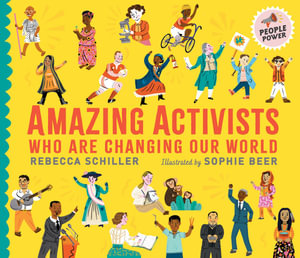
Defining an activist as one who uses their knowledge, skills and energy to make the world a better place by protecting human rights, ending prejudice and inequality and protecting the planet from harmful human activities so all its creatures are safe, this book introduces young readers to 20 people who have made a significant contribution to changing the world - some names familiar, others not-so - including Sonita Alizdeh; Rachel Carson; Favio Chavez; Mahatma Gandhi; Jane Goodall; Helen Keller; Martin Luther King Jr; Nelson Mandela; Wangari Maathai; Aditya Mukarji; Emmeline Pankhurst; Autumn Peltier; Boyan Slat; Gareth Thomas; Harriet Tubman; William Wilberforce; Ai Weiwei Emmanuel Ofosu Yeboah as well as both Yousafzai and Thunberg.
Each person has a double-page spread that includes an outline of what they have achieved, the core motivation for their actions, the particular powers that they employed, as well as a significant quote to inspire the readers to continue their work. There is also an activity suggested so that this can be done so the reader begins to realise that no one is too small to make a difference. For example, they are encouraged to build their public speaking powers so when they have something important to say they can speak out with confidence as Mahatma Gandhi did, or perhaps create something that will solve a problem as Boyan Slat did when he was confronted with an ocean of plastic rather than marine creatures on his first scuba diving trip.
Conservative, right-wing, middle-aged men in suits (and those who follow them) condemned those children who left their classrooms to protest - they should have stayed there to study and learn - yet it could be strongly argued that those same children were actually putting their learning into practice, determined to make the world a better place for themselves and others, because "there is more to life than increasing its speed" as Gandhi said. By introducing our students to those who have gone before, and those who are already forging a new path, through books such as this, Children Who Changed the World, and others, perhaps we can plant the seeds that will grow the future. Encourage each to "dream with their eyes open."
Barbara Braxton
Group hug! by Andy Fackrell
Ford Street Publishing, 2022. ISBN: 9781922696007. (Age:4+) Highly recommended.
While reading this excellent book I had Jennifer Cossins book, 101 Collective nouns (2015) on my desk as well. The two make a wonderful pair of resources and I could see many applications in the classroom.
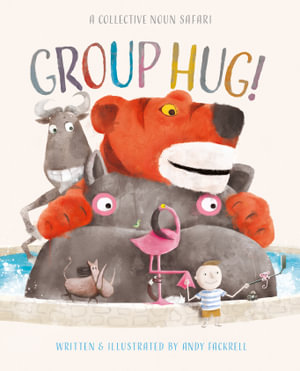
Group hug shows the collective noun for just eight of the world’s creatures, most endangered or at least vulnerable. Each quartet of pages begins with two rhyming lines that ask a question, then turning the page the answer is given, again in rhyme pertaining to the animal the noun relates to. On one page a young boy introduces the question thus
‘Salamat, my Sumatran star Why in the wild do you roam so far?’ On the door to his cage is a map of where he roams and the label of Tiger.'
Over the page four lines
‘Whatever soothes the soul is good, its just too crowded in the ‘hood. Thank you, Wilbur, for letting us speak, our tiger group is called a streak.’
Each of the verses gives information about the animal’s habitat which will intrigue the reader.
The rhymes are simple enough to have the children learn some to repeat them, predicting the last word of each line, and saying it with the reader. They will be encouraged to try out the verse format for themselves, thinking of other endangered animals they could research.
The vivacious illustrations were executed with HB pencil and Photoshop watercolour brushes, giving a bold brightly coloured series of pages for each animal. All readers will be intrigued and informed as they read the pages. And astounded at some of the words that show a group of animals. A group of flamingoes is a flamboyance, while a group of Sumatran tigers is a streak. Young readers will have fun working out just why that particular word is used to show a collection. Teacher's notes are available.
Themes Animals, Collective nouns, Word play, Verse, Humour.
Fran Knight
Water by Catherine Barr and Christiane Engel
Otter-Berry, 2022. ISBN: 9781913074463.
Water is life! Freshwater bubbles, flows and floods with the most wonderful life on Earth - and all of us rely on it to stay alive. Yet, despite about 71 percent of the Earth's surface being water-covered, the oceans hold about 96.5 percent of all Earth's water, freshwater is becoming increasingly rare because of pollution and climate change. Although the recent rains and floods in eastern Australia might suggest otherwise, it is becoming more and more difficult for people and animals to find the clean freshwater they need to survive.
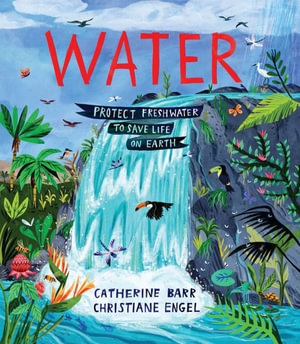
This book tells the story of freshwater around the world including the history of water, how the water cycle works, the different kinds of water and the amazing variety of wildlife that freshwater is home to. It investigates what happens to water because of climate change and global heating; the importance of clean water for health; the worldwide problem of water pollution and the devastating impact of water shortage on children's lives and education. Using a picture book presentation with accessible text and lively illustrations, this is designed to introduce younger readers to the need to be more thoughtful about their water use and perhaps instil lifelong habits early.
With its subtitle Protect Freshwater to Save Life on Earth, the reader is challenged to become more aware of this precious, essential resource and to take action, to use water wisely and protect freshwater to save our planet. Like so many things, thinking locally and acting personally can have a huge impact globally if we all collaborate and co-operate.
Barbara Braxton
Stardiving by Andrew Plant
Ford Street Publishing, 2022. ISBN: 9781922696021. (Age:4+) Highly recommended.
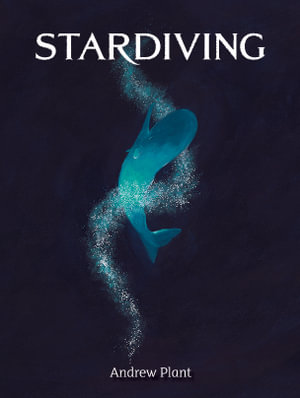
The image on the front cover, that of a whale surrounded by bubbles in the deep black ocean will impel readers to turn the pages of this wonderful story of finding stars where you least expect them. Fluke, the young sperm whale listens to the dolphins as they tumble and turn over the pod of whales in the ocean. They tell Fluke to come and see the sky, and he looks up and can see the sun. But this is not good enough for the dolphins who tell him he could see the stars. That night Fluke lies near the surface of the water waiting to see stars, but clouds blurr his view. The old bull whale, Cachalot questions his desire to see stars, saying he is not a dolphin, but must be himself. He tells him to dive and dive, and in doing so he dives to the deep black of the ocean and sees stars. The glimmer of the creatures at the bottom of the ocean is simply wonderful. Fluke has come to see that he can see stars anytime, he simply needs to look in the right place.
A mixture of acrylic paints and watercolour pencils and pens were used to create the stunning images in this book. The deep blues and blacks of the ocean are mesmerising, the contrast between the seas and deep oceans captivating as Plant uses his talents to perfection. The shock of the shimmering creatures at the bottom of the ocean will delight younger readers and they will clamour for more information about these animals.
Readers will love learning more about whales and along the way learn about the importance of being yourself.
More about this Melbourne based illustrator can be found here. Teacher's notes are available.
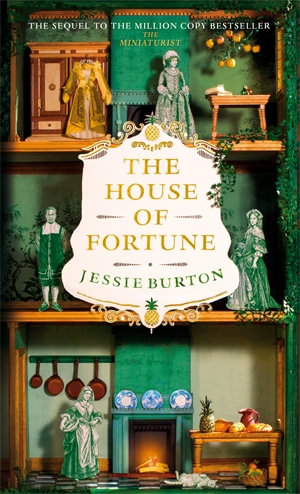
In many ways, this is a puzzling narrative. The world of one young woman in Holland is slowly revealed as her father and aunt prepare her for marriage, a marriage arranged by them with a man who demands a significant amount of money, that in fact this family do not have. Yet the marriage is deemed to be vital, and they must borrow funds to contribute to her marriage.
The world of 1705 is one that is rich with travel, music, drama and social expectations. As the family work towards a suitable marriage for Rebecca Bosman, she discovers that all is not what she would have expected in the social world into which she is plunged. In her discovery of her family secrets, and indeed their poverty, Thea is shocked, yet begins to understand the complexity of their lives and the challenges that they face. Her aunt, Nella, and her father have planned a way to address a marriage with a ‘good’ husband, and all seems to be going according to plan, until there is a discovery that shocks them.
Thea has to adjust to a situation that does not make sense, the trauma that she endures when the secret is revealed, having been kept hidden by her suitor, is one that leaves no room for recovery. Set in the distant past, we are drawn into the world where people’s actions, lives, and behaviour were so defined, with an expectation by the church that all would be done correctly and morally. Her final decision comes as a shock, when we witness her strength of character and determination to live a good life.
It is a companion to an earlier novel The miniaturist, written by Jessie Burton, and would clearly be historically fascinating for readers, as indeed it was for me. This would be suitable for adolescent readers, particularly those who would be intrigued by the social norms and expectations, particularly those imposed on women of that era.
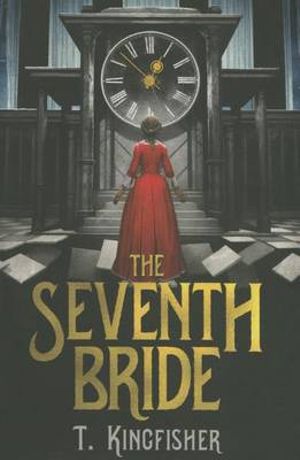
Another of Kingfisher’s inventive fairy tale retellings, The seventh bride is a new take on the classic tale, Bluebeard. Rhea is the daughter of a miller and is not interested in love or marriage so when Lord Crevan proposes she is surprised. She does not like Lord Crevan but is pressured by her parents and aunt to accept his offer. She cannot turn him down because there may be awful consequences for the family and they could lose the mill and although everyone knows there is something disturbing about the lord, Rhea goes to his enchanted castle. There she finds six previous wives all imprisoned in horrible ways. She is determined not to marry him and when he gives her magical tasks to perform, she knows she must use everything at her disposal to escape the castle and help the other wives.
Fans of fairy tale retellings will love Rhea, her fierce determination and her compassion and will be intrigued by the clever ways she manages to perform the tasks that Lord Crevan gives her. There are some moments of real horror to keep the reader breathless and others of friendship between the wives that are very moving.
Kingfisher always writes original and engrossing stories and fans like me will not be disappointed in The seventh bride and may like to try her book The Wizard's guide to defensive baking or some of Shannon Hale's wonderful retellings of fairy tales like Goose girl and Book of a thousand days.
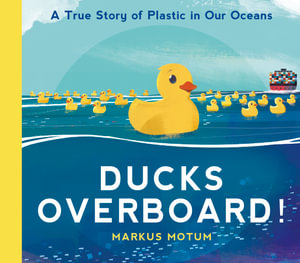
Ducks Overboard! A true story of plstic in our oceans by Markus Motum
Walker Books, 2022. ISBN: 9781529502831.
January, 1992, and far out in the Pacific Ocean in the middle of a ferocious storm, a shipping container slips silently off the deck of a cargo ship and gradually sinks to the bottom of the sea. Unlike many of these containers which sink and remain forever on the seabed, this one has been damaged by the storm and it it goes to its watery grave, it releases its cargo - thousands and thousands of plastic ducks, frogs, turtles and beavers - and they are left to travel the world's seas, taken by wind and current.
Based on true events, this innovative story tracks the journey of one of those 28 000 little ducks as it travels on ocean currents to meet sea life and discovers the rubbish from humans that endangers our oceans., highlighting the growing problem of plastic pollution. Trapped in the vast wasteland that is the Great Pacific Garbage Patch, the little duck thinks it is doomed but another storm frees it and it eventually washes up on a beach where someone is actually doing something to address the problem...
With 40% of plastic that is produced designed for single use only, and an estimated 8 000 000 tonnes of it finding its way into the oceans each year, some scientists are estimating that by 2050 there will be more plastic than fish in the ocean. While recent, and upcoming bans on the sale of single-use plastic items will hopefully contribute to diminishing these statistics, stories like these that bring the problem into the lives of our students so they are aware of it from an early age are essential. As well as explaining how the oceans' currents enable these "plastic islands" to form, there are suggestions to enable individuals to make a difference such as recycling or organising a beach cleanup, but it might also spark discussions about what could be done at the class or school level, such as a toy swap or a Nude Food Week, especially if before-after comparisons are done as part of a maths challenge.
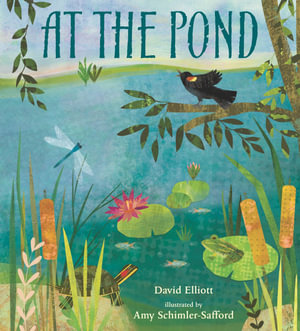
At the Pond by David Elliott and Amy Schimler-Safford
Candlewick Press, 2022. ISBN: 9781536205985.
The red-winged blackbird spreads his tail and sings his hello morning song; he has sung it since the bright and misty world began.
When the soft pink of the dawn sun starts peeking over the pond, a new day has begun for all the animals who live in it and around its watery edges. The friendly duck family, the mysterious water striders, and the busy beaver are a few of the many fascinating and familiar animals included in this glowing poetic tribute to the lively ecosystem of the pond.
Pairing poems with pictures, this is an introduction to the animals and plants that call the pond home, and while they may not all be those that young Australian readers are familiar with, it sets up the opportunity to investigate what a local pond might have and would look like. Do we even call them ponds? Or are they dams and billabongs?
This is another invitation to look more closely at the world around us, especially those parts we tend to take for granted, to extend vocabulary and writing skills to describe it in poetry or depict it in artworks, or if that isn't a strength, create a brief factual description using those included as a model.
Barbara Braxton
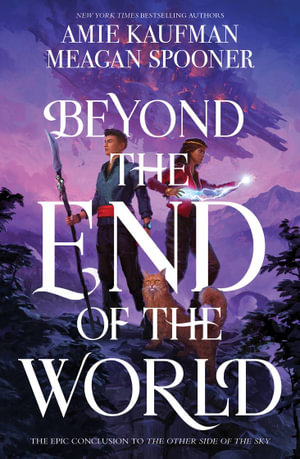
Beyond the end of the world by Amie Kaufman and Meagan Spooner
Allen & Unwin, 2022. ISBN: 9781760529581. (Age:14+) Highly recommended.
This sequel to The other side of the sky brings an end to Kaufman and Spooner’s fantasy duology in a most satisfying way. Continuing directly from the first book, the reader discovers Alciel, the city in the sky, where Nimh has been taken with Inshara. Nimh has lost her memory and Inshara is determined to wrest her power from her. Meanwhile North is determined to find a way to get back to his city in the clouds and rescue Nimh.
The story is told in two voices, that of Nimh and North, with brief passages from other characters scattered throughout the book. From Nimh we learn about the sky city, the Queen, the engineering, and way of life. From North the culture and clashes, power plays and the Fisher King are all described vividly. This dual narration ensures that the worlds of Alciel and Below, the beliefs and main characters, twists and plots all come alive as Nimh, and North try their best to understand what is going on and to save their worlds.
Kaufman and Spooner are talented story tellers who are masters of action driven plots and have a flair for writing believable scenarios that keep the reader glued to the page. The romance between Nimh and North is beautifully devised as well.
The authors have managed to blend what initially reads as a fantasy in with science fiction and it works really well to make a most satisfying conclusion. Readers who enjoy other books by these two authors are sure to enjoy this duology and may like to try books by Laini Taylor and Jay Kristoff.
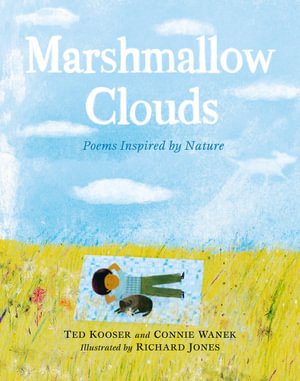
Marshmallow clouds: Poems inspired by nature by Ted Kooser & Connie Wanek
Walker Books, 2022. ISBN: 9781529507072.
There have been a number of books over the last couple of years like that have encouraged young readers to explore their immediate environment with critical, sensitive eyes to discover the detail hiding in the big picture.
But what if, as well as their senses and science brain, they also took their imagination out to play? And what they saw really did become a clown on the top of the hill, up on one leg, juggling a pie, rather than just a winter tree with a long-vacated squirrel's nest on the end of a branch?
The subtitle of the US version of this book by former US poet laureate Ted Kooser and and poet Connie Wanek is "Two Poets at Play Among Figures of Speech" and while a bit dull, nevertheless, it sums up this stunning collection of blank verse poems perfectly. By letting their imaginations out to play, and using similes and metaphors and other literary devices beloved of English teachers, a thunderstorm becomes something that has become lost in the dark of the house, not wanting to wake us but crashing into walls as they stumble about, occasionally striking a match to see their way; tadpoles become commas making them "the liveliest of all punctuation;" and a book is transformed into a sandwich with all sorts of goodness between its folded pitta covers!
Organized by the elements of Fire, Water, Air and Earth and accompanied by distinctive, sparse illustrations that interpret the words but which don't interfere with the picture created by the reader this is an intriguing anthology to dip and delve into, for letting the imagination roam free, wander, and stay healthy. So while we understand that a fire has no stomach, is "never full, never satisfied" and thus must never be set free, it is an entirely different story for our imaginations.
A bedtime story in verse this charming tale of a frightened moose will give hope to all who fear things that go bump in the night. Moose settles down in the snow for his night time sleep. Surrounded by the cold winter, other animals forage for their food in the snow drifts. But something disturbs moose and he wakes, a little disoriented and frightened. He spies a pack of wolves in the hill nearby, he imagines a creature lurking in the forest, a barn owl screeches over his head. He sees the bush quivering and investigating scares a rabbit. He enters a dark cave only to find a sleeping bear. He runs back to his spot in the forest and there finds a little mouse just as fearful as moose. Together they find peace and sleep through the night with each other as company.
A charming and uplifting tale of companionship, of friendship, of the power of togetherness to overcome fears and moments of anxiety, this story will have children empathising with the fearful moose and feeling relaxed as he finds a friend to share the night with.
Soft illustrations cover each page, giving a good impression of the environment in which Moose lives, and also radiating with the cold of the background. Kids will shiver reading the story and point out the many aspects which make Moose’s habitat cold. Many children will marvel at the flora and fauna spotted in the pages, adding to their knowledge of the place where Moose lives.