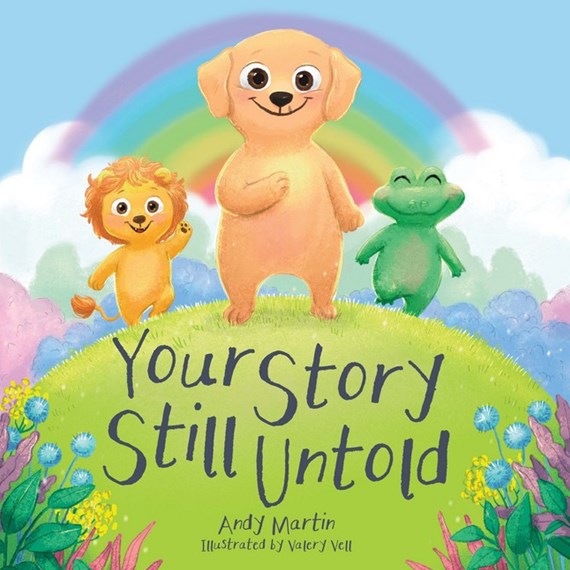
Your story still untold by Andy Martin. Illus. by Valery Vell
Little Steps, 2022. ISBN: 9781922358509. (Age:3-6)
This first children's book by Andy Martin is inspired by his son Archie who was born with a bilateral cleft lip and palate. The main character in the book, a dog, has a visible scar above his upper lip. As the blub says this is a uplifting book that aims to inspire children 'that they can turn to the love and comfort of their loved ones to support them through life as their story unfolds'.
Directed at the child listener the text begins, 'Life is precious, my little one, and your story's still to unfold. I hope these lines can help you through, the moments when it's told'. It talks about how things will sometimes be easy and happy and sometimes they won't, using weather as a visual analogy (sun-storm-rainbow). It also talks about how sometimes we feel disappointed in ourselves or what we can't do but that we need to take time out to appreciate the unique skills we bring and 'strive to be the best person you can be'. Then it goes on to gives some 'dos' for life: ' 'help others live positively', 'be kind and humble always', etc. The puppy is nearly surrounded always by family and friends (an array of animals), leading their support and their smiles, except for a few pages where he is scared and lonely. 'But don't be afraid of these moments, you don't just need eyes to believe. Trust in yourself and take your own steps, be the person you're destined to be'. This is a beautiful letter from a parent to a child, that will be relevant and heartfelt to all and make a wonderfully gentle bedtime story that will help everyone to reset for the next day. It is also a great one to read to children starting school or setting out on a new challenge.
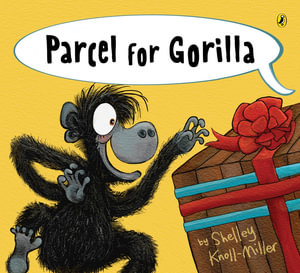
Gorilla and his jungle friends are hungry. Their tummies are rumbling and they cannot get the coconuts down from the tree. A perusal of the endpapers will show younger readers just how hungry little Gorilla is as he dreams of all sorts of things to eat.
But Elephant brings in a parcel, tied sturdily to his back. All the animals are agog, what could it be? Snake comments on its size while the monkeys dare to think that the parcel is full of bananas. But this cannot be as it does not smell like bananas. Hog thinks it may be full of peanuts, but Gorilla says that his friend would not send peanuts as he is allergic to them.
'Maybe it is full of coconuts' whispers Snake just as the parcel slides off elephant’s back. All the animals come closer to help open the parcel just as the monkeys begin to tear off the wrapping.
The surprising present will make readers laugh even more, and Gorilla finds a way of using the gift to bring down the coconuts for them all to eat. A fun filled guessing game as to the contents of the parcel will keep readers intrigued as they will all want to know what might be inside. The surprise gift will cause lots of laughter as they realise just how strange it is for animals in the jungle, but Gorilla works out a way to use it to satisfy their needs.
Themes Problem solving, Animals, Jungle, Gifts, Humour.
Fran Knight
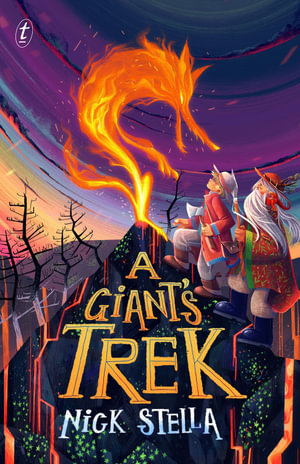
A Giant’s Trek by Nick Stella
Text Publishing, 2023. ISBN: 9781922330703. (Age:9-12) Highly recommended.
A Giant’s Trek written by debut author Nick Stella is an entertaining, fast-paced fantasy novel. What initially began as a bedtime story for the author’s young children, is now a wonderful adventure full of strong likeable characters and fantastical settings.
Giant twin brothers, Ash and Oak, are like chalk and cheese. Ash is smaller and quieter, not as good at things as his brother and not his father’s favourite. Oak is big and loud, able to do everything well and is definitely his father’s son. The twins and a girl giant named Mithra have turned 12 and are ready to complete a coming-of-age quest known as the Trek, in order to pass out of childhood into adulthood. The Trek involves leaving Haven-Home with an adult mentor and travelling many miles to search for something that will help to protect their village from wolves. Oak and Mithra choose to search for strong weapons, but Ash chooses to search for incantations in the magic form of stone, wood, water and fire. Ash’s mentor is known as Avalanche and has been ostracised from the village due to a serious injury to his previous young charge. He does though know incantations so is a perfect match for Ash. The journey for Ash and Avalanche to find each of the four elements is full of danger and challenging situations. Joining them part of the way is Marshall Sypender, one of the pocket folk soldiers, who must guide them through his land. He is not as brave as the giants, but his true worth is shown over and over again during their eventful journey.
This is an exciting story full of descriptive language and amazing challenges with the reader left wondering what could possibly happen next. It is also a story of finding one’s own place in the world and being the person you are meant to be.
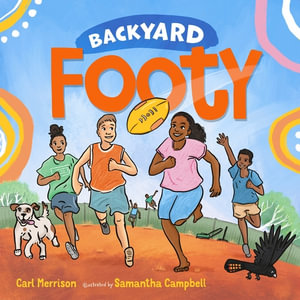
Backyard Footy is a vibrant, fast-paced picture book, set in the Kimberley region of Australia and tells of a number of First Nations children joining in a game of backyard footy. Beginning with Jy playing football on his own, the story explores what happens as more children join in the game as the football is kicked over fence after fence. Sometimes the football is not always kicked true and straight and ends up disrupting other family members! Jy’s footy is finally popped when it lands in a fire but fortunately Shane has a new one, so they all go to the oval together and Jy lines up and kicks a goal. The children discover that while footy is fun on your own it is much better playing together.
This is an entertaining and fun read by author Carl Merrison and is the first in a sporty series titled Backyard Sports. This story moves along with the highlighted key words adding more drama to the story. The bright and bold illustrations perfectly complement the text, and the reader can feel the action and enjoyment of the children. A very enjoyable read.
Themes Aussie Rules Football, First Nations, Kimberley Region, Friends, Family.
Kathryn Beilby
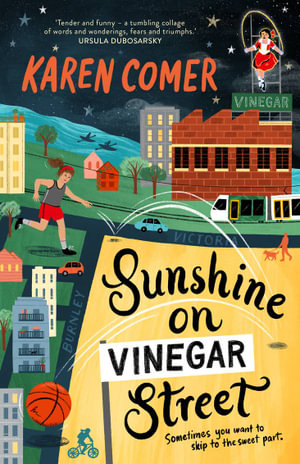
Sunshine on Vinegar Street by Karen Comer
Allen & Unwin, 2023. ISBN: 9781761180132. (Age:9-12) Highly recommended.
Freya’s co-parenting parents have moved from Eltham for work to two different places. Her architect Dad has moved to Broome and Freya and her Mum have moved to Abbotsford in inner-city Melbourne. The change is huge for Freya who leaves behind her best friends, Raffie and Gemma, her basketball team, and the joy of living between two houses side by side. She and her Mum now live on the 11th floor of a high-rise apartment building with the café below where her Mum works and opposite one of Melbourne’s most iconic symbols, the Skipping Girl Vinegar sign, which is an important element of the story.
Freya’s first experience on the local basketball court near her apartment block sets the tone for the start of her life in a new place. Her beloved basketball is taken off by two mean girls who are unfortunately in her new class at school as well as being on the basketball team that Freya joins. The relentless bullying by these girls is central to the story and impacts heavily on Freya’s inability to settle in and affects her performance on the basketball court - the one place where she usually shines. Added to this is her fear of elevators and the problem that causes being on the 11th floor.
Eventually Freya does begin to make friends, play school netball, visits Gemma and Raffie and unknown to her Mum keeps a pet mouse. However, the mean girls, IVF babies and the problems on the basketball team take longer to resolve. Finally, Freya’s Dad comes back for his first visit, and it is during this time everything comes to a head for Freya.
Author Karen Comer has a written an astonishing verse novel with so much packed into a clever use of word shapes, text changes and highlighted words, as well as plenty of basketball and netball references. For older primary school students this would make a wonderful class novel.
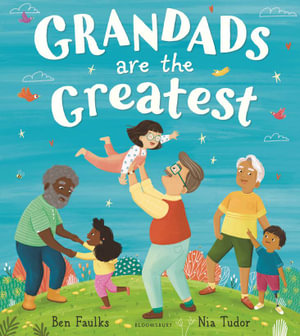
A celebration of all grandfathers is captured in this rhyming text as Ben Faulks shows that grandfathers from many generations do the same thing in cherishing, loving and supporting their grandchildren. At the Grandad’s Summer Picnic the little girl asks to sit on her grandfather’s knee, asking about the grandpas that came before. Each of the grandpas tells a story in a stanza which shows the range of grandpas and their work. One grandpa is a baker, well known for his cakes, one is a builder who has built a hundred homes and now retired, building one for his grandson, one is an explorer who has travelled widely, another an inventor who has made an extraordinary set of popcorn powered wings. Each man has excelled in his profession, surprising the grandchildren with their diversity. No two are the same. Another is a barber, astounding the children with the range of haircuts he has done, one is a fisherman, telling tales of mermaids and sea creatures and whales, but while her grandpa does not tell a mesmerising story like some the others, he is the best as he sits at home, reading books to his granddaughter, singing songs with her, helping her get her act together when she gets in a muddle, giving lots of cuddles, and most importantly showing her love just like all the other grandpas.
This lovely story of the presence of grandpas in a child’s life will enchant younger readers as they recall the place their grandfather has in their life. They will recount stories of walks in the park, songs and books, cooking and sharing, of being with him and sharing the love that binds them together. Charmingly illustrated by Nia Tudor, a freelance illustrator who lives in the UK, children will love checking out the detail, looking for the animals, comparing the grandfathers depicted, and perhaps set up their own Granddads’ Summer Picnic and invite them all along to show how much they care.
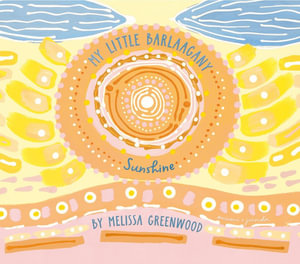
Melissa was born and raised between both Gumbaynggirr and Bundjalung nations.
Drawing on this heritage she has written a charming bedtime story about the passage of sunshine throughout the day, easing the passage to sleeping time. Mother and child journey through the day and night, visiting elders, places that are special to them, watching the night sky, waking in the morning to a new day of adventure.
Soft muted illustrations fill each double page, accompanied by a rhyming pair of lines each set preparing the child to a particular time of the day. While the sun is up it is time to play, but sunset in the evening means it is time to say goodbye. The moon Giidany, now rises, and we thank the gift of the night sky. The evening helps children recall their ancestors, feeling the hugs they give. A brand new day with lots of new adventures await. There are waterholes to visit and cuddles from mother who loves her sunshine, her barlaagany.
The last pages of the book give the poetic words used in the text in both English and Gumbaynggirr languages giving the opportunity for children to learn some of the words to describe things like sunshine, moon and special place, amongst others.
This page is followed by information about Melissa and her upbringing, emphasising her closeness to her community, a closeness heralded by the story of barlaagany.
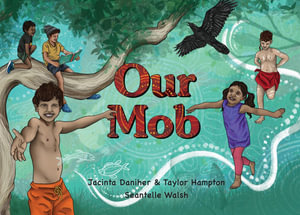
Our mob by Jacinta Daniher & Taylor Hampton. Illus. by Seantelle Walsh
Ford Street Publishing, 2023. ISBN: 9781922696236. (Age:4+) Highly recommended.
Our Mob beautifully explores a number of different mobs across Australia. With stunning images and easily accessible text, this book is perfect for children from early years through to middle primary to grow their understanding of First Nations culture. Each mob is presented across a double page spread and gives a welcome in their own language as well as sharing simple stories. From South Australia is the Wirangu People of the Western coastal region:
Wai (hello), my name is Kaiden and I’m a proud Aboriginal kid from Wirangu Country. I love going camping and fishing with my family. We collect firewood for our garla (fire) to cook the fish we catch. My gurndili (aunty) says it’s important to go back to Manda (Country) to reconnect.
The colourful full-page illustrations are striking in their detail and perfectly complement the text.
This wonderful picture book will be an excellent addition to a public or school library and an important resource to use for both Reconciliation Week and NAIDOC Week. Teacher's notes are available.
Themes First Nations Culture, Children, Family, Stories.
Kathryn Beilby
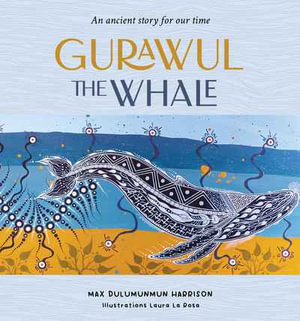
Gurawul the whale by Max Dulumunmun Harrison. Illus. by Laura La Rosa
As a young 10-year-old boy, Uncle Max Dulumunmun Harrison, was given the ancient legend of Gurawul the Whale from his grandfather and uncles with a promise that he would go the southern land to search for the whale dreaming of their Ancestors. Seventy years later, his journey to fulfil this promise has been published in a strikingly presented factual story with stunning images and a beautiful cover. The cover shows two panels of a three-sectioned painting displaying the bubbles left by the whales for people to follow to safety and Gurawul migrating from Antarctica to Kari (Hervey Bay).
The story of Gurawul The Whale begins with a contents page followed by a foreword by Dean Kelly acknowledging Uncle Max Dulumunmun Harrison and the importance of the teachings he has passed on to others. This is followed by a preface by Dwayne Bannon-Harrison, grandson of Uncle Max, who was privileged to be with him as the story of Gurawul was revealed. Following this is the story of the promise with the subsequent chapters sharing Gurawul’s Story, the journey, traditions, finding the place where the rock images and formations are, and how the legacy has been handed down and will continue to be. All through Uncle Max’s journey, there were spiritual connections made, lore passed down and lessons to be learned. Traditional and cultural stories are shared, and the outstanding illustrations add to the mystic and gentleness of the story. There are photographs, acknowledgements, and further information about the author, Max Dulumunmun Harrison, who passed into the Dreaming in December 2021.
This deeply engaging story is one which is important to be shared with others. As well as sharing the story of Uncle Max and his journey, it talks about living in harmony, taking only what is needed and learning from the natural environment. A truly special book that has a place in a school or public library.
Themes First Nations, Story, Whales, Ancestors, Family, Journey, Lore, Dreaming.
Kathryn Beilby
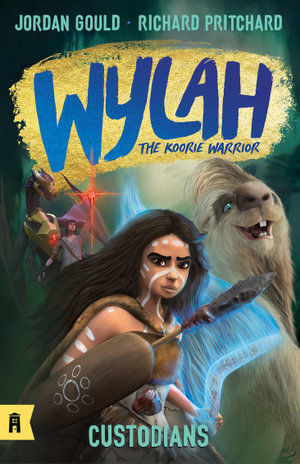
Wylah the Koorie Warrier: Custodians by Jordan Gould and Richard Pritchard
Albert Street Books, 2023. ISBN: 9781761180040. (Age:10+) Highly recommended.
Custodians is the second book in the series Wylah the Koorie Warrior and is as equally engaging as the first. In this story, Wylah is desperately searching for her whole village who have been stolen by dragons to work in gold mines in a faraway land. This time though Wylah has the support of the five united Guardians and her animal companions and friends as she navigates dangerous lands in search of her tribe. With her Grandmother now in the Dreaming, Wylah has become the Koorie Warrior with all the responsibilities of such an important role and the others look to her for guidance and protection.
Throughout the trek the friends face one perilous situation after another. They meet the aggressive Alinta who is Custodian of one of the lands they travel through and who challenges Wylah and Pippy to a contest of speed. There are fierce and fiery drop bears, thieving baby yowies and their formidable mother, a giant red Yara-ma-yha-who that swallows Jayden, a stranger who joined the group early on but whom Wylah does not quite trust, a great Emu who is protecting her eggs and tries to squash them, attacked by Ngarparuts (growl rats) and finally a terrible battle with fire-breathing dragons. In each of these challenges Wylah must call upon her Guardians to help and her companions all bravely join in the battles. Unfortunately, things do not go according to plan and Wylah and her companions are betrayed.
For the reader there is the opportunity to learn about First Nations culture and language, their deep connection to Country, their spiritual beliefs and strong family relationships. This is a fast-paced and exciting read. Strong, brave characters with humour abounding and excitement on every page. The publisher has provided an activity sheet. Book 3 will be out soon.
Text Publishing, 2023. ISBN: 9781922790194. (Age:13+) Recommended.
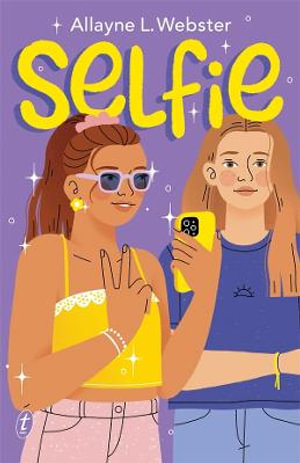
Set in a fictional school in South Australia, this is the story of friendship, online likes, and the battle to find yourself in a constantly shifting environment. Tully comes from a non-traditionally configured family. Her artist mother has left and is now far removed from Tully’s life. Her father’s new partner is now the live-at-home (and work-from-home) mother while her father pursues his busy career in Sydney. Things are complicated. Tully, a high-schooler, is often attached to her phone and besotted with the online world of young influencers and Insta-famous identities. When Dene, an Insta-heroine, arrives at school, Tully loses perspective and abandons an established friendship to get close to the radiance of this online ‘personality’. Dene is both vulnerable and powerful, but it is the ‘like’ culture, the self-promotion of Insta-fame and the absence of perspective in Tully’s life that causes seismic ripples to occur in their lives. What does friendship look like? How can friendship last in a fake, like-unlike world? Who is Tully (and Dene) really when no-one is looking?
This is an appealing teen story about friendship that is complicated by online perspectives. It is both a critique of the falsehood of the selfie and friendship based on the ephemera of a moment-in-time click or hashtag, but also an insight into the world of the influencer and the battles of the teenage years in being able to navigate one’s own path in life, particularly when there are many obstacles in the way and the enticement of the online world is always present. ‘Control-Alt-Delete’ is not an option. Teens will instantly connect with this book. It is not overly complex, but it does address some serious family concerns obliquely as the overarching theme of self-awareness and identity unfolds. The world of teen ‘connection’ and family connection criss-crosses through the story. Teens aged 13+ will enjoy this book. Teacher's notes are available.
Themes Social media, Friendship, Family, Identity.
Carolyn Hull
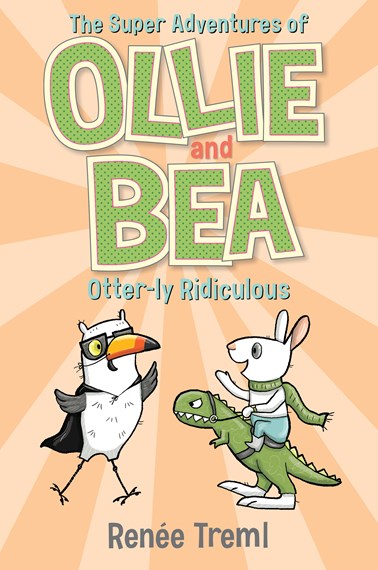
The super adventures of Ollie and Bea: Otter-ly ridiculous by Renee Treml
Allen & Unwin, 2023. ISBN: 9781761068126. (Age:4+) Highly recommended.
This sixth installment in the sensational junior graphic novel series The Super Adventures of Ollie and Bea series (It's Owl Good, Squeals on Wheels, Bats What Friends Are For) is perfect for young, independent readers or for read alouds. The chapter divisions also help with making reading goals approachable. The series will appeal to fans of the Duck, Duck, Porcupine series by Salina Yoon, the Elephant and Piggie series and Renee Treml's other graphic series, Sherlock Bones. While accessible to a younger audience, its content and format will be equally appealing and relevant to an older age group.
In this installment, Bea wants to play hide and seek and Ollie reluctantly agrees. Soon they invite their friends to play as well. There are rollercoaster emotions from everyone; sometimes they are good at hiding and declare themselves invincible and sometimes they can't find someone and they feel sad. They decide no one is really the best at hiding...perhaps they are all good sometimes. When two of the friends get into an awful argument, the others try to cheer them up with some jokes, but that just leads to another pair getting grumpy at each other. Then it's Ollie and Bea's turn to try...same problem. Luckily, along comes deer, with some super solving to save the day and help the friends fix their 'otter-ly ridiculous' problems. Apologies and restorative chats follow and the friends are happy and playing again in no time.
Children will love the jokes and word play that come thick and fast ('I did nut think you would find me here', 'I guess this means I'm not the best at hide and squeak') and the story is told exclusively through sharp, fast-paced dialogue. Renee Treml's (Sleep tight, Platypup) full-colour illustrations are crisp, clear and sparse with a superb focus on the changing emotions of Ollie, Bea and company.
This is such a wonderful series that explores the real problems children have within friendship partnerships and groups. It's a beautifully honest look at those emotions that most kids have but many find it tricky to talk about. It also models wonderfully positive and uplifting ways to be a friend (and the fun of friendships) without glossing over the times when it is hard or uncomfortable.
Themes Friendship, Problem-Solving, Forgiveness.
Nicole Nelson
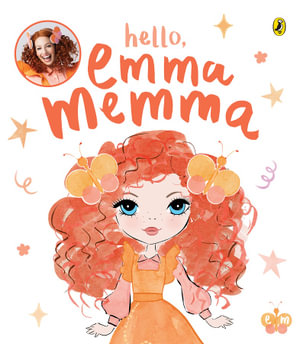
Hello, Emma Memma by Emma Memma
Penguin, 2023. ISBN: 9781761341045. (Age:3-5)
Emma Wiggle makes a slow and graceful transformation into Emma Memma in this first Emma Memma book. Opening with an invitation to look closely at the 'gum blossom tree and pink painted leaves', beautiful watercolour illustrations by artist Kerrie Hess reveal little yellow and pink butterflies. As the book gently progresses the short rhyming text alerts us that 'someone is almost in sight. A friend, a buddy, a pal to play games. She is ready to join in, Emma Memma is her name'. The tree is growing and a cocoon emerges. Could it be hiding someone inside? The first signs of Emma Memma to emerge are bundles of twirly orange hair, followed by her body bursting out of the cocoon, 'pink shirt, orange dress. With pink and orange shoes. Emma Memma is ready for adventures with you!'.
While the text is short and approachable for young ones, it is language rich, with words like 'developing', 'protective' and 'emerging' as well as lots of simple descriptive words (bright, sway, swing, curly wurly). According to the website, Emma's new persona 'focuses on a new generation of communication, where she and her friends navigate challenges and adventure using sign language, choreographed dance narratives, gesture, mime, singing, speaking, listening, making craft and drawing'. This introductory book will delight former Emma Wiggle and now Emma Memma fans.
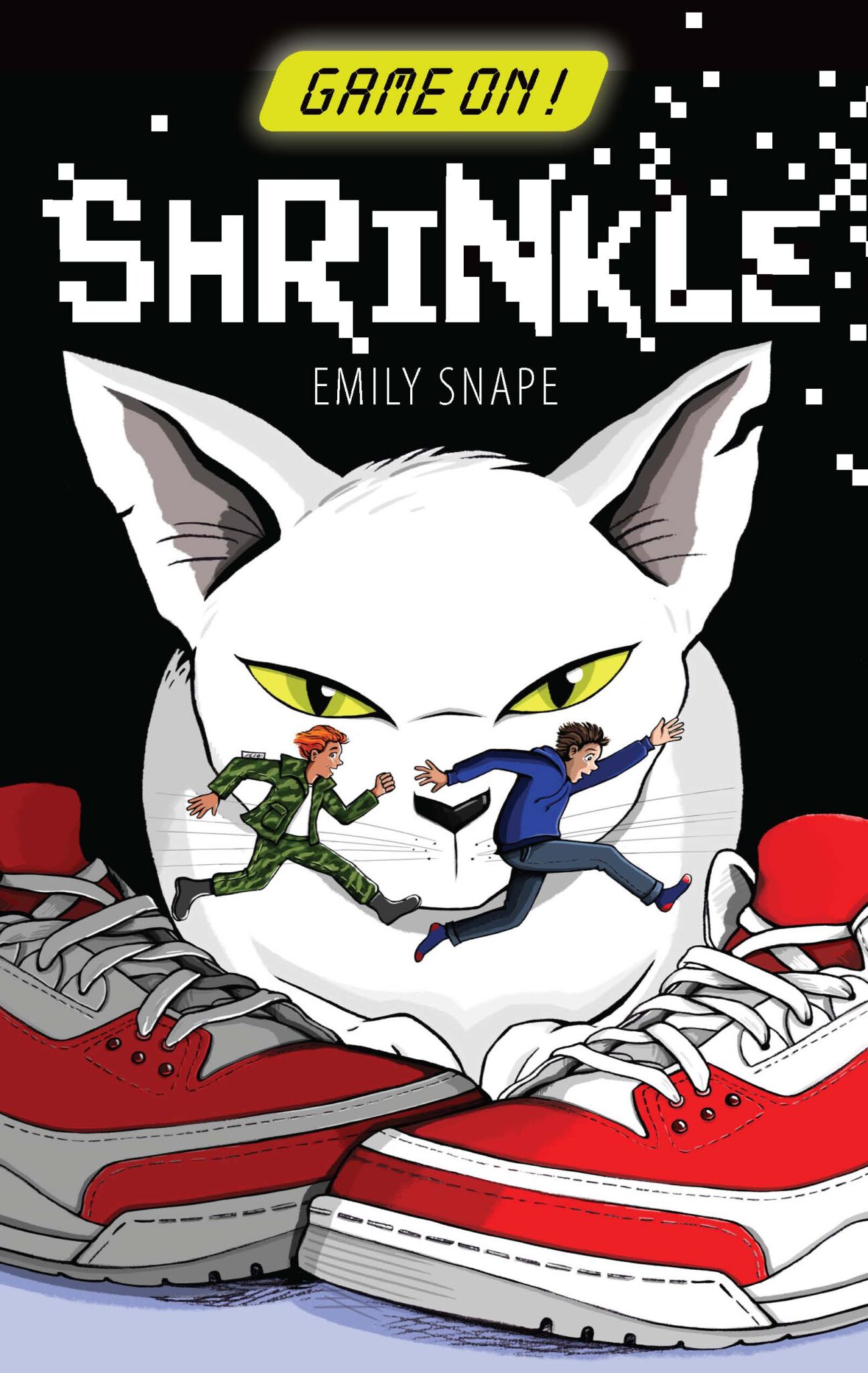
Game-obsessed Max in having a very, very bad day. After being pranked by his brother Liam in front of his class, he is now being looked after by their crazy neighbour Miss McBoob.
But things get even worse when Liam starts playing Shrinkle on Miss McBoob's phone because the app suddenly shrinks both him and Max to the size of a minifigure and their house, once so familiar, is now a treacherous landscape! Everyday objects loom large and even the cat is more like a tiger! Can they scale the sofa mountain, escape Miss McBoob's snoring mouth and outsmart the now-enormous pet cat? And will they stay tiny forever? Can they actually work together to beat the game?
Written to draw reluctant readers into print stories, the author says, 'Reading should be a pleasure and it was my aim to write books that pull you in and hook you from the start. Hopefully, then you can't help being moved by the characters as they grow and develop. I love comedy in books, but funny books also have to have heart, believable characters, and a great plot that keeps you reading till the very end.'
Using a modern premise of being drawn into a game, with characters not unlike themselves, and the sort of fast-packed , immediate action including countdowns, levels and time limits, this is the sort of story that will pull even reluctant readers away from their screens. They might even like to speculate on what might happen if they (or Liam and Max) were drawn into their own favourite game, a concept which, in itself, might spark story-writing and a group display of possibilities. Some might like to be inspired by the Lego Masters television series and recreate the world of their game, while others might prefer to broaden their horizons and explore the world of The Borrowers, a classic series by Mary Norton that dwells in the realm of ordinary becoming extraordinary.
Themes Computer games, Apps.
Barbara Braxton
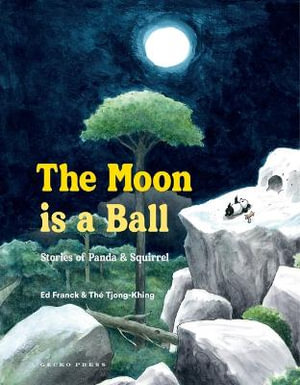
The moon is a ball by Ed Franck. Illus. by Thé Tjong-Khing
Gecko Press, 2023. ISBN: 9781776574933. (Age:4+)
Panda and Squirrel have an unbreakable friendship. They can’t live without each other and do everything together: lie on the rocks to look at the moon, take walks, play games. One of their journeys lasts for only two steps, another day they discover a newly hatched duckling. But like most friends, sometimes they argue but they always make up again.
This is a book of nine short stories about the responsibilities and rewards of friendship, helping younger children understand that you don't always have to like the same things as your friend or agree with everything they say or do to remain friends. That sometimes the richest friendships are those built on the differences that each brings to the relationship. After all, could there be aby combination more physically different than a panda and a squirrel?
Translated from the Dutch edition by David Colmer, and richly illustrated it offers many opportunities for discussion, including asking the child what they might do in a similar circumstance.