Five
Mile Press, 2007
(Ages 11+) Richly illustrated by Danny Willis, this fantasy hardback
novel, sweeps the reader along in a whirl of adventure and danger.
Gerald Hart takes his two children, Allira and Stephen, to the castle
home of his father, Fergus, who has disappeared. Allira often sees
strange things that no one else notices and she keeps the dragon she
glimpses near the castle a secret. More surprises are in store for her
as she discovers the alternative world of Grymm, where a fierce battle
against evil is being waged and she finds hidden depths of strength and
courage
The novel has immediate appeal to an Australian audience because of its
setting in Victoria's bush, with possums, gum trees, a bunyip and the
Calder Highway, blending with the more traditional fantasy elements of
a castle, goblins, dragons and trolls.
The strong female main character will appeal to young girls, and there
is plenty of action, fights, hideous characters and bloodshed to engage
boys. The illustrations stretched my imagination. I especially enjoyed
the pictures of Allira and Stephen, and felt that they were people I
knew well. They contrasted well with the quirky drawings of the unsung
heroes in the Hall of Fame.
The story ends on a frightening cliffhanger which didn't worry me as an
adult as I assumed that all would be resolved in the next book in the
series. However this may worry younger readers. Fans of this book could
move onto Diana Wynne Jones' Chrestomanci series and The Foundling
by
D.M. Cornish.
Pat Pledger
Dusk by Kenneth Oppel
Faber and Faber 2007 (Ages 10+) Highly recommended. A thrilling page-turner with prehistoric bats as the main characters, Dusk is a story that will linger in the imagination. Dusk is a little chiropter who belongs to a colony that dwells in a tall tree. He was born with a difference – he can flap his wings and fly while his relatives can only glide. Outsiders are not welcome and it is not until the colony is under threat that he comes into his own.
This is a wonderful survival story told by an award-winning author. It is set in a time when dramatic changes are occurring on earth. The dinosaurs are dying out and meat eaters have emerged. The chiropter colony, once safe and happy on an island, is viciously attacked by tree climbing mammals. The colony is forced to use Dusk’s echovision, which helps him to see at night, and his flying ability to lead them to a new home.
The reader is swept along with the sheer adventure of the story and becomes immersed in Dusk's struggle to find a place for himself and the parallel tale of Carnassial who is the first in his tribe to eat meat. Both fight to survive in a harsh and evolving environment. Oppel subtly get his reader to think about extinction and the fight for survival.
Characters are finely drawn and very appealing. The family relations are vividly described, with Dusk's relationship with his sister Sylph and father, Icarion, the colony's leader, adding depth to the story. The moral dilemmas facing the groups about hunting and killing species are explored with the destruction of the eggs of the terrifying saurian.
This story is a winner. It will be welcomed by fans of Oppel's previous books about bats and new readers will be want to continue on with other books. Pat Pledger.
Miss McAllister's Ghost by Elizabeth Fensham
UQP, 2008 When Wilf comes home scared out of his wits, talking about a ghost, his siblings decide to investigate. Hardly missed at home, it is an opportunity to go off together. What they find, an elderly woman living by herself in a forgotten part of the neighbourhood, untouched by the twentieth century, is at first, unsettling, but as the children get to know her, they become involved in the routines of Miss McAllister's life.
The children take on the tasks around her house, gardening, chopping wood, cleaning, and cooking, all the while asking questions and learning about life in the past. When Michael spots a face at the window of the stable, then they investigate further and so are more completely drawn into her world, protective and helpful.
This is a most unusual read, partly because it does not go down the path expected when reading about a ghost story, and because it gives so much detail about how people lived a century ago, it seems like a social history book, and I found myself less interested in the story, although I am sure middle school readers will not be so easily strayed from the path. The religious touches too, make it different, and they underline the dissimilarity between the life Miss McAllister led as a child, and that of the protagonists. I enjoyed the read immensely and it will be a winner in schools, but I found the lack of resolution of the cruelty of the children's father a small niggle. Fran Knight
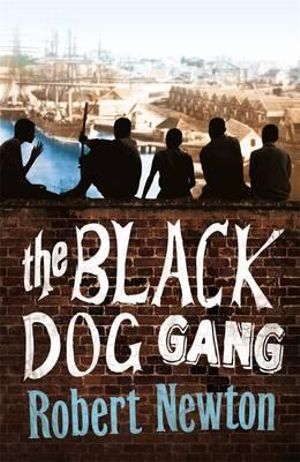
The Black Dog Gang by Robert Newton
Penguin 2007 (Age 11-14) When Maggie is taken to the Quarantine Station with plague, Frankie and his gang come to regret their money making scheme, catching and selling rats to the health inspector. The time is early twentieth century and the setting is the Rocks in Sydney, a haven for poverty and rats, culminating in the outbreak of the plague in those early years.
Frankie and his friends attend the Ragged School, set up for the children of the poor workers who live there. Some are well off with loving families, but others suffer brutal treatment at the hand of alcoholic fathers and cruel men. It is a time of death and cruelty, dealt out not only by fathers, but also the principal of the school.
A terrific and at times, harrowing, read about a time hardly heard about, The Black Dog Gang realistically captures the times and the fear with which some children lived. I found it hard to read (tears) and I am sure middle school readers will lap it up. Fran Knight
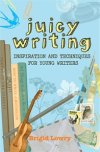
Juicy Writing by Brigid Lowry
Allen
and Unwin, 2008
Subtitled Inspiration and Techniques for Young Writers, Juicy
Writing
will be a boon for all aspiring writers, young and old. Often asked by
students for help in their creative writing, it is great to see such a
well produced and informative guide. In the past, books by Hazel
Edwards and Eleanor Nilsson have been indispensable, but this new guide
by award winning adolescent writer, Brigid Lowry, is set to be used by
a wide variety of aspiring writers. Her light touch makes the book most
accessible, and she gives advice with humour and enthusiasm.
The five easily read chapters go through the different needs for an
aspiring writer, from journals and the need for an inquisitive mind, to
where to look for ideas, to 'funking it up', to lots of ideas to get
started The list of starters intrigued me, and I can see many
teachers getting good mileage from these sections. Easy exercises too,
litter the pages and kids could as easily use these at home or with a
group of friends, as a teacher in the classroom. The book will have
wide appeal to students, teacher and librarians. Lowry discusses
narrative as well as poetry, offering suggestions for writers of both
genres. Several chapters were a surprise, giving advice that I had
never heard of making me immediately think of how I could use it. Such
a chapter is the one entitle 'Dialogue'. The Glasgow Rules outlined by
Lowry make marvelous sense and would appeal to young writers.
It is well worth a look at the book for your library or classroom, as
it offers a huge range of suggestions in an easy to read format.
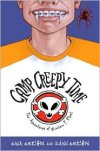
Camp Creepy time by Gina Gershon and Dann Gershon
Random House 2007
(Age 10+) Einstein P. Fleet is at the summer camp from hell. Sent away
for 8 weeks by his long suffering parents, Einsten, a 13 year old
computer freak and consumer of Twinkies, discovers that the brochure
describing its many activities, lake and swimming pool is completely
false. The only friends that he makes are a ghost and an alien and he
must try and save the campers from conniving camp counsellors.
Readers, especially boys, will enjoy the humour surrounding bodily
functions and the scary scenarios. Einstein is an interesting problem
child with his penchant for worse case scenarios and his computer
empire. The book is an easy read.
Film rights have been commissioned for this wacky story by actress Gina
Gershon and her brother Dan and it certainly would lend itself to a
funny horror film with its werewolves, vampires and mummies, aliens
from outer space and highly exaggerated characters.
Pat Pledger
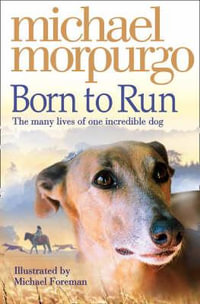
Best mate by Michael Morpurgo
Ill. by Michael Foreman. HarperCollins 2007
(Age 10+) A winner for all animal lovers, this heart-warming story from
an award-winning author relates the story of a greyhound as he goes on
an adventurous journey through life. On his way to school, Patrick
spies a wriggling sack in the canal and rescues a mass of puppies, one
of which he gets to keep. The reader might expect that this would be
the start of a wonderful life for Best Mate, the little greyhound
puppy, but it is only the beginning of a series of traumatic, sad and
ultimately uplifting events as he goes from one owner to another.
This is a compulsive yet easy read as Morpurgo weaves a series of
interrelated stories around the adventures of one dog and how they
influence the lives of the people around him. The reader will be warmed
by the way Patrick responds and grows with a dog as a best mate;
thrilled by BrightEyes’ speed as a champion greyhound and saddened by
the treatment of greyhounds when they are too old to race. The author’s
description of the dog’s loyalty to the runaway Becky and his career as
a protestor for the rights of the aged are wonderful.
Michael Foreman’s quirky illustrations add a dimension to the young
reader’s understanding of the plot and greatly enhance the reader’s
knowledge of greyhounds, their speed and racing skills.
A great story that would be good to read aloud, this book comes highly
recommended.
Pat Pledger
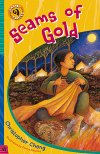
Seams of gold by Christopher Cheng
National Museum of Australia Press, 2007 (Making Tracks) ISBN 978 1876944520 (Age 8+) Danny is staying with his uncle while his parents visit relatives in China. Since the mining accident, uncle has sewn for a living, doing all sorts of repairs for the miners, as they slave over their diggings looking for gold. Grudgingly Danny accompanies his uncle, aghast when he tells him that he should sew too. Sewing is women's work, but things turn out that sewing is Danny's work as well, as he realises that sewing has an important place in the community.
A delightful story full of the sight and sounds of the goldfields in the middle of the nineteenth century in New South Wales, when many Chinese people came to work the mines, Cheng recreates the feelings of being a Chinese person at the diggings, where their skills were sought after. He based his story around a small sewing basket at the National Museum, part of a collection of objects gathered from the NSW goldfields. Fran Knight
Note: Discussion questions and other activities can be found at Making tracks.
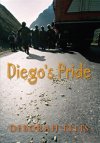
Diego's pride by Deborah Ellis
Allen and Unwin, 2008 (Age 11+) Diego has escaped from the cocaine traders in the Bolivian jungle and now must survive. Luckily he is found by a cocalero family, and he helps them harvest their coca crop before taking it to market. But some sell their crop for cocaine, and the USA funds the Bolivian government to destroy the crops, so the police move in and destroy the family crop, pulling up their plants and trashing their farm. Destitute the family joins with others to blockade the bridge on the highway between the major cities, in protest about their loss of income.
Here Diego learns about grass roots activism, helps the families in their plight and narrowly avoids being hurt himself. Through the kindness of a local policeman, he finds his way back to his family in Cochabamba where he is able to help the police track down those who kidnapped him in Diego, run. A wholly satisfying read, Diego's pride will broaden our students' view of the world and how it works, encourage their sympathy for the poor and oppressed, and gain some understanding of the political nature of the cocaine trade. Fran Knight
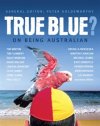
True Blue? On being Australian by Peter Goldsworthy
Allen and Unwin
(All ages) What an introduction to the range of peoples that make up
Australia today, Goldsworthy has drawn together excerpts from books,
speeches, newspaper articles as well as poems and short stories to show
us what it means to be an Australian. Ranging from David Malouf to
Michael Leunig and John Clarke to High McKay, the pieces included here
will engender some debate. Produced by Allen and Unwin with the support
of the Curriculum Corporation, Australia Day Committee and the
Australian Government Department of Education, Science and Training,
the book has the feel of a text for schools, but is enjoyable reading
for a range of interests.
Many of the stories are unforgettable, as people struggle on with their
lives, despite all adversity. One of the most endearing is that of Hieu
Van Le, now the Lieutenant Governor of South Australia. His first sight
of Australia escaping from Vietnam in 1975 is one that will live with
the reader for all time, and is in sharp contrast to the 'welcome'
dealt out decades later to people in a similar plight escaping from the
Middle East. This one is a stand out for me, but all add to the vast
range of people that make up Australia, and give it its broadness.
For students in the classroom, that favourite topic, What it means to
be Australian, will be well served with a class set of this book.
Students will be able to dip in to read authors they have heard of and
many they have not seen before, and argue with their class mates about
what is an Australian, what should have been included or not included,
what best describes us. Some may notice the lack of children's voices
or the dearth of women's voices, some may question the Anglo Saxon
predominance, some may want a greater representation from expatriate
Australians, but all will bring their own views and values to the book,
adding space for discussion and debate. Students will be invited by an
astute teacher to put together their own list of what could be included
in such a book, sending them to a wider reading and selection of
Australian writing, and photos and films will be watched to tease out
other quotes and mythologies.
Fran Knight
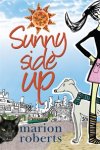
Sunny side up by Marion Roberts
Allen and Unwin, 2008 (Age 11-14) This book has Sunny, the optimistic but introverted daughter of a naturopath, giving the readers a warts and all account of her life. She and her best friend, Claud run a pizza delivery service on Friday nights, Sunny's mum is about to have her boyfriend, Carl move in, along with his two obnoxious kids and a cat, Sunny's dog, Willow is a bum sniffer and on it goes, a litany of stories all set to collide in an amazingly funny way.
In between, Sunny's tangent monitor rings, as she not only describes what is happening but goes off in different directions, many of which have little to do with the plot but all add a different dimension to the girl's character. All in all, a very funny read for upper primary and lower secondary readers, happy to be diverted with a clever and humorous story, written with charm and alacrity. Fran Knight
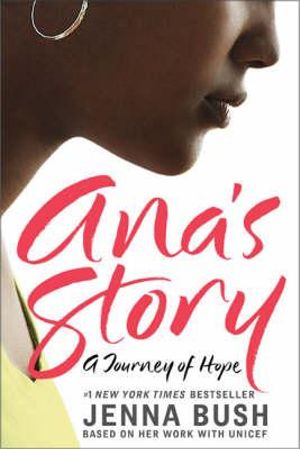
Ana's story by Jenna Bush
HarperCollins, 2008.
(Age 12+) The subtitle, A journey of hope, of this colourfully produced book tells it all, then when you read it is by Jenna Bush based on her work with UNICEF, you know that you are in for a sentimental story of the life of one of the girls Jenna Bush met when working in Africa with AIDS affected children. Although it is sentimental and openly aimed at gaining the readers' sympathies, it does give a lot of information about AIDS and AIDS in Africa and the lives of some of the people affected by this disease and the political pulls which affect their progress.
Ana was born with AIDS, passed on by her mother who died within a few years. Her story is one of courage as she develops strategies to live with the disease and its consequences. When students have read novels like Chandra's secrets by Allan Stratton or The heaven shop by Deborah Ellis, then they have been well informed about the disease and the prejudice which meets people so affected. This book will add to their knowledge. Some of it is mawkishly written, and purple prose abounds, but I know lots of girls will find it absolutely charming. And the photos are stunning, showing life worlds apart from our students. A portion of the proceeds from the sale of the book go to UNICEF and there is a website that students can access. Fran Knight
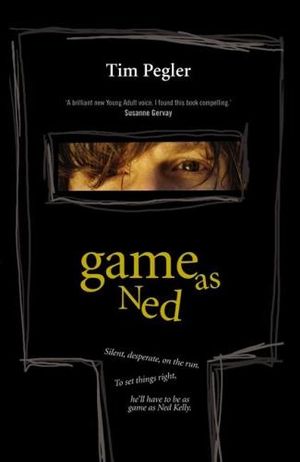
Game as Ned by Tim Pegler
Angus and Robertson, 2007 ISBN978073238576 0
(Age 13+) When Tim tries to speak, his body clams up, his head pounds
and he feels sick: so he doesn't. Left in grade 6 for 3 years meant he
saw a lot of the inside of the library, sent there because of his
failure to respond in the classroom. And here he learns about
Australia's bushrangers, Ned Kelly in particular. With a father killed
in Vietnam, and a runaway mum, he lives with his grandfather, a man who
refuses to allow his autistic grandson to be experimented on with drugs
and therapy.
Working at a sheltered workshop, he meets Erin, employed to be the cook
and general dogsbody. She has problems of her own, but sensing a
kindred soul, she teams up with Ned, chattering away to him, while he
remains silent. But the town bullies intervene and put pressure on both
these young people, and Erin and Ned must stand and fight.
A wholly absorbing read which took me back to the 1970's, with its
setting of a small country town, where girls were sluts and boys'
behaviour ignored. Passing mentions of the Vietnam War and Skyhooks
added to the backdrop. The treatment of both protagonists will evoke a
strong reaction from the readers, and they will be gripped by the final
few chapters, as Ned tries to relive his hero's and namesake's actions.
Fran Knight
Antarctic close-up by Hazel Edwards
National Museum of Australia
Press, 2007 (Making
Tracks)
(Age 8+) Hazel Edwards visited Antarctica in 2001, and since then has
written several enlightening books about that continent. For the
series, Making Tracks, she
has written a short story involving one boy's adventure, peering into
the past through a telescope he finds at his father's auctions rooms,
once owned by the explorer John Close. He links the telescope to an old
video camera, and watches the crew as they live and survive in the
Antarctic.
Readers will learn a great deal of information about how these early
explorers survived as well as holding their breath when the smallest
things happen putting all their lives at risk. Funny stories too are
drawn into the story as the boys watch the men on their video.
But in the end, the telescope is sold at the auction, and the boys
return to their library with gusto to find books and websites which
give them further information about the expedition.
Fran Knight
Note: Discussion questions and other teacher materials can be found on
the Making
tracks site.
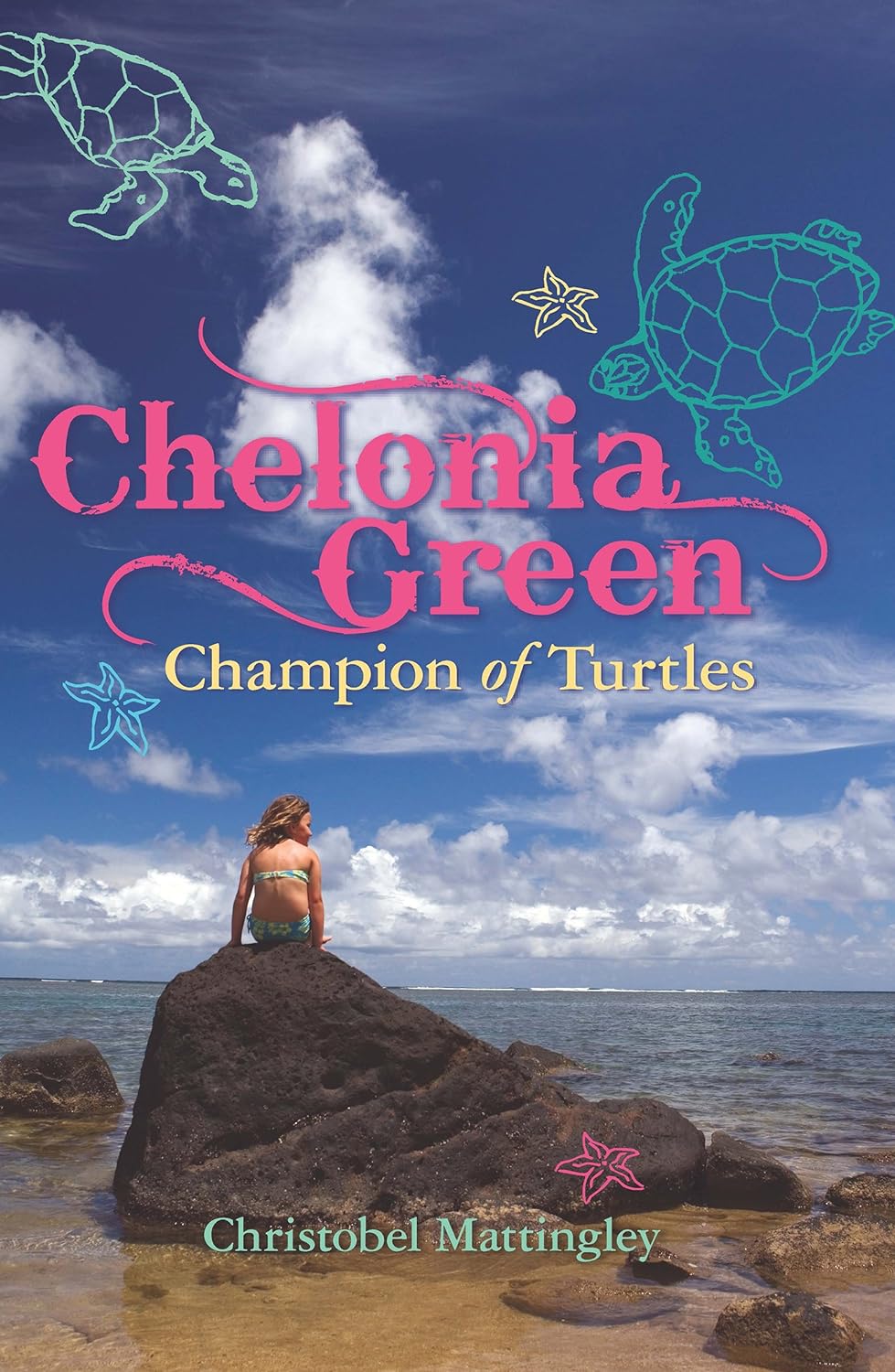
Chelonia Green, champion of turtles by Christobel Mattingly
(Age 8+) This is a breathtaking account of the damage done to the environment by the users of the sea. Chelonia and her family live on an island off the coast of Queensland. Chelonia loves the turtles and sees them as her special friends, but is distraught when one of her favourites, Caretta, turns up dead on the sands. Chelonia and her father unwind the metres of fishing line wound around the turtle's head, and together they begin the arduous job of picking up the rubbish which litters the beaches.
Writing letters to the local yacht club, newspapers and government officials seems to have no response until on one weekend a number of people turn up to help clean up the beaches. A beautifully written story by the admirable Christobel Mattingley, who always writes convincingly about environmental issues, Chelonia Green is a salutary reminder of the damage done to our coastlines and to the animals which live along it. Chelonia Green will be enjoyed by a range of students from beginning readers to upper primary and would work really well, being read aloud. Fran Knight