Scholastic, 2008.
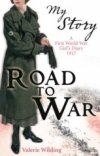
Wealthy, upper class Daphne has been brought up to believe her role in
life is to learn how to run a home. However, after the First World War
breaks out, her father is killed in action and her brother declared
missing. Daphne is determined to do her bit for the war effort, but
bored with knitting socks and rolling bandages she joins the FANYs –
the First Aid Nursing Yeomanry and finds herself driving ambulances at
the front line.
Written as a war diary we are offered a dramatic contrast between
Daphne's privileged home existence and her dangerous exploits at the
front. This is a valuable record of the changing role of women in an
unstable world. Small details such as how daring it was for a girl to
cut her hair (long hair had a habit of getting oily when leaning under
ambulance bonnets) are sensitively portrayed.
However, the characterisation remains rather flat. Daphne is a
pleasant, jolly girl, but her experiences don't tug at the heart
strings and although much of her diary is written from the front line
you don't feel as though you are there with her. One saving grace is
that this book does not offer a stereotyped ending. I had a feeling
that Daphne's brother would be found alive – but at the end of the book
he is still missing, presumed dead, a poignant reminder of the millions
who lost their lives.
This book does not have the same impact as Private Peaceful
(Michael
Morpurgo), but it does offer an insight into the changing role of women
and would be a useful addition to a topic box. The historical notes and
photographs contribute greatly to the overall picture and I was
fascinated to learn that the FANYs still exist today and worked with
the London police in the aftermath of the 7/7 bombings in 2005.
Claire Larson
Perky little penguins by Tony Mitton and Guy Parker-Rees
London, Orchard, 2007. Picture book.
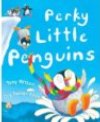
An enchanting look at penguins, this picture book written by Tony
Mitton and illustrated by Guy Parker-Rees is sure to delight its
audience, whether reading independently or listening to the wonderful
language. Perky little penguins go on a fantastic trip, 'skimming
through the snow, slipping on the slidy ice' and having fun wherever
they go.
The rhythm, rhyme and alliteration in this story make it a great read
aloud and the illustrations add lots of vivid colour as well as giving
the reader many chuckles as they follow the antics of the penguins.
As the penguins say:
'Wheeeee!…What a whizzy ride'.
Pat Pledger
The equen queen by Alyssa Brugman
Ford St, 2008. ISBN
9761876462598
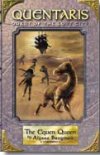
(Age 10+) Alyssa Brugman has made an exciting start with her first
fantasy novel The equen queen, the second in the Quentaris –
Quest of
the lost city series. Tab Vidler is once more faced with saving
Quentaris, this time from the threat of a trader world, which initially
appears to be friendly, beguiling the inhabitants of Quentaris with
gems and the promise of an equen that can heal people. Tab is appalled
to discover that her magic seems to be disappearing and that she is
having difficulties talking to animals. How is she to help overcome the
screeching Loraskians when they come marauding and looking for their
gems? And what will happen to the equen queen when she is returned to
her home planet?
Tab is an strong, engaging heroine whose exploits keep the reader
totally enthralled as she plunges from one adventure to the next. The
tale of Melprin the dragon and her egg melds well with the sorrow of
the equen queen who has been separated from her herd. Readers who enjoy
horse stories will recognise some of the traits of the equens and
identify with the determination of Tab to return her to her native
world.
This was an enjoyable and satisfying story with original twists and
turns and challenging ideas. It could be read as a stand-alone,
although as many of the characters were first introduced in The spell
of undoing, the reader will have a better understanding of
relationships if they read that first. Teacher's
notes are available.
Pat Pledger
The spell of undoing by Paul Collins
Ford St, 2008. ISBN
9781876462536
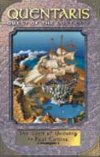
(Age 10+) The first book in a new series of Quentaris – Quest of the
lost city – sees Quentaris uprooted by a wicked spell and sent flying
through the rift-maze. Tab Vidler, a young orphan member of the Dung
Brigade, unknowingly witnesses the magic spell of the icefire gem and
finds herself a key person in the fight to save Quentaris from the
rival city of Tolrush, which has also been hurled into the universe.
With her friends, Amelia and Philmon, she sets on a quest to grow as a
magician who can speak to animals, while facing great danger, a
fiercesome dragon and exciting battles.
The spell of undoing is an enticing start to the series. The characters
are very likeable, the illustrations add to the charm of the story, the
cover art is attractive and the reader is sure to want to read further
adventures of Tab as her powers grows and Quentaris faces many perils
in its search for its home.
This can be read as a stand-alone, although the reader can gain further
information from the Quentaris
website. Fans of the original series will welcome this new
addition, and new readers will be tempted to go back to the original
series. Teacher's
notes are available.
Pat Pledger
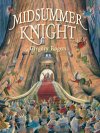
Midsummer Knight by Gregory Rogers
Allen and Unwin, 2008
Bear slumbers in his boat upon the river, and when it bumps into the
bank, he disembarks, exploring the forest beyond. Chased by some bees,
after raiding their honey, he spies a door at the bottom of a large
tree, and runs inside. At the end of the tunnel is another world, one
where he is a tiny hatchling compared with the mushrooms, butterfly and
mother bird nearby. The bird takes him on her back to another tree with
a tiny door at its base, and entering this door, the bear finds he is
in a castle, but one where bad things are happening. Thrown into the
dungeon he spies the imprisoned king and queen and together they devise
a way of escaping, then taking back the castle and restoring the
monarchy to its rightful place.
All is told in a wordless graphic book of incredible detail. Bear, with
his Cromwellian hat and little cape saves the day in rumbustious style,
fighting all and sundry who attack him. The movement and colour on each
page draws in the reader, entreating them to take a closer look at
everything that is happening. From the Elizabethan king and queen, to
the knights in shining armour, the Shakespearian look-a-like for the
nasty usurper with his paunchy stomach and goatee beard, the court
jester and all, each character is an individual, with his own
characteristics and fighting manner.
It is a joy to watch all that is happening and then go back to the
beginning taking a closer look at each individual character. A closer
look also brings the eye to catch small details, otherwise missed; the
fairy ring at the start and end of his adventure, implying perhaps a
magical story, the wings on the characters in the forest, the windows
in the tree trunks, the people like cushions of the royal couple.
Children and adults will delight in this magical story of Bear's
adventure one midsummer night, and take time to look and ponder all the
allusions given by the artist.
Fran Knight
Indij Readers for little fellas, for big fellas
various
authors, (series) Indij Readers, Rockdale, NSW, 2008
A series of small guided readers suitable for primary school people,
but aimed at low reading ability students particularly Aboriginal
students, this series is delightful. Each of the books is well
illustrated, has bold large print, and 16 – 24 pages long. Each has a
simple premise, but is told with charm and insight. Each of the stories
aims to explore a contemporary Indigenous issue, and so support the
idea of Reconciliation.
Our Aunty Sharon (by Chasity Prior, Kelli McIntosh, Philip
Murray,
Sharon Hughes and Karen Briggs) tells the story of Aunty Sharon who is
a volunteer in the classroom, helping the kids read, plays football
with them, gets cross with them but is always their Aunty Sharon. There
are about 10 sentences, each with a variety of words and sounds, and
each page has another question at the bottom of the page, so offering a
range of sentence structures.
Firewood and Rabbits (by Ron Jackson and David Leffler) tells
the story
of Ron Jackson's early life when he lived at Balranald on a mission
station. He and his brothers used their father's axe to fashion a raft
out of the roof of an old FJ Holden to get across the river to find
wood. It is a story about making do, and families and working together.
Dreamtime at the 'G (by Alinta Hayes and Andrew Nelson) will
have huge
appeal to middle school students, with its history of the AFL and the
games played at the MCG in Melbourne. The book shows the development of
the game from Gaelic and Marn Grook, to racism in the game and
Aboriginal players over the years. It's a winner.
Lake Mungo, our story (by Johnno Mitchell, Leanne Taylor, Naomi
Carr,
Raeleen Berriman, Ron Jackson, Roslyn Thorpe, Vanessa Dyke and Wendy
McDougall) This wonderful little book uses a variety of fonts and
design to present information about Lake Mungo. It presents the flora
and fauna of the area, and shows the erosion, the fossils and talks
about the finding of Mungo Man and Mungo Woman, buried in the area.
Each of the books is most interesting to read and a set of these will
add to the guided reading boxes in the classroom. A Teacher's handbook
comes with the set, giving ideas about using the series, as well as
information about what to look for in each book.
(info@indijreaders.com.au or visit www.indijreaders.com.au)
Fran Knight
Minnie Pearl and the Undersea Bazaar by Natalie Jane Prior and Cheryl Orsini
ABC Books; 2007.
(Age - Middle Primary) An underwater environmental tale, set in the
ocean but with universal
themes. Minnie Pearl's parents own the Undersea Bazaar where all the
mermaids come to shop. When Manta Rae sets up a rival business, Minnie
sets out to find out where she is getting her cheap goods from in the
hope of saving her parents' business. With the help of some human
divers she is able to solve the problem. The play on words for names
(eg Manta Rae, Finn, Marina) could make for useful discussion on
aquatic words. The safe disposal of rubbish could also be addressed
through the story. An additional resource for schools doing Sea Week
each year.
Sue Johnston
Marden Education Centre Library
The Seventeen Secrets of the Karma Club by Karen McCombie
Scholastic,
2008
(Age 9+) The story of Kezzy and her new best friend Nell who establish
the Good Karma Club, which aims to spread a little happiness
among friends and acquaintances. Initially keeping the club
secret makes the whole process quite exciting, until their secret good
deeds spiral out of control and Kezzy's Mum makes an announcement
that shocks Kezzy and Nell to the core and threatens their
perfect friendship.
A fast paced story with likeable characters and a believable
plot.Some more serious issues are touched on including the value
of friendship and the importance of having a social conscience.
McCombie also makes a point of challenging stereotypes as Kezzy's
Mum is a tattooed knitting fanatic and her Dad a nursery
nurse! Ultimately this is a lighthearted, humorous story
with plenty of action and a satisfying plot that reveals one of the
seventeen secrets in each chapter. This is a 'chick-lit' novel
that would cater for primary aged children. Although our heroines
are 13 there are no teen-issues that would worry parents and
preclude younger children from enjoying it. Ideal for confident
readers, 9 + who don't want to work too hard.
Claire Larson
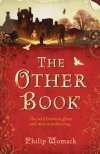
The Other Book by Philip Womack
Bloomsbury, London. 2008
(Age 10 – 14 years) Philip Womack explores the supernatural in The
Other Book, a new fantasy for young readers. At boarding school
in modern-day England, twelve year old Edward Pollock discovers an old
book in the school library; it is cursed and waiting for an opportunity
to weld an evil magic after being lost for three hundred years.
After discovering the book, Edward gradually becomes more bewildered
and realises he must control some dark power which tries to overcome
him at every turn. His strength of character, and sense of duty
and trust are constantly tested. With the help of a knight who
appears mysteriously, Edward learns that the future of his world
depends on his ability to withstand the evil power at work.
Edward's story is a series of exciting confrontations with those who
wish to take the book back from this young 'carrier'. Lady Anne,
Mrs Phipps, Dr Spawforth and Reverend Smallwood oppose all moves by
Edward to restore its power. These are great characters and the
story rolls along very well. There is plenty of action as
Edward's courage is constantly tested; it seems that there is no one he
can trust.
For a first novel Womack successfully lures the reader into his
imagined world, and the array of characters weave a great story.
Numerous editorial errors are annoying and the language style is clumsy
at times but The Other Book has a sound sense of place and time
and is
an absorbing read. This book is recommended for younger readers,
however, often the line which divides reality and the supernatural
becomes blurred and so some images are disturbing.
Julie Wells
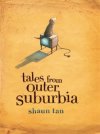
Tales from outer suburbia by Shaun Tan
Allen and Unwin, 2008.
ISBN 978174114917 3
A story and picture book for adults and children alike, Shaun Tan draws
a mirror to the face of Australia, with lonely people, houses where
constant bickering between parents causes the boy to sleep on the lawn,
communities where people use the missiles in their yards for practical
purposes and an exchange student who lives in a house where little
exchange takes place. Each story provokes thought about how we live and
entreats the reader to give more serious consideration to our lives and
the lives of those around us.
His incredible pictorial style, making references to art from the
Renaissance world, Raymond Briggs, Geoffrey Smart, as well as nodding
to Terry Gilliam, among others, gives an intellectual layer to the
illustrations, urging the reader to reflect and ponder on what they are
viewing. From the dog on the TV (dog on the tuckerbox?) to the car of
people, looking for a place to sleep amongst a crowd of hotels, all
showing a 'no vacancy' sign (Mary and Joseph perhaps?) each offers a
suggestion of what is going on in outer suburbia. Tan's observation of
life around him, particularly growing up in an outer suburb of Perth
has given him a rich field from which to draw his stories.
To choose several stories from the wealth offered in this book is
difficult, but I loved Grandpa's story which tells of the
trials of a
marriage, where after almost insurmountable difficulties, resulting in
a no holds barred argument, the two find they must work together to
find the common goal. Eric, too resonates with ideas.
For a perceptive look at the Australian suburban lifestyle, interjected
with humour, pathos, allegory, and an amazing array of detailed
illustrations then this book is a marvelous addition to anyone's
library.
Fran Knight
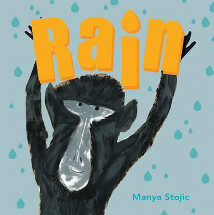
Rain by Kate Le Vann
Piccadilly, 2008.
This novel by Kate Le Vann is set in London over a summer holiday when
16 year old Rain goes to stay with her trendy young grandmother in the
house in which her deceased mother grew up. Here she uncovers her
mother's diaries, written when she was the same age as Rain, and
believes she has discovered that her mother had an affair with an older
pop musician and became pregnant before ever meeting the man Rain
believes is her real father. Is she his 'love- child' and if so how
will Rain deal with that and how will it affect her close relationship
with her scientist academic father?
Throughout this crisis in her life she develops an increasingly close
relationship with Harry, a student who has been employed to help her
grandmother sort out her house in Notting Hill before selling it. He
helps Rain in her quest to uncover the truth but jealousy rears its
head as she assumes Harry and a fellow student have a close
relationship already and that her growing feelings for him are misled.
Switching between emails, the personal diaries of Rain and those of her
mother, written 20 years before, as well as the narrator's voice makes
for a slightly difficult tone but I was gripped and had to read on and
find out if true love triumphs in the end. This is a sensitive,
perceptive and complex exploration of the nature of love explored via
the intense feelings of a 16 year old girl discovering her independence
for the first time in a new environment.
Laura Taylor
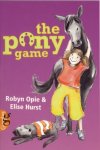
The pony game by Robyn Opie
Lothian Children's Books, 2007
(Ages 7-10) The second in the Giggles Series from Lothian is absorbing.
Lucy
wishes her dog, Beauty was a horse. Together they play the pony game,
where she uses a tea towel on Beauty's back as a saddle and they frolic
all over the back yard, imaging they are riding over the hills. When
Lucy gets to look after a real horse for a week, she is too tired to
play with Beauty and the dog feels neglected.
When the owner of the horse sees Lucy's dog she is just as jealous,
because she cannot have a dog. Lucy realises that she has the best of
both worlds. Young readers will love this story and its illustrations
and the ability to read it for themselves. The Giggles Series is sure
to be a winner with the target audience.
Fran Knight
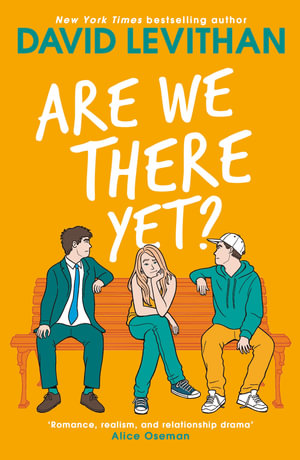
Are we there yet? by David Levithan
Harper Collins, 2013 (Age 15+) Two brothers, tricked into holidaying together in Italy, find that they are worlds apart. Together they drift through Venice, Florence and Rome, seeing the same sights but from a totally different perspective, recalling the happier days of their shared childhood, when the older brother, Danny, looked out for his sibling, Elijah, ten years younger. When Elijah meets a girl, Julia, the hesitation between the two brothers becomes more openly hostile, and an approach by Julia towards Daniel, becomes a secret he keeps from his brother. Elijah and Julia meet and have dinner, staying at Julia's hotel, leaving Danny to fend for himself, but when Julia has dinner with Elijah on Independence Day, her toast is 'to the end'. Elijah, set adrift, must reunite with his brother. Danny in the meantime has run into an old friend, and has realized what little he has apart from work. The two brothers meet again at the Pantheon and here their journeys come together. The descriptions of the sights they see are wonderful. Levithan uses imagery which is at once familiar, and startling. His familiarity with the journey through Italy's past creates a marvelous backdrop to the story of the two brothers, as they meet at museums and galleries, eat together and then alone or with Julia, regurgitating the slights of the past. The story recreates the tension between them, slowly building as they journey towards the inevitable coming together when they realise what they have lost and how easy it is to repair the rift. A wonderful coming of age story, both Elijah and Danny are complete characters, with foibles and behaviours that are as endearing as they are annoying. A treat for upper secondary students and adults alike. Fran Knight
The Floods: the great outdoors by Colin Thompson
Random House, 2008. ISBN
9781741662535;
(Age: Middle and Upper Primary) This is the sixth story of the Flood
family and their adventures but
the stories do not need to be read in sequence. The Floods are a family
of Wizards who would like to be more human. They decide to take a
family holiday with their human neighbours and they do try to fit in at
Port Folio, but there are some things that take a bit of getting used
to – like not using magic to win the sandcastle competition! A funny
story that students who enjoy a sense of the ridiculous will enjoy.
Sue Johnson
Only the brave dare by Christopher Holcroft
Poseidon Books, 2008
(Age 12+) Described by the author as a modern Biggles, Only the
brave
dare is the story of a group of Venturers who uncover a drug deal
by
the Russian Mafia while exploring a wrecked submarine. Taken captive by
the gang, it is up to Scott, an unassuming Venturer, to find a way to
save his mates.
The action switches from the Venturers to the Russian Mafia in
alternate chapters or sections, helping to identify the characters and
what is happening. A more sophisticated reader may find the italics for
different speakers distracting and the conversation rather heavy handed.
A fast paced adventure story, this will appeal to boys who are in the
Scouting movement and the descriptions of the advantages of being a
Venturer would perhaps encourage young boys to join the group.
Pat Pledger