Random House, 2009.
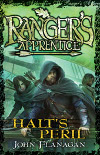
ISBN 9781741663020. (Series: Ranger's Apprentice 9).
Highly Recommended. Arriving at Port Cael, the trio, Halt, Will and
Horace are
searching for the villain, Tennyson and his followers. Some 20 in all,
they had
been helped in their escape from Hibernia. At an inn, Will falters in
getting
information from the notorious Black O'Malley, while Halt takes sterner
measures to extract the information they need. Finding their prey
headed for
Picta, where another group of their religious quacks are stationed,
extorting
money and goods form the local populace, Halt and the others follow.
Overtaken
by O'Malley and his band of smugglers, their captain is fearful until
he sees
the combined ability of Halt and Will at using their long bows.
The ninth richly entertaining adventure in the series Ranger's
Apprentice, keeps the energy levels as high as the stories
which have gone before. Camaraderie, high adventure, a keen sense of
right and
wrong, of helping the underdog along with bravery and resilience, are
key
elements in this fantasy series. Set in medieval times, the undercover
agents,
Halt and Will, range far and wide in their efforts to retain peace and
security
for their kingdom, Araluen. Joined by Horace, they have a jokey manner
between
them, often laughing at themselves but simultaneously keeping a fearful
watch
over their surroundings. Will, now a ranger, still defers to Halt, and
their
work in the field is still often that of the teacher and the student.
Halt
wonders if it will always be like this, and so we have a sense that the
future
may be different.
Tennyson and his band of Genovesan
mercenaries are headed for their stronghold in northern Picta. Here
another of
their group has formed an enclave, where the Outsider prophet means to
gather
his forces before entering Araluen. Will has already killed one of the
Genovesan mercenaries in Conmel, and so the battle lines are drawn.
In a tussle, Halt is wounded by a crossbow
from one of the Genovesan warriors, and at first recovers well. But
over the
next day, he begins to mumble, often talking about people in the past
and is
unable to keep on his horse. Will senses that the arrow was poisoned
and
between them Horace and Will must decide what to do. Their decision is
crucial
to saving Halt's life and over the next week or so, Halt hovers between
life
and death. First Will rides off and fetches the healer, and then Will
must
capture a Genovesan warrior to ascertain which particular poison has
been used.
Tension mounts for the reader, as a funeral is held and Will, Horace
and ride
off from their hideout.
A stunning new chapter in the story of the Ranger's
Apprentice, the 440 pages hums
along at a furious pace, with the reader being drawn into Halt's world
as he hovers
between life and death. I loved it and couldn't help myself turning
pages ahead
just to check how things panned out, so involved was I in their lives.
Readers
from 8 to 80 will be thoroughly entertained by the adventures of this
trio, and
I look forward to the last two books in the series (The
Emperor of Nihon-Jin, number 10 in the series is due out in
November 2010).
Fran Knight
Interview with John Flanagan
Fran
Knight and
Pat Pledger met John Flanagan in Adelaide where he spoke about the
release of
his new book, Halt's Peril, the ninth in his best selling
Ranger's
Apprentice
series. Here are his answers to Fran's questions:
1. Fran: Many of my questions
are more of the admiring type than riveting questions. I loved the
whole
section (about half the book) of Halt hovering near death after being
poisoned
in Halt's Peril. Did you have an awareness of your audience as
you
wrote this?
John: Very obviously, with Halt's poison episode, I was
only giving out
small pieces of information to lure the reader on. When kids saw the
word 'Peril' they thought it meant
death, and we had
tons of emails saying 'don't kill Halt', so all I can say is that there
is a
funeral. Children did not want Halt to die. 'Peril' means danger, but
it was
not long after J.K. Rowling killed off a character, so fans were very
aware
that someone might die.
2. Fran: I was expecting someone would die.
John: Well I do kill one of them (Fran: Shock!)
John: My readers follow the blog religiously, picking up
any errors or
hints about the next book. Australian kids have to be asked not to put
spoilers
on the web site because the United States are two books behind and the
United
Kingdom are on book 5 or six.
3. Fran: Halt to me has many
qualities of a sympathetic priest, humble but knowing his own power,
subtle, a
guide for Will, trainer, teacher etc. Was
this deliberate? Did you have anyone in mind as you created Halt?
John: Not at the beginning, but several years ago I
realised that he is
based upon my year 6 teacher, Brother O'Connor, a
firm disciplinarian, a man who did not smile, short and wiry. Halt is
the dominant
character; Will is leaning about his strengths. There is a father son
relationship. Halt has the depth of experience; Will will always be his
apprentice.
4. Fran: Did
you feel the influence of other fantasy novels and series as you wrote
these?
John: I read the first of
J.K. Rowling's books, but
did not want to read any more because they could have influenced me.
5. Fran: All other fantasy
writers use the imperial system of measurement for their books. It is
quite refreshing
to come across centimetres in a medieval fantasy novel. Was this
deliberate?
John: Yes. And surprisingly the Americans like it and
leave it as they
think it is 'quaint'.
6. Fran: The built environment
comes across very strongly in Will's adventures. How did you develop
these
environments?
John: Castle Redmont is based on a castle that we toured
in France which
had big ironstones which glowed red at sunset. The villages are based
on Irish
villages we saw during our honeymoon in Ireland. There
I developed a fascination with the legends
of Ireland, and spent many hours listening to stories told be locals I
met
along the way.
7. Fran: The map at the start of
Halt's Peril is very bare. A
criticism! I kept looking at the map at the start to see where they
were, but
couldn't find out. For number 10, could
there be a better map?And on maps - it
looks so much like Britain, with Ireland (Hibernia) off to the left.
Why didn't
you just make it the British Isles?
John: I wanted a place I made up, a place
where I made the rules. I didn't want people emailing me and telling me
that
such and such was over here not here. I wanted control.
8. Fran: I somehow assumed that
there would be 8 in the series, and then that Halt's Peril
would be the
final one. How many more can we expect?
John: There are
two more. Number
10: The Emperor of Nihon-Jin is due out in November 2010.
I realised that there was one relationship that wasn't yet resolved, so
in book
10 that will be a main thrust. Number 11 will be the final in the
series and
will be set 20 years hence.
9. Fran: Why Fantasy?
John: I started off with 20
short stories cobbled into a book. Initially I wrote thrillers and spy
y
stories, but after 9/11 I retreated to fantasy, I felt it was wrong to
use that
format of realism. I did not want to write about the medieval world as
such but
would create my own with my own rules (eg coffee is part of several of
the
books, and I worked out a trail allowing coffee to be in Araluen, in
response
to one query about how coffee got there). I am assiduous with my
accuracy but
make my own rules. I wanted to write escapism,
and that's where
my efforts went during a lean year in advertising. I put all my efforts
into selling my books,
an artist friend developed pictures and front covers for the first four
books,
and we put these onto photographic paper, with the first 25 pages of
the first
story, with 4 glossy pages and book covers and 2 columns outlining the
stories of
each book. Knowing what the slush pile was like at publishers' offices,
my
agent took a publisher to lunch and presented his folder to her.
10. Fran: How far have the plans
for a film of the first novel progressed?
John: I am very pleased with the work so far. Paul
Haggis, the director
who has taken up the option is trying to raise the money at the moment,
and has
been responsible in the past for Million Dollar Baby and In
the
Valley of Elah.
11. Fran: Who do you think is
your audience?
John: I think both boys and girls will like my books. My first
fan mail was
from twin girls. Children started to read the books when they were
about 11 or
12 and continued on until they were 17 or so.
12. Pat: What about reluctant
readers?
John: Reluctant
readers will enjoy these books because they have pace, adventure and
humour. My
12 year old son didn't like reading and initially I wrote 20 short
stories to
get him interested. I wrote them as entertainments so things keep
happening and
they are exciting. The joy of writing is in being excited by children
coming to me
and saying that they didn't like reading, but finding my books got them
into
reading. The joy of writing is reflected in being able to do some good
in
helping
kids love reading, which I didn't get in advertising.
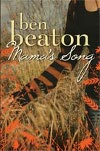
Mama's song by Ben Beaton
Black Dog Books, 2009. ISBN 9781742031057.
(Age 15+) Mama's Song covers
a week in the life of a teenage girl, Georgina,
in which she runs away from home and gives birth to a baby in a country
hospital.
The reader sees Georgina's
character develop through the experiences of childbirth and caring for
a newborn
baby, including learning to breastfeed, and also through the
relationships she
forms with other characters based in the hospital.These include an
older first time mother,
Mary, who has battled infertility to have her baby and another young
mother, Nasreen,
whose premature baby is battling for life.
The main narrative is interspersed with a series
of
flashbacks which provide some background to Georgina's
character and the situation she finds herself in.These
include a sexual encounter at a drunken
teenager party as well as Georgina's
experiences at an abortion clinic and the decline in her relationships
with her
family and her peers.
While the novel does not celebrate teenage pregnancy, it
does show the protagonist as someone who has the strength and resolve
to take control
of the situation in which she finds herself. At the end of the novel,
the reader is left with a sense that Georgina and her baby (whose name
is said to mean 'hope') will be okay. It does not provide any
indication of the struggles Georgina might face once she leaves the
sanctuary of the hospital but hints at a reconciliation with her mother
and stepfather. This will presumably enable Georgina to return home and
access family support in raising her daughter, something that not all
teenage mothers will have access to.
I did find this a beautiful and highly readable book. I think would
appeal to girls over the age of
15 as well as to adult readers. It is
quite short so would be easily read by a less confident reader although
encouragement
may need to be provided to persevere beyond the first few chapters,
which are a
bit sparse on plot detail. The emotions
surrounding birth and the early days of parenthood are keenly described
and
brought tears to my eyes on a number of occasions. I would love to see
a sequel covering the
period after Georgina leaves the
hospital as I
feel that this is where her real journey into motherhood will begin.
Catherine Seal
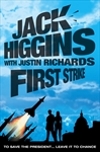
First Strike by Jack Higgins with Justin Richards
HarperCollins, 2009.
ISBN: 9780007300495.
John Chance and his twin children Jade and Rich
are quietly
having a meal in a United
States diner when a man who was
walking over
to speak to them is shot. In hospital he says, 'If the birds have
flown, they
will try for the Football,' before lapsing unconscious. Unravelling
this cryptic message is a key
aspect of this mystery novel.
The plot is set in the United States with Jack
Chance
being a secret serviceman who has already saved the President's life
once. An oriental woman with a long black
plaited
pigtail and missing warheads in China
are other central parts of the drama that has its conclusion in a White
House
siege during a reception. A little hard to follow the plot at times but
nevertheless a good old fashioned mystery that will appeal especially
to
secondary school aged boys.
Kay Haarsma
Nitty Gritty series
Pearson
Education. 2008.
Suitable for 11-13
year olds. The Nitty
Gritty series claim to have:
High interest,
rich texts with themes relevant and of interest to young adolescents,
Stimulating
and engaging discussion prompts, and activities focusing on key
critical literacy areas including author purpose, power of language,
characterisation, bias, point of view and more,
A range of
genres: mystery, adventure, historical fiction, science fiction,
fantasy and contemporary fiction,
Different
social and cultural perspectives, strong themes and messages to spark
discussion and encourage the questioning, challenging and
deconstructing of texts,
Gatefold back
covers with critical literacy discussion prompts for literature
circles.
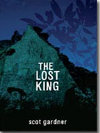
The Lost King by Scot Gardner
ISBN 9781869706449.
15
year old Kingy isn't impressed when he's forced into going on an
outdoor-ed
camp with his school. But after he and his 3 companions, a boy and girl
who
were once girlfriend and boyfriend and a girl to whom he is
increasingly
attracted, get themselves lost, Kingy makes some real, and positive,
discoveries. While Sully and Bethany argue about which way they should
go and
make it clear they no longer like each other, Kingy finds an amiable
companion
in Emily. For 2 days and nights the 4 Year 10 students stumble through
the
rugged bush of the Wanoom Peninsula trying to find their way back to
camp.
Their inability to cooperate with each other doesn't help. I liked the
fact that the author kept the
reader guessing as to what would happen next. In the end the rescue is
almost
an anticlimax as each member of the group has come a long way on their
own
personal journey.
The
book looks at themes including relationships, honesty, being positive
and
facing your fears. Survival is another theme and you get the impression
that
the four students all end up a lot stronger for their experience.
The
book would suit students from Years 8 to 10 and would work equally well
as a
class novel - the questions at the back of the book are helpful - or as
an
addition to the library. The survival theme could lead to a number of
activities including linking with the novel Hatchet.
Geoff Gardner
Date of Origin by John
Lockyer
ISBN 9781869706470.
This
strange sci-fi story is set in a mythical future where Earth has been
colonized
by aliens named Aggers. An ugly species, they have furry heads, yellow
eyes and
green tendrils instead of arms. They win approval by clearing up the
mess
humans have made of the planet. Then their real agenda appears - to
enslave
humans to work in the mines for mugatyl - a liquid metal used as
intergalactic
space travel fuel. Humans morph into Agger slaves by means of a virus,
indicated by a wrist scar, which is fully operational by a certain date
tattooed on the wrist. Hence the title. Also on that date a forefinger
turns
golden. However, some humans are immune to the virus and exist as
rebels,
seeking to overthrow the aliens, or as Unattached living on the fringes
of Los
Angeles.
Kesai,
Rezza, Boyd and Mayer with their robot dog, Snake, are Unattached -
scavengers,
living on birds, wild foods and scraps in a disused building. They
become
involved in a rebel plan to disable the mines by means of a mugatyl by-
product
called neura which causes the Guards to collapse.
As
weird and wonderful as this plot is, much of the actual story consists
of the
Unattached gang moving around the area, either escaping the Guards,
meeting up
with the rebels or capturing the neura. Although they have adventures
there isn't enough real action or
originality to maintain interest. The themes here are of exploitation
and
conquest. Abraham Lincoln's vision sustains the heroes, indicating this
book
hopes to capture the American market as well.
The
Time
Stealers
by Glynne Maclean
ISBN
9781869706463.
Set in a
futuristic city where
everyone has access to everyone through a surveillance system, this
should be
an exciting book. As the first chapter describes it, surveillance made
'everything simple; nothing had to be remembered. You could just check
the
record, play it back and no questions remained.' (p1) You can observe
others'
meetings; only in the confines of your own room is there any privacy.
In the city of
Tal teenager Neil dumps
his girlfriend and idly follows a stranger into an old office building.
Here he
discovers she is a Timer, ie a person travelling to the present from
the past,
and she is on a quest to discover her family history and the true story
of the
founding of Tal. Taleena and Neil enjoy a hair raising ride propelled
only by
wind blasts through tunnels in the building, before accessing the data
from an
old computer. However, there is a sinister agenda to stop Taleena
returning back
to her past. It appears that the Drift-Ins, occasional vistors to the
city, are
not from other places but were the original occupants of the site of
Tal.
The themes of
this book are the
obvious ones of displacement of rightful ownership of land and everyone
owning the past: 'How can you know
where you are going if you don't know where you come from?' (p104).
Plus the disadvantages
of being scrutinized at every step when you question certain power
holders.
There is
suspense and an escape scene
but none of this rather confusing book is very gripping, despite, or
because
of, its worthy themes. Discovering your family history is not a topic
teenagers
are likely to be interested in. The protagonists do not take up the
cause of
the Timers or Drift-Ins and none of the characters are real enough for
you to
care much about. It has a contrived feel
and I can't imagine middle schoolers discussing the questions at the
back with
any real enthusiasm.
Win Win by Diana Noonan
ISBN
9781869706456.
Phoebe is a 15
year old who runs away
from home and hitches a ride to a coastal holiday town in time for
Christmas.
Her mum is distracted by a gambler boyfriend and neglects her. Phoebe
has her
pet rat, Alfie, for company and proves to be a plucky survivor.
Naturally, she
has a lot of luck, eg, discovers a vacant, unlocked caravan to stay in
and
befriends some nice kids. They train for the local triathlon. Her true
identity
is discovered and her mum makes some important decisions.
The themes of Win Win are the
familiar ones of family dysfunction contrasted to stable, caring
families,
survival, trust and integrity. It's an easy read with believable and
likeable
characters. Alfie almost steals the
show.
A useful
addition to the library.
Dogs of the
Hinterland by Tina Shaw
ISBN
9781869706517.
This fantasy
novel finds the teenage
heroine, Vancy, volunteering to return to her evil tyrant father,
Herit, at the
Fortress in order to stop him destroying her adopted village. Lucky she
has done this, as she discovers he
has plans to destroy the village anyway, with the help of ghost dogs.
Just how
ghost dogs would kill is unclear as is how they achieve what they do in
the
climax.
The themes of
loyalty, friendship,
courage and tyranny are explored here, but not in any great depth or
originality. The questions inside the back flap are too difficult or
uninspiring for the age group likely to pick this book up.
A reader new
to fantasy might enjoy
this but to established fans of this genre there is little to excite.
River Rat by
Alison Lohans
ISBN
9781869706418.
Scott
Campbell, a fourteen year old boy visits his Uncle Doug and Aunt
Rachel in
California during summer holidays to help them in their farm. He hates
to be
away from his friends, online game 'Tallinn's Quest' and his computer.
Slowly
he adapts to his new environment, learns how to work in farm, work
ethics and
to make new friends Emily, Paige and Preston.
The
river plays an important role in this story and the reason why his
parents made
him learn to swim. Throughout the story, the mystery of dead twins,
Trevor and
Tim haunts Scott and later he unveils the truth. He dislikes Uncle Doug
for
being uptight and always his way of doing things but eventually starts
admiring
him and wants to stay there. There is also a complete change of Scott's
personality and gets direction in his life and values work more than
play.
This
book is aptly suited for Year 7-9 students and would work equally well
as a
class novel - and brainstorm questions at the back are helpful - or as
a
book for the
library. It talks about the adaptability, sustainability, resilience,
courage
and transformation of young Scott to a mature person. It will fascinate
teens as it has an online
game theme.
Vandana Mahajan
In
summary,
the books in this series
are an uneven bunch. The realistic ones dealing with relationships have
the
most appeal and are the best written. The discussion questions are
fairly
generic and are unlikely to stimulate thinking without teacher
intervention. However,
I believe only River Rats and The Lost King could
aspire to becoming
class
texts.
Teenagers do
chose books by their
covers and these covers do not have enough 'pick me' appeal.
Kevyna Gardner
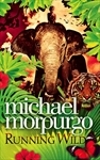
Running wild by Michael Morpurgo
HarperCollins, 2009. ISBN: 9780007317202.
(Ages 10+) When Will's life is changed forever by his
father's
disappearance, he and his mother go to Indonesia for a holiday, a
chance
to start their lives anew. Will has the opportunity to ride on the back
of Oona,
the elephant but, whilst doing so, Oona becomes unsettled and suddenly
thunders
off up the beach toward the jungle as the tsunami makes its presence
known. Seeking
safety, she doesn't stop but keeps running. As a result, Will needs to
learn to
survive in the jungle and make sense of his new situation as he seeks
to find
food, shelter and battle the perils of life in the wild.
Morpurgo is a prolific and accomplished author.
His stories
are engaging, well crafted and keep the reader totally engrossed and
wishing to
direct the course of the story as it unfolds. In Running
Wild, the style, language and descriptions used had me initially
questioning the voice of the story teller until I reached the end and
had my concerns
satisfactorily addressed.
This story skilfully weaves in the effects of war,
the
tsunami, deforestation and the plight of the many jungle creatures
along with
the greed of humankind. Running Wild
could effectively be used as an upper primary class novel to examine
the many
different issues raised. Morpurgo never seems to be excessively
didactic,
merely a brilliant story teller. In each of his books, he allows his
child
protagonist to shine and somehow make a difference in the world.
Jo Schinkel
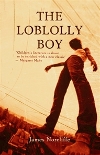
The Loblolly boy by James Norcliffe
Allen and
Unwin, 2009.
(Ages 11+) Highly recommended. With echoes of
Alice
in Wonderland, Peter Pan and
even King Arthur, The Lobloolly Boy is intriguing,
engrossing and wholly satisfying as it
deals
with a boy who lives in a children's home. He meets a winged child in
the
garden who encourages him to try to fly, and when he does so the winged
boy
takes his hand and their two lives are exchanged. The loblolly boy must
now
find out what he is and how he can get back.
At first
enthralled with being able to fly, being
invisible and having no-one tell him what to do or bully him, the
novelty
quickly wears off. He cannot eat; he has no friends and no place to
call his
own. And those people who can see him fall into two categories, the
first are
the Selectives who can see him and so are able to exchange places with
him, but
the second group, the Collectors are more sinister, and he runs into
one of
them, bent on collecting him as the pinnacle of his butterfly
collection.
After flying
to a bay where he meets Captain Bass, the
loblolly boy learns many tings about his situation. Through a telescope
he sees
twins with the same colour hair as his, and a grumpy woman they call
mum.
Flying there, he comes to realise that this group of women are his
sisters and
his mother, and so develops a quest to return to his old self so his
family can
be reunited. The discussions the loblolly boy has with the twin girl he
meets
become deep conversations about the ramifications of going from the
frying pan
into the fire and what is life all about.
Pursued by the
Collector sees the loblolly boy return to
the captain to ask just how he can exchange with the original boy, and
he
learns that all the boys who have exchanged for what they see as a
better life,
soon come to realise that the grass on the other side of the wall is
not always
greener. The loblolly
boy is entirely rounded, a young boy trapped
in a cruel children's home, wanting release from his tormenters, is
willing to
take whatever chance is offered him, but in doing so finds that this
new life
is full of pitfalls. His struggle to get out of this makes for an
absorbing
read for middle school students. This is a highly original fantasy
story, and
surprisingly for someone who does not read or usually like fantasy,
this one I
highly recommend.
Fran Knight
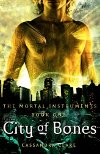
City of bones to be a movie
Cassandra Clare's fantasy series The Mortal Instruments will be
made
into a movie by Bob Shaye and
Michael Lynne's Unique Features, reports Walker Books: 'City
of Bones begins with
a sixteen-year old girl named Clary Fray, who lives in New York with
her mother, an artist. She
comes home one night to find her apartment ransacked, her mother gone
and a
slavering demon ready to tear off her head. Once the demon's dealt
with, Clary
follows the clues to her mother's disappearance into an alternate New
York
filled with hideous demons, hard-partying warlocks, not-what-they-seem
vampires, an army of werewolves and the scariest thing of all: the
secrets of
her mother's past. She also finds herself torn between two boys - her
best
friend Simon, for whom she's developing new feelings, and the
mysterious demon
hunter Jace, who has a past more tangled than her own. She becomes a
part of
the secret word of the demon hunters, or Nephilim, and as she does
discovers
she might be more connected to them than she originally thought. City
of Ashes
continues Clary's adventures with Simon, the demon hunters Jace,
Isabelle and
Alec, the warlock Magnus, and the mysterious Raphael. City
of Glass
takes the characters to the demon hunters' exotic home country, Idris.'
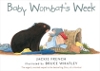
Baby Wombat's Week by Jackie French
Ill. by Bruce Whatley. Angus and
Robertson, 2009. ISBN 9780732286947.
Following in
the wake of the highly successful Diary of a Wombat,
comes this offering
from the same duo. Full of life and fun, baby wombat sleeps through
most of the
day and then spends a little time looking for a new hole, as he and his
mum
have grown out of the old one. Baby wombat crawls into any hole he can
find,
hoping for a new home, but each is fraught with problems. The bin is
too
smelly, the garden basket too small, the hole dug in the garden meets
the underground
hose, causing a small flood and so on.
Younger people
will love this book read out loud,
following the antics of the baby creature with glee. Older student will
happily
read it for themselves, following the pictures and the simple layout of
words easily.
As a class read aloud, too, the teacher will be able to draw
observations from
the class as they read.
As with many
stories of this ilk, the seeming simplicity
underlines a wider problem, and younger readers will have no difficulty
finding
parallels to this story. The illustrations, as always with Bruce
Whatley, are
warm and endearing.The look on the bay
wombat's face is enough to draw smiles form all and sundry, and this
will be
another of Jackie French's books that finds many homes.
Fran Knight
Novel activities: lessons in literature for the primary and post-primary classroom by Judy Dwyer
Wizard Books, 1998.
Roald Dahl
and Emily Rodda are just two of the forty-four authors whose books are
featured
in a resource which teachers can turn to for guidance in book selection
and
literature study with a whole class, group or individual student.
A brief
overview of each title - age level, setting, themes, main characters,
plot and
comments - is accompanied by 'Follow up activities' and a 'Suggested
follow up
lesson'. The activities range over creative thinking and writing
challenges,
research, art, craft and possible excursions.
Judy Dwyer
has taken some of the guesswork out of choosing a class novel for
in-depth
study. She has provided teachers with the tools to ensure that students
will
experience the ways in which literature can enrich our understanding of
humanity and the natural world. Instructions are explicit, practical
and
clearly the result of years of teaching experience.
Although the
72 works examined predate 1998, most are still in constant use because
of their
timeless appeal. Some are classics, such as Bridge to Terabithia.
Others are
stories which have been revived through new editions, reprints or films.
Wizard Book
titles are now on the Curriculum Corporation's list. Only a few copies
of Novel activities are still available for purchase. However,
teachers
may find
that copies of this treasure trove of ideas are already in their school
libraries.
Elizabeth Bor
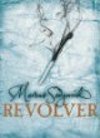
Revolver by Marcus Sedgwick
Orion, 2009. ISBN 9781842551868.
(Age 12+) Recommended. A chilling,
historical thriller, Revolver gripped me from the first page
where
Sedgwick
introduces 15 year old Sig Andersson, sitting alone in a cabin looking
at his
dead father who has frozen out on the lake. When a huge bear of a man
comes
knocking at the door asking for his father, I had to continue reading
to the
end. What did the man want? Was using the old Colt revolver that was
hidden in
the pantry Sig's only way to ensure his safety? Would
help arrive in time?
Sedgwick has written a compulsive story. By writing interspersed
chapters, set
11 years earlier than 1910 when the action occurs, he fills out the
background
to the arrival of Gunther Wolff demanding the gold that he says Sig's
father,
Einar, owes him. With sparse language he brings to life the dangers of
the frozen
lake, the lack of medical care and the desolate isolation of the gold
mining
town of Nome. I became involved in the icy setting of the Arctic and
the trials
of the Andersson family as they tried to make a living. Tension is
built up
when Gunther Wolff sits and watches Einar in his job in the assay
office and
then declares he knows that he is stealing gold and demands half of the
proceeds. After the murder of his wife, Einar goes on the run.
Sig is terrified by the appearance of Gunther and has no idea where
the gold
might be hidden. Sedgwick intensifies the reader's apprehension about
the
outcome, by divulging the inner conflicts that Sig has about the use of
violence. His mother has brought him up to believe in the bible while
his
father has emphasised the power of wielding a gun. How Sig resolves
this
dilemma is clever and satisfying.
Reluctant readers, or people who enjoyed Hatchet by Gary
Paulsen,
will latch
onto this book. It is relatively short, with plenty of action, and Sig
faces a
truly terrifying situation. However it also one that will confront both
adults
and thoughtful readers with its underlying issues of pacifism and
survival.
Pat Pledger
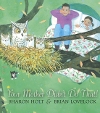
Your mother didn't do that! by Sharon Holt
Ill. by Brian
Lovelock. Walker Books, 2009. ISBN 9781921150173.
(Age 3-7) Holly is unhappy when her mother has to go out, but Dad
consoles her
with a bedtime story about the night she was born. When Holly asks if
she was
hatched out of an egg, Dad tells her that a hen would have fluffed up
her
feathers to protect her and her mother didn't do that. Holly follows
with
questions about what would have happened to her if her mother were a
kitten, an
owl, a shark, a kangaroo and a seahorse. She discovers how mothers look
after
their babies and learns that her mother held her 'close to her heart
and cried
and cried' with happiness.
Children will have fun predicting just how different animals look after
their
babies and will enjoy the humour of the text, especially how sharks eat
their
some of their babies for dinner and a father seahorse keeps his baby in
his belly.
The warmth and love depicted between Holly and her father and mother
jumps out
of the page both from the text and the illustrations, which are
delightful.
Luscious greens, yellows and blues provide a background to engaging
pictures of
Holly and her Dad imagining the bond between different mothers.
This is a lovely book, not just for bedtime or read aloud, but it would
be
useful when studying baby animals, or family relations.
Pat Pledger
The Crime Club Scene Series: Fact and Fiction by Kenneth McIntosh
Mason Crest,
2009. Heinemann.
Cashing in on the obsession
with solving
crime with forensics, this series of 6 books, nos. 7-12 in the series,
have the
novel idea of being both fact and fiction. Being about two thirds
fiction they
will be undoubtedly be catalogued as such, but this type of 'faction'
may well
be the new novelty. Appealing to both genders, the first part of the
book is
the adventures of the teen group, the Crime Club, who learn forensic
science. Each book deals with a different
aspect of
forensics. The last third of the book explains the concepts and
vocabulary used, chapter by
chapter and is well designed and
comprehensive. Each book has an excellent
Further Reading, Bibliography
and Index, albeit very American. The series also boasts a resident
consultant who
is a Senior Forensic Advisor from the Department of Justice.
The Crime Club consists of 5 teenagers -
Lupe, Maeve, Jessa, Ken and Wire from Flagstaff, Arizona, who work
with Detective Dorothy Kwan. In the earlier books they find a lost
treasure,
recover priceless artifacts, solve a cold case and get injured in the
process. This
is The Secret Seven/Nancy Drew meet the brutal
21st century. Each book centres on a different club
member.
There are dysfunctional families, murderers,drugs etc etc.
Considering how often there's a gun
pointed at the gang, it's a miracle they all lived! Of course unlikely
coincidences abound,but this is the
unreal world counterbalanced by the real world.
Whilst each book has an action
packed story
which keeps the suspense bubbling, they have a 'worthy' feel, eg a
member of the group has an eating disorder,
which enables the author to explain this in the notes. This educative
agenda
seeps into the style of writing which seems to use vocabulary designed
to be
defined, eg. 'She couldn't answer; she
was too scared that the inhalation needed to vocalize would threaten
her
tenuous grip.' (p28. The Earth cries out.)
Stories are suitable for upper
primary and
middle school libraries, but some of the explanations would suit middle
and
upper secondary. Excellent, of course, for
someone considering a career in forensics.
Another problem is that the
books do not open anywhere near flat and are hard to hold open.
Although a glossy production, coloured illustrations are crude and
cartoon style, and contrast with the photographs in the factual section.
No 7. The Monsoon Murder.
Forensic
Meteorology. ISBN 9781422208823.
Iraq and Post Traumatic Stress
Disorder
combine with a drunken mother, murderous uncle and drug selling to put
Maeve
and brother Lance in danger of being tried for drug possession and
murder,
until a lucky weather coincidence enables Maeve to put her forensic
meteorology
to good use. DNA, Chemical signatures,
ballistics,
alibis, warrants, citizen's arrest, tasers, arraignment and Vietnam are
explained.
No
8. If the Shoe Fits. Footwear
analysis. ISBN 9781422208779.
Reopening a cold case and
discovering the
shoe prints used as original evidence have been swapped allows Jessa to
explore
this aspect of forensics and the complexities of truth. More
dysfunctional
parents suddenly see the error of their ways. Facts here cover:
Sherlock
Holmes, DNA,
Navaho beliefs, diabetes, nuclear power, OJ Simpson case.
No.
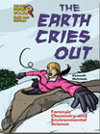
9: The Earth Cries Out. Forensic
Chemistry and Environmental Science. ISBN 9781422208786.
Plenty of action here as the
group scale a
mountain, face a mad bear attack, are nearly blown up and deal with
drug
manufacturers, hence the chemical analysis. The black bear, crazed by
hunger
and ingesting drug chemicals, has annoying anthropomorphic thoughts and
behavior, which is unexpected in such a series. However, the story
moves at a
fast pace and romance is thrown in as well. Facts here deal with global
warming, GPS,
drug chemistry, warrants, hypothermia and hospital waste.
No 10.
Things fall Apart. Forensic
engineering ISBN 9781422208809.
If you can buy a ghost giving
clues as to
why and how a funfair ride crashed and that there was no official
investigation
into it, you may enjoy this tale of investigation into the engineering
of a
thrill ride.
Facts explored include civil
and criminal
case difference, cold cases, urban legends, physics, forensic
photography,
arson and obstructing justice.
No
11.Numbering the Crime. Forensic
mathematics. ISBN 9781422208816.
Jessa is abducted and nearly
shot, so
plenty of detective work here, with Ken the romantic hero and Wire
calculating
possible distances travelled by the abductors. Facts cover hypotheses,
probability, algorithms, Bayesian analysis,
apogee,
the Jonestown massacre, DNA analysis.
No 12.
A Stranger's Voice. Forensic
Speech. ISBN 9781422208793.
This is the finale in the
series when the
club disbands and members go different ways. Cyber crime and computer
hacking feature
here, with stereotype goodies and baddies, more shoot outs and high
tech
gadgetry. Throw in the Navejo Way of harmony for good measure. We learn
about spectrometers,
voice
recognition technology, retinal scans, Linux, Java, lie detectors, OPEC
and
GPS.
Kevyna Gardner
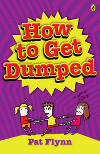
How to get dumped by Pat Flynn
Puffin, 2009. ISBN 9780143303947.
(Ages 10+) The very funny
Pat Flynn is at it again, this time
getting into the mind and heart of a year nine boy, overwhelmed with
the
problem of dumping his overbearing, manipulative girlfriend, Ashleigh.
Tony has
landed Ash, but she decides early on in their relationship that she
must
restrain from kissing for a month to be able to write a poem about
sacrifice.
Tony has just made the grade and likes kissing so it distressed to find
this
avenue of fun things to do cut off. But when he realises that she has
manipulated him into spending lunch times, the only time in the week he
can
play his beloved handball, in the library, he is moved to action.
But try as he
might with deceptive maneuvres, she always
sees his deception as positive. He engages his best friend, Kane to cut
in on
him and take his girlfriend away. Another complication involves Ash's
last
boyfriend, who has threatened Tony with dire happenings should he hurt
Ash in
any way, and apart from that Tony's eyes have moved happily to
another, his
friend's sister, Lacy. All the ingredients for a funny, fast paced
story set in
a school, with familiar figures, a hippy teacher, the slightly dippy
librarian,
school bullies and so on are threaded together to make for an
entertaining read
for upper primary and lower secondary kids.
Fran Knight
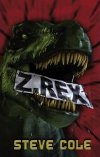
Z.Rex by Steve Cole
Doubleday, 2009.
(Age 10+) Be careful not to confuse Z.Rex
with
Steve Cole's hugely successful Astrosaurs series. The
latter are a fun filled romp, perfect for boys age 7 up. Z.Rex
is made of sterner stuff - the sometimes bleak, but always
action packed story of thirteen year old Adam who finds himself
captured by a
new breed of dinosaur - the terrifyingly intelligent Z.Rex. Zed is a
complex
creature, partly because his creator is Adam's scientist Dad, who
actually
embedded some of Adam's personality traits into the dinosaur. Just
imagine a dinosaur
seething with teenage hormones and you have the picture.
Adam's Dad is kidnapped as his work on
Zed is infiltrated by the mysterious Geneflow, a company managed,
unsurprisingly,
by evil megalomaniacs. The chaos that follows is a rollicking ride of
double
crossing action, nail biting chases and vivid fight scenes. It makes an
impressive, if at times gory read for upper juniors and lower secondary
children.
Steve Cole's skill as a script writer for
Dr Who is apparent in his cinematic action sequences and his ability to
convey
a strong sense of place. The second half of Z.Rex
is set in Edinburgh and I could almost picture Zed pounding up Princes
Street.
Fortunately everything turns out OK, although Edinburgh Castle will
never be
the same again. In a neat ending Zed lopes off into the sunset,
leaving the
perfect set-up for a sequel.
Z.Rex
can be read as a straightforward action adventure, but Cole does pose
some
interesting questions about the nature of consciousness, freewill and
the
responsibility that people have towards the animals (especially
dinosaurs) that
they are manipulating for their own ends.
The cover deserves a special mention - a
terrifying dinosaur head in three-dimensional relief: inspired! I hope
the
publishers adopt the same style for the paperback edition. Display Z.Rex
in your library and it will fly
off the shelf - and hopefully be devoured.
Claire Larson