The cross thieves by Alan Fyfe
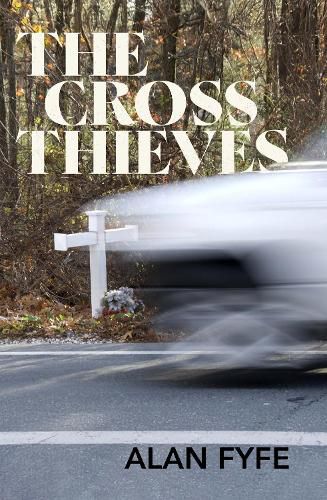
Do you have the heart to read this book? There are sections in the novel where the author speaks directly to the reader and questions whether they have the ‘right heart’ or the ‘good heart’ which he hopes they will bring to this story. It is a story of ‘two skinny, hungry boys living in a squat’, a dirty crumbling shelter, and the last food they had was 48 hours ago at the funeral of their friend. Their welfare payment has been stopped because they didn’t have the two dollars fifty required to log on to the library computer to submit their latest web form to the government ‘job provider’.
Pell and Gark have been brought up with good Christian values so they would not choose to break the law, but when Gark learns who is responsible for the rape and death of Lilly, his rage overtakes him and he wants revenge. In a moment of fury, the boys become the cross thieves, ripping out the cross that commemorates Lilly’s murderer. But it’s an action that leads them to being on the run from relentless drug dealers and violent thugs.
The Pell and Gark storyline takes place over one desperate night. Another storyline introduces Pastor Joshua Chord and the Noble Shepherd Ministry; and then there are also the past letters between the boys’ mother Ellie and her sister Molly. Gradually the pieces come together to fill out a stark picture of poverty, homelessness, organised crime, sexual abuse, violence and vengeance.
The structure of the novel is unusual; it is a chiastic structure or ring composition where themes or narrative segments mirror each other in a symmetrical pattern either side of a central pivotal point. So the chapters are presented as A, B, C, D, E, F, X, F, E, D, C, B, A. My curiosity so got the better of me that when I finished the book, I re-read the chapters as couplets, and it actually works! It’s an amazing feat of ingenuity. Instead of a climactic ending, the events of the middle become the turning point, and the reader realises the caring bond between the two boys, the values they share, and the potential they never had the opportunity to realise.
The cross thieves would be an interesting book to explore with secondary students because of its unusual structure, and because of the comments the author makes about writing and the manipulation of readers, and most of all because of its concern for an underclass suffering food insecurity and homelessness. Fyfe hopes to build the political will to create the needed social solutions.
This is the second book, in a trilogy that began with T, but you do not need to read that one to understand and appreciate The cross thieves. I for one will be eager to see the form that his forthcoming work The nine angles takes.
Themes: Homelessness, Poverty, Welfare, Drugs, Religion, Sexual abuse.
Helen Eddy