Son of nobody by Yann Martel
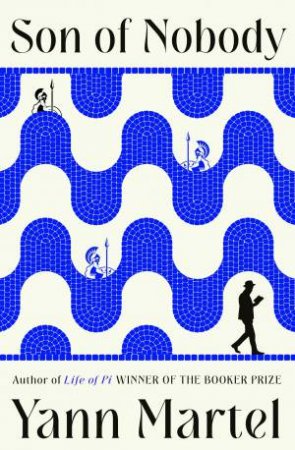
Flipping through the pages of Martel’s latest book reveals its unusual layout. The top half of the page is devoted to the fragments of an epic poem The Psoad, whilst the lower half comprises footnotes, comments by the narrator and snippets of his life. Harlowe Donne is a classicist, researcher of ancient Greek, and the narrative is presented like one of his papers, as he gradually decodes a heretofore undiscovered account of the Trojan War, told by Psoas, not a prince or glorious hero, not one of the elite recorded in The Iliad, but the ‘son of nobody’. His story presents the perspective of the peasant called to war, clad not in shining armour but in wood attached to linen, dirty and flea laden. While the Argive kings ‘laugh, dance, feast, and live forever’, the foot soldiers die miserable anonymous deaths.
Martel’s story of the Psoad exposes the crude reality of war. He suggests that The Iliad is the preferred account of the victors, a propaganda that hides the true motives of greed. The story of the kidnap of Helen has been presented as the justification for an armada of ships intent on destroying another empire; just as unscrupulous modern day politicians might falsely justify their wars on other nations. The chameleon is a recurrent motif, the way its eyes can gyrate separately, taking in two different perspectives. There are likely two sides to this story of war. And it is the soldiers who pay the price, starved and aching, sent into battle to kill other sons, husbands and fathers, good men who have not wronged.
Within the footnotes, there is also the story of Harlowe, the researcher, the events in his life a micro war running in parallel to the historical account he is piecing together. His marriage is falling apart, and in his passion for his work, which ironically is dedicated to his daughter, he is losing touch with the child he loves, just like those Greek soldiers who left their families behind for ten years.
I recommend Martel’s novel for students of classical Greece and Greek mythology, for the perspective it offers and the interesting questions it raises. However general readers need not have read Homer, for Martel provides details of the relevant heroes and their exploits whilst introducing his ‘son of nobody’ perspective. And despite the academic style of layout, the book is not difficult to read; it flows smoothly and readily engages the reader in all the threads of narrative. I could not put it down, and read it in one sitting. Highly recommended.
Themes: Trojan War, Greek mythology, War, Propaganda, Philosophy.
Helen Eddy