Pilbara by Judy Nunn
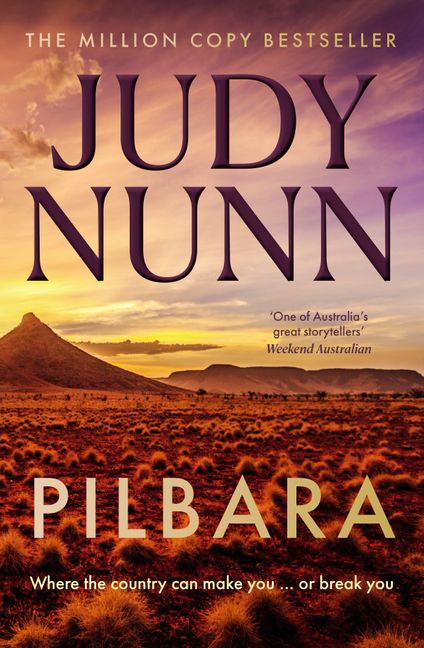
The prologue to Judy Nunn’s Pilbara reveals the secret at the heart of the book. Charles Burton the young widower with three children sent from his English family estate to the Pilbara to restore his family’s fortunes, is in fact Charlotte, an independent-minded young woman in disguise. This is in the 1880’s but it is not as far-fetched as readers might initially surmise. Charlotte herself names three famous examples of fearless women disguised as men, Hannah Snell, Deborah Sampson, and Sarah Edmonds, and there are others of that period whose disguise had not yet been discovered. But where credibility is stretched, is that none of the difficulties inherent in such subterfuge are given attention in Nunn’s book. In the first section, Charlotte’s early life is simply given the pronoun ‘she’; in the next section, about life as Charles, the pronoun ‘he’ takes over and is so convincing it is hard to remember sometimes that he is supposed to be a woman disguised. The children relate to Charles as their father. Nunn’s focus is not so much the identity switch, as much as the actual story, the adventures of making a life in the rugged environment of a sheep and cattle station between Roebourne and the little port town of Cossack in Western Australia.
Nunn revels most in the characters of the outback, and the lawlessness that abounds, with situations that are almost farcical such as when Charles has to preside over court proceedings against young miscreants. His decisions actually flout any English sense of the law, but allow for his kindness and common sense to prevail. This is also apparent in his relationship with the Aboriginal housekeeper Nina, and the young boy Alwyn. But while there is sympathy for the dispossessed Indigenous people the prevailing view of the time is to see them as lesser, unreliable, and a threat.
More attention is given to the status of women in the 1800’s. Security for a woman is marriage or in the case of the courtesan Eleanor, it is ensuring the patronage of a wealthy man. While Eleanor’s pursuit of Charlotte’s father William is viewed by his daughter as self-seeking manipulation, Nunn also makes the reader aware that there aren’t many options for a woman not born into the gentry. Charlotte herself is only able to do the things she wants by undertaking her own education, and then becoming a man. It is only the next generation, Charlotte’s daughter Victoria who dares to assert herself as a woman running a property in her own right.
Judy Nunn’s experience as an actor shows in her work. It’s a story with a great plot and interesting characters. Some of the conversations read like a script ready to be brought to life on stage or in film. And her enthusiasm for Australian history also shines through, revealing the harsh world of pioneering outback settlements. All in all, it makes for a rewarding and entertaining read.
Themes: Women, Independence, Determination, Australian history, Outback.
Helen Eddy