Hagtale by Sally O'Reilly
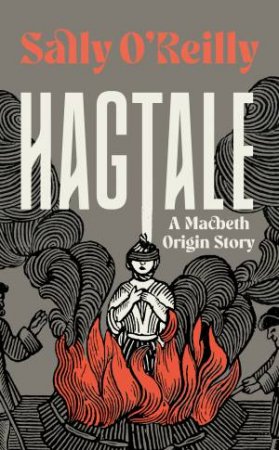
Hagtale is described as a ‘Macbeth origin story’, but the reference only gradually becomes apparent. O’Reilly weaves together two stories, one set in 1354, about a monk on a quest to retrieve the records of Scottish royal lineage from a distant ruined abbey, and the other of a strange wolf-girl Wulva, raised by witches 300 years earlier. The separate stories are told in alternating chapters until the connection is revealed at the end.
In essence the book is about human induced climate change. The three witches mould the feral child to become accepted in the human realm; she will charm the fierce Lord Macbeth and foster his ambition to become king. Their motive is to bring about war and the destruction of the human race, allowing the natural world to rise up again.
But not all humans are evil. The parallel story of the monk Rowan shows him to be a gentle thoughtful man in tune with the natural world in direct contrast to the rigidly pious and inconsiderate Brother Kenneth who unfortunately is his appointed travel companion. Having survived the plague, Rowan enjoys anew the peaceful rambles alongside his mare Hestia, contemplating the wondrous world God has created.
O’Reilly’s rich descriptive writing brings to life all the sights and sounds of nature, the tranquil countryside, the sparkling river waters, the night sounds, the forest spreading its roots. As a Senior Lecturer in Creative Writing, she challenges writers to engage in eco-aware writing, and to explore different kinds of narrative techniques or strategies to contribute to ‘a shift in consciousness’ and encourage a more sustainable way of living. Her website includes videos about fiction and climate writing, offering prompts to budding writers to build writing skills and contribute to making a difference.
Thus her book Hagtale is an unusual mix of genres. It is presented partly as historical fiction, partly fantasy. Drawing on the Shakespearen tale, it includes the three witches and their bubbling pot, and adds ‘something other’, a feral wolf-child, and a yew-tree forest that moves. The two time-separated storylines of Wulva and Brother Rowan run alongside each other with short chapters that keep the reader engaged. The title ‘Hagtale’ with its permutations of dark fable and oral storytelling is perfect. This is a book that should appeal to a variety of readers.
Themes: Medieval times, Macbeth, Fable, Wolf-child, Nature, Climate change.
Helen Eddy